1972rif. 161164Burbank CA: Warner Brothers 1972. Eight color front-of-house cards from the French release of the 1972 film. Included with the collection are two promotional pages specific to the film's French release with text in French. Based on the 1969 novel by Philip Roth. The fourth Roth novel after "Goodbye Columbus" to be adapted for the screen and the sole directorial effort for noted screenwriter Ernest Lehman "North by Northwest" "The Sweet Smell of Success" "Sabrina" "West Side Story" The Sound of Music" and "Who's Afraid of Virginia Woolf". The eponymous Portnoy sees a therapist and goes on one long tirade after another about his family his childhood his sexual fantasies and desires his problems with women and his obsession with his own Judaism. Set in New York. Front-of-house cards: 11.25 x 9 inches. Very Good plus with light wear on the left corners. Synopsis: 8.25 x 12 inches. Single staple at the top left corner. Very Good plus lightly creased on the bottom edges. Warner Brothers unknown
1978rif. 160490N.p.: N.p. 1978. Collection of vintage international promotional materials for the 1974 film. Included in the collection are: - 1974 Japanese Film Program handbill printed on recto and verso text in Japanese. An Israeli Orly Theater flyer for a week of screenings of the film in 1977 text in Hebrew. - French film festival card recto and verso for the film text in French. - Bi-fold promotion for a special preview screening of the film on March 19 1974 a week before the April 27 1974 premiere at the Lowes State I theater in New York with an enclosed ticket stub. Based on F. Scott Fitzgerald's classic 1925 novel. While the film received a mixed reception from critics it was nevertheless praised for its lavish costumes and decadent set design. Winner of two Academy Awards. Set in New York shot on location in New York Rhode Island and in England. Japanese Program 7 x 10 inches printed on recto and verso. Very Good plus. Israeli Orly Theater flyer 12.5 x 7.25 inches. Very Good plus with light creasing and edgewear. French Film Festival card 5 x 8 inches. Near Fine. Lowes State I Special Preview promotion 3.25 x 6.25 inches Bi-fold. Near Fine with a Near Fine ticket stub. N.p. unknown
1980rif. 159643Paris: Twentieth Century-Fox 1980. Four vintage borderless reference photographs and one vintage pressbook for the French release of the 1980 Italian film. Photographs include three matte-finish photographs of actress Eleonora Giorgi and one glossy photograph of director Dario Argento talking with actor Sacha Pitoëff on the set. Pressbook text in French. The second installment in Argento's "Three Mothers" trilogy preceded by "Suspiria" 1977 and followed by "Mother of Tears" 2007. Partially derived from Thomas De Quincey's 1845 prose poetry essay collection "Suspiria de Profundis" the trilogy was inspired by De Quincey's concept of three "Ladies of Sorrow": an all-powerful triumvirate of ancient witches and Satanists. Photographs: 10 x 8 inches. Near Fine. Pressbook: 27 leaves. perfect-bound in wrappers. Very Good plus lightly rubbed. Twentieth Century-Fox unknown
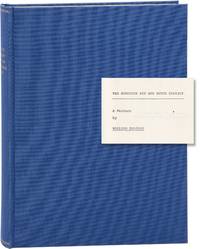
1969rif. 156803N.p.: N.p. 1969. Early Draft script for the classic 1969 Western film seen here under the working title "The Sundance Kid and Butch Cassidy." Bound in full blue cloth with the original wrappers bound in. A landmark of New Hollywood cinema and arguably the high spot as well as the beginning of an incredible streak of inventive cinematic achievements directed by George Roy Hill in the 1960s and 1970s including "Slaughterhouse-Five" 1972 "The Sting" 1973 and "Slap Shot" 1977. Loosely based on fact about two outlaws on the run from a lethal posse after a string of train robberies. They flee to Bolivia in search of a a better way to be thieves but ultimately meet their doom. Winner of four Academy Awards including Best Screenplay for William Goldman. Set in Wyoming and Bolivia and shot on location in New Mexico California Utah Colorado and Arizona in the US and in Morelos Guerrero and Sonora in Mexico. Blue untitled wrappers. Title page present undated with credits for screenwriter William Goldman. 177 leaves with last page of text numbered 175. Mimeograph duplication rectos only. Pages Near Fine wrapper Very Good plus. Housed in a custom red and blue quarter-leather clamshell box. National Film Registry. Hardy The Western. Pitts 586. N.p. unknown
1953rif. 159861New York: Omnifilms 1953. Two vintage reference photographs of Luis Buñuel on the set of the 1953 Mexican film. Mimeo snipes affixed to the versos along with Photofest labels and provenance stamps. A woman contends with her husband's increasingly jealous behavior eventually realizing that he has gone completely mad. Although the film was a critical and financial disappointment at the time of release it garnered several prominent fans including Jacques Lacan who purportedly used it in psychoanalysis classes as an example of the paranoid mind. It is now considered among Buñuel's best and in 2009 was included in a list of 100 essential films by "Cahièrs du Cinèma." 10 x 8 inches. Very Good plus lightly edgeworn and creased. Criterion Collection 1289. Omnifilms unknown
1964rif. 159909N.p.: N.p. 1964. Vintage borderless reference photograph from the set of the 1964 film showing director Luis Buñuel embracing actress Jeanne Moreau. Based on Octave Mirbeau's 1900 novel which follows a chambermaid in 1930s France whose Parisian beauty and sophistication at turns alienate and arouse the bourgeoisie members of the country house where she has recently found employment. Shot on location in Seine-Maritime Saint-Maurice and Essonne France. 7.5 x 9.25 inches. Near Fine. Criterion Collection 117. N.p. unknown
1979rif. 160041N.p.: N.p. 1979. Third Draft script for the 1981 film with rainbow revisions. Laid in with the script are two additional yellow revision pages dated 3/28/80. Based on the 1977 novel by John Gregory Dunne who with his wife Joan Didion wrote the screenplay for the film. Loosely based on the notorious 1947 Black Dahlia murder about a homicide detective investigating the brutal murder of a young woman in Los Angeles. Set and shot on location in Los Angeles. Blue titled wrappers. Title page present dated November 29 1979 noted as Third Draft with credits for screenwriters John Gregory Dunne and Joan Didion. 136 leaves with last page of text numbered 121. Xerographic duplication rectos only with rainbow revision pages throughout dated between 1/9/80 and 3/24/80. Pages Fine wrapper Near Fine bound with two gold brads. Housed in a custom beige clamshell box. N.p. unknown
rif. 160172Los Angeles: Twentieth Century-Fox 1977. Final Draft script for the 1978 film. A unique script in terms of the narrative with each scene described in fragmented sentences. Director Walter Hill's existential neo-noir heavily influenced by Jean-Pierre Melville's "Le Samourai" 1967 with some of the finest car-chase sequences ever committed to celluloid. The film follows a skilled getaway driver whose elusive escapes torment a self-assured police detective driving the detective to the brink of obsession. Cream titled wrappers dated May 23 1977. Title page present dated May 23 1977 noted as FINAL with a credit for Hill. 114 leaves with last page of text numbered 111. Xerographic duplication on blue stock rectos only. Pages and wrapper Near Fine bound with two gold brads. Silver and Ward US Neo-Noir. Spicer US. Twilight Time 53. Twentieth Century-Fox unknown
rif. 160169Burbank CA: Warner Brothers 1972. Final Draft script for the 1973 film. Copy belonging to production accountant Gordon Kee with his name in manuscript ink on the first leaf. Two drifters set out on a journey east from California towards Pittsburgh hoping to start a business together when they arrive. A key film from the New Hollywood era and one of the best proletarian-minded works of the 1970s. Winner of the Palme d'Or. Shot on location in Denver and Canon City Colorado in Detroit and Hamtramck Michigan and in Reno Nevada. Yellow titled wrappers noted as FINAL on the front wrapper rubber-stamped copy No. 97 dated August 16 1972. Distribution page present with receipt intact. Title page present dated 8/16/72 with credits for screenwriter Garry Michael White. 115 leaves with last page of text numbered 113. Mimeograph duplication on eye rest green stock rectos only. Pages Near Fine wrapper Near Fine bound internally with two gold brads. Warner Brothers unknown
1955rif. 160373Vienna: Metropolverlages 1955. Vintage Austrian program for the 1954 film here under the German release title "Die Faust im Nacken." Text in German. Terry Malloy Brando who dreams of being a prize fighter while tending his pigeons and running errands for the corrupt boss of the local union Johnny Lee J. Cobb witnesses a murder at the hands of Johnny's men. After meeting the victim's sister Eva Marie Saint Malloy confesses he feels culpable for the murder and is persuaded to implicate the dock racketeers by Father Barry Karl Malden. Winner of eight Academy Awards including Best Picture Best Director Best Screenplay Best Cinematography Best Actor and Best Supporting Actress nominated for another four. Shot on location in Hoboken New Jersey and New York City. 6.5 x 9.5 inches Bi-fold. Near Fine. National Film Registry. Criterion Collection 647. Ebert I. Grant US. Scorsese A Personal Journey through American Movies. Selby US. Spicer US. Metropolverlages unknown
1971rif. 160452London: Michael Klinger 1971. Draft script for the 1972 film here under the working title "Scandal." Following the success of the stone-cold 1971 neo-noir classic "Get Carter" director-screenwriter Mike Hodges and actor Michael Caine re-teamed for a lighter but no less moody take on the noir genre. Caine stars as Mickey King author of sleazy pulp paperbacks who is hired as a ghost writer for a mysterious celebrity's autobiography. When the celebrity is revealed to be retired tough guy actor Preston Gilbert played by an outrageous Mikey Rooney the bodies begin piling up with King wondering if he's the intended target. Starring noir stalwart Lizabeth Scott in her final film appearance. Set and shot on location in Malta. Blue untitled wrappers with a die-cut window in the British fashion. Title page present with credits for screenwriter Michael Hodges. 111 leaves with last page of text numbered 109. Mimeograph duplication rectos only. Pages Near Fine wrapper Near Fine bound internally with two flat metal brads. Michael Klinger unknown
1959rif. 1599671959. Vintage screenplay for the 1959 film. Text in Japanese. Annotations in manuscript pencil on several leaves noting revisions and amendments. A remake of the 1934 silent film "A Story of Floating Weeds" also directed by Yasujiro Ozu. The leader of a traveling theatre troupe goes to visit his former mistress and their son who is unaware that the man is his father. Meanwhile the man's current lover jealous of his attentions to his former mistress schemes to shame him by convincing a young actress in the troupe to seduce his son. One of the final films the prolific Japanese director made before his death in 1963. Set on the Japanese coast. White titled wrappers. 107 leaves with last page of text numbered e-22. Mimeograph duplication rectos and versos. Pages Very Good plus wrapper Very Good with perfect binding. Criterion Collection 232. Ebert I. Eureka Masters of Cinema 41. unknown
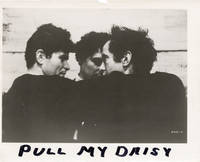
1959rif. 160564N.p.: N.p. 1959. Four vintage reference photographs by John Cohen from the 1959 short film. Three with the title in manuscript ink on the bottom margin of the recto and one with a provenance label on the verso. Based on a purportedly true incident in the life of Beat icons Neal and Carolyn Cassady wherein a couple's dinner party for a visiting bishop is crashed by their zany bohemian friends. Adapted by Jack Kerouac from the third act of his play "Beat Generation" with voiceover narration by Kerouac and a title taken from the poem of the same name co-written by Kerouac Cassady and Allen Ginsberg. For years the film was rumored to have been entirely unscripted capturing a real event at co-director Alfred Leslie's loft in the Bowery until Leslie revealed in a 1968 interview that the film had in fact been scripted heavily rehearsed and shot in a photography studio. 10 x 8 inches. Small chips at the top edges else about Near Fine. National Film Registry. N.p. unknown
1968rif. 159850Los Angeles: Twentieth Century-Fox 1968. Revised First Draft script for the 1970 film. Copy belonging to an unknown cast or crew member with their manuscript ink annotations on 19 pages underlining locations settings and props. Based on the 1968 novel by Richard Hooker and in turn the basis of the acclaimed television show which ran for 11 seasons on CBS from 1972 to 1983. A film that kick-started a great decade of cinema and one that still defines it. Winner of the Academy Award for Best Screenplay nominated for four more including Best Picture Best Director and Best Supporting Actress. Winner of the Palme d'Or. Orange titled wrappers noted as REVISED FIRST DRAFT SCREENPLAY on the front wrapper rubber-stamped copy No. 209 dated DECEMBER 11 1968. Title page present dated December 11 1969 noted as Revised First Draft Screenplay with credits for screenwriter Ring Lardner Jr. and author Richard Hooker. 144 leaves with last page of text numbered 142. Mimeograph duplication rectos only. Pages Near Fine wrapper Very Good plus bound internally with three gold brads. National Film Registry. Twentieth Century-Fox unknown
rif. 147210Rome: Pegaso Unknown. Treatment script for an unproduced Italian film. Text in English. Three brothers battle the local Mafia in a small province in central Sicily. An early career script by noted Italian screenwriter Nicola Badalucco who was best known for "The Damned" 1969 which won an Oscar for Best Screenplay. Set in Agrigento Sicily. Pink titled wrappers. Title page present with credits for screenwriter Nicola BADALUCCO. 23 leaves with last page of text numbered 22. Carbon typescript rectos only. Pages Near Fine wrapper Very Good plus with a small splash on the front wrapper and slight yapping to the fore edge bound internally with two gold brads. Pegaso unknown
rif. 159835New York: Rollins and Joffe Productions 1970. Draft script for the 1971 film. Annotations in manuscript ink on the title page striking the working title "El Weirdo." The draft notably features the film's original ending which Woody Allen's editor Ralph Rosenblum convinced him to replace showing Allen emerging from a bombing in inadvertent sooty blackface and participating in a Black uprising on a university campus. Anxious to impress his activist ex-girlfriend a blue collar worker travels to a fictitious South American country where he is unwittingly conscripted into a group of violent revolutionaries. Allen's third feature film the first in which he had nearly full creative control and the third and final film he wrote with Mickey Rose. Preceded by "What's Up Tiger Lily" 1966 and "Take the Money and Run" 1969. Set in the fictional "banana republic" of San Marcos and shot on location in New York and Puerto Rico. Black Studio Duplicating Service wrappers with a rubber stamped titled label. Title page present dated March 24 1970 with credits for screenwriters Woody Allen and Mickey Rose. 126 leaves with last page of text numbered 116. Mimeograph duplication rectos only with pink yellow and green revision pages throughout dated variously between 4-28-70 and 4-30-28. Pages Near Fine wrapper Very Good plus bound with two gold screw brads. Rollins and Joffe Productions unknown
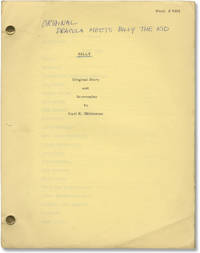
1965rif. 158305N.p.: N.p. 1965. Draft script for the 1966 film here under the working title "Billy." Annotation in manuscript ink on the title page amending the title to "Original Dracula Meets Billy the Kid." Copy likely belonging to screenwriter Carl K. Hittleman with annotations in manuscript ink and pencil on virtually every page amending dialogue and scene numbers with two unnumbered pages bound in created on a different typewriter. Dracula travels to the American West intent on making the fiancée of the now reformed Billy the Kid his next victim. One of director William Beaudine's final films originally released on a double bill with Beaudine's other Western horror picture "Jesse James Meets Frankenstein's Daughter." Front wrapper integral with title page with credits for screenwriter Carl K. Hittleman. 114 leaves with last page of text numbered 110. Ribbon copy typescript rectos only. Pages Near Fine with cello tape repair and reinforcement to final page bound with two gold brads. N.p. unknown
1955rif. 156909Burbank CA: Warner Brothers 1955. Draft script for the 1956 revisionist Western. Near the end of Randolph Scott's career producer Harry Brown Scott and director Budd Boetticher began work on a series of intelligent films that would combine Scott's minimalist acting style with Boetticher's lean approach to filmmaking. The result was a series of films today referred to as the "Ranown" cycle a rich canon that formed a strong stylistic whole. Boetticher's approach to storytelling was traditional in the sense that it involved traditional Western characters but revisionist in that his protagonist invariably worked alone and sought his own brand of morality rather than one established by tradition government and family. Apart from ardent fans of Westerns these films went unrecognized by most until Martin Scorsese made a case for them in his 1995 BFI documentary "A Personal Journey with Martin Scorsese Through American Movies." Gray titled wrappers dated September 15 1955 with credits for screenwriter Burt Kennedy. Title page present dated September 15 1955 with credits for screenwriter Burt Kennedy. 100 leaves with last page of text numbered 99. Mimeograph duplication rectos only with blue revision pages throughout dated variously between 9/19/55 and 9/20/55. Pages and wrapper Very Good plus with tide marks on the bottom edges of the title page and front wrapper bound internally with three gold brads. Housed in a custom brown quarter-leather clamshell box. Pitts 3788. Schrader 52. Scorsese A Personal Journey Through American Movies. Warner Brothers unknown
1992rif. 157075N.p.: N.p. 1992. Vintage two-sided Japanese flyer for the 1992 film featuring a full-color graphic on the recto and the verso in black and white with three film still photographs. Text in Japanese and French. Young Japanese couple Kishin and Rie are trying to survive living in Paris as private detectives when the wealthy and powerful gangster Okuyama hires them to trail his French girlfriend Lorraine who he suspects is cheating. Before long Kishin is sleeping with Loraine and Rie discovers a link between Okuyama and a multi-million dollar heist involving an affluent Paris S&M club. Set in and shot on location in Paris France. 10 x 7 inches. Near Fine. N.p. unknown
1948rif. 156774Los Angeles: Twentieth Century-Fox 1948. Revised Final script for the 1948 Western film. An extremely effective minimal Western starring Gregory Peck playing against type as a bank robber-albeit an honorable one-who must go head-to-head with Richard Widmark. One of the classics of the late 1940s overshadowed by "Treasure of the Sierra Madre" which was released the same year and is much better remembered today. Shot on location in Death Valley National Monument and near Lone Pine CA where an entire ghost town was constructed for the film. Red titled Twentieth Century-Fox wrappers noted as REVISED FINAL on the front wrapper rubber-stamped copy No. 122 dated May 14 1948. Distribution page present with receipt intact. Title page present dated May 14 1948 with a credit for screenwriter Lamar Trotti. 133 leaves with last page of text numbered 131. Mimeograph duplication rectos only. Pages and wrapper Near Fine bound internally with two gold brads. In a custom green quarter-leather clamshell box. Pitts 5051. Twentieth Century-Fox unknown
1964rif. 151653N.p.: N.p. 1964. Vintage borderless reference photograph from the set of the 1964 film showing director Luis Buñuel in conversation with actors Jeanne Moreau and Jean Ozenne. Based on Octave Mirbeau's 1900 novel which follows a chambermaid in 1930s France whose Parisian beauty and sophistication at turns alienate and arouse the bourgeoisie members of the country house where she has recently found employment. Shot on location in Seine-Maritime Saint-Maurice and Essonne France. 7.25 x 9.5 inches. Near Fine. Criterion Collection 117. N.p. unknown
1977rif. 151652N.p.: N.p. 1977. Vintage borderless reference photograph of Luis Buñuel discussing a scene with Fernando Rey and Carole Bouquet on the set of the 1977 film. With a printed label affixed to the verso along with manuscript ink and pencil annotations. Based on the 1898 novel "Le femme et le patin" "The Woman and the Puppet" by Pierre Louys which follows the tempestuous relationship between a wealthy middle-aged Frenchman and a young Spanish dancer. The woman is played by both Carole Bouquet and Angela Molina interchangeably demonstrating the character's mercurial nature a decision Buñuel came to in desperation after original actress Maria Schneider proved a poor fit but that ultimately helped define the film as one of his late masterpieces. Shot on location in Switzerland in Andalucia and Madrid Spain and in Hauts-de-Seine and Paris France. 9.25 x 6.25 inches. Near Fine. Criterion Collection 143. Rosenbaum 1000. Schrader Canon Fodder 33. N.p. unknown
1974rif. 148295N.p. 1974. Three vintage borderless studio still photographs from the 1974 film. A non-linear surrealist satire of Buñuel's usual targets in this case bourgeois morality and class-based societal structures. 9.5 x 7 inches. Near Fine. Rosenbaum 1000. Criterion Collection 290. unknown
1972rif. 148273N.p.: Greenwich Film Productions 1972. Collection of 15 vintage borderless studio still photographs from the 1972 film. Six bourgeois friends try to sit down to a meal together and are repeatedly interrupted by surreal dream-like happenings in Buñuel's satiric masterpiece. Winner of the Academy Award for Best Foreign Film also nominated for Best Screenplay. Set in and shot on location in Paris. 9.5 x 7 inches. One uniformly faded else Near Fine. Vogel Film as a Subversive Art. Rosenbaum 1000. Ebert II. Criterion Collection 102. Greenwich Film Productions unknown
1940rif. 155765Culver City CA: RKO Radio Pictures 1940. Final script for the 1941 screwball comedy film with "286" in manuscript pencil to the top right of the front wrapper. Laid in is a ribbon copy typescript listing the five lead actors on RKO letterhead. A cantankerous tycoon goes undercover as a shoe clerk at his own New York department store in order to identify labor agitators but finds himself befriending the workers and becoming sympathetic to their needs. A key film in the American screwball comedy cycle with proletarian elements deftly woven into a hilarious and whip-smart story. Nominated for two Academy Awards for Best Screenplay and Best Supporting Actor for Charles Coburn. Pink titled wrappers rubber-stamped FINAL SCRIPT on the front wrapper rubber-stamped copy No. 60 dated November 26 1940 with credits for screenwriter Norman Krasna. Distribution page integral with title page with receipt removed dated 11/26/40 noted as FINAL. 163 leaves with last page of text numbered 158. Mimeograph duplication rectos only. Pages Very Good plus with a small amount of silverfish damage on the second and third leaves with foxing to the top edge and faint foxing to the fore-edge wrapper Very Good plus with light foxing and soiling bound with three gold brads. Byrge and Miller The Screwball Comedy Films: A History and Filmography. Olive 53203. RKO Radio Pictures unknown