11,046 results
1945ref. 29200HBDJ 1945 1st Edition THUS IN POOR TATTERED WORN DUSTJACKET With BACK & Spine DJ MISSING MOVIE EDITION FEATURING JUDY GARLAND & MARGARET O'BRIEN on DJ Front NO INTERIOR Illustrations SCUFF & RUB BOOK COVER GOOD CONDITION WITH SOME WATER DAMAGE TO EDGES CVR DJ IS POOR Condition Only DJ Front is There The Back Flap with Rub & Wear the Rest of DJ NOT PRESENT 6" X 8 1/2" HC DJ front cover torn and frayed - repaired spine and back section missing - as is the front flap autograph note by it's author Sally Benson also included is a tiny letter invitation to a tea party found within the book. Interior is clean clear and together making it an solid 'readers copy' WORLD PUBLISHING FORUM BOOKS hardcover
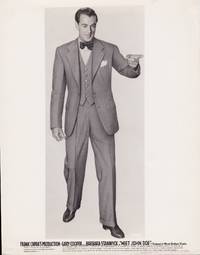
1941ref. 170358Los Angeles: Vitagraph 1941. Vintage publicity photograph from the 1941 film showing actor Gary Cooper in his iconic role. When a laid-off reporter is asked to write one final column she fabricates a letter from a John Doe planning on committing suicide on Christmas Eve in protest of society's ills. When the letter becomes a sensation Ann convinces the papers to hire her back and turns the letters into a series of articles. The only problem is in order to convince the public John Doe is real they need to find someone to impersonate him. Enter down-on-his-luck homeless man John Willoughby. 8 x 10 inches. Very Good plus. Vitagraph unknown books
1941ref. 170358Los Angeles: Vitagraph 1941. Vintage publicity photograph from the 1941 film showing actor Gary Cooper in his iconic role. When a laid-off reporter is asked to write one final column she fabricates a letter from a John Doe planning on committing suicide on Christmas Eve in protest of society's ills. When the letter becomes a sensation Ann convinces the papers to hire her back and turns the letters into a series of articles. The only problem is in order to convince the public John Doe is real they need to find someone to impersonate him. Enter down-on-his-luck homeless man John Willoughby. 8 x 10 inches. Very Good plus. Vitagraph unknown
1952ref. 164809Universal City: Universal Pictures 1952. Vintage publicity photograph from the 1952 film showing actor Frank Sinatra. Partial snipe on the verso. A small-town singer gets a taste of success at a gangster's popular nightclub but his burgeoning fame comes at a high price both financially and emotionally. Made during Sinatra's mid-career slump one year before his career-reviving performance in "From Here to Eternity" 1953. From the archive of noted Hollywood still photographer Ray Jones. Born in Wisconsin on January 1 1901 Jones worked for Paramount Pictures in the early 1930s and went on to be the head of the still photography department at Universal Pictures in 1935 where he worked well into the 1950s. 10 x 8 inches. Near Fine. Universal Pictures unknown books
1952ref. 155305Universal City: Universal Pictures 1952. Vintage reference photograph from the 1952 film showing actors Frank Sinatra and Alex Nicol. Printed mimeo snipes affixed to the verso. A small-town singer gets a taste of success at a gangster's popular nightclub but his burgeoning fame comes at a high price both financially and emotionally. Made during Sinatra's mid-career slump one year before his career-reviving performance in "From Here to Eternity" 1953. 10 x 8 inches. Near Fine. Universal Pictures unknown books
1952ref. 164809Universal City: Universal Pictures 1952. Vintage publicity photograph from the 1952 film showing actor Frank Sinatra. Partial snipe on the verso. A small-town singer gets a taste of success at a gangster's popular nightclub but his burgeoning fame comes at a high price both financially and emotionally. Made during Sinatra's mid-career slump one year before his career-reviving performance in "From Here to Eternity" 1953. From the archive of noted Hollywood still photographer Ray Jones. Born in Wisconsin on January 1 1901 Jones worked for Paramount Pictures in the early 1930s and went on to be the head of the still photography department at Universal Pictures in 1935 where he worked well into the 1950s. 10 x 8 inches. Near Fine. Universal Pictures unknown
1952ref. 155305Universal City: Universal Pictures 1952. Vintage reference photograph from the 1952 film showing actors Frank Sinatra and Alex Nicol. Printed mimeo snipes affixed to the verso. A small-town singer gets a taste of success at a gangster's popular nightclub but his burgeoning fame comes at a high price both financially and emotionally. Made during Sinatra's mid-career slump one year before his career-reviving performance in "From Here to Eternity" 1953. 10 x 8 inches. Near Fine. Universal Pictures unknown
1969ref. 149604Los Angeles: Paramount Pictures 1969. Three vintage borderless reference photographs from the 1969 film a highlight of early New Hollywood cinema. One shows actor Harold Blankenship the other with actors Robert Forster Peter Bonerz and Janet Langhart. One with a printed mimeo snipe affixed to the verso along with the stamp of Paramount Pictures the other with the stamp of Israel Film Archive on the verso. A hardened and dubiously ethical television cameraman finds out he is being watched by the FBI amidst the tumultuous protests taking place around the 1968 Democratic National Convention. Highly influential for its groundbreaking use of factual historical events interspersed with fictional narrative. Featuring early music by Frank Zappa's band Mothers of Invention and addressing underlying social issues of race gender and poverty the film frankly depicted much of the growing countercultural movement of the late 1960s even going so far as to use real-life footage of civil disobedience occurring in 1968 Chicago. Due to its startlingly political narrative as well as nudity and language the film was originally given an X rating by the MPAA though by 1970 this would be downgraded to an R. One photograph 10 x 8 inches one photograph 9.5 x 7.25 inches. Near Fine. Criterion Collection 658. Spicer US Neo-Noir. Paramount Pictures unknown books
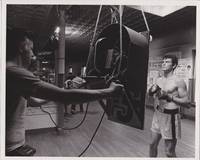
1969ref. 168073Los Angeles: Paramount Pictures 1969. Vintage reference photograph from the 1969 film showing Haskell Wexler capturing a scene with Robert Forster. Annotations in manuscript pencil on the verso. A hardened and dubiously ethical television cameraman finds out he is being watched by the FBI amidst the tumultuous protests taking place around the 1968 Democratic National Convention. Highly influential for its groundbreaking use of factual historical events interspersed with fictional narrative and its frank depiction of the contemporary countercultural movement. Featuring early music by Frank Zappa's band Mothers of Invention. Due to its startlingly political narrative as well as nudity and language the film was originally given an X rating by the MPAA though by 1970 this would be downgraded to an R. 10 x 8 inches. Near Fine. Criterion Collection 658. Spicer US Neo-Noir. Paramount Pictures unknown books
1969ref. 147586Hollywood: Paramount Pictures 1969. Five vintage studio still photographs from the 1969 film. A semi-documentary dramatization of the violence that surrounded the 1968 Democratic National Convention and a film that questions the politics inherent in journalism and image-making "Medium Cool" is a remarkable directorial accomplishment highlighting the political unrest of the late 1960s in part by using real footage. 8 x 10 inches. Near Fine one uniformly faded. Paramount Pictures unknown books
1969ref. 168073Los Angeles: Paramount Pictures 1969. Vintage reference photograph from the 1969 film showing Haskell Wexler capturing a scene with Robert Forster. Annotations in manuscript pencil on the verso. A hardened and dubiously ethical television cameraman finds out he is being watched by the FBI amidst the tumultuous protests taking place around the 1968 Democratic National Convention. Highly influential for its groundbreaking use of factual historical events interspersed with fictional narrative and its frank depiction of the contemporary countercultural movement. Featuring early music by Frank Zappa's band Mothers of Invention. Due to its startlingly political narrative as well as nudity and language the film was originally given an X rating by the MPAA though by 1970 this would be downgraded to an R. 10 x 8 inches. Near Fine. Criterion Collection 658. Spicer US Neo-Noir. Paramount Pictures unknown
1969ref. 149604Los Angeles: Paramount Pictures 1969. Three vintage borderless reference photographs from the 1969 film a highlight of early New Hollywood cinema. One shows actor Harold Blankenship the other with actors Robert Forster Peter Bonerz and Janet Langhart. One with a printed mimeo snipe affixed to the verso along with the stamp of Paramount Pictures the other with the stamp of Israel Film Archive on the verso. A hardened and dubiously ethical television cameraman finds out he is being watched by the FBI amidst the tumultuous protests taking place around the 1968 Democratic National Convention. Highly influential for its groundbreaking use of factual historical events interspersed with fictional narrative. Featuring early music by Frank Zappa's band Mothers of Invention and addressing underlying social issues of race gender and poverty the film frankly depicted much of the growing countercultural movement of the late 1960s even going so far as to use real-life footage of civil disobedience occurring in 1968 Chicago. Due to its startlingly political narrative as well as nudity and language the film was originally given an X rating by the MPAA though by 1970 this would be downgraded to an R. One photograph 10 x 8 inches one photograph 9.5 x 7.25 inches. Near Fine. Criterion Collection 658. Spicer US Neo-Noir. Paramount Pictures unknown
1969ref. 147586Hollywood: Paramount Pictures 1969. Five vintage studio still photographs from the 1969 film. A semi-documentary dramatization of the violence that surrounded the 1968 Democratic National Convention and a film that questions the politics inherent in journalism and image-making "Medium Cool" is a remarkable directorial accomplishment highlighting the political unrest of the late 1960s in part by using real footage. 8 x 10 inches. Near Fine one uniformly faded. Paramount Pictures unknown
1969ref. 161757Beverly Hills CA: Metro-Goldwyn-Mayer MGM 1969. Draft script for Season 1 Episode 14 of the 1969-1976 television series seen here under the working title "The Inner Space The Alcoholic Story." Originally aired on January 7 1970 on CBS. The long-running medical drama series followed two surgeons at a university hospital in Los Angeles with a changing roster of patients showcased in each episode. In this episode a young patient needs a kidney but dark family secrets prevent her parents from becoming donors. Bright orange titled wrappers dated October 30 1969 and noted as REVISED FINAL DRAFT on the front wrapper noted as production No. 6871 and stamped copy No. 81 with credit for screenwriter Andy Lewis. Title page integral with the front wrapper. 72 leaves with last page of text numbered 71. Mimeograph duplication rectos only. Pages Very Good plus lightly foxed on the edges wrappers Near Fine bound with two gold brads. Metro-Goldwyn-Mayer [MGM] unknown books
1973ref. 161689Beverly Hills CA: Metro-Goldwyn-Mayer MGM 1973. Final Corrected script for Episode 7 Season 5 of the 1969-1976 television series. Originally aired on October 29 1973 on CBS. Noted as copy No. 19 in manuscript ink on the front wrapper. The long-running medical drama series followed two surgeons at a university hospital in Los Angeles with a changing roster of patients showcased in each episode. In this episode a young woman diver struggles with the pressure of competitive diving. Bright orange titled wrappers dated September 17 1973 stamped FILE COPY noted as FINAL CORRECTED SCRIPT and production No. 7890 on the front wrapper with credit for screenwriter Stephen Kandel. Title page integral with the front wrapper. 59 leaves with last page of text numbered 58. Xerographic duplication rectos only. Pages Near Fine wrapper Near Fine bound with two gold brads. Metro-Goldwyn-Mayer [MGM] unknown books
1971ref. 170164Beverly Hills CA: Metro-Goldwyn-Mayer MGM 1971. Final Draft script for Season 3 Episode 17 of the 1969-1976 television series. A long-running medical drama that followed doctors Paul Lochner and Joe Gannon as they went about their daily lives at a university hospital in Los Angeles. In this episode Gannon reconnects with an old flame a doctor with a troubled past. Originally aired on January 19 1972 on CBS. Screenwriter Jerome Coopersmith wrote prolifically for television and the stage throughout the mid- to late-twentieth century. He is best remembered today for his writing for "Hawaii Five-O" 1968-1980 and the 1974 Christmas television special "'Twas the Night Before Christmas" but also contributed episodes for "Armstrong Circle Theater" "The Streets of San Francisco" "Combat!" "Spenser for Hire" and others. In 1965 he received a Tony nomination for the Sherlock Holmes Broadway musical "Baker Street" and wrote and co-wrote a number of off-Broadway plays including a biographical play about the early life of Eleanor Roosevelt. Orange titled MGM wrappers dated November 18 1971 noted as FINAL DRAFT and production No. 7852 stamped copy No. 61 with credit for screenwriter Jerome Coopersmith. Title page integral with the front wrapper. 62 leaves with last page of text numbered 60. Mimeograph duplication rectos only. Pages Very Good plus wrapper Near Fine with light foxing to the page edges bound with two gold brads. Metro-Goldwyn-Mayer [MGM] unknown books
1970ref. 161733Beverly Hills CA: Metro-Goldwyn-Mayer MGM 1970. Draft script for Episode 21 Season 2 of the 1969-1976 television series seen here under the working title "Give and Take." Originally aired on February 17 1971 on CBS. The long-running medical drama series followed two surgeons at a university hospital in Los Angeles with a changing roster of patients showcased in each episode. In this episode an orderly struggles to provide for his sickly wife and infant daughter after abruptly quitting his job at the hospital. Lacking wrappers. Title page integral with the first leaf noted as production No. 6890. 61 leaves with last page of text numbered 59. Xerographic duplication rectos only. Pages Very Good plus lightly foxed on the edges bound with two gold brads. Metro-Goldwyn-Mayer [MGM] unknown books
1969ref. 161757Beverly Hills CA: Metro-Goldwyn-Mayer MGM 1969. Draft script for Season 1 Episode 14 of the 1969-1976 television series seen here under the working title "The Inner Space The Alcoholic Story." Originally aired on January 7 1970 on CBS. The long-running medical drama series followed two surgeons at a university hospital in Los Angeles with a changing roster of patients showcased in each episode. In this episode a young patient needs a kidney but dark family secrets prevent her parents from becoming donors. Bright orange titled wrappers dated October 30 1969 and noted as REVISED FINAL DRAFT on the front wrapper noted as production No. 6871 and stamped copy No. 81 with credit for screenwriter Andy Lewis. Title page integral with the front wrapper. 72 leaves with last page of text numbered 71. Mimeograph duplication rectos only. Pages Very Good plus lightly foxed on the edges wrappers Near Fine bound with two gold brads. Metro-Goldwyn-Mayer [MGM] unknown
1970ref. 161733Beverly Hills CA: Metro-Goldwyn-Mayer MGM 1970. Draft script for Episode 21 Season 2 of the 1969-1976 television series seen here under the working title "Give and Take." Originally aired on February 17 1971 on CBS. The long-running medical drama series followed two surgeons at a university hospital in Los Angeles with a changing roster of patients showcased in each episode. In this episode an orderly struggles to provide for his sickly wife and infant daughter after abruptly quitting his job at the hospital. Lacking wrappers. Title page integral with the first leaf noted as production No. 6890. 61 leaves with last page of text numbered 59. Xerographic duplication rectos only. Pages Very Good plus lightly foxed on the edges bound with two gold brads. Metro-Goldwyn-Mayer [MGM] unknown
1971ref. 170164Beverly Hills CA: Metro-Goldwyn-Mayer MGM 1971. Final Draft script for Season 3 Episode 17 of the 1969-1976 television series. A long-running medical drama that followed doctors Paul Lochner and Joe Gannon as they went about their daily lives at a university hospital in Los Angeles. In this episode Gannon reconnects with an old flame a doctor with a troubled past. Originally aired on January 19 1972 on CBS. Screenwriter Jerome Coopersmith wrote prolifically for television and the stage throughout the mid- to late-twentieth century. He is best remembered today for his writing for "Hawaii Five-O" 1968-1980 and the 1974 Christmas television special "'Twas the Night Before Christmas" but also contributed episodes for "Armstrong Circle Theater" "The Streets of San Francisco" "Combat!" "Spenser for Hire" and others. In 1965 he received a Tony nomination for the Sherlock Holmes Broadway musical "Baker Street" and wrote and co-wrote a number of off-Broadway plays including a biographical play about the early life of Eleanor Roosevelt. Orange titled MGM wrappers dated November 18 1971 noted as FINAL DRAFT and production No. 7852 stamped copy No. 61 with credit for screenwriter Jerome Coopersmith. Title page integral with the front wrapper. 62 leaves with last page of text numbered 60. Mimeograph duplication rectos only. Pages Very Good plus wrapper Near Fine with light foxing to the page edges bound with two gold brads. Metro-Goldwyn-Mayer [MGM] unknown
1973ref. 161689Beverly Hills CA: Metro-Goldwyn-Mayer MGM 1973. Final Corrected script for Episode 7 Season 5 of the 1969-1976 television series. Originally aired on October 29 1973 on CBS. Noted as copy No. 19 in manuscript ink on the front wrapper. The long-running medical drama series followed two surgeons at a university hospital in Los Angeles with a changing roster of patients showcased in each episode. In this episode a young woman diver struggles with the pressure of competitive diving. Bright orange titled wrappers dated September 17 1973 stamped FILE COPY noted as FINAL CORRECTED SCRIPT and production No. 7890 on the front wrapper with credit for screenwriter Stephen Kandel. Title page integral with the front wrapper. 59 leaves with last page of text numbered 58. Xerographic duplication rectos only. Pages Near Fine wrapper Near Fine bound with two gold brads. Metro-Goldwyn-Mayer [MGM] unknown
1973ref. 134920Burbank CA: Warner Brothers 1973. Complete-as-issued set of 15 black-and-white studio still photographs from the 1973 film. Housed in the original sack envelope as issued rubber stamped "MEAN STREETS / 15 STILLS / B." Scorsese's breakthrough film one of the establishing pillars of New Hollywood cinema setting the template that would guide the best of his work to follow. Set in New York City and shot on location there. 8 x 10 inches. Near Fine. Sack Very Good Plus with minor wear. Warner Brothers unknown books
1973ref. 134920Burbank CA: Warner Brothers 1973. Complete-as-issued set of 15 black-and-white studio still photographs from the 1973 film. Housed in the original sack envelope as issued rubber stamped "MEAN STREETS / 15 STILLS / B." Scorsese's breakthrough film one of the establishing pillars of New Hollywood cinema setting the template that would guide the best of his work to follow. Set in New York City and shot on location there. 8 x 10 inches. Near Fine. Sack Very Good Plus with minor wear. Warner Brothers unknown
1969ref. 147779N.p.: Cinema Center Films 1969. Two vintage studio still photographs one borderless from the 1979 film. One of Salome Jens and one of Jens and Nancy Marchand. Natalie Miller Patty Duke is an insecure girl living in Greenwich Village apartment and falls in love with David Harris James Farentino an architect who wants to become a painter and has an affair later discovering he is married with a family. Al Pacino's film debut in a brief screen appearance. Set in and shot on location in New York City. 8 x 10 inches. Near Fine with some light edgewear. Cinema Center Films unknown books
1969ref. 141375New York: Two Faces / New Yorker Films 1969. Vintage poster for the 1969 film an experimental mix of documentary and fiction. Poster designed by Robert Frank. Director Robert Frank's first feature film in which he follows poet Peter Orlvosky and his mentally ill and mostly catatonic brother Julius as they move through the late 1960s Beat scene. When Julius wanders off he is replaced in the film by actor Joseph Chaikin. A meditation on the boundaries of reality and sanity featuring the screenwriting debut of Sam Shepard and the first feature film appearance of Christopher Walken. The film was released in a new restoration by Steidl in 2007 along with a book publication outlining the film. From the Steidl book: "Frank's feature debut was first screened in 1968 at the Venice Film Festival. Everything which had defined Frank's art up to that point turns up in this film - the look at America 'from the outside' the poetic libertinage of the Beats the marginal in a central role. It celebrates the return of the poetic essay as assemblage the affirmation of the underground as a wild cinematic analysis in the form of a collage and skillfully weaves together opposites plays counterfeits against the authentic pornography against poetry acting against being Beat cynicism against hippie romanticism monochrome against colored. The story contains bizarre twists and turns and appears to be a rather artless-film-within-a-film being shown at a rundown movie theater." 26.75 x 20.75 inches. Near Fine. In a custom frame. Two Faces / New Yorker Films unknown books