10,190 results
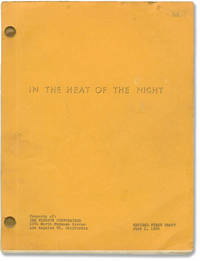
1966ref. 152454Los Angeles: The Mirisch Corporation 1966. Revised First Draft script for the 1967 film. Laid in is a Call Sheet from the production dated Tuesday November 29 1966. Based on John Ball's 1965 novel. An African American police detective from Philadelphia is recruited to help solve a murder in a small bigoted Mississippi town. Winner of five Academy Awards including Best Picture and Best Actor for Rod Steiger nominated for two others. After the success of the film version the characters were developed further for a police procedural television series in 1988 developed by James Lee Barrett and starring Carroll O'Connor and Howard Rollins which aired on NBC then CBS from 1988 to 1995. Set in the fictional town of Sparta Mississippi and shot largely on location in Illinois. Poitier insisted the movie be filmed in the North because of a 1964 incident in Mississippi in which he and Harry Belafonte had been run off the road and almost killed by Klansmen while in the state to support the SNCC Student Non-Violent Coordinating Committee. Goldenrod titled wrappers noted as REVISED FIRST DRAFT on the front wrapper rubber-stamped copy No. 84 dated July 1 1966. Title page present dated July 1 1966 noted as REVISED FIRST DRAFT with credits for screenwriter Stirliing Silliphant. 134 leaves with last page of text numbered 140. Mimeograph duplication rectos only with blue pink and white revision pages throughout dated variously between 7/27/66 and 8/10/66. Pages with damp stain on top right of last several pages else Near Fine wrapper Very Good plus bound with two gold brads. Call Sheet 8.5 x 14 inches folded horizontally. Near Fine National Film Registry. Criterion Collection 959. Penzler 101 Greatest Films of Mystery and Suspense. The Mirisch Corporation unknown books
1967ref. 158495Beverly Hills CA: United Artists 1967. Vintage reference photograph from the 1967 film. United Artists stamp on the verso. Based on John Ball's 1965 novel. An African American police detective from Philadelphia is recruited to help solve a murder in a small bigoted Mississippi town. The film dealt skillfully with the topic of race relations in the South during the Civil Rights movement and included a controversial scene in which a white actor Larry Gates slaps Poitier in the face at which point Poitier slaps him right back. It was said you could determine the racial makeup of a theater by their verbal reaction to the scene: cheers for a predominantly Black audience or whispers for a predominantly white one. Winner of five Academy Awards including Best Picture and nominated for two others. Though set in the fictional town of Sparta Mississippi Poitier refused to travel below the Mason-Dixon Line so the film was shot largely in Illinois. 10 x 8 inches. Near Fine. National Film Registry. Penzler 101. United Artists unknown books
1967ref. 163763Beverly Hills CA: United Artists 1967. Collection including four vintage slides and four vintage color transparencies from the 1967 film. Based on John Ball's 1965 novel. An African American police detective from Philadelphia is recruited to help solve a murder in a small bigoted Mississippi town. The film dealt skillfully with the topic of race relations in the South during the Civil Rights movement and included a controversial scene in which a white actor Larry Gates slaps Poitier in the face at which point Poitier slaps him right back. It was said you could determine the racial makeup of a theater by their verbal reaction to the scene: cheers for a predominantly Black audience or whispers for a predominantly white one. Winner of five Academy Awards including Best Picture and nominated for two others. Though set in the fictional town of Sparta Mississippi Poitier refused to travel below the Mason-Dixon Line so the film was shot largely in Illinois. Transparencies 4 x 5 inches slides 2 x 2 inches. Near Fine. National Film Registry. Penzler 101. United Artists unknown books
1966ref. 152454Los Angeles: The Mirisch Corporation 1966. Revised First Draft script for the 1967 film. Laid in is a Call Sheet from the production dated Tuesday November 29 1966. Based on John Ball's 1965 novel. An African American police detective from Philadelphia is recruited to help solve a murder in a small bigoted Mississippi town. Winner of five Academy Awards including Best Picture and Best Actor for Rod Steiger nominated for two others. After the success of the film version the characters were developed further for a police procedural television series in 1988 developed by James Lee Barrett and starring Carroll O'Connor and Howard Rollins which aired on NBC then CBS from 1988 to 1995. Set in the fictional town of Sparta Mississippi and shot largely on location in Illinois. Poitier insisted the movie be filmed in the North because of a 1964 incident in Mississippi in which he and Harry Belafonte had been run off the road and almost killed by Klansmen while in the state to support the SNCC Student Non-Violent Coordinating Committee. Goldenrod titled wrappers noted as REVISED FIRST DRAFT on the front wrapper rubber-stamped copy No. 84 dated July 1 1966. Title page present dated July 1 1966 noted as REVISED FIRST DRAFT with credits for screenwriter Stirliing Silliphant. 134 leaves with last page of text numbered 140. Mimeograph duplication rectos only with blue pink and white revision pages throughout dated variously between 7/27/66 and 8/10/66. Pages with damp stain on top right of last several pages else Near Fine wrapper Very Good plus bound with two gold brads. Call Sheet 8.5 x 14 inches folded horizontally. Near Fine National Film Registry. Criterion Collection 959. Penzler 101 Greatest Films of Mystery and Suspense. The Mirisch Corporation unknown
1967ref. 163763Beverly Hills CA: United Artists 1967. Collection including four vintage slides and four vintage color transparencies from the 1967 film. Based on John Ball's 1965 novel. An African American police detective from Philadelphia is recruited to help solve a murder in a small bigoted Mississippi town. The film dealt skillfully with the topic of race relations in the South during the Civil Rights movement and included a controversial scene in which a white actor Larry Gates slaps Poitier in the face at which point Poitier slaps him right back. It was said you could determine the racial makeup of a theater by their verbal reaction to the scene: cheers for a predominantly Black audience or whispers for a predominantly white one. Winner of five Academy Awards including Best Picture and nominated for two others. Though set in the fictional town of Sparta Mississippi Poitier refused to travel below the Mason-Dixon Line so the film was shot largely in Illinois. Transparencies 4 x 5 inches slides 2 x 2 inches. Near Fine. National Film Registry. Penzler 101. United Artists unknown
1967ref. 149503Beverly Hills CA: United Artists 1967. Three vintage borderless black-and-white photographs taken on the set of the 1967 film: 1 director Norman Jewison sitting alone 2 Jewison directing Rod Stieger and 3 Jewison directing a key early scene featuring actors Arthur Malet Sidney Poitier and Rod Steiger. With manuscript ink annotations regarding layout on the verso. From the collection of film historian and author Joel Finler. Based on John Ball's 1965 novel. An African American police detective from Philadelphia is recruited to help solve a murder in a small bigoted Mississippi town. The film dealt skillfully with the topic of race relations in the South during the Civil Rights movement and included a controversial scene in which a white actor Larry Gates slaps Poitier in the face at which point Poitier slaps him right back. It was said you could determine the racial makeup of a theater by their verbal reaction to the scene: cheers for a predominantly Black audience or whispers for a predominantly white one. Winner of five Academy Awards including Best Picture and nominated for two others. Though set in the fictional town of Sparta Mississippi Poitier refused to travel below the Mason-Dixon Line so the film was shot largely in Illinois. One photograph 7.5 x 10 inches one photograph 10 x 8 inches. Near Fine. National Film Registry. Penzler 101. United Artists unknown
1963ref. 159624N.p.: N.p. 1963. Two vintage borderless reference photographs taken on the set of the 1963 film including one showing actress Jean Seberg with director Robert Parrish. A young American art student must choose between her monied life in the US and her newfound love in Paris when her father arrives to bring her home. Set and shot on location in Paris. One photograph 9.5 x 8.25 inches one photograph 9.5 x 7 inches. Near Fine. N.p. unknown books
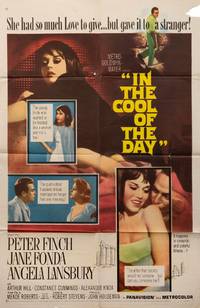
1963ref. 149289Beverly Hills CA: Metro-Goldwyn-Mayer MGM 1963. Vintage one sheet poster for the 1962 film. Based on the 1960 novel by Susan Ertz. Christine Jane Fonda beset with health problems is feeling smothered in her marriage with Sam Arthur Hill and on a trip to Greece ends up falls hopelessly in love with Sam's friend Murray Peter Finch who is himself in an emotionally abusive marriage to Sybil Angela Lansbury. Set in and shot on location in London and Greece. 27 x 41 inches. Folded as issued. Good to Very Good chip at the upper right white margin rough tear to upper center resulting in some loss and some minor chipping and closed tears to the extremities. See image. Metro-Goldwyn-Mayer [MGM] unknown books
1962ref. 159693Various cities: Stafford 1962. Vintage British quad poster for the 1962 American film. Based on Jules Verne's 1868 novel "Captain Grant's Children" about a search for a missing shipwrecked captain. The third of six Disney films to star child actress Hayley Mills. 40 x 30 inches folded. About Fine. Stafford unknown books
1962ref. 159693Various cities: Stafford 1962. Vintage British quad poster for the 1962 American film. Based on Jules Verne's 1868 novel "Captain Grant's Children" about a search for a missing shipwrecked captain. The third of six Disney films to star child actress Hayley Mills. 40 x 30 inches folded. About Fine. Stafford unknown
1973ref. 161102Paris: Pierson Production 1973. Three vintage borderless color oversize reference photographs and a pressbook from the 1973 French adult film. Each photograph with a censorship blindstamp at the upper right corner. After an unsuccessful attempt to sleep with a boy her own age an eighteen-year-old goes on a odyssey of sexual exploration culminating in a love triangle between a wealthy older woman the teenager and a renowned male writer. Photographs 12 x 9.25 inches. Near Fine. Pressbook 9.25 x 13 inches. Folded three times as issued. Very Good moderately worn at the corners. Bier 504. Pierson Production unknown books
1973ref. 161102Paris: Pierson Production 1973. Three vintage borderless color oversize reference photographs and a pressbook from the 1973 French adult film. Each photograph with a censorship blindstamp at the upper right corner. After an unsuccessful attempt to sleep with a boy her own age an eighteen-year-old goes on a odyssey of sexual exploration culminating in a love triangle between a wealthy older woman the teenager and a renowned male writer. Photographs 12 x 9.25 inches. Near Fine. Pressbook 9.25 x 13 inches. Folded three times as issued. Very Good moderately worn at the corners. Bier 504. Pierson Production unknown
1959ref. 132496London: Twentieth Century-Fox 1959. Eight vintage full-color British front-of-house cards from the UK release of the 1958 US film. Based on Anton Myrer's 1957 novel "The Big War" about three Marines on shore leave in San Francisco each faced with their own relationships and heartaches. Both Sheree North and Franc Nuyen lend good performances. 8 x 10 inches. Light rubbing and creasing overall else Near Fine. Twentieth Century-Fox unknown books
1924ref. 151017N.p.: N.p. 1924. Vintage publicity photograph of actress Virginia Valli from the 1924 film. With a mimeo snipe on the verso along with the stamp of King Features Syndicate. Based on the 1920 novel "Belonging" by Olive Wadsley. Considered a lost film. 8 x 10 inches. Very Good plus overall. N.p. unknown books
1997ref. 167773N.p.: N.p. 1997. Revised Fourth Draft script for the 1999 film. Copy belonging to an unidentified crew member with their annotations on three pages. Based on Bari Wood's 1993 novel "Doll's Eyes" about a housewife who discovers she has a clairvoyant connection to a serial killer. Shot on location in Amherst Easthampton Florence Huntington Northampton Northfield Southampton Williamsburg and Whately Massachusetts in Fontana Dam North Carolina in New Castle New Hampshire. Self wrappers. Title page present dated 8/19/1997 noted as 4th DRAFT REWRITE with credits for director Neil Jordan and screenwriter Bruce Robinson. 112 leaves with last page of text numbered 111. Xerographic duplication on pink stock rectos only. Pages Near Fine bound with three gold brads. N.p. unknown books
1997ref. 167773N.p.: N.p. 1997. Revised Fourth Draft script for the 1999 film. Copy belonging to an unidentified crew member with their annotations on three pages. Based on Bari Wood's 1993 novel "Doll's Eyes" about a housewife who discovers she has a clairvoyant connection to a serial killer. Shot on location in Amherst Easthampton Florence Huntington Northampton Northfield Southampton Williamsburg and Whately Massachusetts in Fontana Dam North Carolina in New Castle New Hampshire. Self wrappers. Title page present dated 8/19/1997 noted as 4th DRAFT REWRITE with credits for director Neil Jordan and screenwriter Bruce Robinson. 112 leaves with last page of text numbered 111. Xerographic duplication on pink stock rectos only. Pages Near Fine bound with three gold brads. N.p. unknown
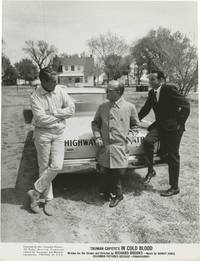
1967ref. 170505Culver City CA: Columbia Pictures 1967. Vintage borderless studio still photograph from the 1967 film showing writer Truman Capote talking with director Richard Brooks and cinematographer Conrad Hall on location in Kansas. Brooks' unflinching and unsentimental documentary style made for a visualization that matched the power of Capote's most famous book and remains one of the great meditations on violence in America. Nominated for four Academy Awards. 7.5 x 10 inches. About Fine. National Film Registry. Ebert II. Criterion Collection 781. Penzler 101. Spicer US. Columbia Pictures unknown books
1967ref. 146012Culver City CA: Columbia Pictures 1967. Vintage borderless photograph of Robert Blake and Scott Wilson from the 1967 film. Crop annotations in manuscript pencil and the stamp of photographer Michel Ciment stamp on the verso. Richard Brooks' unflinching and unsentimental documentary style made for a visualization that matched the power of Capote's most famous book and remains one of the great meditations on violence in America. Nominated for four Academy Awards. 10 x 8 inches. Very Good plus some light creasing and edgewear. National Film Registry. Ebert II. Criterion Collection 781. Penzler 101. Spicer US. Columbia Pictures unknown books
1967ref. 144377Culver City CA: Columbia Pictures 1967. Vintage photograph of Mary Linda Rapelye on the set of the 1967 film. Manuscript annotations in pencil and press agency stamps on the verso. Richard Brooks' unflinching and unsentimental documentary style made for a visualization that matched the power of Capote's most famous book and remains one of the great meditations on violence in America. 10 x 8 inches. Near Fine. National Film Registry. Criterion Collection 781. Ebert II. Penzler 101. Columbia Pictures unknown books
1967ref. 150244N.p.: N.p. 1967. Five vintage borderless black and white photographs from the set of the 1967 film. With two printed mimeo snipes on the verso along with the stamp of still photographer James Johnson. From the archive of the PIX Agency a photo house that acted as an intermediary between emigre photographers as well as those still living in Europe and the American magazine and newspaper market between 1935-1969. Brooks' unflinching and unsentimental documentary style made for a visualization that matched the power of Truman Capote's most famous book and remains one of the great meditations on violence in America. Nominated for four Academy Awards. 10 x 8 inches. Most Very Good plus with light creasing and edgewear one Very Good with a tear to the top right corner repaired with cello tape on the verso. National Film Registry. Ebert II. Criterion Collection 781. Penzler 101. Spicer US. N.p. unknown books
1967ref. 146012Culver City CA: Columbia Pictures 1967. Vintage borderless photograph of Robert Blake and Scott Wilson from the 1967 film. Crop annotations in manuscript pencil and the stamp of photographer Michel Ciment stamp on the verso. Richard Brooks' unflinching and unsentimental documentary style made for a visualization that matched the power of Capote's most famous book and remains one of the great meditations on violence in America. Nominated for four Academy Awards. 10 x 8 inches. Very Good plus some light creasing and edgewear. National Film Registry. Ebert II. Criterion Collection 781. Penzler 101. Spicer US. Columbia Pictures unknown
1967ref. 144377Culver City CA: Columbia Pictures 1967. Vintage photograph of Mary Linda Rapelye on the set of the 1967 film. Manuscript annotations in pencil and press agency stamps on the verso. Richard Brooks' unflinching and unsentimental documentary style made for a visualization that matched the power of Capote's most famous book and remains one of the great meditations on violence in America. 10 x 8 inches. Near Fine. National Film Registry. Criterion Collection 781. Ebert II. Penzler 101. Columbia Pictures unknown
1967ref. 170505Culver City CA: Columbia Pictures 1967. Vintage borderless studio still photograph from the 1967 film showing writer Truman Capote talking with director Richard Brooks and cinematographer Conrad Hall on location in Kansas. Brooks' unflinching and unsentimental documentary style made for a visualization that matched the power of Capote's most famous book and remains one of the great meditations on violence in America. Nominated for four Academy Awards. 7.5 x 10 inches. About Fine. National Film Registry. Ebert II. Criterion Collection 781. Penzler 101. Spicer US. Columbia Pictures unknown
1987ref. 314274CENTURY CITY: SPYROS SKOURAS C/O HERB TOBIAS & ASSOCIATES. 1987. Bradbound sheets. SCRIPT attributed only to Kenneth Bowser though James Purdy was co-credited with working on the script when produced. About fine in bradbound black card covers. Title inked on spine. Later generation mechanically produced sheets. Likely an office copy. Well received little seen film adaptation of Purdy's novel. . SPYROS SKOURAS C/O HERB TOBIAS & ASSOCIATES. unknown
ref. 015986Sacha Guitry (1885-1957), écrivain, réalisateur, scénariste, metteur en scène. Manuscrit en partie autographe, [ca.juin 1935], environ 28f. in-4 [dont 11f. au moins sont autographes]. Important ensemble de notes sur les enfants, listant de nombreux petits enfants avec leur nom, leur ville et parfois leur âge et surtout des détails les concernant : « sucent leurs doigts, paresseux, désobéissants, taquins, gourmands, pleurnicheurs . ». Ces notes sont très largement d'une autre main. A cela sont joints différents textes de Guitry dont un petit discours (2p 1/2, complet), un petit discours sur l'importance du calcul (2p, incomplet de la fin), un petit discours sur les enfants qui sucent leurs doigts (2p 1/2, a priori complet) et diverses notes. Tout cela étant autographe. Sur un feuillet non autographe, on remarquera la note autographe de Guitry : « Il ne faut pas être gourmands / Il faut être gourmets ». On remarquera, parmi les pleurnicheurs, un « Michel Houelbecq » (et non Houellebecq), petit enfant de 6ans originaire du Calvados. En plus de ces 28 feuillets (parfois écrits - partiellement - au verso) se trouvent des pages coupées, des pages pliées ayant dû servir de chemises, etc. Nous ne savons quel fut l'usage de ces textes, si cela a donné lieu à une intervention ou à une publication. Ils furent bien écrits en 1935 car, grâce à certains noms d'enfant avec les âges, on peut affirmer que c'est écrit entre mars et septembre 1935. On remarquera que c'est en décembre 1935 que Guitry fit une présentation de son film sur Pasteur aux écoles de Vincennes. C'est peut-être la période où il s'intéressa le plus aux enfants ? Très bel et important ensemble. [259]