1997réf. 15625Latomus. Near Fine. Softcover. Pages unopened. Very minor shelfwear. Else fine.; Collection Latomus Volume 232; 281 pages . 1997. 2870311729 . Latomus paperback
1946100 pages. Features: Attractive one-page color ad for Dodge Trucks features bright yellow moving van; Seattle's worst earthquake in history; Mrs. Helen Douglas Mankin wins Atlanta's Negro vote; Color ad for General Tire features well-dressed lady with lots of luggage being helped by black porter; Classy color ad for the Farnsworth Television and radio Corporation; Two-page poem commemorates the first anniversary of the Iwo Jima battle; Canadian exposure of spy ring turns doubting eyes on Russia - major article with photo; Nice one-page ad for the Banff Springs Hotel; Attractive color ad for Ford cars features ski scene; Young UNO closes first session with hope, suspicion, and a veto; Photos of Francisco Franco; Field Marshal von Paulus; Sir Sholto Douglas; Photo of Mohammed Ali Jinnah; The bravest padre - Maj. John Weir Foote, Presbyterian chaplain of the Royal Hamilton Light Infantry is awarded the VC; Brief obituaries for Dr. William Allan Neilson, Cornelius Johnson and Adolph Lorenz; Army posters to help soldiers adapt to civilian life; Tuberculosis germ killer; Photo and article of artist Alberto Vargas; Nice color-photo ad for the Boeing Stratocruiser; American Cyanamid color ad shows smiling coal delivery man iun bomber jacket; Dr. Henry A. Jones experiments with onions; Uneasy Swedes wonder what future holds; Photos of the lightweight Bobbi car; Aerial photo of downtown Chicago promotes the area for industrial development; Hotel New Yorker ad features photo of John H. Sienold, Banquet Manager; Photos of American Cardinals; The Secret of "Huff-Duff" (radio direction finder) can be told - as part of ITT ad; Picasso of the Camera - Edward Weston; ad for Dr. Grabow pipes; and more. Covers holding by one staple. Average wear and soiling. A worthy vintage copy. Book
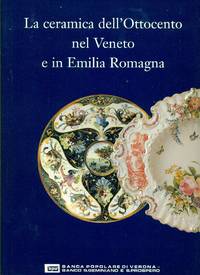
1998réf. 110734Verona - Modena: Artioli 1998. Rilegato tela sovracoperta custodia cloth dust jacket slip-case. Perfetto Mint. Dal sommario: Raffaella Ausenda Presentazione / La ceramica artistica veneta alle Esposizioni 1851-1900 / Nove - Nadir Stringa Il piatto popolare veneto dell'Ottocento / La ceramica per l'architettura / Bassano del Grappa / Monticello Conte Otto / Treviso / Venezia - Dominique Fuchs Ceramiche venete attorno al 1900: ragioni e operatori - Michelangelo Munarini Este e altri centri - Gian Carlo Bojani Presentazione / Romagna fra laterizi stovigliere ceramiche rustiche e ceramiche d'arte / Faenza: varietà d'una produzione ceramica ed egemonia nell'arte della pittura su maiolica - Maria Grazia Morganti Panorama dell'Emilia / Sassuolo / La manifattura Aldrovandi / La fabbrica Minghetti / Imola. In calce a ciascuna sezione Veneto ed Emilia: Le marche Elenco delle illustrazioni Indice dei nomi Bibliografia. Volume corredato di numerosissime illustrazioni riproduzioni fotrografie inbianco e nero e colore. Volume pubblicato a cura della Banca Popolare di Verona e Banco S. Geminiano e S. Prospero. 4to. pp. 307. Perfetto Mint. Prima edizione First Edition - Edizione f.c. Artioli, hardcover
1960In-8° gr. pp. Xv-562, bross. edit. con tracce d'uso.
réf. 3368109758.Ghardcover. Good. Access codes and supplements are not guaranteed with used items. May be an ex-library book. hardcover
1737réf. 43574Ingolstadt, Johann Andreas de la Haye (gedruckt von Maria Magdalena Riedlin [Riedl] in München), 1737. 8°. 32 Bll., 362 S., 18 Bll.; 7 Bll., 318 S., 23 Bll.; 6 Bll., 283 (1) S., 20 Bll.; 7 Bll., 432 S., 20 Bll.; 7 Bll., 413 (1) S., 25 Bll., Ldr.-Bde. d. Zt. a. 5 Bünden m. reicher Rückenverg. u. je 2 goldgepr. Rückenschildern.
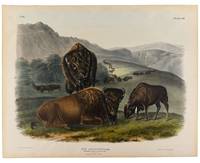
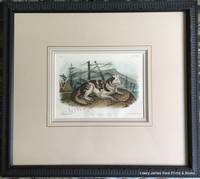
1849réf. 42915New York: John James Audubon 1849. First edition hand-colored lithograph by John T. Bowen of Philadelphia after John James Audubon. An iconic image of Western Americana from the folio first edition of Audubon's "Quadrupeds of North America" the greatest work of natural history illustration produced in America during the nineteenth century: "As long as our civilization lasts America will be in debt to this genius." Peterson This fine plate is from the folio edition of Audubon's The Viviparous Quadrupeds of North America which was produced entirely in the United States. The work was Audubon's last and by 1846 he had to hand over the drawing of the final fifty plates to his sons John Woodhouse and Victor Audubon. The production of the Quadrupeds was begun by Audubon and his sons at about the same time as the commercially-successful octavo edition of The Birds of America. Unlike the double-elephant folio the Quadrupeds was produced entirely in the United States. Reese notes that "By 1843 the Audubon family business was a well-oiled machine involving John James his two sons and various in-laws and friends. The octavo Birds was still in production when Bowen began to produce the plates for the folio edition of the Quadrupeds the largest successful color-plate book project of 19th-century America. It took the family five years to publish 150 plates in thirty parts. The massive project was a commercial success thanks to the close management of Victor. There were about three hundred subscribers." Reese Like Birds of America the Viviparous Quadrupeds was intended to be a comprehensive visual catalog of North America animalia with Audubon's focus here shifting from birds to four-legged land mammals. Accompanying each image was correlating didactic text written primarily by Bachman that informed the reader of the animal's habits diet habitat and gestational period. Totaling 150 prints the project was rushed to completion as Audubon's health declined. Emerging in the shadow of its acclaimed predecessor Birds of America the Viviparous Quadrupeds has not received the adequate attention nor recognition it so richly deserves. This image is of a family of American buffalo the most iconic animal indigenous to North America whose presence was integral for Native American life and whose near-extinction spurred on the conservation movement in the US. The buffalo is today the state animal of Kansas Oklahoma and Wyoming. Bennett p.5. Peterson Birds of America passim. Reese Stamped with a National Character 36. Sabin 2367. Wood p.209. John James Audubon unknown books
1849réf. 42915New York: John James Audubon 1849. First edition hand-colored lithograph by John T. Bowen of Philadelphia after John James Audubon. An iconic image of Western Americana from the folio first edition of Audubon's "Quadrupeds of North America" the greatest work of natural history illustration produced in America during the nineteenth century: "As long as our civilization lasts America will be in debt to this genius." Peterson This fine plate is from the folio edition of Audubon's The Viviparous Quadrupeds of North America which was produced entirely in the United States. The work was Audubon's last and by 1846 he had to hand over the drawing of the final fifty plates to his sons John Woodhouse and Victor Audubon. The production of the Quadrupeds was begun by Audubon and his sons at about the same time as the commercially-successful octavo edition of The Birds of America. Unlike the double-elephant folio the Quadrupeds was produced entirely in the United States. Reese notes that "By 1843 the Audubon family business was a well-oiled machine involving John James his two sons and various in-laws and friends. The octavo Birds was still in production when Bowen began to produce the plates for the folio edition of the Quadrupeds the largest successful color-plate book project of 19th-century America. It took the family five years to publish 150 plates in thirty parts. The massive project was a commercial success thanks to the close management of Victor. There were about three hundred subscribers." Reese Like Birds of America the Viviparous Quadrupeds was intended to be a comprehensive visual catalog of North America animalia with Audubon's focus here shifting from birds to four-legged land mammals. Accompanying each image was correlating didactic text written primarily by Bachman that informed the reader of the animal's habits diet habitat and gestational period. Totaling 150 prints the project was rushed to completion as Audubon's health declined. Emerging in the shadow of its acclaimed predecessor Birds of America the Viviparous Quadrupeds has not received the adequate attention nor recognition it so richly deserves. This image is of a family of American buffalo the most iconic animal indigenous to North America whose presence was integral for Native American life and whose near-extinction spurred on the conservation movement in the US. The buffalo is today the state animal of Kansas Oklahoma and Wyoming. Bennett p.5. Peterson Birds of America passim. Reese Stamped with a National Character 36. Sabin 2367. Wood p.209. John James Audubon unknown
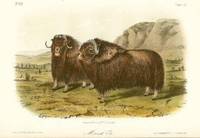
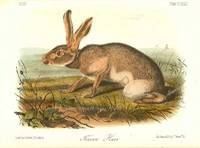
1849réf. 4369New York:: V.G. Audubon 1849-54. First Royal Octavo Edition. Fine with original hand-coloring. A fine original hand-colored lithograph on paper. Royal Octavo 10.5 x 7 inches. Drawn from nature by John Audubon drawn on stone by William E. Hitchcock and lithographed printed and colored by JT Bowen Philadelphia. Accompanied by the original text written by the Reverend John Bachman DD. The Quadrupeds of North America; portrayals of 155 four-legged mammals native to North America depicted in their natural environment was a collaborative effort between the premier nineteenth century American Ornithologist Naturalist Artist and Frontiersman John James Audubon 1785-1851 his sons John Woodhouse Audubon and Victor Gifford Audubon and the naturalist Reverend John Bachman. The four men were unified in their desire to document and portray what they recognized as a dwindling resource; America's native animals amidst the natural beauty of the untouched American landscape. Their collective wisdom predicted the impending effects of Manifest Destiny- man's encroachment on the wilderness and natural landscape of North America- and as such was the impetus for the journey. To document and then portray America's native animals in the splendor and majesty of the uninhabited North American landscape the team traveled westward from Audubon's home in Mill Grove Pennsylvania up the Missouri River and through territory just previously explored by Lewis and Clark; from the Canadian border of the Northern Russian Territories- now Alaska- then southward to Mexico. Arduous and monumental the journey is recognized in the pathos of the compositions. However the true legacy of the work rests on John James Audubon's prolific vision and mastery of his subject and medium. Heretofore unseen The Quadrupeds of North American is a wildlife classic: an essential and timeless contribution to both Early American culture and the Art of American Wildlife Painting. The American Review a Whig journal heralded the national origin of the Quadrupeds: "We have at last have a Great National Work; originated and completed among us- authors artists and artisans of which are our own citizens the Bible of Nature!" John James Audubon in the West. New York: Henry H. Abrams 2000. Sabin 2368. Wood 208. Matted in Ivory Rag Board 12 x 16 inches. V.G. Audubon, unknown
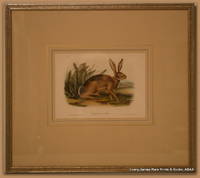
1849réf. 6425New York:: V.G. Audubon 1849-54. First Royal Octavo Edition. Fine with original hand-coloring. A fine original hand-colored lithograph on paper. Royal Octavo 10.5 x 7 inches. Drawn from nature by John Audubon drawn on stone by William E. Hitchcock and lithographed printed and colored by JT Bowen Philadelphia. Accompanied by the original text written by the Reverend John Bachman DD. The Quadrupeds of North America; portrayals of 155 four-legged mammals native to North America depicted in their natural environment was a collaborative effort between the premier nineteenth century American Ornithologist Naturalist Artist and Frontiersman John James Audubon 1785-1851 his sons John Woodhouse Audubon and Victor Gifford Audubon and the naturalist Reverend John Bachman. The four men were unified in their desire to document and portray what they recognized as a dwindling resource; America's native animals amidst the natural beauty of the untouched American landscape. Their collective wisdom predicted the impending effects of Manifest Destiny- man's encroachment on the wilderness and natural landscape of North America- and as such was the impetus for the journey. To document and then portray America's native animals in the splendor and majesty of the uninhabited North American landscape the team traveled westward from Audubon's home in Mill Grove Pennsylvania up the Missouri River and through territory just previously explored by Lewis and Clark; from the Canadian border of the Northern Russian Territories- now Alaska- then southward to Mexico. Arduous and monumental the journey is recognized in the pathos of the compositions. However the true legacy of the work rests on John James Audubon's prolific vision and mastery of his subject and medium. Heretofore unseen The Quadrupeds of North American is a wildlife classic: an essential and timeless contribution to both Early American culture and the Art of American Wildlife Painting. The American Review a Whig journal heralded the national origin of the Quadrupeds: "We have at last have a Great National Work; originated and completed among us- authors artists and artisans of which are our own citizens the Bible of Nature!" John James Audubon in the West. New York: Henry H. Abrams 2000. Sabin 2368. Wood 208. Archivally matted & framed V.G. Audubon, unknown
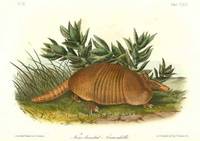
1849réf. 7317New York:: V.G. Audubon 1849-54. First Royal Octavo Edition. Fine with original hand-coloring. A fine original hand-colored lithograph on paper. Royal Octavo 10.5 x 7 inches. Drawn from nature by John Audubon drawn on stone by William E. Hitchcock and lithographed printed and colored by JT Bowen Philadelphia. Accompanied by the original text written by the Reverend John Bachman DD. The Quadrupeds of North America; portrayals of 155 four-legged mammals native to North America depicted in their natural environment was a collaborative effort between the premier nineteenth century American Ornithologist Naturalist Artist and Frontiersman John James Audubon 1785-1851 his sons John Woodhouse Audubon and Victor Gifford Audubon and the naturalist Reverend John Bachman. The four men were unified in their desire to document and portray what they recognized as a dwindling resource; America's native animals amidst the natural beauty of the untouched American landscape. Their collective wisdom predicted the impending effects of Manifest Destiny- man's encroachment on the wilderness and natural landscape of North America- and as such was the impetus for the journey. To document and then portray America's native animals in the splendor and majesty of the uninhabited North American landscape the team traveled westward from Audubon's home in Mill Grove Pennsylvania up the Missouri River and through territory just previously explored by Lewis and Clark; from the Canadian border of the Northern Russian Territories- now Alaska- then southward to Mexico. Arduous and monumental the journey is recognized in the pathos of the compositions. However the true legacy of the work rests on John James Audubon's prolific vision and mastery of his subject and medium. Heretofore unseen The Quadrupeds of North American is a wildlife classic: an essential and timeless contribution to both Early American culture and the Art of American Wildlife Painting. The American Review a Whig journal heralded the national origin of the Quadrupeds: "We have at last have a Great National Work; originated and completed among us- authors artists and artisans of which are our own citizens the Bible of Nature!" John James Audubon in the West. New York: Henry H. Abrams 2000. Sabin 2368. Wood 208. Archivally matted & framed V.G. Audubon, unknown
1849réf. 4387New York:: V.G. Audubon 1849-54. First Royal Octavo Edition. Fine with original hand-coloring. A fine original hand-colored lithograph on paper. Royal Octavo 10.5 x 7 inches. Drawn from nature by John Audubon drawn on stone by William E. Hitchcock and lithographed printed and colored by JT Bowen Philadelphia. Accompanied by the original text written by the Reverend John Bachman DD. The Quadrupeds of North America; portrayals of 155 four-legged mammals native to North America depicted in their natural environment was a collaborative effort between the premier nineteenth century American Ornithologist Naturalist Artist and Frontiersman John James Audubon 1785-1851 his sons John Woodhouse Audubon and Victor Gifford Audubon and the naturalist Reverend John Bachman. The four men were unified in their desire to document and portray what they recognized as a dwindling resource; America's native animals amidst the natural beauty of the untouched American landscape. Their collective wisdom predicted the impending effects of Manifest Destiny- man's encroachment on the wilderness and natural landscape of North America- and as such was the impetus for the journey. To document and then portray America's native animals in the splendor and majesty of the uninhabited North American landscape the team traveled westward from Audubon's home in Mill Grove Pennsylvania up the Missouri River and through territory just previously explored by Lewis and Clark; from the Canadian border of the Northern Russian Territories- now Alaska- then southward to Mexico. Arduous and monumental the journey is recognized in the pathos of the compositions. However the true legacy of the work rests on John James Audubon's prolific vision and mastery of his subject and medium. Heretofore unseen The Quadrupeds of North American is a wildlife classic: an essential and timeless contribution to both Early American culture and the Art of American Wildlife Painting. The American Review a Whig journal heralded the national origin of the Quadrupeds: "We have at last have a Great National Work; originated and completed among us- authors artists and artisans of which are our own citizens the Bible of Nature!" John James Audubon in the West. New York: Henry H. Abrams 2000. Sabin 2368. Wood 208. Matted in Ivory Rag Board 12 x 16 inches. V.G. Audubon, unknown
1849réf. 4396New York:: V.G. Audubon 1849-54. First Royal Octavo Edition. Fine with original hand-coloring. A fine original hand-colored lithograph on paper. Royal Octavo 10.5 x 7 inches. Drawn from nature by John Audubon drawn on stone by William E. Hitchcock and lithographed printed and colored by JT Bowen Philadelphia. Accompanied by the original text written by the Reverend John Bachman DD. The Quadrupeds of North America; portrayals of 155 four-legged mammals native to North America depicted in their natural environment was a collaborative effort between the premier nineteenth century American Ornithologist Naturalist Artist and Frontiersman John James Audubon 1785-1851 his sons John Woodhouse Audubon and Victor Gifford Audubon and the naturalist Reverend John Bachman. The four men were unified in their desire to document and portray what they recognized as a dwindling resource; America's native animals amidst the natural beauty of the untouched American landscape. Their collective wisdom predicted the impending effects of Manifest Destiny- man's encroachment on the wilderness and natural landscape of North America- and as such was the impetus for the journey. To document and then portray America's native animals in the splendor and majesty of the uninhabited North American landscape the team traveled westward from Audubon's home in Mill Grove Pennsylvania up the Missouri River and through territory just previously explored by Lewis and Clark; from the Canadian border of the Northern Russian Territories- now Alaska- then southward to Mexico. Arduous and monumental the journey is recognized in the pathos of the compositions. However the true legacy of the work rests on John James Audubon's prolific vision and mastery of his subject and medium. Heretofore unseen The Quadrupeds of North American is a wildlife classic: an essential and timeless contribution to both Early American culture and the Art of American Wildlife Painting. The American Review a Whig journal heralded the national origin of the Quadrupeds: "We have at last have a Great National Work; originated and completed among us- authors artists and artisans of which are our own citizens the Bible of Nature!" John James Audubon in the West. New York: Henry H. Abrams 2000. Sabin 2368. Wood 208. Matted in Ivory Rag Board 12 x 16 inches. V.G. Audubon, unknown
1826In-8 p., mz. pelle coeva (lievi abras.), fregi e tit. oro al dorso, pp. XVI,562, con 1 tav. inc. f.t. Manca il ritratto dell’A. Fioriture e/o arrossature intercalate nel t. Discreto esemplare.
1949réf. 7028Auxerre imprimerie moderne 1949 Auxerre 1949 Plaquette in12, brochée, couverture imprimée, 24pp.
1949In 16 (cm 13,5 x 18,5), pp. 345 + (3). Cartonatura editoriale con sovraccoperta. La sovraccoperta presenta mancanze in particolare al piatto anteriore. Interessante manuale con nozioni per la cura del viso e ricette per la preparazione di creme, maschere, unguenti.
réf. 19973Milan, 1998 octavo 550 p., 173 planches N/B, broché. 21 x 30
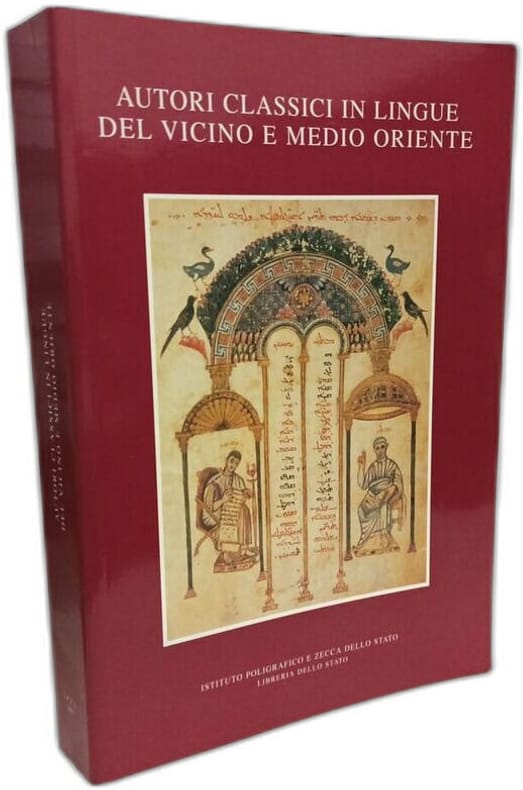
2001réf. 100144351Ist.Poligrafico e Zecca dello Stato- Archivi di Stato 2001 in8. 2001. Broché.
réf. 0244641285.Gpaperback. Good. Access codes and supplements are not guaranteed with used items. May be an ex-library book. paperback
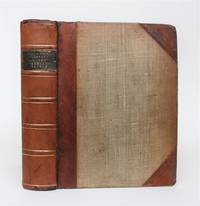
1868réf. 006787London: John Russell Smith 1868. 1st Edition. Hardcover. Very Good/No Jacket. 6.25" x 8.25" Small 4to. Half calf binding green spine label with gilt titling tan buckram boards. liv 616 pp. All edges yellow. Wear to corners rubbing to joints and spine ends. Some soiling and light staining to buckram. Soiled to top edge of text block. Staining and chipping to edges of front pastedown. Professional repairs to front and rear hinges. Interior is bright and clean. Constitutional Club Library bookplate to front pastedown. Subscriber list at rear. A prodigious treatment of the north-eastern British dialect of Cleveland Northumbria. John Russell Smith hardcover
1965réf. 2143427Napoli (Neapel): Libreria Scientifica Editrice 1965. XLI, (1), 196, (2) Seiten. Gr. 8° (22,5-25 cm) Orig.-Broschur. [Softcover / Paperback].
1969réf. 224399Roma: Lerici editore 1969. Hardcover. 181p. text in Italian very good first Italian edition thus in limp red cloth boards in lightly-used red cloth slipcase with white cover labels affixed front and rear. Poeti europei #28. Poetry by the Guatemalan Magic Realist novelist and ambassador to France who was awarded the Lenin and the Nobel Peace Prize. Lerici editore hardcover books
réf. 15203Avignon, Aubanel, s.d. (fin XIXème), 1 1 cahier, petite coupure sans manque. in-8 de 3 pp. ;
1931réf. 123250Milano Officine Grafiche Schor 1931. In 4° mezza tela editor. con titoli al dorso e piatti a stampa illustrati Pp. 105 3 n.n. 108 tavole in nero descritte a piede e con retro bianco pp. 8 n.n. Tutto il testo è in cornice floreale non ripetuta dai disegni di T. Vieroven. Buon esemplare hardcover
réf. 65799Année 1977 - 1er trimestre - Bulletin n° 2 - in-4 broché - revue illustrée - 36 pages