94 Ergebnisse
1532Best.-Nr. 4763Naples: per maestro Ioanne Sulsbach Giovanni Sultzbach Alemano 1532. FIRST EDITION. Hardcover. Fine. Bound in contemporary vellum a bit wrinkled small defects to spine with a contemporary Sicilian gift inscription occupying the full length of the lower cover: "Al mio padre Giacomo Battista Serabone della Compagnia del Giesu. Messina." Inscription on title scored through "Collegii Messiniensis Soc. Jesu."; 16th or 17th c. ownership inscription on title: "Custodia Caraffa" and associated ownership inscription on leaf B1 verso "Questo libro è dela Suor Custodia et Suor Ginobia Carrafe" with the subscription "Vittoria Caraffa". 19thc. book ticket on front pastedown: "Jacob Manzoni" 1816-1889 whose library was dispersed in various auctions between 1892 and 1894; 20th c. book ticket "Libreria Rappaport"Rome. Contents in overall good condition but with several gatherings browned and other minor faults: title page foxed and lightly soiled with small marginal chips and a couple of stains; several gatherings as well as the margins of a few other leaves with damp-stains to margins. With a large title page woodcut see below and unusual intricate woodcut initials. A search of KVK OCLC EDIT16 and Universal STC finds only a single copy Biblioteca nazionale Vittorio Emanuele III Naples. An extremely rare Neapolitan printing this copy once owned by nuns of a life of Saint Agnello "Aniello the Abbot" co-patron saint of Naples b. ca. 535- d. ca. 596 responsible in life and in death for numerous miraculous healings. The title page woodcut depicts the Saint towering over Naples carrying a banner protecting the city from the Lombard invasion of 581. The book is replete with accounts of miraculous healings including exorcisms performed by the saint. The book is listed in EDIT16 under the name of "Petrus Subdiaconus" 10th c. monk of Monte Cassino and sub-deacon of St. Januarius in Naples. However the text is not in fact a translation of Peter's life of Sant'Agnello "Libellus Miraculorum" but rather a new composite work by the 16th c. Augustinian Canon Giovanni da Napoli who cites several sources for the saint's vita f. 4v-5r. The title page tells us that this Vita has been translated from the Latin original which I have thus far failed to trace. The dedication -to the Neapolitan noblewoman Vincenza Montalto the content of the book and the provenance indicate the book's strong appeal for women. An early inscription see provenance note above indicates that the book was owned by the nuns suore Custodia and Ginobia Genovia Carrafa possibly daughters of the woman who penned the inscription Vittoria Caraffa. The Vita begins with the story of Sant'Agnello's conception which strongly mirrors the birth of Christ. The first chapter focuses on the experience of the Saint's mother Giovanna a barren "sterile" woman who prayed before an image of the Virgin Mary for 30 days in the hopes of conceiving a child. On the 30th day the image of the Virgin glowed and from it emanated a voice that announced to Giovanna that she would give birth to a boy. Soon thereafter women began to flock to the image of the Virgin still preserved in the author's time in the Church of Sant'Agnello in the hope of conceiving children. The Saint: Born in Naples Agnello was the scion of a prosperous family of Sicilian origin and perhaps a relation of Saint Lucy with whom he is still closely associated. Agnello spent his youth living as a hermit first in a cave and later in the church of Santa Maria Intercede now Sant'Agnello Maggiore. The story that he saved the city of Naples from the Lombards in 581 while widely-known is not found in Pietro's life of the saint. He died at the age of 61 while a priest in the church of Santo Gaudioso which had been founded by African clergy fleeing the Vandals. Agnello's jawbone is preserved as a relic in a 17th c. reliquary in the Naples cathedral. His body is buried in Sant'Agnello Maggiore in Caponapoli. The saint's cult is still active. His feast day is December 14th. per maestro Ioanne Sulsbach [Giovanni Sultzbach] Alemano hardcover books
1532Best.-Nr. 4763Naples: per maestro Ioanne Sulsbach Giovanni Sultzbach Alemano 1532. FIRST EDITION. Hardcover. Fine. Bound in contemporary vellum a bit wrinkled small defects to spine with a contemporary Sicilian gift inscription occupying the full length of the lower cover: "Al mio padre Giacomo Battista Serabone della Compagnia del Giesu. Messina." Inscription on title scored through "Collegii Messiniensis Soc. Jesu."; 16th or 17th c. ownership inscription on title: "Custodia Caraffa" and associated ownership inscription on leaf B1 verso "Questo libro è dela Suor Custodia et Suor Ginobia Carrafe" with the subscription "Vittoria Caraffa". 19thc. book ticket on front pastedown: "Jacob Manzoni" 1816-1889 whose library was dispersed in various auctions between 1892 and 1894; 20th c. book ticket "Libreria Rappaport"Rome. Contents in overall good condition but with several gatherings browned and other minor faults: title page foxed and lightly soiled with small marginal chips and a couple of stains; several gatherings as well as the margins of a few other leaves with damp-stains to margins. With a large title page woodcut see below and unusual intricate woodcut initials. A search of KVK OCLC EDIT16 and Universal STC finds only a single copy Biblioteca nazionale Vittorio Emanuele III Naples. An extremely rare Neapolitan printing this copy once owned by nuns of a life of Saint Agnello "Aniello the Abbot" co-patron saint of Naples b. ca. 535- d. ca. 596 responsible in life and in death for numerous miraculous healings. The title page woodcut depicts the Saint towering over Naples carrying a banner protecting the city from the Lombard invasion of 581. The book is replete with accounts of miraculous healings including exorcisms performed by the saint. The book is listed in EDIT16 under the name of "Petrus Subdiaconus" 10th c. monk of Monte Cassino and sub-deacon of St. Januarius in Naples. However the text is not in fact a translation of Peter's life of Sant'Agnello "Libellus Miraculorum" but rather a new composite work by the 16th c. Augustinian Canon Giovanni da Napoli who cites several sources for the saint's vita f. 4v-5r. The title page tells us that this Vita has been translated from the Latin original which I have thus far failed to trace. The dedication -to the Neapolitan noblewoman Vincenza Montalto the content of the book and the provenance indicate the book's strong appeal for women. An early inscription see provenance note above indicates that the book was owned by the nuns suore Custodia and Ginobia Genovia Carrafa possibly daughters of the woman who penned the inscription Vittoria Caraffa. The Vita begins with the story of Sant'Agnello's conception which strongly mirrors the birth of Christ. The first chapter focuses on the experience of the Saint's mother Giovanna a barren "sterile" woman who prayed before an image of the Virgin Mary for 30 days in the hopes of conceiving a child. On the 30th day the image of the Virgin glowed and from it emanated a voice that announced to Giovanna that she would give birth to a boy. Soon thereafter women began to flock to the image of the Virgin still preserved in the author's time in the Church of Sant'Agnello in the hope of conceiving children. The Saint: Born in Naples Agnello was the scion of a prosperous family of Sicilian origin and perhaps a relation of Saint Lucy with whom he is still closely associated. Agnello spent his youth living as a hermit first in a cave and later in the church of Santa Maria Intercede now Sant'Agnello Maggiore. The story that he saved the city of Naples from the Lombards in 581 while widely-known is not found in Pietro's life of the saint. He died at the age of 61 while a priest in the church of Santo Gaudioso which had been founded by African clergy fleeing the Vandals. Agnello's jawbone is preserved as a relic in a 17th c. reliquary in the Naples cathedral. His body is buried in Sant'Agnello Maggiore in Caponapoli. The saint's cult is still active. His feast day is December 14th. per maestro Ioanne Sulsbach [Giovanni Sultzbach] Alemano hardcover
1994A clean, unmarked book with a tight binding. This book smells a bit like nag champa incense. Slight edge wear to dust jacket. 342 pages.
Hardcover in-8°, 385 pages, cartonnage + jaquette. ill. plast. Tres bel exemplaire. [nv-29]
Best.-Nr. M6055Jaquette Couverture rigide Paris Librairie Académique Perrin 1964, in8 rel, cartonnage éditeur sous jaquette illustrée, 324pp. Illustrations hors texte. Langue: Français
2011Best.-Nr. LFA-126727013Un ouvrage de 331 pages, format 150 x 225 mm, illustré d'un plan, broché couverture couleurs, publié en 2011, Editions Salvator, bon état
1706Best.-Nr. 20083Germany 1706. Manuscript in brown ink on paper in Latin and German written in two highly legible secretary hands by one scribe one for Latin and one for German single- and double-column 27 lines to a full page. Contemporary blind-ruled black morocco red edges. Authorial inscription on the pastedown dated 1706 ex-libris inscription on the title verso “J.M. Herré Presbyt. 1802.” In excellent condition. A unique and curious manuscript manual for pharmaceutical exorcisms highlighting a pivotal moment in Enlightenment Era Europe when scientific innovation collided with deeply rooted religious traditions. Divided into four parts the first and longest section of the text provides the necessary incantations psalms and prayers for exorcising evil spirits and putting protections over the body and home. It lists specific saints to invoke for assistance and biblical excerpts to read in different situations. It also includes recipes for holy water talismanic salt and anointing oil as well as holy baths for dunking witches purgatives for vomiting up demons and potions for expelling evil spirits from the house. The recipes for holy water differ according to the intended use: menstruating women plague victims gardens and building foundations. There are also illustrated instructions for making cross talismans. The second part of the manuscript is more proscriptive listing practical instructions for conducting exorcisms and equipment necessary such as vessels herbs and fire. It is about setting the stage for the ceremony: arranging furniture restraining the cursed victim administering medications and ointments and creating cleansing smoke. It includes numerous recipes for pharmaceutical implements which are written in German as opposed to Latin for the clerical text presumably because the compounds would be prepared by a layman pharmacist or healer who did not read Latin and because the recipes incorporate contemporary metals and plants that did not have Latin names. The section concludes with an alphabetic glossary of pharmaceutical terms with their definitions in Latin. The third part focuses specifically on exorcising demons sent by Satan. The text describes the steps to identify a demonic possession and invoke the help of angels to expel it. The final section comprises an alphabetic materia medica sorted according to ailment. Each entry lists ingredients for medications to treat the illness incorporating pharmaceutical symbols for amounts and dosage. As with the previous section the directions for mixing the compounds are written in German. The manuscript concludes with two alphabetic indices—one for prayers and exorcisms the other for medicine. It is perhaps worth note that this bookseller has handled dozens of grimoires that were placed on the Index of banned books and used as evidence to convict healers of witchcraft and I find few differences between those texts and this manuscript. This text demonstrates how the essential elements of faith and medicine were at play in very similar ways both within the Church and in the communities of its supposed enemies. unknown books
1706Best.-Nr. 20083Germany 1706. Manuscript in brown ink on paper in Latin and German written in two highly legible secretary hands by one scribe one for Latin and one for German single- and double-column 27 lines to a full page. Contemporary blind-ruled black morocco red edges. Authorial inscription on the pastedown dated 1706 ex-libris inscription on the title verso “J.M. Herré Presbyt. 1802.” In excellent condition. A unique and curious manuscript manual for pharmaceutical exorcisms highlighting a pivotal moment in Enlightenment Era Europe when scientific innovation collided with deeply rooted religious traditions. Divided into four parts the first and longest section of the text provides the necessary incantations psalms and prayers for exorcising evil spirits and putting protections over the body and home. It lists specific saints to invoke for assistance and biblical excerpts to read in different situations. It also includes recipes for holy water talismanic salt and anointing oil as well as holy baths for dunking witches purgatives for vomiting up demons and potions for expelling evil spirits from the house. The recipes for holy water differ according to the intended use: menstruating women plague victims gardens and building foundations. There are also illustrated instructions for making cross talismans. The second part of the manuscript is more proscriptive listing practical instructions for conducting exorcisms and equipment necessary such as vessels herbs and fire. It is about setting the stage for the ceremony: arranging furniture restraining the cursed victim administering medications and ointments and creating cleansing smoke. It includes numerous recipes for pharmaceutical implements which are written in German as opposed to Latin for the clerical text presumably because the compounds would be prepared by a layman pharmacist or healer who did not read Latin and because the recipes incorporate contemporary metals and plants that did not have Latin names. The section concludes with an alphabetic glossary of pharmaceutical terms with their definitions in Latin. The third part focuses specifically on exorcising demons sent by Satan. The text describes the steps to identify a demonic possession and invoke the help of angels to expel it. The final section comprises an alphabetic materia medica sorted according to ailment. Each entry lists ingredients for medications to treat the illness incorporating pharmaceutical symbols for amounts and dosage. As with the previous section the directions for mixing the compounds are written in German. The manuscript concludes with two alphabetic indices—one for prayers and exorcisms the other for medicine. It is perhaps worth note that this bookseller has handled dozens of grimoires that were placed on the Index of banned books and used as evidence to convict healers of witchcraft and I find few differences between those texts and this manuscript. This text demonstrates how the essential elements of faith and medicine were at play in very similar ways both within the Church and in the communities of its supposed enemies. unknown
Best.-Nr. DADAX1858216117New unknown
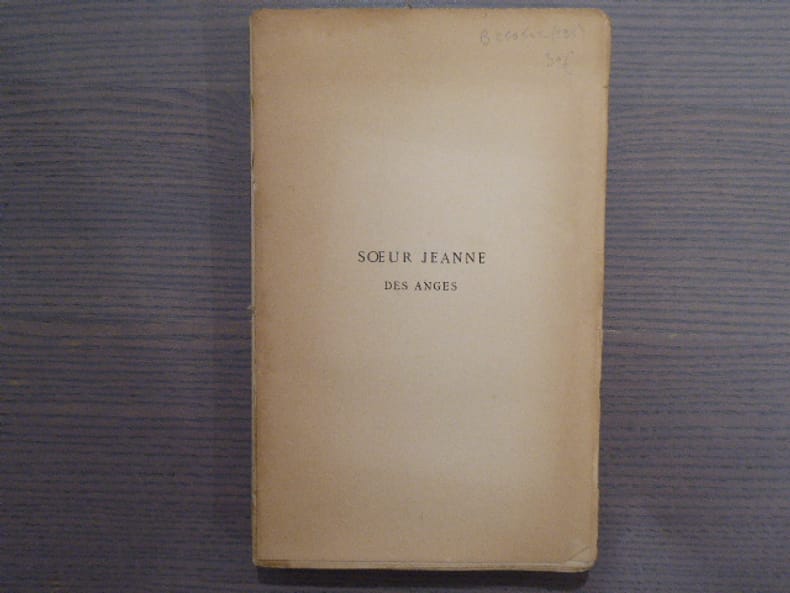
Best.-Nr. 257114Bureaux Du Progrès Médical - Delahaye & Lecrosnier - Charpentier - Bibliothèque Diabolique "Collection Bourneville" Paris 1886 In-8 ( 225 X 140 mm ) de XIV-321 pages, broché sous couverture imprimée. EDITION ORIGINALE. Préface de Jean-Martin Charcot. Autobiographie d'une hystérique possédée, d'après le manuscrit inédit de la bibliothèque de Tours annoté et publié par les Docteurs, Gilles de la Tourette et Gabriel Legue. Contient, encarté en fin d'ouvrage, une reproduction de la célèbre lettre du démon Asmodée et le fac-similé d'une lettre de Soeur Jeanne des Anges à Laubardemont. Dos fendu, premier plat absent, exemplaire de travail à relier.
1968Best.-Nr. 801Paris, Klincksieck, 1968, in-8, br., 454 pp., II pl. h.t.
1854Best.-Nr. 3693Paris, Hachette, Bibliothèque des Chemins de Fer, 1854 ; in-12, broché ; 314 pp., couverture illustrée au second plat d’une locomotive.
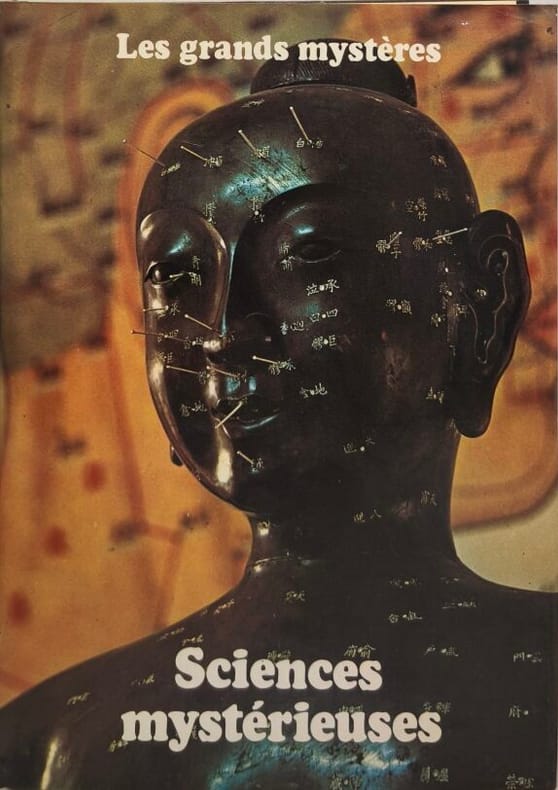
1979Best.-Nr. 6595Le livre de Paris / Hachette les Grands Mystères 1979 253 pages IN4. 1979. cartonné jaquette. 253 pages. Ce livre cinquième volume de la collection 'Les Grands mystères' explore divers domaines considérés comme des 'sciences mystérieuses'. Il aborde des sujets tels que la sagesse asiatique la science du yoga les pratiques vaudou umbanda et candomblé ainsi que les phénomènes d'esprits et de fantômes
2002Best.-Nr. 8540Editions DésIris 2002 In-4 Relié toile éditeur, jaquette illustrée, 143 pp. Nombreuses illustrations en noir & couleurs. Jaquette un peu fendillée en tête au premier plat, nénamoins reliure et inétrieur frais, bon état d’occasion.
Best.-Nr. ORD-19250Quatrième édition. Vincennes. Chez l'Abbé Julio. 1907. Fort in-12 (122 x 182 mm) percaline verte à dos lisse de l'éditeur, titre doré, sur le 1er plat et le dos, pentacle sur le dernier plat, gardes violettes, tranches rouges 704 pages, frontispice et 26 figures hors texte soit 14 portraits et scènes en noir et blanc et 12 pentacles ou talismans, certains en couleur. Intérieur assez défrâichi, quelques feuillets un peu décalés, papier souvent jauni, reliure en très bon état. Exemplaire uméroté 1399 et signé à la main par l'auteur. Rare.
Best.-Nr. M6079Paris Editions de l'Omnium Littéraire 1959, in12 br, 171pp. Excellent état non coupé. Langue: Français
1980Best.-Nr. LFA-126724352Une plaquette de 52 pages, format 135 x 215 mm, brochée, publiée en 1980, Editions Jean Marty, bon état
1962Best.-Nr. 013505Paris Galerie Raymond Cordier 1962 En feuilles
1992Best.-Nr. LFA-126710833Un ouvrage de 226 pages, format 125 x 195 mm, broché, publié en 1992, Droguet & Ardant, Collection "Références", bon état
in-12, 407 pp.,broché. Bon état. [NV-41]
Best.-Nr. DADAX0253204674New unknown
Best.-Nr. DADAX0883490781New unknown
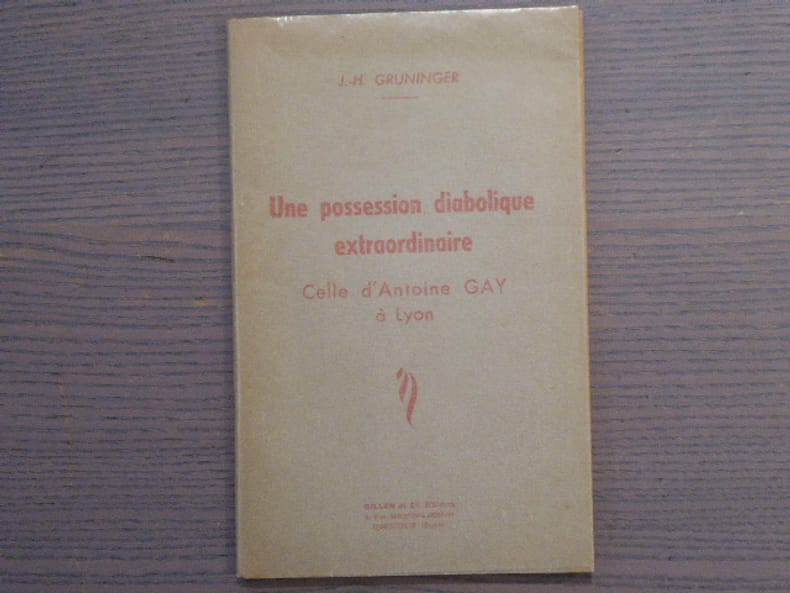
Best.-Nr. 875329Dillen Et Cie, Editeurs Issoudun 1948 In-8 ( 210 X 130 mm ) de 43 pages, broché sous couverture imprimée. EDITION ORIGINALE. Bel exemplaire.
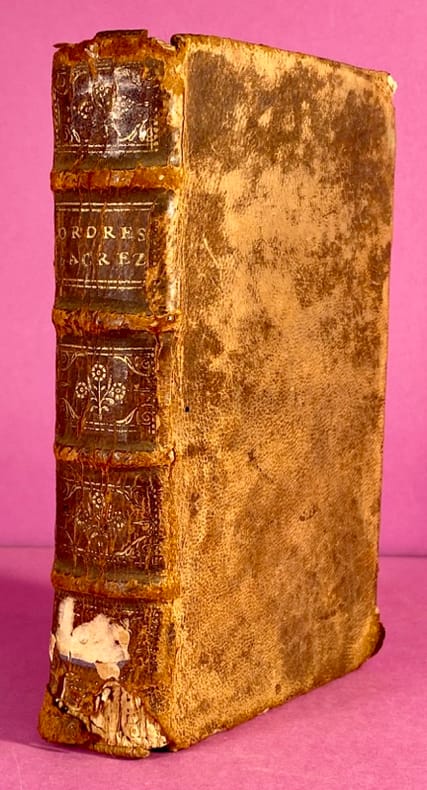
1680Best.-Nr. 16681680 Couverture rigide Lyon, Pierre Valfray, 1680. Un volume in-12 (15 x 9,5 cm), reliure pleine basane de l'époque, dos à nerfs orné, reliure frottée, manques au bas du dos et aux coiffes, coins émoussés, petites marques d'étiquette au dos, exemplaire qui baillle un peu. (12) 597 (2) pages, papier jauni, rousseurs éparses, deux pages barrées à l’encre. Première édition en 1653. Divisé en douze discours décrivant les différentes étapes conduisant au sacerdoce. Le cinquième porte sur les exorcistes (pages 247-284). Ils connurent un grand succès et furent encore réédités dans la Collection des orateurs sacrés de l'abbé Migne en 1844.Exemplaire en assez bon état.
1775In-4°: pp. LXXXIV. Legatura in cartonato.