Karl Wilhelm JerusalemBiblio.com

2 797 résultats
réf. 0666406677.Ghardcover. Good. Access codes and supplements are not guaranteed with used items. May be an ex-library book. hardcover
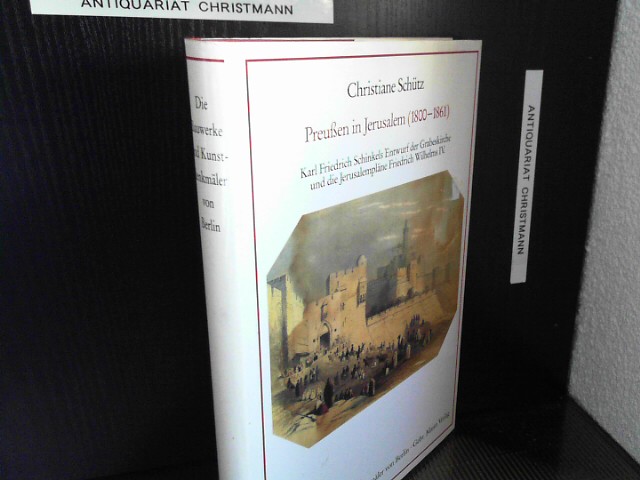
1988réf. 20717Berlin : Gebr. Mann 1988. 188 S. : 77 Abb.. ; 26 cm, mit Schutzumschlag Gewebe, gebundene Ausgabe, Leinen, Exemplar in gutem Erhaltungszustand
1995IN HEBREW. 24.5X18 cm. 516+VIII pages. Hardcover. Cover slightly chafed. Else in good condition.
1991SIGNED BY AUTHOR. 24.5x18cm. 195 pages. Hardcover with dust jacket. Spine slightly curved. spine edges slightly bumped. Else in good condition.
1991245x175 mm. 195 pages. Gilt hardcover with dust jacket. In good condition.
2000IN HEBREW WITH ENGLISH ABSTRACT. 27.5x27 cm. 153 pages. Hardcover. Cover stained and slightly yellowing. Cover corners and edges, and spine edges bumped. Else in good condition.
réf. DADAX0792304055New unknown
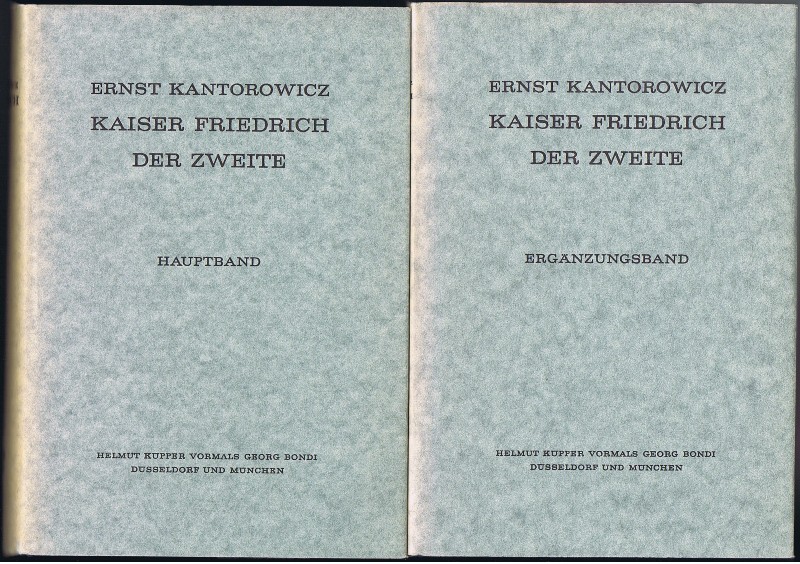
1973réf. 28037Düsseldorf und München, Helmut Kupfer vormals Georg Bondi, 1973. Vorbemerkung von Erich von Kahler, Princeton 1964. Jeweils mit Frontispiz und 4 Tafeln im Ergänzungsband. Gr.8°, ca. 24,5 x 17 cm, 651 S. mit Register, 335 S., Orig.-Leinen, Orig.-Umschlag. Herstellung: fotokop, Reprografischer Betrieb, Darmstadt. ISBN Ergänzungsband 3783500346. Wikipedia: "Ernst Hartwig Kantorowicz (geboren am 3. Mai 1895 in Posen; gestorben am 9. September 1963 in Princeton, New Jersey) war ein deutscher Historiker und Mediävist. Zunächst dem George-Kreis zugehörig, von dessen Vorstellungen sein bedeutendes Jugendwerk Kaiser Friedrich der Zweite stark beeinflusst ist, emanzipierte sich Kantorowicz nach dem Tod Stefan Georges 1933 und nach der Emigration in die Vereinigten Staaten 1939 weitgehend. In den USA, wo er in Berkeley und Princeton lehrte, schrieb er neben zahlreichen kleineren Studien das noch heute wichtige Buch über Die zwei Körper des Königs (1957)." 3. fotomechanischer Nachdruck. Gut erhalten.
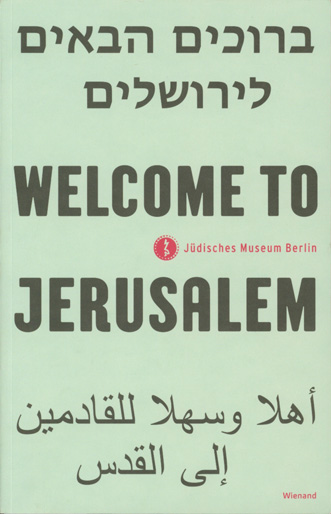
réf. 41867Köln, Wienand, 2017. 263 Seiten, illustriert, 31 x 21 cm, Klappenbroschur.
1981réf. HC10-018Wien, Braum?ller Verlag, 1981. original kartoniert, gr.-8?, 143 Seiten / pages; Zustand: gut / a good copy / Beitr. teilw. engl., teilw. franz.
1979réf. 42456Selbstverlag, 1979.
1924réf. LFA-126711077un ouvrage de 305 pages, format 120 x 190 mm, broché, publié en 1924, Librairie Plon (Paris), couverture en état moyen, rousseurs
1985réf. 5818Revue Proche-Orient et Tiers-Monde, 1985, in-8°, 176 pp,
2005réf. 24540Publications de l'Université de Saint-Étienne Couverture souple Saint-Etienne 2005
1931réf. AUB-4776Grenoble, B. Arthaud/J. Rey 1931. Bel exemplaire relié, reliure demi cuir ornée,tête dorée, in-8 carré, 160 pages.
1994réf. 10408Le Grand Livre du Mois 1994 224 pages in8. 1994. broché. 224 pages.
réf. ria9780471124122_inpHardback. New. New Book; Fast Shipping from UK; Not signed; Not First Edition; In this revised and updated edition of his successful reference Jungreis shares his expertise with readers to explore the contemporary utilization of simple spot and screening tests in clinical forensic geochemical and environmental hardcover
1867réf. AUB-3020Paris, éd. Michel Lévy frères, 1867. Bon exemplaire relié, reliure demi veau, dos orné avec titres dorés, in-12, 322 pages.
1947réf. 383071947. JUDAICAÑZIONISM. Kriath Kodesh Call to Yeshiva Students. Jerusalem: Kislev 1947-48. Broadside measures 10 by 13-1/2 inches printed on recto. $1800.1947 Jerusalem Orthodox broadside against Òthe Zionists who wish to uproot the TorahÓ illustrative of the conflicts among Zionists and other factions in Jerusalem just prior to the creation of the state of Israel.This broadside states that it is the scholars of Torah who are the Neturei Karta Òthe protectors of the city.Ó ÒThe forces which were contending over the nature of the new society were divided into three broad groupsÉ Socialist Zionists known as the HistadrutÉ middle-class elements anti-Socialist RevisionistsÉ and the Orthodox who could not imagine a Jewish presence in the land which did not exemplify the values and practices of the religious traditionÓ Encyclopaedia Judaica. These three factions came to maturity as the Zionist settlement in Palestine increased tenfold from roughly 60000 in 1919 to 600000 in the 1940s. This broadside goes on to claim ÒWhomever has any relationship with the Zionists-even enlisting in the Haganah-becomes a partner in actions against Judaism.Ó ÒOrthodox elements were dedicated to the building of an institutional power base for religious Jews so that they could compete as equals with the other groups and provide equal opportunity in the new country for those who shared the Orthodox religious faith. This body of opinion was deeply concerned that the total temper of the Jewish community should not be secularized. They did not want to become a religious ghetto in a non-religious Jewish society and they believed that it was their duty to bring religion even to those who opposed itÉ The struggle between the Socialist and the middle-class elements in IsraelÕs society has been muted in the generation of statehood for a mixed economy now prevails. The conflict over religion and its relationship to public life has if anything become sharper within the sovereign parliamentary life of the Jewish stateÓ Encyclopaedia Judaica. Text in Hebrew. Faint fold lines. Fine condition. Scarce. unknown books
1947réf. 383071947. JUDAICAÑZIONISM. Kriath Kodesh Call to Yeshiva Students. Jerusalem: Kislev 1947-48. Broadside measures 10 by 13-1/2 inches printed on recto. $1800.1947 Jerusalem Orthodox broadside against Òthe Zionists who wish to uproot the TorahÓ illustrative of the conflicts among Zionists and other factions in Jerusalem just prior to the creation of the state of Israel.This broadside states that it is the scholars of Torah who are the Neturei Karta Òthe protectors of the city.Ó ÒThe forces which were contending over the nature of the new society were divided into three broad groupsÉ Socialist Zionists known as the HistadrutÉ middle-class elements anti-Socialist RevisionistsÉ and the Orthodox who could not imagine a Jewish presence in the land which did not exemplify the values and practices of the religious traditionÓ Encyclopaedia Judaica. These three factions came to maturity as the Zionist settlement in Palestine increased tenfold from roughly 60000 in 1919 to 600000 in the 1940s. This broadside goes on to claim ÒWhomever has any relationship with the Zionists-even enlisting in the Haganah-becomes a partner in actions against Judaism.Ó ÒOrthodox elements were dedicated to the building of an institutional power base for religious Jews so that they could compete as equals with the other groups and provide equal opportunity in the new country for those who shared the Orthodox religious faith. This body of opinion was deeply concerned that the total temper of the Jewish community should not be secularized. They did not want to become a religious ghetto in a non-religious Jewish society and they believed that it was their duty to bring religion even to those who opposed itÉ The struggle between the Socialist and the middle-class elements in IsraelÕs society has been muted in the generation of statehood for a mixed economy now prevails. The conflict over religion and its relationship to public life has if anything become sharper within the sovereign parliamentary life of the Jewish stateÓ Encyclopaedia Judaica. Text in Hebrew. Faint fold lines. Fine condition. Scarce. unknown
2005réf. LFA016ebUn ouvrage de 168 pages, format 210 x 210 mm, illustré, broché couverture couleurs, publié en 2005, Editions Complexe, bon état
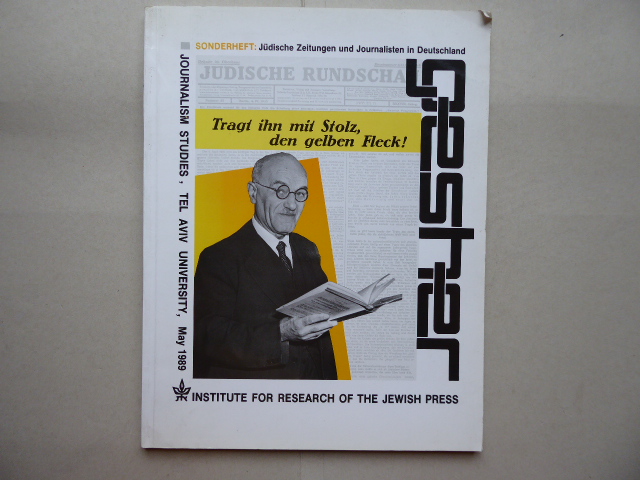
1989réf. 127604(Tel Aviv 1989). Zwei Teile. 71 u. 49 Seiten. Mit zahlreichen Abbildungen. Farbig illustrierte Originalbroschur. (Geringe Gebrauchsspuren). 28x22 cm
réf. 44010Monaco Editions du Rocher 1965 in 8 (19x14,5) 1 volume broché, couverture illustrée à rabats, 408 pages [6], avec des illustrations hors texte en noir et blanc. Bel exemplaire
1975Very Good English Original cloth bdg. HC. 618 p. Roy. 8vo. (23 x 18 cm). In French. B/w ills. (2. of 2). Histoire du Royaume Latin de Jérusalem. Tome II.
1975réf. MONDEBYZANTIN1010CNRS, 1975, 18,5 x 23, 686 pages sous percaline éditeur imprimée et rhodoïd. Traduit de l'hébreu par G. Nahon, revu et complété par l'auteur. Cartes, tableaux généalogiques, figures et planches. Seconde édition corrigée et complétée.