2786 resultados
1979IN HEBREW. 20x25 cm. 699 pages. Gilt hardcover in dust jacket. In good condition.
1979IN HEBREW. 25.5X19 cm. 699 pages. Gilt hardcover with dust jacket. Cover and spine slightly bumped. Pages slightly yellowing. Else in good conditions. PLEASE NOTE: This item is overweight. We may ask for extra shipping costs.
19774' 495pp. Hard gilt cover with dust jacket. Jacket water damaged and bumped on edges. The book contains black & white illustrations and photographs. Pages somewhat yellowing. Personal dedication on first white page. In good condition. Over 1.2kg
1977IN HEBREW. THIS VOLUME ONLY. 25.5X15.5 cm. 495 pages. Gilt hardcover in dust jacket. Pages slightly yellowing. Else in good condition. PLEASE NOTE: This item is overweight. We may ask for extra shipping costs.
ref. 0364070811.Ghardcover. Good. Access codes and supplements are not guaranteed with used items. May be an ex-library book. hardcover
ref. 0259463353.Gpaperback. Good. Access codes and supplements are not guaranteed with used items. May be an ex-library book. paperback
1997ref. 1206362Schocken Books; NY, 1997. 211 S.; 20,5 cm; kart.
1997Gutes Ex.; der illustr. Einband stw. minimalst berieben. - Englisch. - Elie Wiesel (geboren am 30. September 1928 in Sighetu Marmatiei, Königreich Rumänien; gestorben am 2. Juli 2016 in New York City, Vereinigte Staaten) war ein rumänisch-US-amerikanischer Schriftsteller, Hochschullehrer und Publizist. Als Überlebender des Holocausts verfasste er zahlreiche Romane und sonstige Publikationen zu diesem Thema und erhielt 1986 den Friedensnobelpreis für seine Vorbildfunktion im Kampf gegen Gewalt, Unterdrückung und Rassismus. ... (wiki) / When the Six-Day War began, Elie Wiesel rushed to Israel. "I went to Jerusalem because I had to go somewhere, I had to leave the present and bring it back to the past. You see, the man who came to Jerusalem then came as a beggar, a madman, not believing his eyes and ears, and above all, his memory." This haunting novel takes place in the days following the Six-Day War. A Holocaust survivor visits the newly reunited city of Jerusalem. At the Western Wall he encounters the beggars and madmen who congregate there every evening, and who force him to confront the ghosts of his past and his ties to the present. Weaving together myth and mystery, parable and paradox, Wiesel bids the reader to join him on a spiritual journey back and forth in time, always returning to Jerusalem. (Verlagstext) ISBN 0805210520
1925ref. 31489Jerusalem Franciscan printing press 1925 in-8 broché
ref. 88512Victor Lecoffre, Gabalda, Atlas seul, planches sous chemise papier, chemise salie, une déchirure sans manque dans la marge de l'une des planches, bon état pour le reste.
ref. 88514Victor Lecoffre, Gabalda, Atlas seul, 43 planches sous chemise papier. Chemise en mauvais état, bords des planches un peu froissés, plis de la planche VI en grande partie fendus avec une déchirure sans manque, des rousseurs sur la planche X. Bon état pour le reste.
1970Very Good Arabic Original pamphlet. Large roy. 8vo. (25 x 17,5 cm). Texts in completely Arabic. [4] pp., ills. An extremely rare propaganda and political proclamation in Arabian related to Jerusalem and Palestine question. It has a "call to arms" for the struggle. A unique brochure. Not in OCLC.; Not in IISG.
1880Very Good Latin Extremely rare second edition of Quaresmus' work including four parts in two volumes, which is a a contribution to history, geography, archaeology, biblical and moral science of the East and Holy Land. First Edition is 1639, printed in Antwerp. This edition was edited by Father Cypriano da Treviso. First volume has one two-page map titled 'Chorographia Terræ Sanctæ Sev Terræ Promissionis Nova Descriptio' depicting a very attractive view of the Holy Lands, which is decorated ships heading to the Holy Land. Second volume has two maps, one plate, and two plans (All is folded and huge sizes). First map is one of the most attractive views of Extremely rare second edition of Quaresmus' work including four parts in two volumes, which is a contribution to history, geography, archaeology, biblical and moral science of the East and Holy Land. First Edition is 1639, printed in Antwerp. This edition was edited by Father Cypriano da Treviso. The first volume has one two-page map titled 'Chorographia Terræ Sanctæ Sev Terræ Promissionis Nova Descriptio' depicting a very attractive view of the Holy Lands, which is decorated ships heading to the Holy Land. The second volume has two maps, one plate, and two plans (All are folded and huge sizes). The first map is one of the most attractive views of Jerusalem titled 'Novæ Ierosolymæ et Locorvm Circvmiacentivm Accvrata Imago'. Other is depicting attractively 'Montis Calvariæ' [i.e. Calvary, or Golgotha] which was, according to the canonical Gospels, a site immediately outside Jerusalem's walls where Jesus was crucified, as well as Bethlehem and Resurrection Temple's plans. Quaresmio was a writer and Orientalist of the seventeenth century. His father was the noble Alberto Quaresmi and his mother Laura Papa. At an early age, he was enrolled among the Franciscan Observantines at Mantua. For many years he held the chairs of philosophy, theology, and canon law, and became successively guardian, custos, and minister of his province. His long apostolate in the East and the magnificent works he has left us have secured Quaresmius worldwide fame, especially among earlier historians, Biblical scholars, and Orientalists. On 3 March 1616, he went to Jerusalem, where he became Guardian and Vice-Commissary Apostolic of Aleppo in Syria (1616-8), and Superior and Commissary Apostolic of the East (1618-9). During this period he was twice imprisoned by the Turks. In 1620 he returned to Europe, but in 1625 was back in Jerusalem, whence the following year he addressed from the Holy Sepulchre an appeal to Philip IV of Spain, inviting him to reconquer the Holy Land, and at the same time dedicating to him his work, "Hierosolymæ afflictæ". Between 1616 and 1626 he wrote his classical work, "Elucidatio terræ Sanctæ", adjudged by the learned a monumental contribution to history, geography, archæology, Biblical and moral science. During 1627-9 he was at Aleppo as papal commissary and as vicar-patriarch for the Chaldeans and Maronites of Syria and Mesopotamia. In 1629 he went to Italy to render an account to the Holy See of the state of the Eastern Churches; he then returned to the East, but how long he remained is not known. Meanwhile, he journeyed through Egypt and Sinai, the Holy Land, Syria, Mesopotamia, Cyprus, Rodi, Constantinople, and a large part of Asia Minor; he also visited Germany, France, Belgium, and Holland. In 1637 he was a guardian of S. Angelo (Milan), wherein 1643 he completed his other great work on the Passion of Christ. Original 1/3 black leather bdg. Six raised bands to spine. Marbled endpapers. Gilt title on spine and volume numbers. Folio. (38 x 28 cm). In Latin. 2 volumes set: (xxviii, [8], 761 p.; 893 p., 6 engraved maps and plans (5 folded)).
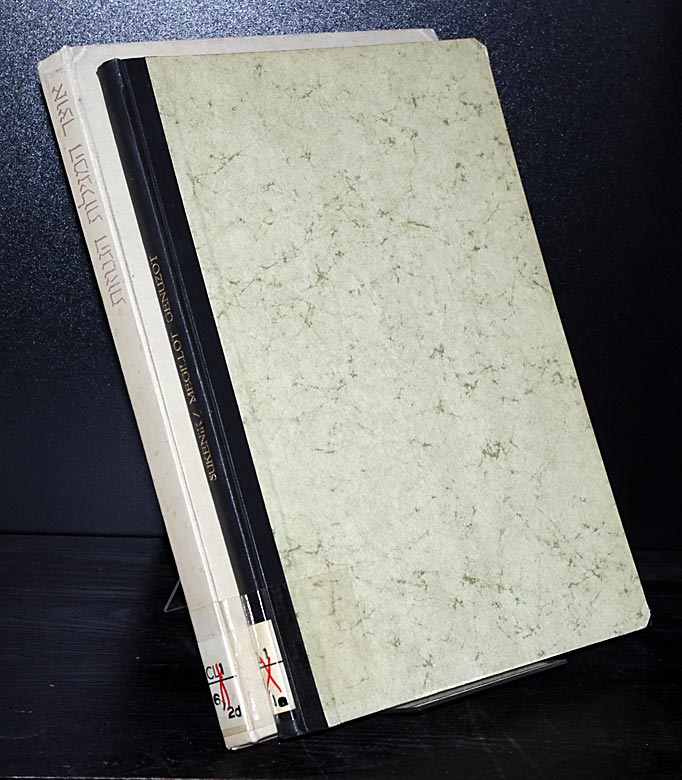
1954ref. 3084144Jerusalem: Bialik Institut 1954. 40, 58 Seiten. 4° (25-35 cm). Bibliotheks-Halbleinenband. [Hardcover / fest gebunden].
1954ref. 3084145Jerusalem: Bialik Institut 1954. 40 Seiten. 4° (25-35 cm). Bibliotheks-Halbleinenband. [Hardcover / fest gebunden].
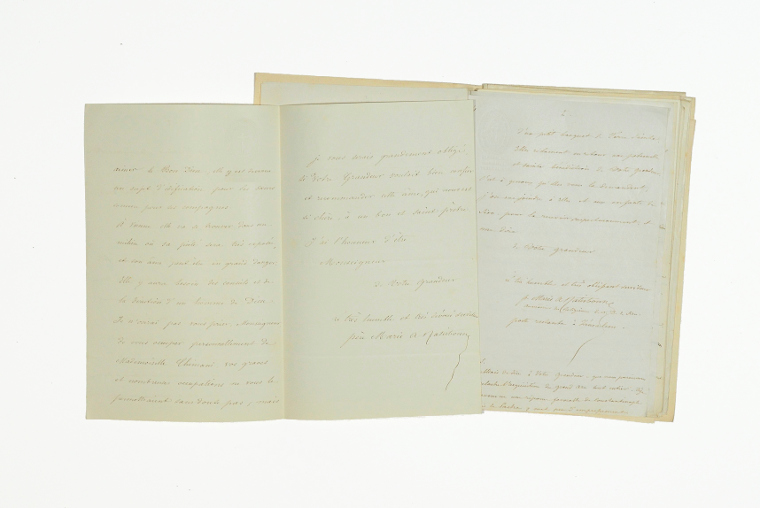
1878ref. 41253Straßburg, Paris u. Jerusalem, 1859-1878. Zus. 51 S., 8° u. 4°.
ref. DADAX0548161216New unknown
ref. DADAX1436723280New unknown
ref. DADAX0548330840New unknown
ref. DADAX0548166013New unknown
ref. DADAX0548033528New unknown
ref. DADAX1859642187New unknown
ref. DADAX1409466531New unknown
ref. DADAX0791429164New unknown
ref. DADAX1903689031New unknown