8900 risultati
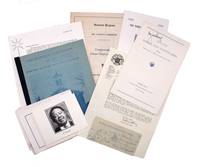
rif. 352443Vp 1990. Together 11 items as listed below. Together 11 items as listed below. The present group comes from the papers of Alfonso and Lucy Campbell. The Campbells attended Dexter Avenue Baptist Church and became friendly with the King family. Both became deeply involved with the Montgomery Improvement Association and during the bus boycott Alfonso served as co-chair the Montgomery Improvement Association's Transportation Committee and chair of the Purchasing Committee. In 1964 the Campbells moved from Montgomery to Virginia when Alfonso became Assistant Dean of Men and Lucy a staff librarian at Hampton Institute. Included are the following in chronological order: 1. Souvenir Program. The Citizen's Committee Presents Congressman Adam Clayton Powell of New York. Alabama State College Gymnasium . November 3 1955. Montgomery AL: 1955. 12 pp. Original printed stiff staple-bound self-wrappers. Unrecorded in OCLC. 2. Ten Times One is Ten Club Presents Dr. Ralph J. Bunche Undersecretary of the United Nations. Alabama State College Gymnasium . May 27 1956. Montgomery:1956. 4pp. Unrecorded in OCLC. The program included a solo by Coretta Scott King. 3. The Eightieth Anniversary of the Dexter Avenue Baptist Church. Montgomery: 1957. 30pp. 4to. Blue printed wrappers. Later tape along the spine. Official printed booklet for the 80th anniversary celebration of the Dexter Avenue Baptist Church featuring a history of the Church a biography of Dr. Martin Luther King Jr. a program of events printed photographs of the church's various members and groups including Dr. King the Deacons and Trustees the Missionary Society Scholarship Committee the Choir Social Political Actions Committee and others as well as dozens of printed ads of congratulations and compliments from Montgomery's businesses and individuals. OCLC records a single copy at Swarthmore. 4. The Dexter Avenue Baptist Church Presents The First in a Series of Youth Programs . October 25 1959. Montgomery: 1959. 1p. single 4to sheet. Stamped signature of Martin Luther King Jr at top "M.L. King Jr; "Dexter Avenue Baptist Church School/J.T. Alexander Superintendent" rubber-stamp at bottom in purple ink and signed in pen by Enrollment Secretary Eileen Jones. Unrecorded in OCLC. 5. The Dexter Avenue Baptist Church Montgomery Alabama Presents A Salute to Dr. & Mrs. Martin Luther King . January 31 1960. Montgomery: 1960. 4pp. 8vo. Self-wrappers. Folds. Printed program for the farewell celebration for Dr. King at the Dexter Avenue Baptist Church featuring the banquet menu program of events and tributes and the various committees and their members. Unrecorded in OCLC. 6. Partially-printed check accomplished and signed by Alfonso Campbell issued to Martin Luther King Jr. in the amount of $10. Montgomery: February 1 1960. Endorsed on verso secretarially. Campbell donates to King the day after the testimonial dinner after his leaving Dexter Avenue Baptist. 7. A season's greeting card inscribed by Coretta Scott King to the Campbells signed "'The Martin Luther Kings' Coretta Martin Yoki Marty & Scotty. Atlanta: December 29 1961. With the original mailing envelope. 8. A printed season's greeting card send from the King family to the Campbells with the original mailing envelope. Atlanta: December 1965. 9. A printed season's greeting letter from the King family with printed signatures below with the original mailing envelope. Atlanta: December 19 1967. 1p. 10. The Twenty-sixth Annual Fall Convocation and the Dedication of Martin Luther King Hall. Ogden Hall . September 26 1968. Hampton Institute: 1968. Signed on the upper cover by Benjamin Mays. 8pp. 11. Typed letter secretarially signed by Coretta Scott King to Alfonso Campbell thanking him for a donation. Atlanta: July 1 1985. 1p. 12. A printed card from the Abernathy family thanking the Campbells for the sympathy. Atlanta: June 28 1990. unknown books
1556rif. 4183Wittenberg: Georg Rhau 1542 1556. Hardcover. Fine. Bound in contemporary alum-tawed pigskin over wooden boards one clasp defective binding soiled and mildly worn and with small defects. The boards are ruled and tooled in blind signed and dated “IPN 1556”. The contents are in excellent crisp condition one leaf working loose marginal tear in margin of leaf E5 no loss. With a historiated woodcut title border to the “Apologia”. Woodcut coat-of-arms to verso of final leaf of the “Confessio” and fine woodcut initials in the Saxon Confession. Text of second work in Latin and German. With 16th c. notes on the f.f.e.p. This is the authorized text of the Augsburg Confession 1st ed. 1531 approved by Luther edited by and with the "Apologia" of Philip Melanchthon. It was printed by Georg Rhau who also printed the first editions both in Latin and German of the “Confessio” and “Apologia”. The “Apologia” of this 1556 edition is dated 1542 see VD 16 ZV 31340. This edition was printed in the wake of the agreement reached in 1555 between the Lutheran princes and Charles V known as the Peace of Augsburg which granted Lutheranism legal status within the Holy Roman Empire. Bound into this copy is the 1553 Leipzig edition of the Saxon Confession which was drawn up by Melanchthon and intended for presentation at the Council of Trent; it presented the doctrinal status of the Lutheran Church of Germany as of 1552 and was the basis for the signing of the Peace of Augsburg. The Augsburg Confession: "On January 21 1530 the Emperor Charles V issued letters from Bologna inviting the German diet to meet in Augsburg on April 8 for the purpose of discussing and deciding various important questions. The far-seeing Landgrave of Hesse hesitated to attend the diet but the Elector John of Saxony who received the writ March 11 directed Luther Jonas Bugenhagen and Melanchthon to meet in Torgau and present a summary of the Protestant faith to be laid before the Emperor at the diet. This summary has received the name of the "Torgau articles". On April 3 the Elector and the reformers started from Torgau and reached Coburg on April 23. There Luther was left behind. The rest reached Augsburg May 2. On the journey Melanchthon worked on an "Apology" using the Torgau articles and sent his draft to Luther at Coburg who approved it. "The Emperor had ordered the confession to be presented to him on June 24. The evangelical princes however declared that they would not part with the confession until its reading should be allowed. The 25th was then fixed for the day of its presentation. In order to exclude the people the little chapel of the Episcopal palace was appointed in place of the spacious city hall. The two Saxon chancellors Bruck and Beyer the one with the Latin copy the other with the German stepped into the middle of the assembly and against the wish of the Emperor the German text was read. "Although the emperor prohibited the printing of the evangelical confession without his special permission during the diet six German editions and one in Latin were published. Their inaccuracy and incorrectness induced Melanchthon to prepare an edition to which he added the Apology. Thus originated the so-called 'editio princeps' of the Augustana and the Apology which was published in the spring of 1531." Schaff-Herzog "Melanchthon drafted the ‘Confession’ in both German and Latin using the Torgau Schwabach and Marburg Articles. The intention of the German Protestants was to present a single creed. Since they could not all agree on one several versions were presented to the Diet meeting at Augsburg. Of these it is the ‘Augsburg Confession’ that is remembered today; the others have long been forgotten. The presentation of the ‘Augsburg Confession’ was probably Melanchthon’s finest hour as a theologian. He had written a theological document that presented a reasonable compromise in the ongoing religious disputes in Germany. Luther himself said that he could never have ‘trod so lightly’ in treating such matters. The ‘Confession’ has come to be the standard Lutheran statement of faith and was included in the ‘Book of Concord’ of 1580."Kessler. Georg Rhau, 1542 hardcover
1556rif. 4183Wittenberg: Georg Rhau 1542 1556. Hardcover. Fine. Bound in contemporary alum-tawed pigskin over wooden boards one clasp defective binding soiled and mildly worn and with small defects. The boards are ruled and tooled in blind signed and dated “IPN 1556”. The contents are in excellent crisp condition one leaf working loose marginal tear in margin of leaf E5 no loss. With a historiated woodcut title border to the “Apologia”. Woodcut coat-of-arms to verso of final leaf of the “Confessio” and fine woodcut initials in the Saxon Confession. Text of second work in Latin and German. With 16th c. notes on the f.f.e.p. This is the authorized text of the Augsburg Confession 1st ed. 1531 approved by Luther edited by and with the "Apologia" of Philip Melanchthon. It was printed by Georg Rhau who also printed the first editions both in Latin and German of the “Confessio” and “Apologia”. The “Apologia” of this 1556 edition is dated 1542 see VD 16 ZV 31340. This edition was printed in the wake of the agreement reached in 1555 between the Lutheran princes and Charles V known as the Peace of Augsburg which granted Lutheranism legal status within the Holy Roman Empire. Bound into this copy is the 1553 Leipzig edition of the Saxon Confession which was drawn up by Melanchthon and intended for presentation at the Council of Trent; it presented the doctrinal status of the Lutheran Church of Germany as of 1552 and was the basis for the signing of the Peace of Augsburg. The Augsburg Confession: "On January 21 1530 the Emperor Charles V issued letters from Bologna inviting the German diet to meet in Augsburg on April 8 for the purpose of discussing and deciding various important questions. The far-seeing Landgrave of Hesse hesitated to attend the diet but the Elector John of Saxony who received the writ March 11 directed Luther Jonas Bugenhagen and Melanchthon to meet in Torgau and present a summary of the Protestant faith to be laid before the Emperor at the diet. This summary has received the name of the "Torgau articles". On April 3 the Elector and the reformers started from Torgau and reached Coburg on April 23. There Luther was left behind. The rest reached Augsburg May 2. On the journey Melanchthon worked on an "Apology" using the Torgau articles and sent his draft to Luther at Coburg who approved it. "The Emperor had ordered the confession to be presented to him on June 24. The evangelical princes however declared that they would not part with the confession until its reading should be allowed. The 25th was then fixed for the day of its presentation. In order to exclude the people the little chapel of the Episcopal palace was appointed in place of the spacious city hall. The two Saxon chancellors Bruck and Beyer the one with the Latin copy the other with the German stepped into the middle of the assembly and against the wish of the Emperor the German text was read. "Although the emperor prohibited the printing of the evangelical confession without his special permission during the diet six German editions and one in Latin were published. Their inaccuracy and incorrectness induced Melanchthon to prepare an edition to which he added the Apology. Thus originated the so-called 'editio princeps' of the Augustana and the Apology which was published in the spring of 1531." Schaff-Herzog "Melanchthon drafted the ‘Confession’ in both German and Latin using the Torgau Schwabach and Marburg Articles. The intention of the German Protestants was to present a single creed. Since they could not all agree on one several versions were presented to the Diet meeting at Augsburg. Of these it is the ‘Augsburg Confession’ that is remembered today; the others have long been forgotten. The presentation of the ‘Augsburg Confession’ was probably Melanchthon’s finest hour as a theologian. He had written a theological document that presented a reasonable compromise in the ongoing religious disputes in Germany. Luther himself said that he could never have ‘trod so lightly’ in treating such matters. The ‘Confession’ has come to be the standard Lutheran statement of faith and was included in the ‘Book of Concord’ of 1580."Kessler. Georg Rhau, 1542 hardcover books
1520rif. 5195Wittenberg: Melchior Lotter the younger 1520. FIRST EDITION. Hardcover. Fine. Disbound with a slim guard along the spine. A crisp copy the title very lightly soiled contents with some very light scattered marginal foxing and a few light marginal blemishes; blank verso of last leaf lightly soiled. This is the first response by Luther to the papal bull threatening him with excommunication 'Exsurge Domine' issued by Pope Leo X on June 15 1520 and published in Germany in September 1520. In it Luther is defiant. He defends his "heretical" errors amplifies his criticism of indulgences and condemns the pope as an illegitimate tyrant. "The papal bull did not excommunicate Luther but rather condemned forty-one theses taken from Luther's writings as either 'heretical or scandalous or false or offensive to pious ears or dangerous to simple minds or subversive of catholic truth.' Luther was asked to recant these errors within sixty days or face excommunication. Luther proceeded to defend the condemned propositions in two Latin and two German works of which this is the first. "As far as Luther was concerned the pope and his bull did not speak for the true church. Rather the bull made it plain that the men in Rome were 'tyrants' and their condemnation of obvious Christian truth would now reveal their tyranny to everyone. His response to the condemnation of his statement 'Indulgences are a pious fraud practiced upon Christians; they are remissions of good works and belong to the things that are permitted but not necessary' is very significant. He stated his willingness to recant this proposition because he now considered it far too mild. Luther was now prepared to say 'The indulgences are not a pious fraud but an infernal diabolical antichristian fraud larceny and robbery whereby the Roman Nimrod teacher of sin peddles sin and hell to the whole world and sucks and entices away everybody's money as the price of this unspeakable harm.'" "As far as his conflict with Rome was concerned Luther appeared to be utterly sure of himself. In fact the violent opposition from the papacy became for him a vindication of the truth of his cause. And Luther made the source of his confidence very clear. He said 'I am sure the Word of God is with me and not with them for I have the Scriptures on my side and they have only their own doctrine. This gives me courage so that the more they despise and persecute me the less I fear them.' "It was this same complete trust in the power of the Word which he expressed in a letter to his friend Spalatin accompanying his 'Defense and Explanation of All the Articles' the third of Luther's responses to the papal bull. Referring to Ulrich von Hutten's warlike plans to defend the cause of the gospel by force of arms he wrote 'You can see what Hutten has in mind. I do not want the gospel to be contested by force and the shedding of blood.Through the Word the world was overcome through the Word the church was maintained and through the Word she will again be restored.' It was on this power that Luther relied in his struggle with the papacy." George Forell The Concordia edition of Luther's Works Vol. 32 pp. ix-xiv. [Melchior Lotter the younger] hardcover
1520rif. 5195Wittenberg: Melchior Lotter the younger 1520. FIRST EDITION. Hardcover. Fine. Disbound with a slim guard along the spine. A crisp copy the title very lightly soiled contents with some very light scattered marginal foxing and a few light marginal blemishes; blank verso of last leaf lightly soiled. This is the first response by Luther to the papal bull threatening him with excommunication 'Exsurge Domine' issued by Pope Leo X on June 15 1520 and published in Germany in September 1520. In it Luther is defiant. He defends his "heretical" errors amplifies his criticism of indulgences and condemns the pope as an illegitimate tyrant. "The papal bull did not excommunicate Luther but rather condemned forty-one theses taken from Luther's writings as either 'heretical or scandalous or false or offensive to pious ears or dangerous to simple minds or subversive of catholic truth.' Luther was asked to recant these errors within sixty days or face excommunication. Luther proceeded to defend the condemned propositions in two Latin and two German works of which this is the first. "As far as Luther was concerned the pope and his bull did not speak for the true church. Rather the bull made it plain that the men in Rome were 'tyrants' and their condemnation of obvious Christian truth would now reveal their tyranny to everyone. His response to the condemnation of his statement 'Indulgences are a pious fraud practiced upon Christians; they are remissions of good works and belong to the things that are permitted but not necessary' is very significant. He stated his willingness to recant this proposition because he now considered it far too mild. Luther was now prepared to say 'The indulgences are not a pious fraud but an infernal diabolical antichristian fraud larceny and robbery whereby the Roman Nimrod teacher of sin peddles sin and hell to the whole world and sucks and entices away everybody's money as the price of this unspeakable harm.'" "As far as his conflict with Rome was concerned Luther appeared to be utterly sure of himself. In fact the violent opposition from the papacy became for him a vindication of the truth of his cause. And Luther made the source of his confidence very clear. He said 'I am sure the Word of God is with me and not with them for I have the Scriptures on my side and they have only their own doctrine. This gives me courage so that the more they despise and persecute me the less I fear them.' "It was this same complete trust in the power of the Word which he expressed in a letter to his friend Spalatin accompanying his 'Defense and Explanation of All the Articles' the third of Luther's responses to the papal bull. Referring to Ulrich von Hutten's warlike plans to defend the cause of the gospel by force of arms he wrote 'You can see what Hutten has in mind. I do not want the gospel to be contested by force and the shedding of blood.Through the Word the world was overcome through the Word the church was maintained and through the Word she will again be restored.' It was on this power that Luther relied in his struggle with the papacy." George Forell The Concordia edition of Luther's Works Vol. 32 pp. ix-xiv. [Melchior Lotter the younger] hardcover books
1597rif. 4754Frankfurt an der Oder: Friedrich Hartmann 1597. THIRD EDITION the 1st ed. of Vol. I appeared in 1556; 1st ed. of Vol. II in 1565. Hardcover. Fine. Bound in matching 17th c. stiff vellum ruled in blind covers slightly bowed vellum lightly soiled small split at head of rear hinge of Vol. I 1 end-band loose. The contents are in overall excellent condition with minor blemishes Vol I: leaf D2 with small natural paper flaw affecting a few letters small paste stain to lvs. m3 q2 and GG1; a few index lvs. lightly browned. Vol. II: title very slightly frayed; first four lvs. damp-stained at head a handful of gatherings with very light damp-stains in the lower margin. The dimensions of the two volumes in matching early bindings differ in size by about 1 cm. Edges of text-block stained an even blue. Third printing of Martin Luther's early correspondence edited by Joannes Aurifaber 1519-1575 Luther’s private secretary who lived with Luther at the time of the Reformer’s death. The first volume contains 255 letters from 1507 to 1522 from the celebration of his first Mass to his removal to Wartburg Castle after the Diet of Worms. The second has 407 letters from 1520 to 1528. These letters offer a revealing view of Luther’s private and public thoughts on matters of pivotal importance to the early reformation. They include a "cover letter" to a copy of the 95 Theses written on the very day October 31st 1517 that Luther nailed the Theses to the door of the Castle Church in Wittenberg. In this letter addressed to Cardinal Albrecht Archbishop of Magdeberg and Mainz Luther requests that the indulgence traffic be halted. In a related letter written as a dedication to his explanations of the 95 Theses Luther gives an account of his understanding of penitence which led him finally to the attack on indulgences. Included are letters to Pope Leo X 1475-1521 King Henry VIII 1491-1547 Georg Spalatin 1484-1545 Philip Melanchthon 1497-1560 Frederick Elector of Saxony 1463-1525 Emperor Charles V 1500-1558 Andreas Karlstadt 1486-1541 Cardinal Tommaso de Vio Cajetan 1470-1534 and many others. This collection also includes Luther’s first letter to Erasmus written at Wittenberg on March 28th 1519 Vol. I p. 156-158 and several letters in which Luther discusses his opinions of Erasmus’ theology. The letters’ chronological arrangement allows the reader to follow the development of Luther’s thought and the political ramifications of his actions. Luther provides first-hand accounts of his efforts to avoid a trial in Rome his negotiations with the Pope’s secretary Karl von Miltitz and the papal legate Cardinal Cajetan and his eventual appearance before the Emperor at the Diet of Worms. Included are Luther’s letter to Cajetan Oct. 1518 written as Luther fled the Augsburg to avoid being kidnapped and taken to Rome and a letter of apology to Pope Leo X Jan. 1519 in which Luther argues that he is now powerless to control the power of his own ideas: "The demand is made that I recant my Disputation. If such a revocation could accomplish what I was attempting to do with my theses I would issue it without hesitation. Now however through the antagonism and pressure of my enemies my writings are spread farther than I ever had expected and are so deeply rooted in the hearts of so many people that I am not in the position to revoke them.". In a letter written after his appearance at Worms Luther writes to the Emperor to express his gratitude and ask for continued protection. He also gives a vivid account of the proceedings and a critique of his own performance. "Your Sacred Majesty ordered that I be asked first whether I would acknowledge said little books as mine and second whether or not I would be ready to revoke them or would uphold the. When I had acknowledged that these books were mine. I pointed out with great reverence and submission that the following was my opinion: since I had fortified my books with clear and intelligible Scripture passages it does not seem to me right or just to deny the Word of God and revoke my little books in this way nor could I do it in any way. . In addition to all this it was requested and demanded of me that I answer simply and plainly whether or not I was ready to recant. Again I answered as humbly as I could: since my conscience is bound by the Scripture passages which I have quoted in my little books I could under no circumstances recant anything unless I be better informed." In a letter to Nicholas von Amsdorf folio 326 Luther describes his capture and the ride to Wartburg Castle. The first volume concludes with a series of letters to Melanchthon and others written from the Wartburg in which Luther discusses the volatile situation at Erfurt and Wittenberg and the actions of Karlstadt in particular. In these letters Luther discusses his ideas on clerical and monastic celibacy communion private mass the dynamics of faith etc. Friedrich Hartmann hardcover books
1545rif. 38532(Leipzig, Nikolaus Wolrab), 1549 (im Kollophon: 1544 bzw. 1545). Fol. Titeln in Rot u. Schwarz m. Titelholzschnitt bzw. m. breiter figürl. Holzschn.-Bordüre. Mit zahlr. Textholzschnitten von Hans Brosamer. 4 Bll., 382 num., 10 Bll. (das letzte weiß); 1 nn., 69 num., 4 nn. Bll. (das letzte weiß); 6 nn., 281 num., 7 nn. Bll.; 6 nn., 88 num., 1 nn. Bll., Blindgepr. Schweinsldr.-Bde. d. Zt. über Holzdeckeln a. 4 Bünden m. goldgepr. Rückenschild sowie blindgepr. Deckeltitel (?Postil sumer teyl und fest? bzw. ?Postil winter Teill?, dat. ?1550?) u. 2 Schließen.
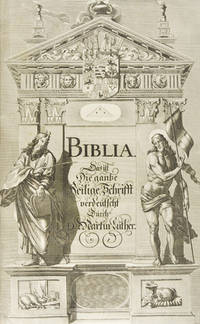
1768rif. 20419Nürnberg Nuremberg: In Verlegung der Johann Andrea Endterischen Handlung 1768. Later edition. Hardcover. Very good. Three parts folio 17 3/4 x 12". 4: engraved title; main title 12: Preface to the 1736 Second Edition 2: Note to the Christian Reader on this New 1768 Edition 16: Preface to the 1640 i.e. 1641 Edition 2: List of Saxony's Electors pages 11 full-page engraved portraits of the Electors 1: full-page portrait of Martin Luther leaves 8: Short Introduction and Instruction Regarding the Holy Scriptures 2: Calendar 13: General Index 26: Name Index 11: Chronology 1: Personalities in the Maccabean and Herodian Eras 7: Explanations on the Old Testament 5: Charts of calandars weights money measures and distance in biblical times 4: Chronological Order of the Books of the Bible 7: Register/Table of the Old Testament 3: Martin Luther's Preface to the Old Testament; 740 Pentateuch; Former Prophets; Writings; 512 Latter Prophets and Apocrypha; 472 New Testament 473-480 Gospel Harmony 14: Creeds and Augsburg Confession pages. Text in German Gothic script; text within ruled borders marginal column for printed side notes; woodcut initials and ornaments; elaborate woodcut half titles in imitation of calligraphy at verso of initial text leaves for the second and third parts Prophets and New Testament. Complete with 48 copperplate engravings: 12 full-page portraits in the preleminaries Electors and Martin Luther; a full-page depiction of the construction of Noah's Ark; 27 full-page sectional illustrations 20 vignette compositions; 9 portraits of Prophets and Evangelists; 8 double-suite plates biblical lands from Egypt to Babylonia; Egypt and Canaan noting tribal allotments; Canaan in the New Testament era; Greece and Asia Minor with vignettes of the Temple; encampment of the Israelite tribes in the wilderness; bird's eye view of Jerusalem after Adrichem; view of Jerusalem in the New Testament era; Diet of Augsburg with legend. Contemporary calf lightly rubbed at extremities with some light scratching at rear board elaborately tooled in gilt depicting a neo-classical sanctuary on both boardsTetragrammaton in pediment on the front a cross in pediment on the rear; exquisite gauffered fore-edges ornamented in gilt against forest green wash depict a sunburst with architectural motifs; gilt turn-ins. Rebacked retaining original spine; endpapers renewed. 15 cm clean tear through text at leaf C4 in the New Testament reparable; final text leaf chipped at bottom edge not affecting text; tears at Diet of Augsburg plate and final text leaf expertly repaired at versos. Overall pages crisp and fresh with mild intermittent toning very occasional light stains and smudges and just a touch of damptstain at fore-edge in later leaves of the New Testament. A very good copy with clean plates in a beautiful magnificent binding complete with the folding plate of the Diet of Augsburg often lacking. Housed and protected in a modern custom red cloth slipcase. Final edition of the sumptuously illustrated Kurfürstenbibel Electors' Bible with a full apparatus of introductory and historical materials. Also known as the Weimar Bible it was compiled under the auspices of Ernst I Duke of Saxe-Gotha and Altenburg. Beginning in 1641 all editions were published by the prominent German printing dynasty of Endter. The maps views and illustrated divisional titles by Jacob van Sandrart and others made their first appearance in the edition of 1686. In this latest version the illustrated sectional titles are signed by Johann Chrisopher Claussner and most of the other views lack the signatures found in the 1686 edition. The earlier forewords by Salomon Glass ed. 1641 and Ernst Solomon Cyprian ed. 1736 are reprinted in the present edition. The preliminaries feature eleven full page engravings of Saxony's Electors from Friedrich III to Bernhard der Große followed by an engraved portrait of Martin Luther. Often lacking the final fold-out engraving depicts the Holy Roman Emperor and representatives of the German states in a large reception hall during the Diet of Augsburg. Participants are identified in the legend on the facing page. The conference was assembled by Charles V so that the Princes and Free Territories in Germany might explain their religious convictions in an attempt to restore religious and political unity in the Holy Roman Empire and rally support against the Turkish invasion. The consensus of the assembly is expressed in the Augsburg Confession the primary confession of faith of the Lutheran Church and one of the most important documents of the Reformation era. Written in both German and Latin the Confession was presented at the Diet of Augsburg on 25 June 1530; it is the fourth document contained in the Lutheran Book of Concord. References: Bibelsammlung Stuttgart E777; Delaveau & Hillard 16; Cf. Darlow & Moule 4217 note on ed. 1641; 4234 ed. 1736. Full title: Biblia Das ist die gantze Heilige Schrift Altes und Neues Testaments. Verdeutscht von Herrn Doctor Martin Luther: Und auf gnädigste Verordnung Des Durchlauchtigsten Fürsten und Herrn Herrn Ernsts Herzogen zu Sachsen Fülich Kleve und Berg von etlichen reinen Theologen dem eigentlichen Wort-Verstand nach erkläret wie hiervon weiter in der Vorrede gehandelt wird. daher über die gewöhnliche mit Fleiß verbesserte Biblische Register unter anderem zu finden ein Bericht von Vergleichung der Jüdischen und Biblischen Monden Maaß Gewicht Müntz und Elen mit den Unserigen: Sowohl auch eine Beschreibung der Stadt Jerusalem samt unterschiedlichen neuen Land-Tafeln und andern schönen Kupffer-Figuren und derselben Beschreibung: Welches alles dem Christlichen Leser zu mehrerm Verstand der Schrifft gute Anleitung geben kan. Zu Ende ist auch nebst den Christlichen Haupt-Symbolis die unveränderte Augspurgische Confession mit beygedruckt worden. Von neuem mit Fleiß übersehen durch fernere sowohl den Verstand als Lutheri Ubersetzung betreffende Anmerckungen erläutert auch mit einer kurzen Anweisung zur Erklärung der Heil. Schrift und andern Einleitungen vermehret. Mit königl. polnischem und Chur-Fürstl. Sächsischem Privilegio. In Verlegung der Johann Andrea Endterischen Handlung hardcover
1768rif. 20419Nürnberg Nuremberg: In Verlegung der Johann Andrea Endterischen Handlung 1768. Later edition. Hardcover. Very good. Three parts folio 17 3/4 x 12". 4: engraved title; main title 12: Preface to the 1736 Second Edition 2: Note to the Christian Reader on this New 1768 Edition 16: Preface to the 1640 i.e. 1641 Edition 2: List of Saxony's Electors pages 11 full-page engraved portraits of the Electors 1: full-page portrait of Martin Luther leaves 8: Short Introduction and Instruction Regarding the Holy Scriptures 2: Calendar 13: General Index 26: Name Index 11: Chronology 1: Personalities in the Maccabean and Herodian Eras 7: Explanations on the Old Testament 5: Charts of calandars weights money measures and distance in biblical times 4: Chronological Order of the Books of the Bible 7: Register/Table of the Old Testament 3: Martin Luther's Preface to the Old Testament; 740 Pentateuch; Former Prophets; Writings; 512 Latter Prophets and Apocrypha; 472 New Testament 473-480 Gospel Harmony 14: Creeds and Augsburg Confession pages. Text in German Gothic script; text within ruled borders marginal column for printed side notes; woodcut initials and ornaments; elaborate woodcut half titles in imitation of calligraphy at verso of initial text leaves for the second and third parts Prophets and New Testament. Complete with 48 copperplate engravings: 12 full-page portraits in the preleminaries Electors and Martin Luther; a full-page depiction of the construction of Noah's Ark; 27 full-page sectional illustrations 20 vignette compositions; 9 portraits of Prophets and Evangelists; 8 double-suite plates biblical lands from Egypt to Babylonia; Egypt and Canaan noting tribal allotments; Canaan in the New Testament era; Greece and Asia Minor with vignettes of the Temple; encampment of the Israelite tribes in the wilderness; bird's eye view of Jerusalem after Adrichem; view of Jerusalem in the New Testament era; Diet of Augsburg with legend. Contemporary calf lightly rubbed at extremities with some light scratching at rear board elaborately tooled in gilt depicting a neo-classical sanctuary on both boardsTetragrammaton in pediment on the front a cross in pediment on the rear; exquisite gauffered fore-edges ornamented in gilt against forest green wash depict a sunburst with architectural motifs; gilt turn-ins. Rebacked retaining original spine; endpapers renewed. 15 cm clean tear through text at leaf C4 in the New Testament reparable; final text leaf chipped at bottom edge not affecting text; tears at Diet of Augsburg plate and final text leaf expertly repaired at versos. Overall pages crisp and fresh with mild intermittent toning very occasional light stains and smudges and just a touch of damptstain at fore-edge in later leaves of the New Testament. A very good copy with clean plates in a beautiful magnificent binding complete with the folding plate of the Diet of Augsburg often lacking. Housed and protected in a modern custom red cloth slipcase. Final edition of the sumptuously illustrated Kurfürstenbibel Electors' Bible with a full apparatus of introductory and historical materials. Also known as the Weimar Bible it was compiled under the auspices of Ernst I Duke of Saxe-Gotha and Altenburg. Beginning in 1641 all editions were published by the prominent German printing dynasty of Endter. The maps views and illustrated divisional titles by Jacob van Sandrart and others made their first appearance in the edition of 1686. In this latest version the illustrated sectional titles are signed by Johann Chrisopher Claussner and most of the other views lack the signatures found in the 1686 edition. The earlier forewords by Salomon Glass ed. 1641 and Ernst Solomon Cyprian ed. 1736 are reprinted in the present edition. The preliminaries feature eleven full page engravings of Saxony's Electors from Friedrich III to Bernhard der Große followed by an engraved portrait of Martin Luther. Often lacking the final fold-out engraving depicts the Holy Roman Emperor and representatives of the German states in a large reception hall during the Diet of Augsburg. Participants are identified in the legend on the facing page. The conference was assembled by Charles V so that the Princes and Free Territories in Germany might explain their religious convictions in an attempt to restore religious and political unity in the Holy Roman Empire and rally support against the Turkish invasion. The consensus of the assembly is expressed in the Augsburg Confession the primary confession of faith of the Lutheran Church and one of the most important documents of the Reformation era. Written in both German and Latin the Confession was presented at the Diet of Augsburg on 25 June 1530; it is the fourth document contained in the Lutheran Book of Concord. References: Bibelsammlung Stuttgart E777; Delaveau & Hillard 16; Cf. Darlow & Moule 4217 note on ed. 1641; 4234 ed. 1736. Full title: Biblia Das ist die gantze Heilige Schrift Altes und Neues Testaments. Verdeutscht von Herrn Doctor Martin Luther: Und auf gnädigste Verordnung Des Durchlauchtigsten Fürsten und Herrn Herrn Ernsts Herzogen zu Sachsen Fülich Kleve und Berg von etlichen reinen Theologen dem eigentlichen Wort-Verstand nach erkläret wie hiervon weiter in der Vorrede gehandelt wird. daher über die gewöhnliche mit Fleiß verbesserte Biblische Register unter anderem zu finden ein Bericht von Vergleichung der Jüdischen und Biblischen Monden Maaß Gewicht Müntz und Elen mit den Unserigen: Sowohl auch eine Beschreibung der Stadt Jerusalem samt unterschiedlichen neuen Land-Tafeln und andern schönen Kupffer-Figuren und derselben Beschreibung: Welches alles dem Christlichen Leser zu mehrerm Verstand der Schrifft gute Anleitung geben kan. Zu Ende ist auch nebst den Christlichen Haupt-Symbolis die unveränderte Augspurgische Confession mit beygedruckt worden. Von neuem mit Fleiß übersehen durch fernere sowohl den Verstand als Lutheri Ubersetzung betreffende Anmerckungen erläutert auch mit einer kurzen Anweisung zur Erklärung der Heil. Schrift und andern Einleitungen vermehret. Mit königl. polnischem und Chur-Fürstl. Sächsischem Privilegio. In Verlegung der Johann Andrea Endterischen Handlung hardcover books
1729rif. 10151Leipzig Johann Heinrich Zedler/Register: Leipzig Bernhard Christoph Breitkopf 1729-1733/1740. 12 bindings containing 22 volumes and a register 10 16 588 8 834 8 4 674 14 608 10 16 640 8 674 10 4 548 8 636 14 744 12 576 10 32 664 6 8 651 8 16 742 8 680 6 8 620 6 621 10 720 6 534 6 708 2 380 8 736 2 592 4 224 26 144 882 280 p. Contemporary Vellum Folio H. 345 x L. 225 x W. 7-85 cm. -the complete set is ca. 90 cm. wide- A single wormhole in the bottom margin of volume 13 top of the back covers of volume 19/20 21/22 and the register lack a small piece of vellum the text blocks are slightly browned at some places but not nearly as browned as usual page 451/452 of volume 9 is present a second time in volume 8 all 22 volumes are illustrated with a large engraved head-piece depicting Luther at the beginning of the main text. Firm and complete set of the works of Martin Luther 1484-1546. Included is a useful register which was specially made for this edition by Johann Jacob Greiff 1699-1767. The set is uniformly bound in firm vellum bindings which are in very good condition and surprisingly clean. Altogether a beautiful set of the life's work of the renowned Martin Luther. Leipzig Johann Heinrich Zedler/Register: Leipzig, Bernhard Christoph Breitkopf hardcover
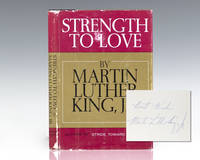
1963rif. JH1151489New York: Harper & Row 1963. Hardcover. . Very good condition./Very good moderatly edgeworn and rubbed dust jacket. . Not price clipped $3.50. Signed by author Best Wishes Martin Luther King Jr. Gift inscription by Kivie Kaplan who was a member of the NAACP and elected a member of the board in 1954. He certainly would have know Martin Luther King Jr. Wake up White Americans letter laid in. It mentions Kivie Kaplan as a jew who raises money for the NAACP. Philosophy Phl New York: Harper & Row hardcover
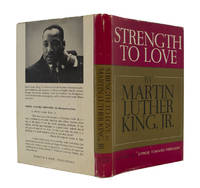
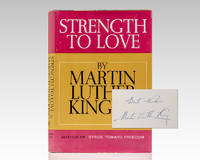
1963rif. 68866New York: Harper & Row Publishers 1963. Full Description: KING Martin Luther Jr. Strength to Love. New York: Harper & Row Publishers 1963. Signed by King on front free end paper "Best Wishes/Martin Luther King". In publisher's dust jacket. Octavo 8 3/8 x 5 5/8 inches; 212 x 144 mm. x 2 146 2 blank pp. Below the signature is an ownership stamp reading "Golden State Mutual Life Ins. Co." Publisher's quarter black cloth over black paper boards. Spine lettered in gilt. In publisher's non-price clipped dust jacket. Jacket with some rubbing along edges and at the top of front panel. Top of jacket spine with some very minor chipping. Bottom of jacket spine with a one-inch closed tear. Overall a very good jacket and an about fine book. This copy's provenance is particularly interesting being that is was once part of the art collection of the Golden State Mutual Life Insurance Company the insurance company renown for being one of the largest Black-owned insurance companies in the Western United States and one of the few places in the 1920s that would insure Black people. "Golden State Mutual founder William Nickerson Jr. moved to Los Angeles from Texas in 1921 as an official representative of the Texas-based insurance company American Mutual Benefit Association. When he arrived in California he soon discovered that the state's existing insurance agencies viewed its 40000 Black citizens as either uninsurables or extraordinary risks. Black residents were only accepted at discriminatory premium rates or denied insurance coverage altogether." Online Archives of California. "The Golden State Mutual Life Insurance Company was founded on July 23 1925 in Los Angeles by William Nickerson Jr. George A. Beavers Jr. and Norman O. Houston. Their mission was to provide dignified employment for African Americans and to provide them with insurance protection. Golden State Mutual operated for eighty-four years and grew to become one of the largest Black-owned companies in the United States." Online Archives of California. "The Golden State Mutual Life Ins. Co. owned a significant collection of artwork by African American artists acquired and curated by one of their employees artist William Pajaud. As art historian Kellie Jones states the company had 'committed itself to supporting black creativity' since its founding but Pajaud 'moved Golden State to a new level of support for artists'.6 Employed in 1957 Pajaud worked initially as art director in design for the company and then ran the public relations department but as a trained artist had a knowledge of art and connections with many fellow artists. He proposed starting a company collection in 1965 to celebrate the company's fortieth birthday and with a small budget acquired over 200 works of art over the next twenty or so years. The collection was auctioned in 2007 when the company went out of business." Wikipedia. Strength to Love is the second book written by Martin Luther King Jr. and it is a collection of his sermons. This first edition was published in 1963 the same year he organized the nonviolent protests in Birmingham Alabama and organized the March on Washington where he gave his most famous "I Have A Dream" speech. He was awarded the Nobel Peace Prize the following year. HBS 68866. $10000. Harper & Row Publishers unknown books
1729rif. 041022Leipzig Johann Heinrich Zedler/Register: Leipzig Bernhard Christoph Breitkopf 1729-1733/1740 1729. Hardcover. Very Good. Des Theuren Mannes Gottes D. Martin Luthers Sämtliche Theils von Ihm selbst Deutsch verfertigte theils aus dessen Lateinischen ins Deutsche übersetzte Schriften und Werke Welche aus allen vorhin Ausgegangenen Sammlungen zusammen getragen Und Anietzo in eine bequemere und nach denen Materien eingerichtete Ordnung gebracht nach denen ältesten und besten Exemplarien mit Fleisz übersehen und verbessert mit verschiedenen in denen Altenburgischen und andern Tomis ermangelnden Schrifften vermehret und mit nöthigen Vorberichten versehen. WITH in Volume XXII: M. Johann Jacob Greiffs Pastoris in Mölbis Vollständige Register über die XXII Leipziger Theile der gesammten Schriften Des seligen D. Martin Luthers Nebst einem auf die Wittenbergischen Jenischen 1740. 22 volumes in 22 bound vellum bindings. Marble endpapers. Interior very good pages evenly browned. Leipzig Johann Heinrich Zedler/Register: Leipzig, Bernhard Christoph Breitkopf 1729-1733/1740 hardcover
1963rif. 65890Atlanta: np 1963. 8pp. Mimeographed on rectos only bound with single staple. Tanned overall else in very good condition. One of an unknown but no doubt small number printed for colleagues attendees and the press. Provenance upon request. "Dr. King discusses the issues of segregation poverty and discrimination within the City of Atlanta in this 1963 speech at the Pilgrimage for Democracy. He explains that although Atlanta was thought to be a place of "racial harmony" the reality of glaring discrimination in Atlanta's schools restaurants and housing has left the local Negro community "tired" and hungry for change." www.thekingcenter.org. We locate only one other example in the King papers at Stanford University. np unknown
1737rif. 761397Erfurt: heirs of Carl Friedrich Jungnicols 1737. Vellum. Quarto Five volumes Text in German with Latin Captions above engravings. Vellum shows normal aging spine labels intact. Paper aged-tanned bindings sound. Photos available. Copperplate engravings throughout the original text AT Vol I: Frontispiece 2 pages of King Portraits Illustration on 114 Extendable page near 127 4 pages of illustrations around 129 illustration on 180. AT Vol II: 3 prints between 470 and 471 One after 472 Print depicting Moloch after 734. AT Vol III: Temple illustration around 1119. NT Vol I: Two illustrations after page 42 Fold-out page after 47. NT Vol II No original engravings. There are 844 total added engravings on quarto pages with a single page per leaf that come from the Biblia Ectypa of Christoph Weigel which are unnumbered 840 total AT Vol I: 133 AT Vol II: 176 AT Vol III: 83 NT Vol I: 291 NT Vol II: 156. Notes on the Biblia Ectypa engravings: they appear to be in very good condition with only slight staining on a select few ~12. In AT Vol II there is a print error on the border of plate 73 and plate 88 is slightly tilted. The engravings in the New Testament are occasionally signed either by J.J. Sandrart 44 times or by G. C. Eimmart 33 times. Sandrart’s signatures are concentrated in the second volume and a select cluster in the first while Eimmart’s make up most of the first volume. Not all engravings are signed and none of the engravings in any of the Old Testament volumes have signatures. In NT Vol I some of the etchings are numbered at the top of the border these appear in the scenes of the crucifixion in the final chapters of Luke Ordering of numbering is 6 13 12 16 27 36 37 38 40 41 42 49 47 48 in that order and John 8 14 18 26 31 33 34 43 46 49. The volumes are uniformly bound in vellum binding with only one section with around 7 pages in NT Vol II that is loose. Page 743 in AT Vol II has a small rip on the upper right side around an inch long. The plates are most likely from the 1730 Augsburg reprinting of the Biblia Ectypa which was done after the death of Christoph Weigel. Even though there are some plates at the beginning of NT Vol II that show Weigel’s extant signature Christ. Weigel excudit those plates were reused rather than being remade. Photos available. Erfurt: heirs of Carl Friedrich Jungnicols hardcover
1963rif. 65890Atlanta: np 1963. 8pp. Mimeographed on rectos only bound with single staple. Tanned overall else in very good condition. One of an unknown but no doubt small number printed for colleagues attendees and the press. Provenance upon request. "Dr. King discusses the issues of segregation poverty and discrimination within the City of Atlanta in this 1963 speech at the Pilgrimage for Democracy. He explains that although Atlanta was thought to be a place of "racial harmony" the reality of glaring discrimination in Atlanta's schools restaurants and housing has left the local Negro community "tired" and hungry for change." www.thekingcenter.org. We locate only one other example in the King papers at Stanford University. np unknown books
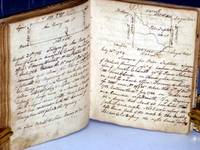
rif. 031811Major William Haymond 1740-1821 Revolutionary War officer and first surveyor of Harrison County Virginia appointed 1784 kept a rare detailed field diary of surveys from the late 18th century. Covering parcels of 1000-5000 acres the volume records names measurements maps and land patents often correcting and refining entries found in Sims Index to Land Grants in West Virginia. Patents under the new U.S. government some issued before the Constitution’s ratification are meticulously noted with hundreds of named purchasers. Among the most notable are surveys for John Tyler Sr. Governor of Virginia and father of President John Tyler. unknown
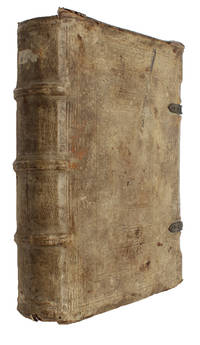
1556rif. 60674Ihenae (Jena), Rhodius (Rödinger), 1556. 4to. In contemporary blindstamped pigskin over wooden boards with three raised bands and two clasps. Wear and soiling to extremities. Pigskin partly detached to upper part of boards. Previous two owner's names in contemporary hand to title-page. A few occassional underlignings and marginal annotations in contemporary hand throughout. Small worm-tract affecting last 20 leaves, internally generally fine. (10), 367 pp.
1556rif. 60674Ihenae Jena Rhodius Rödinger 1556. 4to. In contemporary blindstamped pigskin over wooden boards with three raised bands and two clasps. Wear and soiling to extremities. Pigskin partly detached to upper part of boards. Previous two owner's names in contemporary hand to title-page. A few occassional underlignings and marginal annotations in contemporary hand throughout. Small worm-tract affecting last 20 leaves internally generally fine. 10 367 pp. Rare first printing of Martin Luther's early letters from 1507 to 1522 spanning the years from the celebration of his first Mass to his removal to Wartburg Castle after the Diet of Worms. Among them is a notable letter Cardinal Albrecht Archbishop of Magdeberg and Mainz accompanying a copy of the 95 Theses composed on the very day October 31st 1517 when Luther affixed the Theses to the door of the church in Wittenberg and Luther's first letter to Erasmus penned on March 28th 1519. These letters provide a most interesting perspective into Martin Luther's personal and public reflections on crucial aspects of the early days of the Reformation. The collection encompasses correspondence with figures such as Emperor Charles V Pope Leo X King Henry VIII Georg Spalatin Philip Melanchthon Frederick Elector of Saxony Andreas Karlstadt Cardinal Tommaso de Vio Cajetan and many others. The present work was edited by Joannes Aurifaber 1519-1575 Luther’s private secretary who lived with Luther at the time of his death: “Joannes Vinariensis; 1519–1575 was born in the county of Mansfeldt in 1519. He studied at Wittenberg where he heard the lectures of Luther and afterwards became tutor to Count Mansfeldt. In the war of 1544–45 he accompanied the army as field-preacher and then lived with Luther as his famulus or private secretary being present at his death in 1546. In the following year he spent six months in prison with John Frederick elector of Saxony who had been captured by the emperor Charles V. He held for some years the office of court-preacher at Weimar but owing to theological disputes was compelled to resign this office in 1561. In 1566 he was appointed to the Lutheran church at Erfurt and there remained till his death in November 1575. Besides taking a share in the first collected or Jena edition of Luther’s works 1556 Aurifaber sought out and published at Eisleben in 1564–1565 several writings not included in that edition. He also published Luther’s Letters 1556 1565 and Table Talk 1566. This popular work which has given him most of his fame is unfortunately but a second or third hand compilation.” Encyclopedia Britannica. A second volume was published as “Secundus tomus epistolarum” in 1565. Adams L1805 BM STC German 1455-1600; p. 535 hardcover
1963rif. 151642New York: Harper & Row Publishers 1963. First edition of Dr. King’s second book of which Coretta Scott King noted “If there is one book Martin Luther King Jr. has written that people consistently tell me has changed their lives it is Strength to Love.” Octavo original half cloth. Boldly signed by the author on the front free endpaper "Best Wishes Martin Luther King." Fine in a near fine dust jacket. Housed in a custom half morocco clamshell box made by the Harcourt Bindery. Strength to Love was Martin Luther King’s first volume of sermons published the same year in which he penned his Letter from a Birmingham Jail and joined the historic March on Washington and delivered his famous I have a dream speech. The following year he won the Nobel Peace Prize. King notes in the preface: “In these turbulent days of uncertainty the evils of war and of economic and racial injustice threaten the very survival of the human race. Indeed we live in a day of grave crisis. The sermons in this volume have the present crisis as their background; and they have been selected for this volume because in one way or another they deal with the personal and collective problems that the crisis presents.” Coretta Scott King said about this book that it "best explains the central element of Martin Luther King Jr.' s philosophy of nonviolence: His belief in a divine loving presence that binds all life. By reaching into and beyond ourselves and tapping the transcendent moral ethic of love we shall overcome these evils." Harper & Row, Publishers hardcover
1958rif. 140945324New York: Harper & Brothers 1958. First Edition. Very Good. Advance uncorrected proof of the first edition. 5-3/4" x 7. Bound in publisher's stiff blue and white wraps with plastic comb-binding. Very Good. Half-title page with publisher's review slip glued to the top edge is detached from the binding. Rusty paperclip to top of one page sporadic marking mostly underlining and marginal brackets throughout. MLK's first book recounting his nonviolent successful organizing of the Montgomery bus boycott and the beginning of the Nonviolent Civil Rights Movement. Harper & Brothers unknown books
1519rif. 4926No place: Erfurt: No printer: Matthes Maler No date: 1519. ONE OF THREE PRINTINGS ALL PRINTED IN 1519 ALL BY THE SAME PRINTER. This the second listed by Benzing has "Responsio Carolostadij" on leaf A6r line 24 and "Responsio Eckij" on leaf B1r line 3 rather than Responsio Carolostadij." and "Responsio. Eckij." as in the first. The third issue has "Eccii" on the title in Gothic character. For the variants see Dommer "Lutherdrucke auf der Hamburger Stadtbibliüthek" p. 41 f. Nr. 79 and 80. Hardcover. Fine. Bound in 19th c. drab wrappers sunned. The text is in fine condition a few leaves lightly toned title and blank verso of final leaf lightly soiled. Title with short bibliographical reference and 2 stamps Nuremberg city library with deaccession stamp. A printed eye-witness transcript of the Leipzig Disputation of 1519. The debate took place from June 27th to July 15th between the reformers Martin Luther 1483-1546 and Luther's Wittenberg colleague Andreas Bodenstein von Karlstadt 1486-1541 representing emerging "Protestant" views and the Ingolstadt theologian Johannes Eck 1486-1543 representing Church orthodoxy. This is the first printed account of the entire debate. A notarial transcript "protocol" of about two-thirds of the debate was printed at about the same time see note in references but precedence cannot be established. No other edition of the complete text appeared until 1729. "In the fateful series of events that led from Martin Luther's writing of the Ninety-Five Theses on the power of indulgences in 1517 to his condemnation at the Diet of Worms in 1521 few were more significant than the Leipzig Debate of 1519. It began as a disputation between Karlstadt and Eck on free will and grace in Christian life. When the topic turned to the authority of the church and papacy however Luther stepped in with fateful consequences. At the debate he stood in front of gathered theologians students and nobility and publicly expressed sympathy for the Greek Church and the Hussites declared that popes and councils could err and submitted himself to the authority of Holy Scripture above all. "Afterwards Luther's case seemed to his critics all the more urgent and they moved quickly to secure his excommunication as a heretic. Once reports of the debate spread theologians and theological faculties again took sides as they had after the controversy over the Ninety-Five Theses university students shifted loyalties and even institutions and legal proceedings against Luther resumed in Rome. In the wake of Leipzig Luther began to write highly controversial treatises denounced the pope as Antichrist famously burned the bull proscribing his teachings and was finally excommunicated in January 1521."Leppin and Maddox Luther at Leipzig: Martin Luther the Leipzig Debate and the Sixteenth-Century Reformations pp. 1 and 11 The Account: The debate was a public affair that went on for seventeen full days from June 27th to July 15th 1519 focused upon thirteen academic theses agreed to by Eck and Karlstadt beforehand with Luther's knowledge and cooperation. Prior to the debate against the preference of Eck Luther and Karlstadt insisted that what was said by all three disputants be dictated directly to appointed notaries present during the debate. This had the effect of slowing the debate down considerably and allowed other attendees time to make their own transcripts. It is quite possible that the account printed in this volume was written and edited for the press by Luther's friend Johann Lang of Erfurt 1487-1548 who was present at the Debate. In the brief preface the editor suggests that he and the eye-witness are one and the same: "Reader. you have here the famous debate held at Leipzig. which we saw and heard "Habes hic lector quisquis es disputationem illam celebrem quam Lipsiae vidimus et audivimus inter insignes viros." Otto Seitz "Der authentische Text der Leipziger Disputation"1903 p. 8 f. while not disputing the editor's claim that his text is an eye-witness account demonstrates that the editor was not publishing a copy of the official notarial report. This is borne out by the editor himself who writes in his preface that although printing the notarial transcript was officially banned he is not in violation of the ban on printing because it only applies to the notarial copies not to private transcripts of which -he tells us- there were "more than 30" -proof that the authorities did not wish to conceal what was said. Seitz does point out that there are two passages in the printed text that indicate that the editor had access to the official transcript. The Aftermath of the Leipzig Debate: "After Leipzig the constellation of issues involved in the Luther affair had shifted from questions surrounding grace and repentance to the longstanding problem of authority in the church especially that of the pope. Luther and Eck had debated how papal authority should be understood. Does the pope rule over all the churches as the vicar of Christ on earth Does papal spiritual and jurisdictional authority over the whole church reflect the design and intent of Christ the Savior More to the point does the pope rule as a monarch in the church 'de iure divino' that is as a matter of divine law If so where does that leave the authority of Holy Scripture "Questions such as these suggested a vexing series of further queries. What is the relationship between the Bible and church tradition especially church councils and the writings of the church fathers Whether the pope is an ecclesial monarch or not is he subject to Scripture as the Word of God limited that is in what he can say by what the Bible says In the heated clash at Leipzig in 1519 Eck defended the position that the pope rules over all the particular churches within the one church and that he does so 'de iure divino'. Luther on the other hand publicly argued for the first time that both popes and councils could err as he thought even a brief perusal of church history would demonstrate. For support of this point he turned at Leipzig not only to Scripture but to the history of the church and its canon law as well. "Leipzig thus marked a decisive moment in the evolution of what would become known as Protestantism in contradistinction to 'Roman' Catholicism. Leipzig increased the velocity at which the two sides moved toward these 'termini ad quos' and thus toward ecclesiastical division. The public contest between Karlstadt Luther and Eck each a highly skilled and devout theologian led to the division of the western Catholic church."Leppin and Maddox p. 11. No printer: ?Matthes Maler, No date: hardcover
1519rif. 4926No place: Erfurt: No printer: Matthes Maler No date: 1519. ONE OF THREE PRINTINGS ALL PRINTED IN 1519 ALL BY THE SAME PRINTER. This the second listed by Benzing has "Responsio Carolostadij" on leaf A6r line 24 and "Responsio Eckij" on leaf B1r line 3 rather than Responsio Carolostadij." and "Responsio. Eckij." as in the first. The third issue has "Eccii" on the title in Gothic character. For the variants see Dommer "Lutherdrucke auf der Hamburger Stadtbibliüthek" p. 41 f. Nr. 79 and 80. Hardcover. Fine. Bound in 19th c. drab wrappers sunned. The text is in fine condition a few leaves lightly toned title and blank verso of final leaf lightly soiled. Title with short bibliographical reference and 2 stamps Nuremberg city library with deaccession stamp. A printed eye-witness transcript of the Leipzig Disputation of 1519. The debate took place from June 27th to July 15th between the reformers Martin Luther 1483-1546 and Luther's Wittenberg colleague Andreas Bodenstein von Karlstadt 1486-1541 representing emerging "Protestant" views and the Ingolstadt theologian Johannes Eck 1486-1543 representing Church orthodoxy. This is the first printed account of the entire debate. A notarial transcript "protocol" of about two-thirds of the debate was printed at about the same time see note in references but precedence cannot be established. No other edition of the complete text appeared until 1729. "In the fateful series of events that led from Martin Luther's writing of the Ninety-Five Theses on the power of indulgences in 1517 to his condemnation at the Diet of Worms in 1521 few were more significant than the Leipzig Debate of 1519. It began as a disputation between Karlstadt and Eck on free will and grace in Christian life. When the topic turned to the authority of the church and papacy however Luther stepped in with fateful consequences. At the debate he stood in front of gathered theologians students and nobility and publicly expressed sympathy for the Greek Church and the Hussites declared that popes and councils could err and submitted himself to the authority of Holy Scripture above all. "Afterwards Luther's case seemed to his critics all the more urgent and they moved quickly to secure his excommunication as a heretic. Once reports of the debate spread theologians and theological faculties again took sides as they had after the controversy over the Ninety-Five Theses university students shifted loyalties and even institutions and legal proceedings against Luther resumed in Rome. In the wake of Leipzig Luther began to write highly controversial treatises denounced the pope as Antichrist famously burned the bull proscribing his teachings and was finally excommunicated in January 1521."Leppin and Maddox Luther at Leipzig: Martin Luther the Leipzig Debate and the Sixteenth-Century Reformations pp. 1 and 11 The Account: The debate was a public affair that went on for seventeen full days from June 27th to July 15th 1519 focused upon thirteen academic theses agreed to by Eck and Karlstadt beforehand with Luther's knowledge and cooperation. Prior to the debate against the preference of Eck Luther and Karlstadt insisted that what was said by all three disputants be dictated directly to appointed notaries present during the debate. This had the effect of slowing the debate down considerably and allowed other attendees time to make their own transcripts. It is quite possible that the account printed in this volume was written and edited for the press by Luther's friend Johann Lang of Erfurt 1487-1548 who was present at the Debate. In the brief preface the editor suggests that he and the eye-witness are one and the same: "Reader. you have here the famous debate held at Leipzig. which we saw and heard "Habes hic lector quisquis es disputationem illam celebrem quam Lipsiae vidimus et audivimus inter insignes viros." Otto Seitz "Der authentische Text der Leipziger Disputation"1903 p. 8 f. while not disputing the editor's claim that his text is an eye-witness account demonstrates that the editor was not publishing a copy of the official notarial report. This is borne out by the editor himself who writes in his preface that although printing the notarial transcript was officially banned he is not in violation of the ban on printing because it only applies to the notarial copies not to private transcripts of which -he tells us- there were "more than 30" -proof that the authorities did not wish to conceal what was said. Seitz does point out that there are two passages in the printed text that indicate that the editor had access to the official transcript. The Aftermath of the Leipzig Debate: "After Leipzig the constellation of issues involved in the Luther affair had shifted from questions surrounding grace and repentance to the longstanding problem of authority in the church especially that of the pope. Luther and Eck had debated how papal authority should be understood. Does the pope rule over all the churches as the vicar of Christ on earth Does papal spiritual and jurisdictional authority over the whole church reflect the design and intent of Christ the Savior More to the point does the pope rule as a monarch in the church 'de iure divino' that is as a matter of divine law If so where does that leave the authority of Holy Scripture "Questions such as these suggested a vexing series of further queries. What is the relationship between the Bible and church tradition especially church councils and the writings of the church fathers Whether the pope is an ecclesial monarch or not is he subject to Scripture as the Word of God limited that is in what he can say by what the Bible says In the heated clash at Leipzig in 1519 Eck defended the position that the pope rules over all the particular churches within the one church and that he does so 'de iure divino'. Luther on the other hand publicly argued for the first time that both popes and councils could err as he thought even a brief perusal of church history would demonstrate. For support of this point he turned at Leipzig not only to Scripture but to the history of the church and its canon law as well. "Leipzig thus marked a decisive moment in the evolution of what would become known as Protestantism in contradistinction to 'Roman' Catholicism. Leipzig increased the velocity at which the two sides moved toward these 'termini ad quos' and thus toward ecclesiastical division. The public contest between Karlstadt Luther and Eck each a highly skilled and devout theologian led to the division of the western Catholic church."Leppin and Maddox p. 11. No printer: ?Matthes Maler, No date: hardcover books
1963rif. 130633New York: Harper & Row Publishers 1963. First edition of Dr. King’s second book of which Coretta Scott King noted “If there is one book Martin Luther King Jr. has written that people consistently tell me has changed their lives it is Strength to Love.” Octavo original half cloth. Boldly signed by the author on the front free endpaper "Best Wishes Martin Luther King." Fine in a near fine dust jacket with light wear. Strength to Love was Martin Luther King’s first volume of sermons published the same year in which he penned his Letter from a Birmingham Jail and joined the historic March on Washington and delivered his famous I have a dream speech. The following year he won the Nobel Peace Prize. King notes in the preface: “In these turbulent days of uncertainty the evils of war and of economic and racial injustice threaten the very survival of the human race. Indeed we live in a day of grave crisis. The sermons in this volume have the present crisis as their background; and they have been selected for this volume because in one way or another they deal with the personal and collective problems that the crisis presents.” Coretta Scott King said about this book that it "best explains the central element of Martin Luther King Jr.' s philosophy of nonviolence: His belief in a divine loving presence that binds all life. By reaching into and beyond ourselves and tapping the transcendent moral ethic of love we shall overcome these evils." Harper & Row, Publishers hardcover
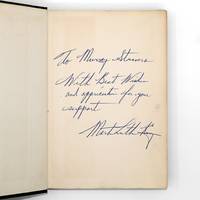
1963rif. 374986New York: Harper & Row 1963. First edition first printing. Signed and inscribed on the front free endpaper. 146pp. 1 vols. 8vo. Publisher's black cloth and charcoal paper-covered boards gilt publisher's device to upper cover spine lettered in gilt. Near fine in a very good unclipped dust jacket with a few small nicks and creases to edges. Housed in a gilt half-morocco clamshell box. First edition first printing. Signed and inscribed on the front free endpaper. 146pp. 1 vols. 8vo. First edition of Dr. King's second book of a collection of sermons espousing racial justice love and nonviolence. This was published in the same month April 1963 as King wrote his famous Letter from Birmingham Jail and four months before his delivery of the seminal "I Have a Dream" speech. The author's inscription reads: "To Murray Stravers With Best Wishes and appreciation for your support Martin Luther King. Harper & Row unknown