24.224 risultati
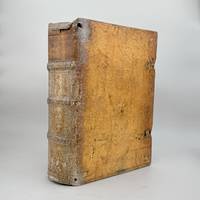
1512rif. 372103Paris: Philippe Pigouchet for Simon Vostre 1512. Title page printed in red and black with woodcut device of Simon Vostre; full page woodcuts of St. Jerome crucifixion old coloring. Text in gothic type in two columns ornamental initials some colored text ruled in red throughout. 15 340 28 leaves. Terminal black dd6 present. 1 vols. Folio. Modern linen conservation binding. First leaf toned ownership marks struck out early bibliopole's description in ink at bottom of title. Some minor worming at end. Very good. Title page printed in red and black with woodcut device of Simon Vostre; full page woodcuts of St. Jerome crucifixion old coloring. Text in gothic type in two columns ornamental initials some colored text ruled in red throughout. 15 340 28 leaves. Terminal black dd6 present. 1 vols. Folio. Large folio Bible printed for Simon Vostre by Philippe Pigouchet the famous printer of some of the most beautiful Books of Hours. Uncommon in institutions and in the trade. Renouard ICP II 248; Delaveau & Hillard 778 Philippe Pigouchet for Simon Vostre unknown books
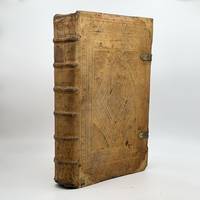
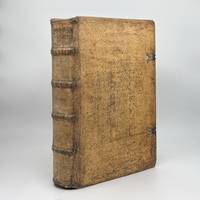
1609rif. 371891Geneva: Pierre de la Rouière 1609. In two columns. 28 184 283 1 84 203 1; 8 186 2 134 2pp. Folio 15 x 9-1/2 inches. Contemporary pigskin covers blocked in gilt and blind remnants of paper label on the spine gauffered edges lacks bosses and hinges and clasps worn at extremities and bottom of spine. Provenance: Johann Georg Feuchter of Jura-Weickersroda inscription on pastedown that the bible was purchased at an August 6 1728 auction for 4 florins and 30 groschen; General Theological Seminary blindstamp. In two columns. 28 184 283 1 84 203 1; 8 186 2 134 2pp. Folio 15 x 9-1/2 inches. Edited with introduction by Benito Arias Montanus 1527-1598 Spanish orientalist and editor of the Antwerp Polyglot a reprint of Plantin's similar edition. Darlow & Moole 5113 OT and 4662 NT Pierre de la Rouière unknown books
1607rif. 372868Sanctii Gervasii Saint-Gervais Geneva: Sumptibus Caldorianae Societatis 1607. O.T. and N.T. title pages with printer's device of Fama; each part of O.T. with sectional title parts 2-4 paginated consecutively. 1 vols. Folio. Old calf boards ruled in gilt. Rebacked with morocco spine label. Some paper flaws at end. Portrait of William Lupton 1676-1726 dated 1727 frontispiece to his Sermons on front pastedown. Cloth slipcase and folding box. O.T. and N.T. title pages with printer's device of Fama; each part of O.T. with sectional title parts 2-4 paginated consecutively. 1 vols. Folio. The Junius-Tremellius Bible with Theodore de Beze's translation of the New Testament. This was for many years the standard Latin Bible favored by Protestants. Uncommon OCLC records fewer than 20 locations with interesting English provenance. William Slater or Slatyer 1587-1647 whose Psalmes or songs of Sion: turned into the language of a strange land 1631 "was on 9 July 1631 ordered to be burned. Summoned before the court of high commission on 20 October Slatyer confessed that he had 'added thereunto a scandalous table to the disgrace of religion and to the encouragement of the contemners thereof'; judging from an annotated copy of the work dated 1642 this probably consisted of a list of popular tunes to which the psalms might be sung" ODNB He was also editor of The Psalmes of David in 4 languages 1643 "a high quality edition containing both words and music the latter principally by Thomas Ravenscroft". Not in Darlow & Moule; Bibles imprimées 976 locates a copy with later Genevae imprint. Provenance: William Slater his Latin ownership signature; W.A. Copinger; General Theological Seminary gift of Cornelius Vanderbilt and Dean Augustus Hoffman bookplates and blindstamps Sumptibus Caldorianae Societatis unknown books
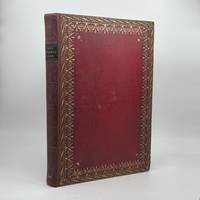
1642rif. 371830Paris: Ek basilikēs typographias Imprimerie Royale 1642. Engraved title by by Claude Mellan engraved head and tail pieces and initials. 2 453 3 pp. Extra-illustrated with a later English printed "Abbreviations and Connexions" leaf inserted after the title. Folio 15-1/2 x 10-5/8 inches. Late eighteenth or early nineteenth century red morocco gilt marbled endpapers gilt edges. Neatly rebacked. Cloth slipcase and chemise. Engraved title by by Claude Mellan engraved head and tail pieces and initials. 2 453 3 pp. Extra-illustrated with a later English printed "Abbreviations and Connexions" leaf inserted after the title. Folio 15-1/2 x 10-5/8 inches. Known as the Mazarin edition "since it appeared under the auspices of the great Cardinal" D&M it is the first edition of the Greek New Testament from the Imprimerie Royale founded just two years prior. Inserted before the engraved title page is a partly-printed certificate of the Collegium Mazarinaeum awarding this volume as a prize in Rhetoric to Philippus Matthaeus Guillot dated MDCC in manuscript i.e. 1700 and signed by the college's master P.-J. Le Chapelier Pierre-Jean le Chapelier de Mauron abbé de Ste Marie de Boquen in Brittany with the trace of a seal below. The College Mazarin or College des Quatre-Nations was established by bequest of Cardinal Mazarin 1602-1661 and opened its doors to students in 1688. Darlow & Moule 4687. Provenance: Philippus Matthaeus Guillot certificate his signature at foot of title engraving; Montagu Barton armorial bookplate; John Horatio Nelson gift inscription dated 1841; General Theological Seminary bookplate perforated stamp Ek basilikēs typographias [Imprimerie Royale] unknown books
1509rif. 372247Basel: per Johannem Petri de Langdorff et Johannem Froben de Hammelburg 1509. Printer's device on title hand colored at an early date. Large manuscript initials in red and blue; rubricated throughout. 14 CCCXLVII 28 leaves. Manuscript references and extensive early marginalia in Hebrew in O.T.; citations in Table keyed to N.T. and underlined. Contemporary colored deerskin sectional fore-edge tabs. Folio 13 x 8-1/2 inches. Full burgundy morocco by Zaehnsdorf. Title leaf repaired at gutter and bottom corner; minor staining. Printer's device on title hand colored at an early date. Large manuscript initials in red and blue; rubricated throughout. 14 CCCXLVII 28 leaves. Manuscript references and extensive early marginalia in Hebrew in O.T.; citations in Table keyed to N.T. and underlined. Contemporary colored deerskin sectional fore-edge tabs. Folio 13 x 8-1/2 inches. A scarce Latin bible the first edition of the Vulgate with the printed marginal references to canon law. These 'Concordantiae iuris canonici' according to Masch were compiled by Johannes Niuicellensis an abbot and were printed separately in 1482. This is also the first edition to printed the commendatory hexastich by Matthias Sambucellus on the title page beginning: "Emendata magis scaturit nunc biblia tota." A tall copy with generous margins lovely stylish manuscript initials and full rubrication. VD16 B2584. Delaveau & Hillard 771; cf. Darlow & Moule note after 6092. Provenance: Dr. Charles Clay Manchester 19th century inscription on front endpaper sold Sotheby Wilkinson & Hodge May 18 1883; General Theological Seminary bookplate blindstamps; [per Johannem Petri de Langdorff et Johannem Froben de Hammelburg unknown books
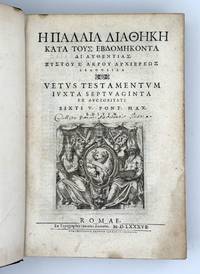
1590rif. 372093Rome: Ex Typographia Apostolica Vaticana 1590. First edition of the Sixtine Vulgate Bible. Engraved illustrated title-page. Title in red and black text in double columns. 8 479 1; 5 482-899; 5 902-1141pp. Lacks the 4ff preface i.e. the papal bull of Sixtus V beginning "Aeternus ille caelestium terrestriumq. rerum omnium conditr ac moderator Deus ." as often. Folio 13-1/2 x 9-1/2 inches. Later red morocco spine darkened corners bumped some repairs at head and tail of spine marbled endpapers gilt edges. Engraved title and title page paper-backed. Red quarter morocco clamshell box. First edition of the Sixtine Vulgate Bible. Engraved illustrated title-page. Title in red and black text in double columns. 8 479 1; 5 482-899; 5 902-1141pp. Lacks the 4ff preface i.e. the papal bull of Sixtus V beginning "Aeternus ille caelestium terrestriumq. rerum omnium conditr ac moderator Deus ." as often. Folio 13-1/2 x 9-1/2 inches. The Sixtine Bible containing the Vulgate text as edited by Pope Sixtus V intended as the first ecclesiastically authorized text to be used throughout Christendom. "In its text it comes closer to R. Stephanus' Bible of 1538-40 than to the Louvain editions" Darlow & Moule who discuss the textual variations. The association with Aldus II suggested by Renouard and lasting long thereafter is spurious. Pope Sixtus V died soon after the book was printed and was followed by three short-lived popes. The Sixtine Bible had "aroused antagonism among both clergy and laity" and was swiftly condemned; the edition was withdrawn by Pope Clement VIII soon after his elevation to the papal throne in 1592 and many copies were destroyed. Preparations began in 1591 for a new edition of the Vulgate printed in 1592 and known as the Clementine Bible which long remained the standard Vulgate text. As often e.g. the Brooker copy this copy without the preface the Bull of Sixtus declaring the text to be immutable and forbidding any reprint without papal permission. Copinger 521; Darlow & Moule 6181; Adams B1098; BM STC Italian 1465-1600 p. 93; EDIT16 CNCE 5805. Provenance: Henry John Farmer Atkinson his sale Sotheby Wilkinson & Hodge March 1896 lot 2752 sold for £18.15s to; Bernard Quaritch; General Theological Seminary bookplate Ex Typographia Apostolica Vaticana unknown books
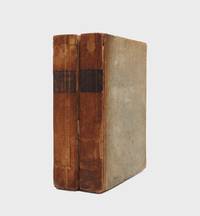
1810rif. 373845Boston: De l'Imprimerie de J. T. Buckingham 1810. 403; 3261pp. Half-titles errata leaf at back of second volume. Uncut. 2 vols. 8vo. Publisher's paper-backed boards printed paper label one cover detachedsome darkening and spotting chipping and cracking of spines. Spotting and light soiling of text mostly marginal and light. Very good copies in brown cloth open faced case. 403; 3261pp. Half-titles errata leaf at back of second volume. Uncut. 2 vols. 8vo. First American edition of the Bible in French. De Sacy's translation was the most widespread French Bible of the 18th century. O'Callaghan 102; Shaw & Shoemaker 19531; Rumball-Petre "Rare Bibles" 185 De l'Imprimerie de J. T. Buckingham unknown books
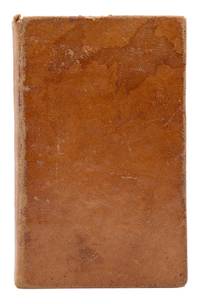
1790rif. 374001New York: Hugh Gaine 1790. 336pp. Text printed in two columns printer's device on the title. 12mo. Contemporary sheep minor wear. Tear to front endpaper else very good. 336pp. Text printed in two columns printer's device on the title. 12mo. The second NT printed in New York preceded only by the prior edition by Gaine dated 1789 known in but one extant example at NYPL and evidently from the same setting of type as this edition. The complete Bible was not published in New York until 1792. Evans 22359; Hills 27; ESTC W4679 Hugh Gaine unknown books
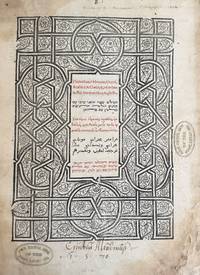
1516rif. 371021Genoa: Petrus Paulus Porrus 1516. Title printed in red and black within woodcut arabesque border printer's device on final leaf. Parallel text in Hebrew Latin Greek Arabic and Chaldaean Aramaic 4 columns to a page 41 lines. 13 woodcut floriated initials. A10 B-Z8 &8 con6; 200 leaves complete. Folio 13-1/8 x 9-3/8 inches. Contemporary blind tooled pigskin over bevelled wooden boards boards with repeated roll of hound hunter and stag spine with floral tools. Clasps perished early repairs with vellum at lower corners; spine darkened with chip at foot joint starting wormholes to the covers. Toning throughout worm holes throughout but heavier to the preliminary and terminal leaves paper loss not affecting text at the lower outer corners of the first 3 leaves minor dampstaining at the lower corners of most leaves and extending from the top inner margin. Scattered early marginalia. Title printed in red and black within woodcut arabesque border printer's device on final leaf. Parallel text in Hebrew Latin Greek Arabic and Chaldaean Aramaic 4 columns to a page 41 lines. 13 woodcut floriated initials. A10 B-Z8 &8 con6; 200 leaves complete. Folio 13-1/8 x 9-3/8 inches. The Genoa Psalter also known as the Octaplum or Quadruplex Psalter was the first polyglot psalter to be published and the first polyglot edition of any part of the Bible. Financed by the Oriental language scholar Bishop Agostino Giustiniani and printed in Genoa in 1516 it presents the psalms laid out in eight columns i.e. four per page on double-page spreads: in Hebrew a Latin paraphrase the Vulgate Latin the Septuagint Greek Arabic Chaldean Aramaic a Latin paraphrase and the editor's notes. "A monument of Renaissance typography this Psalter was linguistically the most ambitious work attempted to date and the first Polyglot work ever published. It provides the Psalms in five languages as well as a marginal scholarship based largely on rabbinic sources. The Arabic text is one of the first two texts and the first biblical text ever printed in this language. The Hebrew types used in this book were apparently never used again" B. Sabin Hill Hebraica from the Valmadonna Trust The Piermont Morgan Library 1989 no. 18. Notably within a lengthy editor's note to Psalm XIX is what is considered the first printed biography of Christopher Columbus along with a very early description of his voyage. A native son of Genoa Giustiniani presents the discovery of the new world as a fulfilment of Biblical prophecy appropriately glossing verse four of Psalm XIX to include his biography of Columbus: "Their sound is gone out through all the earth and their words to the end of the world." The text of the biography of Columbus written a decade after his death includes a brief account of his childhood and continues at length on his discovery of America. Translated from the Latin it begins: "And so their words have reached unto the ends of the earth at least in our own times in which by the marvelous daring of Christopher Columbus of Genoa almost another world was discovered and joined to the community of Christians. And since Columbus often declared that he was chosen by God so that through him this prophecy would be fulfilled I did not consider it unsuitable to include his life here. Therefore Christopher surnamed Columbus a Genoese by birth . lived in our age and through his own efforts explored more lands and seas in a few months than almost all other mortals had done throughout all previous ages . More swiftly than the Portuguese had done he approached new lands and new peoples and at last penetrated regions unknown before now. The news of this matter quickly reached the King who - both out of rivalry with the Portuguese kings and a desire for such new marvels and glory that might accrue to him and his descendants - after long discussions with Columbus finally ordered two ships to be outfitted. With these Columbus set sail from the Fortunate Islands directing his course slightly off the western line . After many days of sailing they had covered great distances. While the others having lost all hope urged a change in course Columbus persisted asserting by reason and conjecture that continuing but a little longer might lead them to discover continents or islands. Nor was he wrong. On the following dawn they sighted land. From this event immense confidence arose in human minds. Later it was learned that these were islands and observations were made of certain peoples there uncultivated and prone to raids on their neighbors even devouring human flesh like wolves. There were violent encounters yet eventually some of these islanders were brought safely to Spain astonishing and delighting all who saw them because they were at first timid unfamiliar with approach easy to persuade and marveling at everything as new." An important and desirable work from a liturgical linguistic and historical perspective. Adams B1370; BM STC Italian p. 97; Darlow & Moule 1411; Sabin 66468; European Americana 516/4; Harrisse BAV 88; JCB 3 I:64; Smitskamp 236; Roper Early Arabic Printing in Europe in Sprachen des Nahen Ostens und die Druckrevolution p. 132; Vinograd Genoa 1. Provenance: Cenobii Alois 1570 inscription below title; Bibliotheca Regia Monacensi pencil inscription on the inside front board identifying it as a duplicate; General Theological Seminary ink and blindstamps and other markings Petrus Paulus Porrus unknown books
1653rif. 371930London: Roger Daniel 1653. Title in red and black. Engraved printer's device on the title state B. Text in two columns. 8 1279 1 pp. 4to 7-3/8 x 5-3/8 inches. Eighteenth century red morocco panelled in gilt spines gilt with black morocco lettering pieces marbled endpapers gilt edges. Provenance: Viscount Palmerston bookplate; General Theological Seminary bookplate. Title in red and black. Engraved printer's device on the title state B. Text in two columns. 8 1279 1 pp. 4to 7-3/8 x 5-3/8 inches. The rare first printing in England of the Septuagint the earliest translation of the Hebrew Old Testament into Greek the scarce printing in quarto format. The text is derived from the Sixtine text and edited by John Biddle 1615-1662 the Unitarian controversialist who was imprisoned by the Parliamentary Commissioners for his religious views. "Roger Daniel's version of the text of the Sixtine edition was prepared for the use of the scholars at Westminster School. This appeared in 1653 and was edited by the Socinian John Biddle. Its publication may have owed something to the interest in the Septuagint generated by Codex Alexandrinus and the frustration produced by the failure of Young's attempts to edit it" S. Mandelbrote "English Scholarship and the Greek Text of the Old Testament" p. 87. A rare issue from the same setting as the octavo edition imposed in quarto without rules separaring the columns. Wing 2nd ed. B2718A; ESTC R12599; Darlow & Moule 4692 Roger Daniel unknown books
1587rif. 371783Rome: Franciscus Zanetti 1587. Text in Greek with short Latin notes at the end of each verse in two columns. Large engraved vignette on title with figures of Moses and Esdras on either side of the arms of Sixtus V. aâ´ A-3Sⶠ3Tâ¸. 8 783 1pp. Folio. Eighteenth century red morocco arms of the second Duke of Newcastle on the covers marbled endpapers gilt edges minor darkening to spine and wear to joints. Scattered minor dampstaining at lower outer corner of a few leaves. Provenance: Collegii Paris. Societas Jesu.early inscription on title; Douglass Maxwell Moffat booklabel with original invoice purchasing the volume from Davis & Orioli in 1940; General Theological Seminary bookplates. Text in Greek with short Latin notes at the end of each verse in two columns. Large engraved vignette on title with figures of Moses and Esdras on either side of the arms of Sixtus V. aâ´ A-3Sⶠ3Tâ¸. 8 783 1pp. Folio. Commissioned by Pope Sixtus V to assist the revisers who were preparing the Latin Vulgate edition ordered by the Council of Trent the "Sixtine" or "Roman" edition of the Septuagint was edited by Cardinal Antonio Carafa based on the Codex Vaticanus and became the standard for all the later editions of the Septuagint for three centuries after its publication. Darlow & Moule no. 4647; Adams B1246; BM STC Italian 1465-1600 p. 94 Franciscus Zanetti unknown books
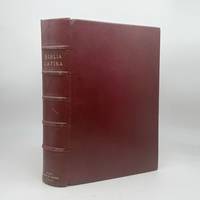
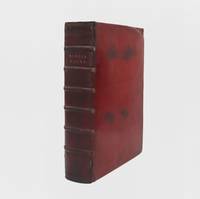
1592rif. 371810Rome: Ex Typographia Apostolica Vaticana 1592. First edition of the Clementine Bible. Edition of 500 copies. Engraved title page reading: Biblia sacra vulgatae editionis. Sixti Quinti Pont. Max. iussu recognita atque edita. Letterpress title page printed in red and black. Text in double columns. 12 1131 1 blank 23 1 blank pp. 1 vols. Folio 349 x 250 mm. Full reddish-orange levant morocco spine titled in gilt raised bands highlighted in black boards with single rule in black dated 1957 on turn-in. Fine. Leather-tipped slipcase. First edition of the Clementine Bible. Edition of 500 copies. Engraved title page reading: Biblia sacra vulgatae editionis. Sixti Quinti Pont. Max. iussu recognita atque edita. Letterpress title page printed in red and black. Text in double columns. 12 1131 1 blank 23 1 blank pp. 1 vols. Folio 349 x 250 mm. First edition of the official text of the Catholic Bible issued under sanction of Clement VIII and therefore known as the "Clementine Bible" and superseding the controversial and suppressed edition of Sixtus V of 1590. The text is preceded by Cardinal Bellarmino's preface the Decree of the Council of Trent on the canonical Scriptures and a brief by Clement VIII. "It is generally admitted that on the whole the Clementine text . is critically an improvement upon the Sixtine. . The Clementine Bible of 1592 remains to the present day the standard edition of the Roman Church" Darlow & Moule. Nice wide-margined copy of this notable edition. Brunet I 878; Darlow and Moule 6184; Adams B1101; P.M. Baumgarten Neue Kunde von alten Bibeln pp. 316-322. Provenance: W. A. Copinger bookplate; General Theological Seminary gift of Cornelius Vanderbilt and Dean Augustus Hoffman bookplates Ex Typographia Apostolica Vaticana unknown books
1585rif. 372230London: Deputies of Christopher Barker 1585. Text in black letter in two columns. General title and calendar printed in red and black titles within woodblock frames woodcut map on leaf following NT NT-O3 woodcut initials. 17 536 137pp. New Testament title page present. Lacks preliminary blank lacks the general title with a 1588 title supplied in its place lacks NT leaf V1 Titus 2:12 through Hebrews 1:10 preliminaries bound out of order. Folio 15-5/8x10-1/2 inches. Nineteenth century dark purple morocco covers blocked in blind marbled endpapers red edges. Repairs to voids in preliminaries and several leaves in the beginning of Genesis general title supplied and mounted restoration to the terminal five leaves with some losses else scattered minor staining and edge tears. Scattered early marginalia including an early female ownership signature on page 536. Bookseller's label on front endpaper J. Whereat Weston Super Mare. Text in black letter in two columns. General title and calendar printed in red and black titles within woodblock frames woodcut map on leaf following NT NT-O3 woodcut initials. 17 536 137pp. New Testament title page present. Lacks preliminary blank lacks the general title with a 1588 title supplied in its place lacks NT leaf V1 Titus 2:12 through Hebrews 1:10 preliminaries bound out of order. Folio 15-5/8x10-1/2 inches. The Bishops' version the translation overseen by Matthew Parker. ESTC S156; Herbert 188; STC 2143. Provenance: General Theological Seminary bookplates Deputies of Christopher Barker unknown books
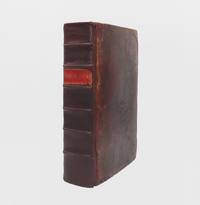
1638rif. 371824Cambridge: Thomas Buck and Roger Daniel 1638. Large paper copy. Ruled in red throughout. Roman letter in two columns. Engraved title page within architectural border featuring Biblical characters a vignette of the 'Last supper' and printer's device. 12 642 151 3 202pp. Bound with preceding the Bible: The Book of Common Prayer. 104pp. And with following the Bible: Whole Book of Psalmes. 8 1 2-90 10 pp. Folio 17 x 11 inches. Contemporary black morocco gilt covers panelled with roll tool borders and central arabesque design in gilt flat spine gilt with marching morocco labels gilt edges minor wear at joints lower corners bumped. Provenance:Webb early inscription on the front pastedown; Maggs Brothers item 827 in unidentified mid-20th century catalogue clipping laid in; General Theological Seminary bookplate. Large paper copy. Ruled in red throughout. Roman letter in two columns. Engraved title page within architectural border featuring Biblical characters a vignette of the 'Last supper' and printer's device. 12 642 151 3 202pp. Bound with preceding the Bible: The Book of Common Prayer. 104pp. And with following the Bible: Whole Book of Psalmes. 8 1 2-90 10 pp. Folio 17 x 11 inches. This edition contains the first major revisions of the King James version standardising the use of italics and altering several readings. "This remained the standard text until the publication of Dr. Paris' Cambridge edition of 1762" Herbert. A lovely example bound in contemporary English black morocco and measuring 430x280mm is considerably larger than the dimensions cited by Darlow & Moole 402 375x234 mm and Darlow & Moole 403 for a "large thick paper" copy 397x270 mm. Bible: Herbert 520; Darlow & Moule 402 and 403; ESTC S123371; STC 2nd ed 2331. Common Prayer: Griffiths 1638:2; STC 2nd ed. 16410; ESTC S902. Psalms: STC 2nd ed. 2682; ESTC S122380 Thomas Buck and Roger Daniel unknown books
rif. 371476Amsterdam: Joseph Jacob and Abraham the sons of Solomon Proops 5522. Titled printed in red and black. 2 178 2 179-332 10 Introduction etc. 2 160 2 161-350pp. Publisher's introduction and other preliminaries misbound preceding the later Prophets. Folio 15-7/8x10 inches. Nineteenth or early 20th century half morocco and marbled paper boards rear joint splitting worn at joints and head and tail of spine. Foxing principally to the title tear to the final text leaf. Provenance: General Theological Seminary bookplate. Titled printed in red and black. 2 178 2 179-332 10 Introduction etc. 2 160 2 161-350pp. Publisher's introduction and other preliminaries misbound preceding the later Prophets. Folio 15-7/8x10 inches. Besides being the first bi-lingual edition in Hebrew and Spanish this edition is the first Hebrew book whose publication was financed by an American - Abraham Mendes de Castro 1689-1762 of Curaçao - intended for use in the West Indies with the sale proceeds to benefit the Jewish communities of Jerusalem and Hebron. Cowley 102; Darlow & Moule 5156; Zedner 102; not in Steinschneider or Roest Joseph, Jacob and Abraham, the sons of Solomon Proops unknown books
1510rif. 371469Leipzig: Wolfgang Stockel 1510. Title in red and black. A-DⶠEâ´ F-JⶠKâ´ L-Mâ¶. 68 leaves. Extensive annotations throughout in Latin in a contemporary Germanic cursive comprising both interlinear notes and marginal gloss. 1 vols. Folio 12x8-1/2 inches. Early pigskin and oaken boards a remboitage from a thicker volume worn front hinge split between A2 and A3. Housed in a blue cloth slipcase. Provenance: Duplum Bibliothecae Regiae Monacensis pencil annotation; John Pintard inscription presenting the book to; General Theological Seminary bookplate and inked stamps. Title in red and black. A-DⶠEâ´ F-JⶠKâ´ L-Mâ¶. 68 leaves. Extensive annotations throughout in Latin in a contemporary Germanic cursive comprising both interlinear notes and marginal gloss. 1 vols. Folio 12x8-1/2 inches. Edited by Johann Kusthuert this printing of the Epistles of Paul was intended for the student market with the introduction addressed to studiosis sacarum litterarum tyronibus. In addition the colophon reads: Impressum ad altissimi Dei laudem ac studiosorum Sacre Scripture tyronum perfectum in officina libraria prouidi viri Vuolffgangi Stockel ciuis Liptzensis anno Domini 1510 quarto kalendis Septembris. The annotations and marginal gloss are impressive and very similar though in a different hand to the copy described by Rosenthal now at the Beinecke suggesting they are by a student at the same institution: "The present copy comes with a vast manuscript apparatus in Latin covering the entire text from St. Jerome's general preface to the last sentence of the last epistle. The annotation . is uniformly intense throughout. The script is a very small at times microscopic Germanic cursive and there is evidence of careful layout especially in the marginal gloss." Estimating the annotations to be approximately 80000 words Rosenthal describes the interlinear notes as "frequently far more than simole reading aids." He continues: "The marginal gloss includes an argumentum for each chapter and its subdivisions . There are also occasional citations from authorities such as St. Thomas and Ambrose." It is a handsomely printed volume with the title in large red letters above an 11-line subtitle in black. The verso of the title comprises a table of contents of the Pauline epistles and is followed by an introduction by Kusthuert. On the duplicates sold by the Munich royal library including the present volume see: Wagner Bettina. "'Duplum Bibliothecae Regiae Monacensis': The Munich Court Library and Its Book Auctions in the Nineteenth Century." The Papers of the Bibliographical Society of America vol. 111 no. 3 2017 pp. 345-77. Pintard 1759-1844 was a prominent New Yorker of Huguenot origin patron of education and one of the earliest and staunchest advocates for the preservation and study of the history of New York and the United States. Pintard began to work towards the establishment of a historical society in the city in early 1804 and he was the leader in the organization of the New-York Historical Society in November 1804. He was also a patron of the old French Huguenot Church of St. Esprit and the General Theological Seminary to whom he donated this volume in 1826. Scarce. OCLC locates three copies in Germany the aforementioned copy at Yale described by Rosenthal and the present example. Rosenthal B.M. Printed books with manuscript annotations 105 for a similarly annotated copy of the same edition; Panzer vii p. 169; VD16 B 4980. Not in BM STC Germany Adams or Darlow & Moule [Wolfgang Stockel] unknown books
1593rif. 371924London: Excudebant G. Bishop R. Newbery & R. Barker 1593. Six parts in one. Text printed in verse form double column references and notes in margins. 81771 blankpp; 31041 blank leaves; 3 75 i.e. 73 leaves; 6 numbered 1-12pp 13-129 leaves 1 blank; 3 4-74 leaves; 3 198 leaves. With additional blanks bound in at the front and rear. 1 vols. Folio. Eighteenth century reverse calf covers blocked in blind red morocco lettering piece repairs to joints minor loss at head of spine. Repairs at hinges scattered minor paper repairs. Provenance: Peckham Williams armorial bookplate; General Theological Seminary bookplate. Six parts in one. Text printed in verse form double column references and notes in margins. 81771 blankpp; 31041 blank leaves; 3 75 i.e. 73 leaves; 6 numbered 1-12pp 13-129 leaves 1 blank; 3 4-74 leaves; 3 198 leaves. With additional blanks bound in at the front and rear. 1 vols. Folio. The third edition of the Latin Bible printed in England in this case printing Tremellius and Junius's version of the Old Testament with Beza's translation of the New Testament accompanied by Tremellius's version based on the edition printed in Geneva in 1590 see D&M 6182. Texts printed in double columns. The complete text was printed in six parts each with a divisional title and independent pagination or foliation. The fifth part Junius's translation of The Apocrypha was never bound into this copy. A variant of this edition with the imprint for "Guliel. N." i.e. William Norton appeared the same year. ESTC S106974; STC 2061.5; Darlow & Moule 6185; BM 1. b. 12; Copinger 534 Excudebant G. B[ishop] R. N[ewbery] & R. B[arker] unknown books
1483rif. 372104Venice: Johannes Herbort de Seligenstadt 1483. Text in two columns 56 lines per page. Initials mostly executed in red Psalms and a few other chapter headings with large color initial others empty. N.T. with printed marginal glosses. 398 leaves. 1 vols. Folio. Contemporary pigskin stamped in blind lower pastedown with manuscript waste re-inforcement. Binding worn and soiled spine darkened. Front pastedown with abundant annotations; flyleaf with tabulations of books of the Bible; occasional marginal annotations a bit more frequent in N.T. Pious abecedary poem in 23 lines in manuscript on blank verso of last leaf. Text in two columns 56 lines per page. Initials mostly executed in red Psalms and a few other chapter headings with large color initial others empty. N.T. with printed marginal glosses. 398 leaves. 1 vols. Folio. With additions by Franciscus Moneliensis and Quintius Aemilianus. This is grouped with the Fontibus ex Graecis editions of the corrected Latin text though this edition does not include the Latin verses. Leaf a1v prints a letter by Franciscus Moneliensis in which he praises the printer Johannes Herbort who got his start in Padua in the mid-1470s where he printed Avicenna's Canon medicinae. He came to Venice and worked with Jenson and others; he printed an edition of the Bible with Postilla of Nicolaus de Lyra in 1481; a quarto Bible was issued in 1484. Herbort produced some 50 works during his career. ISTC ib00579000; GW 4254; Goff B579; cf. Darlow & Moule 2:911 note. Provenance: W. A. Copinger bookplate; General Theological Seminary gift of Cornelius Vanderbilt and Dean Augustus Hoffman bookplates and blindstamps Johannes Herbort, de Seligenstadt unknown books
1527rif. 372109Coloniae: Petrus Quentel excudebat 1527. First Protestant Bible printed in Latin. Title-page with large woodcut vignette of arms of Cologne lion and gryphon rampant with and three crowns; numerous illustrations by Anton Woensam and ornamental initials throughout. Ff. 8 CCCXXV 1 LXXXVII i.e. 85 5. Manuscript marginal glosses in red chiefly calling out names names in Kings. 1 vols. Folio. Contemporary blindstamped pigskin over bevelled wooden boards clasps perished. Some soiling repairs to hinges painted fore-edge tabs. Very good. First Protestant Bible printed in Latin. Title-page with large woodcut vignette of arms of Cologne lion and gryphon rampant with and three crowns; numerous illustrations by Anton Woensam and ornamental initials throughout. Ff. 8 CCCXXV 1 LXXXVII i.e. 85 5. Manuscript marginal glosses in red chiefly calling out names names in Kings. 1 vols. Folio. The first Protestant Bible in Latin edited by Johan Rüdel Rudelius printed in Cologne by Peter Quentel or Quentell and notable for the wood engraved illustrations by Anton Woensam Anton von Worms particularly those at the head of each of the four gospels. Matthew faces an angle who is touching his stylus; a lion is seated beside Mark; a bull with Luke; and an eagle stands beside John. Quentel was the printer of Tyndale's quarto Cologne English New Testament known from a single surviving fragment in the Grenville Collection where this same illustration to Matthew appears. It is a reasonable inference that each of the four gospels would have carried an illustration. The project which had "'got as far as the letter K' the signature that would have taken the work well into Mark" ODNB was unfinished at the time of Tyndale's flight from Cologne in 1525. Quentel's print shop was raided but sheets of the first gospel translated from the original Greek and printed in English soon began to circulate in England. Tyndale settled in Worms where Schöffer completed an octavo printing of the first complete English New Testament in 1526 a facsimile of the Grenville fragment and its illustration were published in 1871. The blocks for the illustrations evidently survived the raid on the Quentel's shop and are used here at the head of each of the four gospels. A notable edition in the history of the printing of the Bible. Adams B1007; Darlow & Moule 6107 note; VD16 B2589; Copinger 210. Provenance: Cartusiae Buxiana Buxheim inscription on title; Thomas Raffle early signature on title; General Theological Seminary blindstamps bookplate Petrus Quentel excudebat unknown books
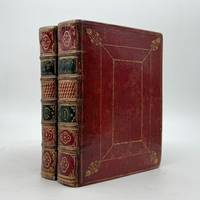
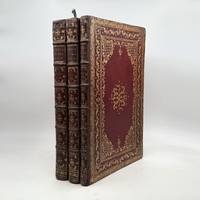
1590rif. 371036Rome: Ex Typographia Apostolica Vaticana 1590. First edition of the Sixtine Vulgate Bible large paper copy. Engraved illustrated title-page. Title in red and black text in double columns. 3 vols. Folio. Italian full red morocco binding of the seventeenth or early eighteenth century elaborately gilt with triple floral scrollwork borders stars in cornerpieces about a central motif stencilled paste paper endsheets a.e.g. Boxed. First edition of the Sixtine Vulgate Bible large paper copy. Engraved illustrated title-page. Title in red and black text in double columns. 3 vols. Folio. The engraved title reads: Biblia sacra vulgatae editionis ad concilii Tridentini praescriptum emendata et a Sixto V.P.M. recognata et approbata. With the preliminary document the Bull of Sixtus V beginning 'Aeternus ille caelestium terrestriumq. rerum omnium conditr ac moderator Deus .". This is often lacking. An extraordinary copy of the Sixtine Bible containing the Vulgate text as edited by Pope Sixtus V intended as the first ecclesiastically authorized text to be used throughout Christendom. "In its text it comes closer to R. Stephanus' Bible of 1538-40 than to the Louvain editions" Darlow & Moule who discuss the textual variations. This copy includes examples of the printed overslips required to correct hurried printing. The association with Aldus II suggested by Renouard and lasting long thereafter is spurious. Pope Sixtus V died soon after the book was printed and was followed by three short-lived popes. The Sixtine Bible had "aroused antagonism among both clergy and laity" and was swiftly condemned; the edition was withdrawn by Pope Clement VIII soon after his elevation to the papal throne in 1592 and many copies were destroyed. Preparations began in 1591 for a new edition of the Vulgate printed in 1592 and known as the Clementine Bible which long remained the standard Vulgate text. The ordinary issue of this printing measures 13-3/8 inches tall as in the Brooker copy sold 2024; the present copy measures 15-3/4. AN OUTSTANDING LARGE PAPER COPY OF A NOTABLE EDITION. Copinger 521; Darlow & Moule 6181; Adams B1098; BM STC Italian 1465-1600 p. 93; EDIT 16 CNCE 5805. Provenance: Vincenzo Maria Carafa 1739-1814 Prince of Roccella and Duke of Bruzzano engraved bookplates MS shelfmark :H 5; Douglas Maxwell Moffat bought of Quaritch in Dec. 1939; General Theological Seminary Ex Typographia Apostolica Vaticana unknown books
1758rif. TK0022Leipzig:: Johann Gottlob Immanuel Breitkopf 1758 LACKS TITLE; New Testament only incomplete. 1758. 8vo. 150 ff. 151-154 pp. Each leaf has a beautifully printed engraving though small and printed on one side. Early brown cloth-backed blue boards deckle-edge leaves paper spine label; spine label is a remnant extremities worn corners showing. Very good. Rare. No copies on the market. A beautiful collection of 150 small engravings. Das neue Testament. Zacharia erscheint ein Engel. Luc. I 5.20. Johann Gottlob Immanuel Breitkopf, 1758 LACKS TITLE; New Testament only (incomplete). hardcover books
1798rif. 345310Basel: Ben und Verlag Emanuel Zhurnensen. Zhurnensen 1798. 32 688; 120; 4 280pp. Double coplumn. Folio. Full contemporary blindstamped pigskin over wooden boards with clasps and bosses. Signed Gotfried Zahn on ffep. 32 688; 120; 4 280pp. Double coplumn. Folio. Ben und Verlag Emanuel Zhurnensen. Zhurnensen unknown books
1886rif. 50292Tokyo: Tokiwaya 1886. Very good. Scarce and exceptional first edition thus a light-hearted illustrated adaptation of the Creation and story of Adam and Eve from the Book of Genesis into Japanese. The story of Bible editions in Japan reflects the country's fraught history with Christianity; after the religion was banned in the early 17th century the portions printed by Catholic missionaries were lost. The ban on Christianity lifted only in the Meiji era first partially in 1873 then enshrined in the Constitution 1889 by means of an article on the freedom of religion. The post-Meiji Restoration translation effort of the Hebrew Bible began in 1882 and was finally completed in 1887. Books were completed and issued in parts with Genesis first issued in 1883. This heavily illustrated and lighthearted version of the two most famous stories from Genesis adapts the text to a well-established literary genre of Meiji Japan: KusazÅshi a forerunner of manga popular illustrated works in which the text weaves around the illustrations that dominate most spreads. Because they were meant for a popular audience the text is often primarily in hiragana or kanji with furigana; here the text is shown in three writing styles: kanji hiragana and romaji with furigana glosses. This presentation suggests how Christian mythology must have appeared to Japanese readers much as say Greek mythology seems to modern American readers of Homer. God is depicted as a mustachioed wise man while the serpent approaches Eve on legs. Most charmingly one spread depicts God spying on Adam and Eve with a pair of binoculars. While listed as the "first part" it is all published with no second volume ever appearing. We find only two copies at the National Diet Library and at Waseda University. 7.75'' x 5.25''. Original printed wrappers. Woodblock printed and illustrated including 16 double-page spreads. Title page matching illustrated cover printed on red metallic-speckled paper. 39 1 pages. Some staining and wear to wrappers with 2.5'' paper repair to rear wrapper verso. Black ink calligraphy to versos of both wrappers. Housed in custom blue cloth chemise. [Tokiwaya] unknown books
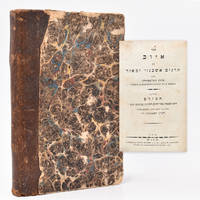
1817rif. 353306Vienna: Anton Schmidt 1817. Portrait frontispiece engraved additional title. 8vo. Contemporary quarter calf and marbled boards the calf tooled in blind worn rear hinge cracked lacks rear pastedown frontispiece detached. Portrait frontispiece engraved additional title. 8vo. Includes commentary by Rashi and Beur. Anton Schmidt unknown books
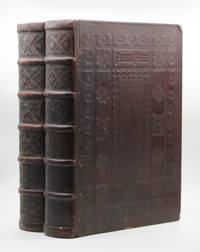
1914rif. 353913Leipzig: Insel Verlag 1914. No. 208 of 300 copies limitation leaf at end of each volume. Photolithographic facsimile of the 42-line Bible printed in colors with gilt ornamental incipit pages book headings and red and blue initials and headlines throughout. 2 vols. Folio. Publisher's full blindstamped brown calf after the original binding on the Fulda Landesbibliothek copy. Finely rebacked preserving original spines. No. 208 of 300 copies limitation leaf at end of each volume. Photolithographic facsimile of the 42-line Bible printed in colors with gilt ornamental incipit pages book headings and red and blue initials and headlines throughout. 2 vols. Folio. The first and finest facsimile of the great landmark of printing history the Gutenberg Bible reproduced from the Berlin copy now in the Universitätsbibliothek at Tubingen with some leaves in the first volume reproduced from the Landesbibliothek copy at Fulda. Insel Verlag unknown books