Bible, Roy HBiblio.com
24 224 résultats
réf. 146847166X.Gpaperback. Good. Access codes and supplements are not guaranteed with used items. May be an ex-library book. paperback
réf. SB12OS-02243Plenum Press. Used - Good. Good condition. Acceptable dust jacket. nuclear magnetic resonance physics science A copy that has been read but remains intact. May contain markings such as bookplates stamps limited notes and highlighting or a few light stains. Plenum Press unknown
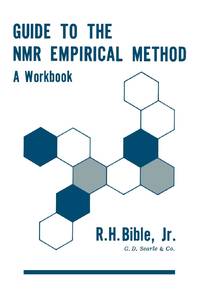
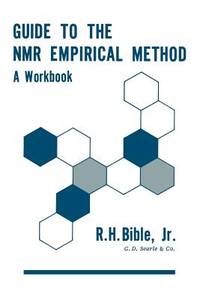
réf. ria9781468471663_inpPaperback. New. New Book; Fast Shipping from UK; Not signed; Not First Edition; The organic chemist who wishes to learn how to use NMR spectra effectively must first learn the essential facts and then must gain both ability and confidence through the solution of a wide range of specific problems. My previous volume paperback
réf. 6128012937Springer . Papeback. New. pp. 320 Springer unknown
2012réf. x-146847166XSpringer 2012. Paperback. New. rep wkb edition. 318 pages. 9.02x5.98x0.73 inches. Springer paperback
2005réf. Q-1585168092American Bible Society 2005-11-30. perfect. New. In shrink wrap. Looks like an interesting title! American Bible Society unknown
réf. RO20223539S.A.C.E.L.P.. Non daté. In-4. Relié toilé. Bon état, Couv. convenable, Dos satisfaisant, Intérieur frais. 478 pages augmentées de 230 illustrations en noir et blanc hors texte. Frontispice illustré en noir et blanc. . . . Classification Dewey : 220-Bible
réf. 13981743Paris: S.A.C.E.L.P. , 1979 in-4, 478 pages, 230 illustrations hors texte. Cartonnage d'éd. sans la jaquette, mors lég. fendu, autrement bon état.
1995A clean, unmarked book with a tight binding. Full blue cloth boards with gilt lettering. Edge wear and small tears on dust jacket. 8 3/4"w x 11 1/4"h. 352 pages. 500 b&w illustrations. "A comprehensive biography and bibliography of Gustave Dore's 10,000 engravings, 400 oil paintings, plus sculpture and other works of art, including a catalogue of over 3,000 book editions containing Dore illustrations."
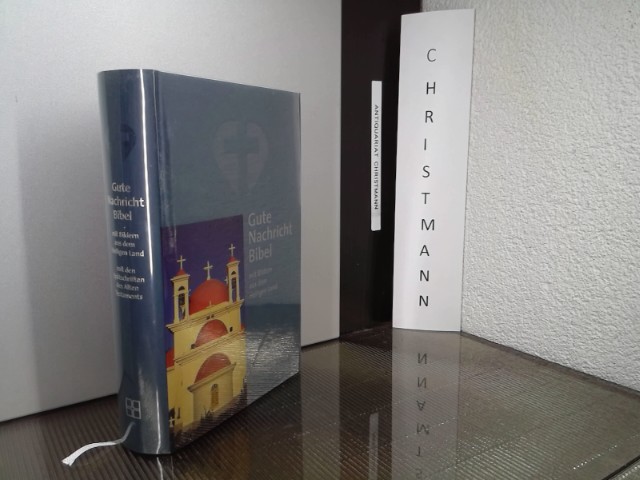
2008réf. 46544Stuttgart : Dt. Bibelges. 2008. 1603 S. in getr. Zählung : 24 S. farb. Fotos ; 22 cm O-Klarsichtumschlag, Top Zustand, Pp., gebundene Ausgabe, Hardcover/Pappeinband
1992réf. 110963Watch Tower Bible And Tract Society Of Pennsylvania 1992. hardcover. Bueno. Italia 1992. Watch Tower Bible And Tract Society Of Pennsylvania. Cartoné. 192 p. 16x11. Cantos rozados. Algunos subrayados y anotaciones a boli. Watch Tower Bible And Tract Society Of Pennsylvania hardcover
1850réf. 40402ABLondon, Fisher, n.d. (ca. 1850). Folio. 1036, 31, (2)pp. With 18 engr. plates. Contemp. full calf, gilt.
1954réf. ROD0047358Rose France. 1954. In-12. Broché. Bon état, Couv. convenable, Dos satisfaisant, Intérieur frais. 30 pp. Une photo noir et blanc et plusieurs cartes dans le texte.. . . . Classification Dewey : 220-Bible
réf. 90702aafGöttingen, Vandenhoeck & Ruprecht/ Freiburg, Universitätsverlag, 2001, in-8vo, XVII + 176 S. + XXXVIII z. T. farbige Tafeln, Stempel auf Vorsatz, illustrierte Original-Broschüre.
réf. 96284Tiguri Helvetiorum,Joannis Heideggeri 1 Co., 1730-1733, 4 volumes in-4 de 265x200 mm environ, Tome I. (2) ff., 1 frontispice, (63) ff; (titre en rouge et noir, dedicatio, praefatio, prefationes, prolegomena, praefatio), 503 pages, (2) ff.,- Tome II : (2) ff., (58) ff. (titre, prolegomena), 670 pages, (2) ff., - Tome III : (2) ff., 1 frontispice, (39) ff. (titre en rouge et noir, prolegomena, praefatio), 440 pages, (2) ff., - Tome IV : (2) ff., (51) ff. (titre, prolegomena, praefatio, postscriptum), 373 pages (2) ff., (reliés en plein vélin crème à recouvrements d'époque, décorés du monogramme de la Church Missionary Society sur les plats et ex-libris de la même sur le premier contreplat, titres à froid sur le dos, tranches rouges. Complet des deux frontispices identiques (tome I et III). Quelques rousseurs légères et mouillures très claires dans les marges, petites traces sur les couvertures, sinon bon état.
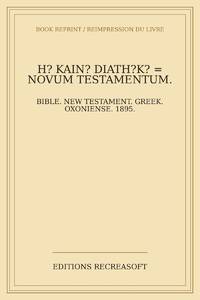
2026réf. LRB1007504Paris: Editions Recreasoft 2026 Langue : Latin. Environ 578 pages. Français : Réimpression à la demande. Édition originale : 1895. Édition en grec du Nouveau Testament présentée sous le titre parallèle Novum Testamentum d'intérêt bibliographique pour l'étude des textes bibliques et de la tradition éditoriale des Écritures. Le volume se rattache à la grande histoire des éditions savantes du texte néotestamentaire et conviendra aux chercheurs collectionneurs et lecteurs intéressés par les textes sacrés en langue originale. Images du livre non contractuelles English : Print-on-demand reprint. Original edition : 1895. Greek edition of the New Testament issued under the parallel title Novum Testamentum of bibliographic interest for the study of biblical texts and the editorial tradition of Scripture. This volume belongs to the long history of scholarly editions of the New Testament text and will appeal to researchers collectors and readers interested in sacred texts in the original language. Book images are non-contractual. Editions Recreasoft. Softcover. New. Editions Recreasoft paperback
1958réf. 112910London: The British and Foreign Bible Society. Good. 1958. Second Edition. Paperback. 787 pages . The British and Foreign Bible Society paperback
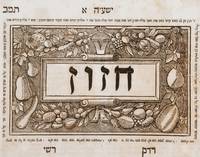
1619réf. 52679Basel: Ludwig König 1619. First edition in part. Hardcover. Good. Eight parts in three volumes folio biblical texts and commentary in four parts continuously foliated; three supplemental sections each with separate foliation; Tiberias 1655 with separate pagination here bound after the Haftarot - Vol. 1: 6 title and prelims 1-228 1 sect. title 234-441 1 blank ff. Vol. 2: 1 sect. title 442-705 3 blank 707 sect. title-837 1 blank ff. Vol. 3: 839 half-title-881 1 blank 883-946; 8 Targum Yerushalmi; last leaf unfoliated; 67 Masorah 1 blank; 1 title 2-36 Haftarot ff.; 8 title and prelims 108pp. Despite the gap in foliation between the first and second parts and numerous errors in foliation throughout the Rabbinic Bible collates complete with all blanks noted in Prijs Die Basler hebräischen Drucke and the Haftarot bound at the end. Largely arranged in two columns of biblical texts in square font surrounded by commentaries in rabbinic Rashi font; biblical texts read from right to left. This copy with collective Hebrew title surrounded by biblical quotations in Hebrew set within elaborate woodcut architectural borders; brief preface in Hebrew by Abraham Braunschweig at the verso. Hebrew sectional titles set within the same woodcut borders for the three other biblical sections and the Haftarot with a plain letterpress half-title for the Five Megillot. Opening word of each biblical book set in large one-third to one-half page cartouche vignettes with elaborate woodcut borders and surrounding letterpress Hebrew text. Main title Jewish date chronogram = 5378 1618-1619. Near-contemporary half calf over speckled boards worn and rubbed; spines with raised bands gilt morocco lettering pieces and old paper labels heavily faded. About two-thirds of the text embrowned ranging from minimal to moderately heavy; worm tracing in a 1- by 2-inch section at leaves 541-553 affecting text. A good complete set notably containing the Ashkenazi Haftarot readings not found in all copies. Sixth Rabbinic Bible in Hebrew: Mikra'ot Gedolot edited by Johann Buxtorf I 1565-1629 professor of Hebrew at the University of Basel and the foremost Christian Hebraist of his era with the assistance of the Jewish scholars Abraham Braunschweig who served as the principal corrector and Mordechai Gumplin of Posen. This was "a truly audacious undertaking for his time" Burnett as no Christian scholar had yet attempted to edit the entire biblical corpus including the Aramaic versions Targumim and masoretic notes. Based mainly on the third Rabbinic Bible published by Daniel Bomberg at Venice in 1546-1548 the editor has carefully incorporated elements from two other Venetian editions. At the verso of the Latin title Buxtorf provides a detailed bibliographical excursus on the earlier Venetian editions and offers a tribute to Bomberg's industry by reprinting the colophon of the second Venetian Rabbinic Bible 1524-1525 at the conclusion of the masoretic appendix with text by the Hebrew grammarian and lexicographer Elijah Levita 1468 or 1469-1549 and a new introduction by Abraham Braunschweig. The design of the sectional titles and separate book title vignettes closely model those of the Venetian editions. "Buxtorf did not plan simply to reprint one of the existing Venice editions but rather to assemble the best features of them all into one work" and "to provide theologians with what he considered the most important tools for interpreting the Old Testament" Burnett. Buxtorf served in an official capacity as Basel's Hebrew censor charged with the oversight of all Jewish printing in the city and insuring that "no 'blasphemies' or slurs against Christians or Christianity appear in any book printed in Basel" Burnett. He carefully edited the Jewish commentaries in the Rabbinic Bible in accordance with this mandate "and removed many words and phrases which had escaped the attention of earlier censors" Burnett. The Rabbinic Bible contains the vocalized Masoretic text of the Hebrew Scriptures with accents and a vocalized Targum an Aramaic paraphrase of the biblical text: Onkelos for the Pentateuch; Jonathan b. Uzziel for the Prophets; and Targum Hagiographa for the Writings. The Hebrew and Aramaic versions are printed in square characters and presented in facing columns at the center of each page. The Jerusalem Targum of the Pentateuch appears as an appendix. In addition to the Aramaic paraphrases the Rabbinic Bible includes a massive scholarly apparatus of biblical commentaries by Rashi Ibn Ezra Baal ha-Turim Jacob b. Asher R. David Kimchi Radak R. Levi b. Gershon Ralbag Saadia Gaon and R. Isaiah along with the Masora a corpus of critical notes on the external form of the Biblical text compiled by Jewish scholars from late antiquity through the medieval era. As frequently occurs a copy of Buxtorf's work on the textual history of the Hebrew Bible Tiberias the 1655 revised edition is bound-in. This work was made possible by the publication in 1538 of Elijah Levita's Masoret ha-Masoret a commentary on the Masora which Buxtorf translated into Latin for his own private use in 1593. While "Buxtorf was concerned with the integrity of the consonantal text and the origin and integrity of the vowel points and accents of the Hebrew Bible from the very beginning of his scholarly career." While he had earlier published a long excursus on the age of the vowel points and accents in his 1609 Thesaurus Grammaticus "Tiberias is Buxtorf's fullest and most impressive work on the history of the biblical text" Burnett. Intended as a reference work for Christian students and scholars interested in studying the Masora Buxtorf was also keen to refute the view advanced by Levita that the Hebrew vowel points were early medieval innovations. Our folio version of Tiberias was intended to accompany the Rabbinic Bible and has the same architectural borders at the title. König also published a quarto edition in the same year but only the folio version includes a critical commentary on the Masora in which Buxtorf proposes various corrections to the Masoretic notes. As noted at the title Buxtorf's faithful study and tireless labor studio fido et labore indefesso yielded notably long-lasting results: "The Basel rabbinical Bible became a standard tool for research among Christian scholars and would remain so. until the end of the nineteenth century" Burnett. A vast array of early modern scholars including Protestants like Johannes Drusius and John Selden as well as Roman Catholics like Robert Bellarmine and Andreas Masius owned a copy or two of the Rabbinic Bible. "Johannes Buxtorf's thoroughly censored "Christian" version of the Rabbinic Bible Basel 1618-19 only made it easier for Hebraists to own copies of their own" Burnett Christian Hebraism in the Reformation Era p.163. A note on the date of publication: "The actual printing began between the mid-August and mid-September of 1618. According to the colophon production ended on the 24 of Ab 379 = August 4 1619 but since this date also appeared on the colophon of the Bomberg Biblia rabbinica edition of 1524-25 reprinted unchanged in the 1546-48 and 1568 editions it is suspect. Prijs suggested that the probable completion date was sometime during Ab of 379 between July 12 and August 10 of 1619" Burnett. References: Biblia Sacra: Burnett 7. Cowley 87. Darlow & Moule 5120 like our copy bound with the 1665 second edition of Tiberias cf. 5093. Davidson Otsar ha-shirah vol.1 p.406 no.8954. Prijs 219. Steinschneider 423 423b. VD17 23:675325G. S. Burnett Christian Hebraism in the Reformation Era Leiden: Brill 2012 p.163. Tiberias: Burnett 114. Prijs 272a. For detailed analyses of both works see: S. Burnett From Christian Hebraism to Jewish Studies Leiden: Brill 1996 pp.169-239 chaps. 6 & 7. Ludwig König hardcover
1619réf. 52679Basel: Ludwig König 1619. First edition in part. Hardcover. Good. Eight parts in three volumes folio biblical texts and commentary in four parts continuously foliated; three supplemental sections each with separate foliation; Tiberias 1655 with separate pagination here bound after the Haftarot - Vol. 1: 6 title and prelims 1-228 1 sect. title 234-441 1 blank ff. Vol. 2: 1 sect. title 442-705 3 blank 707 sect. title-837 1 blank ff. Vol. 3: 839 half-title-881 1 blank 883-946; 8 Targum Yerushalmi; last leaf unfoliated; 67 Masorah 1 blank; 1 title 2-36 Haftarot ff.; 8 title and prelims 108pp. Despite the gap in foliation between the first and second parts and numerous errors in foliation throughout the Rabbinic Bible collates complete with all blanks noted in Prijs Die Basler hebräischen Drucke and the Haftarot bound at the end. Largely arranged in two columns of biblical texts in square font surrounded by commentaries in rabbinic Rashi font; biblical texts read from right to left. This copy with collective Hebrew title surrounded by biblical quotations in Hebrew set within elaborate woodcut architectural borders; brief preface in Hebrew by Abraham Braunschweig at the verso. Hebrew sectional titles set within the same woodcut borders for the three other biblical sections and the Haftarot with a plain letterpress half-title for the Five Megillot. Opening word of each biblical book set in large one-third to one-half page cartouche vignettes with elaborate woodcut borders and surrounding letterpress Hebrew text. Main title Jewish date chronogram = 5378 1618-1619. Near-contemporary half calf over speckled boards worn and rubbed; spines with raised bands gilt morocco lettering pieces and old paper labels heavily faded. About two-thirds of the text embrowned ranging from minimal to moderately heavy; worm tracing in a 1- by 2-inch section at leaves 541-553 affecting text. A good complete set notably containing the Ashkenazi Haftarot readings not found in all copies. Sixth Rabbinic Bible in Hebrew: Mikra'ot Gedolot edited by Johann Buxtorf I 1565-1629 professor of Hebrew at the University of Basel and the foremost Christian Hebraist of his era with the assistance of the Jewish scholars Abraham Braunschweig who served as the principal corrector and Mordechai Gumplin of Posen. This was "a truly audacious undertaking for his time" Burnett as no Christian scholar had yet attempted to edit the entire biblical corpus including the Aramaic versions Targumim and masoretic notes. Based mainly on the third Rabbinic Bible published by Daniel Bomberg at Venice in 1546-1548 the editor has carefully incorporated elements from two other Venetian editions. At the verso of the Latin title Buxtorf provides a detailed bibliographical excursus on the earlier Venetian editions and offers a tribute to Bomberg's industry by reprinting the colophon of the second Venetian Rabbinic Bible 1524-1525 at the conclusion of the masoretic appendix with text by the Hebrew grammarian and lexicographer Elijah Levita 1468 or 1469-1549 and a new introduction by Abraham Braunschweig. The design of the sectional titles and separate book title vignettes closely model those of the Venetian editions. "Buxtorf did not plan simply to reprint one of the existing Venice editions but rather to assemble the best features of them all into one work" and "to provide theologians with what he considered the most important tools for interpreting the Old Testament" Burnett. Buxtorf served in an official capacity as Basel's Hebrew censor charged with the oversight of all Jewish printing in the city and insuring that "no 'blasphemies' or slurs against Christians or Christianity appear in any book printed in Basel" Burnett. He carefully edited the Jewish commentaries in the Rabbinic Bible in accordance with this mandate "and removed many words and phrases which had escaped the attention of earlier censors" Burnett. The Rabbinic Bible contains the vocalized Masoretic text of the Hebrew Scriptures with accents and a vocalized Targum an Aramaic paraphrase of the biblical text: Onkelos for the Pentateuch; Jonathan b. Uzziel for the Prophets; and Targum Hagiographa for the Writings. The Hebrew and Aramaic versions are printed in square characters and presented in facing columns at the center of each page. The Jerusalem Targum of the Pentateuch appears as an appendix. In addition to the Aramaic paraphrases the Rabbinic Bible includes a massive scholarly apparatus of biblical commentaries by Rashi Ibn Ezra Baal ha-Turim Jacob b. Asher R. David Kimchi Radak R. Levi b. Gershon Ralbag Saadia Gaon and R. Isaiah along with the Masora a corpus of critical notes on the external form of the Biblical text compiled by Jewish scholars from late antiquity through the medieval era. As frequently occurs a copy of Buxtorf's work on the textual history of the Hebrew Bible Tiberias the 1655 revised edition is bound-in. This work was made possible by the publication in 1538 of Elijah Levita's Masoret ha-Masoret a commentary on the Masora which Buxtorf translated into Latin for his own private use in 1593. While "Buxtorf was concerned with the integrity of the consonantal text and the origin and integrity of the vowel points and accents of the Hebrew Bible from the very beginning of his scholarly career." While he had earlier published a long excursus on the age of the vowel points and accents in his 1609 Thesaurus Grammaticus "Tiberias is Buxtorf's fullest and most impressive work on the history of the biblical text" Burnett. Intended as a reference work for Christian students and scholars interested in studying the Masora Buxtorf was also keen to refute the view advanced by Levita that the Hebrew vowel points were early medieval innovations. Our folio version of Tiberias was intended to accompany the Rabbinic Bible and has the same architectural borders at the title. König also published a quarto edition in the same year but only the folio version includes a critical commentary on the Masora in which Buxtorf proposes various corrections to the Masoretic notes. As noted at the title Buxtorf's faithful study and tireless labor studio fido et labore indefesso yielded notably long-lasting results: "The Basel rabbinical Bible became a standard tool for research among Christian scholars and would remain so. until the end of the nineteenth century" Burnett. A vast array of early modern scholars including Protestants like Johannes Drusius and John Selden as well as Roman Catholics like Robert Bellarmine and Andreas Masius owned a copy or two of the Rabbinic Bible. "Johannes Buxtorf's thoroughly censored "Christian" version of the Rabbinic Bible Basel 1618-19 only made it easier for Hebraists to own copies of their own" Burnett Christian Hebraism in the Reformation Era p.163. A note on the date of publication: "The actual printing began between the mid-August and mid-September of 1618. According to the colophon production ended on the 24 of Ab 379 = August 4 1619 but since this date also appeared on the colophon of the Bomberg Biblia rabbinica edition of 1524-25 reprinted unchanged in the 1546-48 and 1568 editions it is suspect. Prijs suggested that the probable completion date was sometime during Ab of 379 between July 12 and August 10 of 1619" Burnett. References: Biblia Sacra: Burnett 7. Cowley 87. Darlow & Moule 5120 like our copy bound with the 1665 second edition of Tiberias cf. 5093. Davidson Otsar ha-shirah vol.1 p.406 no.8954. Prijs 219. Steinschneider 423 423b. VD17 23:675325G. S. Burnett Christian Hebraism in the Reformation Era Leiden: Brill 2012 p.163. Tiberias: Burnett 114. Prijs 272a. For detailed analyses of both works see: S. Burnett From Christian Hebraism to Jewish Studies Leiden: Brill 1996 pp.169-239 chaps. 6 & 7. Ludwig König hardcover books
1953réf. RO40071094Le Cerf. 1953. In-8. Broché. Bon état, Couv. convenable, Dos satisfaisant, Non coupé. 91 pages.. . . . Classification Dewey : 220-Bible
1953réf. RO40105145Le Cerf. 1953. In-8. Broché. Etat d'usage, Couv. convenable, Dos satisfaisant, Intérieur frais. 91 pages. 1er plat légèrement taché.. . . . Classification Dewey : 220-Bible
1953réf. RO30060751LES EDITIONS DU CERF. 1953. In-12. Broché. Bon état, Couv. convenable, Dos satisfaisant, Non coupé. 91 pages. Couverture rempliée.. . . . Classification Dewey : 220-Bible
1959réf. RO30106787DU CERF 2e EDITION. 1959. In-12. Broché. Bon état, Couv. convenable, Dos satisfaisant, Non coupé. 91 pages.. Avec Jaquette. . . Classification Dewey : 220-Bible
1953réf. RO40236616Le Cerf. 1953. In-12. Broché. Bon état, Couv. convenable, Dos satisfaisant, Intérieur frais. 91 pages.. Avec Jaquette. . . Classification Dewey : 220-Bible
1953réf. 235916Cerf 1953 92 pages in12. 1953. Broché jaquette. 92 pages.