JACOB (Max)Biblio.com
45 912 résultats
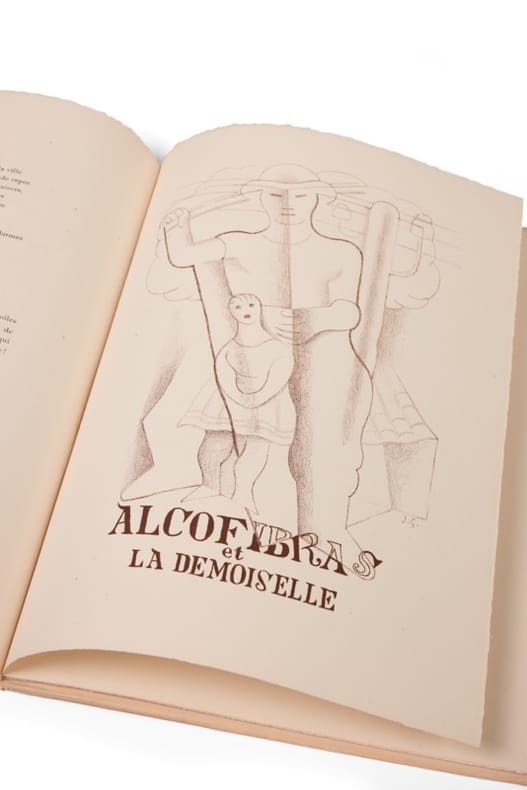
réf. 29047Paris Editions Galerie Simon 1921. 1 vol. 235 x 325 mm. Broché. . Édition originale. Illustré de quatre lithographies hors-texte par Juan Gris. Un des 90 exemplaires sur hollande signé au colophon par l'auteur et l'artiste. Premier livre illustré de gravures originales par Juan Gris et première apparition de la couleur dans la production éditoriale de Kahnweiler : le bleu le vert le bistre et l’ocre sont utilisés. C'est également la première fois que les illustrations portent clairement un titre ou une légende. . « L'ouvrage sera souscrit notamment par Paul Guillaume Jacques Doucet et Paul Poiret. Encore un détail éditorial c'est la première fois que les illustrations portent clairement un titre : aucun des livres précédents n'avait de légende ou de titre pour les hors-texte. Et ici Kahnweiler privilégie le papier de Hollande à l'exclusion du papier Japon. » Librairies Illi et l'Exemplaire Daniel-Henry Kahnweiler éditeur 9. Paris, Editions Galerie Simon, 1921. 1 vol. (235 x 325 mm). Broché. unknown
1921réf. 29047Premier livre illustré par Juan Gris Paris, Editions Galerie Simon, 1921. 1 vol. (235 x 325 mm). Broché. Édition originale. Illustré de quatre lithographies hors-texte par Juan Gris. Un des 90 exemplaires sur hollande signé au colophon par l'auteur et l'artiste. Premier livre illustré de gravures originales par Juan Gris, et première apparition de la couleur dans la production éditoriale de Kahnweiler : le bleu, le vert, le bistre et l’ocre sont utilisés. C'est également la première fois que les illustrations portent clairement un titre ou une légende.
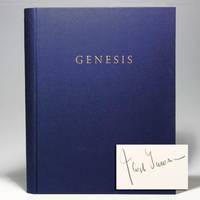
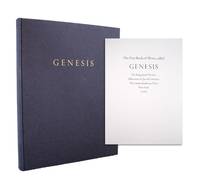
réf. 020738New York: Limited Editions Club 1989. hardcover. Fine in a Fine suede-lined linen clamshell box with leather label. Jacob Lawrence. Large folio bound in full midnight blue Japanese cotton. Copy #160 of only 400 numbered copies SIGNED on the colophon by Jacob Lawrence who has contributed 8 ORIGINAL SILKSCREENS to this massive 16" x 22" and truly magnificent work one of the high points of the press. These silkscreens are identical except for not being individually signed to the very few portfolios of 8 prints currently selling for upwards of fifty thousand dollars. According to the publisher anywhere from 17 to 21 screens were required to bring out the coloring of each illustration making a total of 144 separate stencils all of which were destroyed after the strictly limited number of some 400 original sets of prints had been achieved on the fine Whatman paper specified by the Osiris Printing Studio in New York. The text was printed on a heavy handmade paper from Cartiere Enrico Magnani of Pescia Italy. Monthly Letter laid in. A gorgeous book. Limited Editions Club hardcover books
1772réf. 46993Mannheim: Churfurstl. Hof-und Academie-Buchdruckerey 1772. Rare Account of Lower California by a German Jesuit First printing of this rare and important account of Lower California by the German Jesuit Jacob Baegert. Baegert lived in Baja California for seventeen years 1751-68 and spent most of his time at the Mission of San Luis Gonzaga leaving after the expulsion of the Jesuits in 1767. He provides some important details on the culture of the Indians of Baja California including the Pericues Guiacuras and Cochiemes. Part one is an overview of California its climate and products; part two describes the inhabitants; and the third part contains an account of the introduction of Christianity to California. Wagner states that the German Jesuits were especially dissatisfied toward the end of the Jesuit regime in California and Baegert's bitterness is evident in his book: ".it was a land full of ferocious beasts and even more ferocious Indians the soil was poor the water undrinkable and there was no fuel to be had." The fine and important map was made by fellow Jesuit Ferdinand Consak and is described by Streeter as "most helpful in giving the location of the many Jesuit missions in Lower California. It also shows the route along the west coast of Mexico followed by Baegert in going to California in 1751 and his route out in 1768 after the expulsion of the Jesuits." The top right corner of the territory present-day Arizona is labeled rather ominously "Los Apaches Barbari." The excellent plates which were apparently not issued with all copies depict male and female California Indians. A prime early account of Baja California with an important map and plates of the region. 163581pp. plus two engraved plates on one sheet and folding map. Small octavo. Modern half vellum and marbled boards spine gilt. A bit of light age toning an occasional light fox mark. Three small purple ink spots in lower portion of map. Near fine. HOWES B29 "b." HILL 46. COWAN p.27. SABIN 4363. BELL B5. STREETER SALE 2442. BARRETT 129. WAGNER SPANISH SOUTHWEST 157. WAGNER NORTHWEST COAST pp.154-155 item 631. MEADOWS BAJA CALIFORNIA 1. GRAFF 137. PILLING PROOF SHEETS 203. PALAU 358393. hardcover
1772réf. 46993Mannheim: Churfurstl. Hof-und Academie-Buchdruckerey 1772. Rare Account of Lower California by a German Jesuit First printing of this rare and important account of Lower California by the German Jesuit Jacob Baegert. Baegert lived in Baja California for seventeen years 1751-68 and spent most of his time at the Mission of San Luis Gonzaga leaving after the expulsion of the Jesuits in 1767. He provides some important details on the culture of the Indians of Baja California including the Pericues Guiacuras and Cochiemes. Part one is an overview of California its climate and products; part two describes the inhabitants; and the third part contains an account of the introduction of Christianity to California. Wagner states that the German Jesuits were especially dissatisfied toward the end of the Jesuit regime in California and Baegert's bitterness is evident in his book: ".it was a land full of ferocious beasts and even more ferocious Indians the soil was poor the water undrinkable and there was no fuel to be had." The fine and important map was made by fellow Jesuit Ferdinand Consak and is described by Streeter as "most helpful in giving the location of the many Jesuit missions in Lower California. It also shows the route along the west coast of Mexico followed by Baegert in going to California in 1751 and his route out in 1768 after the expulsion of the Jesuits." The top right corner of the territory present-day Arizona is labeled rather ominously "Los Apaches Barbari." The excellent plates which were apparently not issued with all copies depict male and female California Indians. A prime early account of Baja California with an important map and plates of the region. 163581pp. plus two engraved plates on one sheet and folding map. Small octavo. Modern half vellum and marbled boards spine gilt. A bit of light age toning an occasional light fox mark. Three small purple ink spots in lower portion of map. Near fine. HOWES B29 "b." HILL 46. COWAN p.27. SABIN 4363. BELL B5. STREETER SALE 2442. BARRETT 129. WAGNER SPANISH SOUTHWEST 157. WAGNER NORTHWEST COAST pp.154-155 item 631. MEADOWS BAJA CALIFORNIA 1. GRAFF 137. PILLING PROOF SHEETS 203. PALAU 358393. hardcover books
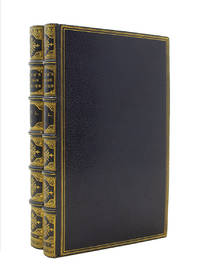
1823réf. 68858London: Published by C. Baldwyn 1823. CRUIKSHANK George. . GRIMM Wilhelm. ZAEHNSDORF binder. German Popular Stories. Translated from the Kinder und Haus Marchen Collected by M.M. Grimm from Oral Tradition. London: Published by C. Baldwyn 1823. Full description: GRIMM Jacob and Wilhelm. CRUIKSHANK George illustrator. German Popular Stories Translated from the Kinder und Haus Marchen Collected by M.M. Grimm from Oral Tradition. London: Published by C. Baldwyn 1823; James Robins & Co. London and Joseph Robins Junr. & Co. Dublin 1826. First English edition with the second issue title-page for Volume I with an umlaut over the "a" in "Märchen" in the title. "A few copies of the engraved title were printed off before the umlaut was added in 'Märchen'" Otherwise with the following first issue points: With a list of plates on page 218; the title to the tale of "The Travelling Musicians" on p. 9 has no additional words; in the "Notes" at the end of the volume the note referring to "Preface p. vii" comes last; and Baldwyn's advertisement at the end begins "On the First of November was published Price 5s. No. XII. Completing the Sixth Volume of The Retrospective Review." Two twelvemo volumes 7 3/8 x 4 3/8 inches; 190 x 110 mm. 2 xii 240 12 publisher's advertisements; 2 iv 256 1 1 printer's imprint 1 ads 1 blank 12 publisher's advertisements pp. Half-titles in each volume. With twenty-two etched plates by George Cruikshank including two vignette title-pages. The plates in Volume I are printed in brown and black in Volume II. Bound by F. Bedford in full navy crushed levant morocco. Covers triple-ruled in gilt. Spines tooled and lettered in gilt in compartments board edges ruled in gilt turn-ins decoratively tooled in gilt. Top edge gilt others uncut. Maroon coated endpapers. Leaves D2 and D3 in volumes I and B10 and page iv in Volume II with small closed tears to fore-edge margins invisibly repaired and not affecting text. Text is very clean and margins are large. The drab printed pictorial front and back wrappers for Volume I along with the spine are bound in to the end of volume I. The printed paper spine label from volume II is bound in to the end of that volume. Overall an about fine set. "The stories that we know today as Grimm's Fairy Tales were collected from oral tradition by the brothers Jacob and Wilhelm Grimm philologists and pioneer folklorists. They began to publish the results of their work in 1812 in Germany under the title Kinder- und Haus-Märchen. The tales first appeared in English in 1823 with the publication of the first volume of German Popular Stories. The translator was Edgar Taylor and the book's publication was an auspicious event for at least two reasons. It launched an era in which folklore and the fairy tale would stimulate writers to produce an increasingly imaginative literature for children. And German Popular Stories also put before the public the remarkable illustrations-perhaps his best work-of George Cruikshank. The illustrations evoke wonderfully the grotesque awesome yet matter-of-fact qualities of witch and goblin of Frog Prince Rapunzel Rumpelstiltskin and all the other characters that people the tales. As illustrations to these fairy tales Cruikshank's etchings have never been surpassed" Morgan Library Early Children's Books. Cohn 369. Morgan Library Early Children's Books 197. Ray The Illustrator and the Book in England 112. HBS 68858. $10000. Published by C. Baldwyn unknown books
réf. 140947127New York: The Limited Editions Club 1989. Limited Edition. Fine. Copy number 384 of a limited 400 copies signed by Jacob Lawrence. Bound in publisher's blue cloth stamped in gilt on the upper board. Housed in the publisher's navy blue coarse linen velvet lined solander case with title label stamped in gilt. Illustrated with eight original silkscreens by Jacob Lawrence printed on fine Whatman paper by Osiris Printing. 23.5 x 18" elephant folio. Light rubbing to covers else Fine in a Near Fine case with slight wear to corners trivial fading and trivial wear to cloth. A monumental fine press edition of Genesis enhanced with vivid wildly expressive illustrations by Harlem Renaissance artist Jacob Lawrence that express the narrative of the King James Version. The Limited Editions Club unknown
réf. 140947127New York: The Limited Editions Club 1989. Limited Edition. Fine. Copy number 384 of a limited 400 copies signed by Jacob Lawrence. Bound in publisher's blue cloth stamped in gilt on the upper board. Housed in the publisher's navy blue coarse linen velvet lined solander case with title label stamped in gilt. Illustrated with eight original silkscreens by Jacob Lawrence printed on fine Whatman paper by Osiris Printing. 23.5 x 18" elephant folio. Light rubbing to covers else Fine in a Near Fine case with slight wear to corners trivial fading and trivial wear to cloth. A monumental fine press edition of Genesis enhanced with vivid wildly expressive illustrations by Harlem Renaissance artist Jacob Lawrence that express the narrative of the King James Version. The Limited Editions Club unknown books
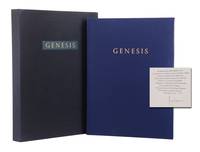
réf. 324488New York: The Limited Editions Club 1989. Edition limited to 400 numbered copies signed by Lawrence. This is number 341. Illustrated with eight original silkscreens by Jacob Lawrence printed on fine Whatman paper by Osiris Printing. Original prospectus laid in. Folio. Original blue cloth clamshell box by Karl Folkes at the Spectrum Bindery and John Isakovics of Jovonis Bindery. Fine. Edition limited to 400 numbered copies signed by Lawrence. This is number 341. Illustrated with eight original silkscreens by Jacob Lawrence printed on fine Whatman paper by Osiris Printing. Original prospectus laid in. Folio. The prints illustrate and accompany the King James version of the book of Genesis. "The silk-screen stencils of Jacob Lawrence's paintings were expertly processed in New York City. Anywhere from 17 to 21 screens were required to bring out the coloring of each illustration making a total of 144 separate stencils all of which were destroyed after the strictly limited number of some 400 original sets of prints had been achieved on the fine Whatman paper. Jacob Lawrence one of the great figurative painters of the 20th century. rose to fame in 1941 after creating one of the most original and forceful series of narrative works in the history of American art - the 'Migration of the Negro.' He was the first African American artist to be represented by a major New York gallery and one of the first to have a solo exhibit at the Metropolitan Museum of Art" Regina Hackett. The Limited Editions Club unknown books
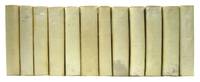
1729réf. 041022Leipzig Johann Heinrich Zedler/Register: Leipzig Bernhard Christoph Breitkopf 1729-1733/1740 1729. Hardcover. Very Good. Des Theuren Mannes Gottes D. Martin Luthers Sämtliche Theils von Ihm selbst Deutsch verfertigte theils aus dessen Lateinischen ins Deutsche übersetzte Schriften und Werke Welche aus allen vorhin Ausgegangenen Sammlungen zusammen getragen Und Anietzo in eine bequemere und nach denen Materien eingerichtete Ordnung gebracht nach denen ältesten und besten Exemplarien mit Fleisz übersehen und verbessert mit verschiedenen in denen Altenburgischen und andern Tomis ermangelnden Schrifften vermehret und mit nöthigen Vorberichten versehen. WITH in Volume XXII: M. Johann Jacob Greiffs Pastoris in Mölbis Vollständige Register über die XXII Leipziger Theile der gesammten Schriften Des seligen D. Martin Luthers Nebst einem auf die Wittenbergischen Jenischen 1740. 22 volumes in 22 bound vellum bindings. Marble endpapers. Interior very good pages evenly browned. Leipzig Johann Heinrich Zedler/Register: Leipzig, Bernhard Christoph Breitkopf 1729-1733/1740 hardcover
réf. 45783Nürnberg : Johann Jacob Wolrab circa 1720. Original wooden box 270 x 105 x 40 mm with two compartments containing removable cards: 6 double-sided cards for the months and 16 smaller double-sided cards for the days; each card is engraved and hand-coloured but the larger cards also have hand-painted gouache decorations illustrating the months and signs of the zodiac; the verso of the sixteenth day card i.e. the card with '31' on the recto has the engraved imprint of 'Nürnberg zu finden bey Johann Jacob Wolrab'; the cards have an expected amount of rubbing and handling wear one has a recent tape repair but overall they have been remarkably well preserved the colours still vibrant; the wooden box has a short crack on the underside. A rare and charming perpetual calendar made and sold by Johann Jacob Wolrab 1675-1746 a Nuremberg bookseller publisher and art dealer who is perhaps best known for his engravings of dwarf caricatures. The cards for the months contain printed information about each month including variations in day length. It is almost certain that the calendar was issued in an uncoloured state and without illustrations as some traces of the printed text show through the overpainted motifs. However the appeal of this particular calendar lies in these attractive naively executed decorations - unquestionably fully contemporary with the printed cards - that transform it into a unique artwork. No other example traced. unknown
1729réf. 10151Leipzig Johann Heinrich Zedler/Register: Leipzig Bernhard Christoph Breitkopf 1729-1733/1740. 12 bindings containing 22 volumes and a register 10 16 588 8 834 8 4 674 14 608 10 16 640 8 674 10 4 548 8 636 14 744 12 576 10 32 664 6 8 651 8 16 742 8 680 6 8 620 6 621 10 720 6 534 6 708 2 380 8 736 2 592 4 224 26 144 882 280 p. Contemporary Vellum Folio H. 345 x L. 225 x W. 7-85 cm. -the complete set is ca. 90 cm. wide- A single wormhole in the bottom margin of volume 13 top of the back covers of volume 19/20 21/22 and the register lack a small piece of vellum the text blocks are slightly browned at some places but not nearly as browned as usual page 451/452 of volume 9 is present a second time in volume 8 all 22 volumes are illustrated with a large engraved head-piece depicting Luther at the beginning of the main text. Firm and complete set of the works of Martin Luther 1484-1546. Included is a useful register which was specially made for this edition by Johann Jacob Greiff 1699-1767. The set is uniformly bound in firm vellum bindings which are in very good condition and surprisingly clean. Altogether a beautiful set of the life's work of the renowned Martin Luther. Leipzig Johann Heinrich Zedler/Register: Leipzig, Bernhard Christoph Breitkopf hardcover
1909réf. IGRe& GR18London: Constable and Company Ltd. 1909. 1909. 4to. pp. xv 325 1. title in red & black within decorative border. 40 tipped-in colour plates incl. frontis. & numerous text illus. tissue guards with legends. A very good copy in original gilt-stamped vellum top edge gilt others uncut silk ties present but detached covers moderately spotted & soiled a few marginal spots. Deluxe Edition Limited to 750 numbered copies signed by Rackham. Signed by Authors. Hardcover. London: Constable and Company Ltd., 1909. hardcover
1780réf. ABC_48891The Netherlands 1780. 4to ca. 19 x 15 cm. Late 18th-century gold-tooled brown mottled calf sewn on 5 supports bound by the so-called Acorn-and-Foliage Tool Bindery in Amsterdam Storm van Leeuwen. Both boards show the large gold-tooled monogram of the Amsterdam chamber of the VOC as a centre piece sandwiched between the gold-tooled date Anno 1780 all within a gold-tooled floral frame with floral corner pieces in the inside corners spine gold-tooled in six compartments red sprinkled edges. Manuscript in French written in black ink on paper in a neat cursive script by one hand. With chapter divisions numbered 39-75 and headings. The text is written upside down in relation to the binding. Most leaves show an identical watermark depicting a lion rampant on a pedestal with Vryheyt in a crowned ring with Pro Patria Eiusque Libertate and the letters CR below which is very close to Heawood 3149 date: 1753. 28 ll. Late 18th-century manuscript copy of a French childrens catechism by the Swiss theologian Jacob Vernet 1698-1789 bound in a remarkable late 18th-century binding originally produced for the Amsterdam Chamber of the Dutch East India Company VOC by the so-called Acorn-and-Foliage Tool Bindery which was active between ca. 1760 and ca. 1784 Storm van Leeuwen.It shows the large monogram of the Amsterdam Chamber of the VOC sandwiched between the date "Anno 1780" on both boards. These bindings were usually commissioned as gifts to persons important to the VOC often containing an almanac for the relevant year but possibly also produced as blank notebooks. The present work comprises chapters 39-49 and 58-75 of Vernet's work which form almost the second half of printed editions. The chapters included in the present work are complete and exactly follow the order of the printed text in the Geneva 1742 edition pp. 75-140 checked using a digital copy with a slightly different spelling and replacing some words. For unclear reasons chapters 50-57 dealing with the fourth through tenth commandment have not been copied and several leaves between the end of chapter 49 and the beginning of chapter 58 have been left blank.Vernets religious text was first published in 1741 under the title Instruction chrétienne ou catechisme familier; avec quelques prières a lusage des petits enfans . In 1742 a revised edition appeared with a slightly different title Instruction crhetienne ! ou catechisme familier. Avec quelques passages de lEcriture Sainte & quelques prières à lusage des petits enfans. Nouvelle edition. Revuë corrigée & augmentée. Both works were printed in Geneva for the Swiss bookseller Emanuel Du Villard Emmanuel Duvillard 1693-1776 and subsequently reprinted several more times until 1769. With the book block showing the remnants of 12 removed leaves probably already removed before the manuscript was finished. Both pastedowns partly detached an old annotation Ao. 44305 in black ink on the lower pastedown some foxing. Otherwise in good condition.l For the binding: Landwehr/Van der Krogt VOC pp. XXVII-XXVIII; Storm van Leeuwen I p. 175 p. 196 VOC A-stamp and pp. 612-616 the bindery; for Vernet's work: Google Books digital copy of the 1742 ed. title: Instruction crhetienne ! ou Catechisme familier; physical copy at the Biblioteca Universitaria di Torino; WorldCat 951908419 1 copy 1767 ed.; WorldCat 1040828976 1 copy 1769 ed. no author noted; for the watermark: Heawood 3149. hardcover
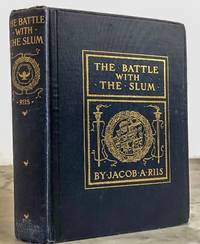
1902réf. 021995New York: The Macmillan Company 1902. First Edition. Hardcover. Minor wear to covers. Near Fine. Second Printing in publisher's original decorated blue cloth. Illustrated. This copy is SIGNED "with the best wishes of/Theodore Roosevelt/Dec 1906." Jacob Riis a significant contributor to the cause of urban reform in the United States of America at the turn of the twentieth century was among the most dedicated advocates for America's oppressed and downtrodden. He arrived in New York from his native Denmark at the age of 21 in 1870. A pioneer in photojournalism Riis photographed and wrote about the slums and tenements of a New York in the dawn of a new century. Riis came to Roosevelt's attention through his 1890 book HOW THE OTHER HALF LIVES. As Commissioner of the New York City Police Department Roosevelt accompanied Riis on his evening travels through the slums and witnessed firsthand the inhumane conditions endured by many of New York's inhabitants. In his 1901 book MAKING OF AN AMERICAN Riis wrote of Roosevelt: "It could not have been long after I wrote HOW THE OTHER HALF LIVES that he came to the Evening Sun office one day looking for me. I was out and he left his card merely writing on the back of it that he had read my book and had 'come to help.' That was all and it tells the whole story of the man. I loved him from the day I first saw him; nor ever in all the years that have passed has he failed of the promise made then. No one ever helped as he did. For two years we were brothers on Mulberry Street." Roosevelt in turn wrote of Riis after his death: "It is difficult for me to write of Jacob Riis only from the public standpoint. He was one of my truest and closest friends. I have ever prized the fact that once in speaking of me he said 'since I met him he has been my brother.' I have not only admired and respected him beyond measure but I have loved him dearly . and I mourn him as if he were one of my own family." The Macmillan Company hardcover
réf. 136590aafLondini, impensis Henrici Clements, ad insigne Lunae Falcatae in Coemeterio D. Pauli, 1708, petit in-4to, (24 x 18 cm), VI + 58 S.; II + 72 S.; II + 22 S., illustriert mit insgesamt 45 teils gefalteten Kupfertafeln einschliesslich des Porträts des Verfassers als Frontispiz, und 3 Titeltafeln (gestochen von Jos. Nutting nach Mechior Füssli und Anna Waser, auf Tafel 17 vom 2. Teil ist eine Figur im Zentrum handkoloriert, rezenter Kalbsledereinband, dem frühen 18. Jhd nachempfunden, beide Buchdeckel mit Blindpressung, Rücken reich vergoldet, Vorsätze erneuert, ein sehr schönes Exemplar.
réf. 89380aafZürich, bey Heidegger und Comp., 1752, kl. in-4to, komplett mit 2 gest. Front. und 32 (10 gefalt., davon 1 mit gr. Klappteil) Kupfertafeln. Bd. 1: IV + 268 S. + 2 Bl. Register / Bd. 2: VIII + 480 S. + 4 Bl. Register / Bd. 3: VIII + 336 S., Halbleder der Zeit mit Lederecken und Rückenschildchen, Buchdeckel mit Schabspuren, sonst sehr schönes Exemplar.
1639réf. 89174Ex Officina Elzeviriana | Lugduni Batavorum [Leyde] 1639 | 15.3 x 20.8 cm | 2 volumes reliés en 1
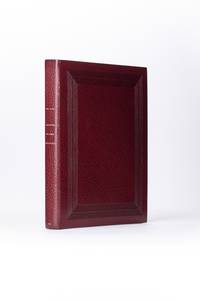
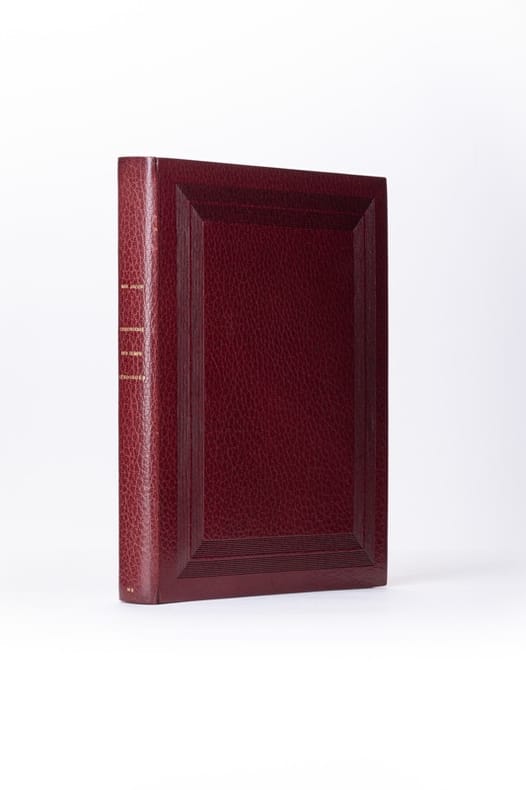
réf. 28110Saint-Benoît-sur-Loire vers 1936-1937. Manuscrit autographe à l'encre noire de 70 feuillets in-4 numérotés 23-92 avec un f. 74 bis f. 70 manquant montés sur onglets. Maroquin bordeaux dos lisse double encadrement de filets à froid sur les plats encadrement intérieur de même maroquin orné de filets à froid tranches dorées Semet et Plumelle. . Important manuscrit autographe de travail avec corrections ratures ainsi que variantes et passages inédits et ayant appartenu à Louis Broder premier éditeur du texte. Monté en tête : portrait photographique de Max Jacob le montrant dans sa chambre de la rue Gabrielle en 1917 selon la légende manuscrite au dos tirage argentique 239 x 180 mm. Il a servi à l’établissement du texte pour la version publiée en 1956. . Ce témoignage capital et de première main sur le cubisme devait initialement introduire les mémoires du marchand d'art Paul Guillaume disparu en 1934. Max Jacob y travailla plusieurs années mais n'en publia qu'un fragment en janvier 1937 dans la revue Les Feux de Paris sous le titre « Le Tiers transporté ». Pour le quatre-vingtième anniversaire de la naissance de l'auteur en 1956 Louis Broder en publia la version intégrale avec des illustrations de Picasso l'ami historique de Max Jacob. Les pages 36-38 offrent plusieurs passages raturés restés inédits. Par ailleurs le manuscrit diffère légèrement de l'édition dans l'emplacement des titres et sous-titres. C'est à partir de ce jeu que Broder publia ces Chronique des temps héroïques en y ajoutant la partie publiée dans Les Feux de Paris en 1937 dont le manuscrit lui manquait à l'époque p. 1-33 feuillets 1-22. Propriété du libraire Bernard Loliée il fut vendu lors de la vente de la bibliothèque 22 mai 2019 n° 27. À l'issue de la publication du volume Broder fit relier l'ensemble de ses manuscrits à l'identique de l'exemplaire unique sur papier japon qu'il s'était dessiné : un décor de filets à froid composé par Plumelle sur une reliure de maroquin bordeaux établie par Semet. Dans l'idée d'y adjoindre un jour les 22 feuillets du début du texte Broder demanda à son relieur de réserver la place nécessaire en tête de volume ou figurent autant de feuillets vierges prêts à les recevoir. Le manuscrit Broder commence donc à la page 33 du texte publié et offre toute la suite des Temps héroïques - à l'exception du chapitre VI qui est ici remplacé par trois pages inédites intitulées « Voyage en Suisse » p. 71-73 acquises chez un libraire parisien en 1966 : « Ils sont inédits et doivent prendre place avant la page 99 de la Chronique des temps héroïques en début de chapitre » et du folio 70 « page de titre de la seconde partie ». Le catalogue de la vente Loliée mentionne deux chapitres des Temps héroïques conservés dans des collections publiques : « Mouvement moderne » à la bibliothèque d'Orléans et « Art nègre » au fonds Gompel-Netter de la BnF. Après consultation c'est inexact : ces manuscrits ne constituent pas des parties originales du manuscrit mais sont de simples notes et des articles préparatoires à leur rédaction. Le manuscrit Broder est donc le seul document autographe existant et le seul qui ait servi à l'établissement [Saint-Benoît-sur-Loire, vers 1936-1937]. Manuscrit autographe à l'encre noire de 70 feuillets in-4, numérotés 23-92 [avec u unknown
1936réf. 28110Manuscrit autographe complet. Exemplaire Broder [Saint-Benoît-sur-Loire, vers 1936-1937]. Manuscrit autographe à l'encre noire de 70 feuillets in-4, numérotés 23-92 [avec un f. 74 bis, f. 70 manquant], montés sur onglets. Maroquin bordeaux, dos lisse, double encadrement de filets à froid sur les plats, encadrement intérieur de même maroquin orné de filets à froid, tranches dorées (Semet et Plumelle). Important manuscrit autographe de travail, avec corrections, ratures, ainsi que variantes et passages inédits, et ayant appartenu à Louis Broder, premier éditeur du texte. Monté en tête : portrait photographique de Max Jacob, le montrant dans sa chambre de la rue Gabrielle en 1917, selon la légende manuscrite au dos (tirage argentique, 239 x 180 mm). Il a servi à l’établissement du texte pour la version publiée en 1956.
1773réf. 822371773. BAEGERT JACOB. Nachrichten von der Amerikanischen Halbinsel Californien. Mannheim: Churfurstl Hof-und Academie-Buchdruckerey 1773. 2nd issue. 12mo. 16 358pp. 2 engraved folding plates and 1 engraved folding map. Three-quarter tan morocco over contemporary paper-covered boards rebacked and recornered in period-style leather morocco spine label stamped in gilt. One leather tab in margin marking the folding map; stain marking where a tab once was at the folding plates. Very good or better. Howes B-29; Hill p. 12; Cowan p. 27; Sabin 4363; Bell B5; Streeter Sale 2442; Barrett 129; Wagner Spanish Southwest 157; Meadows Baja California 1; Graff 137; Pilling Proof Sheets 203. Second printing with some corrections after the first printing of the previous year of an early account of Lower California by the Jesuit Jacob Baegert. Baegert lived in Baja California from 1751 to 1768 and spent most of his time at the Mission of San Luis Gonzaga leaving after the expulsion of the Jesuits in 1767. He provides important details on the culture of the Native Americans of the region including the Pericues Guiacuras and Cochiemes. Wagner states that the German Jesuits were especially dissatisfied toward the end of the Jesuit regime in California and Baegert's bitterness is evident in his book: ".it was a land full of ferocious beasts and even more ferocious Indians the soil was poor the water undrinkable and there was no fuel to be had." The fine and important map was made by a fellow Jesuit Ferdinand Consak and is described by Streeter as "most helpful in giving the location of the many Jesuit missions in Lower California. It also shows the route along the west coast of Mexico followed by Baegert in going to California in 1751 and his route out in 1768 after the expulsion of the Jesuits." The two plates apparently not issued with all copies depict male and female Californian Native Americans. Rare. The National Union Catalogue locates only three copies of the second issue. unknown
1860réf. 1726401860. CHEVREUL Michel-Eugène and M. JACOB editors. Le teinturier universel: echo des applications des Matières colorantes. 96 fascicles in four volumes. 192; 192; 192; 192 pp. together with 192 specimens of various dyes on paper cotton silk rope and leather. Folio 310 x 228 mm. bound in original printed wrappers together in a new red cloth box. Paris: Teinturier Universel 1860-1864. Complete set containing every issue from 1 année no. 1 1 avril 1860 through 4 année no. 24 15 mars 1864. The periodical was issued semi-monthly; each issue includes lecture notes from M.E. Chevreul's "Cours de teintures des Gobelins" here in its first printing. Chevreul's colour studies made him one of the most influential scientists in France during the nineteenth century. From 1824 he was director of dyeing at the Manufactures Royales des Gobelins where he taught chemistry for nearly sixty years. "Chevreul's immediate task at Gobelins was to work on the improvement of colour intensity and fastness in wools. He had been selected for this position because he was an outstanding chemist; and his initial studies were on the chemical aspects of dyes and dyeing attempting to place the art of dyeing on a more rational basis than the complicated and empirical procedures then employed.Chevreul rendered an important service to the dye industry during the years prior to the advent of synthetic dyestuff" DSB. With nearly two hundred specimens of various colour dyes on paper cotton silk rope and a few illustrating the tanning and colouring of leather. The final volume investigates a large number of contrasting colours on the same type of sample Échantillon de Papier. Fragile spines somewhat worn but an excellent copy in original condition with many gatherings unopened. A desirable copy of a rare and important work. Bibliotheca Tinctoria 1218. hardcover
1860réf. 1726401860. CHEVREUL Michel-Eugène and M. JACOB editors. Le teinturier universel: echo des applications des Matières colorantes. 96 fascicles in four volumes. 192; 192; 192; 192 pp. together with 192 specimens of various dyes on paper cotton silk rope and leather. Folio 310 x 228 mm. bound in original printed wrappers together in a new red cloth box. Paris: Teinturier Universel 1860-1864. Complete set containing every issue from 1 année no. 1 1 avril 1860 through 4 année no. 24 15 mars 1864. The periodical was issued semi-monthly; each issue includes lecture notes from M.E. Chevreul's "Cours de teintures des Gobelins" here in its first printing. Chevreul's colour studies made him one of the most influential scientists in France during the nineteenth century. From 1824 he was director of dyeing at the Manufactures Royales des Gobelins where he taught chemistry for nearly sixty years. "Chevreul's immediate task at Gobelins was to work on the improvement of colour intensity and fastness in wools. He had been selected for this position because he was an outstanding chemist; and his initial studies were on the chemical aspects of dyes and dyeing attempting to place the art of dyeing on a more rational basis than the complicated and empirical procedures then employed.Chevreul rendered an important service to the dye industry during the years prior to the advent of synthetic dyestuff" DSB. With nearly two hundred specimens of various colour dyes on paper cotton silk rope and a few illustrating the tanning and colouring of leather. The final volume investigates a large number of contrasting colours on the same type of sample Échantillon de Papier. Fragile spines somewhat worn but an excellent copy in original condition with many gatherings unopened. A desirable copy of a rare and important work. Bibliotheca Tinctoria 1218. hardcover books
réf. 211191New York: Limited Editions Club 1989. First edition. Large folio hardcover. Number 184 of only 400 copies printed on handmade paper by Cartiere Enrio Magnani. Features eight stunning color silkscreen illustrations by Jacob Lawrence. A clean and tight very near fine copy in blue cloth boards and in a near fine black linen covered clamshell box lined with suede but that has some slight sunning and other very minor wear and with laid in newsletter for the Limited Editions Club. Signed by Lawrence on the colophon page. A very nice copy of one of the most sought after books from this long running Please note that this is a very heavy and oversized book and will require extra shipping. Limited Editions Club unknown
réf. 211191New York: Limited Editions Club 1989. First edition. Large folio hardcover. Number 184 of only 400 copies printed on handmade paper by Cartiere Enrio Magnani. Features eight stunning color silkscreen illustrations by Jacob Lawrence. A clean and tight very near fine copy in blue cloth boards and in a near fine black linen covered clamshell box lined with suede but that has some slight sunning and other very minor wear and with laid in newsletter for the Limited Editions Club. Signed by Lawrence on the colophon page. A very nice copy of one of the most sought after books from this long running Please note that this is a very heavy and oversized book and will require extra shipping. Limited Editions Club unknown books