56 424 résultats
1960réf. 87671London: Watkins & Clark 1960. First printing of this edition originally published in 1634. xlvii 723 pp. Hard bump to rear panel else very near fine in near fine dust jacket with a sticker shadow over the printed price on the front flap and some ripples to spine. Translated by John Sparrow. Edited by C.J.B. and D.S.H. London: Watkins & Clark, unknown books
1986réf. 88010Chicago & London: University of Chicago Press 1986. First edition. xxii 641 pp w/indexes. Fine in fine dust jacket. From the collection of Nathaniel Tarn with his bookplate. Chicago & London: University of Chicago Press unknown books
1986réf. 88364Chicago & London: University of Chicago Press 1986. First edition. xvii 267 pp w/index of Biblical & Talmudic references. Fine in fine dust jacket with a small corner crease to the front flap. Chicago & London: University of Chicago Press unknown books
1993réf. 88407Northvale & London: Jason Aronson 1993. First edition. xii 194 pp w/index. Fine in fine dust jacket. Nathaniel Tarn’s copy with his bookplate inside the front cover. Northvale & London: Jason Aronson unknown books
1986réf. 87020Seattle & London: University of Washington Press/Seattle Art Museum 1986. First edition. 4to. 235 pp w/index. Fine in very near fine dust jacket. Foreword by Bruce Guenther. Essay by Patricia Hill. Dated 1/29/90 and SIGNED by Lawrence on the title page. Seattle & London: University of Washington Press/Seattle Art Museum unknown books
1903réf. 10825Philadelphia: George W. Jacobs & Co 1903. First Edition. Hardcover. Near Fine. Illustrated with photographs. Near Fine lacking the jacket. Blue cloth lightly rubbed at the surface with gilt lettering on the spine. Square and firmly bound with a gilt top edge clean internally. From the author of How the Other Half Lives a collection of three lectures about the state of urban home life during the turn of the century. George W. Jacobs & Co hardcover books
1970réf. 82264Glen Ellyn: Cat’s Pajamas Press 1970. First edition. Fourteen leaves stapled along the top edge. Near fine. One of “about” 50 numbered copies. Duane Locke Victoria McCabe Derek Pell Martha JacobDarrell Kerr John Jacob James Bertolino and Terry Stokes contribute. [Glen Ellyn]: Cat’s Pajamas Press unknown books
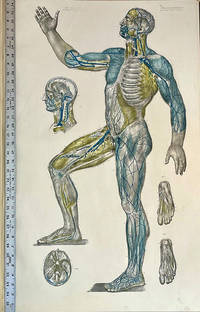
1854réf. 51129Brussels: Comptoir des éditeurs 1854. Bourgery Jean-Baptiste Marc 1797-1849 and Nicolas Henri Jacob 1782-1871. Anatomie élémentaire en vingt planches representant chacune un sujet dans son entier à la proportion de demi-nature . . . Atlas only. Elephant folio. Title-leaf and 20 lithographed plates most hand-colored. Brussels: Meline Cans et Cie; Comptoir des Éditeurs 1854. 888 x 600 mm. 20th-century quarter morocco boards slight wear. A few marginal tears repaired minor dampstaining but very good. Later edition first published in both Paris and Brussels in 1836 of this set of very large anatomical plates that were intended to be mounted on the walls of dissection rooms. All editions are extremely rare-OCLC does not cite any copies of the 1854 edition. This is the only copy of any edition of this work that we have handled in over 50 years of trading. The work was originally accompanied by a small 20-page pamphlet of text that is not present here. The impressive plates in this atlas reproduce the illustrations in Bourgery and Jacob's Traité complet d'anatomie at a much larger scale than their counterparts in the Traité-roughly half life-size. Some plates were lithographed in Paris; others in Brussels. Plates I and II are devoted to osteology and syndesmology; plates III - VIII to myology and aponeurology; plates IX-XIV to angiology; plates XV-XVII to neurology; plates XVIII-XIX to the digestive system; and plate XX to the reproductive organs. The plates were originally sold separately; uncolored versions were priced at 6 francs and colored versions at 12 francs. Currently two uncolored plates from this series are on the market for about $1300. . Comptoir des éditeurs unknown books
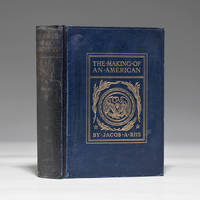
1901réf. 1228141901. First Edition. Signed. RIIS Jacob. The Making of an American. New York: Macmillan 1901. Octavo modern full blue morocco gilt raised bands marbled endpapers top edge gilt with original gilt stamped cloth front cover bound in at rear. $4500.First edition of the pioneering photographer and reformer's autobiography published the decade after his influential work How the Other Half Lives with frontispiece portrait and 83 photographic illustrations many full-page in original bright gilt cloth inscribed to a prominent social reformer and close friend of Jane Addams mentioned in the text: ""Mrs Emmons Blaine with the admiration and respect of the author Jacob A. Riis. New York Dec 9 1901.""In this profusely illustrated autobiography Riis charts his life from his youth in Denmark to his immigration to America and his dedication to documenting the social injustice of New York's slums first as a police photographer and then as a newspaper photographerÑ""the first photographer to use the power of the image as a tool for reform"" McDarrah 381. His 1890 photobook How the Other Half Lives marks the landmark beginning of ""a photographic attitude an ethos-humanist documentary photographyÑin which the photographic social document is employed to bear critical witness to what is going on in the world"" Parr & Badger I:53. ""A pioneer in the development of the documentary"" to Theodore Roosevelt Jacob Riis was ""the staunchest most efficient friend the children of New York City have ever had"" and ""the ideal American citizen"" ANB. With rear leaf of publisher's advertisements. This copy is inscribed to Anita McCormick Blaine a famous Chicago philanthropist and the widow of Emmons Blaine. The son of a powerful political operative his father was a former Republican Secretary of State who lost the presidential race to Grover Cleveland Emmons Blaine was vice president of the B&O Railroad. However he died at just 33 years old leaving his 26-year-old wife a widow. Fortunately her family's intervention into the financial aspects of her marriage ensured that she was a wealthy widow while her late husband guaranteed that she was welcomed into the highest social and political circles. As a newly single mother Blaine became deeply interested in her son's education. She became acquainted with Col. Francis Parker and began to absorb and enact progressive ideas on education. She helped to found the Chicago Institute for teacher training. She also founded two additional schools including a free school for poor children. The success of Blaine's educational initiatives earned her a spot on the Chicago School Board. Blaine soon came to be recognized as a leading philanthropist and social reformer. Much of her work focused on Jane Addams' Hull-House and similar ventures aimed at improving the lives of the poor. Blaine's empirical mindset set her apart and the information and data she doggedly collected supported further social and legislative reform. As a result Blaine was welcome onto the Chicago Board of Charities and the United Charities. She also worked together with Jane Addams to create the City Homes Association dedicated to providing housing for the poor. Collaborating with Addams Blaine fought for labor reform particularly the eight-hour work day and peace. Peace soon became her primary interest after her son died from the 1918 flu spread by World War I. A supporter of the League of Nations and later the United Nations Blaine hoped that she could spare other mothers her fate. At her death Blaine was one of the greatest philanthropists of her time the acknowledged doyenne of the social reform world. She donated over 10 million dollars to social causes and left a huge fortune to the New World Financial Trust. Blaine is mentioned in the last chapter of The Making of an American which is essentially an acknowledgments chapter. Riis writes: ""Jane Addams and Mrs. Emmons Blaine leaven that shall yet leaven the whole unsightly lump out yonder by the western lake and let in the light"" page 436. Blaine's archived correspondence at the University of Wisconsin reveals a request from John Bogue to sell tickets for Riis' lecture ""How the other half lives"" and an invitation from Maud Warner McCormick to a lecture by Jacob Riis. Interestingly Warner McCormick was married to Alexander Agnew McCormick a Chicago alderman and Daily News editor who was a residential member of the University of Illinois' Chicago Literary Club and a member of Chicago Historical Society with possible relative Cyrus Hall McCormick Jr. Blaine's brother.Interior generally fine with a few leaves reinforced at gutter's edge. Attractive in blue morocco most desirable inscribed. hardcover books
1963réf. vas5336Gainesville: University of Florida Press 1963. Octavo green cloth hardcover xxxv 326 pp. Fine in a Near Fine dust jacket with mylar wrapper. From dust jacket: In June 1836 24-year-old Jacob Rhett Motte a Harvard-educated Southern gentleman trained as a surgeon departed his hometown of Charleston to serve as an Army surgeon in wars against the Creek and Seminole Indians. Motte who had a genuine literary flair began keeping a journal -- “While witnessing the dreadful scenes of Indian warfare I was also impressed with the conviction that descriptions of horrible massacres imminent and hairbreadth escapes bloody battles and dreadful murders have always been subjects of interest to the human mind” he later wrote. University of Florida Press, 1963. hardcover books
1987réf. 79187Whitethorn: Holmgangers Press 1987. First edition. 20 pp. Fine in stapled wrappers. Kestrel 11. Whitethorn: Holmgangers Press unknown books
1973réf. 79151Oak Park: Cat's Pajamas Press 1973. First edition. 8 pp. Very good plus in stapled wrappers. INSCRIBED by Jacob on the verso of the title page “This one’s / for Gary - / John.” Oak Park: Cat's Pajamas Press unknown books
1853réf. 50480London: Taylor and Francis 1853. Whole issue in original printed wrappers mostly uncut & unopened. iv 311-561 1 15pp.; 7 plates Plates XIX. - XXVI. Jacob Augustus Lockhart Clarke 1817-1880 was an English physician physiologist histologist and neurologist. Clarke received his material edication at Guy's Hispital and St. Thomas's Hospital in London. He was liscenced by the Apothecaries Society and subsequently went to love with his mother at Pimlico where he established a private practice. From 1851 to 1868 while Clarke was engaged in general practice and continuing his studies at St. George's Hospital he conducted his now famous research on the central nervous system. "Most of his numerous works were published in in the Philosophical Transactions 1851 53 58 59 60 65 68 in the Proceedings of the Royal Society 1857 61 the Microscopical Journal British and Foreign Medical Review 1864 and others. His earlier works concern the anatomy and the physiology of the medulla oblongata and the spinal marrow as well as the brain. His discovery of the Clark's column also designated nucleus dorsalis was done in this period. His later research is more concerned with pathological studies in his special field. he also published on tetanus diabetes paraplegias of muscular atrophy. Clarke was described as a man of the highest character "with s singleness of purpose of noble independence honest and just conscientious and intellectually keen but with a singularly retiring and reserved disposition. He never acquired a large practice and is reputed not to have been well off financially." Whonamedit Jacob Augustus Lockhart Clarke. Accessed 11/4/2022. . Taylor and Francis unknown books
1856réf. 9751gcsNew York: Harper & Brothers Publishers 1856. Signed by Elias Loomis to his son Henry Elias Loomis famous scientist. Duodecimo red blind-stamped cloth hardcover gilt letters 160 pp. Very Good with edgewear. Harper & Brothers, Publishers, (1856). hardcover books
1858réf. 1354648Boston: Phillips Sampson and Company 1858. First Edition. Hardcover. Octavo v 7-75 pages. In Good plus condition. Bound in embossed brown cloth with gilt lettering. Boards show some discoloration to covers; spine with light wear to edges and corners. Text block foxed. Inscribed by author on front free endpaper: "Prof. Geo. B. Wood with the author's regards." An ex-library embossed stamp on title page. MF Consignment. NOTE: Shelved in Rockville Annex Aisle A Top Shelf. George Bacon Wood received his B.A. and M.D. from the University of Pennsylvania. Wood first taught at the Philadelphia College of Pharmacy beginning in 1822 as professor of chemistry and then in 1831 becoming professor of materia medica. He concluded his teaching at the College of Pharmacy in 1835 when he was named professor of materia medica at the University of Pennsylvania; in 1850 he became professor of the theory and practice of medicine a position he held until he retired in 1860. In 1863 he was elected to the University of Pennsylvania's board of trustees where he remained until his death. In 1865 Wood endowed an Auxiliary Faculty of Medicine at Penn with five chairs in zoology and comparative anatomy; botany; mineralogy and geology; hygiene; and medical jurisprudence and toxicology. Up until 1855 he continued to instruct medical students privately as well. Wood was connected with many other institutions during his career. He was an attendant physician at the Pennsylvania Institute for the Deaf and Dumb from 1822 to 1844 and at Philadelphia Hospital later Philadelphia General Hospital from 1835 to 1859. He was president of the American Philosophical Society from 1859 until his death of the American Medical Association from 1855 to 1856 and also for many years of Philadelphia's College of Physicians. Wood was also the author of many books most notably the Dispensatory of the United States with Dr. Franklin Bache in 1833 and Treatise on the Practice of Medicine in 1847. - University of Pennsylvania website. 1354648. Special Collections - Upstairs. Phillips, Sampson and Company hardcover books
1987réf. 67546Whitethorn: Holmgangers Press 1987. First edition. 20 pp. Fine in stapled wrappers. Dated 9/23/87 and warmly INSCRIBED by Jacob on the title page. Laid into this copy is a full page holograph letter from Jacob to the book’s publisher. Kestrel 11. Whitethorn: Holmgangers Press unknown books
1993réf. 67175Washington DC: Rappahannock Press/Phillips Collection 1993. First edition. 4to. 172 pp w/selected bibliography & index. Fine in fine dust jacket. Introductory essay by Henry Louis Gates Jr. 116 illustrations of which 60 are in full color. Washington DC: Rappahannock Press/Phillips Collection, unknown books
1775réf. 1087571775. London: T. Payne 1775/1776. 3 vols 4to xx 516; 2 vi 535; viii 602 pp with 31 engravings on the 30 listed plates. A very good and attractive set in clean condition bound in original calf with gilt decorated rules to covers and gilt decoration to spine panels with six compartments and red and black labels. § Second edition of Vol. 1 and 2 1775 and only edition of Vol. 3 1796. The three maps are lacking. All other illustrations are present in good condition but including usual offsetting and a few showing minor mottling and browning. Plate XI stated in the List of Plates to be a Bartolozzi engraved plate designed by Cypriani from an original onyx Camaio by the Greek artist Tryphon is the correct plate although in fact it bears no plate No. and the imprint "G. B. Cipriani Del I.K. Sherwin Sculp." Although Bartolozzi normally signs his studio's plates J. K. Sherwin was an apprentice of Bartolozzi's and presumably was allowed to sign his engraving in this instance. The plate's design matches "The Marriage of Eros and Psyche" from Tryphon's Camaio in the Duke of Marlborough's Collection see e.g Wikipaedia: "The Marlborough Gem". Bentley BB 439. Essick CBI p. 117 entry C. unknown books
réf. 64347np: nd. nd. First edition. 8 pp including covers. Very near fine in side-stapled wrappers. SIGNED by Jake. A collection of five poems dedicated to “JMC & Cate.” (np): (nd). unknown books
1848réf. 433851848. Berzelius Jöns Jacob 1779-1848. Jacobus Berzelius. Medal in bronze showing a right-facing bust of Berzelius on the obverse with his birth and death dates in roman numerals; the reverse with a standing winged figure and the seated figure of Hygeia along with text in Latin. Signed "P. H. Lundgren fec. - C. G. Quarnstroem inv." N.p. n.d. 1848. 57 mm. diameter. A few minor scratches and dings but very good. The Berzelius Medal was commissioned by the Royal Swedish Academy of Sciences in memory of the famous Swedish chemist who is regarded as one of the founders of modern chemistry. Berzelius invented the current system of chemical symbols originated the duality theory of chemical affinity classing chemical elements as either electronegative or electropositive an ancestor of 20th century electron theories of bonding developed new and important methods of chemical synthesis and analysis and discovered the elements cerium selenium and thorium. T he Latin motto above the figures on the reverse reads "Naturam jussit vires proferre latentes" He commanded forth the secrets of nature. The text below the figures reads "Fundatorum supremo lugens in deepest mourning/ Medic. Suec. Societas." The medal was issued in silver bronze and Berlin iron; this is an example of the bronze. Storer Medicina in Nummis no. 337. . unknown books
2008réf. 57395Brooklyn: Cuneiform Press 2008. First edition. Single sheet folded twice to make a booklet 7 1/2 x 4 1/2 inches closed. Fine. Jacob’s poem in French Fagin’s version in English. SIGNED by Fagin on the rear cover. [Brooklyn]: Cuneiform Press unknown books
1839réf. 430451839. Einige Blicke auf die Entwicklungsgeschichte des vegetabilischen Organismus bei den Phanerogamen. Offprint from Archiv für Naturgeschichte 3 1837: 289-320. Plate. 206 x 126 mm. Original plain wrappers front wrapper detached; modern bookplate. Inscribed by Schleiden to William Francis on the front wrapper. Botanische Notizen. Offprint from Archiv für Naturgeschichte 4 1838: 49-66. Plate. 205 x 129 mm. Original plain wrappers sun-darkened detached; modern bookplate. Inscribed by Schleiden to William Francis inscription partially lost due to sunning Botanische Notizen. Offprint from Archiv für Naturgeschichte 5 1839: 253-292. Plate. 214 x 128 mm. Original plain wrappers small tear in lower margin; modern bookplate. Inscribed by Schleiden to William Francis on the front wrapper. Botanische Notizen. Offprint from Archiv für Naturgeschichte 5 1839: 211-234. Lacking plate. Original plain wrappers back wrapper lacking; modern bookplate. Inscribed by Schleiden to William Francis on the front wrapper. A collection of four extremely rare offprints on botanical science by Schleiden whose landmark 1838 paper "Beiträge zur Phytogenesis" marks the beginning of cell theory and plant cytology. The first offprint is on the development of organs in phanerogams plants with seeds; "his theory of the flower and fruit is an admirable performance for the time even though we abandon his view of the stalk nature of placentas and some other notions as we obviously must. As Robert Brown founded the history of the development of the ovule so Schleiden founded that of the flower and his example influenced other botanists" Von Sachs History of Botany 1530-1860. Schleiden presented these offprints to British chemist Dr. William Francis who in 1852 joined with publisher Richard Taylor to found the firm of Taylor and Francis. unknown books
1800réf. 41277London: William Richardson 1800. Plate: 196x144 mm. Margin: 275x200 mm. Little faint soiling right and bottom margins are trimmed faint crease in top right margin. William Richardson unknown books
réf. 41853Margin: 76x45 mm. Chip in left margin faint soiling edges trimmed. unknown books
réf. 41558Plate: 152x101 mm. Print: 188x137 mm. Mount: 201x137 mm. Mounted on paper. Print has three frayed edges. some minor tearing Light soiling faint foxing trimmed edges. unknown books