Lassner, JacobBiblio.com

54 675 résultats
1993réf. x-0226469158Univ of Chicago Pr 1993. Paperback. New. 1st edition. 308 pages. 9.25x6.25x0.75 inches. Univ of Chicago Pr paperback
2005réf. mon0000413449UPA 2005-11-28. Paperback. Like New. 0.5000 in x 8.8000 in x 5.8000 in. UPA paperback
réf. 0876688768.Ghardcover. Good. Access codes and supplements are not guaranteed with used items. May be an ex-library book. hardcover
réf. 1782167854.Gpaperback. Good. Access codes and supplements are not guaranteed with used items. May be an ex-library book. paperback
1849réf. 011523-NLanchaster PA.: G. Hills 1849. Book. Illus. by author. Very Good. Hardcover. 1849 Dark brown leather binding with title on the spine decorated end pages 684 page book.With black & white illustrations on battle strategies both Army and Navy . Chronicles the history of the United States Army and Navy from the French and Indian War to the end of the Mexican - American War. The book covers military actions naval engagements and remarkable incidents durning that period . Great research book . A very scarce USA Military history book . Condition Very Good with edge ware and rubsPencil note on the first blank page foxing through out No missing pages or damage or writing on the pages. . G. Hills Hardcover
2022réf. x-3030867390Springer 2022. Paperback. New. 110 pages. 10.98x8.27x0.51 inches. Springer paperback
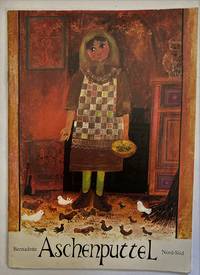
1983réf. BN58850Nord-Süd Verlag 1983. Broschur. untere Ecken etwas bestoßen! Nord-Süd Verlag unknown
1982réf. 69387Amsterdam: North-Holland 1982. 27 cm. or hardcover. viii836 pp. author index. subject index. -paper sl browned along edges otherwise very good. North-Holland hardcover
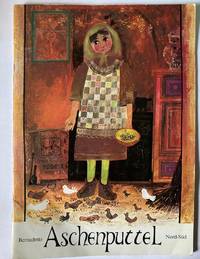
1987réf. BN58932Nord-Süd Verlag 1987. Taschenbuch. Buchrücken berieben mit leichten Lesekniffen! Nord-Süd Verlag unknown
2000réf. mon0003112560Edward Elgar Publishing 5/4/2022 12:00:01 AM. hardcover. Very Good. 0.6693 9.4882 6.2992. Edward Elgar Publishing hardcover
2023réf. x-9811652627Springer 2023. Paperback. New. 706 pages. 9.00x5.75x1.50 inches. Springer paperback
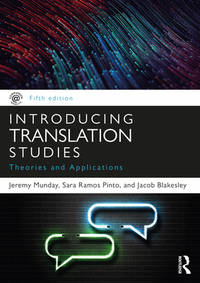
2022réf. x-0367370514Routledge 2022. Paperback. New. 5th pap/psc edition. 303 pages. 10.00x7.00x0.75 inches. Routledge paperback
réf. 295597Fantagraphics Books 2011. Octavo illus glossy light card covers yellow lettering to spine 258pp illus VG ligth creasing & curling to covers Fantagraphics Books 2011 unknown
2001réf. mon0002899817Brill Academic Publishers 2001-02-01. Hardcover. Like New. 7.0000 12.1000 9.4000. Brill Academic Publishers hardcover
2022réf. __3170414488Kohlhammer 2022. Paperback. New. 3rd edition. 188 pages. German language. 11.69x8.23x0.98 inches. Kohlhammer paperback
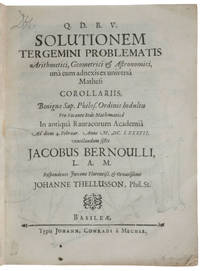
1687réf. 5601Basel: Mechel 1687. First edition. First edition exceptionally rare of this dissertation which Bernoulli 1655-1705 submitted in order to secure the chair of mathematics at the University of Basel. This was the beginning of a remarkable career in mathematics in which he "greatly advanced algebra the infinitesimal calculus the calculus of variations mechanics the theory of series and the theory of probability and was one of the most significant promoters of the formal methods of higher analysis" DSB. EXCEPTIONALLY RARE DISSERTATION BY JACOB BERNOULLI. First edition exceptionally rare of this dissertation which Bernoulli 1655-1705 submitted in order to secure the chair of mathematics at the University of Basel. This was the beginning of a remarkable career in mathematics in which he "greatly advanced algebra the infinitesimal calculus the calculus of variations mechanics the theory of series and the theory of probability and was one of the most significant promoters of the formal methods of higher analysis" DSB. The dissertation 'The solution of a triplet of problems arithmetical geometrical and astronomical together with corollaries from general mathematics' treats three elementary problems in number theory one arising from arithmetic one from geometry and one from astronomy/navigation. "Jacob Bernoulli's research on elementary mathematics taken as a whole constitutes a work of no mean importance very diverse in content lacking organic unity to be sure but also of exceptional historic interest. Indeed only from very few of the mathematicians who have left a lasting mark do we have the documentation which allows us to examine carefully the process of their scientific education . However in contrast from Jacob Bernoulli we actually possess some 'exercises' that he wrote beginning during the early years of his education. This is how we might characterize some of his Meditationes which he worked on with great diligence and singular ability. The interest of these exercises lies not only in their relationship to the general state of mathematics of the time but also and perhaps more in the way in which they represent an almost complete psychological picture of the formation of a great mathematician - which he certainly was - toward the end of the XVIIth century" Werke 2 p. 15. These Meditationes remained unpublished until the twentieth century except for the three published with much additional detail in the present pamphlet. On the last page of the dissertation is a list of 'Corollaries' one of which concerns the values of expectations in a lottery and is of particular interest in view of Bernoulli's posthumously-published Ars conjectandi 1713 the founding work of mathematical probability. "The academic dissertation Solutionem tergemini problematis arithmetici geometrici et astronomici which was presented at the University of Basel 4.2.1687 secured him the desired teaching post. Therefore this paper has particular biographical interest" ibid. p. 18. OCLC lists only 5 copies worldwide Yale only in US; not on COPAC. "Let us recall briefly what we know of Jacob Bernoulli's education before he obtained at the age of34 the chair in mathematics in his hometown Basel. Jacob was born in this city on December27th 1654 according to the old calendar in a protestant family of spice traders who had fled theSpanish low lands after the fall of the Duke of Alba. Complying with the wish of his father NicolasBernoulli a state adviser and magistrate Jacob studied philosophy and then theology until 1676. Aswas common at the time he chose a motto. His came from Phaeton who drew the solar carriageInvito patre sidera verso which may be translated by 'Despite my father I am among thestars'. Rather than exaggerated modesty this motto was a proud affirmation of superiority. "The young Jacob fully benefited from what Daniel Roche calls 'culture de la mobilité' promoted in the second half of the XVII century by new institutions which facilitated the movement of individuals and the spread of knowledge. Starting in August 1676 he traveled by horse to Geneva where he remained for twenty months preaching instructing a blind young girl Elisabeth von Waldkirch and serving as an opponent during the theological disputations. He relates his experience teaching mathematics to the blind in an article published in the Journal des Savants in 1685. This article is probably a reaction to an account by Spon published in the same journal in 1680 in which the author attributes to the father of the blind girl the writing system that was in fact developed by Jacob. It is here that Jacob meets Nicolas Fatio de Duillier a life long friend who recalled in a letter dating from July 22nd 1700 that he had seen Jacob play court tennis in Geneva a game on which Jacob later wrote a famous letter . "In June 1678 Jacob continues his extensive traveling in France residing in the Limousin in Nède with the marquis de Lostanges where he constructs two sundials in the castle courtyard then in Bordeaux and a few weeks in Paris. During this journey he begins in 1677 to write his mathematical journal Meditationes annotationes animadversiones theologicae et philosophicae which contains 236 articles . The journal is a precious testimony from this early phase of Jacob's scientific training which only really began when he encountered the Cartesian environment initially in France later mainly in the Netherlands Amsterdam and Leiden and in England during a second journey April 1681- October 1682. In August 1682 Jacob attended a meeting of the Royal Society in London. Jacob started out by acquainting himself with the Cartesian philosophy of nature after which he turned to geometry . "After his return to Basel in 1682 Jacob gave up the idea of a career in the clergy and decided to devote himself to mathematics. At the University of Basel he gave courses in experimental physics as can be gathered by a pamphlet printed in Basel in 1686. From 1682 on he also submitted short articles to the Journal des Savants - reactions to the works of others that he presented or criticized - initially in the area of natural philosophy machines for breathing under water to elevate water to weigh air oscillation center then from 1685 in mathematics . "Jacob slowly acquired a knowledge of mathematics at first through his readings of the second Latin edition of Descartes' Géométrie 1659-61 later that of Arnauld and his Logique Malebranche and Prestet . Jacob is confronted with precise problems often stemming from the area of applied mathematics. Solving these leads him to discover general methods. He begins by a thorough study of previous works which will serve him as a springboard to make further headway and produce new results. On several occasions Jacob voices the opinion that it is necessary to base one's own progress on the knowledge of what has been done in the past. Accordingly in the memoir entitled Solutionem tergemini problematis arithmetici geometrici et astronomici offered here presented on February 4th 1687 in order to obtain the mathematics chair in Basel he describes his own way of proceeding in the following way: 'In reality he who embraces a career as a mathematician is not the one who copies the inventions of others remembers them and recites them on occasion but the one who is truly innovative and is able to invent by using the divine algebra and thus to revolutionize what has been studied by others'" Peiffer. "Like other graduates of the University of Basel in the seventeenth century Bernoulli had a broad if not deep knowledge of all the disciplines of the liberal arts - an education he would draw on in writing Ars conjectandi 1713. The university at this time had a small faculty of philosophy including only nine chairs in logic rhetoric eloquence Greek mathematics physics history ethics and Hebrew. So although he had only an elementary education in mathematics as an undergraduate Bernoulli had a knowledge of Greek logic rhetoric and other subjects and was able to write polished Latin. "It was not uncommon at this time for a man to take a university post in a less desirable discipline if the chair he would have preferred was not available. He would then move if the opportunity arose to the preferred discipline without having to do everything required of a new applicant for a university position such as paying to print lists of theses to be defended in a disputation . The lists of theses that Jacob Bernoulli proposed to defend publicly in the years after his return to Basel in October 1682 reflect this list of open positions. Thus in January 1684 of the 100 theses that Bernoulli proposed to defend 34 were logical and 18 oratorical . Again in September 1685 and in February 1686 Bernoulli's theses were heavily logical. Finally after the death of the professor of mathematics in 1686 Bernoulli applied for disputed and won the chair" Sylla pp. 6-7. The first of the three problems treated by Bernoulli in his Solutionem tergemini problematis is: 'to find without the aid of algebra with the help of numerical arithmetic alone a number such that if we divide it into the numbers 12 and 36 and then add 8 to each of these numbers the resulting sums are in the ratio of 3 to 5.' The problem is generalized to arbitrary sets of given numbers. The second problem is more challenging. It "calls for the construction of a quadrilateral inscribed in a semi-circle with sides and diagonals of rational lengths in other words commensurable to the radius" Werke 2 p. 18. The third problem is one which could arise in navigation: 'It is observed somewhere at the sixth hour of the sun that it has an altitude of 12 degrees above the horizon and that one hour and 12 minutes after the moment of this observation the sun sets. The question is at what latitude and at what time of the year was the observation made' On the last page of text under 'Corollaria' Bernoulli lists some of his other Meditationes - problems dealing with logic physics meteorology geometry referring to Propositions 55-57 of Euclid Book X stereometry mechanics perpetual motion machines dioptrics perspective referring to Bosse and Desargues gnomonics referring to Münster and Sturm ballistics 'ars conjecturandi' probability and figurate numbers giving the very large example 1580972. The problem on probability "concerned the slowness with which the values of expectations in a lottery increase as more and more blank slips are drawn out of the urn. In an urn containing 16000 slips if it initially cost 7½ to participate 1000 blank slips in a row would have to be drawn out before the person could sell his expectation to someone else for 8" Sylla p. 27. Peiffer 'Jacob Bernoulli teacher and rival of his brother Johann' Electronic Journal for History of Probability and Statistics 2 2006. Sylla tr. Jacob Bernoulli. The Art of Conjecturing 2006. Small 4to 198 x 156 mm pp. 16 including a full page of geometrical diagrams printed on title verso. Contemporary marbled wrappers. Mechel unknown
2022réf. x-9462702896Leuven Univ Pr 2022. Paperback. New. 304 pages. 9.10x6.75x0.91 inches. Leuven Univ Pr paperback
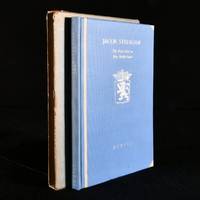
1908réf. 801F18New York: Dodd Mead and Company 1908 . Cloth. Very Good Indeed/Good. 8.5" by 5.5". None. A delightfully bound Limited Edition English language translation of the work of this Dutch poet claimed to be the first poetry written in Manhattan known at the time as New Amsterdam. An English language translation of the work of seventeenth century Dutch poet and minister Jacob Steendam. A Limited Edition of this work one hundred and fifteen copies were printed on Van Gelder handmade paper in Holland. In the scarce publisher's original slip case.These poems were first discovered by American politician and historian Henry Cruise Murphy in the nineteenth century when he was U.S. Minister to the Netherlands with the first English translation of Steendam's work published in 1861.This work illustrated with a portrait frontispiece map and facsimile of the title page of the 1649 first Dutch edition of this work is complemented with biographical notes from editor William Loring Andrews. In the publisher's original cloth binding with paper covered slip case. Light discolouration to back strip with boards exceptionally bright and clean. With slip case back strip detaching to the tail and small losses to the paper covering to perimeters. Internally firmly bound. Pages are clean and bright. Very Good Indeed Dodd, Mead and Company hardcover
2022réf. __3506793683Brill I Schoeningh 2022. Paperback. New. 400 pages. 9.25x6.10x1.10 inches. Brill I Schoeningh paperback
2001réf. x-1853835617Earthscan / James & James 2001. Paperback. New. 1st edition. 216 pages. 9.00x6.00x0.50 inches. Earthscan / James & James paperback
2022réf. x-3030917231Springer Nature 2022. Paperback. New. 607 pages. 9.25x6.10x1.23 inches. Springer Nature paperback
1998réf. x-0929699092Rodef Shalom Pr 1998. Paperback. New. 214 pages. 8.75x6.00x0.50 inches. Rodef Shalom Pr paperback
1998réf. x-0929699041Rodef Shalom Pr 1998. Paperback. New. 142 pages. 8.75x6.00x0.25 inches. Rodef Shalom Pr paperback
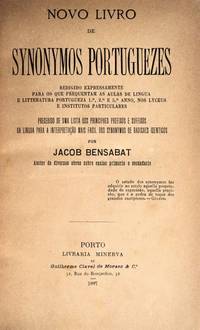
réf. 1202IM156Redigido Expressamente para os que frequentam as aulas de lingua e litteratura portugueza 1.º 2.º e 5.º anno nos lyceus e Institutos particulares. Precedido de uma lista dos principaes prefixos e sufixos da lingua para a interpretação mais facil dos synonymos de radicaes identicos. Por . Auctor de diversas obras sobre ensino primario e secundario. Livraria Minerva. Porto. 1887. De 19x12 cm. Com 255 pags. Encadernação da época com lombada em pele. Corte dourado por folhas. I-7-C-25 unknown
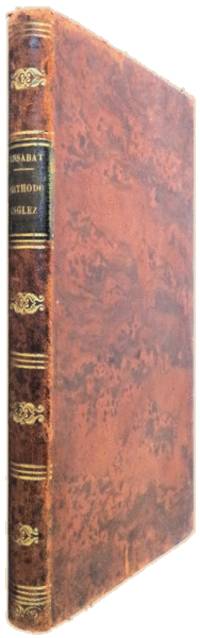
réf. 1711PG091Dividido em tres partes. Leitura conversação e phraseologia. Approvado pelo Conselho Geral de Instrucção Publica. Por . Auctor de uma grammatica ingleza theorica e pratica de um curso completo de exercícios sobre a Etymologia e a Syntaxe da mesma língua de um novo methodo de leitura e traducção ingleza etc. Terceira edição. Revista e corrigida pelo auctor. Livraria Ferreira. Lisboa. 1878. De 18x113 cm. com ii ix 194 págs. Encadernação da época inteira de pele com ferros a ouro na lombada e rótulo verde. Não preserva as capas de brochura. Contém dedicatória a D. maria da Conceição Quintella Cabral prólogo apêndice gramatical lista de abreviaturas inglesas e um índice gramatical. Manual para a aprendizagem da língua inglesa com o principal objectivo de conseguir que o estudante adquira um nível elevado na expressão falada e escrita deste idioma. Muito importante para o estudo da língua inglesa e da história do ensino desta língua em Portugal. I-32-A-39 unknown