Moses SeveranceBiblio.com
11 148 résultats
réf. 0483621595.Ghardcover. Good. Access codes and supplements are not guaranteed with used items. May be an ex-library book. hardcover
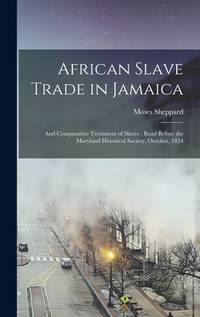
réf. B9781015381186Hardback. New. hardcover
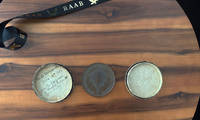
1509réf. 3366415/09/1866. Acquired from the direct descendants of the commander of the vessel that received the medal in Russia it was not known to have survived and has never before been offered for sale Emperor Alexander II issued the Emancipation Manifesto on March 3 1861 which granted freedom to over 23 million serfs. This reform is known as the Emancipation Edict. The Emancipation Proclamation was issued by President Abraham Lincoln on January 1 1863. It declared that all persons held as slaves within the rebellious Confederate states ""are and henceforward shall be free."" The Union victory in the Civil War finalized in 1865 ensured this would become the law of the land. Lincoln and Alexander had something else in common. Lincoln was assassinated in April 1865 by John Wilkes Booth in an act of political violence. The attempted assassination of Alexander II in 1866 was a failed act of political violence by Dmitry Karakozov a young revolutionary. Karakozov's aim was to kill the Tsar and spark a revolution believing the Emperor had betrayed the people's expectations after his emancipation of serfs in 1861. Another attempt around 20 years later would be successful. In 1866 President Andrew Johnson sent Assistant Secretary of the Navy Gustavus Vasa Fox who had played a leading role in the expedition to relieve Fort Sumter in April 1861 on a mission to Russia primarily to deliver a resolution from Congress congratulating Emperor Alexander II on his survival of the assassination attempt. The mission also aimed to gather information on European naval capabilities and explore potential trade opportunities including the sale of the ironclad monitor USS Miantonomoh. The mission was a major event marking a high point in Russian-American friendship and was met with grand receptions in St. Petersburg and Moscow. In the process Johnson sent the ironclad Miantonomoh itself on a world tour with the destination of Russia - first across the Atlantic and through the North Sea the Baltic and then through the Mediterranean in 1866 and 1867. The commander of this vessel was Moses Stuyvesant graduate of the Naval Academy and hero of the Civil War. He had been on two sunk vessels including one taken down by a Confederate Ironclad. But the mission had two messages: to congratulate Russia on the freeing of the serfs and the Tsar on surviving the assassination attempt. The resolution read: “JOINT RESOLUTION relative to the attempted assassination of the Emperor of Russia. “Be it resolved by the Senate and House of Representatives of the United States of America in Congress assembled That the Congress of the United States of America has learned with deep regret of the attempt made upon the life of the Emperor of Russia by an enemy of emancipation. The Congress sends greeting to his Imperial Majesty and to the Russian nation and congratulates the twenty millions of serfs upon the providential escape from danger of the sovereign to whose head and heart they owe the blessings of their freedom. “Sec. 2. And be it further resolved That the President of the United States be requested to forward a copy of this resolution to the Emperor of Russia. “Approved May 16 1866.” In mid Summer the Miantonomoh arrived in the harbor of Cronstadt on the 17th of August and the Tsar sent an address acknowledging the visit of Mr Fox. On Saturday September 15 the fleet went to push off from Russia. Mr. Fox left Petersburg after a farewell breakfast given on Russian yacht Rurik at which the Russian Lieutenant Greig presented the Americans with a symbol of their newly instituted freedoms from slavery in both countries: a medal struck in memory of the enfranchisement of the serfs in Russia. Grieg said ""The friendship of the two nations. among the causes to which is due this mutual spirit is the great event emancipation which has been accomplished almost simultaneously in the two countries - there by a sanguinary struggle here by the path of peace."" He then presents the ""medal struck in memory of the enfranchisement of the peasants.He will see on it the likeness of our sovereign and the effigy of a nobleman and of peasant."" This is that very medal given by the Russians to the Americans to commemorate the freedom of their former slaves presented to the Americans depicting the scene of Alexander II on one side as Grieg says in a case on the inside of which Stuyvesant as commander of the expedition has signed his name and dated it September 15 1866 the day of the presentation of the medal and Grieg's speech and written ""From the Emperor of Russia Alex III"" instead of II. The bronze medal reads: ""FEBRUARY 19 1861 Cut to N. Kozin from the model of count F. Tolstoy. Engraver: Nikolai Kozin"" It is not known how many were made. A small number have reached the market but none akin to this: with the important symbolism of a state gift congratulating a nation on emancipation. This was a gift of one slave-freeing nation to another in the immediate aftermath of those actions. This medal was not known to have survived and comes from the direct descendants of Stuyvesant who received it September 5 1866. <img class=""alignnone wp-image-25018 size-post-window"" src=""https://cdn.raabcollection.com/wp-content/uploads/20231204144051/Folder-site-11-1600x1327.jpg"" alt="""" width=""1600"" height=""1327"" /> unknown
1509réf. 3366415/09/1866. Acquired from the direct descendants of the commander of the vessel that received the medal in Russia it was not known to have survived and has never before been offered for sale Emperor Alexander II issued the Emancipation Manifesto on March 3 1861 which granted freedom to over 23 million serfs. This reform is known as the Emancipation Edict. The Emancipation Proclamation was issued by President Abraham Lincoln on January 1 1863. It declared that all persons held as slaves within the rebellious Confederate states ""are and henceforward shall be free."" The Union victory in the Civil War finalized in 1865 ensured this would become the law of the land. Lincoln and Alexander had something else in common. Lincoln was assassinated in April 1865 by John Wilkes Booth in an act of political violence. The attempted assassination of Alexander II in 1866 was a failed act of political violence by Dmitry Karakozov a young revolutionary. Karakozov's aim was to kill the Tsar and spark a revolution believing the Emperor had betrayed the people's expectations after his emancipation of serfs in 1861. Another attempt around 20 years later would be successful. In 1866 President Andrew Johnson sent Assistant Secretary of the Navy Gustavus Vasa Fox who had played a leading role in the expedition to relieve Fort Sumter in April 1861 on a mission to Russia primarily to deliver a resolution from Congress congratulating Emperor Alexander II on his survival of the assassination attempt. The mission also aimed to gather information on European naval capabilities and explore potential trade opportunities including the sale of the ironclad monitor USS Miantonomoh. The mission was a major event marking a high point in Russian-American friendship and was met with grand receptions in St. Petersburg and Moscow. In the process Johnson sent the ironclad Miantonomoh itself on a world tour with the destination of Russia - first across the Atlantic and through the North Sea the Baltic and then through the Mediterranean in 1866 and 1867. The commander of this vessel was Moses Stuyvesant graduate of the Naval Academy and hero of the Civil War. He had been on two sunk vessels including one taken down by a Confederate Ironclad. But the mission had two messages: to congratulate Russia on the freeing of the serfs and the Tsar on surviving the assassination attempt. The resolution read: “JOINT RESOLUTION relative to the attempted assassination of the Emperor of Russia. “Be it resolved by the Senate and House of Representatives of the United States of America in Congress assembled That the Congress of the United States of America has learned with deep regret of the attempt made upon the life of the Emperor of Russia by an enemy of emancipation. The Congress sends greeting to his Imperial Majesty and to the Russian nation and congratulates the twenty millions of serfs upon the providential escape from danger of the sovereign to whose head and heart they owe the blessings of their freedom. “Sec. 2. And be it further resolved That the President of the United States be requested to forward a copy of this resolution to the Emperor of Russia. “Approved May 16 1866.” In mid Summer the Miantonomoh arrived in the harbor of Cronstadt on the 17th of August and the Tsar sent an address acknowledging the visit of Mr Fox. On Saturday September 15 the fleet went to push off from Russia. Mr. Fox left Petersburg after a farewell breakfast given on Russian yacht Rurik at which the Russian Lieutenant Greig presented the Americans with a symbol of their newly instituted freedoms from slavery in both countries: a medal struck in memory of the enfranchisement of the serfs in Russia. Grieg said ""The friendship of the two nations. among the causes to which is due this mutual spirit is the great event emancipation which has been accomplished almost simultaneously in the two countries - there by a sanguinary struggle here by the path of peace."" He then presents the ""medal struck in memory of the enfranchisement of the peasants.He will see on it the likeness of our sovereign and the effigy of a nobleman and of peasant."" This is that very medal given by the Russians to the Americans to commemorate the freedom of their former slaves presented to the Americans depicting the scene of Alexander II on one side as Grieg says in a case on the inside of which Stuyvesant as commander of the expedition has signed his name and dated it September 15 1866 the day of the presentation of the medal and Grieg's speech and written ""From the Emperor of Russia Alex III"" instead of II. The bronze medal reads: ""FEBRUARY 19 1861 Cut to N. Kozin from the model of count F. Tolstoy. Engraver: Nikolai Kozin"" It is not known how many were made. A small number have reached the market but none akin to this: with the important symbolism of a state gift congratulating a nation on emancipation. This was a gift of one slave-freeing nation to another in the immediate aftermath of those actions. This medal was not known to have survived and comes from the direct descendants of Stuyvesant who received it September 5 1866. <img class=""alignnone wp-image-25018 size-post-window"" src=""https://cdn.raabcollection.com/wp-content/uploads/20231204144051/Folder-site-11-1600x1327.jpg"" alt="""" width=""1600"" height=""1327"" /> unknown books
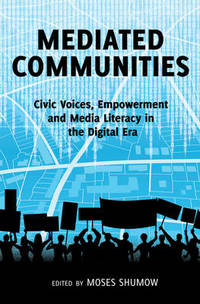
réf. B9781433124549Paperback. New. Mediated Communities brings together a diverse global cohort of academics and professional communicators to assess the current state of democratic mobilizing around the world and the ways in which protest movements are being transformed in the midst of a communication revolution. paperback
réf. A9781433124556Hardback. New. Mediated Communities brings together a diverse global cohort of academics and professional communicators to assess the current state of democratic mobilizing around the world and the ways in which protest movements are being transformed in the midst of a communication revolution. hardcover
réf. Bloomsbury-9781498501989Lexington Books. Hardback. New. 210 pages Lexington Books hardcover
réf. Bloomsbury-9781498501989Lexington Books. Hardback. New. 210 pages Lexington Books hardcover
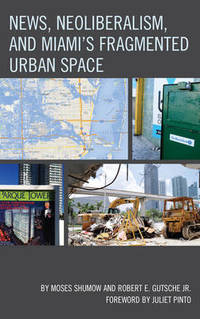
réf. ria9781498501989_inpHardcover. New. New Book; Fast Shipping from UK; Not signed; Not First Edition; This book examines the forces responsible for emerging inequalities in the rampant development of Miami as a “world city.” Looking at news as central to neoliberal movements in physical geography and collective ideology the hardcover
réf. A9781498501989Hardback. New. This book examines the forces responsible for emerging inequalities in the rampant development of Miami as a "world city." Looking at news as central to neoliberal movements in physical geography and collective ideology the authors analyze intersections of memory race capitalism and journalistic power as Miami's geography changes due to rising seas. hardcover
réf. 065681148X.Ghardcover. Good. Access codes and supplements are not guaranteed with used items. May be an ex-library book. hardcover
réf. 0259447889.Gpaperback. Good. Access codes and supplements are not guaranteed with used items. May be an ex-library book. paperback
réf. 6209995411.Gpaperback. Good. Access codes and supplements are not guaranteed with used items. May be an ex-library book. paperback
réf. 6209987737.Gpaperback. Good. Access codes and supplements are not guaranteed with used items. May be an ex-library book. paperback
réf. 033289066X.Ghardcover. Good. Access codes and supplements are not guaranteed with used items. May be an ex-library book. hardcover
réf. 1396746501.Ghardcover. Good. Access codes and supplements are not guaranteed with used items. May be an ex-library book. hardcover
1814réf. mon0003516716Packard & Van Benthuysen 1814. Hardcover. Good. . Rare. Presumed first. Original or very early full leather boards with leather label on spine. Age wear/rubbing to boards chipping to label on spine but in good shape for its age binding sturdy boards intact. Pencil notes on blank pages at front and back. Page 47 has a tear about 4"" x1"". Both color engravings present execution engraving is clean some foxing to other engraving. Some foxing/water staining to pages throughout but still totally readable. Binding sturdy. Packard & Van Benthuysen hardcover
réf. 042881820X.Ghardcover. Good. Access codes and supplements are not guaranteed with used items. May be an ex-library book. hardcover
réf. 1528147774.Ghardcover. Good. Access codes and supplements are not guaranteed with used items. May be an ex-library book. hardcover
1914réf. 50315070130Richard Jackson Leeds 1914. First Edition. Hardcover. Very Good Condition/No Dust Jacket. Contains 38 poems in East Yorkshire dialect. Frontispiece portrait of author. Marked and faded purple covers. Sunned and darkened spine. Lightly rubbed and bumped at spine ends and corners. Slightly darkened end-papers. Clean pages. Sound binding. Small book plate on inside of front cover Ex Libris Leslie Powell 1926-2006. Quantity Available: 1. Shipped Weight: under 1 kg. Pictures of this item not already displayed here available upon request. Inventory No: 50315070130. All our books music and maps are sent by a tracked mail service. Richard Jackson hardcover
1968réf. 1270140431Kenmore Press 1968. Hardcover. Very Good. Missing dust jacket; May have limited writing in cover pages. Pages are unmarked. ~ ThriftBooks: Read More Spend Less.Author's signature on back of front cover board. Slipcase in acceptable condition. This book shows minimal sign of wear to the cover binding or pages. No dust jacket included with this book. The book is signed by Author. Secure packaging for safe delivery.Dust jacket quality is not guaranteed. Kenmore Press hardcover
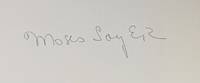
1972réf. 10455Flat signed by Soyer to the title page see image. Paper wraps. Minor soiling to the rear wrap; otherwise a nice clean copy with no defacements. Scarce. 8.75 x 11.75 in 22.5 x 30 cm ACA Galleries paperback
réf. ria9781015528215_inpHardcover. New. New Book; Fast Shipping from UK; Not signed; Not First Edition; This work has been selected by scholars as being culturally important and is part of the knowledge base of civilization as we know it.This work is in the "public domain in the United States of America and possibly other nations. Withi hardcover
réf. A9781015528215Hardback. New. hardcover
réf. B9781015528215Hardback. New. hardcover