9.814 resultados
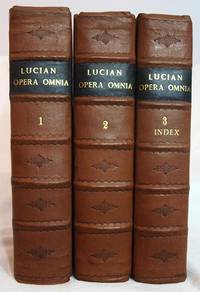
1743ref. 1503260010Amstelodami : Sumptibus Jacobi Wetstenii 1743-01-01. Hardcover. Good. 0x0x0. 3 Volumes. 2 pl in Volume I. Bound in modern 3/4 brown leather. Gilt lettering to spine. 5 raised bands. Red cloth boards. Good bindings and covers. Wear to top page end of Volume II near spine. Soiling to top page ends.Tanning to pages with foxing throughout. Brunet III.1207 Amstelodami : Sumptibus Jacobi Wetstenii hardcover
ref. 49220Henry Moses. Portland Place. 1831. . 1st Ed. IV 23 3 PP with 2 vignettes title page and dedicatory page plus 17 b/w plates these 2 pages and 17 plates protected with tissue guard. Vignette on title page: Vessel represented is most probably HMS Victory as she was the flagship at Portsmouth between 1825 and 1869. Loosely inserted letter by John Barton Windsor Castle dated 5th March 1831 giving assent to Henry Moses Esq. the author to dedicate this work to Her Most Gracious Majesty Adelaide Queen of the United Kingdom. Rebacked copy retaining original front cover leather spine. All the plates are present and in the right place however four are mis-numbered ie they don't have the same number as that given on the List of the Plates. A very nice copy of a scarce item. 38.7 x 28.7. Henry Moses. Portland Place. 1831. hardcover
ref. Bloomsbury-9781843711070Thoemmes Continuum. Hardback. New. 290 pages Thoemmes Continuum hardcover
ref. Bloomsbury-9781843711070Thoemmes Continuum. Hardback. New. 290 pages Thoemmes Continuum hardcover
1904ref. E30364New York: Moses King 1904. First edition. Hardcover. Very Good. Folio hardcover in olive green cloth ornately decorated and lettered in dark green black and gilt lettering. 72 pp. with ornately designed title page; aerial of Brooklyn and Manhattan verso of the title page. VIII Introductory essay "Brooklyn: The Greatest of the five Boroughs of Greater New York" by Rev. John W. Chadwick and Index to Views and Text. Second title page; each succeeding page features one or more photographic images of Brooklyn's statues buildings public business and residential bridges the Brooklyn Manhattan Williamsburg Blackwell's Island and Newton Creek Ft. Hamilton Park Prospect Park Coney Island racetracks ocean frontpublic schools libraries factories hotels churches Greenwood Cemetery. By far the scarcest "King's Views" volumes particularly due to the fact that the first title page states "Made For The Lawyers Title Insurance Company" indicating a limited run possibly not for sale. A tight very good examplesoem light soiling to the outer portion of the front board rear board unmarked minor wear at the extremities small ownership signature top edge of the main title page. Internally clean. PLEASE NOTE: for fear of daminging this extremely scarce volume we cannot provide 41hh. Moses King hardcover
1926ref. 10275Los Angeles California: Vincent Printing Co 1926. 9 x 6" purple leatherette binding with grey lettering and illustration 250 2 pp one color plate many photo illustrations within text. Title in English translates to "Through Sacred Lands and Through Profane Lands Impressions of a Guatemalan on His Journey Around the World During the Years 1922 to 1924." A travel narrative by a Guatemalan-American published in Los Angeles. The author Jose Moises Deleon Letona arrived in California in 1925 lived in Los Angeles and worked as an accountant according to his 1927 naturalization document. He was a member of the Science League of America the American Insurance Union and the Hispanic-American Alliance. The first three chapters cover Letona's journey from Guatemala to New Orleans his travels through the American northeast a visit to Niagara Falls and his border crossing into Canada. The rest of the book covers his travels throughout Europe to the Holy Land and to Egypt. Throughout Letona provides his impressions of the societies he visits listing statistics describing social norms and family structures and providing comparisons to his native Guatemala. A chapter towards the end is dedicated to comparisons of the various countries he visited. Letona wrote for a Central American audience in order to expose his countrymen to the wider world and inspire within them dreams of travel. Letona writes in his introduction that "If all my countrymen who leave their native land and return to their homes put their own impressions on the pages of a book.it would not only give the sensation of things outside but would also be a stimulus to induce the Central American to be less shy and seek in the lives of other peoples means that adapt to his own life." He adds in his conclusion that "One of the objectives of this book is to awaken in you the idea of traveling. You the parents who have resources send your sons and daughters to study to work abroad." The book is infused with patriotic sentiment for Guatemala and includes a poetic ode to the country as well as a color plate depicting the national bird the Quetzal. Soiling to covers wear to edges and spine ends toning to pages. Vincent Printing Co hardcover
1850ref. 21117London: Richard Bentley 1850. First edition. Hardcover. Good. Two volumes octavo. XV 1 438 XVI 437 1pp. Steel plate engravings in text; musical scores with Hebrew text; facsimile of Sephardic amulet. Largely uncut. Original blind-stamped cloth with gold lettering on spines. Engraved frontispiece in each volume. Remarkable illustrated account of the author's journey to the Holy Land with descriptions of ancient and modern Jewish culture in France Malta Tunisia Constantinople Lebanon Syria and Palestine; Moses Margoliouth was a learned and respected minister in the Church of England of the nineteenth century. As his name might indicate he was also of Jewish extraction. Born in Suwalki Poland in 1818 he arrived in England in 1837 and converted to the Christian faith the following year. This work exemplifies the growing English interest in the biblical Land of Israel during the 19th century and growing identification with the Nation of Israel leading in this case to increased missionary activity but also to a support of Zionism. Spines and edges age-toned. Tiny closed tears and minor abrasion at head and tail of spines. Small white stain on spine of first volume. Minor and sporadic foxing throughout. Bindings in overall good condition interior in very good condition. Richard Bentley hardcover
1817ref. 412850London: Published by J. Taylor 1817. Hardcover. Good. First edition. Quarto. pp. 1 2-16; 1 2-8 publisher's catalogue. With an engraved title leaf and 36 engraved plates. Original boards with printed labels. Stains on the boards and titlepage spine partially perished dampstain to the gutter at the head of the spine and scattered foxing on the plates a good copy. Presumably very uncommon in boards. Published by J. Taylor hardcover
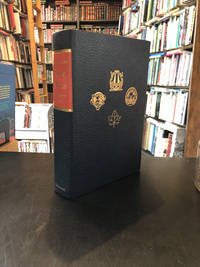
1970ref. 11107New York: McGraw-Hill 1970. First Edition. Hardcover. Near fine. Octavo 952pp. illustrated. A crisp clean copy near fine in the publisher's navy leather stamped in gilt with red leather spine label. Very gentle foxing to edges and a touch of rubbing to extremities but a nice example. This copy SIGNED and INSCRIBED by Moses on the half-title page: "To Betty and Vince from Bob Moses." There are a few faint foxing marks to the signature page. This is one of an unidentified but certainly small number of presentation copies specially bound by the publisher for Moses to give to friends and colleagues. An uncommon memoir which contains great swaths of reproduced correspondence between Moses and other officials relating to the various public works projects in which he was involved. Moses was perhaps the most influential civil servant in history who never sought wider political office. His complex legacy was explored in Robert Caro's unparalleled biography "The Power Broker" which was published four years after this memoir. McGraw-Hill hardcover
2022ref. Adhya-9780323694278ELSEVIER MEDICAL 2022. HB. New. ELSEVIER MEDICAL hardcover
2022ref. Adhya-9780323694278ELSEVIER MEDICAL 2022. HB. New. ELSEVIER MEDICAL hardcover
1970ref. f15574McGraw Hill 1970. Hardcover. Like New. 0x0x0. Signed by Author. Signed and inscribed by author on half title page. Book is in excellent condition text is unmarked and pages are tight. Comes with signed letter and two pamphlets from a dinner event. McGraw Hill hardcover
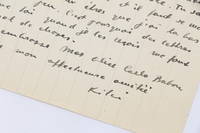
1940ref. 83069s. l.: S. n. 1940. Fine. S. n. s. l. 17 octobre 1940 17.50 x 25.50 cm une feuille Autograph letter signed by Moïse Kisling addressed from his exile in Lisbon to Carlo Rim 30 lines in black ink deeply imbued with melancholic memories of his Provence which he cruelly misses: ""Ta lettre du 5. m'a donné envie de la sentir pour découvrir un peu d'ail pour sentir le mistral et toute la couleur du pays. Elle m'a apporté un peu d'arôme du pays."" ""Your letter of the 5th. made me want to smell it to discover a bit of garlic to feel the mistral and all the color of the country. It brought me a little aroma of the country."" Moïse Kisling questions his friend about fishing : "". elle ne doit pas être bonne en ce moment - nous allons vers novembre. Mais quelque fois la mer est bonne à cette époque. Parle-moi du poisson - quelle sacrée différence de ceux d'ici ! ah ! merde alors ! "" "". it must not be good right now - we're heading towards November. But sometimes the sea is good at this time. Tell me about the fish - what a damn difference from those here! ah! damn it then!"" and appears unenthusiastic about the idea of going to the United States to exhibit his works even further removed from his beloved Provence: ""Quand je serai dans le pays de dollars et j'en gagnerai sûrement je te commanderai des longues chroniques sur beaucoup de pages. Tu seras obligé de me raconter tous les potins du pays et tu prendra comme collaboratrice Alice."" ""When I am in the land of dollars and I will surely earn some I will commission from you long chronicles on many pages. You will be obliged to tell me all the gossip of the country and you will take Alice as collaborator."" The painter confesses to a certain melancholy linked to his retreat: "". toi aussi tu me manque vieux - du coup je deviens sentimentale. Tu sais Ici c'est la solitude complète et il faut se mettre à table pour écrire aux êtres que j'ai la bas pour s'oublier un peu. C'est pourquoi des lettres de gars comme toi quand je les reçois me font oublier pas mal de choses."" "". I miss you too old friend - so I'm becoming sentimental. You know Here it's complete solitude and one must sit at the table to write to the people I have back there to forget oneself a little. That's why letters from guys like you when I receive them make me forget quite a few things."" Folds inherent to posting. Carlo Rim was a Provençal writer author notably of ""Ma belle Marseille"" a caricaturist a filmmaker: ""Justin de Marseille"" ""L'armoire volante"" ""La maison Bonnadieu"" and was notably the friend of Fernandel Raimu and Marcel Pagnol but also of Max Jacob and André Salmon whom he met in Sanary. S. n. unknown
ref. 106938London Printed for J. Noon at the White Hart in Cheapside near Mercer's Chapel 1748. . First edition; 8vo; contemporary calf with embossed title spine gilt in compartments with raised bands joints slightly cracked but holding; edges stained red pages clean and crisp; 12 404 pp. Moses Lowman 16801752 was an English nonconformist minister in a Presbyterian congregation at Clapham Surrey. He was known as a Biblical commentator and an authority on Jewish antiquities this reputation of his resting mainly on his Dissertation on the Civil Government of the Hebrews published in 1740. As a Christian writer Rev. Lowman extols the virtues of Judaism as support for the Christian faith: 'For a right Understanding of the Mosaical Ritual requires some Knowledge of the rites themselves together with some Understanding of the Ends Designs real Advantages and Uses of them. For these are the proper Proofs of their Wisdom and Goodness the proper Reasons and Motives for Approbation and Esteem.' ESTC T88610. London, Printed for J. Noon at the White Hart in Cheapside near Mercer's Chapel, 1748. hardcover
ref. 52967London printed for Peter Parker at the Leg and Star over against the Royal Exchange in Cornhill 1679. TITLE CONTINUED: With several FIGURES in Copper-plates proper for the same. ALSO RULES and TABLES shewing how the Ingenious Planter may measure Superficial Figures with Rules how to divide Woods or Land and how to measure Timber and other Solid Bodies either by Arithmetick or Geometry shewing the Use of that most Excellent Line the Line of Numbers by several New Examples; with many other Rules useful for most Men. By Moses Cook Gardiner to that great Encourager of Planting the Right Honourable the Earl of Essex. Whereunto is now added that ingenious Treatise of Mr. Gabriel Plattes viz. A Discovery of Subterranean Treasure. LACKING THE FINAL GABRIEL PLATTES SECTION. SECOND EDITION 1679. Small 4to approximately 200 x 150 mm 8 x 6 inches 4 engraved plates showing figures placed at rear a few tables in the text pages: 16 1-204 4 - last page an advert rebound in quarter calf green gilt lettered label to spine and gilt lettering and gilt rules between raised bands marbled covers new brown endpapers. Occasional small brown spot title page untrimmed at outer edge. A good tight clean copy. See: Blanche Henrey British Botanical and Horticultural Literature Volume 1 page 235 No. 39; Mary Aslin Catalogue of the Printed Books on Agriculture page 30; ESTC No.: R2565. MORE IMAGES ATTACHED TO THIS LISTING ALL ZOOMABLE FURTHER IMAGES ON REQUEST. POSTAGE AT COST AND ALL PARCELS SENT FULLY TRACKED AND FULLY INSURED. London, printed for Peter Parker at the Leg and Star over against the Royal Exchange in Cornhill, 1679. hardcover
1848ref. B2311London: H.G. Bohn 1848. Minor wear of the binding and some toning of the plates otherwise a very good copy. Binding: contemporary full cloth with gilt image of a vase on upper board spine with 4 compartments of gilt tooled bands gilt lettering on two and three. Notes: Henry Englefield was an antiquary and scientific writer. He was a made a fellow of the Society of Antiquites in 1779 and also served as the president for a brief period. National Bibliography. second and engraved edition with 20 additional plates. Size: 4to Illustration: With 51 beautifully engraved plates of ancient Roman and Greek vases. Pages: P. title printer imprint 3-12 51 plates unpaginated. Category: ; Book Plate Books General; Book Art Architecture & Design H.G. Bohn hardcover
1896ref. 47608Chicago: Isaac S. Moses 1896. First edition. Softcover. g- to near fine. Octavo. 62pp. Beige printed wrappers with black lettering on the front cover. A scarce song book collecting 45 American Jewish liturgical melodies and prayers for use in choral singing in Reform congregations arranged and edited by Rabbi Isaac S. Moses 1847-1926. Contains translations of prayers into English where necessary as well as transliteration of the original Hebrew to accompany the musical notation. Included are a number of original melodies for traditional Jewish prayers and hymns submitted for the purpose of this publication by a variety of rabbis scholars and musical directors of synagogues including F.G. Rohner Alois Kasier and P.C. Lutkin as well as contemporary melodies from established European-Jewish composers and cantors of the 19th century such as Louis Lewandowski 1821-1894 Samuel Naumbourg 1817-1880 and Salomon Sulzer 1804-1890. Also included are a number of adaptations of previously famous melodies from past secular composers including Mozart Beethoven Mendelssohn and Johann Heinrich Rolle. Text in English printed in single and two-column formats. Publishers advertisements on the back wrapper. Wrappers with age toning to the edges of the covers as well as chipping to the head and tail of the spine. Wrappers disbound from book block. Book block tight with pages clean and in great shape. Wrappers in good- interior in near fine condition overall. Extremely scarce. Protected by modern mylar. Singerman 5049. Isaac S. Moses unknown
1791ref. 12073Salonika 1791. Hardcover. f. Folio 57 leaves. Rebound. Illustrated title page. Owner's inscription on title-page. Front and back boards scuffed. Spine worn. Front board starting. Some water damage to lower left front corner of volume but it does not affect text. There is more severe damage along the margin of first ten leaves however there is no text loss. In Hebrew. Fair condition. Ozar Hasefer P.675 item #417. hardcover
1710ref. 37844Frankfurt a. M. 1710. First edition. Hardcover. fair to g. Folio. 1 leaf 4 leaves 99 leaves 114 leaves 9 leaves 13 leaves 1 leaf. Contemporary brown leather with blind tooling along the border and spine as well as raised bands. Blue edges. Illustrated title page with image of a swan. Head and tail pieces. Commentary on the Talmud that elucidates contradictions within the text. Author makes use of gematriot based on his name. Text printed in double columns with talmudic text in regular script and author's comments in Rashi script. Source notes on side margins. Text in Hebrew. Significant peeling and scratching to leather boards. Bottom edge torn. Tail of spine mostly missing. Some misnumbering to leaves. Leaf 5 was bound after the fact. Name of previous owner on front endpaper. Heavy foxing to leaves. Overall in fair to good condition. hardcover
ref. 64080Bureaux de l'Administration - Paris 4 volumes 203 numeros In-folio 39 cm 368-424-416-416pp. illustr. nombreuses gravures sur bois hors-textes reliures demi-cuir basane fauve de l'epoque dos plats ornes quelques marques d'usage details et photos sur demande Nb-0270 unknown
1984ref. 87672 Copies filed J: Cyhoeddiadau Barddag 1984. Paperback. Used: Acceptable. Paperback - 1984 - fair condition clean sunfaded on edge Cyhoeddiadau Barddag paperback
ref. 67195London Priestley and Weale 1820. 4to. Engr. front engr. title 63 pp. 39 engr. plates of which one partly hand-coloured. Foxing and spotting and with a water stain at upper corner at the end. Worn contemporary full calf gilt spine with raised bands and a defective red label gilt edges. Book plate of Venetia Inglefied and with a partly erased owner’s signature. Vinet 1542 with a slightly different titles gives 1819 or 1822 as dates. First edition. A reprint was made in 1848. Henry Englefield was an antiquary and scientific writer. He was a made a fellow of the Society of Antiquites in 1779 and also served as its president for a short period. hardcover
1794ref. 667471794. London : printed for T. Evans Paternoster Row and J. Stead at the Naval and Military Printing-Office Gosport 1794 8° 8 XX 170 pp. Halbledereinband d.Zt.; Rücken erneuert. Rare First Edition! "A treatise on the blood or general arrangement of many important facts relative to the vital fluid. With some cursory observations on the theory of animal heat. Interspersed with pathological and physiological remarks from the inductions of modern chemistry. By Hugh Moises surgeon of the Western Regiment of Middlesex Militia and Late Senior Pupil to the General Hospital Nottingham." "With the general acceptance of the Lavoisier-Crawford theory of animal heat as a resultant of respiration or slow combustion much of the subsequent search for the site of body heat production revolved about two questions. What happens to the inspired oxygen Or alternately where in the body was the carbonic acid first formed A subsidiary and often perplexing question asked at what temperatures the products of combustion carbonic acid and water actually could be formed The last question is of particular interest because the heats of combustion of carbon and hydrogen were utilized in the early nineteenth century attempts to establish the respiration theory of animal heat. Séguin citing Priestley and Bertholet had argued that these combustions could occur at ordinary body temperature. Hugh Moises in his Treatise on the Blod 1794 was equally emphatic : We know of no experiment which might authorize us to suppose that carbon can unite with oxygene in a temperature of 97°-99° or that hydrogene and oxygene air combine and form water in so low a temperature." "The early studies of this limited problem suggested solutions based on the ability of the different gases to cause the color changes observed in blood. Both Girtanner and Hassenfratz had attempted to show that venous blood became bright red upon the absorption of oxygen and thereby demonstrated their contention that the blood took up oxygen in the lungs. Another line of experimentation attempted to recover gases from the blood. Hugh Moises for instance confined arterial blood in bottles with gases containing no oxygen and claimed to find oxygen in the residue." Everett Mendelsohn: The Controversy over the Site of Heat Production in the Body. Proceedings of the American Philosophical Society 105/4 1961 pp. 412-420 Hugh Moises M.D. "Surgeon of the Western Regiment of Middlesex Militia.- An Inquiry into the Abuses of the Medical Department of the Militia. Lond. 1794 8vo.- A Treatise on the Blood; or General Arrangement of many important Facts relative to the Vital Fluid . Lond. 1794 8vo. 5s. - An Appendix to the Toilet; or an Essay on the Management of the Teeth. Loud. 1799 8vo. 2s. 6d." R. Watt: Bibliotheca Britannica. 4. V. 1824 unknown
1884ref. 688281884. Am. J. M. Sc. 88. - Philadelphia The American Journal of the Medical Sciences July 1884 8° 51 1 pp. 2 Figs. orig. wrappers. Rare Offprint! "The localization of brain functions has been raised from the level of an hypothesis to that of a definitely ascertained fact within the past ten years. Meynert was the first to discard the doctrine of Flourens that the brain acted as a whole and on anatomical grounds declared that different portions possessed different powers. The study of aphasia led French observers independently to the same result. Fritsch and Hitzig in Germany and Ferrier in England arrived at a similar conclusion soon after by means of their well-known physiological experiments upon animals and the results reached by them have been confirmed in a most striking manner by Munk Dalton and others. But while anatomical study demonstrating a connection between various organs of the body and definite regions of the surface of the brain may furnish grounds for a priori reasoning as to the function of those regions; and while physiological experiments upon animals may afford valuable suggestions as to the probable effect of limited brain disease in man an accurate determination of the question of localization can only be reached by a study of clinical cases. The appreciation of this fact has led Charcot Ferrier Nothnagel Exner Wernicke and others to collect the cases on record in which a limited area of disease whose position was determined by a careful autopsy had given rise to definite symptoms. From the comparison and classification of these eases certain general conclusions have been reached and it is now possible to refer many symptoms occurring in the course of brain disease to a destruction of a definite area of the surface." Starr Moses Allen Starr 1854-1932 'Professor of Neurology in the College pf Physician and Surgeons at Columbia University New York City' "had plans for a career in classical culture when he graduated from Princeton and embarked for Germany to study Greek and Roman history. In Berlin however several visits to Helmholtz's laboratory revived a latent interest in natural science. He returned to his native New York graduated from the College of Physicians and Surgeons P&S Columbia University did a residency at Bellevue Hospital then returned to Europe to work at Heidelberg Vienna and Paris. On return to New York he set up a laboratory in his home and in 1884 published an essay on the sensory tracts of the central nervous system elucidating some of the then-current questions of myelination. Starr's regard as an American pioneer in the field of cerebral localization stemmed from his participation in a symposium on that subject with the famous English neurologist David Ferrier and neurosurgeon Victor Horsley who were delegates to the 1888 Congress of American Physicians and Surgeons in Washington D.C. He became professor of nervous diseases at the Montreal Neurological Institute. During neurosurgical operations they electrically stimulated the surface of the exposed unanesthetized brains of patients who were talking. On-going speech was blocked by excitation of the parietal-temporal area the inferior frontal area and the supplemental motor area of the left hemisphere Penfield & Roberts 1959. Those experimental protocols were a continuation of Penfield's long quest to add to the knowledge of body representations on the neocortex." H.W. Magoun & L. Marshall; American Neuroscience in the Twentieth Century 2005 pp.383-384 unknown
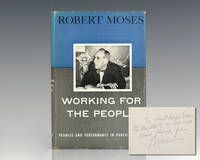
1956ref. 124814New York: Harper & Brothers 1956. First edition of this work by the legendary Robert Moses. Octavo original cloth. Presentation copy inscribed by the author on the front free endpaper "To Janet Hooper Ostahn the daughter of an old and valued friend from Robert Moses." Near fine in a near fine dust jacket. Foreword by Herbert Bayard Swope. Books signed by Moses are uncommon. Robert Moses was a public official who worked mainly in the New York metropolitan area. Known as the "master builder" of mid-20th century New York City Long Island Rockland County and Westchester County he is sometimes compared to Baron Haussmann of Second Empire Paris and was one of the most polarizing figures in the history of United States urban development. His decisions favoring highways over public transit helped create the modern suburbs of Long Island. Although he was not a trained civil engineera Moses's programs and designs influenced a generation of engineers architects and urban planners nationwide. Moses held up to 12 official titles simultaneously including New York City Parks Commissioner and Chairman of the Long Island State Park Commission but was never elected to any public office. He ran only once as the Republican nominee for Governor of New York in 1934 and lost in a landslide. Nevertheless he created and led numerous semi-autonomous public authorities through which he controlled millions of dollars in revenue and directly issued bonds to fund new ventures with little or no input or oversight. As a result of Moses's work New York has the United States' greatest proportion of public benefit corporations which remain the primary driver of infrastructure building and maintenance and account for most of the state's debt. Moses's projects were considered economically necessary by many contemporaries after the Great Depression. Moses led the construction of New York campuses for the 1939 and 1964 World's Fairs and helped persuade the United Nations to locate its headquarters in Manhattan instead of Philadelphia. Harper & Brothers hardcover