11.156 resultados
ref. 3375154585.Gpaperback. Good. Access codes and supplements are not guaranteed with used items. May be an ex-library book. paperback
ref. 3375154917.Ghardcover. Good. Access codes and supplements are not guaranteed with used items. May be an ex-library book. hardcover
ref. 1020533862.Ghardcover. Good. Access codes and supplements are not guaranteed with used items. May be an ex-library book. hardcover
ref. 1333514352.Gpaperback. Good. Access codes and supplements are not guaranteed with used items. May be an ex-library book. paperback
ref. 1018029222.Ghardcover. Good. Access codes and supplements are not guaranteed with used items. May be an ex-library book. hardcover
ref. 0842528431.Ghardcover. Good. Access codes and supplements are not guaranteed with used items. May be an ex-library book. hardcover
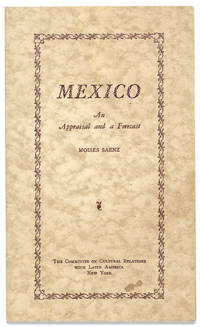
ref. 3731205New York: The Committee on Cultural Relations with Latin America 1929. 16pp. 7¾ x 4½ inches. Stiff paper printed wrappers. Title-leaf slightly silverfished; very good. A utopianistic vision and a survey of pre- and post-Mexican Revolutionary society religion and schools by the educational reformer Moisés Sáenz 1888–1941. In this passage Sáenz discusses how by 1915 to 1920 the tumultuous events had led to a self-examination of the Mexican identity: "“We saw our poverty. Bountiful the soil might be; its gifts were not ours. A few thousand men a mere handful when compared with the rest enjoyed the land. Rich beyond words the mines might be; their treasures were not ours. We were poor. We saw our Indian flesh of our flesh and bone of our bone a silent mass naked and hungry by our neglect and our cupidity yet offering in dumb defiance the gift of his art and tradition. We found him mute—three million not knowing our tongue—we found him lost in the childish nightmare of his folkloric dreaming uncomprehending or perhaps indifferent to the white man’s civilization… p5 ”" Later Sáenz argues for the blending and unification of religion culture and language: "“Our ethnological chaos must give way to order; race fusion must mean spiritual union. Incorporation of the Indian into the Mexican family should mean as much as incorporation of the Mexican family into the Indian. Mexico is an Indian country. There must be cultural integration. A mestizo body must have a mestizo soul. Trying to apply the nordic standard of the white man is both unjust and futile. Let our civilization bravely accept the basic fact of our Indo-lberic mixture let our Indian have a voice and we may yet create a new world” p14" Sáenz was a disciple of philosopher John Dewey. He opened over 4000 rural schools from 1924 to 1928 as the director of Mexico’s federal education program. unknown
ref. 10466-0401Provo Brigham Young University Press 2010. Gr. Oktav Org.-Hardcover mit illustr. OU xxvii i 71 numerierte Blätter und S. 73-119 1 1 Bl. wohlerhaltenes Exemplar. Medical works of Moses Maimonides. - ISBN 9780842527804. - ENGLISH: Large octavo publisher's hardcover with illustr. publisher's D/J xxvii i 71 numbered leaves and pp. 73-119 1 1 f. a well preserved copy. Medical works of Moses Maimonides. - ISBN 9780842527804. - ENGLISH: Large octavo publisher's hardcover with illustr. publisher's D/J xxvii i 71 numbered leaves and pp. 73-119 1 1 f. a well preserved copy. Medical works of Moses Maimonides. - ISBN 9780842527804. - ENGLISH: Large octavo publisher's hardcover with illustr. publisher's D/J xxvii i 71 numbered leaves and pp. 73-119 1 1 f. a well preserved copy. Provo, Brigham Young University Press, 2010. hardcover
ref. KSCMG-SUP-1-00BLeipzig & Berlin B. G. Teubner 1934. Gr.-Oktav. Zeitgenössisches goldgeprägtes Halbleinen mit marmomierten Bezügen. XXVIII 112 S. wohlerhaltenes Exemplar. =Corpus Medicorum Graecorum Supplementum; I. - Erste Ausgabe maßgebliche textkritische Rezension. - "Der berühmte Arzt Galen verfasste einen Kommentar zum Timaios von dem teils umfangreiche Fragmente erhalten sind. Er bot nicht nur Erläuterungen sondern nahm auch inhaltlich Stellung. Außerdem erstellte er eine Zusammenfassung des Dialoginhalts die heute nur in einer arabischen Teilübersetzung vorliegt. Sein besonderes Interesse galt psychosomatischen Zusammenhängen. Er war aufgrund seiner Erfahrungen der Überzeugung dass körperliche Faktoren seelische Krankheiten hervorrufen und berief sich dafür zusätzlich auf den Timaios." - "Im arabischsprachigen Raum gehörte der Timaios im Mittelalter zu den bekanntesten Dialogen Platons wie zahlreiche Bezugnahmen in der arabischen Literatur zeigen. Er wurde im 9. Jahrhundert von dem Gelehrten Yahya ibn al-Bitriq der zum Umkreis des Philosophen al-Kindi zählte ins Arabische übersetzt. Später wurde diese Übersetzung von Hunain ibn Ishq und/oder Yahya ibn 'Adi überarbeitet. Auch Galens Zusammenfassung des Dialogs war arabischsprachigen Gelehrten teilweise zugänglich; sie lag ihnen in einer von Hunain ibn Ishaq stammenden Teilübersetzung vor." wikipedia dt. - Enthält als zweiten Appendix auch die von Paul Kahle stammende arabische Transkription und deutsche Übersetzung der Einleitung des Mosis Maimonides in das Buch der Aphorismen Fusul. - PROVENANCE: The book offered comes from the library of the world-famous Karl-Sudhoff-Institute for the History of Medicine and Sciences of the Leipzig University which was dispersed by sale by the end of 2018. The institute was the first of its kind in the world when it was founded in 1906 and through its existence it gained much considerable relevance for the international emergence of a modern history of science and the source-based cultural studies. The institute was overseen by Karl Sudhoff the most important historian of medicine of the 20th century as was the annexed library that contained a high number of volumes sent and sometimes even dedicated to him personally. After Sudhoff's death in 1938 the institute was renamed to Karl-Sudhoff-Institut in honour of his achievements. All books from this library offered by us about 2.500 were properly withdrawn from the Leipzig University Libraries holdings and bear corresponding marks such as handwritten signatures on spines stamps on titlepages or fly leaves. In general these were added to the volumes in a very careful manner and do not or only to a very small or neglectable degree affect the aesthetical appearance of the books. - =Corpus Medicorum Graecorum Supplementum; I. - Erste Ausgabe maßgebliche textkritische Rezension. - "Der berühmte Arzt Galen verfasste einen Kommentar zum Timaios von dem teils umfangreiche Fragmente erhalten sind. Er bot nicht nur Erläuterungen sondern nahm auch inhaltlich Stellung. Außerdem erstellte er eine Zusammenfassung des Dialoginhalts die heute nur in einer arabischen Teilübersetzung vorliegt. Sein besonderes Interesse galt psychosomatischen Zusammenhängen. Er war aufgrund seiner Erfahrungen der Überzeugung dass körperliche Faktoren seelische Krankheiten hervorrufen und berief sich dafür zusätzlich auf den Timaios." - "Im arabischsprachigen Raum gehörte der Timaios im Mittelalter zu den bekanntesten Dialogen Platons wie zahlreiche Bezugnahmen in der arabischen Literatur zeigen. Er wurde im 9. Jahrhundert von dem Gelehrten Yahya ibn al-Bitriq der zum Umkreis des Philosophen al-Kindi zählte ins Arabische übersetzt. Später wurde diese Übersetzung von Hunain ibn Ishq und/oder Yahya ibn 'Adi überarbeitet. Auch Galens Zusammenfassung des Dialogs war arabischsprachigen Gelehrten teilweise zugänglich; sie lag ihnen in einer von Hunain ibn Ishaq stammenden Teilübersetzung vor." wikipedia dt. - Enthält als zweiten Appendix auch die von Paul Kahle stammende arabische Transkription und deutsche Übersetzung der Einleitung des Mosis Maimonides in das Buch der Aphorismen Fusul. - PROVENANCE: The book offered comes from the library of the world-famous Karl-Sudhoff-Institute for the History of Medicine and Sciences of the Leipzig University which was dispersed by sale by the end of 2018. The institute was the first of its kind in the world when it was founded in 1906 and through its existence it gained much considerable relevance for the international emergence of a modern history of science and the source-based cultural studies. The institute was overseen by Karl Sudhoff the most important historian of medicine of the 20th century as was the annexed library that contained a high number of volumes sent and sometimes even dedicated to him personally. After Sudhoff's death in 1938 the institute was renamed to Karl-Sudhoff-Institut in honour of his achievements. All books from this library offered by us about 2.500 were properly withdrawn from the Leipzig University Libraries holdings and bear corresponding marks such as handwritten signatures on spines stamps on titlepages or fly leaves. In general these were added to the volumes in a very careful manner and do not or only to a very small or neglectable degree affect the aesthetical appearance of the books. - =Corpus Medicorum Graecorum Supplementum; I. - Erste Ausgabe maßgebliche textkritische Rezension. - "Der berühmte Arzt Galen verfasste einen Kommentar zum Timaios von dem teils umfangreiche Fragmente erhalten sind. Er bot nicht nur Erläuterungen sondern nahm auch inhaltlich Stellung. Außerdem erstellte er eine Zusammenfassung des Dialoginhalts die heute nur in einer arabischen Teilübersetzung vorliegt. Sein besonderes Interesse galt psychosomatischen Zusammenhängen. Er war aufgrund seiner Erfahrungen der Überzeugung dass körperliche Faktoren seelische Krankheiten hervorrufen und berief sich dafür zusätzlich auf den Timaios." - "Im arabischsprachigen Raum gehörte der Timaios im Mittelalter zu den bekanntesten Dialogen Platons wie zahlreiche Bezugnahmen in der arabischen Literatur zeigen. Er wurde im 9. Jahrhundert von dem Gelehrten Yahya ibn al-Bitriq der zum Umkreis des Philosophen al-Kindi zählte ins Arabische übersetzt. Später wurde diese Übersetzung von Hunain ibn Ishq und/oder Yahya ibn 'Adi überarbeitet. Auch Galens Zusammenfassung des Dialogs war arabischsprachigen Gelehrten teilweise zugänglich; sie lag ihnen in einer von Hunain ibn Ishaq stammenden Teilübersetzung vor." wikipedia dt. - Enthält als zweiten Appendix auch die von Paul Kahle stammende arabische Transkription und deutsche Übersetzung der Einleitung des Mosis Maimonides in das Buch der Aphorismen Fusul. - PROVENANCE: The book offered comes from the library of the world-famous Karl-Sudhoff-Institute for the History of Medicine and Sciences of the Leipzig University which was dispersed by sale by the end of 2018. The institute was the first of its kind in the world when it was founded in 1906 and through its existence it gained much considerable relevance for the international emergence of a modern history of science and the source-based cultural studies. The institute was overseen by Karl Sudhoff the most important historian of medicine of the 20th century as was the annexed library that contained a high number of volumes sent and sometimes even dedicated to him personally. After Sudhoff's death in 1938 the institute was renamed to Karl-Sudhoff-Institut in honour of his achievements. All books from this library offered by us about 2.500 were properly withdrawn from the Leipzig University Libraries holdings and bear corresponding marks such as handwritten signatures on spines stamps on titlepages or fly leaves. In general these were added to the volumes in a very careful manner and do not or only to a very small or neglectable degree affect the aesthetical appearance of the books. - Leipzig & Berlin, B. G. Teubner, 1934. unknown
ref. 0282985042.Gpaperback. Good. Access codes and supplements are not guaranteed with used items. May be an ex-library book. paperback
ref. 0282918981.Gpaperback. Good. Access codes and supplements are not guaranteed with used items. May be an ex-library book. paperback
ref. 1020475943.Ghardcover. Good. Access codes and supplements are not guaranteed with used items. May be an ex-library book. hardcover
ref. 0548807051.Gpaperback. Good. Access codes and supplements are not guaranteed with used items. May be an ex-library book. paperback
ref. 1362222917.Ghardcover. Good. Access codes and supplements are not guaranteed with used items. May be an ex-library book. hardcover
ref. 0266885128.Ghardcover. Good. Access codes and supplements are not guaranteed with used items. May be an ex-library book. hardcover
ref. 3737216983.Gpaperback. Good. Access codes and supplements are not guaranteed with used items. May be an ex-library book. paperback
ref. 2494509793.Gpaperback. Good. Access codes and supplements are not guaranteed with used items. May be an ex-library book. paperback
ref. 1020506121.Ghardcover. Good. Access codes and supplements are not guaranteed with used items. May be an ex-library book. hardcover
ref. 1020759402.Ghardcover. Good. Access codes and supplements are not guaranteed with used items. May be an ex-library book. hardcover
ref. 1490826971.Ghardcover. Good. Access codes and supplements are not guaranteed with used items. May be an ex-library book. hardcover
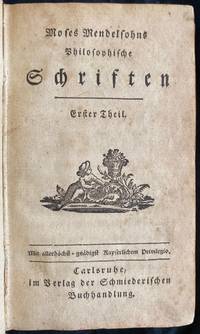
1780ref. 43258Carlsruhe: im Verlag der Schmiederischen Buchhandlung 1780. No Date 1780s. Period laquered boards with leather spine label. 12mo. XXIV 278; 283 pages. In German. Title translates as “Writings.” Includes 2 different title vignettes 1 on each title page. Goedeke IV 1 488 6. Meyer 108; Dorn 105-107; Holzmann/Bohatta Deutsches Anomymen-Lexikon IV no. 1559. Early printing of Mendelssohn’s second work in which he "began his formulation of a new psychological theory that stressed the autonomy of aesthetics logic and ethics relative to each other." Merriam-Webster's Encyclopedia of World Religions p. 710. Contents: Vol. 1. Vorrede. I. Ueber die Empfindungen. II. Gespräche; Vol. 2. I. Rhapsodie oder Zusätze zu den Briefen über die Empfindungen. II. Ueber die Hauptgrundsätze der schönen Künste und Wissenschaften. III. Ueber das Erhabene und Naive in den schönen Wissenschaften. IV. Ueber die Wahrscheinlichkeit. Also includes bibliographical references. Included within these is a series of writings on aesthetics which influenced Lessing and Schiller with Lessing noting“We have to thank him Mendelssohn for the true theory of mixed sensations.” Moses Mendelssohn Moses of Dessau; 1729–1786 was a philosopher of the German Enlightenment in the pre-Kantian period early Maskil and a renowned Jewish figure in the 18th century. Mendelssohn was fluent in German and Hebrew and learned Latin Greek English French and Italian. His early teachers were young broadly educated Jews and he met the writer and dramatist G.E. Lessing 1754 and a deep and lifelong friendship developed between them. Throughout his life he worked as a merchant while carrying out his literary activities and widespread correspondence in his free time. In 1754 Mendelssohn began to publish – at first with the assistance of Lessing – philosophical writings and later also literary reviews. He also started a few literary projects for example the short-lived periodical Kohelet Musar in order to enrich and change Jewish culture and took part in the early Haskalah. In 1763 he was awarded the first prize of the Prussian Royal Academy of Sciences for his work Abhandlung über die Evidenz in metaphysischen Wissenschaften "Treatise on Evidence in Metaphysical Knowledge". However when the academy elected him as a member in 1771 King Frederick II refused to ratify its decision. In 1769 he became embroiled in a dispute on the Jewish religion and from then on he confined most of his literary activity to the sphere of Judaism. His most notable and enduring works in this area included the translation into German and commentary on the Pentateuch Sefer Netivot ha-Shalom "Book of the Paths of Peace" 1780–83 and his Jerusalem: oder Ueber religiöse Macht und Judenthum "Jerusalem or On Religious Power and Judaism" 1783 this work the first polemical defense of Judaism in the German language and one of the pioneering works of modern Jewish philosophy. An active intermediary on behalf of his own people in difficult times and a participant in their struggle for equal rights he was at the same time a forceful defender of the Enlightenment against the opposition to it which gained strength toward the end of his life. In the midst of a literary battle against one of the leading figures of the counter-Enlightenment he died in 1786 EJ. SUBJECTS: Philosophy -- Early works to 1800. Philosophie -- Ouvrages avant 1800. Philosophy. OCLC: 1352546328. Light wear to original boards more so at spine but solid and attractive light spotting as expected About Very Good- Condition an attractive 18th Century copy. B KH-10-31. Carlsruhe: im Verlag der Schmiederischen Buchhandlung unknown
ref. 1022735713.Gpaperback. Good. Access codes and supplements are not guaranteed with used items. May be an ex-library book. paperback
ref. 1022739719.Gpaperback. Good. Access codes and supplements are not guaranteed with used items. May be an ex-library book. paperback
ref. 1022739689.Gpaperback. Good. Access codes and supplements are not guaranteed with used items. May be an ex-library book. paperback
ref. 3368639048.Gpaperback. Good. Access codes and supplements are not guaranteed with used items. May be an ex-library book. paperback