1596-1664, Amyraut MoiseBiblio.com
8292 resultados
ref. 1024255433.Ghardcover. Good. Access codes and supplements are not guaranteed with used items. May be an ex-library book. hardcover
ref. 50680250like new. unknown
ref. 1024258335.Gpaperback. Good. Access codes and supplements are not guaranteed with used items. May be an ex-library book. paperback
ref. 1024147347.Gpaperback. Good. Access codes and supplements are not guaranteed with used items. May be an ex-library book. paperback
ref. 1171943016.Gpaperback. Good. Access codes and supplements are not guaranteed with used items. May be an ex-library book. paperback
ref. 1024500772.Ghardcover. Good. Access codes and supplements are not guaranteed with used items. May be an ex-library book. hardcover
ref. 1376100924.Gpaperback. Good. Access codes and supplements are not guaranteed with used items. May be an ex-library book. paperback
1895ref. 40853Chicago: S. Ettlinger Printing Co 1895. 1st edition. Original green paper wrappers 12mo 56 pages. The author Isaac S. Moses is prominently listed on the title page as Rabbi of Kehilath Anshe Mayriv KAM Chicago's first Synagogue; these were sermons he delivered there. In addition the title page lists S. Ettlinger Printing Co. in Chicago as the publisher though the wrappers list Bloch in New York. This probably means that Bloch bought the printed run or the remains of it or the plates and put their own outer label on and then continued the distribution under their own name. Singerman 4882 simply listing Ettlinger in Chicago as publisher with no mention of Bloch. In his early days in the United States Isaac Moses "was considered a radical Reformer but later he took a more moderate position. In 1884 he introduced his own prayer book Tefillat Yisrael. Moses was a founding member of the Central Conference of American Rabbis and a member of the Reform committee charged with compiling an official prayer book. The appearance of the Union Prayer Book in 1894 has been credited to his personal initiative in preparing and circulating a manuscript when the committee's work seemed to be leading nowhere. Moses also published a number of sermons and textbooks for children. His Sabbath School Hymnal first issued in 1894 ran into 14 editions. While in Milwaukee he edited the weekly Der Zeitgeist 1880-82" encyclopedia.com. In one of these sermons Rabbi Moses discusses the evils that occurred in Egypt and then goes on to say "Does not our civilization show the most alarming symptoms of the evils and the diseases of Egypt We have fought for the emancipation of the negro but the enslavement of the masses by our modern indutrial system threatens to become a plague worse than ever befell the birth-place of Moses." Subjects: Jewish sermons American. English -- United States. OCLC: 25225212. Spine rebacked coveres rubbed and worn but solid. Good Condition Overall. Somewhat scarce. B AMR-57-6-BL-'f. Chicago: S. Ettlinger Printing Co unknown
ref. 1019454237.Ghardcover. Good. Access codes and supplements are not guaranteed with used items. May be an ex-library book. hardcover
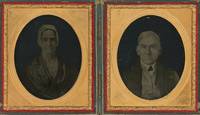
1854ref. List1708Philadelphia 1854. Ninth plate ambrotypes in a union case measuring 2 ½ x 2 ⅛ inches visible in larger case. With the identification of Isaac Rehn with his imprint and "Patented July 4 & 11 1854" imprinted on the case. A fine pair. A striking pair of ambrotypes of Mary and Moses Pennock who were members of the Kennett Square Underground Railroad network as well as active members of the Kennett Square abolitionist and Quaker community. Moses was one of the founders of the Longwood Progressive Meeting. In R.C. Smedley's History of the Underground Railroad in Chester and Neighboring Counties of Pennsylvania Lancaster Office of the Journal 1883 the Pennocks are mentioned on p. 301 as working as part of the network surrounding Isaac and Thamazine Meredity. Their son Samuel who would go on to secure important agricultural patents is also mentioned twice. The images are notable from a photographic history perspective as well as being early examples of the ambrotype process that had been patented in part by fellow Quaker and spiritualist Isaac Rehn. Rehn held a partial patent on ambrotypes along with James Ambrose Cutting of Boston and became unpopular among other photographers for his efforts to extend his patent. He later practiced spiritual photography and was a Professor of Chemistry at Pennsylvania Medical University in Philadelphia. Rehn was also involved in radical politics as a founder and leader of the Philadelphia section of the International Workingmen's Association which was later disenfranchised by Karl Marx along with several other American sections. Examples of Rehn's work are held at the National Gallery of Art the Library Company of Philadelphia and Yale's Sterling Memorial Library. Overall a very fine and significant pair of images. unknown books
ref. 200812731Munchen, Literarisch artistische austalt der J.C. Cota'schen Buchhandlung., 1860 ; in-12, 20-IV240 pp., reliure dos muet cassé, rousseurs salissures taches). (eine auswahl von….) vendu dans l'état.
1832ref. 001352Concord NH: Published by M. G. Atwood 1832. Second printing ; 2 1/2 x 4; pp. 16; brown illustrated wraps bound with a string; a bit of age-toning to lower half of front wraps; a few small nicks and cuts along spine; minor foxing to pages; illustrated with woodcuts; very good. An early children's book and number 3 in Atwood's natural history series it teaches children interesting facts about a variety of wild and domestic animals including elephant sheep lion dog monkey and others. Concord, NH: Published by M. G. Atwood paperback
1832ref. 001352Concord NH: Published by M. G. Atwood 1832. Second printing ; 2 1/2 x 4; pp. 16; brown illustrated wraps bound with a string; a bit of age-toning to lower half of front wraps; a few small nicks and cuts along spine; minor foxing to pages; illustrated with woodcuts; very good. An early children's book and number 3 in Atwood's natural history series it teaches children interesting facts about a variety of wild and domestic animals including elephant sheep lion dog monkey and others. Concord, NH: Published by M. G. Atwood paperback books
ref. 41697Aberdeen: Printed by J. Davidson & Co. 1829. First edition 12mo xii 131 1pp. endpapers renewed orig. quarter marbled paper boards spine defective uncut. Provenance: The Lawes Agriculture Library Rothamsted Research Institute. Rothamsted Catalogue p.133; JISC locates copies at University of Aberdeen and the University of Southampton only. Aberdeen: Printed by J. Davidson & Co., 1829 hardcover
1913ref. E1428Rio de Janeiro-Manguinhos, s.e., 1913 ; 185 x 250 mm, 22 pp. + 5 pl. hors-texte, couverture et cahier agrafés. Tiré à part bilingue, en langue portugaise et allemande. «Memorias do Instituto Oswaldo Cruz» (Reimpresso das)- Tomo VI - Fasc. II - Anno 1913. Bon état.
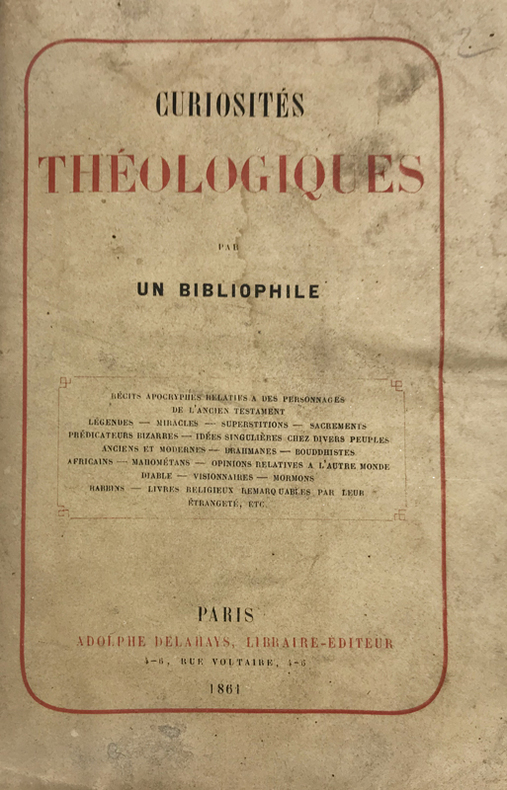
1861ref. 10901Paris, Adolphe Delahays, 1861 ; in-16, broché ; (4), II, 358 pp., (6) pp. de catalogue du libraire, couverture beige imprimée en rouge et noir.
1587ref. 910999CGWittenberg:, Ambrosius Kirchner, 1587. Holzschnitt, 26 x 36 cm, Blattgröße 30,5 x 39 cm. [2 Warenabbildungen]
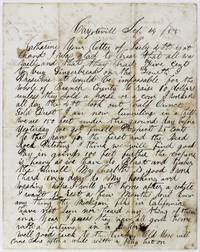
1855ref. 3206Coyoteville: September 12 1855. Very good. 2pp. plus integral blank. Original mailing folds moderate toning staining and ink spotting but still easily readable. Bottom fourth of integral blank excised. An informative Gold Rush letter about mining in the long-vanished ghost town of Coyoteville which was an extraordinarily rich gold area for a couple of years in the early 1850s. A noted tunneling method nicknamed "coyoteing" was developed in the town and subsequently inspired the name of the town. In the present letter Moses Pine writes to "Catherine" in Branch County Michigan and signs his name simply as "Mose Esq" at the conclusion. The author informs Catherine presumably his wife or sister of his activities some of the economic realities and some of the practical details of prospecting for gold in California. Presuming that "it would be impossible for the whole of Branch County to raise $10 unless they sell a horse" Pine comments that he had ginger bread on the Fourth of July after working all day and yielding a "half Ounce Gold Dust." He then provides a detailed description of his mining: "I am now tunneling in a hill. We are 150 feet under the ground. Day before yesterday we got small respect 25 cents to the pan for the first and the bed rock pitching. I think we will find good pay in the going 100 feet further the expense is heavy as we have to blast and timber the tunnel." Pine also talks of his health and that "I work hard every day do my cooking and baking." He then expresses his hope to get back to Michigan to "rest a few months" but knows nothing of other Michigan folks in California: "Have not seen nor heard anything of them in a year. I guess they have all gone home with a fortune in a horn. Well good luck to the lucky. Old Mose will come home after a while with a pretty hat on." A nicely-detailed letter from an unusual and obscure Gold Rush location. September 12 unknown books
1974ref. 1228London & San Juan Puerto Rico: Children of God 1974. 8vo 9 & 4 pp. plus covers. Publisher's pictorial wraps. OCLC locates a single copy published in Sydney Australia without the appended separately paginated "Dropouts!" accession number 897210517; University of Melbourne. Soft vertical crease throughout toned modest edge wear otherwise very good. The notorious David Berg 1919 - 1994 founded a Christian cult in 1968 originally known as "Teens for Christ" later "Children of God " and currently "The Family International." Finding adherents among counterculture youth in Southern California Berg promoted the concept of "Flirty Fishing" defined by the Urban Dictionary as "a form of religious prostitution practiced by the Children of God from 1974 until it was officially discontinued in 1987 due in part to the AIDS scare. Its etymology can be traced to Matthew 4:19 where Jesus says "Follow me and I will make you fishers of men." Children of God books
1936ref. 56738Shanghai China: China Journal Printed by The Mercury Press Dec. 1936. Tall 8vo. A32 4 311-354 A33-60 pp. With photo plates 1 colour plate photo text illustrations illustrated ads including index. Colour-illustrated softcovers Art Deco cover art of pink & yellow blossoms on black background lettering in green & black minor soiling minor chipping head & foot of spine minor tear & creasing to lower corner still G copy. First edition of this installment in the storied journal founded by Sowerby 1885-1954 the naturalist and explorer. Of particular interest in this installment is the first published announcement of Ruth Harkness’ d. 1947 as the first person to bring a living Giant Panda out of China a female named Su Lin. Her husband William Harkness zoologist and adventurer had headed an expedition to capture Giant Pandas but died before he even entered the habitat. Ruth traveled into Wenchuang County of Sichuan Province then onto Baoxing County where she discovered the cub less then 2 kilometers from Jiajin Mountain and was later donated to the Brookfield Zoo in Chicago. China Journal, Printed by The Mercury Press, paperback
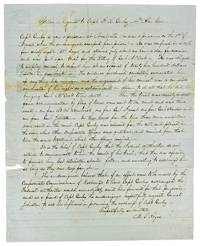
1864ref. 49788N.p. 1864. Very Good. N.p.: 1864. Manuscript letter written in ink signed by Royce at the end and on the verso. Single leaf 26.5x21cm; chips and rubbing; a few closed tears with archival tape repairs; Very Good. An unusual insightful document highlighting the laws of war and murder during the Civil War. Royce's petition seeks justice for Confederate Captain Frank R. Gurley sent to the Confederate Commission of Exchange. Its author Confederate Captain Moses Strong Royce was captured in Tennessee and imprisoned at Nashville. Gurley Royce's cell-mate had killed Union General Robert McCook of Ohio near Huntsville Alabama in August 1862. In October 1863 Union forces captured Gurley and charged him with murdering McCook. Gurley Union officials claimed was a guerrilla who shot McCook while the General was lying in an ambulance. Southerners claimed that Gurley was not a guerrilla but a regular soldier in the Confederacy's 4th Alabama Cavalry and that he killed McCook according to the laws of war. Harper's Weekly and Frank Leslie's Illustrated Newspaper fanned the flames claiming that lawless Confederate guerrillas murdered the general; feelings ran high. "US General Grant wrote CS General Hardee in December of 1863 and said that although Gurley was a member of the Confederate army that did not preclude him from being tried for having committed a foul murder" online Huntsville-Madison County Public Library essay 'Frank B. Gurley's 1866 Diary'. Having escaped from prison in March 1864 Royce plead Gurley's case. "He was confined in a cell for sixty-eight days and allowed only about one hour a day for exercise and was put upon trial for the killing of Genl. McCook. He was obliged to employ counsel to defend himself at an expense of 2500 dollars in greenbacks. The evidence produced completely exonerated him of anything like murder and the argument of his counsel was a complete vindication of his right as a soldier and an officer to do all that he did in bringing Genl. McCook to his death. "When the trial was nearly ended four communications by flag of truce were sent to the court and were there read - one from Lt. Col. Hambrick one from Genl. Forrest one from Genl. Hardee and one from Genl. Johnston" assuring that Gurley was not a guerrilla but a duly enrolled member of the Confederate military forces. Nevertheless Gurley was found guilty and sentenced to death. "The undersigned believes that if an effort were to be made by the Confederate Commission of Exchange to have Capt. Gurley exchanged the Federal authorities would immediately send him forward for that purpose and as a friend of Capt. Gurley the undersigned respectfully requests General Johnston to use his influence in procuring the exchange of Capt. Gurley. Respectfully submitted M. S. Royce." Even after War's end the dispute continued. Gurley having been released from prison in an administrative snafu was re-arrested charged but finally released and placed on parole in April 1866. . unknown
1864ref. 49788N.p. 1864. Very Good. N.p.: 1864. Manuscript letter written in ink signed by Royce at the end and on the verso. Single leaf 26.5x21cm; chips and rubbing; a few closed tears with archival tape repairs; Very Good. An unusual insightful document highlighting the laws of war and murder during the Civil War. Royce's petition seeks justice for Confederate Captain Frank R. Gurley sent to the Confederate Commission of Exchange. Its author Confederate Captain Moses Strong Royce was captured in Tennessee and imprisoned at Nashville. Gurley Royce's cell-mate had killed Union General Robert McCook of Ohio near Huntsville Alabama in August 1862. In October 1863 Union forces captured Gurley and charged him with murdering McCook. Gurley Union officials claimed was a guerrilla who shot McCook while the General was lying in an ambulance. Southerners claimed that Gurley was not a guerrilla but a regular soldier in the Confederacy's 4th Alabama Cavalry and that he killed McCook according to the laws of war. Harper's Weekly and Frank Leslie's Illustrated Newspaper fanned the flames claiming that lawless Confederate guerrillas murdered the general; feelings ran high. "US General Grant wrote CS General Hardee in December of 1863 and said that although Gurley was a member of the Confederate army that did not preclude him from being tried for having committed a foul murder" online Huntsville-Madison County Public Library essay 'Frank B. Gurley's 1866 Diary'. Having escaped from prison in March 1864 Royce plead Gurley's case. "He was confined in a cell for sixty-eight days and allowed only about one hour a day for exercise and was put upon trial for the killing of Genl. McCook. He was obliged to employ counsel to defend himself at an expense of 2500 dollars in greenbacks. The evidence produced completely exonerated him of anything like murder and the argument of his counsel was a complete vindication of his right as a soldier and an officer to do all that he did in bringing Genl. McCook to his death. "When the trial was nearly ended four communications by flag of truce were sent to the court and were there read - one from Lt. Col. Hambrick one from Genl. Forrest one from Genl. Hardee and one from Genl. Johnston" assuring that Gurley was not a guerrilla but a duly enrolled member of the Confederate military forces. Nevertheless Gurley was found guilty and sentenced to death. "The undersigned believes that if an effort were to be made by the Confederate Commission of Exchange to have Capt. Gurley exchanged the Federal authorities would immediately send him forward for that purpose and as a friend of Capt. Gurley the undersigned respectfully requests General Johnston to use his influence in procuring the exchange of Capt. Gurley. Respectfully submitted M. S. Royce." Even after War's end the dispute continued. Gurley having been released from prison in an administrative snafu was re-arrested charged but finally released and placed on parole in April 1866. . unknown books
2010ref. 35552LA: Ferus Gallery 2010. Paperback. Very good. Paperback. Three small catalogs held together by printed red bellyband. Ferus Gallery paperback books
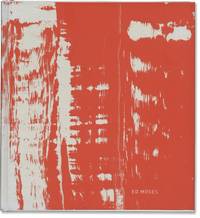
2009ref. 168331Santa Fe: Radius Books / Art Santa Fe Presents 2009. First Edition. Hardcover. First Edition. The first major monograph devoted to the work of Ed Moses a Southern California artist associated with the Ferus Gallery. With 120 color illustrations. About Fine in a Fine dust jacket. Oversize volume shipping billed at cost. Radius Books / Art Santa Fe Presents unknown
2009ref. 168331Santa Fe: Radius Books / Art Santa Fe Presents 2009. First Edition. Hardcover. First Edition. The first major monograph devoted to the work of Ed Moses a Southern California artist associated with the Ferus Gallery. With 120 color illustrations. About Fine in a Fine dust jacket. Oversize volume shipping billed at cost. Radius Books / Art Santa Fe Presents unknown books