Walkowitz, AbrahamBiblio.com
27.963 risultati
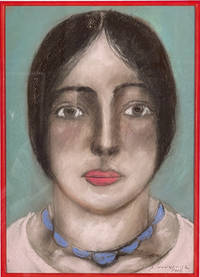
rif. 13927Walkowitz Abraham American born Ukraine 1878-1965. PORTRAIT OF ISADORA DUNCAN. Pastel on paper 1928. Signed lower right. 12 x 8 1/4 inches framed to 17 x 13 inches. The verso of the frame also has a label signed by Walkowitz. Walkowitz grew up in New York; in 1906 he went to Paris to study painting at the Academy Julien. The painter Max Weber introduced him to Isadora Duncan in Rodin's studio. His interest in Duncan as a subject began then and lasted beyond her death in 1927; he made more than 5000 drawings and paintings including more than a few pastel portraits like this one and a great many pieces of her performing. As with this piece done after her death it is likely that many of the works were done from memory rather than from life. "He was also able to draw from the same subject repeatedly and extract a different experience with each observation" Wikipedia article. In this his use of Duncan as a subject seems similar to Giorgio Morandi's repeated use of a handful of cups bottles and bowls to create a large number of still-life paintings drawings and prints each of which has something new to offer.Walkowitz was at the center of American Modernism part of Stieglitz's circle at 291 from 1911 to 1917 and a participant in the Armory Show.The following from the Wikipedia article on Walkowitz is a discussion of his Duncan drawings:In 1927 Isadora Duncan echoed the lines of Walt Whitman in her essay I See America Dancing writing "When I read this poem of Whitman’s I Hear America Singing I too had a Vision: the Vision of America dancing a dance that would be the worthy expression of the song Walt heard when he heard America singing."4 Duncan was the quintessence of modernism shedding the rigid shackles of the balletic form and exploring movement through a combination of classical sculpture and her own inner sources. She described this search: "I spent long days and nights in the studio seeking that dance which might be the divine expression of the human spirit through the body’s movement."5 For Duncan dance was a distinctly personal expression of beauty through movement and she maintained that the ability to produce such movement was inherently contained within the body.Abraham Walkowitz was one of many artists captivated by this new form of movement. The Duncan drawings can be interpreted as representations of Walkowitz's loftiest goals. Composing thousands of these drawings would prove to be one of the most effective outlets for his artistic agenda due to the similarities between the artistic ideals and preferred aesthetic shared by Walkowitz and Duncan. He was also able to draw from the same subject repeatedly and extract a different experience with each observation. Sculptors most readily recognized this trait in Duncan; there was a particular quality of her dance which appeared readily artistic yet not static. Dance critic Walter Terry described it in 1963 as "Although her dance inarguably sprang from her inner sources and resources of motor power and emotional drive the overt aspects of her dance were clearly colored by Greek art and the sculptor’s concept of the body in arrested gesture promising further action. These influences may be seen clearly in photographs of her and in the art works she inspired."6Isadora Duncan #29 c. 1915In each drawing a new observation is recorded from the same subject. In the Foreword to A Demonstration of Objective Abstract and Non-Objective Art Walkowitz wrote in 1913 "I do not avoid objectivity nor seek subjectivity but try to find an equivalent for whatever is the effect of my relation to a thing or to a part of a thing or to an afterthought of it. I am seeking to attune my art to what I feel to be the keynote of an experience."7 The relaxed fluidity of his action drawings represent Duncan as subject but ultimately reconceive the unbound movement of her dance and translates the ideas into line and shape ending with a completely new composition.His interest in recording the "keynote" of experience rather than producing an objective representation of a subject is central to the composition of the Duncan drawings. The fluidity of the lines function simultaneously as recognizable shapes of the human body but also trace the pathways of the dancer's movements. Duncan herself wrote in 1920 ".there are those who convert the body into a luminous fluidity surrendering it to the inspiration of the soul."4 Placed into a different context this passage could function as a description of Walkowitz's art; it is in fact taken from her essay The Philosopher’s Stone of Dancing wherein she discusses techniques to most effectively express the purest form of movement.Walkowitz's dedication to Duncan as a subject extended well past her untimely death in 1927. The works reveal shared convictions toward modernism and breaking links with the past. In 1958 Walkowitz told Lerner "She Duncan had no laws. She did not dance according to the rules. She created. Her body was music. It was a body electric like Walt Whitman. His body electrics. One of our greatest men America's greatest is Walt Whitman. Leaves of Grass is to me the Bible."8 unknown
2008rif. 87145Michael Imhof Verlag. New. 2008. Hardcover. 3865681441 . FREE UPGRADE to Courier/Priority Shipping Upon Request - IN STOCK AND IMMEDIATELY AVAILABLE FOR SHIPMENT - Flawless copy brand new pristine never opened -- Text in German and English. 296 pages; 145 illustrations. Catalogue Raisonne Catalog Raisonné Complete Works Leben Und Werk Oeuvre-Katalog Kritischem Oeuvrekatalog Raisonnee Michael Imhof Verlag hardcover
1669rif. 64891669 Amstelodami, sumptibus Andreae Frisii, [Amsterdam, Andrea Frisi], 1669. 3 parties en 1 vol. in-4: 18.5 x 24.5 cm [5] ff., [4] pl. grav. dép, 96 pp., [6] ff. d'index, [4] ff., 96 pp. Troisième et meilleure édition de ce curieux ouvrage, d'après Brunet, avec les gravures de la Table Isiaque d'après Enea Vico, absentes de précédentes éditions. Notre exemplaire comporte 43 gravures en taille-douce. Un frontispice gravés par Blooteling, 8 planches à pleine page, 26 figures dans le texte et 8 des 11 sections de la Table Isiaque réalisées par Giacomo Franco d'après les gravures de Vico parues en 1559, ces 8 sections sont regroupées en 4 grandes pl. dép. Il manque les 3 sections de la bande centrale de la table. Reliure de l'époque en parchemin. Dos lisse avec titre manuscrit à l'encre noir. Bel exemplaire
1631rif. 126711631 un volume, reliure d'époque plein-vélin vieil ivoire parcheminé in-folio (28X41 cm) (jansenist's binding full vellum old ivory in-folio), dos long (spine without raised band) muet (without title), plat à fermoirs à lacets de cuir avec un lacet restant sur quatre, tranches lisses (smooth edges) lisières des pages abimées avec une usure en arrondi (écorné) en haut à droite sur toute les pages, déchirures légères en marge mais nombreuses,ex-libris manuscrit à l'encre brune : " ....Nail Tailleur de pierre et architecte à Angers..." , orné de 40 planches gravées sur Bois (engraving-wood) en noir par Francini dont le portrait de Francini signé " Bosse fecit" parAbraham Bosse, présence de léger trous en marge de la dernière gravure , cicatrices de mouillures (scars of waterstains), manque marginal de papier sur la page n'atteignant à aucun moment la gravure (lack of paper, but the engraving is intact), sans pagination (unpaginated) (1 p.), 4 pages de texte, 40 planches gravées, 1631 A Paris, Chez Melchior Tavernier, Graueur & Imprimeur du Roy pour les Tailles douces Editeur,
rif. 46404270A la lectµre de ces lettres, toutes relatives à l'édition des ouvrages d'Alexandre Weill, Couronne, Emeraude, Guerre des Paysans et Mismorimes, on devine aisément ce que le pétulant écrivain devait avoir d'insupportable dans ses exigences et son ignorance en matière d'imprimerie. L'échange tourna au cauchemar pour l'éditeur qui abandonna sur le plancher la composition en cours des Mismorimes. Combien Poulet-Malassis dut faire preuve de patience et de courage face à ses auteurs, désinvoltes ou exigeants, pinailleurs, souvent insupportables, toujours prêts à discuter leurs émoluments ou à quémander la sempiternelle avance. Pour qui veut être renseigné sur l'art d'éditer, ces lettres constituent un témoignage précieux. Weill réclame et s'irrite au point que Malassis ne l'appelle plus que «Mon cher Ouragan Weill », le salue comme un" homme de salpêtre et de pétarades » quand il n'ajoute pas en guise de post-scriptum « ce qu'il y a,de meilleur en vous, c'est votre femme, voilà mon opinion ». Durant la composition d'Emeraude, Poulet-Malassis lui écrit même: «je suis content d'éditer Emeraude mais si toutefois vous trouvez un éditeur qui peut publier votre livre plus à votre convenance pour le temps, vous pouvez vous entendre avec lui. Considérez moi comme votre éditeur pis-aller, jeune homme pressé, et si vous mettez la main sur l'éditeur illico, ne vous gênez pas » (10 septembre 1858). Lorsqu'il sollicite de son auteur un manuscrit, redoutant ses tergiversations il lui écrit « ayez soin de me bien spécifœr pour ce dernier le format et le papier car vous êtes un terrible homme quand vous ne faites pas vous même toutes vos affaires. Mettez moi les points sur les i ... ». Il s'agit du manuscrit des Mismorimes que Weill aurait publié avec un s supplémentaire sans la perspicacité de Malassis qui poursuit: « je prendrai la liberté de vous faire observer que Mismorismes par un Nazaréen aura l'air terriblement charabia. - Et vous savez l'observation qu'on afaite depuis longtemps sur les mots en isme à partir de gargarisme (. .. ) » 29 juillet 1859). A l' épreuve de la casse - pour plagier Babou -l'éditeur redoutable de patience et, non sans sarcasmes, prodigue à cet hystérique de la modifïcation ce qu'il peut d'enseignement. En vain. En décembre 1858, harassé, excédé, Malassis l'envoie se faire éditer ailleurs: « je m'empresse de renoncer à imprimer les Mismorimes, quoique l'achat du papier soitfait, et ce papier même donné, car je reconnais qu'il n'y a rien de plus difficile que les affaires avec un homme qui ne sait jamais ce qu'il veut. Je ne m'amuserai pas à vous faire épreuve de tous les caractères de mon imprimerie pour la bonne raison qu'après en avoir choisi un vous l1J'en demanderez un autre le lendemain, ou que vous me direz comme vous l 'aviez fait pour Emeraude, que ce n'est pas le caractère de Couronne: j'en ai assez comme cela et ne veux plus en entendre parler. Il résulte de cela que vous avez toujours les livres les plus mal imprimés du monde, parce que vos tracasseries sontfaites pour dégoûter un imprimeur de métier. Le caractère de votre Guerre des Paysans est un caractère presque neuf et excellent, cent fois supérieur à celui de la première édition, oùj'ai relevé engénéral2fautes par pages (il s'agit de l'édition Amyot de 1847),faite sans soin, confuse, désordonnée de typographie [. .. ] Comment voulez-vous que je marche de l'avant et avec réussite sur votre livre quand l'aller et venir de la première feuille dure depuis plus de 15 jours et que vous demandez une Sème épreuve pour quatre fautes ou corrections insignifiantes en marquant les caractères qui écartent dans la composition en paquet, chose stupide, puisque les caractères se joignent mal n'étant liés qu'avec des ficelles, comme toujours en paquets. C'est ce que vous appelez des caractères accouplés, sans doute. Vous ferez bien aussi de me trouver une fonderie où les caractères se fondent du même jet. Les caractères en questions viennent de la meilleure fonderie de Paris, la fonderie générale rue Madame [. .. ] Vous n'aurez votre seconde feuille que quand vous aurez renvoyé la première, définitive. Et vous comprendrez que je ne prenne pas sur moi de corriger des répétitions, ne sachant jamais si ces répétitions sont ce que vous appelez des effets de style. » (12 décembre 1859) Les Mismorimes parurent chez Dentu, en 1860. Malassis ne se contenta plus que de rééditer les ouvrages de Weill qui, dans l'ensemble, se vendirent très bien. C.E.B.A. n° 141.
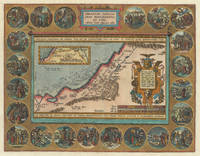
1612rif. 30715Antwerp: Balthasar Moretus 1612. Other. A very strong impression. In excellent condition. 353 by 457mm 14 by 18 inches. Original copper engraving published 1612 in the famous historical atlas Parergon Latin text-edition by Abraham Ortelius. Finely later hand colored in wash and outline. The map shows the travels and life of Abraham. More else this highly decorative map is surrounded by 22 fine engraved medallions which are showing episodes of the life of the Patriach Abraham. The map was published 1592 for the first time in Abraham Ortelius edition of theTheatrum Orbis Terrarum. Ortelius who created this map used as cartographical source for this map information from Ptolemy and from the bible particulary for the illustrations of Abrahams life depicted in 22 medallions. Broe. 182 Balthasar Moretus unknown
1778rif. 76402à Neuchâtel: Chez Samuel Fauche 1778. Fine. Chez Samuel Fauche à Neuchâtel 1778 19 x 25 cm 2 volumes reliés New edition the first and only one in quarto of this extensive historical and geographical description of Switzerland which originated in Abraham Ruchat's Délices and was progressively recast over more than sixty years. Published in Neuchâtel by Samuel Fauche in 1778 it comprises two volumes substantially enlarged from the earlier editions combining Ruchat's text with that of Abraham Stanyan and contributions by several other authors. A binder's instruction leaf at the end of each volume specifies the arrangement of the extensive series of illustrations. The present copy contains 81 engravings and maps according to its collation including two allegorical frontispieces numerous views of Swiss towns landscapes and notable sites together with an extensive cartographic series. Much of the iconography perpetuates compositions associated with Matthäus Merian and the tradition of his Topographia Helvetiae; the illustrative material is nevertheless more diverse also drawing upon artists and engravers including Picart Folkema Herrliberger Neuhaus and Girardet. Bibliographical catalogues differ slightly over the precise division between views and maps making the physical collation of the present copy preferable here to any conventional breakdown. Contemporary full mottled blond calf; spines with raised bands richly gilt beige morocco lettering and volume labels covers framed with a double gilt fillet. Loss of leather at the head of volume II; lower joint of volume I split at head with some loss and again split at foot alongside the final compartment; two corners worn a few scratches to the upper cover of volume II and some rubbing. Loss to the lower margin of plate 5 in volume I; at p. 428 plate 33 has a loss of approximately 1.5 x 3 cm within the engraved area. Bibliothèque Jules Barotte stamps to the versos of several plates and to the title-pages. Internally notably fresh. This 1778 edition brings to a close a publishing history that had begun sixty-four years earlier. In 1714 Abraham Ruchat had published at Leiden under the scarcely concealed pseudonym Gottlieb Kypseler de Munster four volumes entitled Les Délices de la Suisse. A Vaudois pastor and professor and a correspondent of Johann Jakob Scheuchzer among others Ruchat set out to bring together the history geography institutions customs and natural curiosities of the Swiss cantons and their allies. The work never remained fixed in this original form; Ruchat himself was to revise correct and considerably enlarge it. The transformation became explicit in 1730 with L'État et les Délices de la Suisse published at Amsterdam by Wetstein and Smith in four small volumes. More than the title had changed. Ruchat's work was now combined with that of several other authors foremost among them Abraham Stanyan and Johann Georg Altmann. This composite character would remain one of the defining features of the book through its last major recasting: it was a collective work expanded and reworked from one edition to the next rather than merely reprinted. The Basel editions that followed notably those of 1764 and 1776 continued this process of revision and augmentation. It culminated in 1778 with Fauche's substantial Neuchâtel edition which reduced the work to two volumes while giving it for the first time the physical scale of a quarto. The change of format was significant: conceived originally as a description of Switzerland in compact volumes the work now assumed the appearance of a substantial illustrated compendium of the Confederation. Two markedly different perspectives are superimposed within it. Ruchat wrote as a historian formed within the Swiss world itself attentive to the political religious and geographical particularities of the individual cantons; Stanyan by contrast observed Switzerland through the eyes of a British diplomat required to understand its all Chez Samuel Fauche hardcover
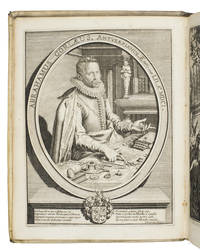
1601rif. ABC_46116Leiden 1601. 4to. Petrus van de Aa Contemporary limp vellum manuscript title on spine. With 2 different engraved allegorical title-pages reflecting the themes of rings and intaglio-carved gems 2 letterpress title-pages in red and black with one of Van der Aas engraved allegorical devices Minerva/Athena books a cock and Hercules/Heracles with motto "studio et vigilantia" a portrait of the author by Jacques de Gheyn with a calligraphic verse by Hugo de Groot below 138 engraved plates: 196 numbered illustrations of ancient rings with carved gems shown at actual size on 101 engraved plates and 148 numbered illustrations of carved gems alone on 37 engraved plates. 2 volumes. 22 28 16 16 pp. plus 109 plates; 64 32 pp. plus 173 plates. The second much enlarged edition by the Dutch classical scholar Jacobus Gronovius of the first extensive repertory of Greco-Roman rings with intaglio-carved gems by Abraham Gorlaeus Van Goorle; 1549-1608 which Gorlaeus had published in 1601 with the title Dactiliotheca seu annulorum sigillarium quorum apud priscos tam Graecos quam Romanos usos 1601 as a catalogue of engraved gems in his cabinet of curiosities.The present edition is also remarkable as one of the earliest books too incorporate - at the end of vol. 2 pp. 1-32 - a medieval treatise on precious stones by Marbodi the bishop of Rennes ca. 1035-1123: Marbodaei Galli Poetae vetusti Carmen de gemmis sive lapidibus pretiosis. The poem is written in exquisite Latin metre and each of the 63 sections is devoted to a single gem explaining its formation appearance etymology exotic origins medical properties and preparations. In his prologue Marbodi says it is partly based on a work on the subject by the first century Arabian King Evax addressed to Emperor Tiberius.With three inserted pages with titles in German translation written by a 19th-century hand and one leaf inserted with 43 tracings of rings etc. from the book also in a 19th-century hand-writing. Bindings a little dust-soiled otherwise in very good condition.l Brunet II 1671; Ebert 8711; Kockel-Graepler Daktyliotheken Kat. 2006 pp. 111-112; Simoni G126; Sinkankas 2470; Ter Meulen & Diermanse 247; STCN 5 copies incl. 2 incomplete; Vinet 1609; cf. Ciconara 2871; J. G. van Gelder Notes on the royal collection - IV: the 'Dutch gift' of 1610 to Henry Prince of Wales'. in: The Burlington Magazine 105 December 1963 pp. 541-545; David Jaffé Aspects of gem collecting in the early seventeenth century Nicolas-Claude Peiresc and Lelio Pasqualini in: The Burlington magazine 135 February 1993 pp. 103-120; Sinkankas 2472; P. & H. Zazoff Gemmensammler pp. 31-34; for the author: NNBW 5 1921 cols. 209-210. hardcover
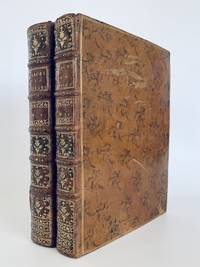
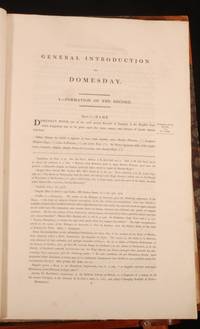
1783rif. SET21-A-1London: Not Stated 1783; 1811-1816. Leather. Good Only. 18" by 11". None. The 1783 Domesday Book with 1816 Additional Volumes. The text of this work is in Latin with 'Introductions' in English. Whilst title pages for Volumes I and II were issued in 1816 these volumes are bound without as usual. Publication Information for Volumes I and II from the ESTC. Citation number: T97297. System Number: 006367139 Volume III includes the informative 1816 'Introduction' by Henry Ellis an English librarian. He was educated at the Mercers' School and St John's College Oxford where he acted as an assistant at the Bodleian Library. He was first appointed to a position at the British Museum in 1800 and was chief librarian from 1827 to 1856. Ellis was knighted in 1833. An important work normally commanding £3000- £4000. We have discounted these to allow for the rebinding they deserve. With two interesting ink inscriptions concerning the text including one from 'the eminent antiquarian' David Turner in Volume III. The Domesday Book is the record of the great survey of England completed in 1086 executed for William I of England otherwise known as 'William the Conqueror'. It was written in Latin although there were some vernacular words inserted for native terms with no previous Latin equivalent and the text was highly abbreviated. Abraham Farley d.1791 was a lifelong civil servant who was appointed deputy chamberlain of the Exchequer in 1736 and soon became involved with the public records at the Chapter House of Westminster Abbey. First amongst these was the Domesday Book of which Farley became custodian granting visiting antiquaries access to the Book and making transcripts for a fee. In later life Farley was to produce the first printed edition of Domesday Book. Following a Parliamentary order in 1767 Farley was appointed co-editor of the Domesday printing project in 1770 alongside Charles Morton of the British Museum. Sir Henry Ellis 1777 1869 was an English librarian. He was educated at the Mercers' School and St John's College Oxford where he acted as an assistant at the Bodleian Library. He was first appointed to a position at the British Museum in 1800 and was chief librarian from 1827 to 1856. Ellis was knighted in 1833. He edited various works on antiques and wrote an Introduction to Domesday Book. In a half calf binding with marbled paper-covered boards. Externally a trifle rubbed resulting in small loss to leather on spine volumes I and IV. Backstrip partially detached to volume II missing to volume III. Boards detached. Internally generally firmly bound. Pages bright and clean with scattered spotting. Pages occasionally age toned to edges. Nameplates and institutional labels to front pastedowns. Good Only Not Stated hardcover
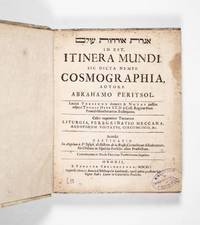
1690rif. 48858Oxford: Sheldonian Theatre; Henry Bonwick 1690. First edition. Hardcover. Very Good -. Two parts quarto published in 1690 and 1691. A-Z4 pi4 b4 Aa4 Bb/CC4 Dd-Gg4 = 124 leaves. 16 196; 4 31 1 blankpp. Text in Hebrew and Latin in parallel columns. De Turcarum liturgia with separate title page dated 1690 and pagination. Contemporary vellum neatly rebacked. Old library stamp at bottom margin title front blank endleaf detached occasional oxidation spot and mild toning else a very good copy crisp and amply margined. First Hebrew-Latin edition of the first modern Hebrew work on geography the author's most famous and important book. Abraham Farissol or Peritsol was a learned Jew from Avignon who compiled his cosmographical works at the court of the Estes in Ferrara. The present text was composed in 1524-25 and first published in Hebrew at Venice in 1586. The Latin translation and notes in the present edition were prepared by the English orientalist and librarian Thomas Hyde 1636-1703 with the assistance of R. Isaac Abendana working from a manuscript which Hyde located in the Bodleian Library. "Each of its 30 chapters deals with a certain geographical area or subject. In addition many cosmological and historical matters are also treated. The author collected all the evidence he could regarding Jewish settlements in each country. The inclusion of a description of the New World makes Farissol the first Hebrew writer to deal in detail with the newly-discovered America. The 14th chapter of Iggeret Orhot Olam which deals mainly with the settlements of the Ten Lost Tribes is of special interest. According to Farissol's introduction to this chapter it is clear that what moved him to undertake this investigation was the appearance in Italy in 1523 of David Reuveni many of whose descriptions are included in this work" EJ 6.1185. Reuveni was "an adventurer who aroused messianic hopes in the early 16th century" EJ 14.114. The appended work is a tract on Islamic customs by Albert Wojciech Bobowski a Polish Christian who converted to Islam after his capture by the Ottoman Turks. Adopting the name Ali Ufki Bey he served as translator court musician at Topkapi and as a notator of Ottoman classical music. Bell F26. Christian Hebraism Cat. Harvard 1988 no. 39. ESTC R27480. Fürst Bibliotheca Judaica 1.276. Heller 17th Century pp. 1176-1177. Sabin 60934. Smitskamp PO 372. Vinograd Oxford 4. Wing F-438. Cf. Alden European Americana 1.187 Venice 1586; Heller 16th Century pp.732-733 ed. 1586. Full title beginning in Hebrew: ×גרת ×רחות ×¢×œ× Id est Itinera mundi sic dicta nempe cosmographia. Latinâ versione donavit et notas passim adjecit Thomas Hyde. Calce exponitur Turcarum liturgia peregrinatio Meccana aegrotorum visitatio circumcisio etc. Sheldonian Theatre; Henry Bonwick hardcover
1690rif. 48858Oxford: Sheldonian Theatre; Henry Bonwick 1690. First edition. Hardcover. Very Good -. Two parts quarto published in 1690 and 1691. A-Z4 pi4 b4 Aa4 Bb/CC4 Dd-Gg4 = 124 leaves. 16 196; 4 31 1 blankpp. Text in Hebrew and Latin in parallel columns. De Turcarum liturgia with separate title page dated 1690 and pagination. Contemporary vellum neatly rebacked. Old library stamp at bottom margin title front blank endleaf detached occasional oxidation spot and mild toning else a very good copy crisp and amply margined. First Hebrew-Latin edition of the first modern Hebrew work on geography the author's most famous and important book. Abraham Farissol or Peritsol was a learned Jew from Avignon who compiled his cosmographical works at the court of the Estes in Ferrara. The present text was composed in 1524-25 and first published in Hebrew at Venice in 1586. The Latin translation and notes in the present edition were prepared by the English orientalist and librarian Thomas Hyde 1636-1703 with the assistance of R. Isaac Abendana working from a manuscript which Hyde located in the Bodleian Library. "Each of its 30 chapters deals with a certain geographical area or subject. In addition many cosmological and historical matters are also treated. The author collected all the evidence he could regarding Jewish settlements in each country. The inclusion of a description of the New World makes Farissol the first Hebrew writer to deal in detail with the newly-discovered America. The 14th chapter of Iggeret Orhot Olam which deals mainly with the settlements of the Ten Lost Tribes is of special interest. According to Farissol's introduction to this chapter it is clear that what moved him to undertake this investigation was the appearance in Italy in 1523 of David Reuveni many of whose descriptions are included in this work" EJ 6.1185. Reuveni was "an adventurer who aroused messianic hopes in the early 16th century" EJ 14.114. The appended work is a tract on Islamic customs by Albert Wojciech Bobowski a Polish Christian who converted to Islam after his capture by the Ottoman Turks. Adopting the name Ali Ufki Bey he served as translator court musician at Topkapi and as a notator of Ottoman classical music. Bell F26. Christian Hebraism Cat. Harvard 1988 no. 39. ESTC R27480. Fürst Bibliotheca Judaica 1.276. Heller 17th Century pp. 1176-1177. Sabin 60934. Smitskamp PO 372. Vinograd Oxford 4. Wing F-438. Cf. Alden European Americana 1.187 Venice 1586; Heller 16th Century pp.732-733 ed. 1586. Full title beginning in Hebrew: ×גרת ×רחות ×¢×œ× Id est Itinera mundi sic dicta nempe cosmographia. Latinâ versione donavit et notas passim adjecit Thomas Hyde. Calce exponitur Turcarum liturgia peregrinatio Meccana aegrotorum visitatio circumcisio etc. Sheldonian Theatre; Henry Bonwick hardcover books
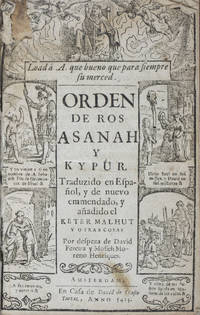
rif. 43956Amsterdam: David Fereira y Mosseh Moreno Henriques/ David de Crasto Tartaz David de Castro Tartas 5423. Hardcover. g- to g. Duodecimo. 6.5x4.5". 479pp. Original brown calf boards with gilt-stamped motifs and raised bands on the spine. Blue ribbon marker. Edges of the book block in red. Marbled endpapers. The title page is illustrated with copper plate engravings in the form of small vignettes of biblical scenes surrounding the text. This is an early Spanish-language edition of the complete Jewish High Holiday prayer book Machzor based on the original translation by Abraham Usque originally printed in Ferarra Italy in 1553. This edition contains some added material not previously present including most prominently Solomon ibn Gabirol's famed philosophical poem "Keter Malkhut" Royal Crown which over the years has come to be read as part of the Yom Kippur service in some Jewish traditions. This edition of the Machzor was published by David Fereira and Mosseh Moreno Henriques to serve members of the then sizable Sephardic Jewish community in Amsterdam. A significant portion of the community would have been ex-Marranos Jews who had outwardly converted to Catholicism during the inquisition in Spain who then immigrated and were able to reestablished their Jewish identity and thus were unable to read Hebrew hence the text's publication in Spanish. As stated in the foreword this edition includes some additions to the text not included in previous versions and omits some material deemed to have been unnecessary. The prayer book starts with the penitential prayers Selichot p.3-47 which includes decorative head and endpeices. This section is followed by the Rosh Hashanah service p.48-195 and then the Yom Kippur service including "Keter Malkhut" p.254-289. The title page is illustrated with scenes from the biblical stories of King David Saul and Goliath and contain small captions underneath with corresponding biblical passages in Spanish. There are a number of pagination printing errors including: p.45-46 are misprinted as 54 and 36 p.264 is misprinted as 164. p.450 is misprinted as 350 p.414 is misprinted as 144. Like in the case of the earlier 1652 edition of the work pages 305-352 are misprinted as "321-368" but in this copy the leaf containing p. 353-354 directly following "368" seems to be missing. Overall this edition follows very closely the 1652 edition of the same work in terms of pagination content and organization. Includes large initials throughout the text. All text in Spanish. Binding with rubbing scratches and abrasions to the covers spine and extremities. Some chipping to the head and tail of the spine. Interior front covers with some starting and the loosening of the endpapers. Title page with starting light creases stains and and light chipping on the top left corner resulting in slight loss of image. Some light water staining along the top edge of the pages with some other sporadic light staining throughout. Page 365 torn along the side edge with no loss of text. Starting at a number of pages throughout the book. Binding in good- interior in good condition overall. Binding protected with modern mylar. David ben Abraham de Castro 1630-1698 was a French-born Portuguese Jewish printer/publisher in Amsterdam. Between 1662 and 1701 his press printed the "Gazeta de Amsterdam" a newspaper for the exiled Sephardic Jewish community in Amsterdam. He started his printing career as a typesetter at the printing house of Menasseh Ben Israel a printer and leading Rabbi in community who printed the earliest Amsterdam edition of this work in 1630. Castro started his own business in 1662 making this edition among his earliest publications. References: RODRIGUEZ 1781 p. 643 KAYSERLING 1890 p. 62 PALAU1923 202416 PEETERS1933 1038. David Fereira y Mosseh Moreno Henriques/ David de Crasto Tartaz (David de Castro Tartas) hardcover
rif. 43956Amsterdam: David Fereira y Mosseh Moreno Henriques/ David de Crasto Tartaz David de Castro Tartas 5423. Hardcover. g- to g. Duodecimo. 6.5x4.5". 479pp. Original brown calf boards with gilt-stamped motifs and raised bands on the spine. Blue ribbon marker. Edges of the book block in red. Marbled endpapers. The title page is illustrated with copper plate engravings in the form of small vignettes of biblical scenes surrounding the text. This is an early Spanish-language edition of the complete Jewish High Holiday prayer book Machzor based on the original translation by Abraham Usque originally printed in Ferarra Italy in 1553. This edition contains some added material not previously present including most prominently Solomon ibn Gabirol's famed philosophical poem "Keter Malkhut" Royal Crown which over the years has come to be read as part of the Yom Kippur service in some Jewish traditions. This edition of the Machzor was published by David Fereira and Mosseh Moreno Henriques to serve members of the then sizable Sephardic Jewish community in Amsterdam. A significant portion of the community would have been ex-Marranos Jews who had outwardly converted to Catholicism during the inquisition in Spain who then immigrated and were able to reestablished their Jewish identity and thus were unable to read Hebrew hence the text's publication in Spanish. As stated in the foreword this edition includes some additions to the text not included in previous versions and omits some material deemed to have been unnecessary. The prayer book starts with the penitential prayers Selichot p.3-47 which includes decorative head and endpeices. This section is followed by the Rosh Hashanah service p.48-195 and then the Yom Kippur service including "Keter Malkhut" p.254-289. The title page is illustrated with scenes from the biblical stories of King David Saul and Goliath and contain small captions underneath with corresponding biblical passages in Spanish. There are a number of pagination printing errors including: p.45-46 are misprinted as 54 and 36 p.264 is misprinted as 164. p.450 is misprinted as 350 p.414 is misprinted as 144. Like in the case of the earlier 1652 edition of the work pages 305-352 are misprinted as "321-368" but in this copy the leaf containing p. 353-354 directly following "368" seems to be missing. Overall this edition follows very closely the 1652 edition of the same work in terms of pagination content and organization. Includes large initials throughout the text. All text in Spanish. Binding with rubbing scratches and abrasions to the covers spine and extremities. Some chipping to the head and tail of the spine. Interior front covers with some starting and the loosening of the endpapers. Title page with starting light creases stains and and light chipping on the top left corner resulting in slight loss of image. Some light water staining along the top edge of the pages with some other sporadic light staining throughout. Page 365 torn along the side edge with no loss of text. Starting at a number of pages throughout the book. Binding in good- interior in good condition overall. Binding protected with modern mylar. David ben Abraham de Castro 1630-1698 was a French-born Portuguese Jewish printer/publisher in Amsterdam. Between 1662 and 1701 his press printed the "Gazeta de Amsterdam" a newspaper for the exiled Sephardic Jewish community in Amsterdam. He started his printing career as a typesetter at the printing house of Menasseh Ben Israel a printer and leading Rabbi in community who printed the earliest Amsterdam edition of this work in 1630. Castro started his own business in 1662 making this edition among his earliest publications. References: RODRIGUEZ 1781 p. 643 KAYSERLING 1890 p. 62 PALAU1923 202416 PEETERS1933 1038. David Fereira y Mosseh Moreno Henriques/ David de Crasto Tartaz (David de Castro Tartas) hardcover books
1735rif. EBS100373Erfurt: Augustinus Crusius 1735. 2nd Edition. Hardcover. Good/No Jacket. BREATHTAKING ALCHEMICAL WOODCUTS IN SOUGHT AFTER TREATISE. Claus Priesner Ambix Vol. 63 No. 1 February 2016 pp 1-27 attributes this work to the probably pseudonymous Julius Gervasius who connects the work to Nicolas Flamel. Supposedly the Werckh manuscript was written by a Rabbi Abraham Eleazar while the Donum Dei manuscript is attributed to a Rabbi Samuel Baruch who is supposed to have received his alchemical knowledge from Tubal-Cain said to be the grandson of Adam. BOOK DETAILS AND CONDITION: First Edition 16.5 X 9.5 cm. ½ leather over boards very considerable wear including losses to leather on spine: frontispiece 30 122 14 pp; 2 87 25 1; In the first part Werckh there are 6 of 7 allegorical plates and numerous in-text woodcuts one full-page on p 49 that are both allegorical and depict apparatus; In the second part Donum Dei there 8 allegorical plates the first 7 each divided into 2 figures 1-14 and the final plate is figure15. The frontispiece and the title pages are dusty but the remainder of the book internally is VG-. Missing plate in the Werckh is number 7 and is likely to have been omitted rather than removed. In this copy Figure 7 provided loose in facsimile on antiquarian paper. Gerhard Gruber Catalogue 130 Jan. 2007 has this edition lacking 2 plates. PROVENANCE: From the Arthur C. Greenberg History of Chemistry Library. Bookplate of Women s College of Frederick Maryland inside from board light library stamp on first page of text and small library pocket envelope inside rear board. REFERENCES AND RARITY: The first edition in Duveen collection absent in Neville Cole Ferguson which includes the 1760 edition. Duveen 1f; Ferchl 1; Ferguson I 3 Anm.; Caillet 31 Anm. Bolton p 980: This work is of great rarity. OCLC lists 10 copies in the world's libraries - none in the United States. Nine copies of this work sold at auction in the last century RBH. FULL TITLE: Uraltes Chymisches Werck. Welches ehedessen von dem Autore Theils in Lateinischer und Arabischer theils auch in Chaldaeischer und Syrischer Sprache geschrieben Nachmals von einem Anonymo In unsere Deutsche Mutter-Sprache übersetzt. Erfurt: Augustinus Crusius hardcover
rif. GOR005251830Paperback. Very Good. paperback
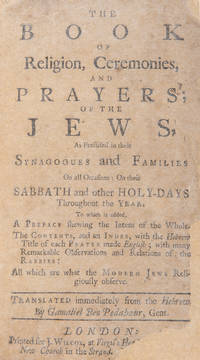
rif. 106895London Printed for J. Wilcox 1738. . First edition 8vo 20.5 x 13 cm; xiv 96; 291 7 pp.; modern blue cloth boards; first and last leaf restored with some marginal loss of text; edges stained corners rubbed. The earliest translation to English of the Jewish Prayer-book. This comprehensive and occasionally rather critical study of Jewish life and practices is dominated by the first English translation of any part of the Siddur the definitive Jewish prayer-book. Translated by Abraham Mears under the pseudonym of Gamaleil Ben Pedahzur according to Roth an apostate member of the English Ashkenazi community it was intended as an exposition of Judaism rather than a service book but in providing phonetic translations of the Hebrew title of each prayer Mears explicitly promotes its use 'to Beginners in the Hebrew Tongue' and 'all Persons that resort to the Synagogues'. The transliterated Hebrew title for each prayer is found in the margins enabling the curious non-Hebrew reading Christian to attend and follow a synagogue service. The transliteration of the Hebrew characters provides a clue as to how Hebrew was pronounced in the eighteenth-century Ashkenazi community of London. The book was not intended for liturgical use but rather for scholarly readership so it is not in effect a prayer-book. It reflects the growing interest in Judaism on the part of non-Jewish Englishmen of the eighteenth century. ESTC T86072; Roth B8:6. London, Printed for J. Wilcox, 1738. hardcover
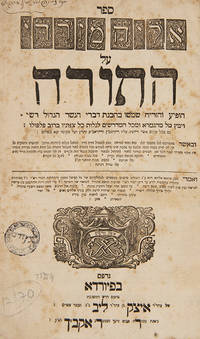
rif. 109205Furth Itzik ben Leib Buchbinder 1763. . 4to; restored publisher's half-calf marbled covers almost entirely perished spine rubbed and chipped at the top end; some browning to leaves a stamp and an old ownership inscription to title; 2 241 ll. Commentary on Rashi's commentary on the Pentatuch with a schematic map of Israel from the collection of Yosef Asher Pollock a 19th-century rabbi whose books were posthumously gifted to various collections. Elijah ben Abraham Mizrahi a.k.a. Re'em c. 1455-1525 or 1526 was a Constantinople rabbi and mathematician who became the Chief Rabbi of the Ottoman Empire in 1495 a post which he held until his death. As part of the role Mizrahi had a seat in the divan assigned to him by the Sultan beside the Mufti and above the Patriarch of the Christians. He had written several works in his lifetime but considered this to be his most important one. 'Sefer HaMizrahi' as it's known is a super-commentary on Rashi's commentary on the Torah and is counted as one of the most important works on the subject. It was first published in Venice in 1527 after Mizrahi's death by his son Israel. Israel edited his work adding a preface to it in which he asked the readers in case they were unable to understand certain passages not to criticise his father but to apply to Israel for explanations instead. In this edition Rashi's commentary is printed in block letters while the Biur Mizrahi commentary appears in Rashi script. On reverse of l.211 there is a schematic map of Israel drawn primarily in straight lines with its east side facing upward. This map was first printed in 1717. Vinograd Furth 292. Furth, Itzik ben Leib Buchbinder, 1763. unknown
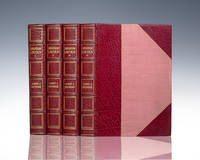
1928rif. 146970Boston and New York: Houghton Mifflin Company 1928. Limited manuscript edition of this complex and revealing biography of one of the most popular Presidents of the United States. Octavo four volumes bound in the publisher's cherry-red three-quarter crushed morocco at the Riverside Press with gilt titles and ruling to the spine in six compartments top edge gilt red silk ribbons tipped in tissue-guarded frontispiece portrait of Abraham Lincoln and additional tissue-guarded color plate views of the Lincoln Memorial to each volume illustrated with thirty-two tissue-guarded plates and maps throughout window-mounted leaf of the author's manuscript research notes adhered to the front flyleaf of Vol. I some pages uncut stamp-signed by the Riverside Press. One of one thousand numbered sets printed at the Riverside Press Cambridge U. S. A. this is number 130. In fine condition bookplate from the library of American banker and philanthropist Frank K. Houston to the front flyleaf of Vol. II. An exceptional set. Praised for his biographies of Chief Justice John Marshall and President Abraham Lincoln American historian and United States Senator Albert J. Beveridge has introduced the public to the realities of the lives of revered historical figures. Using analysis and thorough investigation Beveridge was able to contextualize the actions of America's sixteenth president with his traditions and influences in his four-volume biography 'Abraham Lincoln 1809-1858' published post-humously in 1928. His contributions to historical study cannot be understated and the American Historical Association's Beveridge Award exists to demonstrate as much. Houghton Mifflin Company unknown
1818rif. 820231818. The End of Trial by Battle in the United Kingdom Broadside. Trial. Thornton Abraham c.1793-1860 Respondent. Appeal of Murder: The Decision of the Judges in the Case of Ashford ver. Thornton Court of King's Bench April 20th 1818. Nottingham: Shorrock and Son Successors to E. Hodson Printers 1818. 12-1/2" x 7-1/2" broadside mounted to later backing sheet text in two columns separated by rule below headline and woodcut vignette of a landscape. Moderate toning light soiling to edges a few faint creases printer's flaw and clean tear to right column no loss to legibility. Rare. $3000. Ashford v. Thornton dealt with the aftermath of the murder of Mary Ashford in 1817. Abraham Thornton who had seen and been intimate with Ashford the previous night was tried for rape and murder but acquitted of both charges due to a lack of evidence and inconsistencies in the prosecutor's case. Public outcry around his acquittal led to Mary's brother William invoking an "appeal of murder." This uncommon legal practice allowed a retrial of a defendant acquitted for murder but crucially gave the defendant the right to trial by battle. Thornton invoked that right. After extensive proceedings in the Court of King's Bench the court found that he was eligible to do so. Our broadside documents the final hearing in which Ashford declined to battle with Thornton and withdrew his appeal. Thornton was given a pro forma arraignment and released. The case resulted in the abolition of appeals by murder and thus the end of trial by battle. This broadside is rare and appears to be unrecorded. No copies located on OCLC or Library Hub. Not at Harvard or the British Library. unknown
1818rif. 820231818. The End of Trial by Battle in the United Kingdom Broadside. Trial. Thornton Abraham c.1793-1860 Respondent. Appeal of Murder: The Decision of the Judges in the Case of Ashford ver. Thornton Court of King's Bench April 20th 1818. Nottingham: Shorrock and Son Successors to E. Hodson Printers 1818. 12-1/2" x 7-1/2" broadside mounted to later backing sheet text in two columns separated by rule below headline and woodcut vignette of a landscape. Moderate toning light soiling to edges a few faint creases printer's flaw and clean tear to right column no loss to legibility. Rare. $3000. Ashford v. Thornton dealt with the aftermath of the murder of Mary Ashford in 1817. Abraham Thornton who had seen and been intimate with Ashford the previous night was tried for rape and murder but acquitted of both charges due to a lack of evidence and inconsistencies in the prosecutor's case. Public outcry around his acquittal led to Mary's brother William invoking an "appeal of murder." This uncommon legal practice allowed a retrial of a defendant acquitted for murder but crucially gave the defendant the right to trial by battle. Thornton invoked that right. After extensive proceedings in the Court of King's Bench the court found that he was eligible to do so. Our broadside documents the final hearing in which Ashford declined to battle with Thornton and withdrew his appeal. Thornton was given a pro forma arraignment and released. The case resulted in the abolition of appeals by murder and thus the end of trial by battle. This broadside is rare and appears to be unrecorded. No copies located on OCLC or Library Hub. Not at Harvard or the British Library. unknown books
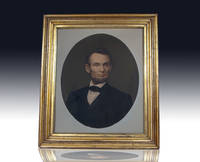
1864rif. 109542Cincinnati: E.C. Middleton 1864. Rare oleographic portrait of Abraham Lincoln by E.C. Middleton. With Middleton's Warranted Oil Colors imprint to the verso of the frame dated 1864. Between 1861 and 1873 E.C. Middleton of Cincinnati published a series oval oleographic portraits intended to have the appearance of oil paintings including thirteen “Portraits of American Statesmen and Heroes.” Middleton invented the method of oleography which used the process of chromolithographic printing with oil based inks mounted on canvas. The portraits were exclusively sold in frames directly through agents by subscription. In near fine condition. Matted and framed. The portrait measures 13.25 inches by 16.25 inches. The entire piece measures 20 inches by 23.25 inches. A rare striking portrait of Lincoln. Abraham Lincoln served as the 16th President of the United States from March 1861 until his assassination in April 1865. He led the United States through its Civil War and in doing so preserved the Union of the United States of America abolished slavery and strengthened the federal government. Lincoln began constructing his cabinet on election night and sought to create a cabinet that would unite the Republican party. His eventual cabinet would include his primary rivals for the Republican nomination and although his appointees held differing views on economic issues all were opposed to the expansion of slavery into the territories of the United States. The most senior cabinet post of Secretary of State was appointed to William Seward who had recently failed to win the 1860 Republican presidential nomination and Lincoln's choice for Secretary of the Treasury was Ohio Senator Salmon P. Chase Seward's primary political rival and the leader of a radical faction of the Republican party that sought the immediate abolition of slavery. E.C. Middleton unknown
1842rif. 151189Hamilton: Printed at Ruthven's Book and Job Office 1842. First edition in Mohawk. Hardcover. Very good. viii 456 p. 22 cm. Full leather. Respined with gilt impressing 5 raised bands and gilt-lettered label. Hinges repaired internally. New England Corporation bookplate on front pastedown. Ink presentation inscription on front free endpaper: "Presented to James Powles by his friend & minister The Rev. A Nelles 19 June 1842." Signature spelled James Powlass above. Mohawk inscription and signature on next leaf. Occasional stains and thumbing. Rev. Abraham or Abram Nelles 1805-1884 was a Church of England clergyman and missionary to the Six Nations. Nelles was principal of the Mohawk Institute a day-school operated by the New England Company for "Indian" students. Nelles first used his knowledge of the Mohawk language to publish in 1839 a hymnal entitled "A collection of psalms and hymns in the Mohawk language for the use of the Six Nations Indians." This translation project also published in Hamilton dates to a few years later. He is buried in the graveyard of the Mohawk Church. Interestingly two individuls named "Powless" are also buried there so James was probably one of his parishioners. Printed at Ruthven's Book and Job Office hardcover
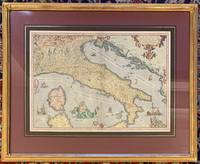
1573rif. 311532Antwerp: Ortelius Abraham 1573. framed. Map. Color engraving. Image measures 14 3/8" x 19.75". In gilt frame with empire French matting 23 x 28 1/2 inches. Gorgeous 16th century map of Italy. Elevations are beautifully colored and major towns are noted in red. Part of the Balkans Corsica and northern Sardinia are included along with part of Switzerland. Monaco is noted to the West. It was Ortelius's first map of Italy with a depiction of Neptune embracing and kissing a Neirid merwoman. A Sphinx perches atop the distance scale cartouche. Seven ships complete the composition. Some foxing and toning but otherwise a beautiful example of this uncommon edition. Abraham Ortelius 1527--1598 started his career as a Flemish map colorist eventually becoming a publisher cartographer and geographer. He widely regarded as one of the important and influential cartographers in history. He is known for his "Theatrum Orbis Terrarum" which was the first modern atlas. Van den Broecke 118. Ortelius, Abraham unknown
1573rif. 311532Antwerp: Ortelius Abraham 1573. framed. Map. Color engraving. Image measures 14 3/8" x 19.75". In gilt frame with empire French matting 23 x 28 1/2 inches. Gorgeous 16th century map of Italy. Elevations are beautifully colored and major towns are noted in red. Part of the Balkans Corsica and northern Sardinia are included along with part of Switzerland. Monaco is noted to the West. It was Ortelius's first map of Italy with a depiction of Neptune embracing and kissing a Neirid merwoman. A Sphinx perches atop the distance scale cartouche. Seven ships complete the composition. Some foxing and toning but otherwise a beautiful example of this uncommon edition. Abraham Ortelius 1527--1598 started his career as a Flemish map colorist eventually becoming a publisher cartographer and geographer. He widely regarded as one of the important and influential cartographers in history. He is known for his "Theatrum Orbis Terrarum" which was the first modern atlas. Van den Broecke 118. Ortelius, Abraham unknown books
1600rif. 63225(Delft, 1600). 4to. In contemporary half vellum with title in contemporary hand to spine. Annotations in ink to verso of front board. Previous owner's names in contemporary hand to title-page. Bookblock split between quire A and B, quire B partly detached. A few barely visible dampstains, internally generally nice and clean. (34), 16, (4), 174 pp. + 137 engraved plates (with illustrations numbered 1 - 196). Wanting the engraved frontispiece.