Abraham LincolnABAA
27.567 risultati
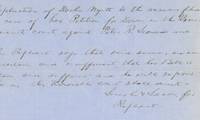
1853rif. 3514603/11/1853. The case is well known and illustrates Lincoln’s penchant for aiding women who had been unjustly treated ""Said answers are untrue uncertain and insufficient that her Bill is true certain and sufficient and he Lincoln will so prove it to be"" During his 25-year legal career in Illinois Abraham Lincoln was involved in a substantial number of cases involving women as litigants. He was known for seeking to represent women and working to get justice for them in an era when women’s cases were often shunned by lawyers or not taken seriously. Lincoln handled some 147 divorce cases about 40% of all divorce cases in his home county of Sangamon. Importantly more than half of the litigants he represented were women. He handled these cases with ""tender consideration"" learning from experience that the law could be a dangerous place for women who had few rights under the legal doctrines of the time. Lincoln also represented women in cases involving land disputes and in slander lawsuits which often involved accusations of adultery and were important for maintaining a woman's community reputation. Lincoln was known for taking cases for women where he felt justice was on his client's side. Notable examples include: Nance Legins-Costley - In 1841 Lincoln successfully represented this African American woman to prevent her from being sold into slavery arguing that slavery was illegal in Illinois; Melissa Goings - He defended Mrs. Goings an elderly woman charged with her abusive husband's murder in a case based on self-defense; Doshia Wyatt - In 1853 Lincoln took on the case of Mrs. Wyatt a widow whose claim was that she was being cheated out of her inheritance. A petition for dower is a legal request filed by a surviving spouse typically a widow to claim a portion of their deceased spouse's estate such as in real property based on common law dower rights. This is a formal process that requires the surviving spouse to file a petition in court describing the property and naming the heir or person with the next immediate estate of inheritance. The court then holds a hearing to determine the rights to dower and the property. Doshia Wyatt widow of Robert Wyatt retained Lincoln and sued for her dower. Thomas Wyatt died in 1847 and left all of his property to his son Robert. Robert Wyatt lost part of the land the Mill Farm to satisfy a judgment against him in the U.S. District Court of Illinois. Robert Wyatt sold another property the Prue Farm to George Brewner. After Robert Wyatt's death in 1852 Doshia Wyatt sued Leonard and Brewner's heirs. Leonard contested the petition claiming that he did not believe Doshia and Robert Wyatt had been legally married. Leonard also claimed that Robert Wyatt had already left Doshia Wyatt land in his will which Leonard claimed was recorded. Hearing the case was Judge David Davis a friend of Lincoln whom as President he would appoint to the U.S. Supreme Court. Ward Hill Lamon Lincoln’s co-attorney on the case began his professional association with Lincoln in 1852 when they became law partners. Though they had different styles they remained close personal and professional friends. After the partnership dissolved in 1857 their friendship continued and Lamon would later become Lincoln's bodyguard and U.S. Marshal for the District of Columbia during Lincoln's presidency. As the bodyguard Lamon was not in Washington on the night of Lincoln’s assassination being on assignment in Richmond at Lincoln’s request. In his Recollections of Abraham Lincoln Lamon reveals that before he left for Richmond he implored the President not to ""go out at night after he was gone particularly to the theatre."" This document relates to the case of Doshia Wyatt. In a petition to the Court filed by Lincoln Wyatt stated her case: “Your petitioner would further represent to your honor that she your petitioner is the widow of the said Robert Wyatt — that she has never relinquished her dower to the said aforesaid land or any part thereof - nor has her dower ever been set off - or assigned her in said premises - that said Robert Wyatt on or about the 28th of July AD 1852 departed this life leaving her the said Doshia widow as aforesaid…Your petitioner would further pray that this honorable court appoints commissioners to assign her dower in & to all of the above described tracts or parcels of land according to the statue in such cases made and approved. And your petitioner would pray for such & gather relief as may be according to equity and good conscience and as in duly abound your petitioner will ever pray.” This is a pleading in Lincoln’s hand which contains the answer of Wyatt to the defendants’ responses to her allegations. Autograph document signed Vermillion County Illinois Circuit Court November 3 1853. “The replication response of Doshia Wyatt to the defendants’ answers filed in the case for her Petition for Dower in the Vermillion Circuit Court against Peter R. Leonard and others. This repliant respondent says that said answers are untrue uncertain and insufficient that her Bill is true certain and sufficient and he Lincoln will so prove it to be as this Honorable Court shall direct. Lincoln & Lamon for Repliant respondent.” On the verso Lincoln has docketed the document “Dosha Wyatt vs Peter R. Leonard Replication.” The clerk of court Samuel Craig then notes that the plea was filed on November 3 1853. An uncommon document in Lincoln’s hand concerning his representation of women. As for the case the parties likely reached a settlement as Wyatt ended up dismissing the case while Leonard paid the costs. <img class=""alignnone wp-image-25018 size-post-window"" src=""https://cdn.raabcollection.com/wp-content/uploads/20231204144051/Folder-site-11-1600x1327.jpg"" alt="""" width=""1600"" height=""1327"" /> unknown books
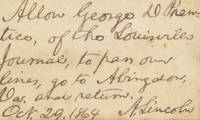
1864rif. 3503129/10/1864. Journalist George D. Prentice's son was a Confederate officer captured by Union forces who would later be charged with murder George D. Prentice was born in Connecticut on December 18 1802 and graduated from Brown University in 1823. He came to Kentucky in 1830 to write a campaign biography entitled The Biography of Henry Clay and remained in this state until his death on January 22 1870 in Louisville. Prentice became the editor of the Louisville Journal the newspaper of the Whig Party. The main focus of this paper was the promotion of Henry Clay’s agenda and his multiple presidential campaigns. Prentice brought the Journal from upstart newspaper to the most widely read newspaper in the western United States because of his wit and command of the English language. Upon the failure of the Whig Party Prentice supported the Know-Nothing Party. Prentice then supported John Bell and his Unionist platform in the 1860 election calling for the Southern states to stay in the Union. Following the repeal of neutrality in Kentucky the pro-Union Prentice wrote in the Louisville Journal on September 19 1861: “Well thank God we at last have weighed anchor and set out for the haven of safety and of honor. Now let all possible sail be spread and the noble ship of state be driven into the lines of her insolent foe with the whole might of the valor and devotion of her true men.” Prentice became part of Lincoln’s core group of advisors for Kentucky affairs during the war. But despite Prentice’s Unionist satisfaction that Kentucky was no longer neutral his two sons fought in the Confederate army one dying in 1862 and the other being captured in 1863. The son of Prentice Clarence J. Prentice was one of the most colorful Kentuckians in the Confederate Army. From 1863 to 1865 he commanded the 7th Confederate Cavalry Battalion. Based in southwestern Virginia the 7th was composed of mountaineers who resided along the Kentucky-Virginia border. The unit was difficult to discipline and was regarded as a ""black sheep"" battalion by other units in the department. While some members of the battalion accompanied Gen. John Hunt Morgan on his last Kentucky raid they were part of the dismounted brigade. Prentice and the balance of the 7th was left behind to guard Pound Gap. In his ""Kentucky Cavaliers in Dixie"" George Dallas Mosgrove left a lively pen portrait of the young officer. He described the 7th as wild and difficult to discipline but added that the men were afraid of Prentice who was a crack shot. Major Prentice was captured on March 31 1863. George Prentice wrote to Lincoln to enlist his help in securing a parole for his son. In his letter to Lincoln dated Journal Office Louisville Ky. May 6 1863 Prentice stated: “I wrote to you last week in regard to my son Major Clarence Prentice now a rebel prisoner at Camp Chase. He would ere this have been forwarded for exchange but Gen. Burnside at my solicitation consented to have him detained until I could have time to hear from you. I think there has been time but I have received nothing from you either by mail or telegraph. I know that the pressure of the affairs of state upon you is very great. Perhaps you did not read my letter at all. Major Prentice is the only child left to me. My household is very desolate. My son is tired of the war but unfortunately he thinks the south right. I ask you to direct his release upon his taking the non combatants oath and giving bond and security for its scrupulous observance. If you cannot do this as I painfully fear you cannot I earnestly appeal to you to parole him to stay outside of both the United States and the Southern Confederacy until after the rebellion. I should scarcely venture Mr. President to make this appeal to you but that I think I have served the Union cause faithfully devotedly and successfully. I have suffered very much and sacrificed very much in its behalf—more I am sure than any other man in Kentucky; and I am likely even at the best to suffer and sacrifice much hereafter. I think there is not a candid and intelligent Union man in this state who would hesitate to say to you that I have saved it to the Union politically. “And now dear sir pray grant me what I ask in behalf of my only son. His mother is half delirious and so am I. I am scarcely capable of performing my daily duties to the country but if my request were granted I feel I should be buoyant with new life. Please let me know your decision soon for if my son cannot be paroled upon either of the conditions I have mentioned I want him sent forward as soon as possible to City Point as he is extremely uncomfortable in his present situation.” Ten days later Lincoln issued an order written on the back of Prentice's letter instructing General Burnside to parole young Prentice ""to remain outside the limits of both the loyal and disloyal States or so-called 'Confederate States’…during the present rebellion and to abstain from in any wise aiding or abetting said rebellion."" He was released in May 1863. However Clarence Prentice immediately upon his release from Camp Chase violated his oath and re-entered the Confederate Army. He was promoted to lieutenant colonel. Only a few months after his parole he was back to robbing banks burning courthouses and spreading terror and destruction generally along the Kentucky-Virginia border. In the fall of 1863 after being released from Union custody Prentice shot and killed a hotel proprietor named White in Abingdon Va. during a ""personal difficulty."" His trial was set for November 8 1864 in Abingdon and his father wanted to attend and assist him at his trial. George Prentice again wrote Lincoln asking for his assistance. Lincoln complied with Prentice’s request. Autograph note signed Washington October 29 1864. “Allow George D. Prentice of the Louisville Journal to pass our lines go to Abingdon Va. and return.” Prentice also wrote to Secretary of State William Seward on October 25 1864. A letter of Captain R. H. Baptist exists October 22 1864 to Prentice offering to give evidence in the forthcoming trial of his son saying “a conversation occurred between White & myself that ought to be made known in the trial of your son by all means.” Prentice sought Seward’s help in lining up Baptist up as a witness for his son: “Capt Baptist who formerly served under my son…and is now a prisoner…at Johnson's Island writes to me some facts which would be of vast importance to my erring child in his approaching trial…and which Capt. B. says he would state on oath…if he could be paroled to the Southern Confederacy or exchanged…I think that the exchange of Capt Baptist would subserve the cause of truth humanity and justice.’’ After being shown Baptist's letter Lincoln arranged for his parole so that he could testify on behalf of Clarence Prentice. Thus did Lincoln intervene twice to aid his Kentucky advisor. Clarence Prentice was acquitted of the murder charge. He continued to serve in the Confederate Army until the war ended. <img class=""alignnone wp-image-25018 size-post-window"" src=""https://cdn.raabcollection.com/wp-content/uploads/20231204144051/Folder-site-11-1600x1327.jpg"" alt="""" width=""1600"" height=""1327"" /> unknown books
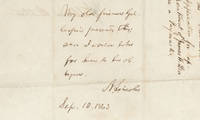
1509rif. 3547615/09/1863. The letter itself was from Lamb a pallbearer after Lincoln's assassination Joseph Gillespie was a Whig member of the Illinois Assembly in 1840-41 and then served in the State Senate from 1847 to 1859. He joined the Republicans in 1856. Gillespie chaired the Illinois Republican State Convention in 1860 where presidential electors were selected who would vote for Abraham Lincoln and served as circuit court judge in Southern Illinois from 1861 to 1873. From when they met in 1840 Gillespie was a key political ally lawyer and trusted and intimate friend to Abraham Lincoln. They consulted on legal cases and in political matters where they kept each other informed of political developments. Gillespie visited President-elect Lincoln at Springfield before he left for Washington. When Lincoln was president Gillespie occasionally went to Washington to see him and kept him informed about the political situation in the western states. Their correspondence shows a close personal bond. James L. Lamb was a meatpacker industrialist and friend of Lincoln from Illinois known for his business dealings with the future President and his role as one of the pallbearers at Lincoln's funeral. In a letter addressed to President Lincoln Lamb wrote him from Springfield Ill. September 10 1863 to secure a position for a relative. “My friend and relative Mr. James H. Lea is an applicant for the position of paymaster in the army. His appointment I am sure would meet the approbation of all true friends of the Government who are acquainted with him. I have long known him as a reliable competent businessman and one whose integrity could be fully relied upon. His moral character is without blemish and the most satisfactory assurances can be given of his integrity and fitness for the position.” The docket states “Springfield Sep. 10/63 James L. Lamb to the President. Application for appointment of James H. Lea as a Paymaster.” This letter was not mailed by Lamb to Lincoln. Instead Lamb gave the letter to Gillespie to enlist his support and use his influence with Lincoln. Gillespie presented Lamb’s letter to Lincoln with his request that it be honored. Autograph endorsement signed Washington September 15 1863. “My old friend Gillespie presents this; and I would like for him to be obliged.” This is unpublished and not in Basler’s Collected Works of Abraham Lincoln. The wording of Lincoln’s endorsement saying that Gillespie presented this to Lincoln and the implication that Gillespie will need to be presenting this to the Secretary of War raises the possibility that Gillespie handed this to Lincoln in person and then took the endorsement to Stanton. On October 10 Gillespie wrote Lincoln that the appointment had not yet been made and relating a communication with Stanton saying “I would beg to call your attention to the subject of the appointment of my friend James H. Lea of Alton to the office of paymaster in the regular army. Secy. Stanton told me that he would retire one now on the list to make place for Mr Lea in a short time. I have heard nothing from him since. I would take it as a great favor if this thing could be done soon. I am aware how much you must be pressed with business of an engrossing character at this juncture but hope you may find leisure to jog the secretary’s memory.” According to papers in the Library of Congress James H. Lea was appointed an additional paymaster of volunteers to rank from February 23 1864. He signed his oath of office in April. This is a fascinating endorsement showing how Lincoln sought to assist his old friends to the extent he appropriately could. <img class=""alignnone wp-image-25018 size-post-window"" src=""https://cdn.raabcollection.com/wp-content/uploads/20231204144051/Folder-site-11-1600x1327.jpg"" alt="""" width=""1600"" height=""1327"" /> unknown books
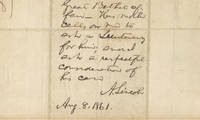
1861rif. 3521508/08/1861. ""It is said that the young man named within was in the Great Bethel affair. His mother calls on me to ask a Lieutenancy for him"" We have never before a document on the market referencing Bethel by name or referring to the battle as great Part of a private collection assembled at Sesslers more than a half century ago The Civil War formally began with the bombardment of Fort Sumter on April 12–13 1861 but the first sustained clash between organized armies on land was the Battle of Big Bethel also called the Battle of Bethel Church fought on June 10 1861 near Hampton Virginia. Virginia's decision to secede from the Union had been ratified by popular vote on May 23 and Confederate colonel later major general John B. Magruder was sent down to the peninsula to deter any advance on the state capital Richmond by Union troops based at the well-defended post of Fort Monroe. Confederate forces under Magruder defeated a probing Union attack led by John Adams Dix and field commander Theodore Winthrop who was killed in the assault. The Union objective was to push back Confederate outposts guarding the Yorktown Road but poor coordination and a nighttime friendly-fire incident ruined surprise. When Union troops advanced at dawn they were repulsed by well-positioned Southern artillery and infantry around Big Bethel Church. The battle ended in a Confederate victory providing an early morale boost to the South while exposing the inexperience and disorganization of Union forces in the war’s opening weeks. It confirmed that the conflict would not be short or bloodless. Abraham Lincoln was distressed by the Union defeat at Big Bethel. The battle underscored for him the Union's lack of military preparedness and the challenges in finding capable commanders reinforcing his determination to avoid future losses. During his presidency Lincoln would regularly meet with members of the public who would wait to see him in the foyer of his office in the White House. This included soldiers and their family members. Autograph letter signed Frank J. White as Captain of Company A 10th Regiment Fortress Monroe July 27 1861 seemingly given to the soldier himself or his sent to his family. ""Mr. Charles. J. Seymour has been a member of my company for three months and has gained my highest esteem for the excellent manner in which he has discharged his duties. He is well qualified to hold a much higher position than his present one."" Autograph document signed August 8 1861 on a detached leaf no recipient but likely Secretary of War Simon Cameron. ""It is said that the young man named within was in the Great Bethel affair. His mother calls on me to ask a Lieutenancy for him; and I ask a respectful consideration of his case."" Seymour received the promotion Lincoln requested becoming a lieutenant just weeks later on August 27 1861. He served as Aide-de-Camp on the staff of Gen. Daniel E. Sickles and was later promoted to major. He also assisted in recruiting efforts in New York City. This was acquired from Mabel Zahn at Sesslers in the 1970s. <img class=""alignnone wp-image-25018 size-post-window"" src=""https://cdn.raabcollection.com/wp-content/uploads/20231204144051/Folder-site-11-1600x1327.jpg"" alt="""" width=""1600"" height=""1327"" /> unknown books
1862rif. 3341204/03/1862. As 1862 opened the war was not going well for the Union. In the east Bull Run had been a disaster and led to the shake-up of command with no results yet to show for it. In the west the loss at Wilson’s Creek gave the Confederates the upper hand. The Federal armies in the west then turned their attention to implementation of the Anaconda Plan – to cut the Confederacy in half by securing the Mississippi River from St. Louis all the way to the Gulf of Mexico and clearing a maritime invasion route into the heart of the Confederacy by taking the Tennessee and Cumberland Rivers which lay just to the east of the Mississippi. If successful these maneuvers would cut Texas Arkansas and Louisiana off from the main body of the South hold Kentucky and Missouri firmly in the Union and make it difficult for Tennessee to cooperate with her sister Confederate states. The first moves would be to take and hold commanding locations north on the Tennessee and Cumberland rivers and command of the operation was given to Brig. Gen. Ulysses S. Grant an obscure and largely unproven officer. On February 6 1862 Fort Henry commanding the Tennessee River was captured by Grant’s forces. It had a poor defensive position and was reduced mainly by the bombardment of gunboats on the river. Nonetheless its fall opened the Tennessee River to Union gunboats and shipping past the Alabama border and provided a real victory for Union arms. Grant next focused his attention on Fort Donelson eleven miles away on the more strategically important Cumberland River. This fort had a much stronger physical position and the Confederates had placed some 20000 men and a number of senior commanders on site to engage in its defense. They were not about to concede the fort and they were ready and waiting for Grant. Grant arrived at Fort Donelson late on February 12 and on the 13th established his headquarters near the left side of the front of the line. That day was spent in battle preparation with a few small probing attacks being carried out against the Confederate defenses. Grant's headquarters was at Cairo Ill where the head of Ordnance was Stephen Lyford. Grant arrived at Fort Donelson late on February 12 and on the 13th established his headquarters near the left side of the front of the line. That day was spent in battle preparation with a few small probing attacks being carried out against the Confederate defenses. The battle was severe with nearly 1000 soldiers on both sides killed and about 3000 wounded. When Simon Buckner the Confederate commander asked for surrender terms Grant famously replied “No terms except unconditional and immediate surrender can be accepted“ adding “I propose to move immediately upon your works.” Buckner surrendered his command of about 15000 men; this was the first of three Confederate armies that Grant captured during the war. The capture of Fort Donelson gave the North control of the Cumberland River which provided the road that opened the Deep South to Union invasion. It boosted morale in the North which now saw that the war could result in great victories and not just defeats. It gave President Lincoln the fighting general he was looking for and it made Grant’s career in the process; he was soon promoted to major general of volunteers. Stephen C. Lyford had a long and distinguished career. He served from May to August 1861 in the defenses of Washington D. C. and in the Manassas Campaign participating in the Battle of Bull Run July 21 1861. He was Aide-de_Camp to Brig. General McDowell in the defenses of Washington D. C. August to October 1861 and Asst. Ordnance Officer at St. Louis Arsenal Mo. November 2 1861 to February 1 1862; in command of the Cairo Ordnance Depot Ill. February to May 1862 being detached to the Cumberland River and was present at the Surrender of Ft. Donelson. He was part of Gen. Halleck's Mississippi Campaign May to July 1862 being engaged in the Siege of Corinth May 1862 and was Chief of Ordnance for Department of the Tennessee July 11 1862 to September 6 1863 and fought in the Battle of Corinth. He would go on to teach at West Point and also serve as aide-de-camp for Gen. Halleck and as representative of the US to Japan to bring back information and technology relevant for American ordnance. Document signed with engravings of flags and weapons Washington March 4 1862 Naming Lyford a “Second Lieutenant in the Ordnance Department."" <img class=""alignnone wp-image-25018 size-post-window"" src=""https://cdn.raabcollection.com/wp-content/uploads/20231204144051/Folder-site-11-1600x1327.jpg"" alt="""" width=""1600"" height=""1327"" /> unknown books
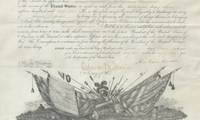
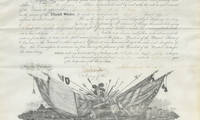
1507rif. 3254115/07/1864. A real rarity the first Lincoln appointment to the Signal Corps for an officer active in Sherman’s Georgia Campaign we have seen On March 29 1860 the United States House of Representatives approved the Army appropriations bill for fiscal year 1861 which included the following amendment: ""For the manufacture or purchase of apparatus and equipment for field signals $2000; and that there be added to the staff of the Army one signal officer with the rank pay and allowance of a major of cavalry who shall have charge under the direction of the Secretary of War of all signal duty and all books papers and apparatus connected therewith."" The United States Senate eventually approved the appropriations bill over the objections of Jefferson Davis now Senator from Mississippi and President James Buchanan signed it into law on June 21 1860 the date now celebrated as the birthday of the modern U.S. Army Signal Corps. Now armies on the go could report back to their civilian leadership in real time and those leaders could make decisions without waiting for a messenger on horse. This changed the face of warfare. President Lincoln himself spent significant time in the telegraph office sending and receiving war correspondence. He often walked alone from the White House to the office and chatted with the operators. As Bates later wrote “During the Civil War the President spent more of his waking hours in the War Department telegraph office than in any other place except the White House. While in the Telegraph Office he was comparatively free from official cares and therefore more apt to disclose his natural traits and disposition than elsewhere under other conditions.” John Quincy Adams first enlisted in 1862 with the 38th Ohio Volunteers. On October 15 of that year he was a quartermaster sergeant with the 10th Ohio Cavalry. After a stint as acting lieutenant on July 15 1864 he was appointed by the President Second Lieutenant to date from March 3 1863. Adams was actively involved in the Georgia campaign conducted by Gen. William T. Sherman. He was with left wing of the 16th Army Corps on the march to Chattanooga Tenn. In the Atlanta Campaign he participated in the battles of Resaca Dallas Kenesaw Mountain. and Jonesboro. He manned signal corps stations at Kenesaw Mt. and Allatoona. Adams was in the engagements at Port McAllister and Rice Mill station in the campaign from Savannah through the Carolinas including battles at Columbia Bentonville and Raleigh; and at the surrender of Confederate Gen. Joseph E. Johnston to Sherman on April 26 1865. Adams was breveted 1st lieutenant for gallant and meritorious service in the Signal Corps at the battle of Allatoona; he was breveted captain for gallant and meritorious services in the Signal Corps at the capture of Fort McAllister and Savannah and throughout the war. Adams was mustered out August 22 1865. After the war he was in the 1st U. S. Cavalry and was in the Indian wars and finished his career as captain and aide to Gen. O.O. Howard in October 1884. He is listed on the roster of the U.S. Signal Corps in the Civil War. Adams is also a protagonist in one of the most famous telegraph exchanges of the war during the battle near Allatoona. During this battle legend goes that Sherman signaled to General Corse and his men to ""hold the fort"" a phrase that inspired the later popular religious hymn entitled Hold the Fort by Chicago evangelist Philip P. Bliss which featured the chorus 'Hold the fort for I am coming’ which then became a common expression. We still use ""hold down the fort"" today. Adams was the signal officer who received that message or rather a variant as Sherman did not use that exact phrase though captured the sentiment. This is President Lincoln’s appointment of Adams as Second Lieutenant. Document signed Washington July 15 1864 naming Adams ""Second Lieutenant in the Signal Corps"" dating from the third of March 1863. This document is a real rarity as we have never before seen a Lincoln appointment to the Signal Corps for an officer active in Sherman’s March to the Sea. Moreover Lincoln Signal Corps appointments are themselves uncommon this being our first. It was acquired from the Adams descendants and has never been offered for sale before. <img class=""alignnone wp-image-25018 size-post-window"" src=""https://cdn.raabcollection.com/wp-content/uploads/20231204144051/Folder-site-11-1600x1327.jpg"" alt="""" width=""1600"" height=""1327"" /> unknown books
1846rif. 3117130/03/1846. At the time Lincoln wrote this he was running for Congress It shows the relationship between perhaps the most famous senior and junior law partners https://vimeo.com/943731365share=copy In his nearly 25 years as a lawyer in Springfield Illinois Abraham Lincoln had three partners. He joined John Todd Stuart as a junior partner then started a new practice as a junior partner with Stephen T. Logan. In 1844 Lincoln and Logan took on William H. Herndon. In the fall of 1844 Lincoln was tired of being a junior partner. He had worked for senior partners with political ambitions and Lincoln wanted a younger partner to whom he could relate. Logan and Lincoln dissolved their partnership in December 1844. Logan wanted to practice law with his son David and Lincoln wanted to start his own law firm. In October Lincoln invited his friend William Herndon to form a partnership with Herndon as junior partner. Thus was born Lincoln and Herndon. The firm would become a legend. In all three firms Lincoln functioned as a general practitioner taking a wide variety of civil and criminal cases. Herndon did not disappoint his friend. He contributed to the practice by performing research for his older and more experienced partner building the firm's law library and overseeing young men who came to study law read the law at their office. Business began slowly for the new firm. Not until March 1845 was their first case heard in the Sangamon County Circuit Court. That first case was Hope v. Beebe et al and was action in debt with Lincoln and Herndon appearing for plaintiff and Logan for defendant. Here is a description of that case: A plaintiff Norwood had won a replevin suit against the Beebee also spelled Beebe Brothers in the U. S. Circuit Court Beebee Brothers v. Whitney & Norwood. Hope the marshal of the U. S. Circuit Court District of Illinois to help Norwood collect what he was owed retained Lincoln and Herndon and sued Beebee and others in an action of debt the intent being to collect money ordered paid by the court. Beebee and others named on the replevin bond in the federal suit failed to perform the obligation of bond - they did not or would not pay. Beebee claimed that he was unable to pay because of another suit that Norwood instituted against Beebee. On March 18 1845 the case was continued and heard again in July when Lincoln filed documents allowing for concessions on both sides. It was again continued until March of 1846. Lincoln with the help of Herndon then drafted another document seemingly pointing to the another aspect of the suit and explaining why the plaintiff should not have to drop the suit. In 1846 Lincoln was running for what would be his first elected position Congressman. In August he won that election and served one term. In March he was campaigning and seeking to gain support. Autograph document signed ""Lincoln & Herndon"" Springfield late March 1846 in the hand of both partners showing their collaboration. It begins in Lincoln's hand: “And for further replication"" before switching to Herndons for the lines"" to the said plea of the said defendants by them above pleaded said plaintiff says that to be further precluded from maintaining his said action against said defendants because of the matters in said plea alleged he ought not because he says that since the pleading of the last plea by said defendants to wit on — day of February AD 1846 the said replevin suit by the said Norwood and Turner against the said Beebees in the Said plea mentioned was by the same court at which it was pending determined in favor of the said Beebees and against the said Norwood and Turner and by the judgment of said court a return of the bacon in the plea mentioned.” Lincoln hand wrote the balance: “…Mentioned was awarded to the said Beebees and also adjudged that the said Beebees should recover of and from the said Norwood and Turner the sum of $650 damages and costs of suit and this he is ready to verify. Wherefore he prays judgment.” At that time Lincoln was preparing for his run for Congress his only national election until 1860. The parties would later reach an agreement in March 1847 and the court dismissed the case. Lincoln and Herndon received fees of $25 for their legal services. A final version of this filed document is published by the Papers of Abraham Lincoln as is the judge's further March 1846 continuance. The present document is three pieces affixed either by Lincoln or at a later date. This is the only paperwork from Lincoln and Herndon’s first case we have ever seen on the market. <img class=""alignnone size-post-window wp-image-25018"" src=""https://cdn.raabcollection.com/wp-content/uploads/20231204144051/Folder-site-11-1600x1327.jpg"" alt="""" width=""1600"" height=""1327"" /> unknown books
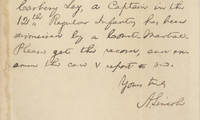
1863rif. 2972001/09/1863. A powerful letter showing Lincoln's direct involvement with the chief judicial military officer showing the merciful Lincoln at work and showing his prioritizing retaining experienced veterans in the service <img class=""alignnone size-post-window wp-image-29790"" src=""https://cdn.raabcollection.com/wp-content/uploads/20240123003955/Lincoln-Sept-1-1863-3-1600x295.jpg"" alt="""" width=""1600"" height=""295"" /> The Judge Advocate General of the United States Army is the senior officer of the Judge Advocate General's Corps of the United States Army. The position was abolished but then reinstated in 1849. In 1862 Lincoln appointed his first Judge Advocate General Joseph Holt only the second since 1783. He named Joseph Holt. Holt joined the Army as a colonel in 1862. As Judge Advocate General of the Army Holt oversaw the expansion of military law to include the military prosecutions of citizens who were not in the military service. By the time he joined the Army he believed that the only means to prevent treason from occurring again was to ensure that slavery was abolished for all time and eventually equal treatment under the law enforced in the South. At the beginning of the Civil War Joseph Carbery Lay had an office in Washington D. C. as an agent for the transaction of all kinds of business including procuring patents pensions back pay purchase and sale of real estate writing of deeds releases and other instruments regarding settlement of accounts with and claims against the Government. He quickly enlisted in the 12th Infantry Regiment of the Regular Army as a lieutenant. During the Peninsula Campaign in the spring of 1862 the 12th Infantry distinguished itself in its first combat action at the Battle of Gaines Mill in June 1862 while sustaining fifty percent casualties. Lay was a captain at that time. <img class=""alignnone size-post-window wp-image-29789"" src=""https://cdn.raabcollection.com/wp-content/uploads/20240123003932/Lincoln-Sept-1-1863-2-1600x746.jpg"" alt="""" width=""1600"" height=""746"" /> Captain Joseph Carbery Lay was cashiered - dismissed - from the Army on July 21 1862 for being drunk on duty and breach of arrest. Lay felt that an injustice had been done and wanted the dismissal revoked. In 1863 the matter came to the attention of President Lincoln who insisted on seeing the record of the case. He was always anxious to prevent injustice from being done and even a case in which alleged drunkenness was involved was not beneath his notice. Autograph letter signed as President on Executive Mansion letterhead Washington September 1 1863 to the Judge Advocate General insisting that he receive the records in Lay’s case. “Sir: I am told that Carbery Lay a Captain in the 12th. Regular Infantry has been dismissed by a Court-Martial. Please get the record and examine the case & report to me. Yours truly A. Lincoln.” <img class=""alignnone size-post-window wp-image-29791"" src=""https://cdn.raabcollection.com/wp-content/uploads/20240123004036/Lincoln-Sept-1-1863-4-1600x491.jpg"" alt="""" width=""1600"" height=""491"" /> Lincoln prioritized retaining experienced veterans in the service and sided with Lay as is indicated by the fact that Lay was reinstated by being appointed a lieutenant in the Seventeenth Infantry on October 30 1863 less than two months after this letter. While Lay was serving in that unit in 1863 it was present in engagements at Rappahannock Station and on Mine Run and marched with it until going into winter camp. In 1864 the regiment took part in the Wilderness Campaign and the operations before Petersburg inscribing on its colors Laurel Hill North Anna Bethesda Church Cold Harbor and Petersburg; while its records show in addition that it was also engaged at Spotsylvania Court House and the battle of the Wilderness. Lay’s problems were not over however as in June 1864 he was accused of having returned to his home in Washington without leave. He came back to base soon after and made a statement that he had been ill and sent to hospital and then had a difficult time rejoining his regiment. Perhaps to avoid disciplinary action he resigned from the Army a few months later on September 12 1864. Over the years we’ve had just a handful of letters showing the kindly merciful Lincoln at work and none to Holt. <img class=""alignnone size-post-window wp-image-25018"" src=""https://cdn.raabcollection.com/wp-content/uploads/20231204144051/Folder-site-11-1600x1327.jpg"" alt="""" width=""1600"" height=""1327"" /> unknown books
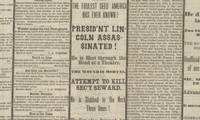
1504rif. 2913315/04/1865. The Assassination: Abraham Lincoln continues to stand as America’s most beloved President. Of our nation’s historical icons Lincoln is the quintessential embodiment of American possibility in his mythic-like rise from rail-splitter to Chief Executive and Emancipator of the oppressed. The admiration felt by Americans for Lincoln’s humble integrity his performance in office his noble statesmanship and his keen sense of justice is enduring. Lincoln is not given the highest marks just for character but for the transformation of the nation that he left behind which was both profound and long-lasting. Polls of historians generally show their belief that Lincoln faced the hardest job of any president. He had to define the issues inspire the people be steadfast in the face of losses win the Civil War free the slaves and lay the groundwork to reunite the nation. All that in the face of determined opposition. He accomplished all this in four years but was assassinated on April 14 1865 and his death left him unable to finish the job a job that quite likely he was the only one with a chance to get completed in a way that would truly bring the nation together. The end of the Civil War left the nation with two overwhelming questions: what to do with and do for the millions of freed slaves; and how to reintegrate the South into the Union. On the first point Lincoln was focused on African American access to land economic prosperity and legal rights and had just approved Gen. William T. Sherman’s order distributing parcels of former slave plantations to the slaves themselves. Lincoln wanted black Union veterans to have the right to vote which was a step to ultimately embracing full suffrage for African American males. In what proved to be his final speech three evenings before his death Lincoln had become the first president ever to support black voting. Lincoln’s successor Andrew Johnson was a Southerner uninterested in fair treatment of the liberated slaves. He opposed plans designed to guarantee the civil rights of black Americans and cancelled Sherman’s order granting land to slaves. Johnson accepted the draconian post-Civil War Black Codes which limited the rights and liberties of African-Americans something Lincoln would never have done. On the second point the readmission of the Southern states Johnson felt that once Southern states returned their loyalty to the national government they could manage their own affairs. This meant they could pass any Jim Crow laws they liked. He opposed the Republican plan for Reconstruction of the South including provisions designed to guarantee the civil rights of black Americans. The Republican Congress had no rapport with Johnson and the initial four years era of Reconstruction which was a disaster to the nation was essentially a bitter battle between a North and South that remained locked in contention presided over by a weak President Johnson and a Congress at loggerheads with him. Lincoln had enormous power and influence some of which extended into the South. He saw the end of the war as an opportunity to not simply celebrate victory but an opportunity to move the country forward. Johnson had no such feeling. Lincoln would have been much better placed to direct moderate and ease the contentions of Reconstruction. John Wilkes Booth was a member of a famous acting family and he enjoyed a phenomenally successful stage career during the Civil War: By 1864 he earned $20000 a year at a time when the average Northern family earned around $300 annually. A Marylander by birth Booth was an open Confederate sympathizer during the war. A supporter of slavery Booth believed that Lincoln was determined to overthrow the Constitution and to destroy his beloved South. After Lincoln’s reelection in November 1864 Booth devised a plan to kidnap the president and spirit him to Richmond where he could be ransomed for some of the Confederate prisoners languishing in northern jails. That winter Booth and his conspirators plotted a pair of elaborate plans to kidnap the president; the first involved capturing Lincoln in his box at Ford’s Theater and lowering the president to the stage with ropes. Booth ultimately gave up acting to focus on these schemes. Neither of the kidnapping plans bore fruit. On the evening of April 11 the President stood on the White House balcony and delivered a speech to a small group gathered on the lawn. Two days earlier Robert E. Lee had surrendered the Army of Northern Virginia at Appomattox Court House and after four long years of struggle it had become clear that the Union cause would shortly emerge from the war victorious. Lincoln’s speech that evening outlined some of his ideas about reconstructing the nation and bringing the defeated Confederate states back into the Union. Lincoln also indicated a wish to extend the franchise to some African-Americans—at the very least those who had fought in the Union ranks during the war - and expressed a desire that the southern states would extend the vote to literate blacks as well. Booth stood in the audience for the speech and this notion seems to have amplified his rage at Lincoln. “That means nigger citizenship” he told Lewis Powell one of his band of conspirators. “Now by God I’ll put him through. That is the last speech he will ever make.” Three days later Booth made good on his promise. Upon learning that Lincoln and his wife intended to see the play “Our American Cousin” at Ford’s Theater Booth used his actor’s connections there to gain access to the President’s box. He shot Lincoln at about 10 pm on April 14 1865 and Lincoln died about after 7 am on the 15th. Dr. Charles Leale was in the audience. Leale leapt over theater seats got to the president’s box and announced that he was a doctor. As he entered the President was sitting in a chair with his eyes closed and head slumped. He already looked dead Leale recalled. He felt Lincoln’s right arm for a pulse but couldn’t find one. He and some others eased Lincoln to the floor and Leale began searching for the wound. “I quickly passed the separated fingers of both hands through his blood-matted hair…and I discovered his mortal wound” Leale recalled. “The president had been shot in the back part of the head behind the left ear.” Leale stuck the little finger of his left hand into the hole in Lincoln’s skull. “I then knew it was fatal and told the bystanders” he wrote later. Leale knew he had to get Lincoln out of the theater to treat him. But he believed a carriage ride back to the White House would kill him. He and several other men lifted the president and with Leale holding Lincoln’s head they began to maneuver him outside. Across the street from the theater was the house of William Peterson and Lincoln was taken there. Lincoln was carried to a small back room stripped of his clothes and covered with blankets. His 6-foot-4-inch frame had to be placed diagonally to fit on the bed. Leale ordered the window opened and the wait began. A parade of anguished government officials and family members came and went. The President sank steadily his breathing labored and his pulse nearly undetectable. At 7:22 am on April 15 President Lincoln breathed his last. Leale smoothed the contracted muscles of Lincoln’s features placed two coins over his eyes and pulled a sheet up over his face. Famously Secretary of War Stanton saluted the fallen President and uttered “Now he belongs to the ages.” Stanton further eulogized Lincoln with the apt observation “There lies the most perfect ruler of men the world has ever seen.” Original report on the assassination printed the very day he died The public was hungry for information and the newspapers equally hungry to report the momentous news. One of these was the Binghamton Daily Republican and this is its issue of April 15 1865 with black mourning columns. The front page as was routine at the time was taken up by ads. The news then began on page two. There at top left is the headline “The Assassination of President Lincoln! A Nation in Mourning!!!” It begins “We feel too unfitted by this awful event to allude to the calamity in terms becoming its solemnity and importance! LINCOLN IS DEAD! Struck down by the hands of a brutal assassin in the midst of the triumphs which were commemorating his salvation of the country. A great man indeed has fallen! The foremost man of his time is no more…We dare not contemplate what may follow this sad and inscrutable providence.” This was followed by a proclamation of the governor of New York. On page three were dispatches from 12:30 AM to noon to 3:00. An early dispatch reports that “the President was shot… and is not expected to live” and told of the events of the assassination then available in detail. It mentioned “The screams of Mrs. Lincoln first disclosed the fact to the audience that the President had been shot.” Later it reported of Lincoln “At midnight the Cabinet…a few personal friends with Surg. Gen. Barnes and his immediate assistants were beside his bedside…The parting of his family with the dying president is too sad for description.” At noon the newspaper had more news and reported “Later concerning the President. He died this morning at 7:20. Two villains engaged in the horrible crime. The murder planned before March 4th.” At the bottom of the column is a report on the progress of the army of General William T. Sherman saying that in response to Grant’s hope Sherman would pursue the remaining Confederates Sherman said “I think we’ll do it.” At 3:00 the paper printed the latest from Washington. It contained “Full particulars of the Death of Abraham Lincoln” plus “Inauguration of President Johnson” and Johnson’s statement on taking office. Original newspapers reporting Lincoln’s assassination have become very scarce this being our first in over a decade. This one is comprehensive and with its black borders and large headlines is evocative of the moment and would be perfect for display. <img class=""alignnone wp-image-25018 size-post-window"" src=""https://cdn.raabcollection.com/wp-content/uploads/20231204144051/Folder-site-11-1600x1327.jpg"" alt="""" width=""1600"" height=""1327"" /> hardcover books
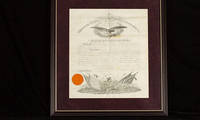
1861rif. 1571129/03/1861. James E. Harrison though born in Virginia served the Union cause during the Civil War. He received his first appointment as a Second Lieutenant to the 2d U. S. Cavalry in June 1856 and was stationed in Texas and various forts in the West until December 1858 when he was assigned to scouting Indians. He returned East and with the Civil War imminent he was promoted to First Lieutenant 2d U.S. Cavalry in March 1861 and then to Captain 5th U.S. Cavalry in May of that year. Harrison was engaged in the Peninsular campaign and commanded a regiment in the Army of the Potomac from September 1862 to June 1863. During that time he served at the battles of Antietem Chancellorsville and Brandy Station among many others. He was Breveted Major U.S. Army for gallant and meritorious services at the battle of Hanover Court House and Brevet Lieutenant Colonel U.S. Army for gallant and meritorious services at the battle of Antietam. In July of 1864 Harrison was assigned to be Inspector-General of Cavalry in the Department of Arkansas and was later appointed as Special Inspector of Cavalry in West Mississippi. Document signed as President Washington March 29 1861 effective retroactively to February 27 1861 an ornate vignetted commission with an eagle cannons and flags appointing Harrison to the rank of “First Lieutenant in the Second Regiment of Cavalry.” The document is countersigned by Secretary of War Simon Cameron. unknown books
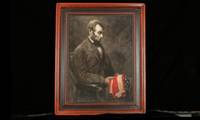
rif. 257151/1/88. Print of Abraham Lincoln well framed approximately 2 ft by 3 ft color commemorating the fallen president's work in saving the nation at the expense of his life. <img class=""alignnone wp-image-25018 size-post-window"" src=""https://cdn.raabcollection.com/wp-content/uploads/20231204144051/Folder-site-11-1600x1327.jpg"" alt="""" width=""1600"" height=""1327"" /> unknown books
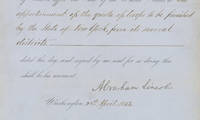
1864rif. 2373223/04/1864. A search of public sale records going back 40 years fails to turn up even one other example of this document After the firing on Fort Sumter on April 12 1861 enthusiasm for enlisting in military service swept through both the North and South. In remarkable speed two large volunteer armies were created. Except for a tiny number of professional soldiers all expected to be in service for a brief term. Not just soldiers but the public and political leaders had fooled themselves about the war's likely duration. However the patriotic hope on each side that the war would be over in a matter of weeks or months was dashed in the first battle of Bull Run on July 21 1861. By late 1862 no sensible person believed that an early end to the bloody strife was possible and the knowledgeable expected peace to be far off in the future. Facing a protracted war maintaining a sufficiently sizable army became the greatest problem facing both Union leader Abraham Lincoln and Confederate leader Jefferson Davis. In 1862 rather than institute a draft President Lincoln requested 300000 more men and assigned each state a quota. The states could meet their quota in any manner they saw fit. Most states offered cash incentives known as bounties to gain recruits. Depending on where one enlisted the combination of local state and federal bounties could exceed $1000. But the 1862 policy also did not recruit enough troops. <img class=""alignnone wp-image-24611 size-post-window"" src=""https://cdn.raabcollection.com/wp-content/uploads/20231204150003/Lincoln-April-23-1864-2-1600x602.jpg"" alt="""" width=""1600"" height=""602"" /> As the war dragged on with no end in sight the inflow of volunteers was drying up and the Union needed to keep the ranks filled. The U.S. Congress resorted to the first draft in the country’s history in March 1863. All able-bodied men between ages 20 and 45 were required to be enrolled and available for military service. Draftees were chosen by lottery. Once conscripted a man could avoid service for that particular round of the draft either by paying a $300 commutation fee or by hiring a substitute to take his place. As in the South this raised accusations that the war had become “a rich man’s war but a poor man’s fight.” Nevertheless in both North and South statistics indicate that wealthy men were represented in the service in at least the same proportion as they were in the general population. A lot of blood was spilled in 1863 with the battles of Chancellorsville Gettysburg Vicksburg Chickamauga and Chattanooga among others. By year’s end President Lincoln and the Union leadership realized that more men were needed for the army and urgently. On February 1 1864 Lincoln called for 500000 men to serve for three years or for the duration of the war. Then on March 15 he supplemented this with a call for 250000 more. There would be another draft call in December 1864 but it was never completed due to the impending end of the war. The March 1864 draft call stated: “Washington March 15 1864. In order to supply the force required to be drafted for the Navy and to provide an adequate reserve force for all contingencies in addition to the 500000 men called for Feb. 1 1864 the call is hereby made and a draft ordered for Two Hundred Thousand men for the military service – Army Navy and Marine corps of the United States. The proportional quotas for the different wards towns townships precincts or election districts or counties will be made known through the Provost Marshall General’s bureau and account will be taken of the credits and deficiencies of former quotas. The 15th day of April 1864 is designated as the time up to which the numbers required from each ward of a city town etc. may be raised by voluntary enlistment; and drafts will be made in each ward of a city town etc. which shall not have filled the quota assigned to it within the time designated for the number required to fill said quota. The draft will be commenced as soon after the 15th of April as practicable…” It took little more than a week for everything to be in place. <img class=""alignnone wp-image-24623 size-full"" src=""https://cdn.raabcollection.com/wp-content/uploads/20231204145931/My-Movie-177ygbhbj.gif"" alt="""" width=""1920"" height=""1080"" /> The mechanics of the draft were that each state and district within a state were assigned quotas and the President would order that each state’s draft numbers and districts be implemented. This was the actual order for the draft. Then each individual district would receive from the President details of its requirements in a circular letter. One sees these individual district circular letters on the market every now and then. But what one never sees is the order to implement the draft for a state assigning the districts and number of troops being called forth. In fact a search of public sale records going back 40 years fails to turn up another example nor have we seen one before. Document signed as President Washington April 23 1864 being Lincoln’s implementation order for New York. “I hereby authorize and direct the Secretary of State to affix the Seal of the United States to the apportionment of the quota of troops to be furnished by the State of New York from its several districts dated and this day signed by me and for so doing this shall be his warrant.” An extremely rare if not unique document showing Lincoln raising troops on the macro level of a state. <img class=""alignnone wp-image-23729 size-post-window"" src=""https://cdn.raabcollection.com/wp-content/uploads/20231204152429/Folder-site-7-1600x1327.jpg"" alt="""" width=""1600"" height=""1327"" /> unknown books
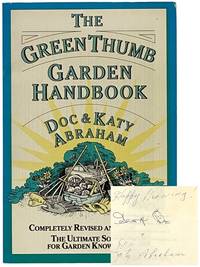
1992rif. 2351745New York: Lyons & Burford 1992. Trade Paperback. Very Good. 1x6x9. Signed by author. 2nd printing of 1992 revised and expanded edition. Inscribed and signed by both authors 'Happy Growing! George Doc & Katy Abraham' with a doodled face within the D of Doc. Edges faded and a bit rubbed inside of front wrapper toned as if a newspaper article had been laid in now absent. Binding tight and square pages clean bright and unmarked. viii 527 pp. Completely revised and expanded. Includes chapters on lawns various types of plants soils greenhouse culture propagation and pest control. The Abrahams had a syndicated column called The Green Thumb designed to educate home gardeners on tips and tricks for successful planting and cultivation. Lyons & Burford paperback books
2006rif. 2352102Yaoi Press 2006. Trade Paperback. Very Good. Studio Kosaru; Le Peruggine; Silvan Rhea. 4-vol set includes volumes 1-4. Edges lightly rubbed. Binding tight and square pages clean bright and unmarked. 2006 Trade Paperback. Volumes 1-4 in series. When three ruthless fire demons come to terrorize the monk Hakuin's village he's forced to seek help from Fuyu the snow demon who tormented him a year ago. Fuyu is thrilled to see his beautiful monk again. He'll defeat the demons only if Hakuin becomes his willing slave. Fuyu realizes too late that the fire demons are out of his league. Even worse the lead demon thinks the fey Fuyu would make a nice slave in his own right. When Fuyu is put in the same position he put Hakuin a year ago he starts to realize the error of his ways. Maybe in time he can even be redeemed to his beloved monk. Also a pacifist is forced to bring an assassin to a rival lord. It doesn't help that the assassin is part of the group who wiped out the pacifist's race. So why are they sleeping together Yaoi Press paperback books
2011rif. 2349072Gettysburg Pennsylvania: Abraham's Lady LLC 2011. First Edition. Soft Cover. Near Fine. 9x6x0. First edition - a paperback original. An excellent copy. 2011 Soft Cover. 143 1 pp. A unique record of magnified photos showcasing what people wore during the American Civil War. An important reference for historical curators reenactors authors etc. Abraham's Lady, LLC paperback books
1927rif. 2331972Boston: Little Brown and Company 1927. 2nd Printing. Hard Cover. Very Good/No Jacket. 8x5x1. 2nd printing of trade edition lacks slipcase. Spine faded discolored smudge on front board minor transfer from now-absent tape on endpapers pencil name John E. Petrick on front endpaper. 1927 Hard Cover. xiv 311 pp. Frontispiece of a page from the Gutenberg Bible numerous plates throughout text depicting bindings title pages manuscripts bookstores booksellers book collectors auction rooms etc. Rosenbach was a renowned American book and manuscript collector and dealer whose collection forms the cornerstone of a museum and library in Philadelphia. Little, Brown, and Company hardcover books
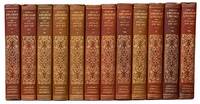
1894rif. 2311448Harrogate Tennessee: Lincoln Memorial University 1894. Limited Edition. Half-Leather. Near Fine/No Jacket. 0x0x0. Limited edition #399 of an unspecified limitation this set 'especially prepared for Harry J. Williams.' Signed by John Wesley Hill opposite limitation page. Copyright page states 1894 but this is clearly reproduced from the plates of the original - this set is circa 1905. Volume 1 has very minor discoloration to edges of cloth on rear board minor wear to corners spine a bit faded. Complete in twelve hardcover volumes. Red half-leather gilt titles and decorations top edges gilt decorative endpapers. A complete collection of Abraham Lincoln's works including speeches letters biographical writings etc. with an introduction by John Wesley Hill and special articles by various other contributors. The editors were Lincoln's private secretary and assistant secretary and also served in various other governmental roles Hay going on to become Secretary of State under McKinley and Roosevelt. Nicolay and Hay are perhaps best known for their ten-volume biographical history of Lincoln's administration originally published serially in The Century Magazine beginning in 1886 -- it remains one of the more exhaustive and personal accounts of the life of the 16th President of the United States and is notable for the inclusion of facsimiles of original drafts of important documents most importantly the Emancipation Proclamation. This set includes facsimiles of original correspondence and documents reproductions of contemporary photographs and engravings etc. Lincoln Memorial University hardcover books
1946rif. 1416485London: Wm. Heinemann Medical Books 1946. Hardcover. Octavo iv 257 pages. In Fair plus condition. Spine is tan with gold print. Boards in blue cloth gold print; wear to spine caps and corners toning to spine mild shelf wear. Text block has spotting to top edge tanning to endpapers. Illustrated: b&w frontispiece portrait and plates photographs drawings NOTE: Shelved in Netdesk Column K ND-K. 1416485. FP New Rockville Stock. Wm. Heinemann, Medical Books hardcover books
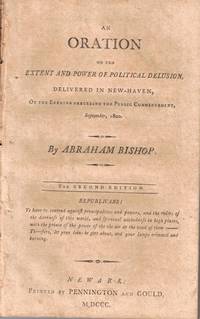
1800rif. 72527Newark: Printed by Pennington and Gould 1800. Paperback. Good. Paperback. 71pp. Disbound with residue on the spine. Foxed throughout else an about very good example. Political argument concerning the Federalist Party by an author opposed to Federalism. Evans 36980; Sabin 5590. Printed by Pennington and Gould paperback books
1603rif. 228104Antwerp: Abraham Ortelius 1603. unbound. very good. Map. Engraving with original hand coloring. Image measures 13.25" x 18.25". Beautifully colored map of Croatia. Shows place names topographical and geographical features a compass rose and a ship in the Adriatic. Latin text on verso. From "Theatrum Orbis Terrarum". Light scattered stains to margins and cartouche. Minor abrasion to upper right. A few small chips and tears to edges. Abraham Ortelius 1527--1598 a Flemish cartographer and geographer is widely regarded as one of the important and influential cartographers in history. He is known for his "Theatrum Orbis Terrarum" which was the first modern atlas. Van den Broecke 145 Abraham Ortelius unknown books
1970rif. 123553Seattle: University of Washington Press. Fine in Near Fine dust jacket. 1970. Hardcover. An edition in Fine condition in a price-clipped Near Fine dust-jacket ; This book offers a comprehensive overview of French literature from the seventeenth century to the eighteenth century highlighting the ways in which the Enlightenment impacted the literary landscape. The authors provide a historical context for each work discussing the literary movements and debates that shaped the literature of the time. This is an invaluable resource for anyone interested in French literature from students studying for French exams to general readers looking for a more in-depth understanding of the era.; 8vo; 221 pages . University of Washington Press hardcover books
1968rif. 104662London: Feffer & Simons. Fine in Fine dust jacket. 1968. First Edition; First Printing. Cloth. A Fine first printing of the first edition in Near Fine dust-jacket; Our Children of the Sun is a Suite of Eight Inca Legends translated by Merritt Moore Thompson. Each legend is about a different event or person in the Inca's history. The legends are: 1 The Creation of the World 2 The Battle of the Sun and Moon 3 The Journey of the Condor 4 The Legend of the Sun and the Moon 5 The Legend of the Andes 6 The Legend of the Mountain of the Sun and the Moon 7 The Legend of the Sun and the Wind 8 The Legend of the Moon and the Wind; 8vo; $7.00 . Feffer & Simons hardcover books
1983rif. 21582New York: Alfred A. Knopf. Fine in Near Fine dust jacket. 1983. First Edition; First Printing. Cloth. 0394529308 . An attractive first edition/first printing in Fine condition in Near Fine sunned dust-jacket with finish stamp to verso. From the collection of Betty Anderson legendary art director of publisher Knopf in the late 20th century as evidenced by her small and unobtrusive inventory number; This book tells the story of Menashe a Jewish man who has a deep connection with prayer. Menashe's journey takes him from his childhood in a religious home to eventually discovering his own personal way of prayer. Through his experiences Menashe learns the importance of prayer and how it can help him connect with his Creator. The Face of Prayer is an inspiring story that will leave readers with a deeper understanding of the power of prayer.; B&W Photographs; 8vo . Alfred A. Knopf hardcover books
1980rif. 29006New York: Alfred A. Knopf. Fine in Near Fine dust jacket. 1980. First Edition; First Printing. Cloth. 0394508297 . First edition/first printing in Fine condition in Near Fine slightly spine-sunned dust-jacket. From the collection of Betty Anderson legendary art director of publisher Knopf in the late 20th century as evidenced by her small and unobtrusive inventory number on front paste down; Photographs by Abraham Menashe revealing the dignity courage and grace inherent in the lives of those who a both mentally and physically handicapped capturing moments of innocence struggle determination accomplishment and joy ; B&W Photographs; Oblong 4to . Alfred A. Knopf hardcover books
1993rif. 31259New York: Hyperion. Near Fine in Near Fine dust jacket. 1993. First Edition; First Printing. 1/4 Cloth. 1562828452 . An eye catching first edition/first printing in Near Fine condition in alike dust-jacket with minor edgewear; Author's second book and first novel; 8vo; 323 pages . Hyperion hardcover books