45 189 résultats
réf. 165739Various cities: RAM / Whitney Museum / Steidl / Nash Editions 2005. Hardcover. Limited Edition complete in three volumes one of a numbered edition of 55 this being No. 42 with an original print SIGNED by the artist. Each volume additionally SIGNED by the artist on the half-title page. Text in English and German. Each volume Fine in a Near Fine dust jacket with light toning along the jacket spines. Print Fine in publisher's paper folio. Print and volumes housed together in publisher's white hard plastic slipcase. Oversize volume shipping billed at cost. RAM / Whitney Museum / Steidl / Nash Editions unknown books
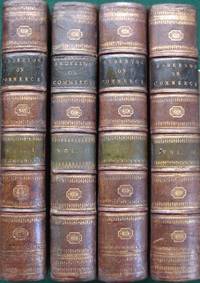
1787réf. 55106IMPORTANT HISTORY OF COMMERCE - THE BEST EDITION - GREATLY EXPANDED & REVISED first edition thus revised and expanded second overall 4 vols. 4to. 2 title v-lxxxviii 556; 2 title 647 1 blank; 2 title 508 59 chronological index 1 blank 11 index & appendix 1 blank; 2 title iv 4 list of subscribers 718 43 alphabetical & chronological index 1 blankpp. 2 folding maps 1 frontispiece plate 1 folding table contemporary speckled calf sides with a decorative gilt rolled border spines panelled by gilt highlighted raised bands panels gilt tooled black morocco title labels and olive green morocco numbering labels labels on vol. 2 renewed very close match to originals minor old worm trace in a few early gatherings of vol.2 very skillfully repaired minor damps stains to margins of some leaves mainly of terminal leaves some minor cracking of joints sometime very skillfully refurbished. Overall a nice and a handsome copy. ESTC t79287 SABIN 1382 Anderson's work was first published in 2 folio vols. in 1764. A prospectus for this greatly extended edition was issued on January 21 1787 and it was thereafter issued in parts. Vols. 1-3 are dated 1787 and vol. 4 1789. There is a list of subscribers in vol. 4.Attractive copy of this "monument of industry in the form of annals treating specially Great Britain and Ireland" Palgrave Political Economy v.1 p.39. The initial work of 1764 is here greatly extended by Coombe and especially in this later form it has long been valued by economic historians as an important source. Anderson worked for many years in the South Sea Company and this work is particularly notable for its accurate account of that company and the great crash of 1720. There is also considerable information on aspects of American and Canadian economic affairs such as the history of the fur trade the fisheries of Nova Scotia and Newfoundland and John Law's Mississippi scheme. Printed at the Logographic Press, by J. Walter and sold by [many listed booksellers in London, Dublin, Edinburgh & Glasgow] hardcover
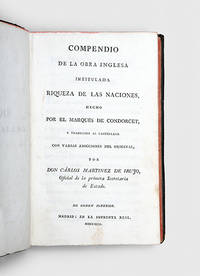
1792réf. 164946Madrid: en la Imprenta Real 1792. THE FIRST APPEARANCE OF ADAM SMITH IN SPANISH First Spanish translation of Condorcet's summary of Smith's Wealth of Nations the first appearance of any of his work in Spanish prior to the complete translation by J. A. Ortiz in 1794. The translator of the present summary is the young marqués de Casa Carlos Martinez de Yrujo y Tacón 1763-1824. "This is a translation of the Roucher/Blavet condensation of Wealth of Nations in the Bibliothèque de l'homme publique. to which Condorcet lent his name. The translator restores to the text a summary of Smith's Digression on the Bank of Amsterdam WN IV iii. b 479-88 a five-line qualification of the argument for free trade. The criticism of Catholic clergy is omitted." Tribe. Octavo 174 x 108 mm. Contemporary tree sheep flat spine ruled and decorated in gilt red morocco label marbled endpapers red edges. 19th-century ownership inscription to front free blank leaf extremities lightly rubbed one corner slightly worn; a crisp clean copy in fine condition. Palau 59126; Tribe 47. This edition not listed in Goldsmiths' Kress or Vanderblue. unknown
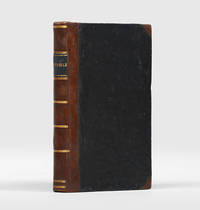
1811réf. 119352Vilnius: Drukarnia XX Bazylianów 1811. Scarce Polish translation of Georg Sartorius's Von den Elementen des National-Reichthums und von der Staatswirtschaft nach Adam Smith translated from the second German edition of 1806 first 1796 translated by Jan Znosko holder of the chair of political economy at the Vilnian University from 1810 to 1823. "Znosko established his credentials with a work entitled A Science of Political Economy according to Adam Smith thought by his contemporaries to be an original work but which later turned out to be a translation of the second editoin of Gaorg Sartorius's 1796 Handbuch. The book is of course a summary of Wealth of Nations but in places Znosko inserts some critical obervations printed in a smaller typeface. The longest of these is related to Smith's conception of 'fertile' and 'infertile' labour that is productive and unproductive labour." Stefan Zabieglik 'The Reception of Adam Smith's Works in Poland from the Eighteenth to the Twentieth Centuries' in: A critical Bibliography of Adam Smith. Octavo 168 x 97 mm. Contemporary roan-backed drab paper boards spine renewed yellow edges. Ownership stamp of Gwalbert Pawlinkowski to title verso and T6 verso library stamps to title recto and verso partly blacked out. Spine renewed corners worn stamp to lower margin of B1 cut away; occasional light spotting; a good copy. Tribe p. 174. Not in Vanderblue. OCLC locates only the Polish national union catalogue copy. hardcover
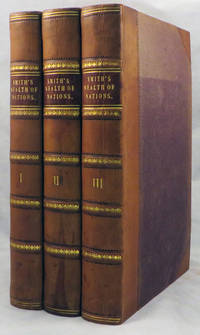
1811réf. 27288London: J. Maynard.Haymarket; and F. Zinke.Strand 1811. 3 volumes. Very early printing. This printing now with an Account of the Life of the Author which has been specially drawn up for the first time as well as studies on the author and the French economists of the period and a method of facilitating the study of the work. 8vo bound in very handsome and well preserved three-quarter contemporary polished calf over cloth covered boards compartments of the spines decorated with gilt decorated raised bands bordering decorations tooled in blind one compartment lettered in gilt one with maroon morocco lettering label gilt. lxxi 360; vi 512 513-514 appendix; vi 448 50 pp.extensive index. An especially bright and fine set in very handsome and well preserved contemporary bindings. The text remains very clean crisp and fresh. There has been no restoration work of any sort to bindings or text. Rare thus. AN UNUSUALLY WELL PRESERVED AND HANDSOME SET OF THIS EXTRAORDINARY WORK. Eighteenth century editions of Smith’s magnum opus are becoming very scarce. This edition of 1811 is a very early English printing of the nineteenth century still in 18th century style. It retains Smith’s introduction and also incorporates the author’s advertisements to the third and fourth editions and a new advertisement to this edition setting out the additions made to the preliminary materials for this edition. ‘The history of economic theory up to the end of the nineteenth century consists of two parts: the mercantilist phase which was based not so much on a doctrine as on a system of practice which grew out of social conditions; and the second phase which saw the development of the theory that the individual had the right to be unimpeded in the exercise of economic activity. While it cannot be said that Smith invented the latter theory – the physiocrats had already suggested it and Turgot in particular had constructed an organised study of social wealth – his work is the first major expression of it. He begins with the thought that labour is the source from which a nation derives what is necessary to it. The improvement of the division of labour is the measure of productivity and in it lies the human propensity to barter and exchange: "labour is the real measure of the exchangeable value of all commodities … it is their real price; money is their nominal price only". Labour represents the three essential elements – wages profit and rent – and these three also constitute income. From the working of the economy Smith passes to its matter – "stock" – which compasses all that man owns either for his own consumption or for the return which it brings him. The Wealth of Nations ends with a history of economic development a definite onslaught on the mercantile system and some prophetic speculations on the limits of economic control. ‘Where the political aspects of human rights had taken two centuries to explore Smith’s achievement was to bring the study of economic aspects to the same point in a single work … The certainty of its criticism and its grasp of human nature have made it the first and greatest classic of modern economic thought’ PMM. Smith's classic work was begun at Toulouse in 1763-64 where he had travelled as guardian of Henry Scott the young duke of Buccleuch and in the company of David Hume historian and fellow professor at Glasgow University. The work took shape over the next ten years and was finally published in 1776. At one point during its composition Hume wrote that Smith was "cutting himself off entirely from human society." But his labors however severe his methods yielded the "first and greatest classic of modern economic thought" Printing and the Mind of Man. "It may be said that the WEALTH OF NATIONS certainly operated powerfully through the harmony of its critical side with the tendencies of the half-century which followed its publication to the assertion of personal freedom and 'natural rights.' It discredited the economic policy of the past and promoted the overthrow of institutions which had come down from earlier times but were unsuited to modern society. As a theoretic treatment of social economy and therefore as a guide to social reconstruction and practice in the future it is provisional not definitive. But when the study of its subject comes to be systematized on the basis of a general social philosophy more complete and durable than Smith's no contribution to that final construction will be found so valuable as his" Britannica J. Maynard...Haymarket; and F. Zinke...Strand hardcover
2014réf. Adhya-9781446267165SAGE PUBLISHING 2014. HB. New. SAGE PUBLISHING hardcover
2014réf. Adhya-9781446267165SAGE PUBLISHING 2014. HB. New. SAGE PUBLISHING hardcover
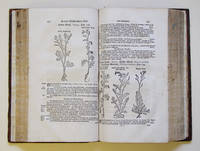
réf. 52487Ulm Albrecht Friedrich Bartholomäi 1770. 2° 4 Bl. n.n. 750 S. 11 Bl. n. n. Register Index; 4 Bl. n. n. 136 S. über 800 Holzschnitten OLdr. der Zeit m. Rückenschild Deckel berieben auf Vorsatz Notationen von alter Hand einige Bl. m. Randfehlstellen kein Textverlust diese fachfrauisch augefüllt. Einige Seiten wasserrändig und fingerfleckig. Insgesamt ein gutes Exemplar. Seitensprung zwischen 2. u. 3. Teil von S. 566 auf 571 Graesse IV 256. - Eines der beliebtesten Kräuterbücher der Zeit. Lonitzer - Mediziner Botaniker 1528-1586 seit 1545 Magister artium wurde L. 1553 Prof. der Mathematik in Marburg und im folgenden Jahr zum Dr. med. promoviert. Das Amt des Stadtphysikus in Frankfurt/Main übte er bis zu seinem Tod aus. 1551-55 veröffentlichte L. eine bearbeitete lateinische Neuauflage des Kräuterbuchs seines Amtsvorgängers Eucharius Rößlin dessen deutsche Fassung EA 1557 noch zu L.s Lebzeiten fünf Auflagen erlebte und fast 250 Jahre lang als volkstümliches Heilpflanzenbuch benutzt wurde. Neben Pflanzen behandelt das Werk auch Tiere Erze Edelsteine und Metalle. DBE 010 Ulm, Albrecht Friedrich Bartholomäi, 1770 unknown
réf. 05952Paris & London: V. Morlet & McLean 1830. Twelve Superb Hand-Colored Lithographed Plates Depicting Scenes from the Debtor's Prison of Sainte-Pélagie ADAM Victor. Album de Sainte-Pélagie Prison de la Dette. Gravures réhaussées à l'aquarelle. Douze scènes intérieures dessinées et lithographiées d'après nature par V. Adam. Paris & London: Publié par V. Morlot & Mc.Léan n.d. ca. 1830. First edition. Oblong folio 10 5/8 x 13 7/8 inches; 270 x 352 mm. 4 pp. of descriptive text. Twelve numbered hand-colored lithographed plates. Plates lithographed by Bernard. Each plate with the publisher's oval blind-stamp in lower blank margin. Bound without the printed title-page. Mid-nineteenth century quarter red calf over marbled boards smooth spine ruled and lettered in gilt. A superb example with fine contemporary hand-coloring. The plates are captioned: "L'Écrou;" "Chambre du détenu malheureux;" "Chambre du détenu philosophe;" "Les Élections;" "Le Cabinet de lecture;" "Le Cabaret;" "Le Café;" "Le Repas dans la cour;" "Les Jeux dans la cour;" "Le Bain du créancier;" "Le Paye;" and "Sortie du débiteur;." A rare album depicting various scenes at the Parisian prison of Sainte-Pélagie. This prison once located in the 5th arrondissement was active from 1790-1899 and housed many renowned prisoners during and after the French Revolution including the Marquis de Sade. In this series Adam conveys in various scenes of prison life the dignified squlor to which its inhabitants were reduced. Exceptionally rare. We have only seen this book once before - a copy with modern hand-coloring which we sold in 2003. OCLC locates just one copy - BCU Dorigny Lausanne Switzerland. Jean Victor Adam 1801-1866 was a French painter and lithographer. Born in Paris he was the son of Jean Adam an esteemed engraver. During the years 1814 to 1818 he studied at the Ecole des Beaux-Arts and also in the ateliers of Meynier and Régnault. In 1819 he exhibited 'Herminia succouring Tancred.' He was almost immediately afterwards employed to paint various subjects for the Museum at Versailles amongst which are 'The Entry of the French into Mainz' 'The Battle of Varroux' 'The Taking of Menin 'The Battle of Castiglione' 'The Passage of the Cluse' 'The Battle of Montebello' 'The Capitulation of Meiningen;' the last three in association with Alaux. He also exhibited down to the year 1838: 'Henry IV. after the Battle of Coutras' 'Trait of Kindness in the Duke de Berri' 'The Postillion' 'The Vivandiere' 'The Road to Poissy' 'The Return from the Chase' 'Horse-fair at Caen' and numerous other subjects. He then retired from publicity till 1846 when he appeared as the exhibitor of some works in lithography to which branch of art he afterwards restricted himself. In this line he produced a lithographic album 'Views in the Environs of Paris' 'Studies of Animals for an edition of Buffon' &c. He obtained a gold medal in 1824 a second class medal in 1836 besides several others from Lille Douai and other cities. He died at Viroflay in 1866. "Beraldi assigns between 7000 and 8000 designs to Victor Adam 1801-1865.A Parisian by birth he remained in the capital all his life but this did not prevent him from drawing negroes Turks Chinese and other peoples all over the world in his Paris studio. He was famous indeed as a faiseur de bonshommes that is to say a specialist in adding groups of small figures to the foreground of architectural or landscape drawings by other artists.His immense production contains many amusing albums concerning the life of the time" Ray The Art of the French Illustrated Book p. 194. Sainte-Pélagie was a debtor's prison in Paris in active use from 1790 to 1899. The former Parisian prison was located between the current group of buildings bearing No. 56 Rue de la Clef with Rue du Puits-de-l'Ermite in the 5th arrondissement of Paris at the old Place Sainte-Pélagie. The penal structure held many noted prisoners during the French Revolution with Madame Roland Grace Dalrymple Elliott and Marie-Louise O'Murphy being among the known prisoners. After the revolution the Marquis de Sade was imprisoned here as was the young mathematician Évariste Galois. During the July Monarchy the "April insurgees" were also detained there and some managed to escape through a tunnel. The painter Gustave Courbet was also imprisoned there for his activities in the Paris Commune. Bobins V 1524. Paris [&] London: V. Morlet [&] McLean, 1830 unknown
réf. 05952Paris & London: V. Morlet & McLean 1830. Twelve Superb Hand-Colored Lithographed Plates Depicting Scenes from the Debtor's Prison of Sainte-Pélagie ADAM Victor. Album de Sainte-Pélagie Prison de la Dette. Gravures réhaussées à l'aquarelle. Douze scènes intérieures dessinées et lithographiées d'après nature par V. Adam. Paris & London: Publié par V. Morlot & Mc.Léan n.d. ca. 1830. First edition. Oblong folio 10 5/8 x 13 7/8 inches; 270 x 352 mm. 4 pp. of descriptive text. Twelve numbered hand-colored lithographed plates. Plates lithographed by Bernard. Each plate with the publisher's oval blind-stamp in lower blank margin. Bound without the printed title-page. Mid-nineteenth century quarter red calf over marbled boards smooth spine ruled and lettered in gilt. A superb example with fine contemporary hand-coloring. The plates are captioned: "L'Écrou;" "Chambre du détenu malheureux;" "Chambre du détenu philosophe;" "Les Élections;" "Le Cabinet de lecture;" "Le Cabaret;" "Le Café;" "Le Repas dans la cour;" "Les Jeux dans la cour;" "Le Bain du créancier;" "Le Paye;" and "Sortie du débiteur;." A rare album depicting various scenes at the Parisian prison of Sainte-Pélagie. This prison once located in the 5th arrondissement was active from 1790-1899 and housed many renowned prisoners during and after the French Revolution including the Marquis de Sade. In this series Adam conveys in various scenes of prison life the dignified squlor to which its inhabitants were reduced. Exceptionally rare. We have only seen this book once before - a copy with modern hand-coloring which we sold in 2003. OCLC locates just one copy - BCU Dorigny Lausanne Switzerland. Jean Victor Adam 1801-1866 was a French painter and lithographer. Born in Paris he was the son of Jean Adam an esteemed engraver. During the years 1814 to 1818 he studied at the Ecole des Beaux-Arts and also in the ateliers of Meynier and Régnault. In 1819 he exhibited 'Herminia succouring Tancred.' He was almost immediately afterwards employed to paint various subjects for the Museum at Versailles amongst which are 'The Entry of the French into Mainz' 'The Battle of Varroux' 'The Taking of Menin 'The Battle of Castiglione' 'The Passage of the Cluse' 'The Battle of Montebello' 'The Capitulation of Meiningen;' the last three in association with Alaux. He also exhibited down to the year 1838: 'Henry IV. after the Battle of Coutras' 'Trait of Kindness in the Duke de Berri' 'The Postillion' 'The Vivandiere' 'The Road to Poissy' 'The Return from the Chase' 'Horse-fair at Caen' and numerous other subjects. He then retired from publicity till 1846 when he appeared as the exhibitor of some works in lithography to which branch of art he afterwards restricted himself. In this line he produced a lithographic album 'Views in the Environs of Paris' 'Studies of Animals for an edition of Buffon' &c. He obtained a gold medal in 1824 a second class medal in 1836 besides several others from Lille Douai and other cities. He died at Viroflay in 1866. "Beraldi assigns between 7000 and 8000 designs to Victor Adam 1801-1865.A Parisian by birth he remained in the capital all his life but this did not prevent him from drawing negroes Turks Chinese and other peoples all over the world in his Paris studio. He was famous indeed as a faiseur de bonshommes that is to say a specialist in adding groups of small figures to the foreground of architectural or landscape drawings by other artists.His immense production contains many amusing albums concerning the life of the time" Ray The Art of the French Illustrated Book p. 194. Sainte-Pélagie was a debtor's prison in Paris in active use from 1790 to 1899. The former Parisian prison was located between the current group of buildings bearing No. 56 Rue de la Clef with Rue du Puits-de-l'Ermite in the 5th arrondissement of Paris at the old Place Sainte-Pélagie. The penal structure held many noted prisoners during the French Revolution with Madame Roland Grace Dalrymple Elliott and Marie-Louise O'Murphy being among the known prisoners. After the revolution the Marquis de Sade was imprisoned here as was the young mathematician Évariste Galois. During the July Monarchy the "April insurgees" were also detained there and some managed to escape through a tunnel. The painter Gustave Courbet was also imprisoned there for his activities in the Paris Commune. Bobins V 1524. Paris [&] London: V. Morlet [&] McLean, 1830 unknown books
1783réf. 1203151783. First Edition. FERGUSON Adam LL.D. The History of the Progress and Termination of the Roman Republic. London: Printed for W. Strahan; T. Cadell in the Strand: and W. Creech in Edinburgh 1783. Three volumes. Tall quarto 9-1/2 by 12-inches contemporary full brown calf sympathetically rebacked in calf-gilt red morocco spine labels original plain endpapers preserved. $4500.First edition of Ferguson's monumental work a core influence on America's Founders in its argument against standing armies and a particular influence on John Adams who ""incorporated large sections of the History within his Defence of the Constitutions"" with six maps three folding including large folding map of ""The Roman Empire"" an especially distinctive association copy with a striking American provenance in possessing the owner signatures of the U.S. Navy's Commodore James Biddle in each volume. An impressive wide-margined copy.The Scottish Enlightenment ""created the basic idea of modernityÉ It marks a crucial turning point in AmericaÉ and a contemporary world shaped by technology capitalism and modern democracy."" Adam Ferguson a core Enlightenment figure along with Adam Smith David Hume Francis Hutcheson and Lord Kames believed that the American Revolution the perils of an over-extended British empire and the end of the Roman Republic sparked a persistent philosophical question: ""How can a self-governing republic rule over a vast expanseÉ without becoming an empire and therefore acquisitive and corrupt"" Herman Scottish Enlightenment viii 247. By carefully examining that and other seminal questions in this massive-three volume History Ferguson ""account of Rome's mixed constitution with its emphasis on distinctions of rank and senatorial virtue"" would prove key to America's Founding Fathers including ""John Adams who incorporated large sections of the History within his Defence of the Constitutions of Government 1787"" McDaniel Adam Ferguson 214. This work is also highly distinctive in that Ferguson alone among his peers served in the British army and as chaplain of the famed Black Watch. His History as such highlights his unique influence as a philosopher who ""was actively involved in political controversies in Scotland including arguing for the necessity of the Scottish militia post-1745 and was involved in international politics such as the Carlisle Commission which unsuccessfully attempted to resolve the differences between the British Crown and the American ColoniesÉ It is not only Ferguson's experience with these events but also his interpretation of historical processes which sets him apart from many of his contemporaries through his critiques of modern politicsÉ he feared that as the Roman Republic changed to a dictatorshipÉ so would the British"" Journal of Scottish Historical Studies.Ferguson's friend and colleague Adam Smith was ""one of the proofreaders of the manuscript"" for this History and ""thought it had 'the highest degree of merit'"" Bryn Mawr Classical Review. By focusing on ""the era of the late Roman Republic when the Senate was powerful"" Ferguson argues that Rome ""had mainly a negative lesson to teachÉ in his view the career of Caesar showed the disastrous outcome when a charismatic and ambitious leader appeals exclusively to the self-interest of the populace"" Skjonsberg Adam Ferguson. He draws ""on Montesquieu's classic typology of governmentÉ yet had less confidence than Montesquieu or Hume and Smith for that matter that legal or constitutional arrangements were sufficient guarantees of libertyÉ Acutely aware of the crisis precipitated by the American Revolution Ferguson emphasized how commercial overreach could itself provoke warÉ and dissipated political liberties"" Journal of Scottish Philosophy. In addition to emphasizing ""the fatal consequences of military virtue and of entrusting arms to mercenary soldiers"" Ferguson's History argues for a militia that inculcates ""the practice of moral virtue."" His warnings against a standing army and in favor of an engaged citizen militia would soundly resonate with America's founders Robertson Scottish Militia. With six maps including: large folding map of ""Principal Kingdoms and States"" large folding map of ""Italy with the Provinces of Caesar"" full-page map of ""Theatre of the Campaign in Africa""; large folding map of ""The Roman Empire""; rear errata page III. ESTC T77047. Encyclopedia of Philosophy II:188. Jessop 122. Title page of each volume with partially erased contemporary owner signatures; along with clear owner signatures of ""James Biddle U.S. Navy."" Commodore James Biddle of the U.S. Navy was a brother of financier Nicholas Biddle and a nephew of Captain Nicholas Biddle who was one of the first captains of the Continental Navy and would be killed at sea in a battle during the American Revolution. The owner of this copy Commodore James Biddle ""first attracted national attention when he commanded the US sloop Hornet during her defeat of the British Penguin in one of the last sea battles of the War of 1812"" Journal of the Early Republic. He was then put in command of Oregon Country on the USS Ontario. In 1845 he took part in the ratification of the Treaty of Wanghia the first treaty between the U.S. and China and as Commodore anchored his flagship the USS Columbus with the USS Vincennes at Echo Bay in an early attempt to open trade with Japan.Interior generally fresh with light scattered foxing one leaf with expert restoration to corner loss not affecting text I165; contemporary calf boards with a few inoofensive stains and expert restoration. An extremely good copy. hardcover
1783réf. 1203151783. First Edition. FERGUSON Adam LL.D. The History of the Progress and Termination of the Roman Republic. London: Printed for W. Strahan; T. Cadell in the Strand: and W. Creech in Edinburgh 1783. Three volumes. Tall quarto 9-1/2 by 12-inches contemporary full brown calf sympathetically rebacked in calf-gilt red morocco spine labels original plain endpapers preserved. $4500.First edition of Ferguson's monumental work a core influence on America's Founders in its argument against standing armies and a particular influence on John Adams who ""incorporated large sections of the History within his Defence of the Constitutions"" with six maps three folding including large folding map of ""The Roman Empire"" an especially distinctive association copy with a striking American provenance in possessing the owner signatures of the U.S. Navy's Commodore James Biddle in each volume. An impressive wide-margined copy.The Scottish Enlightenment ""created the basic idea of modernityÉ It marks a crucial turning point in AmericaÉ and a contemporary world shaped by technology capitalism and modern democracy."" Adam Ferguson a core Enlightenment figure along with Adam Smith David Hume Francis Hutcheson and Lord Kames believed that the American Revolution the perils of an over-extended British empire and the end of the Roman Republic sparked a persistent philosophical question: ""How can a self-governing republic rule over a vast expanseÉ without becoming an empire and therefore acquisitive and corrupt"" Herman Scottish Enlightenment viii 247. By carefully examining that and other seminal questions in this massive-three volume History Ferguson ""account of Rome's mixed constitution with its emphasis on distinctions of rank and senatorial virtue"" would prove key to America's Founding Fathers including ""John Adams who incorporated large sections of the History within his Defence of the Constitutions of Government 1787"" McDaniel Adam Ferguson 214. This work is also highly distinctive in that Ferguson alone among his peers served in the British army and as chaplain of the famed Black Watch. His History as such highlights his unique influence as a philosopher who ""was actively involved in political controversies in Scotland including arguing for the necessity of the Scottish militia post-1745 and was involved in international politics such as the Carlisle Commission which unsuccessfully attempted to resolve the differences between the British Crown and the American ColoniesÉ It is not only Ferguson's experience with these events but also his interpretation of historical processes which sets him apart from many of his contemporaries through his critiques of modern politicsÉ he feared that as the Roman Republic changed to a dictatorshipÉ so would the British"" Journal of Scottish Historical Studies.Ferguson's friend and colleague Adam Smith was ""one of the proofreaders of the manuscript"" for this History and ""thought it had 'the highest degree of merit'"" Bryn Mawr Classical Review. By focusing on ""the era of the late Roman Republic when the Senate was powerful"" Ferguson argues that Rome ""had mainly a negative lesson to teachÉ in his view the career of Caesar showed the disastrous outcome when a charismatic and ambitious leader appeals exclusively to the self-interest of the populace"" Skjonsberg Adam Ferguson. He draws ""on Montesquieu's classic typology of governmentÉ yet had less confidence than Montesquieu or Hume and Smith for that matter that legal or constitutional arrangements were sufficient guarantees of libertyÉ Acutely aware of the crisis precipitated by the American Revolution Ferguson emphasized how commercial overreach could itself provoke warÉ and dissipated political liberties"" Journal of Scottish Philosophy. In addition to emphasizing ""the fatal consequences of military virtue and of entrusting arms to mercenary soldiers"" Ferguson's History argues for a militia that inculcates ""the practice of moral virtue."" His warnings against a standing army and in favor of an engaged citizen militia would soundly resonate with America's founders Robertson Scottish Militia. With six maps including: large folding map of ""Principal Kingdoms and States"" large folding map of ""Italy with the Provinces of Caesar"" full-page map of ""Theatre of the Campaign in Africa""; large folding map of ""The Roman Empire""; rear errata page III. ESTC T77047. Encyclopedia of Philosophy II:188. Jessop 122. Title page of each volume with partially erased contemporary owner signatures; along with clear owner signatures of ""James Biddle U.S. Navy."" Commodore James Biddle of the U.S. Navy was a brother of financier Nicholas Biddle and a nephew of Captain Nicholas Biddle who was one of the first captains of the Continental Navy and would be killed at sea in a battle during the American Revolution. The owner of this copy Commodore James Biddle ""first attracted national attention when he commanded the US sloop Hornet during her defeat of the British Penguin in one of the last sea battles of the War of 1812"" Journal of the Early Republic. He was then put in command of Oregon Country on the USS Ontario. In 1845 he took part in the ratification of the Treaty of Wanghia the first treaty between the U.S. and China and as Commodore anchored his flagship the USS Columbus with the USS Vincennes at Echo Bay in an early attempt to open trade with Japan.Interior generally fresh with light scattered foxing one leaf with expert restoration to corner loss not affecting text I165; contemporary calf boards with a few inoofensive stains and expert restoration. An extremely good copy. hardcover books
1822réf. 181994London: Richardson and Co. Very Good-. 1822. Hardcover. Bound in full decorative calf leather with gilted boarder on the boards raised bands on spines with gilted pannels and black leather title labels very nice. The leather is scuffed and pulled at spine heads but still present hinges are sound with only a couple inch closed crack in volume 1. Previous owners name. A very nice tight clean and attractive set. Vol. 1 xii lx 431 pp. ; vol. 2 viii 336 pp. ; vol. 3 vi 345 pp plus 2 pp appendix; vol 4 vi 312pp plus 46 pp index; vol 5 201 pp. Vol 1.; The Theory of Moral Sentiments. Volume 2 3 and 4; An Inquiry to the Wealth of Nations. Volume 5; The Essays on Philosophical Subjects. 12mo . Richardson and Co hardcover
réf. 18469London : for John Starkey and Thomas Basset 1669. Second edition. Two parts in one volume folio contemporary full mottled calf with blind embossed boards spine with raised bands and contrasting morocco title label with gilt lettering and ornament front pastedown with eighteenth century armorial bookplate of John and Louisa Trevelyan additional engraved title incorporating 5 portraits main title leaf pp 18 316; 6 232 9; with 2 engraved portraits and 6 folding or double-page maps including one of the East Indies engraved illustration of the Ruthenian script; engraved headpieces and historiated initials; complete with all the folding maps in very good condition; a fine copy in a contemporary binding. The principal aim of the Duke of Holstein's embassies was to establish an overland trade route with Persia. A first embassy travelled to Russia in 1633-34 to secure a right of passage through the Tsar's realms; the embassy to Persia itself was sent in 1635. Adam Olearius acted as secretary on both embassies and his accounts of Tartary and Persia first published in Dutch in 1647 were of the utmost value to European travellers of the later seventeenth century. This is the second 'corrected' English edition translated by John Davies the first English edition had appeared in 1662. The second part with separate title comprises the narrative of German adventurer Johann Albrecht von Mandelslo who was also a member of the Holstein embassy. He was given permission to journey on to India also visiting Ceylon before returning to Europe via the Cape. Although he did not personally travel to the Far East Mandelslo's account includes secondhand descriptions of Formosa and China. Wing 0-270; Löwendahl China illustrata nova. Supplement 1571 hardcover
1886réf. 779L7Paris: Tresse et Stock 1886. First edition. Leather. Very Good Indeed. 7" by 5". None. An extremely scarce first edition copy of this important symbolist novel. This particular copy once belonged to Edmund Gosse and has been signed by the author. The dedication to the half-title bears the author's inscription to Gosse. Edmund Gosse an English poet met Moreas in Paris 1893 during a week of absinthe drinking which is possibly the occasion for the inscription to this book and for the sketch. Gosse wrote to Heinemann on the 6th April 'My week in Paris has been a great success tho' quite unlike what I expected. We were mostly in the Latin Quarter and I saw a great deal of the Symbolist poets. Mallarmé was ill but all the rest from Verlaine and Moréas downward were on show and they were extremely cordial to me'.With an original sketch tipped in as a frontispiece of Moreas and Verlaine signed 'Dauphin Meunier 31.3.93' bound in before the title. In the original French. Bookplate to the front pastedown of Edmund William Gosse. This novel is an collaboration between Jean Moreas and Paul Adam. It is one of a couple of works the two worked on together. in a contemporary half crushed morocco binding with paper covered boards. Externally generally smart. Light rubbing to the joints and to the extremities. Bookplate to the front pastedown Edmund William Gosse. Signature and original drawing from the author tipped in to the frontispiece. Internally firmly bound. Pages are age toned to the edges. Tidemark to the title page and to the tipped in page. Occasional light spots to pages. Very Good Indeed Tresse et Stock hardcover
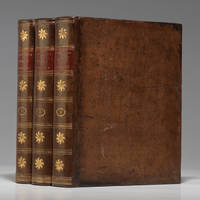
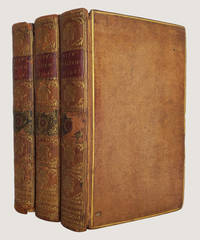
1789réf. 10820London; Printed for A. Strahan and T. Cadell 1789. 1789. Hard Cover. Fifth Edition. Octavo pp. i-iii iv-x 499; i-iii iv-vi 518 6 Appendix; i-iii iv-v 1465 1 50 Index etc. Contemporary speckled tan calf with gilt titles to maroon labels to spine gilt cornucopia motifs to compartments and gilt fillet to boards; all edges sprinkled brown marbled endpapers & gilt fillet dentelles. Corners rubbed with minor wear; vol I. capably and sympathetically recased; volume II bumped to lower corner of upper board with minor to edge of volume label; volume III partial loss to number label; joints worn but holding. Internally very clean with just some minor spotting confined principally to prelims. A very good set. A handsome early edition in a contemporary binding of the magnum opus of the economist moral philosopher and key figure of the Scottish Enlightenment Adam Smith 1723-1790. Although not published until 1776 Smith developed and lectured on many of the leading themes in Wealth of Nations whilst teaching at Glasgow with the work going on to lay the foundations of both classical free market economic theory and the modern academic discipline of economics. "Where the political analysis of human rights had taken two centuries to explore Smith's achievement was to bring the study of economic aspects to the same point in a single work. The first and greatest classic of modern economic thought". Kress: Library of Business and Economics Catalogue 1777-1817 p. 85; PMM 221; ESTC: T96680. London; Printed for A. Strahan and T. Cadell, 1789. hardcover
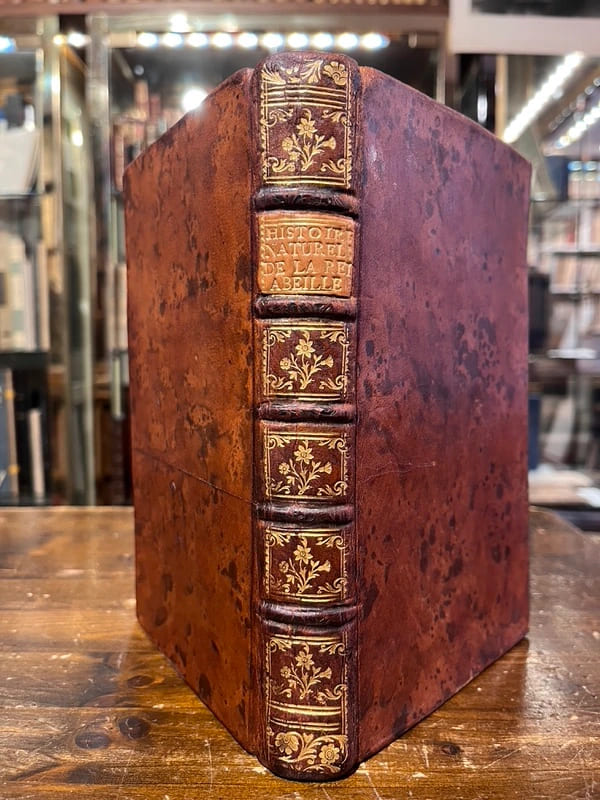
1771réf. 22240La Haye, chez Frédéric Staatman, 1771. In-8 de LV-[11]-269 pages, plein veau moucheté brun, dos à nerfs orné de filets et fleurons dorés, tranches rouges.
réf. 11180Benson Frank W. Benson Frank W. ETCHINGS AND DRYPOINTS OF FRANK W. BENSON - AN ILLUSTRATED AND DESCRIPTIVE CATALOGUE by Adam E.M. Paff and Arthur W. Heintzelman. Houghton-Mifflin 1917-1959. Five Volumes complete. Volumes One and Two are editions of 275 numbered copies Volume Three is an edition of 525 numered copies Volume Four is an edition of 600 numbered copies and Volume Five is an edition of 400 numbered copies. All 4to cloth-backed boards volumes Two through Five with DJs. Each volume with an original etched frontispiece each of which is signed except for that in volume Five which was published after Benson's death. The original etchings are: Vol 1: Pair of Ducks 1916 Paff 102; Vol 2: Two Geese 1919 Paff 158; Vol 3: On Set Wings 1923 Paff 223; Vol 4: Flying Pintail 1927 Paff 275; Vol 5: Perching Grouse 1941 Paff 347. Though there were some proofsthese prints were not editioned separately from the catalogue and were each printed in whatever edition size the catalogue edition was. Volume One with a few small abrasions to the front endpapers where they were separated after sticking; Volumes Two through Five all Fine but the DJs to Volumes Two and Four have 1 1/2 to 2 inch chips at the tops of the spines and a few smaller chips. The numbers on the volumes vary. Complete sets with the original etchings present are now scarce. hardcover
1909réf. 58833Lund, C. W. K. Gleerups förlag, 1909 & 1911. 8vo. Both volumes in the original printed wrappers. Light wear to spines, otherwise a very fine and clean set. XVI,191, (4), 179 pp.
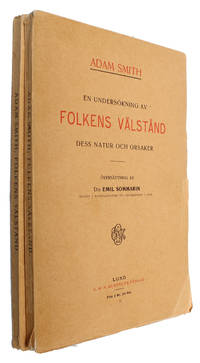
1909réf. 58833Lund C. W. K. Gleerups förlag 1909 & 1911. 8vo. Both volumes in the original printed wrappers. Light wear to spines otherwise a very fine and clean set. XVI191 4 179 pp. First edition of the first Swedish translation of Adam Smith's ground-breaking main work the "Inquiry into the Nature and Causes of the Wealth of Nations". Smaller parts of the book had previously been translated into Swedish in 1800 1804 and 1869 but the present translation is considered the first actual translation of the work even though some parts have been excluded by translator Emil Sommarin who based his translation the 5th English edition the last edition to be supervised by Adam Smith himself. It is to this date the only Swedish translation of the work which tells us a lot about the history of Swedish economics. Despite the comparatively late translation into Swedish it still had a profound influence not on economists since they were well aware of the original work in English but upon politics and public opinion in general: "There are few things more striking to the modem student of the history of ideas in Sweden than the negative phenomenon that Sweden was almost entirely uninfluenced by this fact and thus remained almost unaffected by English economic thought during a period when its superiority was most evident. As far as I am acquainted with the Swedish economic discussion and our popular economic literature of the 1860's and 1870's there is almost no trace of any influence from English writers. .Of Adam Smith we have still only one abbreviated translation of his famous work and that was published as late as during this century; and as far as I know nothing of Ricardo's or Malthus' exists in Swedish nor do any of the major economic works of J.S. Mill." Heckscher A survey of economic thought in Sweden 1875-1950.Translator Emil Sommarin 1874-1955 was a student of Knut Wicksell arguably the most influential Swedish economist and Sommarin succeeded Wicksell's professorship in national economics. Wicksell "came to know his classics very well and became and remained an admirer of Adam Smith. Around 1910 he also assisted his former student and successor as economics professor in Lund Emil Sommarin with the translation of WN still the most complete we have in Sweden. In this connection he wrote to a friend in Uppsala "It is almost unbelievable that we have been denied this masterpiece for 125 years and our economic policy is a result of the omission" Cheng-Chung Lai Adam Smith Across Nations p. 384. unknown
1932réf. 48563Paris.: Bureau d'Editions et de Diffusion. 1932. Original publisher's tan printed wrappers stapled as issued titles and illustration in black to front cover advertisements to rear. Small 4to. 230 x 184 mm. Leaf with title eight leaves with caricature vignettes by Georges Adam and verse by Aragon recto only two per page final leaf with achevé d'imprimer. André Breton's copy of this very scarce plaquette destined for the children of workers and noted for its virulent 'anticlérical anticapitaliste anticolonialiste antipatriotique' sentiments.This rare pamphlet by Louis Aragon was intended for the children of the exploited masses and as noted by Pierre Juquin was 'anticlérical anticapitaliste anticolonialiste antipatriotique'.Aragon had thrown himself into anti-clericalism after his break with Surrealism and wrote the verses accompanied by Adam's caricatures in Russia. The pamphlet was printed on the presses of 'L'Imprimerie Centrale'.'Pour faire oublier la Commune / Le Sacré-Coeur a vu le jour. / Un beau soir il aura son tour / Ce gâteau blanc comme lune!' From the text.Also included inserted loose is André Breton's membership card filled out in his own hand in black ink giving his address in rue Fontaine and signed beneath for the 'Union Fédérale des Libres-Penseurs Revolutionnaires de France'. A bifolium of blue card the front cover features the vignette of the 'Union' which matches the vignette for Aragon's plaquette. The membership card features Marx's famous slogan 'La Religion c'est l'opium du Peuple!' and a quotation from Lenin as well as fifteen stamps of the Union indicating membership or attendance at meetings nine dated '1932' and three dated '1931' and inscribed 'Octobre' 'Novembre' 'Décembre'.Aragon's plaquette is scarce: we locate copies at the Bibliothèque Nationale in France the Bibliothèque Génève in Switzerland as well as copies at Syracuse Duke Yale Bowdoin and the University of California in the US. Bureau d'Editions et de Diffusion. unknown
réf. 121726Basil Basel Printed by J.J. Tourneisen for J.J. Tourneisen; and J.L. Legrand 1791. . First Basel edition; 4 vols; 8vo 21.5 x 13.5 cm; ads to vol. 2 occasional light spotting; contemporary sheepskin-backed marbled paper boards contrasting lettering-pieces to spines further tooled in gilt sheepskin tips the spines faded from blue to brown slightly rubbed with minor loss to extremities very good; viii 406; vi 2 ads 344; iv 358 6;v 1 374 72pp. The first edition in English of Adam Smith's Wealth of Nations to be printed and published abroad. As the title explains the Wealth of Nations is fundamentally an investigation into why certain countries are more prosperous than others. Smith's originality lies in locating the roots of this comparative wealth in the specialisation of labour which had occurred in developed economies for the 'annual labour of every nation is the fund which originally supplies it with all the necessaries and conveniences of life which it annually consumes and which consist always either in the immediate produce of that labour or in what is purchased with that produce from other nations' Introduction. The text is taken from the fourth edition originally printed in 1786. Smith 1723-1790 died on 17th July the year preceding the publication of this Basel edition but it seems evident from the title-page that this work was in the press before news of Smith's death reached Tourneisen. ESTC N16940; Goldsmiths' 14613; Mizuta 43. Basil [Basel], Printed [by J.J. Tourneisen] for J.J. Tourneisen; and J.L. Legrand, 1791. hardcover
1801réf. 177821Dublin: Printed by N. Kelly and William Porter for P. Wogan Gilbert and Hodges W. Porter J. Moore and B. Dornin 1801. Political economy and the Anglo-Irish union Fourth Irish edition of the "first and greatest classic of modern economic thought" PMM in a handsome contemporary Irish binding. Towards the end of the Wealth of Nations Smith outlines an expansive and audacious plan for the political-economic consolidation of the British Empire. In this plan Ireland was to be united with Great Britain in a move largely modelled on the Anglo-Scottish union of 1707. Smith stresses the political and economic benefits to the Irish anticipating that the move would end British trade restrictions and even neutralize the fractious nature of Irish politics. Ironically Smith's wider theories of political economy in the Wealth of Nations were often co-opted by Irishmen diametrically opposed to his political proposals most notably the United Irishman Arthur O'Connor 1763-1852 whose approach to democratic land reform was "a radicalised version of Smith's political economy" Andersen. The United Irishmen mounted a rebellion in 1798 the failure of which led to precisely the Anglo-Irish union advocated by Smith. This fourth Irish edition was the first to be published in the newly formed United Kingdom of Great Britain and Ireland. 2 vols octavo 204 x 131 mm pp. xiii 1 498; viii 489. 61; lacking blank A1 in vol. II. Tables in the text. Contemporary red straight-grain sheep spines lettered ruled and decorated in gilt covers panelled in gilt marbled endpapers. With 1824 prize inscription in Latin to fourth blank of vol. I. Extremities refurbished light scuffing faint sunning to spines minor foxing and offsetting to contents leaf P6 of vol. II with 7 cm closed tear touching text: a very good copy. Kress B.4448; Tribe 75; Vanderblue p. 20. L. S. Andersen "The Political Economy of Ireland and Its Counterfactuals: Review of James Strafford The Case of Ireland: Commerce Empire and the European Order 1750-1848 CUP 2022" History of European Ideas vol. 50 no. 1 2023. unknown
2008réf. Manohar-9781847870223Sage Publications 2008. Hardcover. New. Sage Publications hardcover
2008réf. Manohar-9781847870223Sage Publications 2008. Hardcover. New. Sage Publications hardcover