SMITH, AdamBiblio.com
45 067 résultats
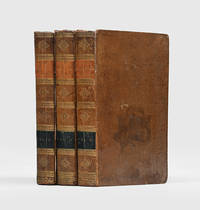
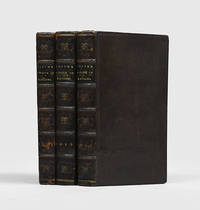
1817réf. 194319Edinburgh: Printed for Silvester Doig and Andrew Stirling & 2 others in Edinburgh; 6 in London 1817. One of the few works in its field to have achieved classic status Sixth Edinburgh edition of the "first and greatest classic of modern economic thought" PMM. This edition includes a 65-page Life of Smith and two essays by Germain Garnier 1754-1821 comparing Smithian economics with the contemporary approach of the French school. Following the publication of the Wealth of Nations in 1776 Smith moved to Edinburgh to take up a post as commissioner of customs and he remained in the city until his death in 1790. Scotland provided an ideal base for Smith's wide-ranging analysis in the Wealth of Nations which was famously written in Kirkcaldy 11 miles north of the capital. For Donald Winch Smith was "a North Briton who regarded Scotland not merely as his home but as the best place from which to observe the affairs of the capital with the minimum of involvement in party politics" ODNB. "The Wealth of Nations had no rival in scope or depth when published and is still one of the few works in its field to have achieved classic status meaning simply that it has sustained yet survived repeated reading critical and adulatory long after the circumstances which prompted it have become the object of historical enquiry" ODNB. 3 vols octavo 211 x 129 mm. Tables in the text. Contemporary diced russia spines lettered and decorated in blind and gilt and with black morocco labels covers panelled in blind marbled edges and endpapers. Light bumping and rubbing minor foxing and offsetting to contents: a very good copy. Tribe 122. unknown
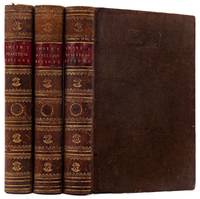
1809réf. 180832Edinburgh: for Mundell Doig and Stevenson; Lackington Allen and Co. Cradock and Joy and T. Hamilton London; and Wilson and Son York 1809. One of the few works in its field to have achieved classic status Second Edinburgh edition of the "first and greatest classic of modern economic thought" PMM. This edition includes a 66-page Life of Smith and two essays by Germain Garnier 1754-1821 comparing Smithian economics with the contemporary approach of the French school. The British copyright for the Wealth of Nations expired in 1804. The following year William Playfair 1759-1823 brought out in London an edition universally derided for its editorial liberties and for exorcising any suggestion of Smithian radicalism in the aftermath of the French Revolution. The first Edinburgh edition criticized Playfair extensively but by 1809 the debate had moved on and these criticisms have been themselves been exorcised here. Following the first publication of the Wealth of Nations in 1776 Smith moved to Edinburgh to take up a post as commissioner of customs. He remained in the city until his death in 1790. Scotland informed much of his analysis in the Wealth of Nations which was written in Kirkcaldy 11 miles north of the capital. For Donald Winch Smith was "a North Briton who regarded Scotland not merely as his home but as the best place from which to observe the affairs of the capital with the minimum of involvement in party politics" ODNB. 3 vols octavo 207 x 128 mm. Tables in the text. Contemporary sprinkled calf spines ruled and decorated in gilt and with twin red and dark green morocco labels edges sprinkled blue. Light bumping and wear minor worming foxing and offsetting to contents: a very good copy. Tribe 96; Vanderblue p. 14. unknown
réf. 62149London: Printed by A. Strahan 1802. 3 vols. 8vo. 21 x 13 cm. pp.xii499; vi5185 index; vii46550 index and ads. Contemporary full calf smooth spines ruled and decorated in gilt red morocco label to each blue sprinkled edges. Old ownership inscription of Chris Fisher to each volume. Bindings a bit scuffed partial loss of gilt to spines light browning to endpapers contents clean and crisp save for some very infrequent occasional spotting generally a very good set. The magnum opus of Scottish economist and philosopher Adam Smith originally published in two volumes in 1775-1776. "The first and greatest classic of modern economic thought" Printing and the Mind of Man. London: Printed by A. Strahan, 1802. unknown
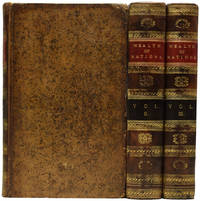
réf. 65823Glasgow: At the University Press 1805. Economics Complete in three volumes. Octavo 21 x 14cm Vol.I pp.iv; iv; lvi; 360; Vol.II pp.ii; iv; vi; 512; 4 Appendix; Vol.III; pp.11; ii; 448 52 Index. Contemporary brown acid-stained patterned calf boards re-backed to style circa 1890s in brown calf with gilt titles to red and black labels and further gilt decoration to spines. Contents clean free from ownership marks bindings gently aged gilt to spine a little rubbed. An attractive natural set. An important Scottish printing with a Glasgow imprint being the first edition to contain "The Life of the Author" preceding the more familiar Edinburgh edition with The Life printed for William Creech published the following year. Glasgow: At the University Press, 1805 unknown
1795réf. 155230Dublin: Printed for Messrs. Wogan Byrne J. Moore and 5 others in Dublin 1795. In the original boards First Dublin edition published following the London edition of the same year. Before his death in 1790 Smith ordered many of his unpublished papers to be destroyed and left his literary executors to decide which of the remainder were fit to publish. The seven previously unpublished essays range across philosophy aesthetics and the history of science. The opening sequence - histories of astronomy ancient physics and ancient logic and metaphysics - survives from Smith's projected "connected history of the liberal sciences and elegant arts" a plan ultimately abandoned. The remaining essays address perception imitation music dancing poetry and metre. It is prefixed by the major early biography by Stewart a committed follower of Smith. Octavo pp. cxxiii 1 332. Uncut in original boards. Housed in a black cloth flat-back box with red label lettered gilt. Spine backing worn front joint weak but holding: a very good copy without repair. ESTC T33501; Jessop p. 172; Kress B.3037; Tribe 56; Vanderblue p. 43. hardcover
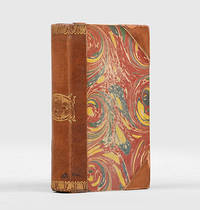
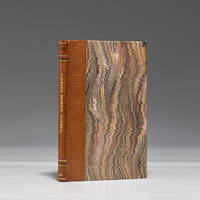
1795réf. 126439Dublin: Printed for Messrs. Wogan Byrne J. Moore and 5 others in Dublin 1795. First Dublin edition same year as the first London edition. The Essays were published five years after Smith's death and edited by the Scottish philosopher Dugald Stewart 1753-1828. Stewart's "Account of the Life and Writings of Adam Smith" is one of the earliest biographical notices of Smith and "until Stewart's Biographical Memoir of 1811. formed the basis upon which everyone drew for the biographies of Smith that began to appear in the early 19th century" Tribe. The editors Joseph Black and James Hutton state that Smith's essays were intended as parts of "a connected history of the liberal sciences and elegant arts" but that Smith "long since. found it necessary to abandon that plan as far too extensive". The essays range over philosophy aesthetics and the history of science. Most were probably written before the appearance of the Theory of Moral Sentiments in 1759 but were withheld from publication as part of Smith's "extensive plan". Kress lists the Dublin printing first and calls the London "another issue" while Tribe calls the Dublin edition a piracy. Neither is correct. Dublin booksellers at the time had a well-established exemption from the copyright laws and could legally reprint any new publication first published in London without having to pay for copy. The London edition precedes this legal Dublin reprint. Scarce: neither Einaudi nor Goldsmiths' list this Dublin edition. Octavo 205 x 125 mm. Early 19th-century tan calf and marbled boards neatly rebacked using a piece of diced Russia gilt roll decoration to head and tail of spine gilt device stamped around the spine. Ownership stamp of William Brough to rear free endpaper. Somewhat inelegantly rebacked with diced russia salvaged from another binding inner hinges cracked but firm corners worn some toning to leaf edges and a few small spots; overall a good copy. Jessop p. 172; Kress B.3037; Tribe 56; Vanderblue p. 43. hardcover
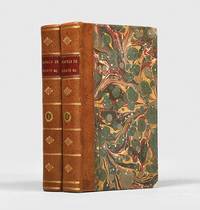
1782réf. 143496London: Printed for J. Murray 1782. First edition of this anonymously published epistolary account in 72 letters written during the course of a trip to India dealing largely with the government and economies of the East Indies and with notes on Adam Smith's Wealth of Nations. At the Cape of Good Hope in April 1799 one Daniel Barwell lent the author his copy of Adam Smith's Wealth of Nations - 'a work of great labour and ingenuity; I had heard of it and anxiously desired to see it because it treated of such commercial and political matters as have long furnished a subject of speculation in my solitude. It is a performance that every statesman and legislator should study and digest. - Yet I have presumed to differ in opinion in a few instances from that great source of knowledge' I 206-7. The 'Observations' written 'on a cursory reading' of Smith are provided in an lengthy two-column appendix in volume II pp. 432-479 which juxtaposes quotations with insightful commentary especially on the relationship of labour and value and real and nominal prices. Macintosh presented a copy of his Travels to Smith 'With Mr. MacIntosh's compliments. Mr. M - having been abroad when these letters were printed had not an opportunity of transmiting sic them in manuscripts'. The Travels' authorship although attributed by DNB Halkett & Laing Kress and Allibone to William Thomson 1746-1817 who was a clergyman in Perthshire until October 1778 and whose role was most probably editorial has also been credited to the Irish-born British politician and pamphleteer Sir Philip Francis 1740-1818 who was also the chief antagonist of the first Governor-General of Bengal Warren Hastings. It is however generally accepted as being William MacIntosh's: "the author was given out to be one Macintosh whose name occurs in Philip Francis's Indian journal. But it runs so minutely into defence of Francis and vituperation of his enemies especially of Hastings. that some assigned the authorship of these portions of it to Francis in person" Parkes. In his Memoirs of Sir Philip Francis 1867 Parkes notes "some people indeed denied the existence of Macintosh altogether. But one of Captain Price's grotesque pamphlets describes him as 'a swarthy and ill-looking man'. of colour born in the West Indies" p. 206. These Travels were translated into German Des Herrn Macintosh's Reisen in 1785 and twice so in French: 1786 and 1792. This copy has the crested bookplate of the banker Thomas Coutts "Strand London" one of the wealthiest men in Britain to the front pastedowns transposed over from an earlier binding. 2 vols octavo 211 x 126 mm. Recent quarter calf red and green morocco labels marbled sides vellum tips. Bindings fine interior remarkably clean and fresh occasionally foxed; a very good copy. ESTC T97734; Goldsmiths' 12256; Kress B.523; Mizuta "Adam Smith's Library" 1660; Joseph Parkes "Memoirs of Sir Philip Francis K.C.B." vol. 2 pp. 205-6; Sowerby E.M. Catalogue of the Library of Thomas Jefferson 3934; Zachs 314; not in Vanderblue. hardcover
1989réf. 87154Davaco Publishers. New. 1989. Hardcover. 9070288524 . FREE UPGRADE to Courier/Priority Shipping Upon Request - IN STOCK AND IMMEDIATELY AVAILABLE FOR SHIPMENT - Flawless copy brand new pristine never opened -- Text in English. 260 pages; 268 illustrations. Catalogue Raisonne Catalog Raisonné Complete Works Life and Work Raisonnee Davaco Publishers hardcover
2008réf. 86912H. Schmidt. New. 2008. Hardcover. 3935647409 . FREE UPGRADE to Courier/Priority Shipping Upon Request - IN STOCK AND IMMEDIATELY AVAILABLE FOR SHIPMENT - Flawless copy brand new pristine never opened -- 419 pages; well-illustrated. Catalogue Raisonne Catalog Raisonné Complete Works Leben Und Werk Oeuvre-Katalog Kritischem Oeuvrekatalog Raisonnee H. Schmidt hardcover
1716réf. 250718001Ulm Germany: Daniel Bartholomew 1716. 2nd Edition. Hardcover Vellum & Calf. Good. TRANSLATED TITLE A complete herbal book and artificial representations of trees shrubs hedges herbs crops spices etc. with an accurate description of their names in German Greek Latin French Italian and Spanish as well as their form natural strength and effect; including a detailed account of the art of distilling as well as the construction of gardens and planting of trees; as well as of the most important animals of the earth birds fish and worms; . metals ore precious stones rubber . formerly reviewed by Mr. Petro Uffenbachio . enlarged . and provided with . indexes . With an encore accompanied by Balthasar Ehrhart. IMPORTANCE & COLLECTIBILITY SCARCE 2nd Ulm Edition - earliest of the desirable ULM edition currently available for sale. World-famous herbalist book containing 800 fantastic and beautiful woodcuts of hundreds of plants species but also hundreds of illustrations of land animals aquatic life and birds mythical beasts like unicorns and dragons alcohol distillation a cadaver study genre and Biblical scenes like of Adam and Eve in the Garden of Eden and more. Quite exceptional! 800 woodcuts with thousands of distinct images. By Adam Lonicer Overall condition: GOOD BOOK INFO Published in 1716 in Ulm Germany by Daniel Bartholomew. 2nd Ulm edition. In full contemporary vellum likely original with a slightly later added gilded spine covering of calf over the vellum. Folio 13.25" x 8" x 2.25" thick. Collated and complete: 4 750 24. 800 woodcuts comprising thousands of images. Plentiful decorated initials. Several head- and tail-pieces. Title page with printer device. A richly illustrated work throughout! All edges stained black. ABOUT THE AUTHOR & BOOK Adam Lonicer Adam Lonitzer or Adamus Lonicerus October 10 1528 -- May 29 1586 was a German mathematics professor and botanist who studied at Marburg and the University of Mainz obtaining his Magister degree at sixteen years of age. After becoming a Doctor of Medicine in 1554 he became the town physician in Frankfurt am Main. His true interest though was herbs and the study of botany. He married into the prominent German printing family Egenolph in 1554 which was famous for printing herbals like the Kr uterbuch. Lonicer first published his important and highly influential work on herbs the Kr uterbuch in 1557. The Kr uterbuch is an early example of a bestsellerthe book remained in print in various forms from 1557 through 1783 which is a testament to its lasting appeal and use. Although the name Kr uterbuch literally translates to herb book and most of it is indeed about plants a great deal of the book is devoted to describing the natures and uses of animals metals gemstones and distillation. In this work Lonicer provides us with one of the early descriptions of local flora as well as being one of the first to differentiate deciduous trees from conifers. It is also noted for its woodcuts and descriptions of mythical beats including unicorns dragons gryphons and phoenixes. CONDITION REPORT GOOD for a 300-year-old folio. Collated and complete with all textual pages. Without a few blank flyleaves. Exterior and binding - a later spine covering of richly gilded calf covers contemporary possibly original full vellum. Leather spine covering is heavily worn and fraying with much of the spine gilding rubbed away. The vellum is aged shrunken with time discolored in areas and soiled and worn along the edges. Fading to the black stain and an ink spill on top edge. Front hinge cracked binding holding firm. Interior: Grubby heavily soiled endpapers. A few words of antique writing on the endpapers and title page. Oxidation of much of the text block. Light foxing overall heavier in a few areas. Signs of handling over the centuries: ink spills marginal thumbing and smudging creases. Raggedy page edges in areas and some paper loss to endpapers. Some larger creases on title page. . Daniel Bartholomew hardcover
1748réf. GT1007Glasgow: Robert & Andrew Foulis 1748. 1st Edition . Hardback. Vg. 12mo. iv 148pp. With a preface by Adam Smith. Original speckled full calf and ORIGINAL 18TH CENTURY marbled end-papers. The binding is rubbed with some loss to the surface of the rear cover and mottled to the front. A fine gilt decorated original spine with raised bands and gilt decoration to the compartments A fine original red calf gilt label to the spine with no repairs. A small contemporary paper scrap of a dove has been lightly pasted above the letter E in the title 3cms. The boards are attached and have double-ruled gilt border line front and band. Nice wide margins to the printed sheets. AN EXCEPTIONAL COPY IN UNRESTORED STATE OF A RARE ITEM IN ORIGINAL STATE.158x100mm Robert & Andrew Foulis hardcover
1817réf. 20141Winchester VA: John T Sharrocks J Foster Printer 1817. First Edition. Full contemporary calf. Very good; some overall browning; tide mark diminishing to the first few leaves of both volumes; bindings scuffed; hinges are strained; a small paper flaw in page 5 of volume one touching two letters. 8vo I - iv 5 - 200 pp.; II - 2 3 - 200 pp. Both volumes collate: A - M8 N4. The copyright notice attributes authorship to Adam Douglass. He had emigrated at a young age from Belfast and settled in the US but went back to Ireland in 1812. He returned a few years later and settled in New Market VA writing two books including this one see Wayland A History of Shenandoah County. The last definite appearance of the book in trade that I could locate was in 1959 in a Midland Notes catalog that copy defective with a page chip affecting three lines of text; the copy of record at the AAS is also defective lacking a leaf of text. Foster was a job printer and newspaper publisher in Winchester see Index of Virginia Printing for a detailed biography who left the trade in 1821. The author states in the preface: "The Emigration from Ireland to the United States has been and still is vast. No human being can love his country better than an Irishman. But oppression forces him from his home. And the sons of Columbia grant him an asylum in a land where virtue reigns triumphant and where he can assert those rights as a man which heaven has implanted in his breast." It purports to be the first Irish-American novel. S&S #41151; Wright I #1367. John T Sharrocks, J Foster Printer unknown books
1669réf. 28698London: Printed for John Starkey and Thomas Basset 1669 1669. Second edition in English preceded by the edition of 1662. ESTC R30756; Wing O270; Cox Literature of Travel I page 249. Several of the maps have paper repairs at the folds and in the margins; the third map of the River Volga is a little darkened at the edges and dust-soiled; the two leaves Q4 & R1 adjacent to that map are also a little darkened and dust-soiled; one clean tear to a leaf without loss; very good copy. Folio in fours contemporary mottled calf rebacked red morocco spine label blind rules and gilt lettering. Frontispiece six folding maps two portraits and one engraved Cyrillic alphabet in the text. In 1634 Frederick III of Holstein-Gottorp present day Denmark and Germany sent an expedition with Adam Olearus 1603-1671 as its secretary from Hamburg to Moscow in an attempt to establish commercial relations with Russia which failed. Undeterred Frederick sent a similar expedition to Persia in 1636 also with Adam Olearius as secretary The first part of this work is the first English translation by John Davies of Olearius' detailed account of those expeditions in its second edition. The second part contains the account by German adventurer Johan Albrecht de Mandelslo 1616-1644 of his departure from Frederick's mission to Persia and continuation on to India China Japan and Formosa also translated by Davies from Olearius' posthumous editing and publication of that travelogue. Though trade missions generally make for dull reading Olearius' narrative is quite engaging with details and anecdotes about the people and places they encountered. Typical of his observations is one about the Russians: "There is no place in the World where drunkenness is more common than in Muscovy . . . Ecclesiastics and laicks Men and Women Old and Young will drink strong water at any time before at and after their meals . . . will drink of it till they lye down and many times die in the place." From the library of John Evelyn with the Evelyn book label "JE" on the front paste-down. Early marginal notes in Mandelslo's adventures though not in Evelyn's hand alas. London: Printed for John Starkey and Thomas Basset, 1669 unknown
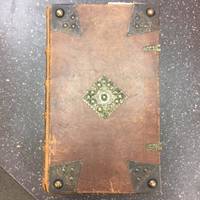
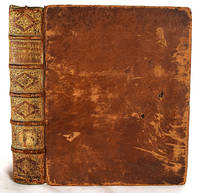
1783réf. 1277019Augsburg Bavaria Germany: Joseph Wolffischen 1783. Hardcover. Folio 750 pages 24 pages 136 pages. In Very Good condition. Bound in brown leather with blank paneled spine. Front board with metal corner pieces and metal diamond-shaped ornament to center of board. Remnants of clasps present: two metal hooks on fore edge of front board and two torn leather strips affixed to rear board. Boards moderately rubbed. Front free end paper partially detached. Title page shows 1.25 in-long area of damage to lower edge repaired but resulting in loss of publication information. Title page also shows small tear repaired to center of page minimally impacting legibility. Minor repairs to pages 165/166 571/572 633/634 649/650 687/688 701/702 705/706 719/720. Plates preface Parts Two and Three pp. 165 and 567 respectively. Profusely illustrated with over 800 black and white woodcut illustrations including genre scenes individual plants and animals and distilling apparatus. Shelved in Case 4. Adam Lonicer was a German botanist who studied at Marburg and the University of Mainz obtaining his Magister degree at sixteen years of age. After becoming a Doctor of Medicine in 1554 he became the town physician in Frankfurt am Main. His true interest though was herbs and the study of botany. His first important work on herbs the Kräuterbuch was published in 1557 with a large part dealing with distillation. He married Magdalena Egenolff the daughter of Christian Egenolff his Frankfurt publisher and a printer who specialized in herbals. The work that made his name famous is this popular herbal the Kräuterbuch. Lonicer provides us with one of the early descriptions of local flora as well as being one of the first to differentiate deciduous trees from conifers. Complete collation: page 110 misprinted as 100 160 as 142 217 as 21 271 as 217 523 as 532 524 as 534 554 as 454 732 as 571. Pagination consistent with this edition. 1277019. Shelved Dupont Bookstore. Joseph Wolffischen hardcover
1783réf. 1277019Augsburg Bavaria Germany: Joseph Wolffischen 1783. Hardcover. Folio 750 pages 24 pages 136 pages. In Very Good condition. Bound in brown leather with blank paneled spine. Front board with metal corner pieces and metal diamond-shaped ornament to center of board. Remnants of clasps present: two metal hooks on fore edge of front board and two torn leather strips affixed to rear board. Boards moderately rubbed. Front free end paper partially detached. Title page shows 1.25 in-long area of damage to lower edge repaired but resulting in loss of publication information. Title page also shows small tear repaired to center of page minimally impacting legibility. Minor repairs to pages 165/166 571/572 633/634 649/650 687/688 701/702 705/706 719/720. Plates preface Parts Two and Three pp. 165 and 567 respectively. Profusely illustrated with over 800 black and white woodcut illustrations including genre scenes individual plants and animals and distilling apparatus. Shelved in Case 4. Adam Lonicer was a German botanist who studied at Marburg and the University of Mainz obtaining his Magister degree at sixteen years of age. After becoming a Doctor of Medicine in 1554 he became the town physician in Frankfurt am Main. His true interest though was herbs and the study of botany. His first important work on herbs the Kräuterbuch was published in 1557 with a large part dealing with distillation. He married Magdalena Egenolff the daughter of Christian Egenolff his Frankfurt publisher and a printer who specialized in herbals. The work that made his name famous is this popular herbal the Kräuterbuch. Lonicer provides us with one of the early descriptions of local flora as well as being one of the first to differentiate deciduous trees from conifers. Complete collation: page 110 misprinted as 100 160 as 142 217 as 21 271 as 217 523 as 532 524 as 534 554 as 454 732 as 571. Pagination consistent with this edition. 1277019. Shelved Dupont Bookstore. Joseph Wolffischen hardcover books
1775réf. 1240791775. AMERICAN REVOLUTION BURKE Edmund TUCKER Josiah D.D. An Humble Address and Earnest Appeal to Those Respectable Personages in Great-Britain and IrelandÉ Whether a Connection with or a Separation from the Continental Colonies of America Be Most for the National Advantage and the Lasting Benefit of these Kingdoms. Gloucester: R. RaikesÉ Sold by T. Cadell 1775. Slim octavo period-style half brown morocco and marbled boards raised bands; pp. 1-3 4-93 3. $3200.First corrected edition second overall issued within days of the same year's first edition of the ""important and influential"" British economist's seminal rebuke of Edmund Burke charging him with a crucial misunderstanding how the political economics of self-interest would best prevent further ""Disturbances and Disputes"" with America urging Britain in 1775 to ""separate totally from the ColoniesÉ to enter into Alliances of Friendship and Treaties of Commerce as with any other sovereign independent States"" handsomely bound.""A controversial figure during his lifetime"" particularly in his views on the economics of Britain's stance toward the American colonies Tucker was well known to Adam Smith and Founding Fathers Madison and Jefferson who each owned copies of his writings. ""Increasingly recognized as an important and original 18th-century theorist"" ODNB Tucker was ""espousing the cause of American separation as early as 1766 before the Americans themselves had considered this eventuality with any seriousness"" To key scholars ""Tucker analyzed the American conflict more accurately than his contemporariesÉ yet so different were his views from all those around him that he has been noted asÉ a 'visionary' Trevelyan or a 'fanatic' Clark"" Rashid ""Tucker's Proposal"" in Journal of the History of Ideas V43 No.3 439. His assessment of American independence was not motivated ""by any sympathy for the Americans."" Instead ""their rapid economic growth and dislike of regulation would he believed eventually lead them to separate from Britain through self-interestÉ and the developing American crisis over taxation touched upon all Tucker's major interests: the need to maintain a mutually self-interested and beneficial trade between Britain and her colonies his dislike of war and mock patriotism and his distrust of political radicalism"" ODNB. ""Central to Tucker's philosophy of economy is the concept of 'self-love' whichÉ became part of Adam Smith's concept of the 'invisible hand'É Tucker regarded trade as Britain's gloryÉ and went so far as to suggest that the colonies should be detached from Britain to allow greater freedom of trade a view which brought him into conflict with Edmund Burke"" Dictionary of 18th-Century British Philosophers V2:898.When Burke attacked Tucker in the famed March 22 1775 Speech on Conciliation with America Tucker quickly responded with Humble Address. Here he marshals arguments and evidence to counter claims that Britain would lose its profitable commerce if America broke free. Tucker contended the ""greater part of the colonial trade was motivated by self-interest andÉ it was a simple corollary that neither shipping nor navigation could be hurt by the independence of the colonies."" To further support his position he details ""customs-house figures from 1765-72 to show that it was not Americans but Germany and Holland who purchased more British exports than the Americans"" Rashid 454. To F.P. Lock ""Tucker anticipated one of Adam Smith's shrewdest insights that regulations and restrictions impeded commerce rather than protecting it. For Tucker imperialism was uneconomicÉ Let the Americans be independent and they will continue to trade with Britain as long as British goods are competitive Thus Tucker like Smith denied the economic value conventionally attributed to the possession of colonies. Burke disagreedÉ in the 1770s Burke still held to the mercantilist belief that exclusive or preferential trade with its colonies benefits the home country"" Edmund Burke I:388. Copies of Tucker's works ""including those on the colonies are found to be in Adam Smith's library"" Rashid 456 and works by Tucker in Jefferson's library included Humble Address ""initialed by Jefferson"" Sowerby 3061. ""Second Edition Corrected"" on title page. With folding chart of exports; rear advertisement leaf. Engraved ornamental initials heading and tailpiece. Preceded by the November 1775 first edition. ESTC T36739. Adams American Controversy 75-144b. Sabin 97350. Goldsmith's 11300. Kress 7174. A fine copy. hardcover
1775réf. 1240791775. AMERICAN REVOLUTION BURKE Edmund TUCKER Josiah D.D. An Humble Address and Earnest Appeal to Those Respectable Personages in Great-Britain and IrelandÉ Whether a Connection with or a Separation from the Continental Colonies of America Be Most for the National Advantage and the Lasting Benefit of these Kingdoms. Gloucester: R. RaikesÉ Sold by T. Cadell 1775. Slim octavo period-style half brown morocco and marbled boards raised bands; pp. 1-3 4-93 3. $3200.First corrected edition second overall issued within days of the same year's first edition of the ""important and influential"" British economist's seminal rebuke of Edmund Burke charging him with a crucial misunderstanding how the political economics of self-interest would best prevent further ""Disturbances and Disputes"" with America urging Britain in 1775 to ""separate totally from the ColoniesÉ to enter into Alliances of Friendship and Treaties of Commerce as with any other sovereign independent States"" handsomely bound.""A controversial figure during his lifetime"" particularly in his views on the economics of Britain's stance toward the American colonies Tucker was well known to Adam Smith and Founding Fathers Madison and Jefferson who each owned copies of his writings. ""Increasingly recognized as an important and original 18th-century theorist"" ODNB Tucker was ""espousing the cause of American separation as early as 1766 before the Americans themselves had considered this eventuality with any seriousness"" To key scholars ""Tucker analyzed the American conflict more accurately than his contemporariesÉ yet so different were his views from all those around him that he has been noted asÉ a 'visionary' Trevelyan or a 'fanatic' Clark"" Rashid ""Tucker's Proposal"" in Journal of the History of Ideas V43 No.3 439. His assessment of American independence was not motivated ""by any sympathy for the Americans."" Instead ""their rapid economic growth and dislike of regulation would he believed eventually lead them to separate from Britain through self-interestÉ and the developing American crisis over taxation touched upon all Tucker's major interests: the need to maintain a mutually self-interested and beneficial trade between Britain and her colonies his dislike of war and mock patriotism and his distrust of political radicalism"" ODNB. ""Central to Tucker's philosophy of economy is the concept of 'self-love' whichÉ became part of Adam Smith's concept of the 'invisible hand'É Tucker regarded trade as Britain's gloryÉ and went so far as to suggest that the colonies should be detached from Britain to allow greater freedom of trade a view which brought him into conflict with Edmund Burke"" Dictionary of 18th-Century British Philosophers V2:898.When Burke attacked Tucker in the famed March 22 1775 Speech on Conciliation with America Tucker quickly responded with Humble Address. Here he marshals arguments and evidence to counter claims that Britain would lose its profitable commerce if America broke free. Tucker contended the ""greater part of the colonial trade was motivated by self-interest andÉ it was a simple corollary that neither shipping nor navigation could be hurt by the independence of the colonies."" To further support his position he details ""customs-house figures from 1765-72 to show that it was not Americans but Germany and Holland who purchased more British exports than the Americans"" Rashid 454. To F.P. Lock ""Tucker anticipated one of Adam Smith's shrewdest insights that regulations and restrictions impeded commerce rather than protecting it. For Tucker imperialism was uneconomicÉ Let the Americans be independent and they will continue to trade with Britain as long as British goods are competitive Thus Tucker like Smith denied the economic value conventionally attributed to the possession of colonies. Burke disagreedÉ in the 1770s Burke still held to the mercantilist belief that exclusive or preferential trade with its colonies benefits the home country"" Edmund Burke I:388. Copies of Tucker's works ""including those on the colonies are found to be in Adam Smith's library"" Rashid 456 and works by Tucker in Jefferson's library included Humble Address ""initialed by Jefferson"" Sowerby 3061. ""Second Edition Corrected"" on title page. With folding chart of exports; rear advertisement leaf. Engraved ornamental initials heading and tailpiece. Preceded by the November 1775 first edition. ESTC T36739. Adams American Controversy 75-144b. Sabin 97350. Goldsmith's 11300. Kress 7174. A fine copy. hardcover books
1985réf. 91169Schirmer/Mosel. New. 1985. Hardcover. FREE UPGRADE to Courier/Priority Shipping Upon Request - IN STOCK AND IMMEDIATELY AVAILABLE FOR SHIPMENT - Flawless copy brand new pristine never opened -- Text in German. 208 pages well-illustrated. Catalogue Raisonne Catalog Raisonné Complete Works Leben Und Werk Oeuvre-Katalog Kritischem Oeuvrekatalog Raisonnee -- with a bonus offer . Schirmer/Mosel hardcover
1987réf. 91079Harry N Abrams. New. 1987. Hardcover. 0810909960 . FREE UPGRADE to Courier/Priority Shipping Upon Request - IN STOCK AND IMMEDIATELY AVAILABLE FOR SHIPMENT - FLAWLESS COPY BRAND NEW PRISTINE NEVER OPENED -- 400 pages. Catalogue Raisonne Catalog Raisonné Complete Works Life and Work Raisonnee -- with a bonus offer . Harry N Abrams hardcover
1760réf. 2607160017Nurnberg: Verlegt von Adam Wolffgang Winterschmidt Kupferstecher in Nürnberg ; gedruckt von Christian de Launoy 1760. First Edition. Hardcover. Good. Microscopic Delights for the Mind and Eyes: One of the most significant and popular works on microscopy from the 18th century vivid color plates Quarto. 9 1/2 x 7 1/2 inches 24 x 19 cm. Two volumes bound as one contemporary German calf. Cosmetic shelf wear and scuffs to leather binding. All edges red with marbled end pages. 202 2 pp.; superb hand-colored engraved emblematic frontispiece and 100 engraved plates most with hand-coloring. Refs: Horn-Schenkling 13091; Hunt 581; Nissen BBI 1156; Pritzel 5142; Stafleu & Cowan TL2 4288. Wellcome III472. The work aimed to educate and entertain through revealing the hidden beauty of nature through microscopy. Ledermuller was a German polymath physician and keeper of the Margrave of Brandenburg’s natural history collection. After an unsuccessful career as a lawyer in municipal services he devoted himself entirely to his physical and microscopic investigations. Through these studies Ledermuller dismissed the theory of spontaneous generation a superseded scientific theory which held that living creatures could arise from non-living matter. It was previously hypothesized that certain forms such as fleas could arise from inanimate matter like dust or that maggots could arise from dead flesh. He championed microscopy as an educational tool suitable even for young women emphasizing its accessibility and intellectual benefits. Much of the microscope’s allure was communicated to the public through salon demonstrations. These events coupled the new solar microscope whose improved imaging capacity came from a rotating mirror directing light into the eyepiece with the camera obscura transforming the private affair of observation into a social event. Verlegt von Adam Wolffgang Winterschmidt, Kupferstecher in Nürnberg ; gedruckt von Christian de Launoy hardcover
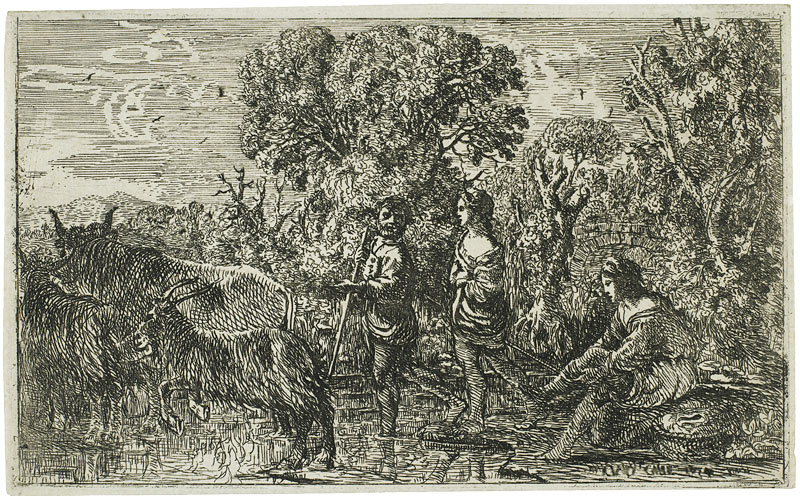
1634réf. 006-A1634. Radierung, 1634, auf Bütten. 10,8:17,2 cm. Literatur: Robert-Dumesnil 3, I (von III); Blum 8, I (von III); Russell 1982, Nr. 18, I (von III). Prachtvoller und kräftiger Druck vor der Nummer und der Beschädigung der rechten unteren Plattenecke. Mit feinem Rändchen um die Plattenkante. - Bis auf eine dünne Stelle links oben und Reste alter Hinterklebung verso am Oberrand ausgezeichnet und frisch erhalten. Eines der wenigen Nachtstücke im 43 Blatt umfassenden graphischen Werk des Künstlers, das, wie man weiß, von der Landschaftsmalerei A. Elsheimers (1578-1610) beeinflußt ist.
2006réf. 93672Thalia. New. 2006. Paperback. 2352780020 . FREE UPGRADE to Courier/Priority Shipping Upon Request - IN STOCK AND IMMEDIATELY AVAILABLE FOR SHIPMENT - Flawless copy brand new pristine never opened -- Text in French. 196 pages; illustrated mostly in color. Three III Catalogue Raisonne Catalog Raisonné Complete Works La Vie et L'uvre Oeuvre Raisonnee -- with a bonus offer . Thalia paperback
1791réf. 76002London: Straham and Cadell 1791. Tre volumi di cm. 21 pp. x 499 1; vi 518 6 d'appendice; v 1 465 51 d'indici. Solida legatura coeva in piena pelle dorsi con piccoli nervi e itoli e filetti in oro. Dorsi quasi impercettibilmente rifatti con tasselli originali. Esemplare genuino ed in ottimo stato di conservazione. Ex libris nobiliare inciso a ciascun volume Somerhill Library. Edizione non comune soprattutto in tale stato. Cfr. Einaudi 5332 e Goldsmiths 14612. Straham and Cadell unknown
2012réf. SBBIH-S3PA6PYYZUKICreateSpace Independent Publishi 2012. paperback. Good. Our good condition books are generally good for reading but not for gifting or collecting. They could have imperfections such as creasing fanning inscriptions margin notes yellowing staining on edge or cover or pages bumps scuffs etc etc sometimes multiple of these. It's a wide category that encompasses anything that isn't almost-new down to anything that is slightly better than poor. We would NOT recommend gifting Good books - these should be considered reading copies. Our books are dispatched from a Yorkshire former cotton mill. We list via barcode/ISBN so please note that the images are stock images and may not be the exact copy you receive furthermore the details about edition and year might not be accurate as many publishers reuse the same ISBN for multiple editions and as we simply scan a barcode or enter an ISBN we do not check the validity of the edition data when listing. If you're looking for an exact edition please don't order at least not without checking with us first although we don't always have time to check. We aim to dispatch prompty the service used will depend on order value and book size. We can ship to most countries see our shipping policies. Payment is via Abe only. CreateSpace Independent Publishi paperback
2016réf. SBBIH-5PU3IRCSZQDMPlain Vision Publishing 2016. hardcover. Very Good. Most of our very good books have only minor imperfections such as shelf wear consistent with a new book that's sat on a bookshop shelf for a year or two. Occasionally we may miss other minor imperfections as we have to grade books at speed. Our books are dispatched from a Yorkshire former cotton mill. We list via barcode/ISBN so please note that the images are stock images and may not be the exact copy you receive furthermore the details about edition and year might not be accurate as many publishers reuse the same ISBN for multiple editions and as we simply scan a barcode or enter an ISBN we do not check the validity of the edition data when listing. If you're looking for an exact edition please don't order at least not without checking with us first although we don't always have time to check. We aim to dispatch prompty the service used will depend on order value and book size. We can ship to most countries see our shipping policies. Payment is via Abe only. Plain Vision Publishing hardcover