7,282 results
1815ref. biblio1Pamphlet 8vo removed disbound 35 pp. Mostly disbound a bit soiled folds and creases at edges ink smudge on title aging and toning throughout. Noah Worcester 1758-1837 was born in New Hampshire and would become a noted a clergyman. He published several important tracts on religious subjects and appears to have had some unorthodox views of the holy trinity and published a few articles on the subject. However around the time of the War of 1812 Worcester reflected on the effects of war and became a pacifist. In 1814 he first published his "A Solemn Review of the Custom of War" which would continue in several other editions. In this work he argued that the violence and destruction of war was inconsistent with Christian values. He would found the Massachusetts Peace Society and this group would be in the forefront of a rather popular antiwar movement that emerged in America around the time of the War of 1812. ANB. OCLC. A. Fagan,
1807ref. 10091716mo leather spine with blue paper covered boards 240 pp .Lacks endpapers binding worn and somewhat stained hinges tender but in tact foxing and staining throughout; good overall. Noah Webster 1758-1843 introduced his spelling books in 1783 and they would become the basic school book for children in early 19th century America. Revised many times by Webster it would teach generations of Americans how to read and spell. This work which is from the press of Isaiah Thomas and Ebenezer Andrews was from another series and designed to improve the minds of young people. It was also published in many editions. Isaiah Thomas and Ebenezer T. Andrews,
1974ref. 4-1253Annandale VA: Charles Baptie Studio 1974. 1974. 1st ed. NAP. 209p. Photos. Maps. Beige wraps. SIGNED & inscribed. Fine Copy. Signed by Author. 1st. Paperback. Fine. Charles Baptie Studio, 1974. Paperback
ref. 0252020707.Ghardcover. Good. Access codes and supplements are not guaranteed with used items. May be an ex-library book. hardcover
ref. 0691165149.Ghardcover. Good. Access codes and supplements are not guaranteed with used items. May be an ex-library book. hardcover
ref. 46571599like new. unknown
2023ref. Gyan-9789368785736Facsimile Publisher 2023. Hardcover. New. 3.48 x 22.59 x 28.94 cm. english Facsimile Publisher hardcover
2010ref. 827j1926Toronto Ontario: Canadian Art Foundation. Very Good. 2010. First Edition. Single Issue Magazine. Features: Canvases by stellar Vancouver painter Elizabeth McIntosh; Delve into the painterly world of Montreal's Marc Seguin; Get the details of this summer's 'Extreme Painting' festival in Montreal; Zoom in on Mark Mullin's Calgary painting studio with photographer Dan Smith's interactive 360-degree views; and more. 120 pages. Clean bright and unmarked with light wear. A nice example. ; 4to . Canadian Art Foundation unknown
2014ref. 044674New York New York U.S.A.: Riverhead Books 2014. 1st Edition 1st Printing. Hardcover. As New/Near Fine. 8vo - over 7¾" - 9¾" tall. First Edition/First Printing Number Line With The One Present. Includes Index Notes And Sources. The Book Is Bound Within Boards With Mottled White Over Gray Paper. Silver Lettering On The Spine. The Unclipped Jacket Has Minor At The Folds And Upper Flap Fold Edges. Riverhead Books hardcover
2007ref. 4071-103120Contents appear as New Unopened Unread & Unblemished in like wraps. Inscribed & signed by author. "Dec. 2014 Jan. 2015. Merry Christmas XXX.From Your Friend …. Ozzie ….Enjoy the reading XOXO. Indian revolts in the province of Chimborazo Ecuador destroyed the family and goods of the rancher Juan Domingo Orosco as revenge for the maltreatment and abuse of the savages. After this unfortunate event Orosco converted and became a missionary priest who worked among the oriental tribes. He was always accompanied by his son Carlos who became very fond of a young Indian beauty named Cumandá. She saved the young white man's life in several situations. Finally she agreed to become the wife of the chief of the Jibaros Yahuarmaqui so the Jivaros would spare her beloved Carlos's life. At the end of this masterpiece we find out that Cumandá is the daughter of Juan Domingo Orosco and that she didn't die when his ranch was destroyed thanks to the protection of Pona wife of the chief of the Paloras. As it turns out Cumandá was raised in the jungle by one of the Indian tribes. Cumandá dies sacrificed according to the customs of the tribe; Father Orosco reconciles with his enemy Tongana and helps him to die as a Christian and the loss of his daughter ends the life of purity Father Orosco had vowed to uphold. Insurance & handling is included free. Extra Charges/Fees apply on Shipments Outside The U.S. and Expedited Shipments. Oversize and/or heavy books may require additional fees. Will advise 10.23.20 #4071-103120 Updated10.15.21 Updated 8.16.25 Noe Vaca Self Published paperback
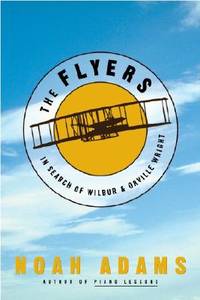
2003ref. 88191New York: Crown Publishers a Division of Random House 2003. First Edition Stated First Printing Stated. Hardcover. Very good/Very good. Neenah Ellis Author photograph. The format is approximately 5.75 inches by 8.5 inches. xiv 4 221 1 pages. Illustrations. Author's Note. Bibliography. Index. Signed by the author sticker on the front of the dust jacket. Inscribed by the author on the title page; inscription reads: "For Dick-- Noah Adams". Noah Adams is an American broadcast journalist and author known primarily since 1987 from National Public Radio. Derived from a Publishers Weekly article: Adams cohost of NPR's All Things Considered sets out to learn about the Wright Brothers their family and why they loved to fly so much. Adams visits all the spots important to the brothers from the Outer Banks of North Carolina where they flew gliders to France; Dayton Ohio; and New York. The most appealing part of the book is the look at the close relationship between Orville Wilbur and their sister Katherine. The three were devoted to one another and planned on living together. In fact when Katherine announced her plans to marry Orville was devastated and ended up not seeing his sister until she was on her deathbed years later. Adams uses letters and diaries to describe the lives of the Wrights; some of these details are not widely included in other books that focus on their inventions and accomplishments. Adams re-creates the travels of the Wrights. In the end he's a personable guide into the Wright Brothers' world offering a refreshing look at these aviation pioneers. "It takes only nineteen seconds to walk the distance of the first powered flight. But when I was there the wind was up and cold on my face and I felt as if I'd entered the black-and-white photograph I'd been seeing all my life. The sand is light gray there's a spill of surf in the distance. Wilbur running at the right of the plane and Orville the pilot are in dark suits. The propellers blur against the sky as the machine rises. . . ." So begins Noah Adams's adventure in search of Wilbur and Orville Wright a journey that takes him across the country as he follows in the footsteps of the famous brothers in an attempt to know them more deeply not just as inventors and pilots but as individuals as well. Adams one of our most distinctive and talented storytellers traveled thousands of miles and interviewed scores of experts and individuals to piece together his story. He finds a local boat captain to ferry him to Kitty Hawk along the same route that Wilbur took in 1900 and spends several days talking with descendants of the families who first welcomed the Wright brothers a century ago and helped them conduct their gliding experiments. To experience first-hand the thrill of being in the air Adams himself goes hang-gliding in the Outer Banks. To understand the aerodynamics of lift and drag and how the famous 1903 plane was constructed he visits Ken Hyde a Virginia pilot and vintage aircraft builder who is creating the world's most accurate reproduction of the 1903 Wright Flyer. Adams goes to the prop shop and handles the tools and materials that the Wrights used to build their gliders and planes and later he visits the wind tunnel at Langley Air Force Base where Hyde's reproduction was tested for the first time. He also travels to France to visit the old racetrack at Le Mans where Wilbur startled the European aviation community with his demonstration flights in 1908 and he spends a few days at Wisconsin's Oshkosh Fly-in where builders of experimental aircraft and owners of vintage planes gather every year to dazzle the crowds. Adams himself takes to the air in a restored Ford Tri-Motor America's first airliner which took its maiden flight seventy years ago. In Adams's book we encounter the Wright brothers in a way that no writer has introduced them before. Through the lens of his own experiences as well as original reporting letters diaries and other primary source material he helps us understand the talent and intensity of the brothers and their family including the fascinating deeply complex and at times tragic bond between Orville and Katharine his younger sister. The Flyers is a wonderfully rich narrative that brings an unprecedented spirit of immediacy to one of history's most dramatic stories. Crown Publishers [a Division of Random House] hardcover
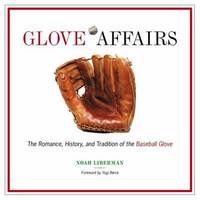
2003ref. 88696Chicago IL: Triumph Books 2003. Presumed First Edition First printing. Hardcover. Very good/Very good. Milo Stewart Front cover photograph. The format is approximately 8.25 inches by 8.25 inches. ix 1 150 pages. Illustrations some in color. Minor DJ wear. Front cover has photo of Mickey Mantle's glove that helped preserve Don Larson's 1956 Game 5 World Series. Perfect Game Index. Foreword by Yogi Berra. A baseball glove or mitt is a glove worn by baseball players of the defending team which assists players in catching and fielding balls hit by a batter or thrown by a teammate. Gloves are traditionally made of leather; but today other options exist such as PVC and synthetic leather. By convention the glove is described by the handedness of the intended wearer rather than the hand on which the glove is worn: a glove that fits on the left hand—used by a right-handed thrower—is called a right-handed RH or "right-hand throw" RHT glove. Conversely a left-handed glove LH or LHT is worn on the right hand allowing the player to throw the ball with the left hand. Noah Liberman was a staff writer for Street & Smith's SportsBusiness Journal. His sports writing has appeared in such national periodicals as and the Chicago Tribune ESPN the Magazine the New York Times Sports Illustrated and the Sporting News. Lawrence Peter "Yogi" Berra born Lorenzo Pietro Berra; May 12 1925 - September 22 2015 was an American professional baseball catcher who later took on the roles of manager and coach. He played 19 seasons in Major League Baseball MLB 1946-1963 1965 all but one for the New York Yankees. He was an 18-time All-Star and won 10 World Series championships as a player—more than any other player in MLB history. In 1920 Bill Doak a pitcher for the St. Louis Cardinals suggested that a web be placed between the first finger and the thumb in order to create a pocket. This design soon became the standard for baseball gloves. Doak patented his design and sold it to Rawlings. His design became the precursor to modern gloves and enabled Rawlings to become the preferred glove of professional players. For many years it was customary for fielders to leave their gloves on the field when their team went in to bat. This practice was prohibited by the major leagues in 1954. Baseball gloves have grown progressively larger since their inception. While catching in baseball had always been two-handed gloves eventually grew to a size that made it easier to catch the ball in the webbing of the glove using the off-hand to keep the ball from falling out. The shape and size of the baseball glove are governed by official baseball rules. Section 3.00 - EQUIPMENT AND UNIFORMS specifies glove dimensions and materials in parts 3.04 through 3.07. In addition to chronicling the amazing history of the glove Glove Affairs has detailed chapters featuring experts' tips on buying breaking in and fixing a glove; Major Leaguers' glove secrets and superstitions; insights into glove endorsements and glove collecting; and page after page of hysterical eye-opening stories from players coaches and industry insiders. With detailed historical records hilarious anecdotes from Major Leaguers and little-known personalities in the glove industry and countless pointers on what to do and not do to your glove Glove Affairs features everything a player or fan would want from a baseball book. Liberman had his Wilson glove for 25 years and lost it a few years ago. He went looking for a replacement but couldn't find one he liked as much. "I realized how beautiful gloves are to anybody who's played the game" Basketballs and bowling balls are replaceable "but gloves aren't" Liberman says. "When something's working for you when you're comfortable with it and you know that your livelihood depends on it you're hesitant to change" Liberman explains. It may seem that gloves have been around as long as baseball itself but they haven't. Liberman says the first player who probably used one was Doug Allison a catcher for the Cincinnati Red Stockings. In 1870 Allison was nursing an injured left hand after a long stretch behind the plate. "He had to have some protection and he put on a couple of thin half-fingered buckskin gloves" Liberman says. "He went out to catch and he caught hell from everybody because in those days baseball players just didn't wear gloves. It was a manly game and that was unheard of. But by 1896 everybody was wearing gloves." Triumph Books hardcover
ref. 3742897896.Gpaperback. Good. Access codes and supplements are not guaranteed with used items. May be an ex-library book. paperback
1992ref. 82194New York: W. W. Norton & Company 1992. First Edition Stated First Printing Stated. Hardcover. Very good/Very good. 332 4 pages. Foreword by Susan Stamberg Inscribed on the half-title page by the author. Inscription reads For Lynn Fondly Noah October 1 1992 Washington. Noah Adams is an American broadcast journalist and author known primarily since 1987 from National Public Radio. A former co-host of the daily All Things Considered program Adams has also been a contributing correspondent at the network's National Desk. His books tend to document a full year in his life specifically as that year relates to a particular passion or research project. He wrote and narrated a documentary called Father Cares: The Last of Jonestown in 1981 which earned him the Prix Italia the Alfred I. duPont-Columbia University Award and the Major Armstrong Award. Adams was the host of the nationally syndicated Minnesota Public Radio variety show Good Evening created in 1987 to replace A Prairie Home Companion after that show left the air. The host of National Public Radio's "All Things Considered" provides a behind-the-scenes look at the creation of this landmark radio show; the team of reporters announcers and technicians that work on the show; and anecdotes about key programs. All Things Considered ATC is the flagship news program on the American network National Public Radio NPR. It was the first news program on NPR premiering on May 3 1971. It is broadcast live on NPR affiliated stations in the United States and worldwide through several different outlets formerly including the NPR Berlin station in Germany. All Things Considered and Morning Edition were the highest rated public radio programs in the United States in 2002 and 2005. The show combines news analysis commentary interviews and special features and its segments vary in length and style. ATC airs weekdays from 4:00 p.m. to 6:00 p.m. Eastern Standard Time live or Pacific Standard Time recorded with some updates; in Hawaii it airs as a fully recorded program or from 3:00 p.m. to 5:00 p.m. Central Standard Time. A weekend version of ATC Weekend All Things Considered airs on Saturdays and Sundays. Major awards won by the show include the Ohio State Award the Peabody Award the Overseas Press Club Award the DuPont Award the American Women in Radio and Television Award and the Robert F. Kennedy Award. In 1993 the show was inducted into the National Radio Hall of Fame the first public radio program to be given that honor. In 2017 the first broadcast episode from 1971 of All Things Considered was selected for preservation in the National Recording Registry by the Library of Congress. Recordings in the collection are considered "culturally historically or artistically significant." Derived from a Kirkus review: The story behind National Public Radio's "All Things Considered" stories. Adams longtime co-host for "All Things Considered" offers his journal for 1989--the year the Berlin Wall came down Communism began crumbling in Eastern Europe Tiananmen Square erupted and the Ayatollah died. To provide a firsthand feel for his job the author who develops many NPR stories on his own intersperses radio interviews with travel notes and entries from his personal diary. The author tells of his background--rock 'n' roll DJ; program director; sales manager--and his worst moment in radio: While announcing for a small station lightning struck the station's antenna putting the broadcast off the air for an hour--and no one called up to complain. Adams relates many interesting stories and his writing is strong and involving. W. W. Norton & Company hardcover
1967ref. 82518New York: The Macmillan Company 1967. First Printing Stated. Hardcover. Very good/Good. DJ is price clipped. DJ has some wear and soiling. Includes Introduction by Admiral E. M. Eller Director of Naval History. Editor's Note Journal of the First Cruise and Journal of the Second Cruise. Also includes 9 illustrations including two maps. The Journals of Two Cruises Aboard the Privateer Yankee are an exciting historical find. Written by a young ardently romantic ship's clerk who signs himself "A Wanderer" they record the heady adventures of the American privateer Yankee on her first two voyages during the War of 1812. Only recently discovered among the possessions of a New England family they are printed here for the first time. The author was listed on the Yankee manifest as Noah Jones but in all probability his real name was Noah Johnson according to descendants. These historic journals bring vividly to life sea voyages that epitomized Yankee daring and skill dedication to freedom and Christian charity in dealing with conquered enemies. What life was like aboard a privateer and how these warships were manned sailed and deployed against the enemy is nowhere better illustrated than in these superb firsthand accounts. The private fleet of James De Wolf which sailed under the flag of the American government in 1812 was most likely a key factor in the naval campaign of the war. De Wolf's ship the Yankee was possibly the most financially successful ship of the war. Privateers proved to be successful than their US Navy counterparts claiming three-quarters of the 1600 British merchant ships taken during the war although a third of these were recaptured prior to making landfall. A privateer is a private person or ship that engages in maritime warfare under a commission of war. Since robbery under arms was a common aspect of seaborne trade until the early 19th century all merchant ships carried arms. A sovereign or delegated authority issued commissions also referred to as a letter of marque during wartime. The commission empowered the holder to carry on all forms of hostility permissible at sea by the usages of war. This included attacking foreign vessels and taking them as prizes and taking prize crews as prisoners for exchange. Captured ships were subject to condemnation and sale under prize law with the proceeds divided by percentage between the privateer's sponsors shipowners captains and crew. A percentage share usually went to the issuer of the commission i.e. the sovereign. Privateering allowed sovereigns to raise revenue for war by mobilizing privately owned armed ships and sailors to supplement state power. For participants privateering provided the potential for a greater income and profit than obtainable as a merchant seafarer or fisher. However this incentive increased the risk of privateers turning to piracy when war ended. The commission usually protected privateers from accusations of piracy but in practice the historical legality and status of privateers could be vague. It took 150 years for this journal to make it to print but when it did it allowed the world's greatest military power to look back at a time when its European counterparts controlled the seas. The Journals of Two Cruises aboard the American Privateer "Yankee" in the War of 1812 reflects a time when The United States had practically no navy when British outrages on the high seas notably the impressment of American sailors led the two nations to war. The British controlled the seas and America was virtually helpless to defend itself from ocean-based attacks. President Madison turned to America's merchant and other ships for help. Private ships were authorized to engage in "privateering" a polite word for legalized piracy. These privateers were able to harass British shipping in a manner similar to the way the Royal Navy was able to disrupt American shipping. This journal of life on board the "Yankee" sailing out of Bristol Rhode Island gives an inside view of life on a privateering ship during America's first war. The Macmillan Company hardcover
1999ref. 69275Albuquerque: Sandia National Laboratories 1999. Presumed first edition/first printing. Wraps. Very good. Staple bound. 78 pages. Includes: illustrations diagrams. Approved for public release. Distribution lists only about 100 copies. Authors continued: Goudy Sue P. and Byers Rupert K. and Beiriger Juday and Wiltzius David P. : Dave" and Shirley David N. The authors represented the following organizations: Sandia National Laboratories Advanced Network Integration Scientific Computing Systems Decision Support System Architecture Lawrence Livermore National Laboratory and ANNA Technologies Inc. The content of this report reflect work in progress during Fiscal Year 1998. The SP2 Pilot Project was launched in March 1998 as a way to bootstrap the DISCOM2 Distance Computing Program. The Pilot was directed towards creating an environment to allow Sandia users to run their applications on the Accelerated Strategic Computing initiative's ASCI Blue Pacific computation platform the unclassified IBM SP2 platform at Lawrence Livermore National Laboratory LLNL. The DISCOM2 Pilot leveraged the ASCI PSE Problem Solving Environment efforts in networking and Services to baseline the performance of the current system. The key areas of the pilot were: applicaitons services networking visualization and the system model. This report details not only the running of two Sandia codes CTH and COYOTE on the Blue Pacific platform but also the building of the Sandia National Laboratories proxy environment of the RS6000 platforms to support the Sandia users. Sandia National Laboratories paperback
1996ref. 61868Dayton OH: Morningside 1996. Hardcover. Very good/very good. vi 7-258 p. Maps. Diagrams; Illustrations. Footnotes. Noted on Sources. Index. Morningside hardcover
ref. 3368145215.Ghardcover. Good. Access codes and supplements are not guaranteed with used items. May be an ex-library book. hardcover
ref. 3368310291.Ghardcover. Good. Access codes and supplements are not guaranteed with used items. May be an ex-library book. hardcover
ref. 8441439036.Gpaperback. Good. Access codes and supplements are not guaranteed with used items. May be an ex-library book. paperback
ref. 1848193386.Gpaperback. Good. Access codes and supplements are not guaranteed with used items. May be an ex-library book. paperback
ref. 1436930847.Ghardcover. Good. Access codes and supplements are not guaranteed with used items. May be an ex-library book. hardcover
ref. 1436853745.Gpaperback. Good. Access codes and supplements are not guaranteed with used items. May be an ex-library book. paperback
ref. 1436721253.Gpaperback. Good. Access codes and supplements are not guaranteed with used items. May be an ex-library book. paperback