7,441 results
1801ref. 146541801. WEBSTER NOAH. The Prompter: A Commentary on Common Sayings and Subjects which are Full of Common Sense the Best Sense in the World. N.p.: Printed in the year 1801. 24mo. 86 p. A complete but rough copy lacking spine covering and rear board original front board damaged scattered dampstaining and occasional moderate browning fore-edge of D4-5 closely cropped but without loss. Neat contemporary printed book label of Elizabeth Van Liew on front pastedown and gift inscription to John P. Van Liew. A scarce early American printing of this great Webster favorite unrecorded in S&S. Skeel Noah Webster 681 records copies at MWA imperf IU and NNC. unknown books
1867ref. 17461867. SCHENCK NOAH HUNT. Epochs of Transition. An Oration Delivered before the American Whig and Cliosophic Societies of the College of New Jersey . June 26th 1866. Philadelphia 1867. 53 p. Wrappers. unknown books
1819ref. 1266971819. First Edition. NOAH Mordecai M. Travels in England France Spain and the Barbary States in the Years 1813-14 and 15. New-York; London: C. Kirk and Mercein; John Miller 1819. Octavo contemporary marbled boards rebacked in period style speckled calf-gilt red morocco spine label uncut. $3400.First edition of this fascinating travelogue by Mordecai Manuel Noah the most prominent Jew in America at the timeÑU.S. Consul to Tunis the first American Jew to receive an overseas diplomatic assignmentÑillustrated with engraved frontispiece portrait and four engraved plates one folding. An excellent uncut copy in contemporary marbled boards.One of the early American republic's most influential Jews Mordecai Noah 1785-1851 was a journalist editor of New York newspaper The National Advocate publisher of the New York Enquirer and a community activist. He held the position of United States Consul to Tunis in 1816 was the sheriff of New York in 1821 the Surveyor of the Port from 1829-33 and a judge of the Court of General Sessions in 1841. He is perhaps most remembered as the originator of the ambitious though never-realized Ararat Project on Grand Island near Niagara Falls in 1825Ña proposed utopian city of refuge for persecuted European Jews. ""In 1813 Noah became U.S. Consul to Tunis. The government hoped that he would be able to forge special ties with influential Jews in North Africa and entrusted him with an additional secret mission: to devise a 'means for the liberation' of 11 captive American seamen in Algiers. Noah's efforts to free American captives were mostly unsuccessful. Only two seamen were released the ransom paid was excessive and the secret agent Noah appointed Richard R. Keene turned out to have an unsavory past. Although Noah carried out his other consular duties successfully and also established ties with local Tunis Jews Secretary of State James Monroe recalled him in 1815É In the wake of the recall Noah published Correspondence and Documents 1816 in his own defense followed by Travels in England France Spain and the Barbary States 1819 his most important book. It describes his experiences abroad and contains valuable information on early 19th-century Tunisian Jewry"" ANB. The appendix includes letters from Thomas Jefferson John Adams James Madison and John Quincy Adams addressed to Noah. Rosenbach American Jewish Bibliography 205. Frontispiece and one plate ""Merchant Slave & Arab"" with expertly repaired margins not affecting image or text. Light foxing to text. A nicely refurbished uncut copy in contemporary marbled boards. hardcover books
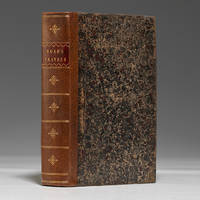
1561ref. 677551561. 2nd & last edition. 2nd & last edition. Fascinating Sixteenth-Century Digest of Land and Hunting Laws: 1 Copy of This Edition Located in North America Meurer Noe 1525-1583. Spangenberg Cyriacus 1528-1604. Von Forstlicher Oberherrligkeit und Gerechtigkeit Was die Recht Der Gebrauch Und die Billigkeit Desshalben Vermog. Item: Von dem Waren Oder Gerechten Rechten Der Teutschen Gerechtigkeit Aequitate Oder Billigkeit Wie und Wenn die von Einem Jeden Gerechten und Nit zu Strengen Richter Nach Gestalt und Gelegenheit Furfallender Ungleicher Fall und Sachen Zuhalten Und Darnach zu Urteilen Sey. Alles Beschriben durch den Hochgelehrten Noe Meurer. Auch vom Rechtmessigen Jagen und vom Missbrauch Desselbigen Bestendiger Bericht durch M. Cyriacum Spangenberg. Frankfurt am Main: Weigand Han and Georg Raben 1561. c xxxvii 1 lxxx 4 ff. Three parts in one volume. Folio 11" x 7"; 27.94 x 17.78 cm. Recent paper-covered boards retaining earlier paper spine endpapers renewed edges rouged. Light soiling front joint just starting at head recent owner bookplate of Hans Dedi to front pastedown. Title page printed in red and black large woodcut coat of arms to verso. Light browning to text faint dampstaining to fore-edge of text block two small library stamps to foot of title page. A nice copy of a handsomely printed volume. $2500. THIS DESCRIPTION IS TRUNCATED DUE TO CHARACTER LIMITS. PLEASE CONTACT US FOR A COMPLETE VERSION Second and final edition. Early game forestry and land laws represent some of the western world's earliest statutory attempts at environmental regulation and resource management. Beyond their legal framework these early codes offer rich insights into early modern social history illuminating sixteenth-century class hierarchies seigneurial privileges property rights and regional foodways. First published in 1560 this compilation by jurist Noe Meurer and theologian Cyriacus Spangenberg provides a comprehensive survey of land-use timber fishing and hunting regulations as enforced across the various territories of the Holy Roman Empire during the mid-sixteenth century. This second edition is significantly expanded compared to the first edition of 1560 which contained only 100 leaves. It includes key treatises on: Forest Sovereignty & Customary Rights Forstliche Oberherrligkeit examining jurisdictiona. unknown books
1842ref. 309481New Haven: Published by the Author. Sold by Crocker & Brewster Boston etc. . Printed by B.L. Hamlen 1842. Second edition first octavo edition. Engraved portrait frontispiece to vol. I by Asher Brown Durand after Samuel F.B. Morse no printer's name given. lxxvi 938; 1004 pp. 2 vols. Large 8vo 10-1/2 x 6 7/8 inches; 269 x 174 mm. Contemporary speckled sheep contrasting morocco spine labels marbled endpapers marbled edges. Covers scuffed joints worn some light spotting to text some worming to vol. I not affecting text. Morse Samuel French B. Second edition first octavo edition. Engraved portrait frontispiece to vol. I by Asher Brown Durand after Samuel F.B. Morse no printer's name given. lxxvi 938; 1004 pp. 2 vols. Large 8vo 10-1/2 x 6 7/8 inches; 269 x 174 mm. A fine copy of the rare octavo edition of Webster's unabridged dictionary the last that Webster published before his death in 1843. This is the textually best edition published in Webster's lifetime incorporating his final revisions some 5000 new definitions and a preface and introduction "on the origin history and connection of the languages of western Asia and Europe with an explanation of the principles on which languages are formed." Skeel notes that 3000 copies of this edition were printed fewer than the 5 or 6 thousand that Webster wanted but more than the 2500 of the 1828 first edition. A prospectus Skeel 585 advertised the edition at $13 sheep and $14 calf gilt. The work was in the press for over a year; a note in Webster's hand on a copy in the Connecticut State Library states "First signature of this edition impressed Oct. 22 1839. Last sheet impressed January 30 1841 15 months & days." The edition sold slowly with nearly half of the run still in sheets at the time of Webster's death. An attractive copy bearing the ownership signatures of George W. Turner dated the year he bought the mansion and farm of Elmscourt now Elms Court in Natchez Mississippi. Skeel 586; cf. Grolier American 36; cf. PMM 291; cf. Sabin 102335. Provenance: George W. Turner of Elmscourt or Elms Court Natchez Mississippi inscription in both volumes dated 1842 Published by the Author. Sold by Crocker & Brewster, Boston, [etc.] ... Printed by B.L. Hamlen unknown books
1807ref. 307347New Haven CT: printed by Oliver Steele & Co for Brisban & Brannan booksellers New York 1807. First edition. 250 pp. 1 vols. Small 8vo. Contemporary sheep. Rubbed worn stained but sound front flyleaf with old tear pen starts. Very good. First edition. 250 pp. 1 vols. Small 8vo. First edition of this scarce grammar by Webster which he would later consider to be one of his two most important works. A second edition appeared in 1822 and the text was reused in the introductory matter of his famed American Dictionary 1828. Webster wrote to a friend in 1829 "My 'Philosophical and Practical Grammar" . has been but little used: but except for my quarto Dictionary I consider it as altogether the most valuable work I have ever published." Skeel 433; Sabin 102375 printed by Oliver Steele & Co for Brisban & Brannan, booksellers, New York unknown books
1797ref. 35147Leominster: Printed by Charles Prentiss 1797. Second Leominster Edition. Pp. 91 2 pages publisher's advertisements. 1 vols. 12mo. Later half-sheep over marbled boards. Rubbed spine torn hole and tear in advertisement leaf affecting ads some browning and foxing notes on pastedown with the very precise near-contemporary signature of John D. W. Williams on blank and first page of text else very good. Second Leominster Edition. Pp. 91 2 pages publisher's advertisements. 1 vols. 12mo. An examination of such expressions as "When a man's name is up he may lie abed till noon" "She carries the Bell" "It is just as the fit takes him" "A Stitch in time saves nine" and "He has come out at the little end of the horn". Sabin 102383 for first edition Printed by Charles Prentiss unknown books
1999ref. 83801Jersey City: Jensen/Daniels 1999. First edition. 28 pp. Fine in printed wrappers. Jersey City: Jensen/Daniels unknown books
1991ref. vita5887Boston: Little Brown and Company 1991. First Edition. Octavo brown and cream boards hardcover gilt letters xix 514 pp. Fine in a Fine dust jacket. From dust jacket: The Last Citadel is the first full-length treatment of the most extensive military operation of the Civil War -- the siege of Petersburg Virginia. The Petersburg campaign officially began on June 9 1864 and ended on April 3 1865 when Federal troops at last entered the city. It was the longest and most costly siege ever to take place on North American soil yet it has been overshadowed by other actions that occurred in the same time period most notably Sherman’s famous “March to the Sea” and Sheridan’s celebrated Valley campaign. The ten-month Petersburg campaign witnessed many more combat actions than the other two combined and involved an average of 170000 soldiers not to mention thousands of civilians who were also caught up in the maelstrom. By its bloody end the Petersburg campaign would add more than 70000 casualties to the war’s total. Petersburg was the key to the war in the East. It lay astride five major railroad lines that in turn supplied the Confederate capital Richmond. Were Petersburg to fall these vital arteries would be severed and Richmond doomed. With the same dogged determination that had seen him through the terrible Overland campaign Union general Ulysses S. Grant fixed his sights on the capture of Petersburg. Grant’s opponent Robert E. Lee was equally determined that the city would not fall. The dramatic moving story of The Last Citadel is told largely through the words of the men and women who were there including officers common soldiers and the civilians of Petersburg. What emerges is an epic story rich in human incident and adventure. Based on exhaustive research into official records and unpublished memoirs letters and diaries as well as published recollections and regimental histories The Last Citadel also includes twenty-one maps and a choice selection of drawings by on-the-spot combat artists With The Last Citadel the Petersburg campaign at last emerges from the shadows to take its rightful place among the unforgettable sagas of the Civil War. Little, Brown and Company, (1991). First Edition. hardcover books
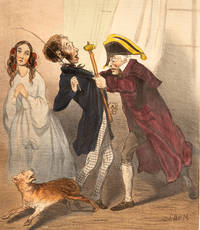
1880ref. 751751880. CHAM pseudonym of NO Charles Amde de. A la Guerre comme a la Guerre. BOUND WITH: Le Grand Magasin dÕImages bound first. Paris: Aubert circa 1880. Oblong quarto contemporary half green calf gilt marbled boards and endpapers. $2750.First edition of this suite of 30 full-page hand-colored lithographs of Cham caricatures documenting the French colonization of North Africa bound with an intriguing publication of 790 French magazine illustrations.Cham saw a career that would result in over 40000 drawings many of them caricatures and sketches of French and Algerian life. In 1843 he began to contribute to such newspapers as Le Charivari whose staff he eventually joined and remained for 30 years. These are ChamÕs parodies of war scenes apparently from the French colonies in North Africa 30 hand-colored lithographs similar to those he produced for the Album du SiÂge Charivari 1870Ñ in collaboration with Honor Daumier. ÒCham embued stories in Le Charivari with the comic force of his caricaturesÉ These in the future will remain when the fleeting stories are forgotten: the day after the stew evaporates and salt escapes us. People who have seen ChamÕs images will always remember the huge success of the cartoonistÓ Henri Beraldi. Bound with this is an ingenious publication of 790 small in-text wood-engravings produced by various engravers and appearing at different times in French magazines around which is woven a clever story line about the travels and adventures of the Lacroix family written to match the diverse engravings. Minor spotting to margins of a few plates not affecting imageslight expert restoration to contemporary binding. Extremely good condition. hardcover books
1911ref. 16927Paris: Masson 1911. Masson unknown books
2003ref. 30781Toronto: Insomniac Press 2003. First edition. 90 pp w/notes. Fine in glossy illustrated wrappers; a trade paperback original. Leznoff's second collection. Toronto: Insomniac Press paperback books
1977ref. 35850Portland OR: Image Gallery 1977. Hardcover. Very Good. Hardcover. Number 77 of 250 copies. Signed by Elliott Brannen McClarty and Van Cleve. A beautiful collaborative limited edition with translations of 21 Japanese Fudoki poems dating from the 8th century. John McClarty's subtle and lovely woodcuts and Clyde Van Cleve's printing arts serve to honor these ancient poems say the translators. Inserted in the book is an original woodcut titled and signed by McClarty. Bound in cream cloth with stabbed sewn binding and paper title label to cover. Book is in near fine condition save for a couple of small spots on the top page edges but unfortunately the dust jacket is dampstained on both the front and back covers. Measures 8 x 10 inches. Unpaginated about 45 bi-fold pages. PRI/072022. Image Gallery hardcover books
1965ref. 3613New York: McGraw-Hill 1965. 1st. Cloth. Collectible; Very Good/Very Good. 1st edition 1965. Clean and VG in a bright price-intact VG dustjacket with very light rubbing to the panels. Octavo 456 pgs. McGraw-Hill unknown books
2004ref. S9204Cave Junction OR:: Althouse Press 2004. 2004. 8vo. xxv 419 pp. Numerous figs. refs. Color-printed covers. Fine. ISBN: 1590872500 Althouse Press, (2004). unknown books
1958ref. 743New York Public Library 1958. 1st. Hardcover. 1958 1st edition 1 of 500 copies. VG in its original dark-blue cloth with bright gilt-lettering on spine. Thick quarto 655 pgs. New York Public Library hardcover books
ref. 05996Paris: Chez Aubert 1850. Amusing Memories from a French Military Post. With Thirty Finely Hand-Colored Comical Lithographs Heightened with Gum Arabic CHAM illustrator pseud. of Charles Amédée de Noé. Souvenirs de Garnison et des plaisirs attachés à la chose. Paris: Chez Aubert n.d. ca. 1850. First edition. Large oblong quarto 10 1/8 x 12 7/8 inches; 258 x 327 mm. Pictorial lithographed title and thirty fine comical lithographed plates all finely colored by hand and heightened with gum arabic. Each plate with printed caption below. Publisher's original green lithographed boards upper cover with the elaborate pictorial title design printed in black and red. Boards a little soiled corners and extremities a little worn. Internally remarkably clean and fresh the hand-coloring bright and well preserved. An excellent copy of this extremely rare Cham title. A wonderfully amusing - and particularly desirable hand-colored - collection of Cham's comic observations on French military life. The thirty lithographs present a succession of wonderfully absurd episodes involving officers conscripts cavalrymen and ordinary soldiers lampooning virtually every aspect of garrison life: military training and theory uniforms and grooming inspections discipline illness boredom relations between officers and men and the innumerable indignities of army service. The humor is characteristically Cham: economical in execution immediate in effect and dependent upon the interaction between the visual joke and the printed caption beneath each plate. The brilliant reds and blues of the uniforms together with more delicately applied coloring to the figures landscapes and architectural backgrounds give the present copy exceptional visual appeal. The application of gum arabic to selected areas further enriches the plates and provides a subtle gloss and depth to the coloring. The work is also encountered with the lithographs uncolored; copies with the complete suite of thirty plates hand-colored and heightened with gum arabic are considerably scarcer. In more than fifty years we have handled only one other hand-colored copy in 2011. CHAM pseudonym of Charles Amédée de Noé 1818-1879. French caricaturist and lithographer Cham published his first book Monsieur Lajaunisse in 1839 and from 1843 contributed regularly to illustrated journals most notably Le Charivari. He became one of the most prolific and popular French caricaturists of the nineteenth century producing thousands of drawings and lithographs satirizing contemporary manners fashions politics and everyday life. Several artists "followed in the wake of Daumier and Gavarni. Among the most attractive of the former is Amédée de Noé known as Cham that is Ham the son of Noah.it was said that he had 'an idea a day' for Le charivari. A good proportion of his thousands of lithographs were gathered into albums. His contributions to the Album du siège 173 in which Daumier was his collaborator are typical of his work" Ray pp. 155-156. Published by Aubert the celebrated Parisian house closely associated with the flowering of French lithographic caricature Souvenirs de Garnison is a particularly attractive example of the comic album at mid-century. Its generous oblong format allows Cham's compositions considerable scope while in the present copy the hand-coloring transforms the lithographs into exceptionally lively scenes of nineteenth-century French military life. The Plates: L'Infanterie à Cheval. De la Coupe. La Théorie. En V'la du Gruau! Cas non prévu par la loi. C'est pas amusant la Guerre. Merci de la Préférence! Heureux Conscrit! Le Pansage. Ah ça pekin tu n'as donc jamais vu deux troupiers. Non mon colonel la musique ne marche pas trop. Coupe à 10 centimes frisure gratis. Monsieur le Vicomte. Qué Bêtise! Petit Inconvénient de la Salle de Police. Oui j'ai quitté le Service. Cap'taine! Ce qui prouve la nécessité de l'Étude. Quel artifice!. Réformes dans l'uniforme. Le pas gymnastique. Il faut consoler les malades. Quel amour de bonnet!. Inspection de Cavalerie. Gueux d'Arabes! En V'la des Inventions. M'est avis Jean Piarre que ce beau Monchieu qu'tire le village. Pacot le pot-aux-roses est découvert. Je fus hier à l'opéra. Fus-tu content Y ne savent quoi inventer pour nous époumonner! A remarkably attractive example of this scarce Cham album complete with all thirty lithographs finely colored by hand and heightened with gum arabic-a particularly desirable form of one of Cham's most entertaining satires of French military life. Ray The Art of the French Illustrated Book 1700 to 1914 pp. 155-156. Paris: Chez Aubert, 1850 unknown books
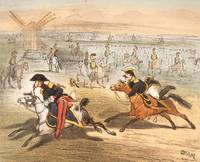
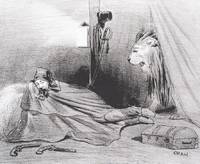
ref. 06849Paris: Chez Aubert & Cie. 1845. All is Fair in Love and War" Cham's Complete Satirical Album of the French Army in Algeria - Thirty-One Lithographed Plates CHAM pseudonym of Charles Amédée de Noé. À la guerre comme à la guerre. Par Cham. Paris: Chez Aubert & Cie. n.d. 1846. First edition. Oblong folio 10 1/8 x 12 3/4 inches; 254 x 324 mm. Pictorial lithographed title-page and thirty numbered lithographed plates each with printed caption beneath presenting Cham's wonderfully comic and frequently irreverent view of the experiences and misadventures of the French army in Algeria. Publisher's original pictorial green boards front cover reproducing the design of the lithographed title-page rear cover plain. Minimal rubbing and wear to spine ends and extremities; internally remarkably clean and fresh. An exceptional survival in the original publisher's pictorial boards. Near fine. A complete suite of Cham's celebrated caricatures of the French military campaign in Algeria comprising the pictorial title and all thirty numbered plates. The title À la guerre comme à la guerre is a proverbial French expression - literally "in war as in war" - conveying the idea that in difficult circumstances one must make do with whatever is available: essentially "you have to take things as they come." It provides the perfect framework for Cham's comic assault upon the romantic conception of military life. Rather than heroic battle scenes and martial glory Cham gives us the decidedly less glamorous realities of campaigning in North Africa: exhausting marches hunger and thirst unruly Arab horses uncomfortable nights beneath canvas troublesome provisions razzias encounters with wild animals and the innumerable indignities suffered by the ordinary soldier. Officers and enlisted men alike are subjected to Cham's irreverent eye the hardships of colonial campaigning becoming the raw material for a sustained sequence of visual jokes. The album relates specifically to the French conquest of Algeria begun in 1830 and still very much an active military enterprise when these lithographs appeared. By the mid-1840s the French army was engaged in the final stages of its long struggle against the forces of Abd el-Kader. Cham transforms this serious contemporary subject into an extended comic narrative of military discomfort confusion and misadventure. CHAM pseudonym of Charles Amédée de Noé 1818-1879. One of the most prolific French caricaturists of the nineteenth century Cham belonged to the generation that followed Daumier and Gavarni and became particularly associated with Le Charivari. His extraordinary productivity - he was said to have had "an idea a day" - resulted in thousands of drawings and lithographs many subsequently gathered into albums such as the present work. "It is to be regretted that space will not serve to represent the caricaturists and depictors of manners who followed in the wake of Daumier and Gavarni. Among the most attractive of the former is Amédée de Noé known as Cham that is Ham the son of Noah of whom it was said that he had 'an idea a day' for Le charivari. A good proportion of his thousands of lithographs were gathered into albums. His contributions to the Album du siège in which Daumier was his collaborator are typical of his work" Ray The Art of the French Illustrated Book pp. 155-156. The Plates: Pictorial lithographed title-page. Ça ne vaut pas l'eau filtrée!!. Au diable les chevaux arabes! Quelle chance!! Pour faire un bon pot-au-feu. V'là soixante lieues d'avalées! Ces gueux d'arabes. Dites donc caporal. Une visite sous la tente. Encore quinze lieues à faire. Une razzia. C'est fort drôle conscrit!. Un héritage flambé. Allons bon!. Gueux de sauvages! Y a des gens qui ont du bonheur! Il est bon d'avoir des amis. C'est une flêche empoisonnée. En toute chose il ne faut jamais considérer la faim. Qué beau pays!!! Est-ce que tu attends l'omnibus. Pauvres camarades! Cristi! V'la mon paletot qui se déchire! Y a pas de bon sens! Cher papa et chère maman. Mon Général. C'est un coup superbe! Un petit homme à grandes passions. Marche de nuit. Un réveil désagréable. L'appétit est le meilleur cuisinier. A remarkably fresh example of one of Cham's most entertaining lithographic albums complete with all thirty plates and retaining the particularly desirable original pictorial boards. Paris: Chez Aubert & Cie., 1845 unknown books
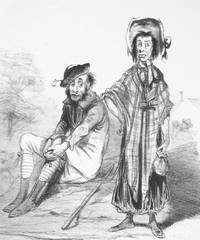
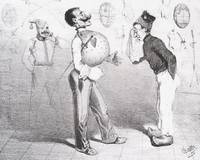
ref. 06867Paris: Chez Aubert & Cie. 1851. The French Take on the British. Fifteen Hilarious Lithographs Caricaturing British Life and Manners CHAM pseudonym of Charles Amédée de Noé. Mœurs Britanniques. Paris: Chez Aubert & Cie. n.d. ca. 1850. First edition. Large folio 13 1/4 x 10 inches; 336 x 252 mm. Lithographed pictorial title and fifteen numbered lithographed plates each with printed caption below. Publisher's original cream-colored glazed lithographed boards upper cover reproducing the pictorial title design. A remarkably fine clean and fresh copy. A wonderfully entertaining series of fifteen caricatures devoted entirely to the peculiarities of the British as observed from across the Channel by one of nineteenth-century France's most popular comic artists. Cham turns his irreverent eye upon an extraordinary cross-section of British life and manners: marriage Quakers army recruiting museums philanthropy prize-fighting Scottish dress the national costume incomprehensible English conversation the stocks turnpikes Chelsea pensioners and finally Smithfield Market. The splendid pictorial title sets the tone for the album. The British lion sits beside the Union Jack with a diminutive figure perched upon its mane while immediately before it lies a tied bundle prominently marked "IRLANDE" - a pointed visual joke upon Anglo-Irish relations that would have been immediately recognizable to Cham's contemporary French audience. The individual plates continue the sustained Anglo-French satire. In Un Costume National an elegantly dressed English gentleman encounters a ragged Irishman and asks whether he comes from a hot country to which the latter replies "Non monsieur je suis Irlandais." Baragouin Britannique makes comic capital of the Frenchman's traditional bewilderment at the English language while Les Hauts Grades lampoons the spectacular proportions of British military headgear. Elsewhere Cham takes aim at Quakers army recruiting the English enthusiasm for boxing Scottish national dress philanthropy public punishment toll roads Chelsea pensioners and the notorious livestock market at Smithfield. Taken together the fifteen scenes form a delightful visual survey of British national character institutions dress and customs as perceived through decidedly French eyes. CHAM pseudonym of Charles Amédée de Noé 1818-1879 was one of the most prolific and popular French caricaturists of the nineteenth century. He published his first book Monsieur Lajaunisse in 1839 and from 1843 contributed regularly to Le Charivari producing thousands of drawings and lithographs satirizing contemporary politics society manners and everyday life. Of Cham Ray notes that several artists "followed in the wake of Daumier and Gavarni. Among the most attractive of the former is Amédée de Noé known as Cham that is Ham the son of Noah.it was said that he had 'an idea a day' for Le charivari. A good proportion of his thousands of lithographs were gathered into albums. His contributions to the Album du siège 173 in which Daumier was his collaborator are typical of his work" Ray pp. 155-156. Published by Aubert the celebrated Parisian house closely associated with the golden age of French caricature and with such artists as Daumier Gavarni and Grandville Mœurs Britanniques is especially appealing for its sustained concentration upon Britain. Rather than merely including occasional English subjects among a broader collection of social satires Cham devotes the entire album to British manners and national stereotypes. Copies were also produced with the plates colored by hand; Bobins records a colored copy III 842. The present copy is the uncolored issue the lithographs displaying the strength and subtlety of Cham's original draughtsmanship to particularly good effect. The Plates: Une femme bien attachée. Le Quaker. Le Recruteur. Visite au Musée. Mariage d'inclination. Les Hauts grades. Philanthropie. Bien entendue. Les Boxeurs. L'Écossais. Un Costume national. Baragouin Britannique. In the Stocks. Le Péage du turn-pike. L'Invalide de Chelsea. Smithfield Market. A remarkably fine and fresh copy of Cham's delightful visual satire on Britain and the British-fifteen wonderfully observed caricatures ranging from Quakers prize-fighters and Highlanders to Irishmen Chelsea pensioners and the inhabitants of Smithfield Market preserved in the striking original glazed pictorial boards. Ray The Art of the French Illustrated Book 1700 to 1914 pp. 155-156. Bobins III 842 colored copy. Paris: Chez Aubert & Cie., 1851 unknown books
ref. 06847Paris: Chez Aubert 1850. Thirty Hilarious Lithographs of French Garrison Life by Cham A Remarkably Fresh Copy in the Original Pictorial Boards CHAM illustrator pseud. of Charles Amédée de Noé. Souvenirs de Garnison et des plaisirs attachés à la chose. Paris: Chez Aubert n.d. ca. 1850. First edition. Large oblong quarto 10 x 12 7/8 inches; 254 x 327 mm. Pictorial lithographed title and thirty fine comical lithographed plates each with printed caption below. Publisher's original green paper-covered boards front cover with a large lithographed pictorial design printed in black and red reproducing the title-page composition. Slight wear to lower two inches of front joint and a little minor rubbing and wear to extremities; internally remarkably clean and fresh. An exceptional survival near fine. A wonderfully entertaining album of military caricatures by Cham Charles Amédée de Noé 1818-1879 one of the most prolific and popular French caricaturists of the nineteenth century. The thirty lithographs mercilessly lampoon the pleasures - and considerably more numerous discomforts - of French garrison life. Officers and soldiers appear on parade at inspections and military exercises enduring the boredom of provincial postings and finding various means of amusing themselves when relieved of their duties. Cham's captions provide the punch lines while his wonderfully economical draughtsmanship captures the absurdities of military hierarchy discipline uniforms and social pretension. Among the scenes are a soldier presenting an enormous bearskin to an officer; another dejectedly reflecting upon the seven years and seven months remaining before his discharge; and a wonderfully energetic cavalry inspection in which a mounted officer hurtles past his superior while declaring that he has difficulty following the commander's advice to remain firmly seated in the saddle. Born Charles Amédée de Noé Cham adopted his celebrated pseudonym as a contraction of his Christian name and a playful allusion to the biblical Ham Cham in French. After studying under Nicolas-Toussaint Charlet and Paul Delaroche he abandoned painting for caricature and became one of the defining comic draughtsmen of nineteenth-century France. His long association with Le Charivari placed him in the company of Honoré Daumier with whom he shared an extraordinary ability to expose the absurdities of contemporary French life. The present album belongs to the great flowering of French lithographic caricature in the decades following the July Monarchy. Published by Aubert the Parisian house intimately associated with La Caricature and Le Charivari and with such artists as Daumier Grandville and Gavarni these albums were essentially deluxe gatherings of topical visual humor intended for a contemporary audience. Their ephemeral nature and large oblong format made them particularly vulnerable to wear handling and disbinding. Copies retaining their original pictorial boards and with the lithographs as clean and fresh as those in the present example are consequently especially desirable. A superb example of Cham's wonderfully irreverent military satire - thirty comic lithographs of the trials tribulations and dubious "pleasures" of French garrison life preserved in unusually fresh condition in the striking original pictorial boards. Paris: Chez Aubert, 1850 unknown books
ref. 05937Paris: Arnauld de Vresse & Martinet 1864. Cham's Most Ambitious Sustained Effort. Actualités - 116 Hand Colored Lithographs CHAM pseudonym of Amédée de Noé. Actualités. A fine collection of one hundred and sixteen hand colored lithograph plates all heightened with gum arabic. Paris: Arnauld de Vresse & Martinet 1864-1870. A superb collection of one hundred and sixteen 116 original hand-colored lithographs each heightened with gum arabic satirizing the political social and cultural life of France during the reign of Napoleon III and the dawn of the Third Republic. Folio 13 x 9/78 inches; 330 x 250 mm. printed on fine wove paper. Preserved loose as issued without text. Chemised in a half black morocco over red cloth clamshell case spine with five raised bands decoratively ruled and lettered in gilt in compartments. Cham - the indefatigable caricaturist Amédée de Noé - produced over 40000 drawings in his career but the Actualités series issued in parts throughout the 1860s and early 1870s remains his most ambitious sustained effort. These plates rarely encountered in contemporary hand-colored state brilliantly combine political allegory fashion satire social comedy and fantastical invention. The application of gum arabic provides added brilliance and depth to surfaces such as glassware metallic armor feathers silks and human expressions. Comparable to Daumier in invention but with a lighter more whimsical tone Cham's satires range from the boulevards of Paris to the battlefields of Europe lampooning politicians dandies soldiers and housewives alike. Large groups of Actualités in colored form are of great rarity. A Complete Annotated Inventory of Plates 1-116 is available upon request - each plate is listed with original French caption English translation and a brief thematic note. Annotated Inventory - Cham Actualités Plate 1. Les actualités. - Enfin les chaleurs commencent. - The news. - At last the heat begins. Note: Comic scene of Parisians suffering under the summer sun; satire on the weather obsessions of city life. Plate 2. Un progrès de la civilisation. - L'ombrelle pour chiens. - A progress of civilization. - The parasol for dogs. Note: Satire on bourgeois excesses showing pampered pets being shaded like aristocrats. Plate 3. Politique étrangère. - La France et le Mexique. - Foreign policy. - France and Mexico. Note: Commentary on Napoleon III's disastrous Mexican campaign; allegorical figures of France and Mexico. Plate 4. Les élégances de Paris. - Nouveau chapeau pour dames. - Parisian elegance. - New ladies' hat. Note: Caricature of extravagant women's fashion lampooning oversized hats and crinolines. Plate 5. Actualité militaire. - Toujours prêts! - Military news. - Always ready! Note: Mocking French soldiers' constant drills; humor in exaggerated weaponry and stiff poses. Plate 6. Les plaisirs d'hiver. - Le patinage à la mode. - Winter pleasures. - Skating in fashion. Note: Depicts the Parisian craze for ice-skating; shows fashionable couples more concerned with appearance than skill. Plate 7. Les omnibus parisiens. - Quelle bousculade! - Paris omnibuses. - What a crush! Note: Urban satire of overcrowded public transport; crinolines and top hats colliding inside a carriage. Plate 8. La guerre de 1866. - La Prusse et l'Autriche se disputant l'Italie. - The war of 1866. - Prussia and Austria fighting over Italy. Note: Political cartoon about the Austro-Prussian war; Italy personified as a prize being tugged in opposite directions. Plate 9. Photographie instantanée. - Le portrait en mouvement. - Instant photography. - The moving portrait. Note: Satire of photography's rise in popularity; comic exaggeration of blurred results. Plate 10. Un mal nécessaire. - Le percepteur des contributions. - A necessary evil. - The tax collector. Note: Traditional caricature of the hated taxman; grotesquely portrayed as an unwelcome guest. Plate 11. Actualité parisienne. - Les embarras de voitures. - Paris news. - The traffic jams. Note: Caricature of Haussmann's Paris with elegant carriages and omnibuses locked in chaotic congestion. Plate 12. Un petit malheur. - Le parapluie perdu. - A little misfortune. - The lost umbrella. Note: Everyday humor; the gentleman adrift in the rain without his indispensable umbrella. Plate 13. L'actualité musicale. - Le piano dans tous les salons. - Musical news. - The piano in every salon. Note: Satire on the bourgeois obsession with piano lessons and the noisy spread of amateur music-making. Plate 14. Les plaisirs de campagne. - Le déjeuner sur l'herbe. - Country pleasures. - The picnic. Note: Parody of rustic leisure; exaggerated figures feasting outdoors with comic mishaps. Plate 15. L'exposition universelle. - L'affluence des visiteurs. - The Universal Exhibition. - The crowd of visitors. Note: Commentary on the massive crowds at the Paris World's Fairs; shows confusion and jostling at the gates. Plate 16. La mode d'été. - Robes légères et transparentes. - Summer fashion. - Light and transparent dresses. Note: Satirical view of women's revealing dresses poking fun at modesty versus display. Plate 17. Les embellissements de Paris. - Les fontaines nouvelles. - The embellishments of Paris. - The new fountains. Note: Humor about Haussmann's civic improvements; gawkers admiring lavish public fountains. Plate 18. Actualité de la chasse. - Le gibier rare. - Hunting news. - The rare game. Note: Comic rural hunting scene; hunters proudly displaying ridiculous or unimpressive catches. Plate 19. Le progrès des sciences. - La machine à parler. - Progress in science. - The talking machine. Note: Satire on new inventions; proto-phonograph device humorously misfiring. Plate 20. Les bals masqués. - Quelle méprise! - Masked balls. - What a mistake! Note: Social satire of mistaken identity at costume balls; a common theme in Cham's humor. Plate 21. La guerre future. - Les aérostats militaires. - The future war. - Military balloons. Note: Fantastical vision of aerial warfare; anticipates both science fiction and future military innovations. Plate 22. Actualité mondaine. - Les visites du jour de l'an. - Society news. - New Year's visits. Note: Satire of endless social calls required at New Year; exhausted visitors and hosts alike. Plate 23. Un petit scandale. - La loge indiscrète. - A little scandal. - The indiscreet theater box. Note: Caricature of flirtations and impropriety observed at the opera. Plate 24. Les bains de mer. - Nouvelle distraction de la mode. - Sea bathing. - A new fashionable diversion. Note: Parisian society at the seaside; awkward swimsuits and seaside follies lampooned. Plate 25. Politique intérieure. - Le budget avalé. - Domestic politics. - The swallowed budget. Note: Allegory of the state devouring taxes; ministers pictured literally gobbling up public funds. Plate 26. La photographie en plein air. - Portrait de famille. - Outdoor photography. - Family portrait. Note: Humor on the stiff chaotic poses of families attempting photographs in public parks. Plate 27. L'actualité culinaire. - Les huîtres de la saison. - Culinary news. - The oysters of the season. Note: Satire of Parisian gourmands; a dandy overeats oysters to comic excess. Plate 28. La mode exagérée. - Crinolines impossibles. - Exaggerated fashion. - Impossible crinolines. Note: Caricature of giant hoop skirts blocking doorways and omnibuses. Plate 29. La chasse aux canards. - Un coup manqué. - Duck hunting. - A missed shot. Note: Humorous sporting failure; sportsmen fire in vain while ducks escape. Plate 30. Politique européenne. - La Pologne sacrifiée. - European politics. - Poland sacrificed. Note: Allegorical satire on the partitions and abandonment of Poland by European powers. Plate 31. Les joies du carnaval. - La bataille de confetti. - The joys of carnival. - The confetti battle. Note: Parody of carnival festivities with an explosion of paper masks and chaos. Plate 32. Un accident parisien. - La cheminée qui tombe. - A Paris accident. - The falling chimney. Note: Social humor; pedestrians flee from falling masonry in a crowded street. Plate 33. La pêche miraculeuse. - Rien que des bottes. - The miraculous catch. - Nothing but boots. Note: Satire of amateur fishermen; pulling up rubbish instead of fish. Plate 34. La toilette de bal. - Les corsets nouveaux. - The ball dress. - The new corsets. Note: Fashion caricature; women squeezed to absurd proportions by corsetry. Plate 35. Actualité dramatique. - La tragédie au boulevard. - Dramatic news. - Tragedy on the boulevard. Note: Comic melodrama of fainting women and exaggerated gestures parodying boulevard theater. Plate 36. Le progrès des transports. - Le chemin de fer sous-marin. - Progress in transport. - The submarine railway. Note: Fantastical satire; fish peering into a train carriage beneath the sea. Plate 37. L'actualité domestique. - Le chat gourmand. - Domestic news. - The greedy cat. Note: Comic household scene; pets stealing food from the table. Plate 38. Politique italienne. - Rome toujours attendue. - Italian politics. - Rome always awaited. Note: Allusion to the unresolved "Roman Question" and Italian unification struggles. Plate 39. Les élégances d'hiver. - Les fourrures nouvelles. - Winter elegance. - The new furs. Note: Satire of ladies in enormous fur wraps exaggerating luxury. Plate 40. Les fiacres de Paris. - Voyage mouvementé. - Paris cabs. - A bumpy ride. Note: Comic mishap of passengers being jolted violently in horse-drawn cabs. Plate 41. La guerre des sexes. - Les femmes triomphantes. - The war of the sexes. - Triumphant women. Note: Gender satire; women depicted overpowering their husbands or suitors. Plate 42. Actualité champêtre. - La moisson abondante. - Rural news. - The abundant harvest. Note: Rustic humor; peasants overloaded with giant sheaves of wheat. Plate 43. Les bains publics. - La pudeur compromise. - Public baths. - Modesty compromised. Note: Gentle satire of bathhouses nudity and awkward social mixing. Plate 44. La photographie d'art. - La pose difficile. - Art photography. - The difficult pose. Note: Humor about stiff unnatural posing required for long exposure times. Plate 45. Politique prussienne. - Le casque à pointe envahissant. - Prussian politics. - The invading spiked helmet. Note: Allusion to Prussia's militarism and looming threat in Europe. Plate 46. Actualité financière. - Le spéculateur ruiné. - Financial news. - The ruined speculator. Note: Commentary on stock market speculation and sudden bankruptcies. Plate 47. Les modes extravagantes. - Les paniers gigantesques. - Extravagant fashions. - Gigantic panniers. Note: Satire of revived 18th-century-style hoops blocking entire staircases. Plate 48. Les journaux du matin. - L'abonné impatient. - Morning newspapers. - The impatient subscriber. Note: A bourgeois anxiously waiting for his paper; lampoon of media obsession. Plate 49. Les inondations. - Paris sous l'eau. - The floods. - Paris under water. Note: Satirical exaggeration of floods with citizens floating in bathtubs or boats. Plate 50. Politique espagnole. - Toujours des révolutions. - Spanish politics. - Always revolutions. Note: Allusion to chronic unrest in Spain with revolts and changes of regime caricatured. Plate 51. La guerre en Orient. - Le Turc et le Russe face à face. - War in the East. - The Turk and the Russian face to face. Note: Satire of Russo-Turkish tensions often staged as dueling caricature figures. Plate 52. Les omnibus à impériale. - Les places convoitées. - Double-decker omnibuses. - The coveted seats. Note: Humor on passengers scrambling for seats on the upper deck. Plate 53. La chasse aux mouches. - Inutile précaution. - Fly hunting. - A useless precaution. Note: Domestic humor; clumsy attempts to swat flies exaggerated into chaos. Plate 54. Politique française. - Les orateurs à la tribune. - French politics. - The speakers at the tribune. Note: Ridicule of parliamentary debates with deputies gesturing wildly. Plate 55. Les pêcheurs du dimanche. - Toujours bredouilles. - Sunday fishermen. - Always empty-handed. Note: Gentle mockery of amateur fishermen returning without a catch. Plate 56. Les élégances de bal. - La valse effrénée. - Ballroom elegance. - The frantic waltz. Note: Caricature of fashionable dancing couples whirling to absurd extremes. Plate 57. Politique autrichienne. - Le double aigle embarrassé. - Austrian politics. - The embarrassed double eagle. Note: Satire of Austria's weakness and confusion in European affairs. Plate 58. Le progrès militaire. - Les canons monstrueux. - Military progress. - The monstrous cannons. Note: Exaggerated giant artillery; commentary on the escalating arms race. Plate 59. Les théâtres du boulevard. - Une scène larmoyante. - Boulevard theaters. - A tearful scene. Note: Satire of sentimental stage melodramas with over-acted weeping. Plate 60. Les chapeaux de printemps. - Une pyramide ambulante. - Spring hats. - A walking pyramid. Note: Comic exaggeration of towering women's hats. Plate 61. Actualité nautique. - Le canotage à la mode. - Nautical news. - Rowing in fashion. Note: Parisian society indulging in boating often with comic mishaps. Plate 62. Politique allemande. - L'unité impossible. - German politics. - Unity impossible. Note: Satire on the fragmented German states before unification. Plate 63. Les chiens savants. - Spectacle nouveau. - Trained dogs. - A new show. Note: Humor on performing animals parody of circus spectacles. Plate 64. Les modes d'hiver. - Manches exagérées. - Winter fashions. - Exaggerated sleeves. Note: Fashion satire; sleeves so large they obstruct doorways. Plate 65. La poste aux lettres. - Toujours en retard. - The postal service. - Always late. Note: Complaint about unreliable mail delivery with citizens waiting impatiently. Plate 66. Politique belge. - Le petit royaume menacé. - Belgian politics. - The little kingdom threatened. Note: Satire on Belgium caught between powerful neighbors. Plate 67. Les photographes de campagne. - L'âne indiscret. - Country photographers. - The indiscreet donkey. Note: Comic intrusion of animals into rural photographic sessions. Plate 68. Les loteries. - Le gros lot rêvé. - Lotteries. - Dreaming of the jackpot. Note: Satire on gambling and unrealistic expectations of sudden wealth. Plate 69. La mode des bottines. - Les pieds minuscules. - The fashion of boots. - Tiny feet. Note: Exaggeration of ladies' shoes shrinking feet to absurd proportions. Plate 70. Politique suisse. - Toujours neutre. - Swiss politics. - Always neutral. Note: Humor about Switzerland's perpetual neutrality portrayed as cautious passivity. Plate 71. Les catastrophes de chemin de fer. - Le wagon culbuté. - Railway disasters. - The overturned carriage. Note: Commentary on frequent railway accidents of the era. Plate 72. Les mariages arrangés. - La dot avant tout. - Arranged marriages. - The dowry before all. Note: Social satire on mercenary marriages with grotesquely mismatched couples. Plate 73. La guerre future. - Les cuirassés volants. - The future war. - Flying ironclads. Note: Fantastical vision of airborne warships; parody of military invention. Plate 74. Les excentricités de Paris. - Le promeneur masqué. - Paris eccentricities. - The masked stroller. Note: Humor on fashionable oddities; a man walking the boulevards in disguise. Plate 75. Politique anglaise. - Toujours pragmatique. - English politics. - Always pragmatic. Note: Caricature of Britain as practical and calculating contrasted with continental turmoil. Plate 76. Les modes extravagantes. - Les traînes interminables. - Extravagant fashions. - Endless trains. Note: Satire of impractically long gown trains sweeping the streets. Plate 77. Politique russe. - L'ours toujours menaçant. - Russian politics. - The ever-threatening bear. Note: Symbolic cartoon of Russia's power shown as a hulking bear. Plate 78. Les bains de vapeur. - La sudation universelle. - Steam baths. - Universal perspiration. Note: Gentle parody of spa culture and sweating rooms. Plate 79. Les journaux illustrés. - Les gravures ressemblantes - Illustrated newspapers. - Resembling engravings Note: Satire on crude likenesses in the press. Plate 80. La guerre de l'avenir. - Les soldats mécaniques. - The war of the future. - Mechanical soldiers. Note: Proto-science fiction; caricature of automaton troops. Plate 81. Politique italienne. - Garibaldi impatient. - Italian politics. - Garibaldi impatient. Note: Caricature of Garibaldi waiting for unity depicted restlessly. Plate 82. Les expositions de peinture. - Le tableau incompris. - Art exhibitions. - The misunderstood painting. Note: Comic reactions of the public to modern art. Plate 83. Les élégances de ville. - Le monocle général. - City elegance. - The universal monocle. Note: Satire of dandies and their fashionable monocles. Plate 84. La guerre maritime. - Les torpilles nouvelles. - Naval war. - The new torpedoes. Note: Exaggerated inventions in naval warfare. Plate 85. Les modes enfantines. - Les poupées vivantes. - Children's fashions. - Living dolls. Note: Children dressed in absurdly adult styles. Plate 86. Politique espagnole. - Toujours des pronunciamientos. - Spanish politics. - Always pronunciamientos. Note: Commentary on Spain's frequent military coups. Plate 87. Les amateurs de curiosités. - La collection encombrante. - Collectors of curiosities. - The cumbersome collection. Note: Lampoon of obsessive collecting cabinets overflowing with oddities. Plate 88. La guerre future. - Les canons volants. - Future war. - Flying cannons. Note: Fantastical satire of airborne artillery. Plate 89. Les modes d'hiver. - Les bonnets astronomiques. - Winter fashions. - Astronomical bonnets. Note: Giant headwear likened to celestial globes. Plate 90. Politique française. - Le budget en équilibre. - French politics. - The balanced budget. Note: Irony on the impossibility of balancing state finances. Plate 91. Les excentricités de la science. - L'homme volant. - Scientific eccentricities. - The flying man. Note: Parody of early aviation experiments. Plate 92. Les élégances champêtres. - Les ombrelles en fleurs. - Rural elegance. - Parasols of flowers. Note: Fanciful fashion plates turned comic. Plate 93. Politique prussienne. - Le casque à pointe triomphant. - Prussian politics. - The triumphant spiked helmet. Note: Symbolic of Prussia's victories in the late 1860s. Plate 94. Les amateurs de pêche. - Toujours la même histoire. - Fishing enthusiasts. - Always the same story. Note: Fishermen exaggerating their catch. Plate 95. Les élégances du bal. - Les plumes interminables. - Ballroom elegance. - Endless feathers. Note: Mockery of plumed headpieces colliding in the ballroom. Plate 96. Politique anglaise. - Le lion flegmatique. - English politics. - The phlegmatic lion. Note: Britain personified as calm and calculating. Plate 97. La guerre future. - Les fusées intelligentes. - Future war. - Intelligent rockets. Note: Satirical anticipation of guided missiles. Plate 98. Les promenades au bois. - Les élégances en voiture. - Walks in the Bois. - Elegant carriages. Note: Satire of the fashionable promenade at the Bois de Boulogne. Plate 99. Politique autrichienne. - L'aigle à deux têtes affamé. - Austrian politics. - The hungry double-headed eagle. Note: Austria depicted as weakened and needy. Plate 100. Les élégances de théâtre. - Les lorgnettes indiscrètes. - Theater elegance. - Indiscreet opera glasses. Note: Comic intrusion of spying spectators. Plate 101. Les modes d'été. - Les robes ballons. - Summer fashions. - Balloon dresses. Note: Crinolines rendered as literal balloons floating upward. Plate 102. Politique belge. - Le petit royaume entre géants. - Belgian politics. - The little kingdom among giants. Note: Belgium squeezed between Prussia and France. Plate 103. Les nouvelles inventions. - La machine à laver automatique. - New inventions. - The automatic washing machine. Note: Satirical exaggeration of mechanical household devices. Plate 104. Les modes excentriques. - Les coiffures pyramides. - Eccentric fashions. - Pyramid hairstyles. Note: Hair piled absurdly high. Plate 105. Politique française. - Le peuple et les impôts. - French politics. - The people and the taxes. Note: Grotesque allegory of taxpayers crushed under burdens. Plate 106. Les sports modernes. - Le vélocipède triomphant. - Modern sports. - The triumphant velocipede. Note: Early cycling craze mocked. Plate 107. Politique suisse. - Toujours entre deux chaises. - Swiss politics. - Always between two chairs. Note: Satire on neutrality and indecision. Plate 108. Les élégances nouvelles. - Le chapeau parapluie. - New elegance. - The umbrella-hat. Note: Fanciful hybrid fashion accessory. Plate 109. La guerre future. - Les soldats sous-marins. - Future war. - Submarine soldiers. Note: Imaginary underwater infantry. Plate 110. Politique italienne. - Rome encore promise. - Italian politics. - Rome again promised. Note: Delay of Rome's incorporation into Italy. Plate 111. Les élégances parisiennes. - Le chien bijou. - Parisian elegance. - The jewel-dog. Note: Fashionable women carrying jewel-bedecked pets. Plate 112. Les inventions nouvelles. - Le lit automatique. - New inventions. - The automatic bed. Note: Parody of "labor-saving" contraptions. Plate 113. Politique européenne. - Le congrès confus. - European politics. - The confused congress. Note: Delegates at a European congress portrayed in disarray. Plate 114. Les modes extravagantes. - Les jupons volants. - Extravagant fashions. - Flying petticoats. Note: Satire of undergarments turned into absurd balloons. Plate 115. Les catastrophes parisiennes. - La maison qui s'écroule. - Paris disasters. - The collapsing house. Note: Humor on urban accidents during Haussmann's works. Plate 116. La guerre future. - Le globe terrestre fortifié. - Future war. - The fortified globe. Note: Finale vision of Earth itself as a fortress; ultimate parody of militarism. Paris: Arnauld de Vresse & Martinet, 1864 unknown books
ref. 06041Paris: Maison Martinet 1856. Mr. Papillon's Highly Amusing Voyage Around the World Love and Romance in Various Countries CHAM pseudonym of Charles Amédée de Noé. Mr. Papillon par Cham. Mr. Papillon ou L'Amour Autour du Monde. Paris: Maison Martinet 1856. Large quarto 13 3/8 x 10 inches; 339 x 254 mm. Pictorial hand-colored lithograph title-page and twenty hand-colored lithograph plates heightened with gum Arabic and containing sixty-eight amusing images. The plates clean and fresh with superb hand coloring. Publisher's red cloth decorated in blind and lettered in gilt plain spine inner hinges expertly strengthened. An excellent copy. Mr. Papillon's highly amusing voyage around the world depicting love and romance in different countries. We have handled this title once before - the plates were identical but the title was Mr. Papillon ou L'Amour Autour du Monde. Also the binding was identical with the exception that there was no lettering on the front cover. Rare. OCLC locates just one copy in libraries and institutions worldwide: Bibliotheque Nationale de France. The plates: 1. - Mr. Papillon commence à croire qu'il finira par s'ennuyer dans la société de Mme. De St. Folichette. - Plusieurs fois déja il a trouve chez lui des chapeaux qui ne lui allaient pas du tout. - .et des cannes qu'il ne se connaissait point. 2. - Ne trouvant même plus de place dans ses armoires pour serrer ses effets. - Mr. Papillon demande une explication qui n'amene rien de bon. - Lui prouve qu'il n'est qu'un vilain jaloux que tous les torts sont de son côté et qu'il n'a qu'à se retirer. 3. - Mais pourquoi diable aussi s'être amourache d'une Francaise! Ce peuple est si léger!. une Anglaise c'est plus calme. - Lady Brighton qu'il a tres souvent recontrée dans les promenades voilà une passion qui doit être tranquille! - Malheureusement toutes ses affections paraissent portées sur son chien. - Comment entrer en conversation. Mr. Papillon y ayant bien réfléchi achète une chienne. 4. -Mr. Papillon se rend à la promenade suivi de sa chienne. - Le chien de Mylady arrive immédiatement. - Mr. Papillon prend sa chienne sous son bras et se retire. - Rentré chez lui le chien de Lylady devient rêveur et refuse de manger. 5. - My lady remarque avec douleur le changement qui s'opere depuis quelques jours chez son chien. - et ne voit qu'un moyen engager Mr. Papillon à venir prendre le thé chez elle accompagné de sa chienne. - Croyant le moment favorable Mr. Papillon se jette aux pieds de Mylady lui déclare qu'il ne peut désormais vivre sans elle et que si on le repousse il en finira avec la vie. de sa chienne! 6. - My lady pense à son chien Mr. Papillon triomphe. - A dater de ce moment Mr. Papillon obtient l'autorisation de suivre tous les jours Mylady à la chasse au renard. 7. - Au bout de quelques jours Mylady est prise d'un accès de spleen. - Et conduisant Mr. Papillon au fond de son parc elle le prie de vouloir la suivre et lui donner ainsi une dernière marque d'affection. - Mr. Papillon croit poli de faire au moins semblant. - Apres quoi il décampe de l'Angleterre sur le premier bateau vapeur venu et débarque a Cadix. 8. - Et tombe foudroyé d'amour devant dona Prunella qui se rend a la course de taureaux. - Profite de cet incident pour acheler immédiatement un costume de picador. - Mr. Papillon se présent dans l'arène avec l'aisance d'un homme qui a fait autre chose toute sa vie. 9. - Mr. Papillon commence à croire que le véritable picadore n'est pas lui. - Et pense que son costume a du perdre de sa rigidité. - Mr. Papillon est de nouveau tiré de ses réflexions. 10. Heureusement il est une providence pour les amoureux; Mr. Papillon va tomber aux pieds de dona Prunella - qui par ses soins touchants et pas mal de cataplasmes apporte un adoucissement à sa mésaventure. - Et autorise Mr. Papillon qui a repris son costume ordinaire a venir tous les soirs de 8 à 10 donner une sérénade sous son balcon. 11. - Ayant un soir dépassé la dixieme heure Mr. Papillon se trouve nez à nez avec un rival qui a l'autorisation de 10 à 11 heures de nuit. - Beaucoup moins fort que son rival sur la guitare Mr. Papillon en recoit un fort coup sur la tête. - Dona Prunella soupçonnant qu'elle pourrait fort bien être pour quelque chose dans le nouvel accident arrivé a Mr. Papillon croit de son devoir de le recouvrir de nouveau de cataplasmes. - Rappelé à la vie Mr. Papillon veut témoigner sa reconnaissance compliquée de pas mal d'amour Dona Prunella réplique Cachucha et lui casse deux dents. 12. Mr. Papillon soupire après une femme qui ferait moins facilement ce qu'elle veut de ses pieds;. une Chinoise! Voilà son affaire. - Ne connaissant pas d'obstacles quand il s'agit peut-être de son bonheur Mr. Papillon débarque en Chine. - Mr. Papillon jetant ses regards autour de lui tombe éperdument amoureux de la belle Péko femme de Mandarin. 13. - S'habille en Chinois et entre comme enseigne chez le marchand de thé dont la boutique fait face aux fenêtres de la belle Péko. - Rentrant chez lui le mandarin remarque le magot Papillon et le trouve cocasse. - L'achète au marchand de the pour en garnir la cheminée de sa femme. 14. - L'ayant fait placer sur la cheminee le mandarin sort faire administrer cent coups de baton au professeur de tam-tam de Mme. Peko le soupconnant tres fort de faire la cour a son eleve. - Mr. Papillon profite de la circonstance pour sauter de la cheminee et expliquer la purete de ses intentions a Madame. - Regardant par la fenetre et voyant assommer le professeur de tam-tam la mandarine suppose qu'il ne sera plus bon a grand chose - et qu'elle ferait aussi bien de suivre Mr. Papillon qui lui en fait l'offre et parait un galant homme. 15. - Malheureusement ses pieds trop petits pour la porter la font tomber sur le nez au moment ou elle veut executer son projet. - Mr. Papillon tombe également au bruit de la sonnette qui annonce le retour du mandarin. - Le mandarin ramasse sa femme et considérant son magot s'étonne de ce qu'il soit tombé de la cheminée sans se casser. - Il lui campe un fort coup de baton sur la tête afin de se rendre bien compte de la dureté de sa pâte. 16. - Etonnement du mandarin qui reçoit une réplique à laquelle il était loin de s'attendre de la part d'un magot de cheminée. - Venant à avoir des soupçons le mandarin obtient jugement et condamnation contre son magot qui subit aussitôt la peine. - Le bourreau s'étant heureusement endormi au milieu de la cérémonie Mr. Papillon décampe avec le morceau de bois instrument de son supplice. - et parvient à le vendre à un peintre comme cadre pour un de ses tableaux. 17. - Poursuive et sur le point de tomber entre les mains des soldats du mandarin Mr. Papillon supplie un bourgeois Chinois de vouloir bien le chacher dans sa maison. - Le bourgeois y consent à la condition que Mr. Papillon lui donnera une marque de confiance à laquelle on tient beaucoup en Chine. - Le Chinois manque un bêau jour on bût; Mr. Papillon lui retire sa confiance et sa personne. - Ayant repris ses anciens effets et s'embarquant comme de coutume sur le premier bateau a vapeur venu Mr. Papillon débarque en Laponie. 18. - Mr. Papillon n'en est pas fache car il n'aura rien a craindre de maris aussi petits dans le cas ou ils viendraient à entrer en fureur. - Aussi se donne-t-il un affreux tour de reins en adressant ses hommages à une Lapone. - Ayant obtenu un rendez-vous le mari Lapon venant à rentrer Madame fait chacher Mr. Papillon dans son armoire. - Mr. Papillon a beau faire le mari Lapon aperçoit quelque chose. 19. - Mr.Papillon prend la fuite mais le mari Lapon monte en voiture et lui donne la chasse. - Mr Papillon est saisi par l'équipage. - Heureusement pour lui son tailleur lui fournissait de mauvaises étoffes. 20. - Mr. Papillon gagne le port le plus voisin s'embarque comme d'habitude sur le premier vaisseau venu et débarque en Corse - où il parvient a nouer une intrigue dont il se dégoûte vite en voyant le couteau de la vendetta piqué dans sa porte comme avertissement. - Rentré en France Mr. Papillon éprouve le besoin de faire une fin Malheureusement ses aventures ayant fait du bruit il épouse sa femme de ménage qui seule voulut bien accepter sa main. Paris: Maison Martinet, 1856 unknown books
ref. 06206Paris: Chez Aubert Éditeur du Musée Philipon. 1842. Twenty Superb Hand Colored Lithograph Plates by Daumier Gavarni Platier Bouchot & Plattel DAUMIER Honoré & others. Paris Comique Revue Amusante Des Caractères Moeurs Modes Folies Ridicules Excentricités Niaiseries Bêtises Sottises Voleries et Infamies Parisiennes. Text non politique Par MM. L. Huart Michelant Ch. Philipon et autres Rédacteurs du Charivari et de la Caricature: Dessins Comiques par MM. Bouchot Cham de N. Daumier Gavarni Grandville et autrés artistes du Musée Philipon. Paris: Chez Aubert Éditeur. 1844. Folio 13 3/16 x 10 inches; 335 x 254 mm. iv 152 pp. Twenty magnificent hand colored lithographs all heightened with gum arabic. Some light foxing which is mainly confined to the blank borders of the plates. The plates are by: Jules Platier 6; Honoré Daumier 5; Paul Gavarni 4; Frédéric Bouchot 4 & Henri Daniel Plattel 1. Publisher's quarter green calf over pictorial green paper boards smooth spine decoratively ruled and lettered in gilt in compartments. Extremities a little rubbed otherwise near fine. An excellent example with eleven of the wonderful hand colored lithographs by Honoré Daumier and Paul Gavarni. "The house of Aubert was ingenious in marketing its products. Its lithographs.were published one by one in periodicals like Le charivari and together in suites by the same artist without letterpress. Still a third form of publication was in albums made up of lithographs by several artists with accompanying texts. These collections most commonly took the form of volumes with the generic title Paris Comique which consisted of twenty colored lithographs accompanied by quite unrelated texts. Aubert remarked that the resulting hodgepodge had 'a plan that is easy to follow for it consists in not having any' and in fact this was indeed a frugal procedure for reusing old texts and already published plates. The interest of the various volumes of Paris comique resides entirely in the lithographs they happen to contain. It can be considerable however since Daumier and Gavarni are the predominant artists" Ray The Art of the French Illustrated Book 164. The Plates: 1. DAUMIER. Chasse et Pêche no. 8. Je l'ai pris pour un lièvre. 2. DAUMIER. Monomanes no. 7. Le Malde Imaginaire. 3. GAVARNI. Les Plaisirs Champêtres no. 2. Le Charge D'Affaires. 4. BOUCHOT. L'École des Voyageurs no. 12. La Neige. 5. DAUMIER. Croquis D'Expressions no. 44. Charmant jeune trainant tous les coeurs après soi Cel qu'on depeint nos Dieux ou tel que je vous vois! Phedre. 6. GAVARNI. Les Rêves no. 2. Monsieur Joseph rêve qu'il est Cure et dit la Messe à St. Thomas d'Aquin. 7. DAUMIER. Croquis D'Expressions no. 2. 8. PLATIER. Profils Contemporains no. 15. Le Restaurateur. 9. BOUCHOT. Ce Que Parler Veut Dire no. 11. 10. GAVARNI. Transacions no. 7. Qu'est ce que tu me bailleras b'en si j' te rends ton fagot 11. BOUCHOT. Ce Que Parler Veut Dire no. 16. 12. BOUCHOT. Ce Que Parler Veut Dire no. 5. 13. PLATIER. Actualites no. 22. 14. PLATIER. Actualites no. 27. 15. PLATIER. Croquis D'Expressions no. 96. 16. GAVARNI. Actualités no. 1. 17. PLATIER. Croquis D'Expressions no. 89. 18. DAUMIER. Croquis D'Expressions no. 45. 19. PLATTEL. Actualités no. 1. 20. PLATIER. Les Mauvais Payeurs no. 4. Paris: Chez Aubert, Éditeur du Musée Philipon..., 1842 unknown books
ref. 05954Paris: Chez Aubert & Cie. 1850. Fifteen Hand-Colored Lithographed Plates Caricaturing the British CHAM pseudonym of Amédée de Noé. Mœurs Britanniques. Paris: Chez Aubert & Cie. n.d. ca. 1850. Large folio 13 1/4 x 10 inches; 336 x 252 mm. Hand-colored lithographed title and fifteen numbered hand-colored lithographed plates heightened with gum arabic. Publisher's cream-colored glazed lithographed boards neatly rebacked with cream-colored cloth backstrip. A little bit of marginal soiling. Otherwise a near fine copy. Of Charles Amédée de Noé 1818-1879 "known as Cham that is Ham the son of Noah.it was said that he had 'an idea a day' for Le charivari. A good proportion of his thousands of lithographs were gathered into albums. His contributions to the Album du siège 173 in which Daumier was his collaborator are typical of his work" Ray The Art of the French Illustrated Book pp. 155-156. The Plates: 1. Une femme bien attachée 2. Le Quaker 3. Le Recruteur 4. Visite au Musée 5. Mariage d'inclination 6. Les Hauts grades 7. Philanthropie. Bien entendue 8. Les Boxeurs 9. L'Écossais 10 Un Costume national 11. Baragouin Britannique 12. In the Stocks 13. Le Péage du turn-pike 14. L'Invalide de Chelsea 15. Smithfied Market Bobins III 842. Paris: Chez Aubert & Cie., 1850 unknown books
ref. 05994Paris: Martinet 1850. The Art of Success in the World! An Ironic Satiric Burlesque by Cham CHAM pseudonym of Amédée de Noé. L'Art de Réussir dans le Monde. Procédé Simple et Facile pour se Faire Jeter a la Porte en Fort peu de Temps. Paris: Martinet n.d. c. 1850. First edition. Large quarto 13 1/8 x 10 in; 337 x 253 mm. Lithographed title with large hand-colored pictorial vignette twenty hand-colored lithographed plates by Fernique after Cham the plates containing three or more images a total of sixty-two each with droll captions. Publisher's illustrated pink boards. Spine expertly and almost invisibly repaired lightly scuffed at board extremities A clean and bright example with the plates in very fine and clean state. A fine copy of a very rare volume with OCLC/KVK locating only two copies in institutions worldwide at the Victoria & Albert Library and Bibliothèque Nationale et Universitaire Strasbourg. "It is to be regretted that space will not serve to represent the caricaturists and depictors of manners who followed in the wake of Daumier and Gavarni. Among the most attractive of the former is Amédée de Noé known as Cham that is Ham the son of Noah of whom it was said that he had 'an idea a day' for Le charivari. A good proportion of his thousands of lithographs were gathered into albums. His contributions to the Album du siège in which Daumier was his collaborator are typical of his work" Ray The Art of the French Illustrated Book pp. 155-156. Bobins IV 1348. Paris: Martinet, 1850 unknown books