[Anonym]Antiquariat.de

188 resultados
1792ref. 97657[Görlitz], 1792. XXXXIV, 186 S. 20 cm. Pp. d. Zeit mit Rückenschildresten.
2007ref. 5143990Solothurn / Düsseldorf: Walter Verlag + Düsseldorf: Patmos Verlag 1993-2007. Zwischen 550-800 Seiten pro Band. Mit einigen Abbildungen. Gr.-8° (23,5 x 17 cm). Orig.-Leinenbände mit illustrierten Orig.-Schutzumschlägen.
2012New Turkish Original aesthetics full leather bdg. in traditional Ottoman style. In publisher's special box. 4to. (30 x 20 cm). In Arabic. All edges gilt. Fully illuminated as traditional: Serlevha, hecde hizb, cüz roses, zahriye semses, müsenna besmele, with 'tevafuk' and color secavends, and med-kasirs. 605, 11, [4] p. The glorious Quran. Kur'an-i Kerim. was an Islamic calligrapher born during Ottoman times. His real name is Sheikh Musa Azmi, which is why his works may be found to be signed as Azmi. He is known by the pseudonym Hamid. He is also known as Hamid Al Amidi in international circles. Hamid learned the jali-thuluth (Turkish: celi-sülüs) style from Mehmed Nazif (1846-1913), the naskh and thuluth styles from Kamil Akdiç (1862-1941) and the ta'liq style from Mehmed Hulusi (1869-1940). His works are on display in many countries including Egypt and Iraq. His works are also on display in many newly built mosques of Istanbul. Some of his popular students include Hasan Çelebi and Fuat Basar. He was buried in the Karacaahmet Cemetery of Üsküdar district, Istanbul.
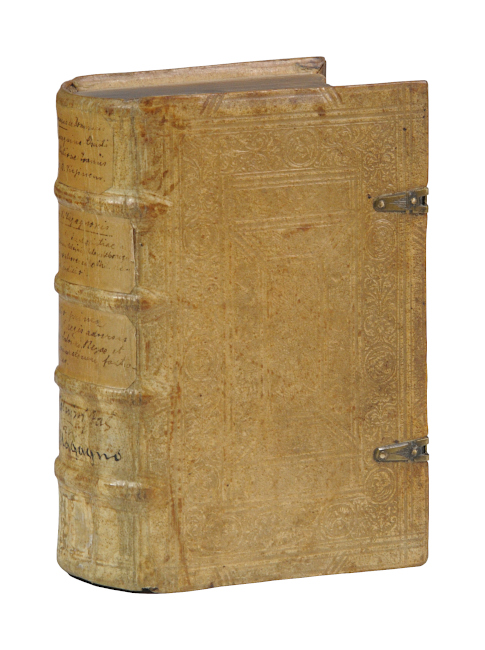
1684ref. 46401343Paris, , Journel, , 1684 ; in-12 , vélin ivoire de l’époque. - 18 ff. n. ch. [Titre, épître, préface, privilège], 188 pp., 32 ff. n. ch. [Remarques, table, catalogue Journel]. - EDITION ORIGINALE DE CETTE TRADUCTION du Commonitorium Peregrini de Vincent de Lérins. Elle est de Jean de FRONTIGNIERES qui a signé la dédicace à François de Harlay. Le traité de Vincent de Lérins avait été traduit une première fois par G. Ruzé en 1560 – Voir Graesse VI, p. 327 - Cioranesco 31889. In ne sait rien de Jean de Frontignières qui est aussi l’auteur de quelques poèmes, d’une traduction du livre d’Oexmelin sur les flibustiers et d’un roman intitulé La Puits de la Vérité. Vincent de Lérins, un Lorraain natif de Toul, fut moine de Lérins. « Venu, comme de nombreux autres moines de Provence, du Nord de la Gaule, Vincent a écrit son Commonitorium en 434 » (Dict. de Spiritualité). L’objet de ce traité, rédigé trois ans après e Concile d’Ephèse qui condamne le Nestorianisme, est de définir les critères de l’orthodoxie chrétienne. Ignoré au Moyen Age, le Commonitorium connut de nombreuses éditions aux XVIe et XVIIe siècles. « L’Eglise catholique s’appuie sur le canon lérinien pour consolider le concept de tradition, la Réforme pour faire le procès de l’innovation. Au XIXe siècle, le cardinal Newman contribuera à l’actualité de Vincent en faisant du traité une lecture quoi lui permet d’y trouver des bases pour l’œcuménisme » J.P. Weiss in Dict. de Spiritualité. Qualifié de Livre d’Or par le Père Labbe, ce livre est un guide pour préserver les fidèles de toutes les nouveautés en matière de foi. En matière de dogme, toute nouveauté est suspecte à moins qu’elle n’ait été définie dans un concile. Ex-libris manuscrit et imprimé de L. Neveu, frère du diocèse de Versailles (XIXe s.). - Quelques feuillets déreliés.
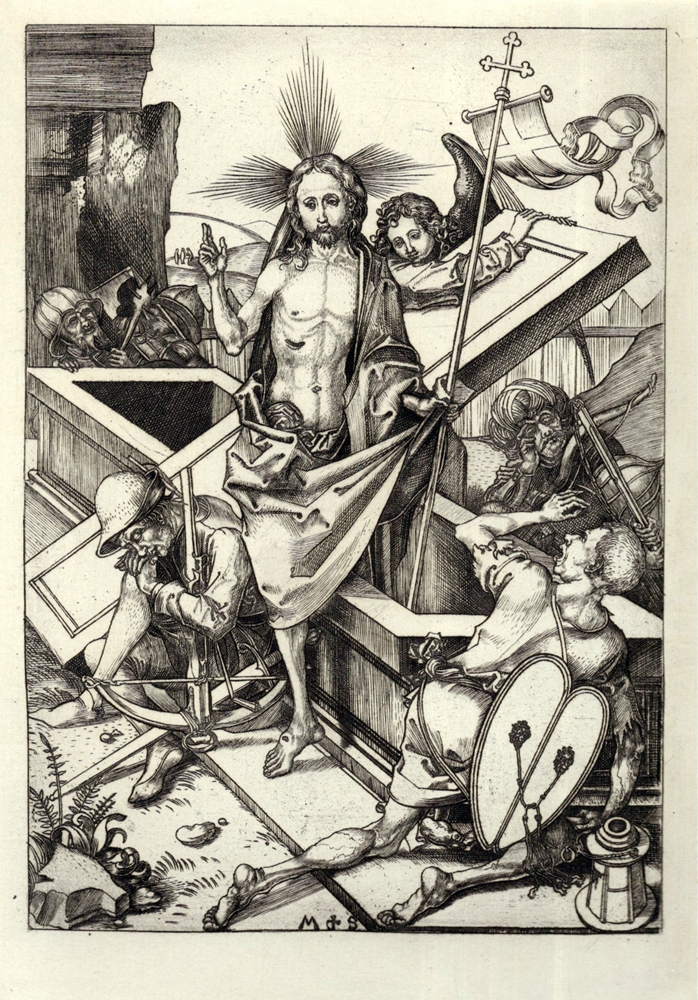
1881ref. 95398Paris, Amand-Durand, [ 1881]. 16 x 11,2 cm (Einfassung). Blattmaß 17,9 x 12,5 cm. Verso mit dem rotem Orig.-Stempel des Stechers. Unter Feinkarton-Passepartout.
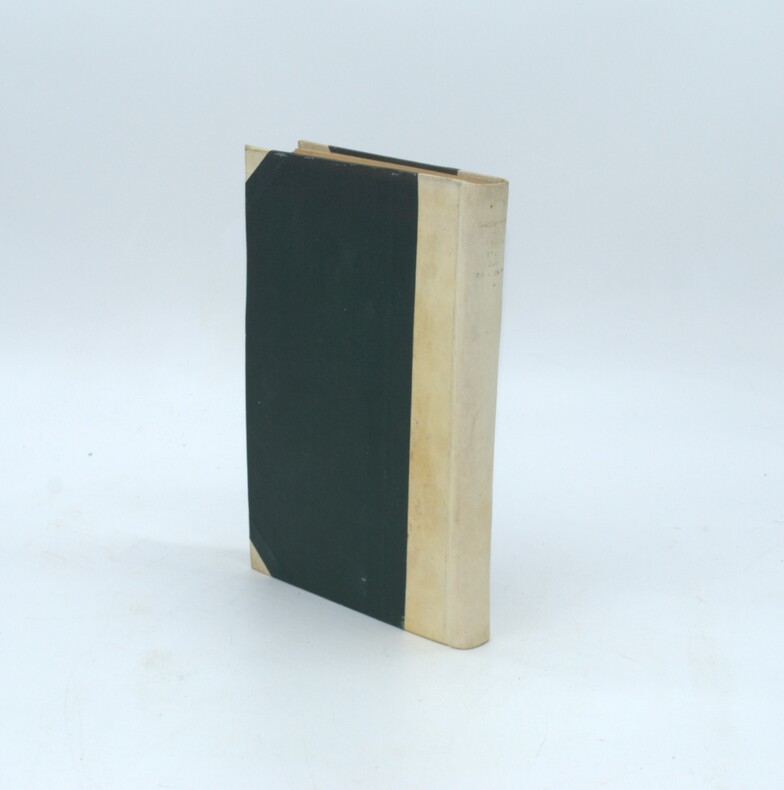
1920ref. PHO-1443Paris , Librairie Paul Geuthner , 1920 , in-8 , viii-315pp.-1f. , demi cuir et coins , dos lisse , perforations sur le premier plat .
1937Very Good Japanese Original cloth bdg. Demy 8vo. (22,5 x 16 cm). In Japanese and Turkish. 45, 59 p., 74 unnumbered pages of plates and ills. with tissue papers. Scarce Japanese and Turkish bilingual book published by the Embassy of the Republic of Turkey in Tokyo, during Hüsrev Gerede's (1886-1962) embassy in the 47th commemoration year of the sinking of the Ottoman frigate Ertugrul. This richly illustrated book includes a detailed historical account of the accident and sinking, with a map showing the cruise line that Ertugrul followed after she left Yokohama to return to Turkey, and the area of Kashinozaki Lighthouse, where she sank. Another map shows the area and its surrounding where the monument was erected in memory of Ertugrul. In addition to the 74 pages of plates showing presidents and dynasties of both countries, ministers in their cabinets, Ambassadors, as well as Ertugrul's making process, journey, and traditional commemoration ceremonies in Japan; a plan of the Martyrdom was added. The book was printed separately as paperback and hardcover, and the copy we have is a hard copy. Ertugrul, launched in 1863, was a sailing frigate of the Ottoman Navy. While returning from a goodwill voyage to Japan in 1890, she encountered a typhoon off the coast of Wakayama Prefecture, subsequently drifted into a reef, and sank. The shipwreck resulted in the loss of more than 500 sailors and officers, including Rear Admiral Ali Osman Pasha. Only 69 sailors and officers survived and returned home later aboard two Japanese corvettes. The event is still commemorated as a foundation stone of Japanese-Turkish friendship. OCLC shows only two printed copies in three libraries worldwide 633837567, 25341022, 28679707.
1905Fine English Paperback. Foolscap 8vo. (17,5 x 12,5 cm). In English. 41, [3] p., musical scores of Mawlid. The Mevlidi Sherif (Wisdom of the East Series). Translated by F. Lyman MacCallum. Süleyman Çelebi, also called Süleyman Of Bursa, one of the most famous early poets of Anatolia. Süleyman appears to have been the son of an Ottoman minister, Ahmed Pasa, who served in the court of Sultan Murad I. Süleyman became a leader of the Khalwatîyah dervish order and then imam (religious leader) to the court of the Ottoman sultan Bayezid I (1389-1402). After Bayezid's death, Süleyman took the position of imam in a mosque in Bursa. Süleyman's most famous and only surviving work is the great religious poem Mevlûd-i Nebi, or Mevlûd-i Peygamberi. The Mevlûd, as it is more commonly called, tells the story of the Prophet Mu?ammad's birth, life, and death; his miracles; and his journey to heaven. Written in simple 15th-century Ottoman Turkish style, it is a work inspired with religious fervour and is often recited at religious ceremonies, particularly funerals in present Turkey. It is chanted during the celebrations of the Prophet's birthday. (Britannica). "In he days of Tamerlane (at the end of the 14th century) Chelebi was one of the royal chaplains of Sultan Beyazid the Thunderbolt. When amerlane overthrew Beyazid, Süleyman found refuge as chief-priest of the Great Mosque at Bursa. Therehe composed the 'The birth-song of the Prophet' to confute a teaching that Muhammed was no greater than other prophets. The poem survives after 500 years and is much loved by the people of Turkey. It is recited at times of thanksgiving and sorrow and on many special occasions. An authority on Turkey said recently: "No one can know what Muhammed means to a Turk unless he is familiar this poem.". The Wisdom of the EEast Series has a definite object. It is planned, by means of the best Oriental literature-its wisdom, philosophy, poetry, and ideals- to bring together West and East in a spirit of mutual sympathy, goodwill, and understanding. From India, China, Japan, Persia, Arabia, Palestine, and Egypt these words of wisdom have been gathered.
2012New Turkish Original aesthetics full leather bdg. in traditional Ottoman style. With flap (miklep). In publisher's special luxury box. Large 4to. (30 x 25 cm). In Arabic. All edges gilt. Fully illuminated as traditional: Serlevha, hecde hizb, cüz roses, zahriye semses, müsenna besmele, with 'tevafuk' and color secavends, and med-kasirs. 605, 11, [4] p. The glorious Quran. Kur'an-i Kerim. was an Islamic calligrapher born during Ottoman times. His real name is Sheikh Musa Azmi, which is why his works may be found to be signed as Azmi. He is known by the pseudonym Hamid. He is also known as Hamid Al Amidi in international circles. Hamid learned the jali-thuluth (Turkish: celi-sülüs) style from Mehmed Nazif (1846-1913), the naskh and thuluth styles from Kamil Akdiç (1862-1941) and the ta'liq style from Mehmed Hulusi (1869-1940). His works are on display in many countries including Egypt and Iraq. His works are also on display in many newly built mosques of Istanbul. Some of his popular students include Hasan Çelebi and Fuat Basar. He was buried in the Karacaahmet Cemetery of Üsküdar district, Istanbul.
2020New Arabic Original bdg. 4to. In Arabic and Turkish. 2 volumes set: (77, 1563, 72 p.). Mushaf-i Serif (Topkapi Sarayi Müzesi nüshasi, Medine Nr. 1). 2 volumes set. Prep. by Tayyar Altikulaç. One of the main chapters of IRCICA s research program titled "Studies on the Holy Quran" consists of analytical and comparative studies on historical and physical features of early copies of the Holy Quran which are located at different places around the world. These studies, published by IRCICA, not only enrich the academic literature in the field but also highlight the clear evidence of the authenticity of the Holy Quran, thus refuting some Western +authors suggestions to the contrary. The following volumes have been published by IRCICA in this series, in the order of publication: the copies attributed to the time of the Third Caliph, Othman bin Affan RA and preserved, respectively, at Topkapi Palace Museum in Istanbul and the Central Library of Islamic Manuscripts (originally founded as Mashhad al-Husayn) in Cairo; the copy attributed to the time of the Fourth Caliph Ali bin Abi Talib KAW and located in the Manuscripts Library near Sana a Grand Mosque, that attributed to the period of the Third Caliph, Othman bin Affan RA and preserved at the Islamic Arts Museum in Cairo, the partial copy preserved at the National Library of France, Paris, the partial copy at Tubingen University Library, Germany, the partial copy at British Library, London, the copy located at State Library in Berlin, Germany, and now, a two-volume study on the copy which is located in the collection of Fahreddin Pasha ("Defender of Madina" during World War I) at Topkapi Palace Museum Library, Istanbul. This new book contains the scholarly study by Dr. Tayyar Altikulac, specialist of studies on the Holy Quran and ex-President of Religious Affairs in Turkey, on this copy. The latter was brought from Madina to Istanbul by Fahreddin Pasha. The study is composed of elaborate chapters written with utmost depth and meticulosity. Some of the subjects dealt with are: the history of the copy, its physical condition and contents, its descent, its relationship with the known pronunciations, its orthography, the period when it was copied, and the method applied in the study.
1563ref. 57649Venedig, [Comin da Trino], 1563. 8°. Mit Holzschn.-Druckermarke a. Titel u. einigen Holzschn.-Vignetten. 4 nn., 130 num., 2 weiße Bll. - Angeb. - Villegaignon, Nicolas Durand de. Clarissimi [...] D. Nicolai Villegaignon [...] adversus novitiu[m] Calvini, Melanchthonis, atq[ue]; id genus sectarioru[m] dogma de sacramento Eucharistae, opuscula tria, recens conscripta, & in lucem edita [...]. Köln, Maternus Cholinus, 1563. Mit Holzschn.-Titelvignette u. einigen Holzschn.-Initialen. 36 nn., 216 num., 4 nn., 87 num., 1 weißes Bll. - Angeb. - [Smith, Richard]. Religionis et regis adversus exitiosas Calvini, Bezae, et Ottomani coniuratorum factiones defensio prima, ad senatum populumq[ue]; Parisiensem. Antwerpen, Jan Mollijns, 1562. 20 num. Bll., Blindgepr. Schweinsldr.-Bd. d. Zt. a. 4 Bünden m. drei handschriftl. Rückenschildchen.
2008New Arabic Original cloth bdg. 592 p. In Arabic. Elephant folio. (49 x 35 cm). First Edition. Illuminated. Reprinted from the original manuscript of Topkapi Palace Museum dated 1584-87. The Koran known as Ahmed Karahisarî's Mushaf-i Serif is leading among the most important works created by artists, who are experts of letters of the Ottoman Palace dealing with the art of books. The work is registered at number 5 among the Hirka-i Saadet books of the Library of Topkapi Palace Museum. Its binding with golden gilded ornament, angle and border has miklep and is made of black leather and was repaired in time. Being the Koran with the largest size written in the Ottoman world, is sized 61.5x42.5 cm and consists of 300 sheets. The place of the work where the name of the calligrapher and the date of transcription would have been written, i.e. the colophon is left empty. The reason for attributing it to Ahmed Karahisarî, the famous calligrapher of the period of Kanunî Sultan Suleyman, is based on a foundation record at its beginning: in this foundation record on page 1b, it is briefly stated that the work is the Mushaf-i Serîf of Karahisarî, was kept in the sultan's treasure until then and was devoted to the Hirka-i Serîf Chamber (Private Chamber) for being recited in 1107 (1696) by Sultan Mustafa II. The beginnings of Fâtiha and Bakara chapters of the Koran, every page of which is gilded carefully, are written with celî muhakkak (large cursive style) and reyhanî calligraphy. Two opposed pages following the epigraph demonstrate a different arrangement. Here, one line each of celî calligraphy at the bottom and top and reyhanî calligraphy in a round medallion at the middle are used. In the opposed pages following this, the same arrangement is used without the medallion. Following this diversity at the beginning, the Koran is written according to a classical arrangement known as Yakut style, consisting of one line of celi muhakkak, five lines of nesih (roundish writing), one line of celî sulus (large style), again five lines of nesih and celî muhakkak calligraphy at the bottom. Ahmed Karahisarî is the most famous artist writing in this style among 16th century Ottoman calligraphers. However, it is quite surprising that the signature of Ahmed Karahisarî, who had great reputation in his time, is not seen at the end of the work. This can be explained by the failure to complete the Koran of the artist due to his death or his old age. It is possible to determine the period in which the work, accepted to be written by Ahmed Karahisarî, famous calligrapher of the time of Kanunî Sultan Suleyman, and incorporating the richest examples of Ottoman palace gilding art was completed with its main lines in the light of some documents.It is understood that 220 pages of the Koran known as Ahmed Karahisarî Mushaf-i Serif and which is one of the most valuable works of Topkapi Palace Museum were written by Karahisarî at the time of Kanunî Sultan Suleyman between 1545-55 and was left unfinished upon the death of the artist. It is also understood that the remaining 80 pages completing the Koran were possibly written by Hasan Celebi, his adoptive son, under the patronage of Sultan Murad III between 1584-87. Conjunction, drawing of rulers, gilding of every page and binding and final completion of the work was performed between 1584-1596. Murad III, who died in 1595, could not see the result of this study that he assumed the patronage of for long years.
1850Very Good Burmese Original dark brown leather with embossing on the front board with an initial-like symbol. The black script in ink with several pencil annotations on rectangular pieces of thick hand-made mulberry paper. Closed size: 38x12,5 cm. Open size: 550x38 cm. Text in Pali, written in Burmese "round" script, richly illustrated in red, black, white, and yellow from the most influential Buddhist and astrological texts of the region. Well-preserved and in very good condition. Extremely rare example of one of the longest and a richly illustrated parabaik from Burma, "reflecting an old system of Theravardan magical beliefs pertaining to Burma / Myanmar over 100 years ago". A highly collectible item from the pre-colonial period of the Konbaung dynasty, formerly known as the Alompra dynasty, the Third Burmese Empire, the last dynasty that ruled Burma/Myanmar from 1752 to 1885, Buddhist Myanmar. With its open size, it is extremely rare in length with 44 folds; "The longest one would have 64 folds" (Harvard online). The scenes might show episodes from the Buddhist folk tales popular in Burma towards the end of the 19th century including many ancient tables and ca. 40 specific depictions of Buddha's life, Buddhist practices, some historical scenes, and religious practices like sky burial scenes, etc, as well as astrological and astronomical chapters. Folding-book manuscripts (Parabaiks in Burmese) are a type of writing material historically used in Mainland Southeast Asia, particularly in the areas of present-day Myanmar, Thailand, Laos, and Cambodia. The manuscripts are made of thick paper, usually of the Siamese rough bush (Khoi in Thai and Lao) tree or the paper mulberry, glued into a very long sheet and folded in a concertina fashion, with the front and back lacquered to form protective covers or attached to decorative wood covers. The unbound books are made in either white or black varieties, with the paper being undyed in the former and blackened with soot or lacquer in the latter. Along with paper made from bamboo and palm leaves, parabaik were the main medium for writing and drawing in early modern Burma/Myanmar.