T. R. P. J.-M.-L. MonsabréLivre Rare Book

188 résultats
1873réf. 7352P. Lethielleux Libraire-Éditeur 1873 309 pages in8. 1873. broché. 309 pages. Ce livre est un volume de la série des conférences de Carême prononcées à Notre-Dame de Paris par le père Monsabré dominicain entre 1873 et 1890. Il constitue une exposition raisonnée et apologétique des fondements du dogme catholique avec un focus particulier dans ce volume sur la démonstration de l'existence de Dieu
1881réf. 7407P. Lethielleux Libraire-Éditeur 1881 305 pages in8. 1881. broché. 305 pages. L'Exposition du dogme catholique du Père Monsabré est une œuvre magistrale en plusieurs volumes constituée des conférences de Carême prononcées à Notre-Dame de Paris entre 1872 et 1890. Elle vise à exposer de manière rigoureuse et accessible l'ensemble du dogme catholique avec un volume spécifique consacré à l'œuvre et à la vie de Jésus-Christ
2020New Arabic Original bdg. 4to. In Arabic and Turkish. 2 volumes set: (77, 1563, 72 p.). Mushaf-i Serif (Topkapi Sarayi Müzesi nüshasi, Medine Nr. 1). 2 volumes set. Prep. by Tayyar Altikulaç. One of the main chapters of IRCICA s research program titled "Studies on the Holy Quran" consists of analytical and comparative studies on historical and physical features of early copies of the Holy Quran which are located at different places around the world. These studies, published by IRCICA, not only enrich the academic literature in the field but also highlight the clear evidence of the authenticity of the Holy Quran, thus refuting some Western +authors suggestions to the contrary. The following volumes have been published by IRCICA in this series, in the order of publication: the copies attributed to the time of the Third Caliph, Othman bin Affan RA and preserved, respectively, at Topkapi Palace Museum in Istanbul and the Central Library of Islamic Manuscripts (originally founded as Mashhad al-Husayn) in Cairo; the copy attributed to the time of the Fourth Caliph Ali bin Abi Talib KAW and located in the Manuscripts Library near Sana a Grand Mosque, that attributed to the period of the Third Caliph, Othman bin Affan RA and preserved at the Islamic Arts Museum in Cairo, the partial copy preserved at the National Library of France, Paris, the partial copy at Tubingen University Library, Germany, the partial copy at British Library, London, the copy located at State Library in Berlin, Germany, and now, a two-volume study on the copy which is located in the collection of Fahreddin Pasha ("Defender of Madina" during World War I) at Topkapi Palace Museum Library, Istanbul. This new book contains the scholarly study by Dr. Tayyar Altikulac, specialist of studies on the Holy Quran and ex-President of Religious Affairs in Turkey, on this copy. The latter was brought from Madina to Istanbul by Fahreddin Pasha. The study is composed of elaborate chapters written with utmost depth and meticulosity. Some of the subjects dealt with are: the history of the copy, its physical condition and contents, its descent, its relationship with the known pronunciations, its orthography, the period when it was copied, and the method applied in the study.
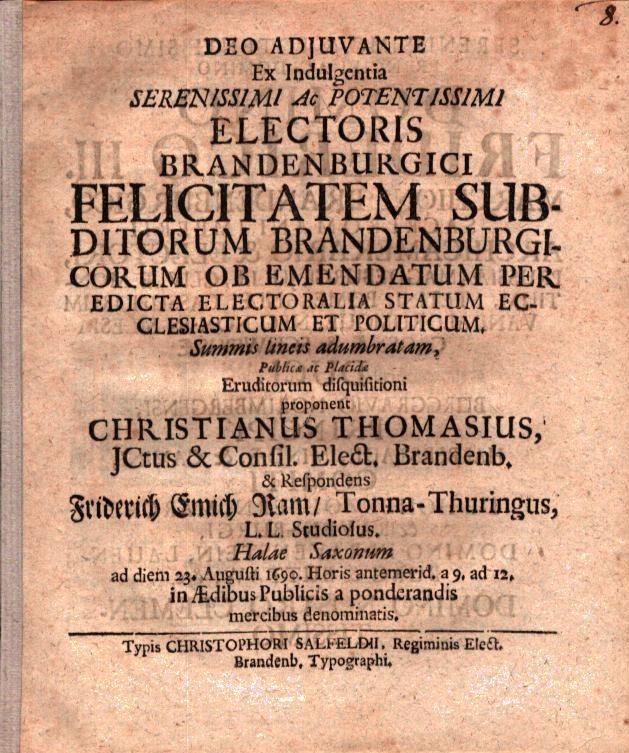
1690réf. 94355[Halle (Saale)], Christoph Salfeldus, 1690. [3] Bl., 48 S. Rückenbrosch.
1901Very Good English Original bdg. HC. Half-title. Demy 8vo. (22 x 15 cm). In Latin. [i], 768 p. 1st of 2. First volume. Summa theologica. Dilinger emendata de Rubeis, Billuart et Aliorum. Notis selectis ornata Pars I.
2003réf. 1111872003 Editions La Libre Pensée Rennaise - 2003 - In-8, broché - 214 p.
1859réf. 89733s.l. Bologna Tipi Chierici di San Domenico 1859. Foglio stampato su carta verdina di cm 32 x 23. ". Or dunque non sarebbe opera cristiana il fare scomparire un dogma che al dire di due santi pontefici fu inventato dal Diavolo'" unknown
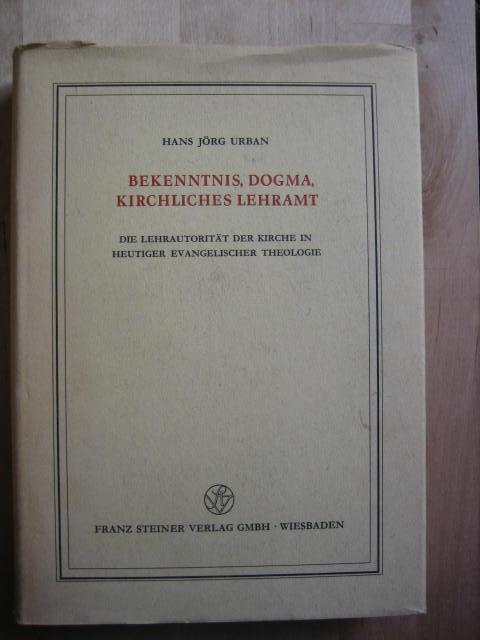
1972réf. 19087Wiesbaden : Steiner, 1972. IX, 401 S., , 24 cm, Lw. mit SU
1684réf. 46401343Paris, , Journel, , 1684 ; in-12 , vélin ivoire de l’époque. - 18 ff. n. ch. [Titre, épître, préface, privilège], 188 pp., 32 ff. n. ch. [Remarques, table, catalogue Journel]. - EDITION ORIGINALE DE CETTE TRADUCTION du Commonitorium Peregrini de Vincent de Lérins. Elle est de Jean de FRONTIGNIERES qui a signé la dédicace à François de Harlay. Le traité de Vincent de Lérins avait été traduit une première fois par G. Ruzé en 1560 – Voir Graesse VI, p. 327 - Cioranesco 31889. In ne sait rien de Jean de Frontignières qui est aussi l’auteur de quelques poèmes, d’une traduction du livre d’Oexmelin sur les flibustiers et d’un roman intitulé La Puits de la Vérité. Vincent de Lérins, un Lorraain natif de Toul, fut moine de Lérins. « Venu, comme de nombreux autres moines de Provence, du Nord de la Gaule, Vincent a écrit son Commonitorium en 434 » (Dict. de Spiritualité). L’objet de ce traité, rédigé trois ans après e Concile d’Ephèse qui condamne le Nestorianisme, est de définir les critères de l’orthodoxie chrétienne. Ignoré au Moyen Age, le Commonitorium connut de nombreuses éditions aux XVIe et XVIIe siècles. « L’Eglise catholique s’appuie sur le canon lérinien pour consolider le concept de tradition, la Réforme pour faire le procès de l’innovation. Au XIXe siècle, le cardinal Newman contribuera à l’actualité de Vincent en faisant du traité une lecture quoi lui permet d’y trouver des bases pour l’œcuménisme » J.P. Weiss in Dict. de Spiritualité. Qualifié de Livre d’Or par le Père Labbe, ce livre est un guide pour préserver les fidèles de toutes les nouveautés en matière de foi. En matière de dogme, toute nouveauté est suspecte à moins qu’elle n’ait été définie dans un concile. Ex-libris manuscrit et imprimé de L. Neveu, frère du diocèse de Versailles (XIXe s.). - Quelques feuillets déreliés.
réf. 10211, Brussel, Paleis der Academien, 1944., Gebrocheerd, originele uitgeversomslag, 18x26cm, 312 p.
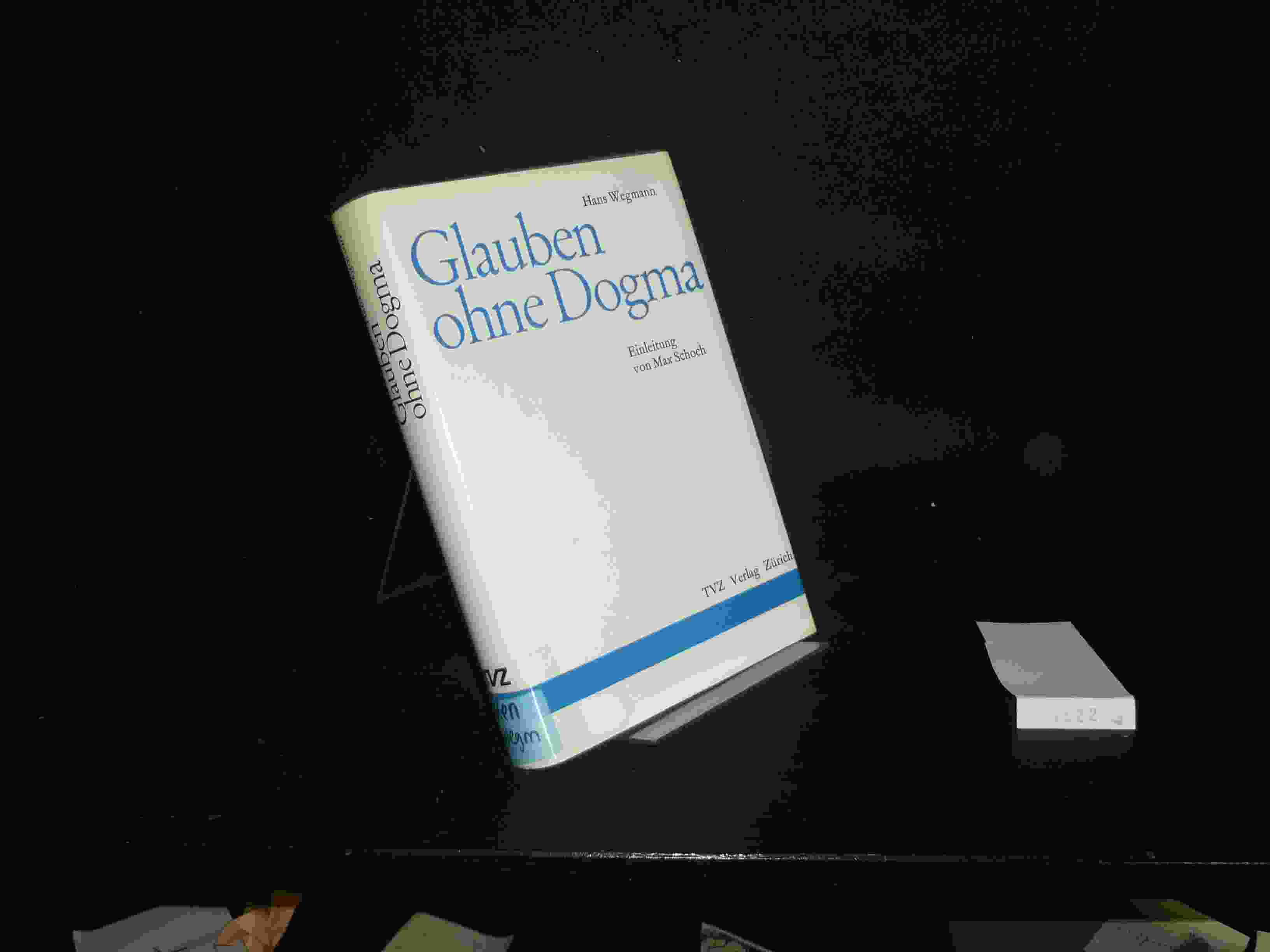
1976réf. 99622Zürich: TVZ Verlag 1976. 416 Seiten. Mit Porträtfrontispiz. 8° (17,5-22,5 cm). Orig.-Leinenband mit Orig.-Schutzumschlag. [Hardcover / fest gebunden].
1932réf. 14209Stuttgart, Quell-Verlag der Ev. Gesellschaft, 1932. 8°, 80 S., Einband ger. beschabt und ger. bestoßen, altersbedingte Bräunungen, sonst ger. Gebr.sp., broschiert
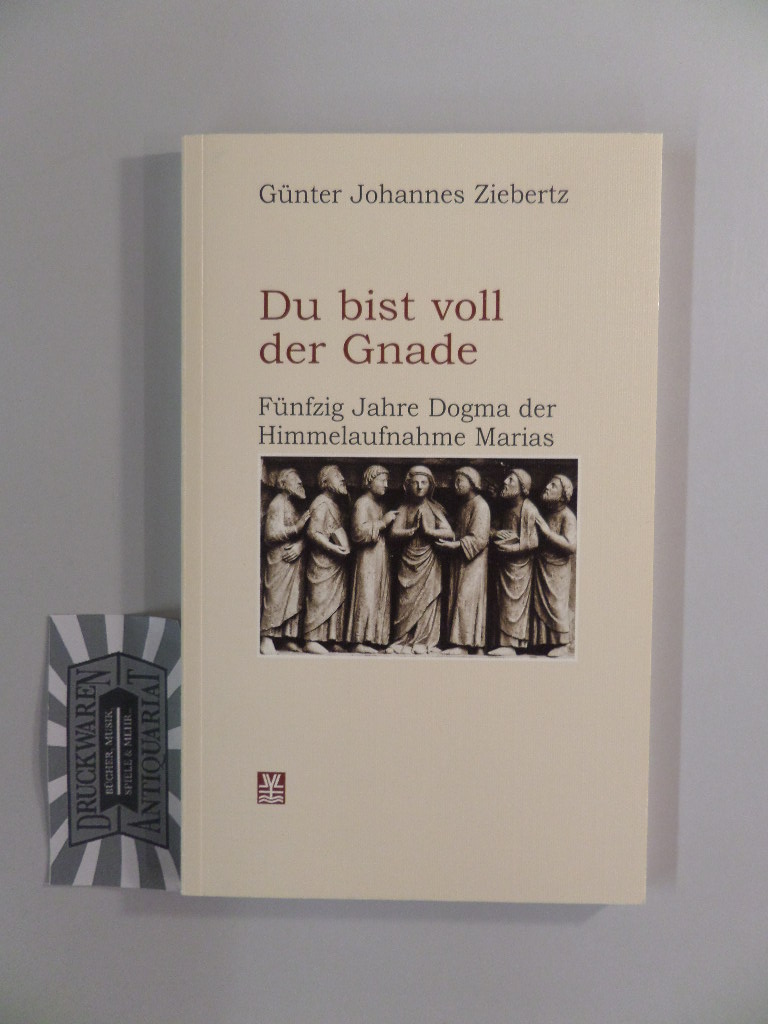
2000réf. 75584Leutesdorf: Johannes-Verl., 2000. 142 S. kart., broschiert.