Knight, GarethAntiquariat.de
630 resultados
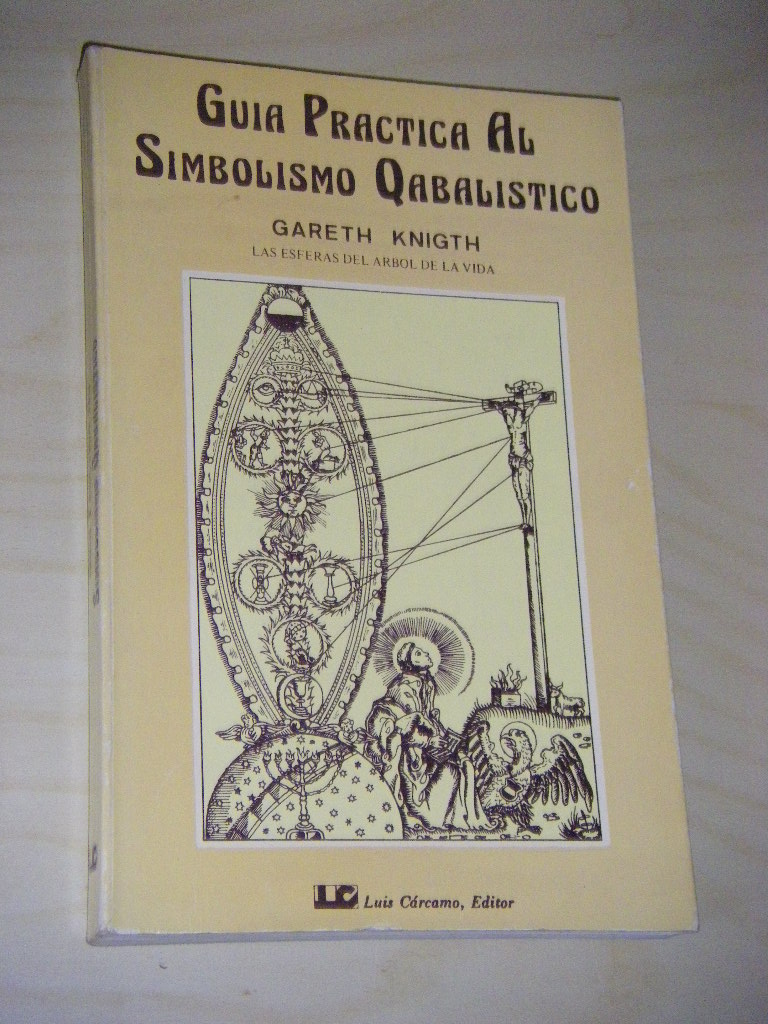
1980ref. 041554Madrid, Luis Carcamo, 1980. 272 S.; mit SW-Ill. Klappenbroschur 21,2 cm Befriedigend
19371st edition. Original paper wrappers. 8vo. 100 pages, 20 cm. In Hebrew. Title translates to The Dreams of Rabbi Mordecai Ashkenazi: On the Dream Journal of Rabbi Mordecai Ashkenazi, student of Rabbi Avraham Ravino. German. Scholem was a Jewish philosopher and historian raised in Germany. He is widely regarded as the founder of the modern, academic study of Kabbalah, becoming the first Professor of Jewish Mysticism at the Hebrew University of Jerusalem (Wikipedia, 2018) . SUBJECTS: Sabbathaians -- Biography. Rabbis -- Biography. Ex-library with usual markings. Some chipping to front wrapper. (RAB-64-67)
18451st edition thus. Later paper wrappers, 12mo, 24 leaves, 155:90 mm. In Yiddish, with title also transliterated on title page ("Hanoges Odom"). Title translates as, The Book of Man's Leadership: ... How Every Jew Should Conduct Himself All His Days From Early to Evening ... and Many Laws. Proper daily behavior for Jews. Contains Kabbalistic customs and practices based on the teachings of the Ari. The text includes detailed descriptions of the halakhot and customs of the Ari for weekdays, Shabbat and festivals, and daily occasions.Although published anonymously, this appears to be similar to the work of Rabbi Meir ben Judah Leib Poppers (died 1662). He was a kabbalist of Ashkenazi descent who was active in Jerusalem after 1640. A pupil of Rabbi Jacob Zemah, he became the last editor of the Lurianic writings. He divided the mass of Rabbi Vital's different versions of Rabbi Luria's teachings into three parts, Derekh Ez Hayyim, Peri Ez Hayyim, and Nof Ez Hayyim. Rabbi Poppers' version became the one in most widespread use in Poland and Germany. After 1640 he composed a large number of his own kabbalistical writings in the vein of Lurianic Kabbalah. They are said to have comprised 39 books, each of which contained the word or ("light") in its title, the entire corpus being called Kokhevei Or. Several parts have been preserved (Ms. Jerusalem no. 101, Ms. Rabbi Alter of Gur no. 170). They included commentaries on Sefer Bahir, on Nahmanides' Torah commentary, on the Zohar, and on Luria's writings according to his own edition (Ms. Jerusalem no. 102). In the latter manuscript Poppers reports that he had studied Rabbi Luria's writings for 17 years. Only two of these books have been published, this work and Or Zaddikim (Hamburg, 1690), written in Jerusalem in 1643, and later incorporated in Rabbi Moses Katz's compilation, Or ha-Yashar (Amsterdam, 1709); and Me'orei Or, a dictionary of kabbalistic symbolism, published with copious notes by Jacob Vilna and Nathan Neta Mannheim under the title Me'orot Natan (Frankfurt, 1709). In addition, Mesillot Hokhmah, a booklet summarizing Lurianic metaphysics in 32 paragraphs, later published under Rabbi Poppers' name (Shklov, 1785), was first printed anonymously (Wandsbeck, c. 1700). Rabbi Poppers is credited with the authorship of a graphic description and summary of the Lurianic system, in the form of a scroll, published under the title Ilan ha-Gadol (1864). This tree, however, shows the distinct influence of Rabbi Israel Sarug's version of Lurianism, which is not to be found in Poppers' other writings. Part of his homilies on the Torah were published as Tal Orot (1911). He mentions as his teachers one Rabbi Israel Ashkenazi and his father-in-law, Azariah Ze'evi (probably from Hebron). During the 1650s Poppers spent about two years in Constantinople. He died in Jerusalem. (EJ, 2007). SUBJECT(S): Jewish ethics. OCLC: 233362307. OCLC lists only one copy (NLI), which, it is noted is missing the end, after 24 leavesexactly the same as our copy, so possibly as issued??? Some toning and stains. Good Condition, very rare. (YID-42-23)
1936395p. Uncut. 8vo. Original full cloth binding. Original dust jacket. Bookseller's label. OCC 7 **
1922ref. 52700München, Kurt Wolff Verlag 1922. 368 S., 1 S. Schrift: Antiqua gebundene Ausgabe, Leinen, Exemplar in gutem Erhaltungszustand
1922ref. 16682München, Kurt Wolff 1922. 2 Bde. 318 S., 1 S.; 368 S., 1 S. Vorsatzblätter mit Zahlen beschrieben gebundene Ausgabe, Halbleinen, Einbände stockfleckig, sonst Exemplar in gutem Erhaltungszustand
1986ref. 253874München : Kösel, 1986. 189 S. : 8 Abbildungen ; 21 cm Originalleinen mit Original-Schutzumschlag.
1992ref. 145681992 Bibliopolis broché, jaquette, 148p. Très bon état.
1986ref. 38831Düsseldorf : Patmos-Verlag 1986. 264 S. : 140 farb. u. 115 schw.-w. Abb. (z.T. farb.) ; 28 cm, Exemplar in gutem Erhaltungszustand Gewebe, gebundene Ausgabe, Leinen, Exemplar in gutem Erhaltungszustand
1870ref. 1091Paris, Furne, Jouvet et Cie, sans date (1870), fort in-8 ; demie-basane tête de nègre, dos à nerfs, couverture conservée (reliure moderne) ; VIII-666 pages, (1) feuillet de table, 16 gravures hors-texte, nombreuses figures.
1966ref. 1265571966 Editions JEP Diffusion - 1966 - In-8 broché, couverture illustrée - 171 pages
1842ref. 1153311842 A Paris, Au bureau de la Revue Scientifique, chez L. Hachette, et chez Fortin, Masson et Cie 1842, 2 volumes in-8 de 135x22 mm environ, X-310 pp., - VIIJ-518 pp. Avec des figures dans le texte. Demi-reliure veau bleu marine et cartonnage marbré, dos lisses portant titres, tomaisons et encadrements dorés, tranches finement mouchetées, gardes marbrées. Frottements sur coins et les coiffes, trou et éraflures sur le dos au niveau du titre du tome 2, mors superficiellement fendillés, erreur de numérotation (p. 97 au lieu de 79), bon état pour le reste.
ref. 22413Paris Librairie Hachette et Cie, sans date 1885 in 12 (18,5x12,5) 1 volume reliure pleine percaline marron de l'éditeur, dos lisse orné de filets à froid, plats orné d'un encadrement estampé à froid, XVIII et 423 pages, rousseurs. Bon exemplaire ( Photographies sur demande / We can send pictures of this book on simple request )
1961ref. 14920Paris, Les Productions de Paris (Hachette), sans date (1961, date du Dépôt légal) ; in-16 (20 cm) ; pleine toile violette, titre en blanc sur le dos et le plat, illustration sur le plat, rhodoïd transparent (reliure de l’éditeur) ; 621, (3) pp., y compris les nombreuses illustrations à pleines pages comprises dans la pagination.
1865Mm 170x200 Volume rilegato in tela coeva con titolo impresso al piatto e al dorso, immagine applicata, 622 pagine, illustrazioni in nero. Testo in lingua francese. Buono stato. Spedizione entro 24 ore dalla conferma dell'ordine.
1950In 8°, brossura edit. ill., pp. 175,(1); esemplare molto buono, solo lievemente brunito. (ZE6) (ZE6)
2001pp. 376, cm 24x17,. brossura con sopracoperta. Nuovo.
1980L'armonia occulta dei due testamenti contenuti nella Profezia di Ezechiele e nella Apocalisse di Giovanni. Con 51 illustrazioni. Traduzione di Ercole Alvi. L'opera fu pubblicata per la prima volta postuma nel 1920. Ottimo esemplare. Brossura editoriale illustrata, pp. 147, in 8°
2011Mm 150x210 Prima edizione. Collana "La saggezza della Cabala" - Brossura editoriale con alette, 351 pagine. Opera in condizioni pari al nuovo. SPEDIZIONE IN 24 ORE DALLA CONFERMA DELL'ORDINE.
Dispensa in-4, brossura editoriale, pp. 208. Rare sottolineature a matita. Lievi tracce d’uso. Esemplare discreto.
1978IN-16°, PP. 147 (5), BROSS. EDIT., COP. ILL. COL. (LIEVISSIME TRACCE D'USO E DI POLVERE, LEGGERE BRUNITURE), LEGGERISSIME BRUNITURE AI MARGINI DELLE CARTE, SCRITTA A PENNA AL RISG., STATO DI CONSERVAZIONE: MOLTO BUONO (VG). 635 99 B
Milano, Rusconi Editore/Gioia, 1978. Fascicolo N. 4 della Collana: Le margherite di Gioia. In 16mo (cm. 17,2); brossura originale illustrata, con titoli al piatto e al dorso; pp. 97, (1). Con numerose illustrazioni in bianco e nero nel testo. Testo entro cornice. Buono stato di conservazione. PAx
2003br. C'è un cuore nella Cabbala: è lo "Zohar", il libro dello Splendore, un immenso e rapsodico commento alla "Torah" nato sul finire del XIII secolo in ristretti circoli cabbalistici castigliani e destinato a imporsi come opera canonica di indiscussa autorità a fianco della "Bibbia" e del "Talmud". E c'è un cuore nello "Zohar": il capitolo dedicato alla creazione, chiuso nella lucentezza dei suoi 17 versetti e delle relative chiose. Poprio questo capitolo è stato tradotto, introdotto e commentato da Gershom Scholem, il quale non trascura di esporre il drammatico racconto "preliminare" delle dieci sefiroth o "sfere" della divinità, le prime tre nascoste nell'insondabile nulla del "senza fondo", le altre sette legate ai giorni della creazione.
2009In-8 (cm. 22.40), cartonato editoriale, sovracoperta editoriale illustrata, pp. 397, (3), con illustrazioni in bianco e nero nel testo ed a colori fuori testo. In ottimo stato (nice copy). Fu un chirurgo ebreo dell'Indiana, Frank Mershberger, a notare per primo che la celebre raffigurazione di Dio nel pannello della Creazione della Cappella Sistina aveva la forma della sezione destra di un cervello umano. E negli anni trascorsi da questa rivelazione, gli studi sull'affresco hanno portato a scoperte ancora più inquietanti. Perché l'albero del Bene e del Male è un fico, e non un melo? Perché il serpente tentatore ha cosce e braccia, come descritto nei testi ebraici? Stimolati da queste e altre "coincidenze", uno storico dell'arte e un esperto di Talmud uniscono le loro forze per dimostrare che le immagini dell'affresco collocato nel cuore della cristianità non sono affatto la summa del pensiero cristiano. Celano invece un messaggio rivoluzionario, e per quei tempi eretico, rimasto incompreso per secoli, influenzato dagli studi cabalistici di Michelangelo. Con un codice che fa largo uso della simbologia ebraica e neoplatonica, il grande artista volle infatti esprimere un violento attacco alla corruzione della Chiesa, una nuova concezione della sessualità e l'idea della fratellanza universale tra le religioni. Doliner e Blech portano alla luce un nuovo messaggio di questo genio ribelle in lotta perenne contro un potere ipocrita e autoritario. Il risultato è un racconto incalzante, ma anche un'indagine storica condotta con rigore e passione.