Poppers, Meir, Rabbi (?)MareMagnum

648 risultati
18451st edition thus. Later paper wrappers, 12mo, 24 leaves, 155:90 mm. In Yiddish, with title also transliterated on title page ("Hanoges Odom"). Title translates as, The Book of Man's Leadership: ... How Every Jew Should Conduct Himself All His Days From Early to Evening ... and Many Laws. Proper daily behavior for Jews. Contains Kabbalistic customs and practices based on the teachings of the Ari. The text includes detailed descriptions of the halakhot and customs of the Ari for weekdays, Shabbat and festivals, and daily occasions.Although published anonymously, this appears to be similar to the work of Rabbi Meir ben Judah Leib Poppers (died 1662). He was a kabbalist of Ashkenazi descent who was active in Jerusalem after 1640. A pupil of Rabbi Jacob Zemah, he became the last editor of the Lurianic writings. He divided the mass of Rabbi Vital's different versions of Rabbi Luria's teachings into three parts, Derekh Ez Hayyim, Peri Ez Hayyim, and Nof Ez Hayyim. Rabbi Poppers' version became the one in most widespread use in Poland and Germany. After 1640 he composed a large number of his own kabbalistical writings in the vein of Lurianic Kabbalah. They are said to have comprised 39 books, each of which contained the word or ("light") in its title, the entire corpus being called Kokhevei Or. Several parts have been preserved (Ms. Jerusalem no. 101, Ms. Rabbi Alter of Gur no. 170). They included commentaries on Sefer Bahir, on Nahmanides' Torah commentary, on the Zohar, and on Luria's writings according to his own edition (Ms. Jerusalem no. 102). In the latter manuscript Poppers reports that he had studied Rabbi Luria's writings for 17 years. Only two of these books have been published, this work and Or Zaddikim (Hamburg, 1690), written in Jerusalem in 1643, and later incorporated in Rabbi Moses Katz's compilation, Or ha-Yashar (Amsterdam, 1709); and Me'orei Or, a dictionary of kabbalistic symbolism, published with copious notes by Jacob Vilna and Nathan Neta Mannheim under the title Me'orot Natan (Frankfurt, 1709). In addition, Mesillot Hokhmah, a booklet summarizing Lurianic metaphysics in 32 paragraphs, later published under Rabbi Poppers' name (Shklov, 1785), was first printed anonymously (Wandsbeck, c. 1700). Rabbi Poppers is credited with the authorship of a graphic description and summary of the Lurianic system, in the form of a scroll, published under the title Ilan ha-Gadol (1864). This tree, however, shows the distinct influence of Rabbi Israel Sarug's version of Lurianism, which is not to be found in Poppers' other writings. Part of his homilies on the Torah were published as Tal Orot (1911). He mentions as his teachers one Rabbi Israel Ashkenazi and his father-in-law, Azariah Ze'evi (probably from Hebron). During the 1650s Poppers spent about two years in Constantinople. He died in Jerusalem. (EJ, 2007). SUBJECT(S): Jewish ethics. OCLC: 233362307. OCLC lists only one copy (NLI), which, it is noted is missing the end, after 24 leavesexactly the same as our copy, so possibly as issued??? Some toning and stains. Good Condition, very rare. (YID-42-23)
1941rif. 476Paris, Beauchesne, 1941, in-16, broché, 370 pp. ; précieux index des noms, couverture illustrée imprimée en rouge et noir.
196818,5 cm, Cartoncino editoriale illustrato, p. 575. contiene: spiegazione dei sogni, moltissime regole e segreti cabalistici, nuovissimi vocaboli secondo il sistema di Giuseppe e Giulio Romeo di Luca e di Rutilio Benincasa. Appunto a penna, di tre parole, all'ultima di copertina.
187024 cm, rilegatura coeva in mezza pelle, titolo e fregi in oro al dorso; pp. 1058
2004Mm 130x210 Brossura editoriale con bandelle, 207 pagine. Copia in condizioni pari al nuovo. SPEDIZIONE IN 24 ORE DALLA CONFERMA DELL'ORDINE.
2017br. Frutto di un'approfondita ricerca tra le fonti della Cabbalà, compresi testi difficilmente accessibili e mai tradotti, questo nuovo libro di Yarona Pinhas si presenta come una raccolta di insegnamenti e suggestioni legati alla tradizione spirituale che ruota attorno all'alfabeto ebraico. Citando Gershom Scholem, le lettere ebraiche sono nella tradizione mistica le configurazioni della forza creatrice di Dio e non esiste un mondo spirituale se non a partire dal linguaggio e dai segni potenti che gli danno voce. La comprensione della Creazione e delle sue energie passa necessariamente dai misteri che si celano nelle lettere; al tempo stesso la nostra presenza nel mondo, il saper vivere pienamente ed eticamente passa dalla consapevolezza della forza insita nella singola lettera e dell'importanza di un uso corretto del linguaggio. Questo libro vuole essere uno strumento per lo studioso di Cabbalà ma anche una porta d'ingresso, fatta di allusioni e fascinazioni, per chiunque percepisca il richiamo della mistica e la potenza delle lettere con cui l'universo è stato creato.
2012br. In questo nuovo libro, Yarona Pinhas si confronta con lo Zohar, il Libro dello Splendore, che le si rivela non solo come testo base della mistica ebraica, ma come una raccolta di bagliori e illuminazioni. Questo testo, a suo modo, aspira a essere un'altra fonte di stupore poetico e d'intuizioni che nascono dalle esperienze di vita e di studio dell'autrice. Al tempo stesso vuole essere una grammatica sintetica dei principali concetti e riferimenti spirituali della Cabbalà.
1975rif. LFA-126720946Un ouvrage de 307 pages, format 140 x 220 mm, broché, publié en 1975, Dervy Livres, collection "Histoire et Tradition", bon état
2003brossura
1994brossura
1994brossura
1945Alcuni titoli: I Santi dell'Arcano (prima pagina), Gli emblemi dei gradi del Rito scozzese..., Il catechismo dei Drudi di Pompeo Falcone - Il simbolismo della Cina antichissima, Potere magico delle pietre preziose, Dizionario di Divinazione, Esistono i fantasmi?, Adolfo Hitler, il demone e il destino della Germania, De secretis naturae, Sono qui per voi: l'astrologo e il cabalista ..... 1 35x25 cm., pp.12, testata e alcuni titoli in verde, testo su 2/3 colonne, in italiano, buone condizioni.
2002New English Paperback. Pbo. Roy. 8vo. (24 x 17 cm). In French. 164 p. Djalâl-od-Dîn Rûmî, Raymond Lulle, Rabbi Abraham Aboulafia ou l'amour du dialogue interconfessionnel.
rif. 100862Chez Gerster - Imprimerie De Henri Wolfrath Neuchatel 1844-1850 2 ouvrages reliés en 1 volume in-8 ( 210 X 140 mm ), demi-percaline violine, dos lisse janséniste. EDITION ORIGINALE rare pour ces 2 ouvrages. Dos passé de couleurs, rousseurs passim.- La FILLE DE SION ou le rétablissement d'ISRAËL. Poème en sept chants avec annotations et études bibliques. Neuchatel, Chez Gerster - Imprimerie de Henri Wolfrath, 1844-1850. 2 parties de 566 pages ( pagination continue ), 1 planche dépliante hors-texte. Il ne semble pas qu'il y ait eu d'édition complète des sept chants avant celle de Paris, Dentu, 1868. Un troisième chant est paru pour faire suite aux deux premiers à Neuchâtel en 1861, Imprimerie de Henri Wolfrath et Metzner. Les deux premiers chants présentés ici sont en édition originale.- Dissertation SUR LA KABBALE ou la philosophie spéculative des hébreux. Imprimerie de Henri Wolfrath, 1848. 64 pages, 1 planche hors-texte.
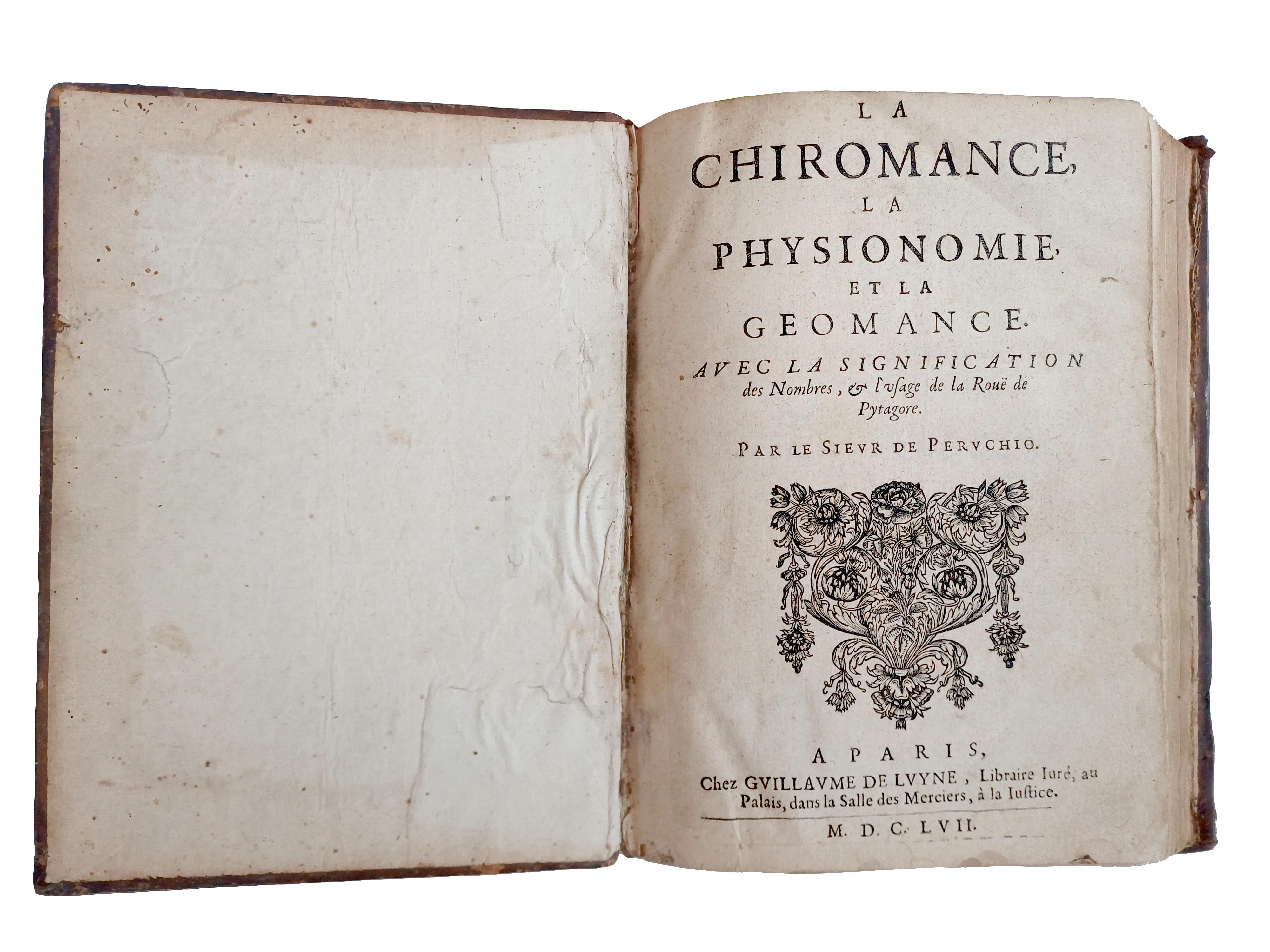
rif. 13164A Paris. Chez Guillaume de Luyne. 1657. In-4°, reliure plein veau du temps, dos à cinq nerfs, pièce de titre en cuir rouge. [12 pp.] + 343 pages. E.O. (plus rare que la réédition de 1663 chez Louis Billaine).
2009français In-8 de 414 pp.; broché de l'éditeur.
rif. 7909Alphée, 2007. In-8, broché, couverture souple glacée ill (Figure triangulaire avec hièroglyphes), 303 pages, bel exemplaire
1997rif. 87366Braunschweig, Aurum Verlag (Edition Roter Löwe), 1997. 2. Auflage, 8°, ins Deutsche übersetzt, 172 S., kartonierter Einband
1985Altersgemäß gutes und sauberes Exemplar. - U.a. ErsterTeil 15 Die Einteilung der Kabbah. Erstes Kapitel 17 ZweiterTeil 45 Die Lehren der Kabbala Die Elemente der Kabbala in zehn Abschnitten. Briefe von Eliphas Lévi 47 Allgemeine Bemerkungen über die Kabbala von Sédir . . . 65 Die mündliche Überlieferung im Zeitalter von Tohu . . . . 69 Methodische Darstellung der Kabbala 89 Zweites Kapitel 95 Das hebräische Alphabet Drittes Kapitel 106 Die göttlichen Namen Viertes Kapitel 148 Die Sephirot Fünftes Kapitel 171 Die Philosophie der Kabbala Sechstes Kapitel 199 Die Seelen nach den Lehren der Qabalah .....Unter Kabbala versteht man die Gesamtheit der mystischen Lehren innerhalb des Judentums. -- Das vorliegende Werk gilt auch heute noch als eine der besten Arbeiten zu diesem Thema. Es erschien um 1900 in Paris unter dem Titel „La Cabbala“. Seine einzelnen Teile wurden von angesehenen französischen Gelehrten verfaßt und von Encausse Gerard Papus in einheitlicher Gesamtredaktion herausgegeben. -- Julius Nestler übersetzte und bearbeitete das Buch, das ein Schlüssel zum Verständnis eines wichtigen Gebietes im geistigen Leben des jüdischen Volkes ist. Die jüdische Geheimlehre umfaßt Theorie und Praxis, die ihrerseits wieder in einen historischen, sozialen und mystischen Teil zerfallen. Theorie und Praxis zusammen bilden die Kabbala im engeren Sinne. -- Nur der theoretische Teil der Kabbala ist schriftlich niedergelegt. Er umfaßt zwei Richtungen des Studiums: Die eine bezieht sich auf die Schöpfung und ihre geheimnisvollen Gesetze, heißt Bereschit und ist im Sepher Jesira dargelegt. Die andere - die metaphysische - befaßt sich mit dem Wesen der Gottheit und mit den Arten seiner Offenbarung. Diese Richtung wird von den Kabbalisten Mercava, d. h. „Himmlischer Wagen“ genannt und ist im Zohar niedergelegt. -- Über den praktischen Teil der Kabbala finden sich nur Andeutungen - und diese nur in sehr seltenen Manuskripten. Sie sind unter dem Namen „Clavicula Salomonis“ bekannt und bilden die Grundlage der landläufigen Zauberbücher. -- Von besonderer Bedeutung ist bei dem vorliegenden Werk die umfangreiche Bibliographie der Kabbala, die in dieser Form zum ersten Mal in deutscher Sprache veröffentlicht wurde.
2004rif. 47067Wiesbaden : Marixverl. 2004. VII S., S. 11 - 449 : Ill. ; 21 cm, mit Schutzumschlag Pp., gebundene Ausgabe, Hardcover/Pappeinband, Exemplar in gutem Erhaltungszustand
vi + 345 + [2] pp. + qqs. planches hors-texte, 3e édition considérablement augmentée (renfermant de nouveaux textes de Lenain, Eliphas Levi, Stnaislas de Guaita, etc., suivi de la réimpression partielle d'un traité cabalistique du chev. Drach), 26cm., brchure originale, bon état, Q100933
rif. Q100933Anvers, Editions Lumen s.d. vi + 345 + [2] pp. + qqs. planches hors-texte, 3e édition considérablement augmentée (renfermant de nouveaux textes de Lenain, Eliphas Levi, Stnaislas de Guaita, etc., suivi de la réimpression partielle d'un traité cabalistique du chev. Drach), 26cm., brchure originale, bon état, Q100933
1889rif. 106087Initiation 1889 L'Initiation, 1889, 3 numéros reliés ensemble, reliure de travail (demi-toile noire), environ 19x12cm, une étiquette sur le dos et sur le premier contreplat, mors internes fendus mais structure solide, seul le premier plat d'origine du N°1 a été conservé, une page surlignée, deux tampons, bon état pour le reste.
1908rif. 106088Initiation 1908 L'Initiation, 1908, 3 numéros reliés ensemble, reliure de travail, environ 19x12cm, premiers plats d'origine conservés, deux étiquettes sur le dos et une sur le premier contreplat, dernières pages jaunies et un peu froissées, bon état pour le reste.
1896rif. 106090L'Initiation 1896 L'Initiation, 1896, 3 numéros reliés ensemble, demi-percaline noire, environ 19x12cm, deux étiquettes sur le dos et une sur le premier contreplat, seul le premier plat d'origine du N°4 a été conservé (sali), des frottements sur les plats, bon état pour le reste.