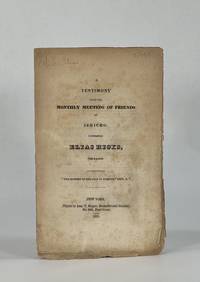
[HOPPER, Edward]; [SOUTHARD, Samuel L]Biblio.com

311 resultados
1834ref. 02723Philadelphia: Elijah Weaver 1834. First edition. Octavo. Contemporary 3/4 paper over cloth boards; viii 279 pp. Lacking paper spine label; paper to board edges chipped; heavy foxing throughout which is typical for this title. A Good but complete and tight copy. Famous legal case of internecine Quaker squabbling. Elijah Weaver hardcover
1742ref. 77443London:: T. Sowle Raylton 1742. Second edition. later old half morocco and marbled sides. Neat marginal repairs to the fore-edge of the last four leaves; extremities of the binding rubbed with the start 2" of a split at the top of one joint. . 12mo. T. Sowle Raylton, unknown
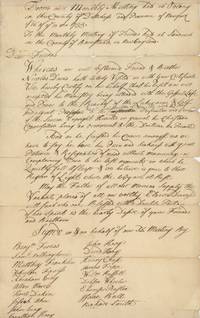
1755ref. List2976Dutchess County New York 1755. Single sheet measuring 7 ¾ x 12 ½ inches. Folded and quite torn at folds; very good. A letter signed by the members of the Oblong Monthly Meeting of Friends in New York to members of the Sandwich one in Massachusetts on the occasion of the death of Nicolas Davis 1690–1755 a member of the Sandwich meeting. Davis was well-respected in his community and occasionally traveled to minister; he died in Quaker Hill where the Oblong Meeting House is located on such a trip. The Oblong Friends remember him: “His visit was well accepted his ministry being attended with the Gospel Life and Power to the Reproof of the Lukewarm & Self Indulgent Professers to the instruction of the weak and to the Edification and Comfort of the Sincere & upright”. One of the letter’s signers Benjamin Ferriss is likely the same Benjamin Ferris who was one of the first Euro-American settlers of Quaker Hill arriving in 1728. The letter has eighteen other signatories: John Hoag Samuel Nothingham David Hoag Matthew Franklin Henry Chase Zebulon Farriss James surname illegible Abraham Ewing Wilm Buffett Allen Moore Dobson Wheeler Tim. Dakin Ebenezer Peaslee Josiah Akin Haas Bull. John Ewing Richard Smith and Jonathan Hoag. Of interest to scholars of Colonial-era Quaker history and New York State history. unknown
1755ref. List2976Dutchess County New York 1755. Single sheet measuring 7 ¾ x 12 ½ inches. Folded and quite torn at folds; very good. A letter signed by the members of the Oblong Monthly Meeting of Friends in New York to members of the Sandwich one in Massachusetts on the occasion of the death of Nicolas Davis 1690–1755 a member of the Sandwich meeting. Davis was well-respected in his community and occasionally traveled to minister; he died in Quaker Hill where the Oblong Meeting House is located on such a trip. The Oblong Friends remember him: “His visit was well accepted his ministry being attended with the Gospel Life and Power to the Reproof of the Lukewarm & Self Indulgent Professers to the instruction of the weak and to the Edification and Comfort of the Sincere & upright”. One of the letter’s signers Benjamin Ferriss is likely the same Benjamin Ferris who was one of the first Euro-American settlers of Quaker Hill arriving in 1728. The letter has eighteen other signatories: John Hoag Samuel Nothingham David Hoag Matthew Franklin Henry Chase Zebulon Farriss James surname illegible Abraham Ewing Wilm Buffett Allen Moore Dobson Wheeler Tim. Dakin Ebenezer Peaslee Josiah Akin Haas Bull. John Ewing Richard Smith and Jonathan Hoag. Of interest to scholars of Colonial-era Quaker history and New York State history. unknown books
1977ref. 41969Brooklyn NY: Win 1977. First Edition. Very good. Weekly pacifist publication this a special issue focused on nuclear disarmament edited by Bruce Birchard a Quaker activist and leader of the watchdog group National Action/Research on the Military Industrial Complex. The issue's theme is "peace conversion" the concept of converting war industries to civilian production. Includes articles on three community-based disarmament and peace conversion projects in Denver Oahu and Santa Clara County California. Wraps. 8" x 10.75" approx. in self wraps. Light toning else fine. 31pp. Win unknown books
ref. 46400295, Londres, chez David Fowler, de l'Imprimerie de J. Cooper, 1791; in-12, plein maroquin rouge, guirlandes dor., dos orné, tranches dorées. (Reliure de l'époque). 286 pp., 1 f. errata. EDITION ORIGINALE et seule parue. A la fin du volume l'éditeur Fowler annonce une édition en anglais de l'ouvrage "actuellement sous presse". Elle ne semble point avoir paru. Le Catal. de la British Library (cote 527 h.26) ne mentionne que l'édition en français. L'éditeur précise que l'ouvrage fut composé plusieurs années avant la Révolution française "il allait paraître lorsqu'elle survint. J'en suspendis alors l'impression afin de voir quelle tournure ce grand événement prendrait et quelles facilités il en résulterait pour l'introduction d'un pareil ouvrage dans un pays où autrefois il eut été proscrit et brûlé. Je fus si frappé des sages décrets de l'Assemblée Nationale Conformes aux vœux formés dans cet opuscule…". Nous n'avons trouvé aucun renseignement sur l'auteur, un certain Poopds, un Quaker familier de la langue française. En confiant son manuscrit à l'éditeur peu avant son décès, l'auteur a exigé le secret sur son nom. Violent pamphlet, inspiré par la philosophie des Lumières, contre les préjugés catholiques, la superstition, l'imposture des prêtres, le fanatisme et la répression préjugés des intolérants, paganisme des prêtres, commémoration du fanatisme pour la Terre Sainte, la Bible n'est pas un livre divin, miracles supposés, moines dangereux, réfutation de quelques erreurs de Locke, conseils pour un prince éclairé, etc. Ce livre est très rare. Très bel exemplaire en maroquin de l'époque.
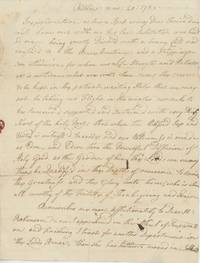
1789ref. List2987Philadelphia Pennsylvania 1789. Single three-page letter measuring 7 ¾ x 9 ¾ inches. Folded with large tears at folds; excellent. A letter from H. Cathrall in Philadelphia to her friend Amey Thurston dated October 20th 1789. The letter discusses her health and the health and lives of their mutual friends. She also describes her experience of hearing ministry at a women's Quaker meeting: "our yearly Solemnity was uncommonly large and much sisterly condescension was comfortingly evidencd; and thro the condescension of Isarels Israel's King and Shepherd we were made in some sittings reverently to rejoice in that the Lord in wondrous Mercy had not forgotten Sion 'nor yet in Anger cast off his People'~". Though Quaker worship meetings did not exclude women Philadelphia did have a women's monthly meeting as well; Haverford College holds its membership book for 1793 Cathrall does not appear in it but at least one other name mentioned in her letter does. Of interest to scholars of Philadelphia's long Quaker history especially the role of Quaker women. unknown
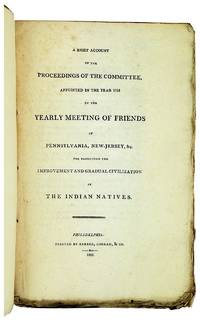
1805ref. 32962Philadelphia: Printed by Kimber Conrad & Co 1805. Very Good. Philadelphia: Printed by Kimber Conrad & Co. 1805. First Edition. Octavo; original grey wrappers; 451pp. Light wear to edges; general smudging; spine perished. Mild soiling and faint spotting else unmarked; terminal leaves unopened; about Very Good. Detailed report on the Friends' interactions with the Oneida Onandago and Cayuga nations focusing on attempts at farming and education. Includes many speeches to the Friends from Native American leaders including Chief Cornplanter with particular attention paid to farming techniques as well as trades such as blacksmithing and carpentry and a couple digressions on the effects of alcohol. Uncommon in retail. Sabin 34617. Printed by Kimber, Conrad, & Co unknown
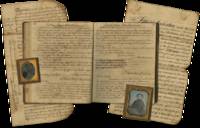
1855ref. BK0035New Jersey 1855. Appx. 43 items: letterbook 26 documents related to properties in New Jersey and 15 images. Letterbook 9 x 7 ¼ inches 58 pp totaling appx. 17500 words. Front cover detached and covers generally quite worn though spine intact contents excellent; overall very good plus. Document conditions vary fair to excellent with some damaged or partial generally very good minus. A full inventory of the contents of the letterbook and legal documents is available on request. Very good. A multigenerational archive of the Woolman family and its allied Hunt Burr Haines and other families documenting nearly a century and a half of Quaker family life in southern New Jersey. The collection is highlighted by a letterbook preserving copies of letters from prominent Quaker minister and colonial-era abolitionist John Woolman 1729-1772 his cousin and fellow minister Wiliam Hunt 1733-1772 and several others written to John Woolman's brother Uriah. These include a number of unpublished letters from authors including Woolman Hunt and others. The collection also contains a number of legal documents relating to family land holdings including an illustrative 1769 document concerning the division of a tract of land inherited by the Woolman brothers on the death of patriarch Samuel Woolman in 1750. Besides several memorials poems and copies of letters of Mary Peisly the letterbook contains two letters from Woolman that have not been published in full eleven unpublished letters from Hunt and two unpublished letters from friends in England concerning Woolman and Hunt's deaths there from smallpox in 1772. The letterbook was likely maintained by Uriah Woolman's wife Susanna Burr Woolman as an inscription on the first page reads "Phebe Woolman 1st Mo. 10th 1823 / given by Susana Woolman"; Susana Woolman was Phebe Woolman's great aunt. A full inventory of the contents of the letterbook and the legal documents can be found at the end of this description. Unpublished Letters of William Hunt 1758-1771 The unpublished Hunt letters come from the late 1750s to early 1770s and trace the North Carolinian's path along the Quaker networks of the US's east coast up to New York and down to the "very pleasant" Delaware capes May 5 1771 and finally to Europe. Hunt John Woolman's cousin was born in Pennsylvania and emigrated to Virginia and eventually the Quaker settlement of New Garden now Greensboro North Carolina. He began his ministry before he turned fifteen and by twenty had begun traveling to minister; his Memoirs state that he visited meetings at every North American colony.1 Like his cousin John Woolman Hunt preached against enslavement. He reported feeling so disturbed by the practice while in Pennsylvania that he nearly abandoned food and drink entirely feeling that consuming goods made by enslaved people would be participating in their oppression.2 The first two letters from Hunt in the letterbook were likely sent from home in New Garden though they indicate that he had already made at least one journey north; in the first undated letter he writes: "The little contract of firm friendship Occasion'd by our small Acquaint's in this Remote Land Induces my hand to paper at this time to Lett thee know that tho' the distance is great and the days are many since I Saw thee we being depriv'd of personal and almost litteral Converse with each other yet that Spring of infinite love that first cemented our hearts together Remains with me unchangable in the hidden Life of our God .". N.d. He states that he feels drawn "in the Spring of Life towards your Land but the Time when as Yet I know not". The next letter is dated to 1758 and also seems to report on home affairs and a visit to New Garden by Uriah Woolman: "we are well in General at this time I also heard from Cousin Grantt not long since; they were then well and settled at the Watterrees Meeting Brother Clearor had the Misfortune to have his House and most of his Household Goods Burnt and allso a pretty Compleat New House that he built since thou wast here .". August 13 1758 He again comments on coming north stating that "I dont see my way quite Cleare in Coming to that province this fall tho' I have made some preparation for it and expect it to be my Lot ere long." In 1761 he traveled to Virginia Maryland Pennsylvania and New Jersey.3 There are two letters to Woolman in the letterbook sent from this journey the first reporting on meetings: "Dear cousin by this I may inform thee that I am favour'd with health through mercy I have visitted meetings as far as Maiden Creek likely Pennsylvania and this day am going to the forest through gracious help I am come thus far pretty safe having had some satisfactory meetings; Deare Cousin it is the desire of my mind that though and I stand in real obedience to our duty which brings true peace and perfect Liberty of mind not to be crampt or fetter'd with those things that suddenly end nor subject unto our own Passions we might become freeborn of that City which John Saw .". July 31 1761 The next reports on a planned visit to the Woolmans: "I hereby convey my dear love to thee as also to lett the know that through gracious favour I am as well as common and intend to be in Town on day come Week if the Lord permitt; if thou hast opportunity please to let Cousin Asher know the Time as he desired me I may further acquaint thee that my companion intends directly home from Town and if it should be agreeable I should be glad if thou or Cousin Asher could go with me into Buck's County". August 13 1761 The letterbook states that this letter was sent from "Willinstown". This is possibly the Willistown meeting Newtown Square Pennsylvania; though that meetinghouse was constructed in 1798 its website states that there was a history of Quaker worship there before its construction.4 It could also be from Williamstown New Jersey. Both locations are fairly close to the Woolmans' Mount Holly homestead. The next two letters dated to 1766 were likely both written from home with one identified as sent from New Garden. This would have been during one of the brief periods of Hunt's life wherein he did not feel called to travel instead spending the time with his young family. In the earlier letter dated April 11 Hunt tells Woolman "I conceive my spirit often united in a secret sympathy with thy deep trials and close besetments". In the later dated letter he weighs in on the value of some land owned by Woolman: "I understood by John Unthank that thou desired I with some others would view thy Land and send an account of our Judgment upon the price it is the mind of many that One hundred pounds is the Value but I think if thou would send Orders to sell it for One hundred and twenty pounds it would fetch it readilly". September 3 1766 The next letters date from 1771 NB: four letters are missing according to the letterbook's numbering meaning likely a single page has been lost and find Hunt on the journey of ministry that would take him to England Holland and his eventual death. In January he reports: "Much esteemed Relations by these you may understand how far we have got on our journey we have been at most of the meetings along shore up to Raway likely Rahway New Jersey where Last night at New York it looks rather likely to my present view we shall return to your City towards spring in order to Embark but leave it to the wise disposer who best knows his Secret purposes concerning us". January 11 The next was written from the Delaware capes where Hunt and his companion nephew Thomas Thornburgh were aboard the Mary and Elizabeth.5 Hunt writes: "After my very dear Love saluting thee and thy Wife these may inform that we are well had a good and Comfortable Night are likely to get past the Capes this Evening Divine regard extending his sweetning presence which seems to make this little habbitation likely to be very pleasant and easey beyond what I expected". May 5 The latest unpublished Hunt letter was sent from London in June of that year and appears to be the first written to Uriah Woolman upon Hunt's and Thornburgh's arrival. Hunt is less than impressed with the English Friends: "I have to Inform thee that we are safe arrived in London having had a short and very agreeable passage we Landed in this City the 28th day att 6 OClock in the morning after parting with thee which was little more than twenty Seven days I have been at a few meetings wherein there seems a number of well disciplin'd friends but these alass are every where but small in comparison of the great number who profess the Glorious Truth but being ignorant of its working are Dead weights and Burthens to those who are Baptis'd in and with the Seed . my dear companion was very Sick the first two Weeks at Sea but after got ; Our Capt. Treated us with great respect". June 4 1771 Unpublished Letters of John Woolman 1760 and 1763 Woolman's letters follow a similar tack to Hunt's though he is more scrupulous about including the full names of Friends he encounters making them promising material for further research into the northeast's Quaker networks. He writes from Nantucket in June 1760: "My companions & I are both middling well in health and expect if way open to go from this place tomorrow Ann Grant and Mercy Richman are here and both middling well. We Samuel & I expect if Providence permit to be at New Port Quarterly Meeting on the Tenth of Next Month and then Turn homewards by the way of Oblong in York Government We were in Company at Rhode Island with J. Storer E Shipley & Th Foster at their Yearly Meeting the 16th 6mo. who are all middling and are Gone toward Boston --" June 30 1760 In this same letter the former merchant Woolman makes a remark characteristic of his views on wealth and accumulation expressed to his merchant brother Uriah: "I have had renew'd occasion since I left home to consider the excellency of that Doctrine Of being Satisfied of the Trueness of Things or in Scripture phrase 'Having food and Raiment therewith to be content' the desire of Wealth and outward Greatness leads many into snares hard to get out of; for whose sake I have in their Journey been Often sorrowful". Fixated on the Quaker belief in plain living Woolman did not object to commerce per se but instead believed that the practice could only be "safe" if "we retain a single Eye to the Real usefulness of Trade And use it no further than it may be Beneficial to True Christians" May 3 17596. In a later letter he expands: "A Belief in the Allsufficiency of God and in his care in providing for those that fear him hath often afforded comfort to me not only in regard to my self but also with Relation to my fellow creatures whom I love and who have the same need of this Fatherly help as I have. They who dwell on Lands as their Inheritance who Eat the food which they raise and wear Garments of their Own Work and of many others appear to be the least exposd to Temptation; Even these stand dayly in need of Divine Assistance to support their Minds in Uprightness before the Lord. But when I think on the Various kinds of Trafic which are in some degree connected with that spirit which works in disobedient children and on the difficulties and Temptations which attends Trade in the present Condition of Countries I have often felt a particular tenderness towards and care for those who depend on Merchandize for a living And when my mind have been thus filled with care and affection mix'd with a feeling of the Manifold difficulties Attending Business A fresh sense of Gods goodness in guiding his People in Quallifying with sound Judgment to distinguish things which differ; and in preserving them from inward dangers hath felt very precious to me and thou hath often on this Account been the Object of my hearty desires". June 4 17637 This letter is quoted partially in Geoffrey Plank's John Woolman's Path to the Peaceable Kingdom 2012 but to our knowledge has never been published in full. Woolman had had a successful retail business in Mount Holly but had mostly retired from business to devote his time to ministry. In his Journal he discusses how the experience during his merchant years of writing a bill of sale for an enslaved person belonging to a fellow Quaker had solidified his abolitionist beliefs.8 In addition he felt strongly that the drive to acquire wealth and land was in itself harmful and warned fellow Quakers against the practice including acquisition with the aim of distributing it through inheritance.9 Woolman Family Land Division Document 1769 In the context of John Woolman's beliefs the 1769 land document is especially interesting. Samuel Woolman had like many other Quakers in the area acquired significant land holdings specifically to distribute them to his sons-of which by the time John left home there were seven alongside six sisters.10 The document divides the land as follows: "Asher Uriah Jonah and Abraham Woolman Made an assay to divide their Cedar Swamp into Two Equal parts: One half to be held by Asher & Abraham. And the Other half by Uriah & Jonah. And in order thereto Run a Line though ye Swamp from the north Side about Thirteen Chains & half from ye Lower Corner of ye Upper fifty Acres: South thirty nine illegible to a post for a Corner of ye South side of ye Swamp. Which is agreed shall Stand at a Division Line between ye Two Lots; & the day following they all mett at Jonahs House; And there Unanimously agreed: that Assher & Abraham Should hold as their full part and Share of ye Swamp: That Lot which Lays on ye Easterly side of sade Line And that Uriah & Jonah shall have for their text missing Residence of sd. Swamp saying on ye text missing That part of ye lower fifty acre text missing sold. --- And also at ye Division Asher & Abraham Agrees that Uriah & Jonah shall have one half of ye part of ye money due from Jos. Moore for a Lot sold him by Company. In Consideration of ye parts being thought to be of Less Value yn-ye other. NB It is agreed yt ye above mentioned Line through ye Swamp shall be Esstablesh as it now stands & ye trees mark'd where the Line is open: without any alteration: whether ye Line should prove straight or not As a Confirmation of ye above the Parties have here unto set their hands & seals Sealed & Deliver'd Abner Woolman in the illegible of Uriah Woolman Sarah Mullen Jonah Woolman Aaron Wills Woolman" For his part John Woolman had already inherited his portion of his father's land in 1750 and it was this land that financially supported his ministry as he steered away from what he called "the road to large business."11 He turned to various vocations primarily with an eye not to accumulation but to the basic need to provide a living for his family and support his ministry mainly through small-scale agriculture and a business in tailoring. The document itself is possibly in Woolman's own hand; checking against attributed documents available online suggests a similarity between the handwritings though with differences in some letters. In fact research suggests that Woolman had drawn up a large number of legal documents in his life with seventy identified and suggesting the existence of many more.12 Moreover it is interesting to see a legal document from the family outlining the very process warned against by Woolman. Two Unpublished Accounts of Hunt's and Woolman's Deaths 1772 In 1771 Woolman would travel to England and Holland and join with Hunt and Thornburgh where like his cousin he would contract smallpox dying within a month of Hunt in the fall of 1772. Thornburgh would also die from smallpox after a visit to Europe in 1787.13 William Tuke's letter to Rubin Haines about Woolman's death included in the letterbook has been published.14 However the letterbook also contains two lengthy letters on their deaths which from our research do not seem to have been published. One was sent from James King of Newcastle to Thomas Smith of London and describes Hunt's final days and death in detail: "Wm Hunt came to my house on the 26th past from Holland with his Nephew Thomas Thornbrough. Accompanied by Morris Berbick of Settle North Yorkshire; they attended our week days meeting on the 27th Return'd to my house with several friends About a Mile from Town and dined and appear'd to be very well next day he complaind of his head and after dinner stepd into Town . And next morning he layed Longer than usual I stept into his room and found he was hott He told me he intended to go into the country to dine at my Brothers in a Carriage to prevent catching more cold; I said I could not give consent to that til my surgeon pronounced it safe for him to go; who upon paying of him a visit order'd him to keep close in bed all day being the 29th he grew worse on the 30th And then I call'd in a Physician to attend him; who discoverd the smallpox appearing on the 31st: for on the 29th & 30th he was extreamly sick and had a continual Braiding & Vomitting with a slow-fever they filled pretty well and appeard promising til Second day last the 7th Atho' they were of the confluent kind when he was first attack'd with the second feaver very smartly of the Putrid kind and indeed we almost lost hope then . The physitian attended twice a day and on the 7th three Times and staid with him from 5 till 10 OClock at Night and came next morning about 5 OClock discovering a great anxiety for the preservation of so valuable a Life And on the evening of the eighth instant I went to bed in good hopes of his getting through; but alass alass; I was call'd up before one this morning A Sudden alteration for the worse had taken place the fever run high and Just att 3 OClock he departed this Life; And make no doubt he is translated to his Eternal rest; to our deep concern and Sorrow for the Churches sake - and for the sake of his dear Wife and Eight Children but his Great Gain . Both Physician & Surgeon who constantly attended him remark'd the steady Calm and patient nammer wherein he bore his Affliction The former Saying this is a man of Men indeed the serenity of his countenance denoted the Tranquility of his mind Being rais'd from Earthly to contemplate on heavenly things - Saying about an hour before he departed on my hearing Friends Truth is over all - in a sweet frame of mind - being preserv'd sensible to the Last." September 9 1772 The second comes from Thomas Thornburgh himself. Thornburgh's letter also mentions the health of Sarah and Debbey Morris updates his recipient on the locations of Robert Willis Samuel Emlen and Samuel Neal and requests his letter be forwarded to John Pemberton Israel Pemberton John Parish and their families. He also opens with an account of Hunt's passing: "He was taken unwell the third day after our return from Holland where we spent about Nineteen days to Good satisfaction; as he express'd in his last illness on reflecting on our journey thereto; it seemed always to afford satisfaction; we thought when he was first taken ill it proceeded from a Cold he had got at Sea but in about three days it appear'd to be the smallpox; Then it was thought advisable for me to leave him which was a sore trial upon me but he would not allow me to be about him; tho' before he would always have me with him their was a skillful physician and Apothecary call'd in who did all they could but to no effect; there was two friends whom he lov'd much that attended him night and Day to the Last; He express'd much satisfaction in their Company and with their care over and for him; He was very full and continued about twelve Days in perfect resignation to the Lord's Will; And then Quietly departed this Life with these Expressions; Truth reins over all the 9th of the 9mo 1772." December 10 1772 At Hunt's funeral at the Newcastle Friends Burying Ground in September "there was a large and comfortable meeting upon the occasion in which there was several Living and Precious Testimonies born for the promotion of that Great cause for which he was engaged and did so faithfully labour to spread and propagate among the Children of Men". Thornbury then describes the final days of John Woolman: "Some time after the Burial of my Dear Uncle I came to York to their Quarterly meeting where I mett with our Aforesaid Friend he complaind a little but attended most of the sittings of the Meetings but grew worse And in a few days appear'd to be the smallpox. I was with him till after they began to come out upon which he was desireous I should leave him the perfect resignation and sweetness of his mind was truely comfortable I heard him say he did not know he had a Will in it either to Live or Die; he Continued 13 or 14 Days and then in A very sweet fame of Mind departed this Life without Sigh or Groan or Struggle; The 7th of the 10th Month and was deacently Buryd in Friends burying Ground at York the 9th of the Same; Some little time before his departure he Ask'd for Pen & Ink it being very difficult for him to speak Intelligibly And at several Times wrote thus I Believe my being here is in the Wisdom of Christ I know not as to Life or Death". Images The collection also includes thirteen images and one lock of hair held in a mother-of-pearl egg. Most are unidentified; the identified subjects belong to later generations of the Woolman family. A quarter-plate daguerreotype of Alan Wood Lukens 1836-1885 is captioned "grandfather of Rev. H.C. Lukens"; Alan Lukens's son Frank Lukens was married to Edith Starr Churchman the great-great-granddaughter of Jonah Woolman John Woolman's brother. Churchman and Lukens's child was the aforementioned H.C. Horace Churchman Lukens. A printed photograph of Edith Anna Woolman Jonah Woolman's great-granddaughter and Edith Starr Churchman's mother is captioned "grandmother of Rev. H.C. Lukens." Also identified is a framed photograph of Elizabeth M. Haines and her daughter Edith Anna Woolman. Haines was married to Thomas Burr Woolman Jonah Woolman's grandson. Unidentified are three ambrotypes four daguerreotypes three photographs one porcelain portrait and the lock of "Nana's" hair. 1 Memoirs of William and Nathan Hunt Taken Chiefly From Their Journals and Letters Uriah Hunt & Son 1858 19. 2 Memoirs 47-48. 3 Memoirs 37-38. 4 "History Of The Meeting House" Willistown Friends Meeting accessed September 7 2026 https://willistownfriendsmeeting.com/menu. 5 Memoirs 74. 6 From the letterbook; this letter appears in Friends' Review V no. 39 June 12 1852: 611. 7 From the letterbook; this letter is quoted in Geoffrey Plank John Woolman's Path to the Peaceable Kingdom University of Pennsylvania Press 2012 116 but to our knowledge has not been published in full. 8 John Woolman A Journal of the Life Gospel Labours and Christian Experiences of that Faithful Minister of Jesus Christ John Woolman Friends' Bookstore Philadelphia 1883 31. 9 Geoffrey Plank John Woolman's Path to the Peaceable Kingdom University of Pennsylvania Press 2012 91. 10 Plank John Woolman's Path 11. 11 John Woolman Memoir of John Woolman Chiefly extracted from a journal of his life and travels Tract Association of the Society of Friends 1856 13. 12 "John Woolman's Testamentary Experiences" Friends Journal 1 no. 18 October 1955 274-282. 13 Memoirs 24-25. 14 William Tuke "Letter from William Tuke On the Death of John Woolman" Friends' Miscellany vol. VIII no. 5 April 1836: 229-239. 15 Ethel Stanwood Bolton and Eva Johnston Coe American Samplers The Massachusetts Society of the Colonial Dames of America 1921 325. . unknown
1939ref. 54597Hamilton NY: The Republican Press 1939. Tall 8vo. 171 1 pp. Illust. title illustrations throughout. Brown cloth gilt lettering w/ d.j. cover art by Coye slight dustsoiling shelfwear NF/NF copy inscribed & signed by both authors on dedication page & numbered from the library of Martin K. Howes 1904-1972 noted collector of Robert Frost professor and librarian at Allegheny College PA. First edition signed & numbered No. 276 of 550 copies of this second title in the Meadville Trilogy largely written by these noted pacifist and Quaker poets during their extended residence in the Allegheny region of Pennsylvania. After acting as conscientious objectors during World War II and living in New York. After the War Albert 1904-1968 and Helen 1907-1968 moved to Rosemont PA founded the Ahab Press edited Toynbee’s War and Civilization and continued to publish and write anthologies of poetry and verse. Coye 1907-1981 is perhaps best remembered for his 1000s of illustrations for science fiction and fantasy magazines and the horror anthologies of August Derleth. The Republican Press, hardcover
1805ref. 32962Philadelphia: Printed by Kimber Conrad & Co 1805. Very Good. Philadelphia: Printed by Kimber Conrad & Co. 1805. First Edition. Octavo; original grey wrappers; 451pp. Light wear to edges; general smudging; spine perished. Mild soiling and faint spotting else unmarked; terminal leaves unopened; about Very Good. Detailed report on the Friends' interactions with the Oneida Onandago and Cayuga nations focusing on attempts at farming and education. Includes many speeches to the Friends from Native American leaders including Chief Cornplanter with particular attention paid to farming techniques as well as trades such as blacksmithing and carpentry and a couple digressions on the effects of alcohol. Uncommon in retail. Sabin 34617. Printed by Kimber, Conrad, & Co unknown books
1789ref. List2987Philadelphia Pennsylvania 1789. Single three-page letter measuring 7 ¾ x 9 ¾ inches. Folded with large tears at folds; excellent. A letter from H. Cathrall in Philadelphia to her friend Amey Thurston dated October 20th 1789. The letter discusses her health and the health and lives of their mutual friends. She also describes her experience of hearing ministry at a women's Quaker meeting: "our yearly Solemnity was uncommonly large and much sisterly condescension was comfortingly evidencd; and thro the condescension of Isarels Israel's King and Shepherd we were made in some sittings reverently to rejoice in that the Lord in wondrous Mercy had not forgotten Sion 'nor yet in Anger cast off his People'~". Though Quaker worship meetings did not exclude women Philadelphia did have a women's monthly meeting as well; Haverford College holds its membership book for 1793 Cathrall does not appear in it but at least one other name mentioned in her letter does. Of interest to scholars of Philadelphia's long Quaker history especially the role of Quaker women. unknown books
1855ref. BK0035New Jersey 1855. Appx. 43 items: letterbook 26 documents related to properties in New Jersey and 15 images. Letterbook 9 x 7 ¼ inches 58 pp totaling appx. 17500 words. Front cover detached and covers generally quite worn though spine intact contents excellent; overall very good plus. Document conditions vary fair to excellent with some damaged or partial generally very good minus. A full inventory of the contents of the letterbook and legal documents is available on request. Very good. A multigenerational archive of the Woolman family and its allied Hunt Burr Haines and other families documenting nearly a century and a half of Quaker family life in southern New Jersey. The collection is highlighted by a letterbook preserving copies of letters from prominent Quaker minister and colonial-era abolitionist John Woolman 1729-1772 his cousin and fellow minister Wiliam Hunt 1733-1772 and several others written to John Woolman's brother Uriah. These include a number of unpublished letters from authors including Woolman Hunt and others. The collection also contains a number of legal documents relating to family land holdings including an illustrative 1769 document concerning the division of a tract of land inherited by the Woolman brothers on the death of patriarch Samuel Woolman in 1750. Besides several memorials poems and copies of letters of Mary Peisly the letterbook contains two letters from Woolman that have not been published in full eleven unpublished letters from Hunt and two unpublished letters from friends in England concerning Woolman and Hunt's deaths there from smallpox in 1772. The letterbook was likely maintained by Uriah Woolman's wife Susanna Burr Woolman as an inscription on the first page reads "Phebe Woolman 1st Mo. 10th 1823 / given by Susana Woolman"; Susana Woolman was Phebe Woolman's great aunt. A full inventory of the contents of the letterbook and the legal documents can be found at the end of this description. Unpublished Letters of William Hunt 1758-1771 The unpublished Hunt letters come from the late 1750s to early 1770s and trace the North Carolinian's path along the Quaker networks of the US's east coast up to New York and down to the "very pleasant" Delaware capes May 5 1771 and finally to Europe. Hunt John Woolman's cousin was born in Pennsylvania and emigrated to Virginia and eventually the Quaker settlement of New Garden now Greensboro North Carolina. He began his ministry before he turned fifteen and by twenty had begun traveling to minister; his Memoirs state that he visited meetings at every North American colony.1 Like his cousin John Woolman Hunt preached against enslavement. He reported feeling so disturbed by the practice while in Pennsylvania that he nearly abandoned food and drink entirely feeling that consuming goods made by enslaved people would be participating in their oppression.2 The first two letters from Hunt in the letterbook were likely sent from home in New Garden though they indicate that he had already made at least one journey north; in the first undated letter he writes: "The little contract of firm friendship Occasion'd by our small Acquaint's in this Remote Land Induces my hand to paper at this time to Lett thee know that tho' the distance is great and the days are many since I Saw thee we being depriv'd of personal and almost litteral Converse with each other yet that Spring of infinite love that first cemented our hearts together Remains with me unchangable in the hidden Life of our God .". N.d. He states that he feels drawn "in the Spring of Life towards your Land but the Time when as Yet I know not". The next letter is dated to 1758 and also seems to report on home affairs and a visit to New Garden by Uriah Woolman: "we are well in General at this time I also heard from Cousin Grantt not long since; they were then well and settled at the Watterrees Meeting Brother Clearor had the Misfortune to have his House and most of his Household Goods Burnt and allso a pretty Compleat New House that he built since thou wast here .". August 13 1758 He again comments on coming north stating that "I dont see my way quite Cleare in Coming to that province this fall tho' I have made some preparation for it and expect it to be my Lot ere long." In 1761 he traveled to Virginia Maryland Pennsylvania and New Jersey.3 There are two letters to Woolman in the letterbook sent from this journey the first reporting on meetings: "Dear cousin by this I may inform thee that I am favour'd with health through mercy I have visitted meetings as far as Maiden Creek likely Pennsylvania and this day am going to the forest through gracious help I am come thus far pretty safe having had some satisfactory meetings; Deare Cousin it is the desire of my mind that though and I stand in real obedience to our duty which brings true peace and perfect Liberty of mind not to be crampt or fetter'd with those things that suddenly end nor subject unto our own Passions we might become freeborn of that City which John Saw .". July 31 1761 The next reports on a planned visit to the Woolmans: "I hereby convey my dear love to thee as also to lett the know that through gracious favour I am as well as common and intend to be in Town on day come Week if the Lord permitt; if thou hast opportunity please to let Cousin Asher know the Time as he desired me I may further acquaint thee that my companion intends directly home from Town and if it should be agreeable I should be glad if thou or Cousin Asher could go with me into Buck's County". August 13 1761 The letterbook states that this letter was sent from "Willinstown". This is possibly the Willistown meeting Newtown Square Pennsylvania; though that meetinghouse was constructed in 1798 its website states that there was a history of Quaker worship there before its construction.4 It could also be from Williamstown New Jersey. Both locations are fairly close to the Woolmans' Mount Holly homestead. The next two letters dated to 1766 were likely both written from home with one identified as sent from New Garden. This would have been during one of the brief periods of Hunt's life wherein he did not feel called to travel instead spending the time with his young family. In the earlier letter dated April 11 Hunt tells Woolman "I conceive my spirit often united in a secret sympathy with thy deep trials and close besetments". In the later dated letter he weighs in on the value of some land owned by Woolman: "I understood by John Unthank that thou desired I with some others would view thy Land and send an account of our Judgment upon the price it is the mind of many that One hundred pounds is the Value but I think if thou would send Orders to sell it for One hundred and twenty pounds it would fetch it readilly". September 3 1766 The next letters date from 1771 NB: four letters are missing according to the letterbook's numbering meaning likely a single page has been lost and find Hunt on the journey of ministry that would take him to England Holland and his eventual death. In January he reports: "Much esteemed Relations by these you may understand how far we have got on our journey we have been at most of the meetings along shore up to Raway likely Rahway New Jersey where Last night at New York it looks rather likely to my present view we shall return to your City towards spring in order to Embark but leave it to the wise disposer who best knows his Secret purposes concerning us". January 11 The next was written from the Delaware capes where Hunt and his companion nephew Thomas Thornburgh were aboard the Mary and Elizabeth.5 Hunt writes: "After my very dear Love saluting thee and thy Wife these may inform that we are well had a good and Comfortable Night are likely to get past the Capes this Evening Divine regard extending his sweetning presence which seems to make this little habbitation likely to be very pleasant and easey beyond what I expected". May 5 The latest unpublished Hunt letter was sent from London in June of that year and appears to be the first written to Uriah Woolman upon Hunt's and Thornburgh's arrival. Hunt is less than impressed with the English Friends: "I have to Inform thee that we are safe arrived in London having had a short and very agreeable passage we Landed in this City the 28th day att 6 OClock in the morning after parting with thee which was little more than twenty Seven days I have been at a few meetings wherein there seems a number of well disciplin'd friends but these alass are every where but small in comparison of the great number who profess the Glorious Truth but being ignorant of its working are Dead weights and Burthens to those who are Baptis'd in and with the Seed . my dear companion was very Sick the first two Weeks at Sea but after got ; Our Capt. Treated us with great respect". June 4 1771 Unpublished Letters of John Woolman 1760 and 1763 Woolman's letters follow a similar tack to Hunt's though he is more scrupulous about including the full names of Friends he encounters making them promising material for further research into the northeast's Quaker networks. He writes from Nantucket in June 1760: "My companions & I are both middling well in health and expect if way open to go from this place tomorrow Ann Grant and Mercy Richman are here and both middling well. We Samuel & I expect if Providence permit to be at New Port Quarterly Meeting on the Tenth of Next Month and then Turn homewards by the way of Oblong in York Government We were in Company at Rhode Island with J. Storer E Shipley & Th Foster at their Yearly Meeting the 16th 6mo. who are all middling and are Gone toward Boston --" June 30 1760 In this same letter the former merchant Woolman makes a remark characteristic of his views on wealth and accumulation expressed to his merchant brother Uriah: "I have had renew'd occasion since I left home to consider the excellency of that Doctrine Of being Satisfied of the Trueness of Things or in Scripture phrase 'Having food and Raiment therewith to be content' the desire of Wealth and outward Greatness leads many into snares hard to get out of; for whose sake I have in their Journey been Often sorrowful". Fixated on the Quaker belief in plain living Woolman did not object to commerce per se but instead believed that the practice could only be "safe" if "we retain a single Eye to the Real usefulness of Trade And use it no further than it may be Beneficial to True Christians" May 3 17596. In a later letter he expands: "A Belief in the Allsufficiency of God and in his care in providing for those that fear him hath often afforded comfort to me not only in regard to my self but also with Relation to my fellow creatures whom I love and who have the same need of this Fatherly help as I have. They who dwell on Lands as their Inheritance who Eat the food which they raise and wear Garments of their Own Work and of many others appear to be the least exposd to Temptation; Even these stand dayly in need of Divine Assistance to support their Minds in Uprightness before the Lord. But when I think on the Various kinds of Trafic which are in some degree connected with that spirit which works in disobedient children and on the difficulties and Temptations which attends Trade in the present Condition of Countries I have often felt a particular tenderness towards and care for those who depend on Merchandize for a living And when my mind have been thus filled with care and affection mix'd with a feeling of the Manifold difficulties Attending Business A fresh sense of Gods goodness in guiding his People in Quallifying with sound Judgment to distinguish things which differ; and in preserving them from inward dangers hath felt very precious to me and thou hath often on this Account been the Object of my hearty desires". June 4 17637 This letter is quoted partially in Geoffrey Plank's John Woolman's Path to the Peaceable Kingdom 2012 but to our knowledge has never been published in full. Woolman had had a successful retail business in Mount Holly but had mostly retired from business to devote his time to ministry. In his Journal he discusses how the experience during his merchant years of writing a bill of sale for an enslaved person belonging to a fellow Quaker had solidified his abolitionist beliefs.8 In addition he felt strongly that the drive to acquire wealth and land was in itself harmful and warned fellow Quakers against the practice including acquisition with the aim of distributing it through inheritance.9 Woolman Family Land Division Document 1769 In the context of John Woolman's beliefs the 1769 land document is especially interesting. Samuel Woolman had like many other Quakers in the area acquired significant land holdings specifically to distribute them to his sons-of which by the time John left home there were seven alongside six sisters.10 The document divides the land as follows: "Asher Uriah Jonah and Abraham Woolman Made an assay to divide their Cedar Swamp into Two Equal parts: One half to be held by Asher & Abraham. And the Other half by Uriah & Jonah. And in order thereto Run a Line though ye Swamp from the north Side about Thirteen Chains & half from ye Lower Corner of ye Upper fifty Acres: South thirty nine illegible to a post for a Corner of ye South side of ye Swamp. Which is agreed shall Stand at a Division Line between ye Two Lots; & the day following they all mett at Jonahs House; And there Unanimously agreed: that Assher & Abraham Should hold as their full part and Share of ye Swamp: That Lot which Lays on ye Easterly side of sade Line And that Uriah & Jonah shall have for their text missing Residence of sd. Swamp saying on ye text missing That part of ye lower fifty acre text missing sold. --- And also at ye Division Asher & Abraham Agrees that Uriah & Jonah shall have one half of ye part of ye money due from Jos. Moore for a Lot sold him by Company. In Consideration of ye parts being thought to be of Less Value yn-ye other. NB It is agreed yt ye above mentioned Line through ye Swamp shall be Esstablesh as it now stands & ye trees mark'd where the Line is open: without any alteration: whether ye Line should prove straight or not As a Confirmation of ye above the Parties have here unto set their hands & seals Sealed & Deliver'd Abner Woolman in the illegible of Uriah Woolman Sarah Mullen Jonah Woolman Aaron Wills Woolman" For his part John Woolman had already inherited his portion of his father's land in 1750 and it was this land that financially supported his ministry as he steered away from what he called "the road to large business."11 He turned to various vocations primarily with an eye not to accumulation but to the basic need to provide a living for his family and support his ministry mainly through small-scale agriculture and a business in tailoring. The document itself is possibly in Woolman's own hand; checking against attributed documents available online suggests a similarity between the handwritings though with differences in some letters. In fact research suggests that Woolman had drawn up a large number of legal documents in his life with seventy identified and suggesting the existence of many more.12 Moreover it is interesting to see a legal document from the family outlining the very process warned against by Woolman. Two Unpublished Accounts of Hunt's and Woolman's Deaths 1772 In 1771 Woolman would travel to England and Holland and join with Hunt and Thornburgh where like his cousin he would contract smallpox dying within a month of Hunt in the fall of 1772. Thornburgh would also die from smallpox after a visit to Europe in 1787.13 William Tuke's letter to Rubin Haines about Woolman's death included in the letterbook has been published.14 However the letterbook also contains two lengthy letters on their deaths which from our research do not seem to have been published. One was sent from James King of Newcastle to Thomas Smith of London and describes Hunt's final days and death in detail: "Wm Hunt came to my house on the 26th past from Holland with his Nephew Thomas Thornbrough. Accompanied by Morris Berbick of Settle North Yorkshire; they attended our week days meeting on the 27th Return'd to my house with several friends About a Mile from Town and dined and appear'd to be very well next day he complaind of his head and after dinner stepd into Town . And next morning he layed Longer than usual I stept into his room and found he was hott He told me he intended to go into the country to dine at my Brothers in a Carriage to prevent catching more cold; I said I could not give consent to that til my surgeon pronounced it safe for him to go; who upon paying of him a visit order'd him to keep close in bed all day being the 29th he grew worse on the 30th And then I call'd in a Physician to attend him; who discoverd the smallpox appearing on the 31st: for on the 29th & 30th he was extreamly sick and had a continual Braiding & Vomitting with a slow-fever they filled pretty well and appeard promising til Second day last the 7th Atho' they were of the confluent kind when he was first attack'd with the second feaver very smartly of the Putrid kind and indeed we almost lost hope then . The physitian attended twice a day and on the 7th three Times and staid with him from 5 till 10 OClock at Night and came next morning about 5 OClock discovering a great anxiety for the preservation of so valuable a Life And on the evening of the eighth instant I went to bed in good hopes of his getting through; but alass alass; I was call'd up before one this morning A Sudden alteration for the worse had taken place the fever run high and Just att 3 OClock he departed this Life; And make no doubt he is translated to his Eternal rest; to our deep concern and Sorrow for the Churches sake - and for the sake of his dear Wife and Eight Children but his Great Gain . Both Physician & Surgeon who constantly attended him remark'd the steady Calm and patient nammer wherein he bore his Affliction The former Saying this is a man of Men indeed the serenity of his countenance denoted the Tranquility of his mind Being rais'd from Earthly to contemplate on heavenly things - Saying about an hour before he departed on my hearing Friends Truth is over all - in a sweet frame of mind - being preserv'd sensible to the Last." September 9 1772 The second comes from Thomas Thornburgh himself. Thornburgh's letter also mentions the health of Sarah and Debbey Morris updates his recipient on the locations of Robert Willis Samuel Emlen and Samuel Neal and requests his letter be forwarded to John Pemberton Israel Pemberton John Parish and their families. He also opens with an account of Hunt's passing: "He was taken unwell the third day after our return from Holland where we spent about Nineteen days to Good satisfaction; as he express'd in his last illness on reflecting on our journey thereto; it seemed always to afford satisfaction; we thought when he was first taken ill it proceeded from a Cold he had got at Sea but in about three days it appear'd to be the smallpox; Then it was thought advisable for me to leave him which was a sore trial upon me but he would not allow me to be about him; tho' before he would always have me with him their was a skillful physician and Apothecary call'd in who did all they could but to no effect; there was two friends whom he lov'd much that attended him night and Day to the Last; He express'd much satisfaction in their Company and with their care over and for him; He was very full and continued about twelve Days in perfect resignation to the Lord's Will; And then Quietly departed this Life with these Expressions; Truth reins over all the 9th of the 9mo 1772." December 10 1772 At Hunt's funeral at the Newcastle Friends Burying Ground in September "there was a large and comfortable meeting upon the occasion in which there was several Living and Precious Testimonies born for the promotion of that Great cause for which he was engaged and did so faithfully labour to spread and propagate among the Children of Men". Thornbury then describes the final days of John Woolman: "Some time after the Burial of my Dear Uncle I came to York to their Quarterly meeting where I mett with our Aforesaid Friend he complaind a little but attended most of the sittings of the Meetings but grew worse And in a few days appear'd to be the smallpox. I was with him till after they began to come out upon which he was desireous I should leave him the perfect resignation and sweetness of his mind was truely comfortable I heard him say he did not know he had a Will in it either to Live or Die; he Continued 13 or 14 Days and then in A very sweet fame of Mind departed this Life without Sigh or Groan or Struggle; The 7th of the 10th Month and was deacently Buryd in Friends burying Ground at York the 9th of the Same; Some little time before his departure he Ask'd for Pen & Ink it being very difficult for him to speak Intelligibly And at several Times wrote thus I Believe my being here is in the Wisdom of Christ I know not as to Life or Death". Images The collection also includes thirteen images and one lock of hair held in a mother-of-pearl egg. Most are unidentified; the identified subjects belong to later generations of the Woolman family. A quarter-plate daguerreotype of Alan Wood Lukens 1836-1885 is captioned "grandfather of Rev. H.C. Lukens"; Alan Lukens's son Frank Lukens was married to Edith Starr Churchman the great-great-granddaughter of Jonah Woolman John Woolman's brother. Churchman and Lukens's child was the aforementioned H.C. Horace Churchman Lukens. A printed photograph of Edith Anna Woolman Jonah Woolman's great-granddaughter and Edith Starr Churchman's mother is captioned "grandmother of Rev. H.C. Lukens." Also identified is a framed photograph of Elizabeth M. Haines and her daughter Edith Anna Woolman. Haines was married to Thomas Burr Woolman Jonah Woolman's grandson. Unidentified are three ambrotypes four daguerreotypes three photographs one porcelain portrait and the lock of "Nana's" hair. 1 Memoirs of William and Nathan Hunt Taken Chiefly From Their Journals and Letters Uriah Hunt & Son 1858 19. 2 Memoirs 47-48. 3 Memoirs 37-38. 4 "History Of The Meeting House" Willistown Friends Meeting accessed September 7 2026 https://willistownfriendsmeeting.com/menu. 5 Memoirs 74. 6 From the letterbook; this letter appears in Friends' Review V no. 39 June 12 1852: 611. 7 From the letterbook; this letter is quoted in Geoffrey Plank John Woolman's Path to the Peaceable Kingdom University of Pennsylvania Press 2012 116 but to our knowledge has not been published in full. 8 John Woolman A Journal of the Life Gospel Labours and Christian Experiences of that Faithful Minister of Jesus Christ John Woolman Friends' Bookstore Philadelphia 1883 31. 9 Geoffrey Plank John Woolman's Path to the Peaceable Kingdom University of Pennsylvania Press 2012 91. 10 Plank John Woolman's Path 11. 11 John Woolman Memoir of John Woolman Chiefly extracted from a journal of his life and travels Tract Association of the Society of Friends 1856 13. 12 "John Woolman's Testamentary Experiences" Friends Journal 1 no. 18 October 1955 274-282. 13 Memoirs 24-25. 14 William Tuke "Letter from William Tuke On the Death of John Woolman" Friends' Miscellany vol. VIII no. 5 April 1836: 229-239. 15 Ethel Stanwood Bolton and Eva Johnston Coe American Samplers The Massachusetts Society of the Colonial Dames of America 1921 325. . unknown books
ref. 18208Philadelphia. Friends' Book-Store. 1871. Hardcover. 12mo. 18cm 268p. black pebbled cloth missing front free end paper a fine bright sound clean copy ds1. - A Connecticut Quaker's diary. Samuel Scott was born in London in 1719 and died in 1788 in Hartford Connecticut in 1788. He had been a Quaker minister for thirty-six years. Originally published in Philadelphia in 1809. Philadelphia. Friends' Book-Store. 1871 hardcover
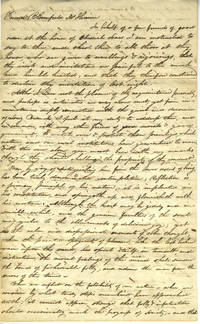
1823ref. 281351823. A three-page manuscript letter from Ephraim Smooth to Bloomfield McIlvaine exhorting him to follow the tenants of meditation and balance inherent in the Quaker tradition. A dance was held at the home of Obediah Sears and Ephraim Smooth writes at length about Quaker tradition of contemplation rejecting "ill-judged indulgence of riot & gaiety" refering to Bloomfield's education he graduated from the College of New Jersey later Princeton in 1812 and his power to influence the youths and finally offers a curative silent meditation with Simon Pure Obediah Broadbrim and himself to "cheerfully join in the dance of the spirit". Dated 5th day 7 month 1823 5 July 1823. Reference is made to the flute and fiddle made in Edenton North Carolina we assume; and addressed to "Bottany Bay" which we assume is the one on Edisto Island South Carolina. Bloomfield McIlvaine 22 Feb 1797- 18 Aug 1826 died at 30 in New Jersey. He married Henrietta Maria Banker in June 1824. His father was Joseph McIlvaine who died a couple hours after his son aged 58. Joseph was a US senator for New Jersey. Bloomfield was a lawyer - his extensive library takes four pages in his will just the books valued at $939.35. He is buried in Saint Mary's Episcopal Churchyard in Burlington New Jersey. unknown
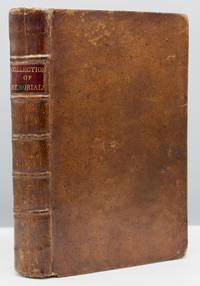
1787ref. 15881Philadelphia: Printed by Joseph Cruikshank 1787 First edition. Contemporary calf burgundy morocco spine label. Octavo. With alphabetical index. Bottom corners rubbed small chip at foot of spine some light browning. Contemporary ink inscription on front free endpaper. A very good copy. An interesting collection of short biographies of early American Quaker ministers. Over fifty of the people discussed are women. Printed by Joseph Cruikshank unknown
1787ref. 15881Philadelphia: Printed by Joseph Cruikshank 1787 First edition. Contemporary calf burgundy morocco spine label. Octavo. With alphabetical index. Bottom corners rubbed small chip at foot of spine some light browning. Contemporary ink inscription on front free endpaper. A very good copy. An interesting collection of short biographies of early American Quaker ministers. Over fifty of the people discussed are women. Printed by Joseph Cruikshank unknown books
1800ref. 11885New York: Printed by Isaac Collins 1800. Hardcover. Very good. First edition. viii 141 pages. Evans 37474. Printed on heavy paper with one or two leaves bound between each of the chapters. According to a note following the introduction "The book is printed with blank pages for the purpose of making future additions which are to be inserted in the manner and in the page in which they will be directed to be placed by the yearly meeting. No other additions are to be made.". The present copy is annotated and corrected in various ways presumably by someone who attended this annual meeting. On the first free endpaper there is a contemporary annotation: "Abraham Barker Lives in Ohio Huron Co. Town of Brunson." On the blank leaf following p. 50 there is the note: " To the monthly Meeting of . . . Dear friend We the subscriber A B son of . . . . do propose taking each other in marriage between us which we submit to your approbation then dated AB / CJ"; the inscription is somewhat illegible owing to some soiling; however it follows the chapter on "Marriages" and reproduces in part the "Form of Marriage Certificate" that appears on p. 49. In the next chapter "Removals and Certificates" at the top of the page the following annotation is added: "it shall be the duty of such monthly Meeting to accept the same unless there be some manifest objections." On p. 123 in the chapter "Queries" the following annotation appears at the bottom of the page: "B. Are the answers to the Queries introduced to the Quarterly and Yearly Meetings the substance of and founded on the answers from the prepositive Meetings." On the preceding page three lines of text have been x'ed out and an "a" has been inserted before the word "priest" in the second line from the bottom and the words "or magistrate" have been crossed through. And on p. 124 the last page of this chapter the entire ten lines of text have been crossed out. Similar crossings have been made to the chapter "Meetings of Ministers and Elders". It would appear that these annotations and corrections were made by one of those attending the Meeting in New York presumably perhaps Abraham Barker. The chapters in the book cover the following topics which however do not appear in the order given in the Table of Contents: Appeals Apprentices Books Burials Certificates Civil government Children Dealing with offenders Differences and Arbitrations Diversions Defamation and detraction Days and times Distilled spirits &c. Donations Elders Gaming Meetings for worship for discipline of ministers and elders for sufferings; Ministry Meeting-houses and ground Marriages Memorials Overseers Oaths Poor Plainness Priests wages or hireling ministry Queries Requests to be received into membership Removals Scandal publick Slavery Schools Sufferings Subscriptions Scriptures of the Old and New Testament Taverns Trade and commerce Women's meetings War Wills. In the short chapter on "Slavery" it is stated: "No friend is to import buy or sell negroes or other slaves; or hire any that are held in bondage; or wake any that are young or others by indenture or otherwise unless they are first set free. Any friend disregarding the advice above expressed after deliberate dealing with except satisfaction be given is to be disowned. . . ." The Meeting House on Pearl Street was established in 1795-96 but demolished in 1828. Light foxing but a very good copy of a rare publication very few locations known including AAS and Haverford College. Printed by Isaac Collins hardcover
1834ref. 958101834. Third edition. Darton and Harvey London. 1834. Quarto hardback. Bound in full tan morocco gilt to contrasting maroon label piece and gilt border rules to boards. End-papers and all page edges marbled. 335 pages. Index. Presentation copy to Sir Herbert Taylor First Private Secretary to George III IV and William IV from the Quaker philanthropist Peter Bedford - inscription to front free end-paper. Extremities sl. rubbed and prelims foxed. A nice copy. hardcover
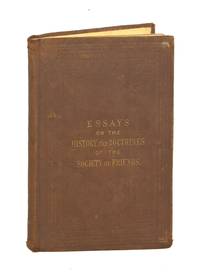
1859ref. 000010694Philadelphia: Association of Friends for the Diffusion of Religious and Useful Knowledge 1859. Later edition. Hardcover. Very Good. 12mo. 2 iii-vii 1 9-103 3 pp. Brown publisher's cloth with gold lettering on the front board. Coated yellow endpapers and pastedowns. Excerpts taken from Tracts Illustrating the History Doctrine and Discipline of the Society of Friends published in London in 1851. A few nicks to the cloth; leaves show minor foxing with a contemporary gift inscription on the front flyleaf. Association of Friends for the Diffusion of Religious and Useful Knowledge hardcover
1715ref. 21205London 1715. 4pp. Printed in two columns. Disbound. Small folio. Early folds and early stab holes in left margin. Some foxing. One of Two Known Copies A rare and expansive appeal to Parliament against the 1715 bill to renew the Quakers' right to the "solemn affirmation" in place of the legal oath. In 1696 after experiencing decades of exclusion and imprisonment for conscientiously refusing to take loyalty and court oaths Quakers were granted the right by an act of Parliament to take a "solemn affirmation" in legal situations in place of an actual oath. In 1715 a bill was under consideration in Parliament to renew that act indefinitely. Significantly longer than most lobbying documents from this time this petition asks that Parliament only extend the act if the affirmation be made "of no Force where they are concern'd in Interest but where they only Affirm as Witnesses between others there being no Temptation for them to Lye when it brings no Profit to them." Many Quakers by this time had achieved significant prosperity in manufacturing and commerce adding fuel to their enemies' resentment. The author of this pamphlet charges various Friends with hypocrisy greed and swindling and reprints an earlier petition describing six widows of commanders of two "Guinea ships" allegedly defrauded by Quakers including one Quaker from Maryland. Not listed in Joseph Smith's Biblioteca Anti-Quakeriana or A Descriptive Catalogue of Friends' Books. ESTC records only one copy at Oxford. unknown
1715ref. 21205London 1715. 4pp. Printed in two columns. Disbound. Small folio. Early folds and early stab holes in left margin. Some foxing. One of Two Known Copies A rare and expansive appeal to Parliament against the 1715 bill to renew the Quakers' right to the "solemn affirmation" in place of the legal oath. In 1696 after experiencing decades of exclusion and imprisonment for conscientiously refusing to take loyalty and court oaths Quakers were granted the right by an act of Parliament to take a "solemn affirmation" in legal situations in place of an actual oath. In 1715 a bill was under consideration in Parliament to renew that act indefinitely. Significantly longer than most lobbying documents from this time this petition asks that Parliament only extend the act if the affirmation be made "of no Force where they are concern'd in Interest but where they only Affirm as Witnesses between others there being no Temptation for them to Lye when it brings no Profit to them." Many Quakers by this time had achieved significant prosperity in manufacturing and commerce adding fuel to their enemies' resentment. The author of this pamphlet charges various Friends with hypocrisy greed and swindling and reprints an earlier petition describing six widows of commanders of two "Guinea ships" allegedly defrauded by Quakers including one Quaker from Maryland. Not listed in Joseph Smith's Biblioteca Anti-Quakeriana or A Descriptive Catalogue of Friends' Books. ESTC records only one copy at Oxford. unknown books
1715ref. 21197London 1715. Broadsheet. 1p. plus printed docket title on verso. Dbd. Early folds and early stab holes in left margin. Moderate toning and foxing. Very good. Quakers seek relief on affirmation. In 1696 after experiencing decades of exclusion and imprisonment for conscientiously refusing to take loyalty and court oaths Quakers were granted the right by Parliament to take a "solemn affirmation" in legal situations in place of an actual oath. Over the next two decades numerous Quakers objected to the invocation of God's name in the official affirmation and refused it as they had the oath. In 1715 a bill was under consideration in Parliament to renew indefinitely the Quakers' right to the affirmation. The Quaker authors of the present petition support the bill but ask that it be amended with a revised affirmation that does not include the name of God. ESTC lists copies at four institutions: the British Library the Library of the Religious Society of Friends the National Library of Scotland and Oxford. Smith A Descriptive Catalogue of Friends' Books Vol. II p.265 listing its imprint at "about 1721". unknown
1715ref. 21197London 1715. Broadsheet. 1p. plus printed docket title on verso. Dbd. Early folds and early stab holes in left margin. Moderate toning and foxing. Very good. Quakers seek relief on affirmation. In 1696 after experiencing decades of exclusion and imprisonment for conscientiously refusing to take loyalty and court oaths Quakers were granted the right by Parliament to take a "solemn affirmation" in legal situations in place of an actual oath. Over the next two decades numerous Quakers objected to the invocation of God's name in the official affirmation and refused it as they had the oath. In 1715 a bill was under consideration in Parliament to renew indefinitely the Quakers' right to the affirmation. The Quaker authors of the present petition support the bill but ask that it be amended with a revised affirmation that does not include the name of God. ESTC lists copies at four institutions: the British Library the Library of the Religious Society of Friends the National Library of Scotland and Oxford. Smith A Descriptive Catalogue of Friends' Books Vol. II p.265 listing its imprint at "about 1721". unknown books
1830ref. 8959New York: Isaac T. Hopper 1830. Unbound. Very Good binding. Octavo. 8 pp. Folded sheet never bound; untrimmed. Separation at the folds of the outer two leaves; toning and soiling; pencil notations. A laudatory biography of Elias Hicks who had led a umber of Quakers into schism. Sabin 31718; American Imprints 1510. Isaac T. Hopper unknown