277 resultados
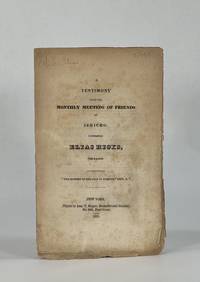
1830ref. 8959New York: Isaac T. Hopper 1830. Unbound. Very Good binding. Octavo. 8 pp. Folded sheet never bound; untrimmed. Separation at the folds of the outer two leaves; toning and soiling; pencil notations. A laudatory biography of Elias Hicks who had led a umber of Quakers into schism. Sabin 31718; American Imprints 1510. Isaac T. Hopper unknown
1780ref. 8847London: James Philips 1780. Original Wrappers. Good binding. Octavo. 32 pp. In original plain wrappers; original stitching perished now renewed. Generally edgeworn and soiled with six-digit number rubber-stamped on the front wrapper; some dog-earing shallow closed tears and chipping. Originally issued in 1666 this is an important publication by the 17th century Quaker who at the time was urging member to follow the central tenets of the Quaker faith and not put trust wholly in the clergy of whom he was suspicious. The preface of this copy points to the insecurity around the American Revolution. It states: "The ensuing Tract is re-published at the Request of several Friends who thought it might be of Service to settle the the sic Minds of many in these unstable Times and incline them to look Home to that Rock which has been is and will be the only Safety for the Righteous in all Storms and Trials of every Kind which may attend them in this Life: and it thought necessary to reprint it for the general Service at this Time wherein there are such Commotions Wars and Rumours of Wars in the Earth" p. 3. An import tract reissued in an important time. ESTC N9235. Oxford Dictionary of National Biography. James Philips unknown
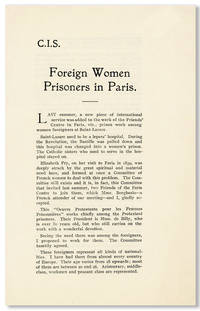
1925ref. 26813London: Friends' Council for International Service 1925. Offprint. Octavo 20.5cm.; bifolium. Fine. "The efforts for pressing reforms in the women's prisons of Paris to which Garda Kappenburg has devoted all her time have at last been crowned with success. A committee has been formed of which the Dean of The Faculty of Law Monsieur Barthelemy is Honorary President and Mr. Donnedieu de Vabre Professor of Criminology actual President. A well known lawyer and a woman barrister are secretaries. The scheme of reform worked out at the instance of Garda Kappenburg and afterwards in the course of several personal interviews submitted to the Minister for Justice Pierre Laval seems to have met with complete success." 1925 Annual Report of The American Friends Service Committee. Article first published in the World Outlook Section of The Friend March 1925. Gerda Kappenburg De Hass's dedication to prison reform and the reduction of criminal behaviour through attacking root causes like poverty and lack of social mobility clearly knew no bounds and her unique determination achieved considerable results. Currently there is only a single institutional holding in a US institution NYPL. Friends' Council for International Service unknown
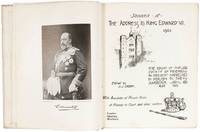
1901ref. 20890291901. London: Headley Brothers. 1901. 8vo. Original decoratively gilt-stamped white cloth the upper board somewhat marked top edge gilt; pp. 90 2 portrait photo frontis and 8 other b/w photo plates; inscribed in pencil to the recto of the ffep 'Barrow Cadbury Birmingham'; endpapers lightly embrowned else a bright copy.First edition. One of a limited edition of 250 numbered copies. This copy numbered in pencil 175. A collection of addresses made to the Sovereign between 1654 up to the address made to King Edward VII in 1902 by the Deputation of the Society of Friends The Quakers.Barrow Cadbury 1862-1958 was the head of the chocolate factory and founder of the Barrow Cadbury Trust. The Cadburys were a leading Quaker family and George Cadbury Barrow's uncle was one of the Friends that formed the deputation to Edward VII. hardcover
1847ref. 2345Boston: Printed by S.N. Dickinson & Co. 1847. A full-throated cry against slavery. The Quakers who had long opposed slavery wonder how a supposedly Christian nation could allow such evil to exist. "From the border slave states to the far south and southwest the vessels of the slave-trader regularly ply laden with youthful victims reared like cattle for the market" page 4. This pamphlet is scarce to the market. PHYSICAL DETAILS: 12mo 7 1/4 x 4 5/8 inches; 183 x 119 mm 12 pages in original printed wrappers softcover. CONDITION: Slight soiling and creasing to wrappers horizontal fold probably for mailing. Very Good or better. Printed by S.N. Dickinson & Co. paperback
1925ref. 26813London: Friends' Council for International Service 1925. Offprint. Octavo 20.5cm.; bifolium. Fine. "The efforts for pressing reforms in the women's prisons of Paris to which Garda Kappenburg has devoted all her time have at last been crowned with success. A committee has been formed of which the Dean of The Faculty of Law Monsieur Barthelemy is Honorary President and Mr. Donnedieu de Vabre Professor of Criminology actual President. A well known lawyer and a woman barrister are secretaries. The scheme of reform worked out at the instance of Garda Kappenburg and afterwards in the course of several personal interviews submitted to the Minister for Justice Pierre Laval seems to have met with complete success." 1925 Annual Report of The American Friends Service Committee. Article first published in the World Outlook Section of The Friend March 1925. Gerda Kappenburg De Hass's dedication to prison reform and the reduction of criminal behaviour through attacking root causes like poverty and lack of social mobility clearly knew no bounds and her unique determination achieved considerable results. Currently there is only a single institutional holding in a US institution NYPL. Friends' Council for International Service unknown books
ref. 202570London Luke Hinde 1760. 372pp. 8vo. Full leather slightly rubbed and edgeworn. Ink inscription to ffe. Some scattered foxing. A very good copy. London, Luke Hinde, 1760. hardcover
1821ref. 1015808vo leather spine label gilt lines on spine 184 pp. Top hinge cracked some minor wear to extremities volume slightly bent small hole through pages 7 and 8 some slight foxing but internally generally bright and clean. This is a collection of short biographies of notable Quakers who passed away between 1783 and 1820.While much of the text appears to talk about the personal challenges these people faced some comments are directed at their works with others including native Americans. Solomon W. Conrad,
1821ref. 1015808vo leather spine label gilt lines on spine 184 pp. Top hinge cracked some minor wear to extremities volume slightly bent small hole through pages 7 and 8 some slight foxing but internally generally bright and clean. This is a collection of short biographies of notable Quakers who passed away between 1783 and 1820.While much of the text appears to talk about the personal challenges these people faced some comments are directed at their works with others including native Americans. Solomon W. Conrad, books
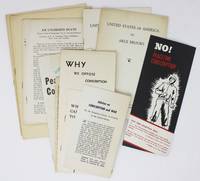
1954ref. 4307Philadelphia 1954. About very good. Thirty-five printed and typescript items approximately 150pp. total. Some staples old folds. Scattered contemporary ink stamps. Light toning and minor wear heavier in places. Scattered chipping and occasional short edge tears. A fascinating and scarce group of newsletters pamphlets and ephemera published by the American Friends Service Committee during and after World War II comprising thirty-five printed and typescript items. The Committee administered roughly one third of the camps in the Civilian Public Service system which was established to provide a means of non-military service to religious conscientious objectors during the war and also played a significant role in the anti-draft anti-conscription movement. The first group of material present here includes seven issues of the Civilian Public Service Friends Newsletter. These provide a detailed contemporary account of the overall state of the camps including camp populations incoming "campers" camp openings and closures and the financial situation. The newsletters also include news relating to the administration of the camps and developments regarding their operation and the activities of the interned objectors. Included as well are a promotional report issued on the two-year anniversary of the Service's inception and an elaborate four-page solicitation for donations to the CPS both also issued by the American Friends Service Committee. The issues of the newsletters present are: No. 5 October 30th 1942; No. 6 December 21 1942; No. 8 February 25 1943; No. 9 March 15 1943; No. 10 April 21 1943; No. 12 July 12 1943; No. 13 August 23 1943. A substantial run of a scarce and short-lived newsletter. We locate individually catalogued groups of these reports only at Bethel College and the University of Oregon and not in the Swarthmore Peace Collection. A second group of newsletters contains three issues of a weekly periodical Information and eleven issues of its monthly offshoot Information Digest dating December 1943 to July 1945 with two issues from later in 1946. These issues document the administration process of the CPS camps and contain reports on various facets of their operation including finances fundraising working and social conditions religious life and legal issues. Amongst these are reports on internal efforts and negotiations to fund the camps both within the Society of Friends and in partnership with other pacifist religious sects such as the Mennonites who were involved in camp operations. The December 2 1943 issue of Information for example contains a detailed narrative of the negotiation to fund the camps in 1944. The newsletters also contain a wealth of information on developments initiatives and daily life at the camps which include some particularly interesting reports on mental health among internees and on civil rights as the issue related to conscientious objectors but also to racial equality in the United States during the war era. OCLC locates holdings of this periodical at just a small handful of institutions. The third group of material comprises four scarce typed reports prepared and distributed by the AFSC during the war regarding the rights of conscientious objectors and their status. Three of the reports address the Selective Service Act and continued amendments thereto concentrating on the portions of the law that applied to religious objectors to military service and changes that affected objectors during the early years of the war. The first these issued in March 1942 first outlines the changes made to the draft law during December 1941 in the wake of the attack on Pearl Harbor and the declaration of war on the Axis powers and then provides an extensive step-by-step procedure for the application process to become a conscientious objector. Two further lengthy "memoranda" explain the rights of conscientious objectors as of December 1942 and March 1943 when each report was produced and gives advice for completing the objector application as well as for preparing supplementary documents and written statements. The other report in this group dated September 1941 gives an outline of the finances and disposition of the Civilian Public Service the system of labor camps for conscientious objectors on the eve of the war including lists of camps already in operation their capacities and statistical charts of objectors already registered and camp populations and assignments. These reports are quite striking as first-hand evidence of the role played by the Society of Friends administration in counseling their members to become conscientious objectors. Finally there is an interesting group of Quaker anti-conscription ephemera from World War II consisting of nine pamphlets that outline the pacifist views of the Society of Friends and the reasons behind them. The works go on to detail how these beliefs necessitate the Quakers' refusal to be conscripted into the American armed forces and defend this stance. Two pamphlets deal specifically with the opposition to peacetime conscription which became a political issue towards the end of the war. The individual titles are as follows: 1 "Why They Cannot Go to War." Philadelphia: American Friends Service Committee 1940. 2 "Why We Oppose Conscription." Philadelphia: American Friends Service Committee 1941. 3 "United States of America vs. Arle Brooks." Philadelphia: American Friends Service Committee 1941. Two copies. 4 Royden A. Maude. "An Unarmed State." Philadelphia: American Friends Service Committee N.d. 5 Muste A.J. "Conscription and Conscience." Philadelphia: American Friends Service Committee 1944. Two copies. 6 "Peace Time Conscription.A Problem for Americans." Philadelphia: American Friends Service Committee 1944. 7 "Permanent Conscription." Philadelphia: American Friends Service Committee 1945. 8 "No! To Peacetime Conscription." Philadelphia: American Friends Service Committee 1945. 9 "Advices on Conscription and War." Philadelphia: American Friends Service Committee 1954. unknown
1954ref. 4307Philadelphia 1954. About very good. Thirty-five printed and typescript items approximately 150pp. total. Some staples old folds. Scattered contemporary ink stamps. Light toning and minor wear heavier in places. Scattered chipping and occasional short edge tears. A fascinating and scarce group of newsletters pamphlets and ephemera published by the American Friends Service Committee during and after World War II comprising thirty-five printed and typescript items. The Committee administered roughly one third of the camps in the Civilian Public Service system which was established to provide a means of non-military service to religious conscientious objectors during the war and also played a significant role in the anti-draft anti-conscription movement. The first group of material present here includes seven issues of the Civilian Public Service Friends Newsletter. These provide a detailed contemporary account of the overall state of the camps including camp populations incoming "campers" camp openings and closures and the financial situation. The newsletters also include news relating to the administration of the camps and developments regarding their operation and the activities of the interned objectors. Included as well are a promotional report issued on the two-year anniversary of the Service's inception and an elaborate four-page solicitation for donations to the CPS both also issued by the American Friends Service Committee. The issues of the newsletters present are: No. 5 October 30th 1942; No. 6 December 21 1942; No. 8 February 25 1943; No. 9 March 15 1943; No. 10 April 21 1943; No. 12 July 12 1943; No. 13 August 23 1943. A substantial run of a scarce and short-lived newsletter. We locate individually catalogued groups of these reports only at Bethel College and the University of Oregon and not in the Swarthmore Peace Collection. A second group of newsletters contains three issues of a weekly periodical Information and eleven issues of its monthly offshoot Information Digest dating December 1943 to July 1945 with two issues from later in 1946. These issues document the administration process of the CPS camps and contain reports on various facets of their operation including finances fundraising working and social conditions religious life and legal issues. Amongst these are reports on internal efforts and negotiations to fund the camps both within the Society of Friends and in partnership with other pacifist religious sects such as the Mennonites who were involved in camp operations. The December 2 1943 issue of Information for example contains a detailed narrative of the negotiation to fund the camps in 1944. The newsletters also contain a wealth of information on developments initiatives and daily life at the camps which include some particularly interesting reports on mental health among internees and on civil rights as the issue related to conscientious objectors but also to racial equality in the United States during the war era. OCLC locates holdings of this periodical at just a small handful of institutions. The third group of material comprises four scarce typed reports prepared and distributed by the AFSC during the war regarding the rights of conscientious objectors and their status. Three of the reports address the Selective Service Act and continued amendments thereto concentrating on the portions of the law that applied to religious objectors to military service and changes that affected objectors during the early years of the war. The first these issued in March 1942 first outlines the changes made to the draft law during December 1941 in the wake of the attack on Pearl Harbor and the declaration of war on the Axis powers and then provides an extensive step-by-step procedure for the application process to become a conscientious objector. Two further lengthy "memoranda" explain the rights of conscientious objectors as of December 1942 and March 1943 when each report was produced and gives advice for completing the objector application as well as for preparing supplementary documents and written statements. The other report in this group dated September 1941 gives an outline of the finances and disposition of the Civilian Public Service the system of labor camps for conscientious objectors on the eve of the war including lists of camps already in operation their capacities and statistical charts of objectors already registered and camp populations and assignments. These reports are quite striking as first-hand evidence of the role played by the Society of Friends administration in counseling their members to become conscientious objectors. Finally there is an interesting group of Quaker anti-conscription ephemera from World War II consisting of nine pamphlets that outline the pacifist views of the Society of Friends and the reasons behind them. The works go on to detail how these beliefs necessitate the Quakers' refusal to be conscripted into the American armed forces and defend this stance. Two pamphlets deal specifically with the opposition to peacetime conscription which became a political issue towards the end of the war. The individual titles are as follows: 1 "Why They Cannot Go to War." Philadelphia: American Friends Service Committee 1940. 2 "Why We Oppose Conscription." Philadelphia: American Friends Service Committee 1941. 3 "United States of America vs. Arle Brooks." Philadelphia: American Friends Service Committee 1941. Two copies. 4 Royden A. Maude. "An Unarmed State." Philadelphia: American Friends Service Committee N.d. 5 Muste A.J. "Conscription and Conscience." Philadelphia: American Friends Service Committee 1944. Two copies. 6 "Peace Time Conscription.A Problem for Americans." Philadelphia: American Friends Service Committee 1944. 7 "Permanent Conscription." Philadelphia: American Friends Service Committee 1945. 8 "No! To Peacetime Conscription." Philadelphia: American Friends Service Committee 1945. 9 "Advices on Conscription and War." Philadelphia: American Friends Service Committee 1954. unknown books
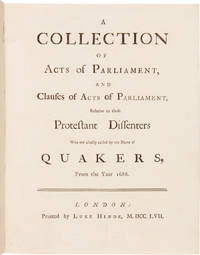
1757ref. 25203London: Printed by Luke Hinde 1757. Significant Compilation of Quaker-Related Laws This collection of statutes covers a very broad range both explicit restrictions on Quakers and many more subtle ones including acts for encouraging the growth of coffee in the American colonies and others relative to colonial finances e.g. "An Act for the more easy Recovery of Debts in his Majesty's Plantations and Colonies in America." in which Quakers are treated differently under the law. Quarto. Contemporary reversed calf red leather label. A bit rubbed. Internally clean and crisp. Very good. SABIN 14370. hardcover
1757ref. 25203London: Printed by Luke Hinde 1757. Significant Compilation of Quaker-Related Laws This collection of statutes covers a very broad range both explicit restrictions on Quakers and many more subtle ones including acts for encouraging the growth of coffee in the American colonies and others relative to colonial finances e.g. "An Act for the more easy Recovery of Debts in his Majesty's Plantations and Colonies in America." in which Quakers are treated differently under the law. Quarto. Contemporary reversed calf red leather label. A bit rubbed. Internally clean and crisp. Very good. SABIN 14370. hardcover books
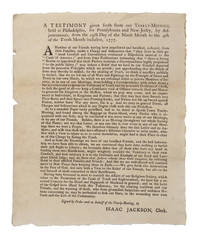
1777ref. 69134Philadelphia. 1777. Calling for the Rights of Conscientious Objectors and the Release of Exiled Quakers A rare broadside concerning the so-called "Quaker exiles" the Philadelphia Friends who were rounded up held without hearing and banished to the Virginia frontier in 1777–1778 during the height of the American Revolution. Signed in type by clerk Isaac Jackson on behalf of the Yearly Meeting the broadside calls for the release of "A Number of our Friends" who have recently "been imprisoned and banished unheard from their Families under a Charge and Insinuation that 'they have in their general Conduct and Conversation evidenced a Disposition inimical to the Cause of America.'" When war broke out between Britain and its North American colonies many Quakers remained steadfast in their religious commitment to pacifist principles refusing to pay taxes bear arms or take oaths of allegiance on behalf of the Patriot cause. This pacifism was met with suspicion by American Revolutionaries who accused Quakers of secretly supporting the British. In August and September 1777 with Philadelphia under imminent threat of capture by the enemy Quakers became the victims of growing persecution. Patriot suspicions were seemingly confirmed when on August 25 1777 the Continental Congress received a letter from Major-General John Sullivan reporting the discovery of several documents signed "the Spank-town Yearly-Meeting" implicating the Society of Friends in passing sensitive military information to the British. Never mind that no such Meeting at Spanktown existed or that the documents were likely fabricated by someone intent on maligning Quakers. The letter together with the incriminating documents were immediately referred to a committee which in its report concluded that the actions of "a number of Quakers of considerable wealth.render it certain and notorious that those persons are with much rancour and bitterness disaffected to the American cause" and that since those persons might be inclined "to communicate intelligence to the enemy and in various other ways to injure the councils and arms of America" they therefore ought to be considered a risk "to the public safety" Ford. The committee recommended that "the executive powers of the respective states.apprehend and secure all persons as well among the people called Quakers as others who have in their general conduct and conversation evidenced a disposition inimical to the cause of America" Ford. On August 28 the Congress approved the committee's recommendation. Three days later on August 31 the Supreme Executive Council of Pennsylvania in response to the resolution in Congress called for the arrest of forty-one people among them some of the city's most prominent and wealthy Quakers. Following their arrest in early September the prisoners were held for several days at the Philadelphia Masonic Lodge pending their removal to Virginia. The prisoners were offered release on condition that they swear or affirm allegiance to the Commonwealth of Pennsylvania but some refused. On September 10 the twenty remaining prisoners nearly all of them either Quakers or disowned former Quakers were banished from Philadelphia and sent to the Virginia frontier. En route the exiles were granted writs of habeas corpus by Chief Justice Thomas McKean of the Pennsylvania Supreme Court but these were denied. The next day the Pennsylvania Assembly passed a bill suspending habeas corpus entirely. The prisoners arrived in Winchester Virginia on September 29. They were released the following April in the face of mounting public pressure but only after two had died in exile. The present broadside is a product of the "extensive publishing campaign" that helped secure the Quaker exiles' release Whidbee. The broadside serves first to reiterate the Friends' position of pacifism and neutrality to remind the public that Quakers "are led out of all Wars and Fightings by the Principle of Grace and Truth in our own Minds by which we are restrained either as private Members of Society or in any of our Meetings from holding a Correspondence with either Army." The authors explain that Quakers are called "to spread the Testimony of Truth and the peaceable Doctrines of Christ to seek the good of all." They then go on to address the fabricated documents recently discovered by the Continental Army and to combat the resulting spread of misinformation: "As to a nameless Paper lately published said to be dated at Spank-Town Yearly-Meeting and found among the Baggage on Staten-Island every Person who is acquainted with our Stile may be convinced it was never wrote at any of our Meetings or by any of our Friends." The authors go on to note that "there is no Meeting throughout our whole Society of that Name; nor was that Letter or any one like it ever wrote in any of our Meetings since we were a People." Finally the Yearly Meeting pleads for the release of "our banished Friends" who they insist "have done nothing to forfeit their just Right to Liberty." OCLC locates at least six copies at Yale University the Society of the Cincinnati the Friends Historical Library Florida Atlantic University the Library of Congress and Princeton University. Additionally we find one copy at Brown University and two at the Library Company of Philadelphia. A rare broadside marking an important moment in the history of civil liberty religious freedom habeas corpus and conscientious objection in America. Old folds two horizontal and one vertical. Very minor splitting to one fold affecting text without loss. Light toning. Near fine. SABIN 94920. EVANS 15302. HILDEBURN 3638. SMITH FRIENDS' BOOKS I p.762. ESTC W5972. OCLC 1365079001 27103627 1268543044. Jack D. Marietta The Reformation of American Quakerism 1748–1783 Philadelphia: Univ. of Pennsylvania Press 1984 pp.240-44. Arthur J. Mekeel "The Relation of the Quakers to the American Revolution" in Quaker History Vol. 65 no. 1 Spring 1976 pp.3-18. Robert F. Oaks "Philadelphians in Exile: The Problem of Loyalty during the American Revolution" in Pennsylvania Magazine of History and Biography Vol. 96 no. 3 July 1972 pp.298-325. Paige L. Whidbee "The Quaker Exiles: 'The Cause of Every Inhabitant'" in Pennsylvania History: A Journal of Mid-Atlantic Studies Vol. 83 no. 1 Winter 2016 p.29. Worthington Chauncey Ford ed. Journals of the Continental Congress 1774–1789 Vol. VIII May 22–October 2 1777 Washington: Government Printing Office 1907 pp.694-95. unknown
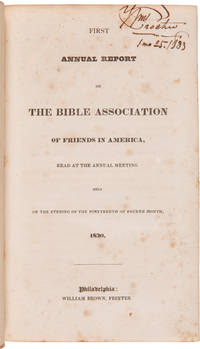
1821ref. 61985Various locations and publishers as noted below. 1821-1834. Collection of Quaker Pamphlets Compiled by a Baltimore Friend An interesting sammelband consisting of twenty-nine tracts published variously between 1821 and 1834 all relating in one way or another to the Society of Friends and bound in a matching set of two volumes. The volumes and many of the bound-in pamphlets bear the handwritten signature of "Wm Procter" and each volume of texts is preceded by a table of contents written in ink in the same hand. Some pamphlets also note the year Procter acquired them. The compiler of these two volumes was almost certainly William Procter 1780-1860 of Baltimore Maryland. Born in York England Procter arrived in Baltimore in 1796 at the age of sixteen. He married Anna Wilson in 1809 and together they had six children. Procter was a hardware merchant and an active member of the Baltimore Yearly Meeting of the Society of Friends. A death notice in the January 17 1860 issue of the Baltimore Sun described Procter as "a venerable and highly esteemed member of the Society of Friends Orthodox and the oldest hardware importer of Baltimore" distinguished for his "unobtrusive manners and integrity of character." The American Annual Monitor a publication of the Society of Friends in America noted that Procter was "much attached to our religious Society and filled many stations in the church to the satisfaction of his friends." The present collection of tracts and pamphlets reflects Procter's involvement and interest in the affairs of the Baltimore community of Friends. From the published minutes of the Baltimore Yearly Meeting documenting the activities of the Society and polemical tracts relating to the bitter theological controversies that divided the Friends community to pamphlets treating some of the issues and institutions in which members of the Baltimore Meeting were personally financially and politically invested the pamphlets herein offer a unique glimpse into American Quakerism in the 1820s and 30s. Included are pamphlets written in both condemnation and defense of Job Scott a Quaker preacher mystic and quietist from Providence Rhode Island as well as a host of pamphlets concerning the Hicksite schism that splintered the Quaker community in the 1820s. Also included is a publication commemorating the establishment of McKim's School in Baltimore a charity school funded by Quaker John McKim and his sons Isaac and William and another pamphlet on the collapse of the Union Bank of Maryland headed by Baltimore Quaker Thomas Ellicott. Most of the pamphlets were published either in Baltimore or Philadelphia with others published - one each - in Wilmington Delaware; Trenton New Jersey; and Mount Pleasant Ohio. A handful of others lack publication information. Early printer's imprints include those of William Brown Philadelphia Thomas Kite Philadelphia T. Murphy Baltimore and R. Porter & Son Wilmington. There is a total of twenty-nine separate works three of them duplicates across the two volumes fourteen in one and fifteen in the other. The titles in the order in which they appear are: First volume: 1 First Annual Report of the Bible Association of Friends in America Read at the Annual Meeting Held on the Evening of the Nineteenth of Fourth Month 1830. Philadelphia: William Brown 1830. 133pp. SMITH FRIENDS' BOOKS I:780. AMERICAN IMPRINTS 531. 2 Second Annual Report of the Bible Association of Friends in America Read at the Annual Meeting Held on the Evening of the Eighteenth of Fourth Month 1831. Philadelphia: William Brown 1831. 31pp. SMITH FRIENDS' BOOKS I:780. 3 Third Annual Report of the Bible Association of Friends in America Read at the Annual Meeting Held on the Evening of the Sixteenth of Fourth Month 1832. Philadelphia: William Brown 1832. 17pp. SMITH FRIENDS' BOOKS I:780. 4 An Appeal to the Society of Friends in Behalf of The Bible Association of Friends in America. Philadelphia: William Brown 1832. 72pp. SABIN 86036. AMERICAN IMPRINTS 11363. SMITH FRIENDS' BOOKS I:780. 5 A Declaration of the Yearly Meetings of Friends Held in Philadelphia Respecting the Proceedings of Those Who Have Lately Separated from the Society: and Also Shewing the Contrast Between Their Doctrines and Those Held by Friends. Philadelphia: Thomas Kite 1828. 32pp. SABIN 19183. AMERICAN IMPRINTS 33301. 6 The Testimony of the Society of Friends on the Continent of America. Philadelphia: Joseph Rakestraw 1830. 36pp. AMERICAN IMPRINTS 1508. SABIN 86070. SMITH FRIENDS' BOOKS I:780. 7 A Letter from Luke Howard of Tottenham Near London to a Friend in America; Containing Observations upon a Treatise Written by Job Scott entitled Salvation by Christ &c. N.p. 1825. 20pp. SMITH FRIENDS' BOOKS I:982. 8 A Letter from a Friend in America to Luke Howard of Tottenham Near London in Which the Character of Our Late Friend Job Scott Is Vindicated and Defended and His Doctrines Shown to Be Consistent with Scripture and Sound Reason. In Reply to a Letter Addressed by Luke Howard to the Author. N.p. 1826. 54pp. plus errata leaf bound in. SABIN 78289. SMITH FRIENDS' BOOKS I:943. 9 Charter of M'Kim's School Incorporated by The General Assembly of Maryland December Session 1820: with the By-Laws of the Trustees of That Institution. Baltimore: T. Murphy 1821. 15pp. including in-text illustration plus embossed seal of the school on separate slip of paper bound in. OCLC records only three copies at Yale Duke and the Library Company of Philadelphia. AMERICAN IMPRINTS 5889. 10 Owen Robert Dale: Letters Addressed to William Gibbons of Wilmington Del. in Reply to "An Exposition of Modern Scepticism;" Together with an Address to the Society of Friends and a Letter to Eli Hilles Benj. Ferris and Others. First Published in the F. Enquirer. Philadelphia: J.A. M'Clintock 1830. 24pp. AMERICAN IMPRINTS 2920. 11 Gibbons William: An Exposition of Modern Scepticism in a Letter Addressed to the Editors of the Free Enquirer. Wilmington De.: R. Porter and Son 1829. 48pp. AMERICAN IMPRINTS 38754. 12 Gould M.T.C.: The Friend or Advocate of Truth Extra. Facts from M.T.C. Gould Respecting Isaac T. Hopper caption title. Philadelphia 1831 16pp. 13 Defence of Isaac T. Hopper Against the Aspersions of Marcus T.C. Gould half title. N.p. N.d. 12pp. 14 Address of the Sufferers of the Eastern District of the City of Baltimore to the Yearly Meeting Held in Baltimore 10th Month 28th 1822. N.p. 1822. 24pp. OCLC locates only five copies. AMERICAN IMPRINTS 8778. Second volume: 15 Extracts from The Minutes of Baltimore Yearly Meeting caption title. N.p. 1833. 21pp. SMITH FRIENDS' BOOKS I:776. 16 Extracts from The Minutes of Baltimore Yearly Meeting caption title. N.p. 1831. 23pp. SMITH FRIENDS' BOOKS I:776. 17 Extracts from The Minutes of Baltimore Yearly Meeting caption title. N.p. 1830. 12pp. SMITH FRIENDS' BOOKS I:776. 18 Extracts from The Minutes of Baltimore Yearly Meeting caption title. N.p. 1829. 15pp. SMITH FRIENDS' BOOKS I:776. 19 Bates Elisha: The Incorporation of Ohio Yearly Meeting for the Purpose of Establishing a Boarding School Defended: or an Explanation of the Application Made by Friends to the Legislature of Ohio. Mount Pleasant Oh. 1833. 23pp. AMERICAN IMPRINTS 17684. 20 Foulke Joseph: Friends' Almanac for the Year of our Lord 1834. Being the Second After Leap Year…. Philadelphia: Evan Lewis 1833. 29-48pp. AMERICAN IMPRINTS 18930. DRAKE 11877. 21 Bates Elisha: A View of the Sentiments of Elias Hicks Respecting Future Rewards and Punishments. Philadelphia: Thomas Kite 1829. 16pp. AMERICAN IMPRINTS 37723. 22 Review of a Letter from Elias Hicks to Dr. N. Shoemaker. Fourth Edition. Philadelphia: Thomas Kite 1829. 28pp. AMERICAN IMPRINTS 40251. SMITH FRIENDS' BOOKS I:943. 23 A Review of Elias Hicks' Letter to Thomas Willis on the Miraculous Conception of Our Lord and Saviour Jesus Christ. Philadelphia: Thomas Kite 1829. 27pp. 24 Epistles and Testimonies Issued by the Yearly Meetings of Friends in North America; Setting Forth Their Faith Respecting the Holy Scriptures and in the Divinity and Offices of Our Lord and Saviour Jesus Christ; Shewing That the Antichristian Doctrines of Those Who Have Lately Separated from the Society are Repugnant Thereto. Philadelphia: Thomas Kite 1828. 83pp. AMERICAN IMPRINTS 33295. SABIN 86056. SMITH FRIENDS' BOOKS I:779. 25 Another copy of The Testimony of the Society of Friends on the Continent of America. Philadelphia: Joseph Rakestraw 1830. 36pp. 26 The Decision in a Cause Decided in the Court of Chancery of the State of New Jersey between Thomas L. Shotwell Complainant and Joseph Hendrickson and Stacy Decow Defendants caption title. Trenton N.J.: P.J. Gray 1832. 90pp. Likely extracted from Wood George and Isaac H. Williamson The Society of Friends Vindicated: Being the Arguments of the Counsel of Joseph Hendrickson in a Cause Decided in the Court of Chancery of the State of New Jersey between Thomas L. Shotwell Complainant and Joseph Hendrickson and Stacy Decow Defendants. By George Wood and Isaac H. Williamson Counsellors at Law. To Which Is Appended the Decision of the Court. Trenton N.J.: P.J. Gray 1832. "An important case relating to a dispute between Orthodox and Hicksite Friends over funds belonging to the Society before the division" - SABIN. AMERICAN IMPRINTS 17135. SABIN 105026. FELCONE COLLECTION 1435. 27 Another copy of Address of the Sufferers of the Eastern District of the City of Baltimore to the Yearly Meeting Held in Baltimore 10th Month 28th 1822. N.p. 1822. 24pp. 28 Another copy of Gould M.T.C.: The Friend or Advocate of Truth Extra. Facts from M.T.C. Gould Respecting Isaac T. Hopper caption title. Philadelphia 1831 16pp. 29 Johnson Reverdy: Reply to a Pamphlet Entitled "A Brief Exposition of Matters Relating to the Bank of Maryland" with an Examination into Some of the Causes of the Bankruptcy of That Institution. Baltimore: Jas. Lucas & E.K. Deaver 1834. 54251pp. AMERICAN IMPRINTS 25136. SABIN 36271. Together the pamphlets provide a comprehensive look at the Society of Friends in Baltimore and in the United States more broadly between 1821 and 1834. Bound in two volumes. Contemporary three-quarter calf and marbled boards spines gilt. Boards rubbed shelfworn corners and spine ends worn. Intermittent tanning foxing and staining. Very good overall. The American Annual Monitor for 1861; or Obituary of the Members of the Society of Friends in America for the Year 1860. No. 4 New York 1861 p.145. "Death of an Aged Citizen. – Mr. Wm Proctor sic" in The Sun Baltimore MD January 17 1860. hardcover
1777ref. 69134Philadelphia. 1777. Calling for the Rights of Conscientious Objectors and the Release of Exiled Quakers A rare broadside concerning the so-called "Quaker exiles" the Philadelphia Friends who were rounded up held without hearing and banished to the Virginia frontier in 1777–1778 during the height of the American Revolution. Signed in type by clerk Isaac Jackson on behalf of the Yearly Meeting the broadside calls for the release of "A Number of our Friends" who have recently "been imprisoned and banished unheard from their Families under a Charge and Insinuation that 'they have in their general Conduct and Conversation evidenced a Disposition inimical to the Cause of America.'" When war broke out between Britain and its North American colonies many Quakers remained steadfast in their religious commitment to pacifist principles refusing to pay taxes bear arms or take oaths of allegiance on behalf of the Patriot cause. This pacifism was met with suspicion by American Revolutionaries who accused Quakers of secretly supporting the British. In August and September 1777 with Philadelphia under imminent threat of capture by the enemy Quakers became the victims of growing persecution. Patriot suspicions were seemingly confirmed when on August 25 1777 the Continental Congress received a letter from Major-General John Sullivan reporting the discovery of several documents signed "the Spank-town Yearly-Meeting" implicating the Society of Friends in passing sensitive military information to the British. Never mind that no such Meeting at Spanktown existed or that the documents were likely fabricated by someone intent on maligning Quakers. The letter together with the incriminating documents were immediately referred to a committee which in its report concluded that the actions of "a number of Quakers of considerable wealth.render it certain and notorious that those persons are with much rancour and bitterness disaffected to the American cause" and that since those persons might be inclined "to communicate intelligence to the enemy and in various other ways to injure the councils and arms of America" they therefore ought to be considered a risk "to the public safety" Ford. The committee recommended that "the executive powers of the respective states.apprehend and secure all persons as well among the people called Quakers as others who have in their general conduct and conversation evidenced a disposition inimical to the cause of America" Ford. On August 28 the Congress approved the committee's recommendation. Three days later on August 31 the Supreme Executive Council of Pennsylvania in response to the resolution in Congress called for the arrest of forty-one people among them some of the city's most prominent and wealthy Quakers. Following their arrest in early September the prisoners were held for several days at the Philadelphia Masonic Lodge pending their removal to Virginia. The prisoners were offered release on condition that they swear or affirm allegiance to the Commonwealth of Pennsylvania but some refused. On September 10 the twenty remaining prisoners nearly all of them either Quakers or disowned former Quakers were banished from Philadelphia and sent to the Virginia frontier. En route the exiles were granted writs of habeas corpus by Chief Justice Thomas McKean of the Pennsylvania Supreme Court but these were denied. The next day the Pennsylvania Assembly passed a bill suspending habeas corpus entirely. The prisoners arrived in Winchester Virginia on September 29. They were released the following April in the face of mounting public pressure but only after two had died in exile. The present broadside is a product of the "extensive publishing campaign" that helped secure the Quaker exiles' release Whidbee. The broadside serves first to reiterate the Friends' position of pacifism and neutrality to remind the public that Quakers "are led out of all Wars and Fightings by the Principle of Grace and Truth in our own Minds by which we are restrained either as private Members of Society or in any of our Meetings from holding a Correspondence with either Army." The authors explain that Quakers are called "to spread the Testimony of Truth and the peaceable Doctrines of Christ to seek the good of all." They then go on to address the fabricated documents recently discovered by the Continental Army and to combat the resulting spread of misinformation: "As to a nameless Paper lately published said to be dated at Spank-Town Yearly-Meeting and found among the Baggage on Staten-Island every Person who is acquainted with our Stile may be convinced it was never wrote at any of our Meetings or by any of our Friends." The authors go on to note that "there is no Meeting throughout our whole Society of that Name; nor was that Letter or any one like it ever wrote in any of our Meetings since we were a People." Finally the Yearly Meeting pleads for the release of "our banished Friends" who they insist "have done nothing to forfeit their just Right to Liberty." OCLC locates at least six copies at Yale University the Society of the Cincinnati the Friends Historical Library Florida Atlantic University the Library of Congress and Princeton University. Additionally we find one copy at Brown University and two at the Library Company of Philadelphia. A rare broadside marking an important moment in the history of civil liberty religious freedom habeas corpus and conscientious objection in America. Old folds two horizontal and one vertical. Very minor splitting to one fold affecting text without loss. Light toning. Near fine. SABIN 94920. EVANS 15302. HILDEBURN 3638. SMITH FRIENDS' BOOKS I p.762. ESTC W5972. OCLC 1365079001 27103627 1268543044. Jack D. Marietta The Reformation of American Quakerism 1748–1783 Philadelphia: Univ. of Pennsylvania Press 1984 pp.240-44. Arthur J. Mekeel "The Relation of the Quakers to the American Revolution" in Quaker History Vol. 65 no. 1 Spring 1976 pp.3-18. Robert F. Oaks "Philadelphians in Exile: The Problem of Loyalty during the American Revolution" in Pennsylvania Magazine of History and Biography Vol. 96 no. 3 July 1972 pp.298-325. Paige L. Whidbee "The Quaker Exiles: 'The Cause of Every Inhabitant'" in Pennsylvania History: A Journal of Mid-Atlantic Studies Vol. 83 no. 1 Winter 2016 p.29. Worthington Chauncey Ford ed. Journals of the Continental Congress 1774–1789 Vol. VIII May 22–October 2 1777 Washington: Government Printing Office 1907 pp.694-95. unknown books
1821ref. 61985Various locations and publishers as noted below. 1821-1834. Collection of Quaker Pamphlets Compiled by a Baltimore Friend An interesting sammelband consisting of twenty-nine tracts published variously between 1821 and 1834 all relating in one way or another to the Society of Friends and bound in a matching set of two volumes. The volumes and many of the bound-in pamphlets bear the handwritten signature of "Wm Procter" and each volume of texts is preceded by a table of contents written in ink in the same hand. Some pamphlets also note the year Procter acquired them. The compiler of these two volumes was almost certainly William Procter 1780-1860 of Baltimore Maryland. Born in York England Procter arrived in Baltimore in 1796 at the age of sixteen. He married Anna Wilson in 1809 and together they had six children. Procter was a hardware merchant and an active member of the Baltimore Yearly Meeting of the Society of Friends. A death notice in the January 17 1860 issue of the Baltimore Sun described Procter as "a venerable and highly esteemed member of the Society of Friends Orthodox and the oldest hardware importer of Baltimore" distinguished for his "unobtrusive manners and integrity of character." The American Annual Monitor a publication of the Society of Friends in America noted that Procter was "much attached to our religious Society and filled many stations in the church to the satisfaction of his friends." The present collection of tracts and pamphlets reflects Procter's involvement and interest in the affairs of the Baltimore community of Friends. From the published minutes of the Baltimore Yearly Meeting documenting the activities of the Society and polemical tracts relating to the bitter theological controversies that divided the Friends community to pamphlets treating some of the issues and institutions in which members of the Baltimore Meeting were personally financially and politically invested the pamphlets herein offer a unique glimpse into American Quakerism in the 1820s and 30s. Included are pamphlets written in both condemnation and defense of Job Scott a Quaker preacher mystic and quietist from Providence Rhode Island as well as a host of pamphlets concerning the Hicksite schism that splintered the Quaker community in the 1820s. Also included is a publication commemorating the establishment of McKim's School in Baltimore a charity school funded by Quaker John McKim and his sons Isaac and William and another pamphlet on the collapse of the Union Bank of Maryland headed by Baltimore Quaker Thomas Ellicott. Most of the pamphlets were published either in Baltimore or Philadelphia with others published - one each - in Wilmington Delaware; Trenton New Jersey; and Mount Pleasant Ohio. A handful of others lack publication information. Early printer's imprints include those of William Brown Philadelphia Thomas Kite Philadelphia T. Murphy Baltimore and R. Porter & Son Wilmington. There is a total of twenty-nine separate works three of them duplicates across the two volumes fourteen in one and fifteen in the other. The titles in the order in which they appear are: First volume: 1 First Annual Report of the Bible Association of Friends in America Read at the Annual Meeting Held on the Evening of the Nineteenth of Fourth Month 1830. Philadelphia: William Brown 1830. 133pp. SMITH FRIENDS' BOOKS I:780. AMERICAN IMPRINTS 531. 2 Second Annual Report of the Bible Association of Friends in America Read at the Annual Meeting Held on the Evening of the Eighteenth of Fourth Month 1831. Philadelphia: William Brown 1831. 31pp. SMITH FRIENDS' BOOKS I:780. 3 Third Annual Report of the Bible Association of Friends in America Read at the Annual Meeting Held on the Evening of the Sixteenth of Fourth Month 1832. Philadelphia: William Brown 1832. 17pp. SMITH FRIENDS' BOOKS I:780. 4 An Appeal to the Society of Friends in Behalf of The Bible Association of Friends in America. Philadelphia: William Brown 1832. 72pp. SABIN 86036. AMERICAN IMPRINTS 11363. SMITH FRIENDS' BOOKS I:780. 5 A Declaration of the Yearly Meetings of Friends Held in Philadelphia Respecting the Proceedings of Those Who Have Lately Separated from the Society: and Also Shewing the Contrast Between Their Doctrines and Those Held by Friends. Philadelphia: Thomas Kite 1828. 32pp. SABIN 19183. AMERICAN IMPRINTS 33301. 6 The Testimony of the Society of Friends on the Continent of America. Philadelphia: Joseph Rakestraw 1830. 36pp. AMERICAN IMPRINTS 1508. SABIN 86070. SMITH FRIENDS' BOOKS I:780. 7 A Letter from Luke Howard of Tottenham Near London to a Friend in America; Containing Observations upon a Treatise Written by Job Scott entitled Salvation by Christ &c. N.p. 1825. 20pp. SMITH FRIENDS' BOOKS I:982. 8 A Letter from a Friend in America to Luke Howard of Tottenham Near London in Which the Character of Our Late Friend Job Scott Is Vindicated and Defended and His Doctrines Shown to Be Consistent with Scripture and Sound Reason. In Reply to a Letter Addressed by Luke Howard to the Author. N.p. 1826. 54pp. plus errata leaf bound in. SABIN 78289. SMITH FRIENDS' BOOKS I:943. 9 Charter of M'Kim's School Incorporated by The General Assembly of Maryland December Session 1820: with the By-Laws of the Trustees of That Institution. Baltimore: T. Murphy 1821. 15pp. including in-text illustration plus embossed seal of the school on separate slip of paper bound in. OCLC records only three copies at Yale Duke and the Library Company of Philadelphia. AMERICAN IMPRINTS 5889. 10 Owen Robert Dale: Letters Addressed to William Gibbons of Wilmington Del. in Reply to "An Exposition of Modern Scepticism;" Together with an Address to the Society of Friends and a Letter to Eli Hilles Benj. Ferris and Others. First Published in the F. Enquirer. Philadelphia: J.A. M'Clintock 1830. 24pp. AMERICAN IMPRINTS 2920. 11 Gibbons William: An Exposition of Modern Scepticism in a Letter Addressed to the Editors of the Free Enquirer. Wilmington De.: R. Porter and Son 1829. 48pp. AMERICAN IMPRINTS 38754. 12 Gould M.T.C.: The Friend or Advocate of Truth Extra. Facts from M.T.C. Gould Respecting Isaac T. Hopper caption title. Philadelphia 1831 16pp. 13 Defence of Isaac T. Hopper Against the Aspersions of Marcus T.C. Gould half title. N.p. N.d. 12pp. 14 Address of the Sufferers of the Eastern District of the City of Baltimore to the Yearly Meeting Held in Baltimore 10th Month 28th 1822. N.p. 1822. 24pp. OCLC locates only five copies. AMERICAN IMPRINTS 8778. Second volume: 15 Extracts from The Minutes of Baltimore Yearly Meeting caption title. N.p. 1833. 21pp. SMITH FRIENDS' BOOKS I:776. 16 Extracts from The Minutes of Baltimore Yearly Meeting caption title. N.p. 1831. 23pp. SMITH FRIENDS' BOOKS I:776. 17 Extracts from The Minutes of Baltimore Yearly Meeting caption title. N.p. 1830. 12pp. SMITH FRIENDS' BOOKS I:776. 18 Extracts from The Minutes of Baltimore Yearly Meeting caption title. N.p. 1829. 15pp. SMITH FRIENDS' BOOKS I:776. 19 Bates Elisha: The Incorporation of Ohio Yearly Meeting for the Purpose of Establishing a Boarding School Defended: or an Explanation of the Application Made by Friends to the Legislature of Ohio. Mount Pleasant Oh. 1833. 23pp. AMERICAN IMPRINTS 17684. 20 Foulke Joseph: Friends' Almanac for the Year of our Lord 1834. Being the Second After Leap Year…. Philadelphia: Evan Lewis 1833. 29-48pp. AMERICAN IMPRINTS 18930. DRAKE 11877. 21 Bates Elisha: A View of the Sentiments of Elias Hicks Respecting Future Rewards and Punishments. Philadelphia: Thomas Kite 1829. 16pp. AMERICAN IMPRINTS 37723. 22 Review of a Letter from Elias Hicks to Dr. N. Shoemaker. Fourth Edition. Philadelphia: Thomas Kite 1829. 28pp. AMERICAN IMPRINTS 40251. SMITH FRIENDS' BOOKS I:943. 23 A Review of Elias Hicks' Letter to Thomas Willis on the Miraculous Conception of Our Lord and Saviour Jesus Christ. Philadelphia: Thomas Kite 1829. 27pp. 24 Epistles and Testimonies Issued by the Yearly Meetings of Friends in North America; Setting Forth Their Faith Respecting the Holy Scriptures and in the Divinity and Offices of Our Lord and Saviour Jesus Christ; Shewing That the Antichristian Doctrines of Those Who Have Lately Separated from the Society are Repugnant Thereto. Philadelphia: Thomas Kite 1828. 83pp. AMERICAN IMPRINTS 33295. SABIN 86056. SMITH FRIENDS' BOOKS I:779. 25 Another copy of The Testimony of the Society of Friends on the Continent of America. Philadelphia: Joseph Rakestraw 1830. 36pp. 26 The Decision in a Cause Decided in the Court of Chancery of the State of New Jersey between Thomas L. Shotwell Complainant and Joseph Hendrickson and Stacy Decow Defendants caption title. Trenton N.J.: P.J. Gray 1832. 90pp. Likely extracted from Wood George and Isaac H. Williamson The Society of Friends Vindicated: Being the Arguments of the Counsel of Joseph Hendrickson in a Cause Decided in the Court of Chancery of the State of New Jersey between Thomas L. Shotwell Complainant and Joseph Hendrickson and Stacy Decow Defendants. By George Wood and Isaac H. Williamson Counsellors at Law. To Which Is Appended the Decision of the Court. Trenton N.J.: P.J. Gray 1832. "An important case relating to a dispute between Orthodox and Hicksite Friends over funds belonging to the Society before the division" - SABIN. AMERICAN IMPRINTS 17135. SABIN 105026. FELCONE COLLECTION 1435. 27 Another copy of Address of the Sufferers of the Eastern District of the City of Baltimore to the Yearly Meeting Held in Baltimore 10th Month 28th 1822. N.p. 1822. 24pp. 28 Another copy of Gould M.T.C.: The Friend or Advocate of Truth Extra. Facts from M.T.C. Gould Respecting Isaac T. Hopper caption title. Philadelphia 1831 16pp. 29 Johnson Reverdy: Reply to a Pamphlet Entitled "A Brief Exposition of Matters Relating to the Bank of Maryland" with an Examination into Some of the Causes of the Bankruptcy of That Institution. Baltimore: Jas. Lucas & E.K. Deaver 1834. 54251pp. AMERICAN IMPRINTS 25136. SABIN 36271. Together the pamphlets provide a comprehensive look at the Society of Friends in Baltimore and in the United States more broadly between 1821 and 1834. Bound in two volumes. Contemporary three-quarter calf and marbled boards spines gilt. Boards rubbed shelfworn corners and spine ends worn. Intermittent tanning foxing and staining. Very good overall. The American Annual Monitor for 1861; or Obituary of the Members of the Society of Friends in America for the Year 1860. No. 4 New York 1861 p.145. "Death of an Aged Citizen. – Mr. Wm Proctor sic" in The Sun Baltimore MD January 17 1860. hardcover books
1779ref. BK0134Philadelphia: Joseph Crukshank 1779. 8vo contemporary calf 256 pp. With the ownership signatures of Jonah Woolman and Burr Woolman. Front board and preliminary page detached else good fair condition. A strong association copy of the first edition owned by Jonah Woolman 1733-1799 younger brother of the Quaker minister and abolitionist John Woolman and subsequently by Jonah's son Burr Woolman 1787-1844. Churchman and John Woolman were fellow ministers and worked together directly in the campaign against slaveholding among Friends. In his Journal Churchman records that in 1759 he and Woolman were engaged in "visiting some active members of our Society who held slaves" in Philadelphia and New Jersey; Woolman's own journal likewise records meeting Churchman by agreement in Philadelphia and spending much of a week visiting Friends who held enslaved people. The provenance connects Churchman's account to the immediate family of one of his collaborators in this work. Jonah Woolman was John Woolman's younger brother and Burr Woolman whose ownership signature also appears was Jonah's son. . Joseph Crukshank unknown
1779ref. BK0134Philadelphia: Joseph Crukshank 1779. 8vo contemporary calf 256 pp. With the ownership signatures of Jonah Woolman and Burr Woolman. Front board and preliminary page detached else good fair condition. A strong association copy of the first edition owned by Jonah Woolman 1733-1799 younger brother of the Quaker minister and abolitionist John Woolman and subsequently by Jonah's son Burr Woolman 1787-1844. Churchman and John Woolman were fellow ministers and worked together directly in the campaign against slaveholding among Friends. In his Journal Churchman records that in 1759 he and Woolman were engaged in "visiting some active members of our Society who held slaves" in Philadelphia and New Jersey; Woolman's own journal likewise records meeting Churchman by agreement in Philadelphia and spending much of a week visiting Friends who held enslaved people. The provenance connects Churchman's account to the immediate family of one of his collaborators in this work. Jonah Woolman was John Woolman's younger brother and Burr Woolman whose ownership signature also appears was Jonah's son. . Joseph Crukshank unknown books
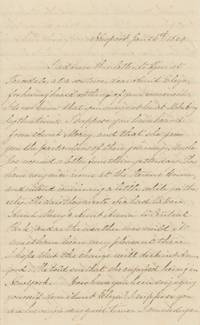
1871ref. List3241Rhode Island Massachusetts and New York 1871. Thirty-two letters two apparently missing final pages; with fifteen pages of incomplete letter material. Excellent to Near Fine. Letters from some of the young ladies of the Hazard family primarily Gertrude Minturn 1843–1877 Anna Peace 1845–1868 and Esther Robinson 1848–d. Hazard with some from other family and friends. The family was descended from Thomas Hazard one of the founding settlers of Newport Rhode Island.1 The girls were educated and often write from school; Anna and Esther attend the ‘Friends School’ in Providence which is probably the Moses Brown School and Gertrude attends Dr. Dio Lewis’s School for Young Ladies in Lexington Massachusetts. Founded by Diocletian Lewis a temperance and physical culture advocate the school incorporated his exercise system developed to condition weaker individuals. Gertrude describes a regimen of thirty minutes of walking plus an hour and a half of exercise and discusses Dr. Lewis: “Dr Lewis gives familiar lectures on any subject which the scholars propose. He is a very pleasant genial man and takes part in the games & dancing with the greatest spirit. There are about 20 scholars. Some of them board in the village but are subject to the rules of the school. This building is very large and is mostly occupied by the patients of Dr Lewis’ ‘Movement Cures’ to whom most of his time is devoted. The scholars and patients associate together. Indeed we are under very little constraint the teachers leaving our actions to be regulated by our own sense of propriety; and they seldom find occasion to reprove the scholars for misdemeanors.” November 23 1864 Meanwhile Anna and Esther’s education is more on the religious side; Esther writes: “We have not been to meeting very often since we returned from our lovely visit to Newport but the first Sunday morning I did think all the time of it as I said I was going to. We were edified this morning by a sermon from Elizabeth Meader or rather a torrent of noise so that I am nearly deafened now. I don’t think I ever heard a more horrible combination of sounds from the mouth of any human being.” January 8 1865 Though speaking in tongues is most strongly associated with Pentecostalism it is not unheard of in Quakerism. In his book of genealogy and reflections the girls’ father Thomas Hazard 1797–1886 connects the family’s “strong religious tendencies” to his own interest in spiritualism.2 This interest in mediumship comes up several times in the letters first in 1864 when one of the girls reports that “Pa writes us that at a circle which he attended a few days ago a clairvoyant medium described our house at Vaucluse perfectly” February 24 1864 and later when one of the girls attends a circle with their father in Philadelphia: “Yesterday morning Pa & I had a sitting with a Mrs. Robinson a trance speaking medium. The communication from mother was the most beautiful I ever heard. She spoke to us just as she used to on earth using the same expressions. It seemed as if I could almost see her – we are going again on Monday.” February 8 1867 That is the pair spoke to Frances Minturn Hazard who had died in 1854. Of interest to researchers of the Hazard family and Rhode Island Quakers. 1 Caroline Elizabeth Robinson The Hazard Family of Rhode Island 1635–1894 Printed for the Author 1896. 2 Thomas R. Hazard Recollections of Olden Times Sanborn 1879 228. unknown
1871ref. List3241Rhode Island Massachusetts and New York 1871. Thirty-two letters two apparently missing final pages; with fifteen pages of incomplete letter material. Excellent to Near Fine. Letters from some of the young ladies of the Hazard family primarily Gertrude Minturn 1843–1877 Anna Peace 1845–1868 and Esther Robinson 1848–d. Hazard with some from other family and friends. The family was descended from Thomas Hazard one of the founding settlers of Newport Rhode Island.1 The girls were educated and often write from school; Anna and Esther attend the ‘Friends School’ in Providence which is probably the Moses Brown School and Gertrude attends Dr. Dio Lewis’s School for Young Ladies in Lexington Massachusetts. Founded by Diocletian Lewis a temperance and physical culture advocate the school incorporated his exercise system developed to condition weaker individuals. Gertrude describes a regimen of thirty minutes of walking plus an hour and a half of exercise and discusses Dr. Lewis: “Dr Lewis gives familiar lectures on any subject which the scholars propose. He is a very pleasant genial man and takes part in the games & dancing with the greatest spirit. There are about 20 scholars. Some of them board in the village but are subject to the rules of the school. This building is very large and is mostly occupied by the patients of Dr Lewis’ ‘Movement Cures’ to whom most of his time is devoted. The scholars and patients associate together. Indeed we are under very little constraint the teachers leaving our actions to be regulated by our own sense of propriety; and they seldom find occasion to reprove the scholars for misdemeanors.” November 23 1864 Meanwhile Anna and Esther’s education is more on the religious side; Esther writes: “We have not been to meeting very often since we returned from our lovely visit to Newport but the first Sunday morning I did think all the time of it as I said I was going to. We were edified this morning by a sermon from Elizabeth Meader or rather a torrent of noise so that I am nearly deafened now. I don’t think I ever heard a more horrible combination of sounds from the mouth of any human being.” January 8 1865 Though speaking in tongues is most strongly associated with Pentecostalism it is not unheard of in Quakerism. In his book of genealogy and reflections the girls’ father Thomas Hazard 1797–1886 connects the family’s “strong religious tendencies” to his own interest in spiritualism.2 This interest in mediumship comes up several times in the letters first in 1864 when one of the girls reports that “Pa writes us that at a circle which he attended a few days ago a clairvoyant medium described our house at Vaucluse perfectly” February 24 1864 and later when one of the girls attends a circle with their father in Philadelphia: “Yesterday morning Pa & I had a sitting with a Mrs. Robinson a trance speaking medium. The communication from mother was the most beautiful I ever heard. She spoke to us just as she used to on earth using the same expressions. It seemed as if I could almost see her – we are going again on Monday.” February 8 1867 That is the pair spoke to Frances Minturn Hazard who had died in 1854. Of interest to researchers of the Hazard family and Rhode Island Quakers. 1 Caroline Elizabeth Robinson The Hazard Family of Rhode Island 1635–1894 Printed for the Author 1896. 2 Thomas R. Hazard Recollections of Olden Times Sanborn 1879 228. unknown books
1953ref. LFA01068N° 17 de la revue "Saint Cyr" : 180 pages, format 240 x 310 mm, illustrée, brochée couverture couleurs, publié en 1953
1809ref. 76436New Bedford:: Abraham Shearman Jun. 1809. First edition. old full sheep. . Light discoloration to the text throughout the paper is not at all brittle; light rubbing to the leather; tight and sound. . 8vo. Printed by Direction of the Meeting. Annotated in an old hand at the top of the title page: "This Book belongs to Rhode Island Monthly Meeting of Friends." A note at the close of the Introduction refers to additions on three pages approx. 200 words; regarding those "out of unity with friends" inspecting testimonies and the receipt of military pensions of persons who subsequently became members. These manuscript additions are dated 1822 1811 and 1818.l Abraham Shearman, Jun., hardcover
First edition, ii,238pp., cont. calf, rebacked, rubbed. The first Quaker bibliography. "Hereby may be seen, not only what Books have been Printed of the Sufferings which many of the said People underwent, but also the many Warnings to the Governments and Rulers, &c. Concerned..." ? Advertisement of verso of title.
New revised edition, 4to (195 x 154 mm), 484, [8]pp., cont. calf, rubbed, hinges cracked, head and foot of spine chipped. An important source on the Quakers which includes, as well, much on the Irish society, local history and genealogy. Provenance: Early ownership ink signature to title page "John Humphreys, City new, Sarum [Salisbury], L/N."