286 resultados
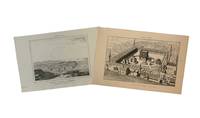
1926ref. 144221926. Gröber Karl. Bird's Eye View of Mecca 1926. Original copperplate photogravure depicting Mecca Islam's holiest city and the destination of the annual Hajj pilgrimage. The elevated view records the historic urban setting of Mecca home to the Masjid al-Haram the Sacred or Grand Mosque and the Kaaba toward which Muslims worldwide direct their daily prayers. Published in 1926 the image dates from the early rule of Abdulaziz Ibn Saud over the Hejaz following his conquest of Mecca in 1924 and assumption of the title King of the Hejaz in 1926. The illustration preserves a photographic view of the holy city during a period of political transition decades before the extensive urban redevelopment and mosque expansions of the later twentieth century. Gröber Karl photographer. Bird's Eye View of Mecca. 1926. Original copperplate photogravure after a photograph by Gröber published as an illustration in the first edition of a 1926 book containing his text and photogravures. Sheet measures approximately 8.25" x 10.25" with a printed area of approximately 8.5" x 6.25". The elevated perspective presents a panoramic view of Mecca recording the city's buildings and urban topography. The copperplate photogravure process reproduces the tonal gradations and architectural detail of the original photograph. Mecca had been under Ottoman sovereignty until the Arab Revolt of 1916 after which it formed part of the Hashemite Kingdom of the Hejaz before coming under Saudi control in 1924. Gröber's 1926 publication belongs to this transitional period in the city's modern history. The original photogravure provides a contemporary visual record of Mecca before the major architectural alterations and expansions undertaken in subsequent decades. unknown
1926ref. 144231926. Gröber Karl. Two Views of the Mosque at Mecca 1926. Pair of original copperplate photogravures depicting the Masjid al-Haram the Sacred or Grand Mosque in Mecca Islam's holiest city and the destination of the annual Hajj pilgrimage. The mosque surrounds the Kaaba toward which Muslims worldwide turn in daily prayer. Published in 1926 the illustrations date from the early period of Saudi rule over Mecca following the city's conquest by Abdulaziz Ibn Saud in 1924. The two views record the mosque from ground-level and elevated perspectives preserving photographic documentation of the sacred precinct before the extensive architectural expansions of the later twentieth century. Gröber Karl photographer. Two Views of the Mosque at Mecca. 1926. Two original copperplate photogravures after photographs by Gröber published in the first edition of a 1926 book containing his text and photographic illustrations. Each sheet measures approximately 8.25" x 10.25" with a printed area of approximately 6.25" x 8.25". The first photogravure presents a ground-level view of the mosque recording its architecture from within the surrounding urban setting. The second provides a bird's-eye view of the mosque showing the sacred complex from an elevated perspective. Both illustrations reproduce the tonal gradations and architectural details of the original photographs through the copperplate photogravure process. The illustrations were published during a decisive period in the modern history of Mecca. Following the collapse of Ottoman authority in the Hejaz during the First World War the city came under Hashemite rule before its capture by Ibn Saud in 1924. In 1926 Ibn Saud assumed the title King of the Hejaz incorporating Mecca into the expanding Saudi state. The paired views record the mosque's architectural setting during this transition preceding the major expansion and redevelopment campaigns undertaken from the mid-twentieth century onward. Both original photogravures are in excellent condition presenting complementary perspectives of the Grand Mosque as reproduced in 1926. unknown books
1926ref. 144231926. Gröber Karl. Two Views of the Mosque at Mecca 1926. Pair of original copperplate photogravures depicting the Masjid al-Haram the Sacred or Grand Mosque in Mecca Islam's holiest city and the destination of the annual Hajj pilgrimage. The mosque surrounds the Kaaba toward which Muslims worldwide turn in daily prayer. Published in 1926 the illustrations date from the early period of Saudi rule over Mecca following the city's conquest by Abdulaziz Ibn Saud in 1924. The two views record the mosque from ground-level and elevated perspectives preserving photographic documentation of the sacred precinct before the extensive architectural expansions of the later twentieth century. Gröber Karl photographer. Two Views of the Mosque at Mecca. 1926. Two original copperplate photogravures after photographs by Gröber published in the first edition of a 1926 book containing his text and photographic illustrations. Each sheet measures approximately 8.25" x 10.25" with a printed area of approximately 6.25" x 8.25". The first photogravure presents a ground-level view of the mosque recording its architecture from within the surrounding urban setting. The second provides a bird's-eye view of the mosque showing the sacred complex from an elevated perspective. Both illustrations reproduce the tonal gradations and architectural details of the original photographs through the copperplate photogravure process. The illustrations were published during a decisive period in the modern history of Mecca. Following the collapse of Ottoman authority in the Hejaz during the First World War the city came under Hashemite rule before its capture by Ibn Saud in 1924. In 1926 Ibn Saud assumed the title King of the Hejaz incorporating Mecca into the expanding Saudi state. The paired views record the mosque's architectural setting during this transition preceding the major expansion and redevelopment campaigns undertaken from the mid-twentieth century onward. Both original photogravures are in excellent condition presenting complementary perspectives of the Grand Mosque as reproduced in 1926. unknown
1958pp. viii, 97. Sm. 4to. Original printed wraps. Very good copy. Scarce, ISLAM BOX 1
1847ref. 146231847. Mecca is the birthplace of prophet Muhammad and home to the Kaaba the holiest site while Medina is the second holiest city where the Prophet's Mosque is located.Two original steel engravings titled "Medina et Sepulcre du Prophete" and "Temple de la Mecque" issued in Picturesque Universe Paris: Firmin Didot 1847. Engraved plates measuring approximately 5" x 8.2". These mid-nineteenth-century French views present idealized yet intricately rendered representations of Islam's two holiest cities Medina and Mecca produced for a European readership at a moment of expanding Orientalist travel literature and imperial curiosity about the Islamic world. The Medina engraving offers a panoramic prospect from an elevated vantage point depicting the walled city and the Prophet's Mosque at its center approached by four travelers traversing a mountainous road some mounted on camels. The composition emphasizes distance and pilgrimage situating the sacred city within both devotional and geographic imagination. The companion engraving of Mecca presents a detailed architectural rendering of the Masjid al-Haram complex with the Kaaba prominently centered and surrounded by arcades and ancillary structures the broader urban fabric faintly delineated in the background. Produced at a time when non-Muslim access to these cities was extremely restricted such engravings mediated sacred Islamic space through European print culture shaping nineteenth-century visual conceptions of the Hijaz. As products of a major Parisian press renowned for technical excellence these steel engravings reflect both advances in reproductive printmaking and the period's fascination with global religious and cultural monuments.First engraving with loss to the lower right corner not affecting the primary architectural focal points; light age toning and minor edge wear consistent with issue; second engraving clean and well-preserved with strong plate impression. Overall very good. An evocative pair of mid-nineteenth-century European views of Medina and Mecca documenting the circulation of Islamic sacred geography within illustrated travel literature at the height of Orientalism publishing. unknown books
1847ref. 146231847. Mecca is the birthplace of prophet Muhammad and home to the Kaaba the holiest site while Medina is the second holiest city where the Prophet's Mosque is located.Two original steel engravings titled "Medina et Sepulcre du Prophete" and "Temple de la Mecque" issued in Picturesque Universe Paris: Firmin Didot 1847. Engraved plates measuring approximately 5" x 8.2". These mid-nineteenth-century French views present idealized yet intricately rendered representations of Islam's two holiest cities Medina and Mecca produced for a European readership at a moment of expanding Orientalist travel literature and imperial curiosity about the Islamic world. The Medina engraving offers a panoramic prospect from an elevated vantage point depicting the walled city and the Prophet's Mosque at its center approached by four travelers traversing a mountainous road some mounted on camels. The composition emphasizes distance and pilgrimage situating the sacred city within both devotional and geographic imagination. The companion engraving of Mecca presents a detailed architectural rendering of the Masjid al-Haram complex with the Kaaba prominently centered and surrounded by arcades and ancillary structures the broader urban fabric faintly delineated in the background. Produced at a time when non-Muslim access to these cities was extremely restricted such engravings mediated sacred Islamic space through European print culture shaping nineteenth-century visual conceptions of the Hijaz. As products of a major Parisian press renowned for technical excellence these steel engravings reflect both advances in reproductive printmaking and the period's fascination with global religious and cultural monuments.First engraving with loss to the lower right corner not affecting the primary architectural focal points; light age toning and minor edge wear consistent with issue; second engraving clean and well-preserved with strong plate impression. Overall very good. An evocative pair of mid-nineteenth-century European views of Medina and Mecca documenting the circulation of Islamic sacred geography within illustrated travel literature at the height of Orientalism publishing. unknown
2012ref. 2998364Madrid.: Dykinson S.L. 2012. Paperback. Good. 24 cm. Encuadernación en tapa blanda de editorial ilustrada. Sánchez Meca Diego 1950-. En la cubierta: UNED. Incluye referencias bibliográficas. Epistemología. Historia . Teoría del conocimiento. Epistemología. 165091 165 Dykinson, S.L. paperback
ref. SAL8413241678España: DYKINSON. RUSTICA. Nuevo/Nuevo. TER DYKINSON unknown
2008New English Paperback. Pbo. 4to. (29 x 22 cm). In English. 243 p., color and b/w ills. Contents: Kadir Topbas "Introduction" / Ilber Ortayli "Introduction" / Hilmi Aydin "Preface" / Seyit Ali Kahraman "Imperial surre" / Sevgi Agca "Tradition of imperial surre" / Sibel Alparslan Arca "Embroidered clothes sent to Haremeyn" / Selin Ipek "Religious fabrics in the Topkapi Palace Museum sent to Mecca and Medina" / Emine Bilirgen "Precious objects in the Imperial Treasury related with sacred places" / Merve Cakir "Hajj travel books and and the travel book of Al-Hajj Ibrahim Efendi" / Senay Eren "The travel book of the surre procession captain" / Catalogue / Catalogue texts / Glossary. This book is prepared for the "Imperial Surre" exhibition organized by the Ministry of Culture and Tourism General Directoratefor Cultural Heritage and Museums, and Istanbul Metropolitan Municipality, Istanbul Culture and Art Works Co., in Topkapi Palace Museum on 16 April - 25 May 2008.
1989IN 8°, pp.XXVIII + 143, COPERTINA EDITORIALE CON TITOLO ENTRO CORNICE ROSSA + SOVRACCOPERTINA ILLUSTRATA A COLORI CON TITOLO + 11 TAVOLE f.t. a col. IL PELLEGRINAGGIO, NEL MONDO ISLAMICO E' UNO DEI PILASTRI DELLA FEDE, UN DOVERE DI OGNI MUSSULMANO. E' IL RITO CHE CERTIFICA E SOSTANZIA IL LEGAME PROFONDO FRA UNA TERRA E UN POPOLO, LA SUA RELIGIONE E LA SUA LINGUA. LA MECCA E' IL LUOGO SACRO E MITICO DI QUESTO RICORRENTE, NECESSARIO APPUNTAMENTO. TRADUZIONE DALL' OLANDESE DI GIUSEPPE SCATTONE. OTTIMO STATO DI CONSERVAZIONE.
1989ISBN 8806593390 Saggi Einaudi 721
1735Raffigurazione del tempio della Mecca
ref. 1326379550.Ghardcover. Good. Access codes and supplements are not guaranteed with used items. May be an ex-library book. hardcover
ref. 2-846981365XANAYA EDUCACIÓN. Paperback. New. 392 pages. Spanish language. 11.42x9.06x1.18 inches. ANAYA EDUCACIÓN paperback
2016ref. 2-8469813056Anaya Educación 2016. Paperback. New. 392 pages. Spanish language. 11.26x8.90x0.79 inches. Anaya Educación paperback
2010ref. 2-8498499917Editorial Dykinson S.L. 2010. Perfect Paperback. New. Spanish language. 9.29x6.77x1.65 inches. Editorial Dykinson, S.L. paperback
1810ref. PHO-1119Paris, Crapart, 1810. In-8, demi-basane bleu, dos lisse avec titre et date en pied, tranches jaunes (reliure postérieure). 4ff-viii-222pp-2ff
ref. 2469Université Mohammed V, Faculte des Lettres et des Sciences Humaines, Rabat, 1984
2008ref. 307696New Jersey: S. Baker Publishing 2008. Paperback. 357p. wraps a bit handled with slightly curled corners minor rubbing to base of spine else very good. S. Baker Publishing paperback books
1921ref. 148161921. Unpublished sepia-toned photograph of pilgrims journeying to Mecca circa 1921 documents the material and spatial realities of the Hajj in the early twentieth century during a period of geopolitical transition in the Arabian Peninsula following the First World War. The image captures a vast encampment of white tents set against a rugged and mountainous landscape outside Mecca visually conveying the scale of pilgrimage infrastructure prior to modern urban expansion. Created during the years immediately preceding the establishment of the Kingdom of Saudi Arabia in 1932 the photograph supports research in Islamic religious practice the history of pilgrimage logistics and British imperial observation of the Hejaz during the inter war period. Photograph. Circa 1921. Approximately 3.5 x 5 inches. Sepia-toned silver gelatin print. The composition presents thousands of white tents clustered across uneven terrain forming a temporary city of pilgrims undertaking the religious journey to Mecca. The mountainous backdrop situates the encampment geographically within the arid environment surrounding the holy city. The photograph originates from the album of a British naval officer who traveled in the region between 1920 and 1923 providing contemporaneous visual documentation from a foreign observer during a time of shifting political authority in the Hejaz following the collapse of Ottoman control. The image appears unpublished and retains the intimate scale characteristic of personal travel albums. As a visual record predating large-scale modernization of pilgrimage facilities the photograph preserves evidence of early twentieth-century Hajj organization material culture and environmental conditions. The presence of an extensive tent city underscores both the enduring continuity of Islamic ritual practice and the logistical complexity of pilgrimage prior to the oil-era transformation of the region. Light age-related curling; minor chipping at lower edge not affecting the image area; surface otherwise clean with strong tonal range. Overall good condition. A historically significant early twentieth-century photograph documenting the lived landscape of pilgrimage to Mecca during a pivotal moment in Arabian political history. unknown books
1921ref. 148161921. Unpublished sepia-toned photograph of pilgrims journeying to Mecca circa 1921 documents the material and spatial realities of the Hajj in the early twentieth century during a period of geopolitical transition in the Arabian Peninsula following the First World War. The image captures a vast encampment of white tents set against a rugged and mountainous landscape outside Mecca visually conveying the scale of pilgrimage infrastructure prior to modern urban expansion. Created during the years immediately preceding the establishment of the Kingdom of Saudi Arabia in 1932 the photograph supports research in Islamic religious practice the history of pilgrimage logistics and British imperial observation of the Hejaz during the inter war period. Photograph. Circa 1921. Approximately 3.5 x 5 inches. Sepia-toned silver gelatin print. The composition presents thousands of white tents clustered across uneven terrain forming a temporary city of pilgrims undertaking the religious journey to Mecca. The mountainous backdrop situates the encampment geographically within the arid environment surrounding the holy city. The photograph originates from the album of a British naval officer who traveled in the region between 1920 and 1923 providing contemporaneous visual documentation from a foreign observer during a time of shifting political authority in the Hejaz following the collapse of Ottoman control. The image appears unpublished and retains the intimate scale characteristic of personal travel albums. As a visual record predating large-scale modernization of pilgrimage facilities the photograph preserves evidence of early twentieth-century Hajj organization material culture and environmental conditions. The presence of an extensive tent city underscores both the enduring continuity of Islamic ritual practice and the logistical complexity of pilgrimage prior to the oil-era transformation of the region. Light age-related curling; minor chipping at lower edge not affecting the image area; surface otherwise clean with strong tonal range. Overall good condition. A historically significant early twentieth-century photograph documenting the lived landscape of pilgrimage to Mecca during a pivotal moment in Arabian political history. unknown
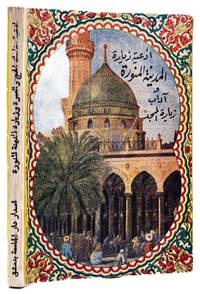
ref. 66333Damascus: University House c.1950s. Small 8vo. 14 x 10.5 cm. pp.191. Publisher's original pictorial wrappers colour-printed with Kaaba to upper cover and Prophet's Mosque Medina to back spine lettered in Arabic script. 16 black & white illustrations including one double-page. Generally a very good copy. Damascus: University House, [c.1950s]. unknown
1717In-8°, (30 cc) compreso ritratto, antiporta e frontespizio, pp. 272, 4 carte ripiegate, legatura in pelle con titolo al dorso. Prima edizione. La prima parte di questo lavoro, intitolata Compendium theologiae mohammedicae arabice et latine, è un'edizione in arabo, con traduzione, di una piccola opera simile al Mukhtasar di Abû Suj ed è probabilmente la prima edizione stampata di un'opera islamica così essenziale in Occidente . La seconda parte è il contributo più importante di Reelant per una migliore comprensione dell'Islam in cui si propone di correggere molte credenze popolari con citazioni dal Corano e da altre fonti arabe. In-8°, (30 cc) including portrait, frontispice and title page, pp. 272, 4 engraved folded plates, binding in calf with title at the spine. First edition.The first part of this work, entitled Compendium theologiae mohammedicae arabice et latine is an edition in Arabic, with translation, of a small work similar to Abû Sujâ s Mukhtasar and is probably the first printed edition of such an essential Islamic work in the West. The second part is Reelant’ s most important contribution towards a better understanding of Islam in which he sets out to rectify many popular misbeliefs with quotations from the Coran and other Arabic sources.
1650ref. 27244Paris Mathieu Guillemot 1650 Une gravure sur cuivre au burin en noir sur papier vergé, ligné, gravée d'après les originaux de l'édition de NICOLAY de 1568, Format à la cuvette : 27,3 centimètres de haut par 17,3 centimètres de large. Format total : 32,8 centimètres de haut par 21,3 centimètres de large, tirée de "L'histoire de la décadence de l'empire grec et établissement de celuy des Turcs" de Laonikos Chalcocondyle, par Thomas Artus d'Embry, d'après Nicolas de Nicolay, trés légère mouillure claire (vraiment trés légère) en haut de la gravure en marge droite, mais n'atteignant à aucun moment la gravure, 1650 Paris, Mathieu Guillemot Editeur,