Multiple ContributorsMareMagnum

316 résultats
1962Features: Nice color Rambler car ad inside front cover; Who Says I'm Uncultured, by Frederick Breitenfeld Jr.; Confessions of a Block-Buster - Norris Vitchek is a Chicago real-estate agent who moves Negro families into all-white blocks - he reveals how he reaps enormous profits from racial prejudice; Riding the World's Wild Giants Waves - Great Color Photos; Brash and Rumpled Star - newcomer Warren Beatty demands superstar treatment from Hollywood; People on the Way Up - TV Emcee Nancy Clark, Grace Kelleher, Neal Williams of Go-Power Corporation; Tempest in a Riviera Teapot - a feud between De Gaulle and Prince Rainier threatens the continued independence of Monaco, the world's loveliest tax haven; How Your Children Grow - Wilton M. Krogman reveals new methods of predicting growth rates and warns parents against needless fears; Magic's Merry Mecca - avid conjurers throng to Colon, Michigan, America's capital of magic-making; Nice color Pepsi ad on page 61; Sandy Koufax, the Strikeout King; Farmer Khrushchev - ideology and climate snarl Russia's farm program. Average wear. A sound copy. Book
1937Photos: The Nizan's jubilee (the ruler of Hyderabad); Hitler on parade in Berlin on the 'Day of Heroes'; Spain's trekking population, and other aspects of the long continued civil war; With the 'Rodney' on the spring cruise; Clear photo of a half-man, half-ape creature discovered in the Atlas mountains on the northern edge of the Sahara by Marcel Homet, a French explorer; Archduke Otto - the Austrian claimant in his Belgian home; Egypt again sends the Mahmal and the Kiswa to Mecca; Britain's 5-year 1.5 billion pound re-armament plan; and more. Average wear. Unmarked. Sound copy. Book
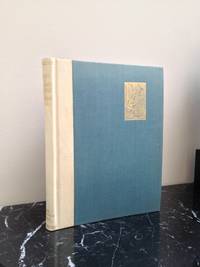
1928réf. 144851928. Varthema Ludovico di. The Itinerary of Ludovico di Varthema of Bologna from 1502 to 1508 1928. Limited first Argonaut Press edition of one of the earliest European firsthand accounts of Mecca and Medina originally published in Italian in 1510. Varthema an Italian traveler from Bologna entered the Islamic holy cities in 1503 after joining a pilgrim caravan from Damascus under the assumed Muslim name Yunus serving among its Mamluk military escort. His account is among the earliest recorded descriptions of the Hajj and Mecca by a European visitor who was not originally Muslim detailing pilgrimage ceremonies religious customs urban life and encounters with merchants and local authorities. His subsequent travels extended through Yemen the Persian Gulf Persia India and parts of Southeast Asia recording commercial networks religious practices military organization and maritime trade during the opening decades of Portuguese expansion into the Indian Ocean. The 1928 edition reproduces John Winter Jones's 1863 English translation prepared for the Hakluyt Society together with Sir Richard Carnac Temple's historical examination of Varthema's travels in southern Asia. Varthema Ludovico di. The Itinerary of Ludovico di Varthema of Bologna from 1502 to 1508. As Translated from the Original Italian Edition of 1510 by John Winter Jones F.S.A. in 1863 for the Hakluyt Society with A Discourse on Varthema and His Travels in Southern Asia by Sir Richard Carnac Temple. London: The Argonaut Press 1928. First Argonaut Press edition limited to 975 numbered copies printed on Japon vellum. One volume quarto 4to pp. lxxxvi 122 last blank 2 colophon blank. Illustrated with one plate five full-page maps within the pagination a facsimile of the original 1510 title page and a title-page vignette printed in blue and black; includes an index. Edited by N. M. Penzer. Original quarter vellum over blue-grey buckram boards spine lettered and ruled in gilt with rectangular gilt devices on both covers. Retains the original ribbon marker and an ownership bookplate centered on the front pastedown. Varthema's narrative follows his passage through Egypt and Syria to Medina and Mecca then southward through Yemen and Aden onward to Hormuz and Persia and across the Indian Ocean to India and Southeast Asia. His descriptions address the religious observances of the Muslim pilgrims Bedouin encounters regional customs and laws commercial products trading practices and methods of warfare. Varthema's travels took place during a period of increasing Portuguese intervention in Indian Ocean commerce shortly after Vasco da Gama's voyage around the Cape of Good Hope established a new maritime route between Europe and India. His account records the established Muslim trading networks connecting the Arabian Peninsula Persian Gulf Indian ports and Southeast Asian markets before Portuguese naval power substantially altered regional commerce. First printed in Rome in 1510 the narrative circulated in successive European editions and translations becoming an early source for European geographical knowledge of Arabia and the Indian Ocean. Sir Richard Carnac Temple's accompanying discourse examines the historical and geographical evidence for Varthema's itinerary distinguishing his observations from earlier travel accounts and evaluating his descriptions of southern Asia. The original vellum and buckram binding retains its gilt decoration ribbon marker and ownership bookplate. Overall in very good condition. unknown
1928réf. 144851928. Varthema Ludovico di. The Itinerary of Ludovico di Varthema of Bologna from 1502 to 1508 1928. Limited first Argonaut Press edition of one of the earliest European firsthand accounts of Mecca and Medina originally published in Italian in 1510. Varthema an Italian traveler from Bologna entered the Islamic holy cities in 1503 after joining a pilgrim caravan from Damascus under the assumed Muslim name Yunus serving among its Mamluk military escort. His account is among the earliest recorded descriptions of the Hajj and Mecca by a European visitor who was not originally Muslim detailing pilgrimage ceremonies religious customs urban life and encounters with merchants and local authorities. His subsequent travels extended through Yemen the Persian Gulf Persia India and parts of Southeast Asia recording commercial networks religious practices military organization and maritime trade during the opening decades of Portuguese expansion into the Indian Ocean. The 1928 edition reproduces John Winter Jones's 1863 English translation prepared for the Hakluyt Society together with Sir Richard Carnac Temple's historical examination of Varthema's travels in southern Asia. Varthema Ludovico di. The Itinerary of Ludovico di Varthema of Bologna from 1502 to 1508. As Translated from the Original Italian Edition of 1510 by John Winter Jones F.S.A. in 1863 for the Hakluyt Society with A Discourse on Varthema and His Travels in Southern Asia by Sir Richard Carnac Temple. London: The Argonaut Press 1928. First Argonaut Press edition limited to 975 numbered copies printed on Japon vellum. One volume quarto 4to pp. lxxxvi 122 last blank 2 colophon blank. Illustrated with one plate five full-page maps within the pagination a facsimile of the original 1510 title page and a title-page vignette printed in blue and black; includes an index. Edited by N. M. Penzer. Original quarter vellum over blue-grey buckram boards spine lettered and ruled in gilt with rectangular gilt devices on both covers. Retains the original ribbon marker and an ownership bookplate centered on the front pastedown. Varthema's narrative follows his passage through Egypt and Syria to Medina and Mecca then southward through Yemen and Aden onward to Hormuz and Persia and across the Indian Ocean to India and Southeast Asia. His descriptions address the religious observances of the Muslim pilgrims Bedouin encounters regional customs and laws commercial products trading practices and methods of warfare. Varthema's travels took place during a period of increasing Portuguese intervention in Indian Ocean commerce shortly after Vasco da Gama's voyage around the Cape of Good Hope established a new maritime route between Europe and India. His account records the established Muslim trading networks connecting the Arabian Peninsula Persian Gulf Indian ports and Southeast Asian markets before Portuguese naval power substantially altered regional commerce. First printed in Rome in 1510 the narrative circulated in successive European editions and translations becoming an early source for European geographical knowledge of Arabia and the Indian Ocean. Sir Richard Carnac Temple's accompanying discourse examines the historical and geographical evidence for Varthema's itinerary distinguishing his observations from earlier travel accounts and evaluating his descriptions of southern Asia. The original vellum and buckram binding retains its gilt decoration ribbon marker and ownership bookplate. Overall in very good condition. unknown books
1926réf. 144221926. Gröber Karl. Bird's Eye View of Mecca 1926. Original copperplate photogravure depicting Mecca Islam's holiest city and the destination of the annual Hajj pilgrimage. The elevated view records the historic urban setting of Mecca home to the Masjid al-Haram the Sacred or Grand Mosque and the Kaaba toward which Muslims worldwide direct their daily prayers. Published in 1926 the image dates from the early rule of Abdulaziz Ibn Saud over the Hejaz following his conquest of Mecca in 1924 and assumption of the title King of the Hejaz in 1926. The illustration preserves a photographic view of the holy city during a period of political transition decades before the extensive urban redevelopment and mosque expansions of the later twentieth century. Gröber Karl photographer. Bird's Eye View of Mecca. 1926. Original copperplate photogravure after a photograph by Gröber published as an illustration in the first edition of a 1926 book containing his text and photogravures. Sheet measures approximately 8.25" x 10.25" with a printed area of approximately 8.5" x 6.25". The elevated perspective presents a panoramic view of Mecca recording the city's buildings and urban topography. The copperplate photogravure process reproduces the tonal gradations and architectural detail of the original photograph. Mecca had been under Ottoman sovereignty until the Arab Revolt of 1916 after which it formed part of the Hashemite Kingdom of the Hejaz before coming under Saudi control in 1924. Gröber's 1926 publication belongs to this transitional period in the city's modern history. The original photogravure provides a contemporary visual record of Mecca before the major architectural alterations and expansions undertaken in subsequent decades. unknown
1926réf. 144221926. Gröber Karl. Bird's Eye View of Mecca 1926. Original copperplate photogravure depicting Mecca Islam's holiest city and the destination of the annual Hajj pilgrimage. The elevated view records the historic urban setting of Mecca home to the Masjid al-Haram the Sacred or Grand Mosque and the Kaaba toward which Muslims worldwide direct their daily prayers. Published in 1926 the image dates from the early rule of Abdulaziz Ibn Saud over the Hejaz following his conquest of Mecca in 1924 and assumption of the title King of the Hejaz in 1926. The illustration preserves a photographic view of the holy city during a period of political transition decades before the extensive urban redevelopment and mosque expansions of the later twentieth century. Gröber Karl photographer. Bird's Eye View of Mecca. 1926. Original copperplate photogravure after a photograph by Gröber published as an illustration in the first edition of a 1926 book containing his text and photogravures. Sheet measures approximately 8.25" x 10.25" with a printed area of approximately 8.5" x 6.25". The elevated perspective presents a panoramic view of Mecca recording the city's buildings and urban topography. The copperplate photogravure process reproduces the tonal gradations and architectural detail of the original photograph. Mecca had been under Ottoman sovereignty until the Arab Revolt of 1916 after which it formed part of the Hashemite Kingdom of the Hejaz before coming under Saudi control in 1924. Gröber's 1926 publication belongs to this transitional period in the city's modern history. The original photogravure provides a contemporary visual record of Mecca before the major architectural alterations and expansions undertaken in subsequent decades. unknown books
1916Very Good Turkish, Ottoman (1500-1928) Original photograph showing Fahreddin Pasha in Medina city with Ottoman soldiers and Arabian notables congratulating each other's bairam. His injured left leg is cast into plaster. 9x14 cm. Fakhri Pasha or Fahreddin Pasha, known as Ömer Fahrettin Türkkan after the Surname Law of 1934, was a Turkish career officer, who was the commander of the Ottoman Army and governor of Medina from 1916 to 1919. He was nicknamed "The Lion of the Desert" and "The Tiger of the Desert" by the British and Arabs for his patriotism in Medina and is known for defending Medina in the Siege of Medina during World War I. In 1914 before the Ottoman Army was mobilized, Staff Colonel Fahreddin Bey was appointed the commander of the XII Corps stationed in Mosul. He was promoted to the rank of Mirliva on 12 November 1914 and appointed as the Deputy Commander of the Fourth Army stationed in Aleppo. During World War I, after Hussein bin Ali, Sharif of Mecca, started preparing for a revolt against the Ottoman Empire, Fahreddin, upon the orders of Djemal Pasha on 23 May 1916 moved toward Medina in Hejaz to defend it; he was appointed the commander of the Hejaz Expeditionary Force on 17 July 1916. Medina was besieged by the Arab forces who revolted against the Ottoman Sultan and sided with the British against Fahreddin Pasha, but he stood his ground and defended the city. He also protected the single-track narrow-gauge Hejaz Railway from sabotage by the Hejazi army Turkish garrisons of the isolated small train stations withstood the continuous night attacks and secured the tracks against the increasing number of attacks (around 130 major attacks in 1917 and hundreds in 1918, including more than 300 bombs on April 30, 1918). With the withdrawal of the Ottoman Empire from the war with the Armistice of Mudros between the Ottoman Empire and the Allies of World War I on 30 October 1918, it was expected that Fahreddin would also surrender. But he refused to do so and rejected the armistice. During the siege of Medina, Fahreddin sent the sacred artifacts and manuscripts of Medina to Istanbul in order to protect them from seizure. Most of the manuscripts were returned to Medina by the Ottoman Empire and are now in libraries in the city, while the rest remain in the Topkapi Palace in Istanbul.
réf. 47969254like new. unknown
réf. 47969254-nnew. unknown
2023réf. x-3030954536Palgrave Macmillan 2023. Paperback. New. 545 pages. 8.27x5.83x1.11 inches. Palgrave Macmillan paperback
1968réf. 015663Paris Georges Fall 1968 In-8 Broché, couverture illustrée Signé par l'illustrateur
réf. 109293A Paris, Chez Lavillettte et Comp. Libraires, rue Sandré-des-Arcs, N° 46, 1801, 1 volume in-12 de 195x130x30 mm environ, 1f.blanc, 3ff. (faux-titre, titre, avertissement), 288-111 pages, 1f.blanc, demi-basane fauve, avec coins en parchemin crème, titres dorés sur dos lisse, tranches mouchetées de rouge. Deuxième Edition traduite par L.M. LANGLES et F.J. NOEL. Cartonnage frotté, galeries et trous de ver sur le cuir, quelques rousseurs et pages brunies.
1978Features: ACQR Scale Drawing Portfolio - Martin Seamaster, Cessna OE-2 Birddog, Northrop Snark, Cessna L-27A, Republic F-105 Thunderchief, Sikorsky Ilia Mouremetz D; Albatross B.I Series 23, Albatross B.I Series 22 (Knoller Wing); The Hawker Sea Fury; Greenham Common Air Tattoo; Strange WWII aircraft; USAF in Europe - today and tomorrow; RAF Mildenhall Open House; Diamond Jubilee Airfield; Tracking hurricanes in C-130 Hercules; Sopwith Z00 - a collection of scale drawings; Southend Air Museum; The Birth of Naval Aviation - the story of the first shipboard landing; RNAS Lee-on-Solent - visiting one of the last Royal Navy air bases; RNAS Yeovilton - an interesting display; Rolls-Royce Spitfire; Super Spad - little known attack aircraft from Douglas; Sweden's new Air Museum; Liberator Nose Art - pin ups from WWII; China's Warbirds - rare look into aviation in China after WWII; Blackbushe Air Festival - we visit an English Warbird mecca; Enter the Lynx - a new helicopter becomes operational; ACQR Scale Profiles - a selction of classic aircraft drawings; Genie named John - first operational use of the Genie atomic missile; Aircraft cutups - can you guess these mismatched airframes; Combat aircraft of the USN - special pictorial report; Maple Leaf Seafires - Canadian Navy Supermarine Spitfires; Forgotten Swingwing - does anyone remember the USN's F-111B?; America's Early Wings - photos from an early flier's album; Fleet Air ARM Museum Update - new exhibits at the FAA Museum in England; Harvard's 40th Anniversary!; How the USAF established an air safety program; Those weird and wild triplanes; The last Falcon - the last Falcon from the Curtiss stable; Bassingbourn Anglo-American Air Festival - a tribute to the 91st Bomb Group; Red Star over California - a Russian record flight of the 1930s; Forgotten Warbird Graveyard; Helicopter Rescue; Strangers in 'Port - unusual aircraft that visit an airfield; Biggen Hill Air Fair; Mustang Guardsmen - the P-51 Mustang helped form the modern Air National Guard; Boeing's Grasshopper - Nifty little observation type lost out to the L-19; Kingfisher Wreckovery; Lady Peace - the Ping Pong Special - V-1; Twilight for the Sikorsky Giants; 18 days of Hell - the brief combat history of the Belgian Air Force in WWII; Mission U-5 - Abort! - the discovery of a rare P-39 combat veteran in Australia; Typhoon! - deadly fighter-bomber of WWII from Hawker Aircraft Co.; Famous Alaskan Bush Pilots - these pioneers helped develop flying in the north; Mountain Air Force - Switzerland maintains a strong and interesting air force; Zerbe's Air Sedan - a flying oddity; Flying the F-82 in combat - the Twin Mustang is pitted against MiGs; Deuces Wild - swan song of the Convair F-102 Interceptor; Service on Sunday - flying a preacher in an SBD and almost meeting the Maker; Sea-going Gliders - USN experiments in amphibious gliders during WWII; Magnificent Men in their Flying Boats - early aerial developments with flying boats; Messerschmitt's Super-Secret P.1101 - this German aircraft helped USAF researchers in the 1950s; Roscoe Turner Special - the famed unlimited racer he flew; Hot Deck! - landing combat aircraft on aircraft carriers is a dangerous business as these photos prove; Japan's newsboy warrior - little-known Japanese biplane. Average wear. Minor lean to spine. Privately bound in blue buckram-covered boards with gilt lettering to backstrip and front board. A sound copy. Book
1928réf. PHO-1377London, Constable & Co ltd ,1928 , 8°, xiv-422pp. , original editor cover , one folding map and several illustrations .
192632 pages. Features: A Wasted Sugar Supply - Honey from Honeybees; Wild Youth Proves a Myth - 'girls and boys' between 35 and 45 are rolling up the crime wave; Making the Government Efficient - reorganization would cut 100,000 unnecessary employees from federal payrolls; The White House - a Mecca for Cranks - Secret Service men must be ever alert to guard the President from the Unbalanced; Missionaries and Machine Guns - many preachers of the gospel do not want the protection of bullets; Tom Learns to Play the Game - an American boy who on mastering himself was able to direct others; Henry Ford's Page - Lower price no longer means lower equality; Editorials - making the movies dry, the value of vulgarity, Mussolini forbids earthquake prophet,exams proposed for ministers of religion, Washington's inability to think in other than political terms; Writing Verse for Composite Readers - some versifiers cultivate eccentricity, others are themselves, and therefore poets; Sad Men Who Look So Wistfully at the Sky - author, William F. Hopp has been chaplain of the Michigan State Prison for over seven years - article with photos; Duelists (Fighter Pilots) of the Sky - a tale of knights-errant and their deeds - of their light-heartedness, and their gallant, tragic fate; Under the White Tops with 'Gil' - (part 3) The Big Snake and the Little Dog - and how a darky made millions from circus side shows; Chats with Office Callers - Christmas cards began with Jewish Adolph Tuck, controversy in Canada over union with the U.S., sighting of monster near Prince Rupert, B.C.; The Virginia Signers of the Declaration of Independence; Fascinating illustrated ad for homes which can be built for under $1k in materials; I Read In the Papers - article by Nathaniel Zalowitz in the 'Jewish Daily Forward' declares "...For the overwhelming majority of Jews in American assimilation in any true sense of the term is absolutely out of the question."; The Barefoot Boy - poetry by J.G. Whittier inside back cover. Unmarked with average wear. A sound vintage copy. Book
192632 pages. Features: Firestone ad inside front cover features photo of Harvey S. Firestone addressing 25th annual stockholders' meeting in Akron, OH; A Sailorman Poet - John Masefield; What has become of our Parties? - Coolidge puts last Democrat doctrine into Republican creed; Is the Pulpit a Bulletin Board? - is the preacher a prophet or propagandist?; An English View of American Installment Buying; A Scientist Urges Farmers to Utilize Waste Products - paper can easily be made from wheat straw; Mental Tests Make Us Seem Foolish - because quacks rush in where true psychologists fear to tread; Henry Ford's Page - the dangers of debt; Editorials - U.S. surplus of housing, Abraham Rothfeld is ordered to not reapply for U.S. citizenship for 10 years; Senator Borah speaks like a statesman, P.R. battle over French debt to the U.S., Dictators are increasing in number in Europe, Robert T. Lincoln of the Pullman Company has given the negro 'the only racial monopoly in the world', namely the Pullman porter, sea travel in steerage becomes fashionable; Life Among the Wild American Humorists, as described by Thomas L. Masson; Islam Aims at World Domination - Consolidation of Moslemism inspires Conference at Mecca; A Negro Views His Own Race - the thoughts of Charles Plummer; The Voyage of the Victoria (part 8) - Wreck of the Santiago; Chats with Office Callers - William Lyon Phelps writes article claiming New York stage plays attack Protestants but not Catholics because they are afraid to attack them; Under the White Tops with 'Gil' - (part 4) - tales of the time when people traveled for days to see teh circus, and slave-traders followed the show; China's Use of Proverbs; The Stories the Windmills Tell - Joy, grief, trouble or celebration all are indicated by the huge sails which serve as 'Town Criers' for the countryside; A Fighting Quaker of '76 - Joseph Hewes - who led the North Carolina Men in Declaring for Independence; A Dance a Week - Seventeenth Century Minuet, with piano sheet music; I Read in the Papers. Unmarked with average wear. A sound vintage copy. Book
réf. 052110N. p. : N. p. 18-19th century. Soft cover. Very Good. 8vo - over 7¾ - 9¾" tall. Original b/w lithographer print of Medina. 215x175 cm. In Arabic. 1 p. A FINE LITHOGRAPHED MEDINA Medina al-Munawwara ali sâhibhâ afzal al-tahiyya. It shows Medina city with its building and walls besides its environment. Medina is the capital of the Al-Madinah Region in Saudi Arabia. At the city's heart is al-Masjid an-Nabawi 'The Prophet's Mosque' which is the burial place of the Islamic prophet Muhammad. Medina is one of the three holiest cities in Islam the other two being Mecca and Jerusalem. Medina was Muhammad's destination in his Hijrah migration from Makkah and became the capital of a rapidly increasing Muslim Empire under Muhammad's leadership serving as the power base of Islam and where Muhammad's Ummah Community composed of both locals and immigrants from Muhammad's original home of Mecca developed. Medina is home to three prominent mosques namely al-Masjid an-Nabawi Quba Mosque and Masjid al-Qiblatayn 'The mosque of the two Qiblas'. Muslims believe that the chronologically final surahs of the Quran were revealed to Muhammad in Medina and are called Medinan surahs in contrast to the earlier Meccan surahs. N. p. (18-19th century) paperback
Very Good Arabic Original b/w lithographer print of Mecca. 21,5x17,5 cm. In Arabic. 1 p. [A FINE LITHOGRAPHER MECCA] Mecca al-Mukarrama Zad Al-Lah Sharifhâ al-ayyum al-qaima. It shows Mecca city with its building like Kaba, and walls besides its environment. Mecca is a city in the Hejazi region of Saudi Arabia. The city is located 70 km (43 mi) inland from Jeddah, in a narrow valley 277 m (909 ft) above sea level, 340 kilometres (210 mi) south of Medina, its population in 2012 was 2 million, although visitors more than triple this number every year during the ?ajj ("Pilgrimage"), held in the twelfth Muslim lunar month of Dhûl-Hijjah. It is the birthplace of Muhammad, a cave 3 km (2 mi) from Mecca was the site of Muhammad's first revelation of the Quran, and a pilgrimage to it, known as the Hajj, is obligatory for all able Muslims. Mecca is home to the Kaaba, one of Islam's holiest sites and the direction of Muslim prayer, and thus Mecca is regarded as the holiest city in Islam.
1926réf. 144231926. Gröber Karl. Two Views of the Mosque at Mecca 1926. Pair of original copperplate photogravures depicting the Masjid al-Haram the Sacred or Grand Mosque in Mecca Islam's holiest city and the destination of the annual Hajj pilgrimage. The mosque surrounds the Kaaba toward which Muslims worldwide turn in daily prayer. Published in 1926 the illustrations date from the early period of Saudi rule over Mecca following the city's conquest by Abdulaziz Ibn Saud in 1924. The two views record the mosque from ground-level and elevated perspectives preserving photographic documentation of the sacred precinct before the extensive architectural expansions of the later twentieth century. Gröber Karl photographer. Two Views of the Mosque at Mecca. 1926. Two original copperplate photogravures after photographs by Gröber published in the first edition of a 1926 book containing his text and photographic illustrations. Each sheet measures approximately 8.25" x 10.25" with a printed area of approximately 6.25" x 8.25". The first photogravure presents a ground-level view of the mosque recording its architecture from within the surrounding urban setting. The second provides a bird's-eye view of the mosque showing the sacred complex from an elevated perspective. Both illustrations reproduce the tonal gradations and architectural details of the original photographs through the copperplate photogravure process. The illustrations were published during a decisive period in the modern history of Mecca. Following the collapse of Ottoman authority in the Hejaz during the First World War the city came under Hashemite rule before its capture by Ibn Saud in 1924. In 1926 Ibn Saud assumed the title King of the Hejaz incorporating Mecca into the expanding Saudi state. The paired views record the mosque's architectural setting during this transition preceding the major expansion and redevelopment campaigns undertaken from the mid-twentieth century onward. Both original photogravures are in excellent condition presenting complementary perspectives of the Grand Mosque as reproduced in 1926. unknown
1926réf. 144231926. Gröber Karl. Two Views of the Mosque at Mecca 1926. Pair of original copperplate photogravures depicting the Masjid al-Haram the Sacred or Grand Mosque in Mecca Islam's holiest city and the destination of the annual Hajj pilgrimage. The mosque surrounds the Kaaba toward which Muslims worldwide turn in daily prayer. Published in 1926 the illustrations date from the early period of Saudi rule over Mecca following the city's conquest by Abdulaziz Ibn Saud in 1924. The two views record the mosque from ground-level and elevated perspectives preserving photographic documentation of the sacred precinct before the extensive architectural expansions of the later twentieth century. Gröber Karl photographer. Two Views of the Mosque at Mecca. 1926. Two original copperplate photogravures after photographs by Gröber published in the first edition of a 1926 book containing his text and photographic illustrations. Each sheet measures approximately 8.25" x 10.25" with a printed area of approximately 6.25" x 8.25". The first photogravure presents a ground-level view of the mosque recording its architecture from within the surrounding urban setting. The second provides a bird's-eye view of the mosque showing the sacred complex from an elevated perspective. Both illustrations reproduce the tonal gradations and architectural details of the original photographs through the copperplate photogravure process. The illustrations were published during a decisive period in the modern history of Mecca. Following the collapse of Ottoman authority in the Hejaz during the First World War the city came under Hashemite rule before its capture by Ibn Saud in 1924. In 1926 Ibn Saud assumed the title King of the Hejaz incorporating Mecca into the expanding Saudi state. The paired views record the mosque's architectural setting during this transition preceding the major expansion and redevelopment campaigns undertaken from the mid-twentieth century onward. Both original photogravures are in excellent condition presenting complementary perspectives of the Grand Mosque as reproduced in 1926. unknown books
1750In folio (59x73 cm il foglio); esemplare in fine coloritura coeva ed in ottime condizioni di conservazione. Testo in francese in cartiglio. Magnifica e vivida tiratura di questa celeberrima carta del territorio egiziano che si sviluppa lungo il corso del fiume Nilo, con parte del territorio dell’Arabia Saudita, dell’Etiopia e Abissinia e del territorio di Suez con ben presente il Mar Rosso con anche evidenziate le profondità. La carta fu stampata dal successore e cognato del grande cartografo Matthaus Seutter (sposò una delle figlie di Seutter), il cartografo, editore ed incisore Tobias Conrad Lotter (1717 - 1777). Lotter, si formò alla bottega di Matthaus Seutter per il quale lavorò. Alla morte di Seutter ne rilevò l’attività che portò avanti fino al 1777 anno della sua morte. L’attività passo poi al figlio, Matthias Albrecht Lotter. Tobias Conrad fu uno dei più apprezzati cartografi del settecento. Il carta si ispira ai dati riportati dal gesuita R. Pere Sicard, da Alphonse Mendez, Emanuel L’Ameyda, Pierre Pays e di altri celebri missionari e studiosi gesuiti. Esemplare in ottime condizioni di conservazione ed in bella coloritura coeva. Esemplare in ottime condizioni di conservazione.
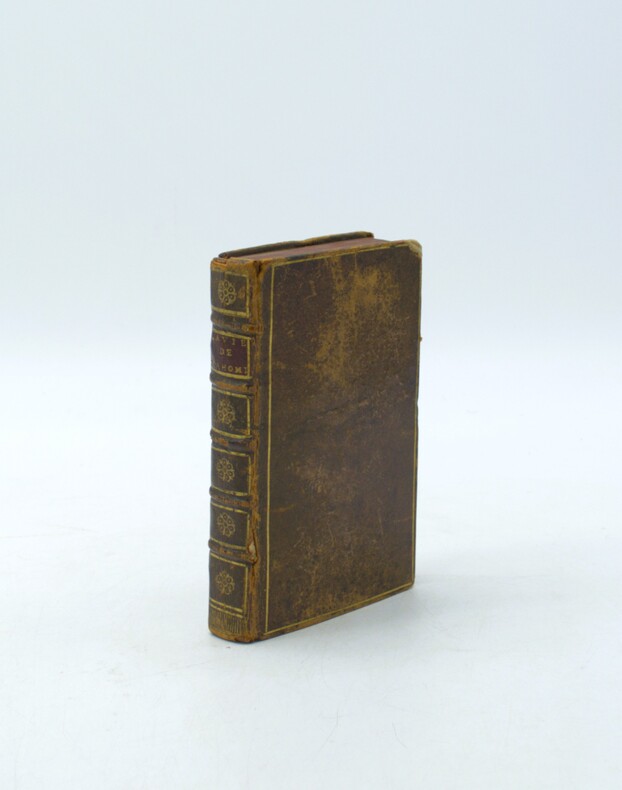
1731réf. PHO-2184Amsterdam, Chez Pierre Humbert, 1731, in-12 (15,5x9,5cm), relié plein veau époque, dos à nerfs orné avec pièce de titre grenat, tranches rouges, filet aux plats, frottements, accroc à la coiffe sup., coins usés, ex-libris et étiquette de libraire en page de garde.
réf. 78024A Amsterdam, chez Steenhouwer & Uytwert, Libraires, 1718, 1 volume de 102x165 mm environ, (2) ff., (25) ff. (titres, épître, avertissement, table et catalogue), 342 pages, (3) ff. (table), (1) f., demi-vélin crème à coins et cartonnage marbré, titres manuscrits sur le dos. Contient 5 planches hors-texte dont le frontispice et une planche dépliante. Des rousseurs, petite mouillure dans la marge en fin de volume, couverture état moyen, ouvrage intéressant et rare.
1925Very Good Turkish, Ottoman (1500-1928) Paperback. Cr. 8vo. (20 x 14 cm). In Ottoman script. 238 p. Hac yolunda. The late nineteenth and early twentieth-century poet Cenab Sahabeddin (1870-1934) narrated his journey observation in the "Hac yolunda" [i.e. On the way of Hajj], which was composed of his 17 letters written in the course of the journey to Mecca, traveling by steamer from Istanbul to Alexandria, and then passing through Cairo, Suez, and Tih. These travel memoirs were completed in 1909. Hegira 1341 = Gregorian 1925. Özege 6535 / 2. Second Edition.
2024réf. x-1032525355Routledge 2024. Hardcover. New. 414 pages. 10.00x7.00x10.00 inches. Routledge hardcover