154 risultati
2024rif. x-1032525894Routledge 2024. Paperback. New. 414 pages. 10.00x7.00x10.00 inches. Routledge paperback
2024rif. x-1032525355Routledge 2024. Hardcover. New. 414 pages. 10.00x7.00x10.00 inches. Routledge hardcover
2023rif. x-3030954536Palgrave Macmillan 2023. Paperback. New. 545 pages. 8.27x5.83x1.11 inches. Palgrave Macmillan paperback
1989rif. x-0520067096Univ of California Pr on Demand 1989. Paperback. New. second printing edition. 372 pages. 9.25x6.25x1.00 inches. Univ of California Pr on Demand paperback
rif. 9788436835991New. unknown
2023rif. SKU0649520Liveright 2023-06-13. paperback. New. 5x0x8. New Textbook Ships with Tracking Liveright paperback
rif. ria9780252043963_inpHardback. New. New Book; Fast Shipping from UK; Not signed; Not First Edition; N/A hardcover
rif. SONG1742706959Used: Good unknown
rif. SONG1501748505Used: Good unknown
1980rif. ZB1220767California Health Research Foundation 1980. 196 pp. Hardcover like new. - If you are reading this this item is actually physically in our stock and ready for shipment once ordered. We are not bookjackers. Buyer is responsible for any additional duties taxes or fees required by recipient's country. Photos available upon request. California Health Research Foundation hardcover
rif. SONG1108478794Used: Good unknown
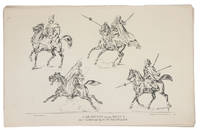
1855rif. GA1LWVIQL20BVienna 1855. Oblong folio 25 x 40 cm. Matthias Trentsensky printed by E. Sieger Loose leaves in a later paper folder. With 19 of 24 numbered leaves containing about 135 lithographic pen-drawings of people animals equipment & gear and goods from a caravan travelling to Mecca each drawing including a base so that one can cut them out paste them on card stock stand them up and arrange them in three-dimensional scenes. Lacking leaves 1-5. ll. 6-24 of 24. All but the first five leaves of a very rare lithographic print series issued in parts. Most copies were probably cut up and perhaps coloured by children and destroyed in play. The human figures to be cut out include Turkish Arabic African and Near Eastern men and women black and white in Islamic clothing some of the men with a variety of firearms spears daggers pipes prayer rugs and other gear and goods. There are also camels horses and donkeys often with their gear for riding or for carrying loads. The wild animals include wolves a hyena and an ostrich. Inanimate objects include containers for water an incense burner baskets chests barrels camel saddles and much more. The series must have provided many children and adults with their first notion of Islamic society and culture and is rich in authentic details.With an occasional pencil mark. Lacking leaves 1-5 but otherwise in remarkable good condition. The whole is slightly browned and the edges somewhat tattered.l Kleine Welt des Bilderbogens: der Wiener Verlag Trentsensky 1977 111; Siefert ed. Paläste Panzer Pop-up-Bücher 2009 with a chapter Die Carawane nach Mecca pp. 31-38; not in KVK; WorldCat. hardcover
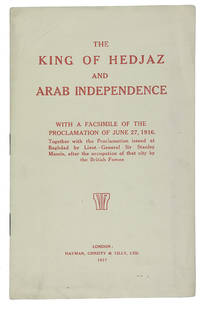
1917rif. F14GSQ01U79OLondon: Hayman Christy and Lilly Ltd. 1917. Original stapled wrappers with red lettering on front wrapper. 8vo. With a photographic portrait of Hussein bin Ali for frontispiece and a folding facsimile proclamation 38 x 28 cm. British pamphlet advertising the independence of Hedjaz from Ottoman rule. The pamphlet includes a facsimile of the proclamation in Arabic pronouncing the Arab peoples free from Turkish domination an introduction about allied involvement the Monroe Doctrine and its role in the region and more basic history behind the eventual writing of the proclamation.Some minor traces of use. In very good condition. Hayman, Christy and Lilly Ltd., unknown
rif. DADAX0199899142New unknown
rif. DADAX140010534XNew unknown
rif. DADAX156565126XNew unknown
rif. DADAX3791341510New unknown
rif. DADAX031601723XNew unknown
rif. DADAX0415888794New unknown
rif. DADAX0520078071New unknown
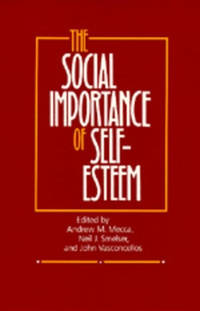
rif. B9780520067097Paperback / softback. New. Is the well-being of a society dependent on the well-being of its citizenry Does individual self-esteem play a causal role in chronic social problems such as child abuse school drop-out rates teenage pregnancy alcohol and drug abuse welfare dependency In an attempt to answer these questions the State of California established a task force on self-esteem and social responsibility in 1987. The aim of this body was to determine what connections might exist between these two factors and to suggest policy guidelines relating to the welfare of Californians and to the expenditure of public resources. The ten essays in this volume prepared by faculty members of the University of California draw on research in the social and behavioral sciences to explore these issues. They assess the substantive assertions and research findings in the field and make careful evaluations of their reliability and validity. In many cases strong connections between self-esteem and problematic behavior are established in others the connections are weak and in some the causal relationship is as yet imperfectly understood. One of the conclusions of the book is that research on these issues needs to be improved particularly in the areas of comparative and longitudinal studies. Guidelines for future research are suggested and some points of policy direction are elaborated. These essays may indeed promote additional research for the premise that social stability and welfare are largely dependent on the psychological state of a people poses a challenging and provocative counter-emphasis to the assumption that social institutions are the primary determinants of individual welfare. paperback
rif. DADAX1643133063Pegasus Books 2020-02-04. 1. hardcover. New. 2.00x10.00x9.00. Buy with confidence. Excellent Customer Service & Return policy. Pegasus Books hardcover
1921rif. 148161921. Unpublished sepia-toned photograph of pilgrims journeying to Mecca circa 1921 documents the material and spatial realities of the Hajj in the early twentieth century during a period of geopolitical transition in the Arabian Peninsula following the First World War. The image captures a vast encampment of white tents set against a rugged and mountainous landscape outside Mecca visually conveying the scale of pilgrimage infrastructure prior to modern urban expansion. Created during the years immediately preceding the establishment of the Kingdom of Saudi Arabia in 1932 the photograph supports research in Islamic religious practice the history of pilgrimage logistics and British imperial observation of the Hejaz during the inter war period. Photograph. Circa 1921. Approximately 3.5 x 5 inches. Sepia-toned silver gelatin print. The composition presents thousands of white tents clustered across uneven terrain forming a temporary city of pilgrims undertaking the religious journey to Mecca. The mountainous backdrop situates the encampment geographically within the arid environment surrounding the holy city. The photograph originates from the album of a British naval officer who traveled in the region between 1920 and 1923 providing contemporaneous visual documentation from a foreign observer during a time of shifting political authority in the Hejaz following the collapse of Ottoman control. The image appears unpublished and retains the intimate scale characteristic of personal travel albums. As a visual record predating large-scale modernization of pilgrimage facilities the photograph preserves evidence of early twentieth-century Hajj organization material culture and environmental conditions. The presence of an extensive tent city underscores both the enduring continuity of Islamic ritual practice and the logistical complexity of pilgrimage prior to the oil-era transformation of the region. Light age-related curling; minor chipping at lower edge not affecting the image area; surface otherwise clean with strong tonal range. Overall good condition. A historically significant early twentieth-century photograph documenting the lived landscape of pilgrimage to Mecca during a pivotal moment in Arabian political history. unknown
1790rif. 145711790. Engraved plate titled View Of The Temple of Mecca and accompanying Plan Of The Temple of Mecca circa eighteenth century represents an early modern European visual interpretation of the Kaaba and the Masjid al-Haram in Mecca Islam's most sacred site. Produced for inclusion in eighteenth-century printed works including editions of André du Ryer's French translation of the Qur'an L'Alcoran de Mahomet the engraving reflects European efforts to depict and systematize knowledge of Islamic sacred geography during a period of expanding global contact. The print supports research in Islamic studies the history of book illustration Orientalist visual culture and early modern European representations of non-Christian religious architecture. Engraved plate. Circa 1700s. Approximately 8 x 12 inches. Unmounted and unframed. The foldout plate comprises two distinct but related images: an aerial plan of the sacred precinct at Mecca and a perspectival view of the Kaaba within the Masjid al-Haram. The central structure of the Kaaba is depicted surrounded by arcaded and domed architectural elements characteristic of the sanctuary as understood in the eighteenth century. In the foreground courtyard numerous Muslim worshippers-approximately one hundred figures-are shown engaged in prayer emphasizing both ritual practice and spatial organization. The engraving was issued in connection with eighteenth-century European editions of Islamic texts including Du Ryer's influential translation and reflects the period's hybrid combination of documentary ambition and interpretive stylization. As a visual artifact circulating within early modern printed Qur'anic translations the plate documents how European readers encountered Islam through mediated imagery shaped by travel accounts diplomatic reports and secondhand description. Such engravings played a formative role in constructing Western visual conceptions of Mecca at a time when access to the holy city was restricted to Muslims. The presence of both plan and elevation view demonstrates Enlightenment-era interest in architectural order cartographic precision and comparative religion. Light age-related toning and traces of original fold at center; minor fold wear consistent with issuance as a book plate; image clear with well-preserved engraved detail. Overall very good condition. A significant eighteenth-century engraved representation of the Kaaba and Masjid al-Haram reflecting early European visual engagement with Islamic sacred space. unknown
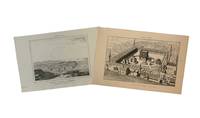
1847rif. 146231847. Mecca is the birthplace of prophet Muhammad and home to the Kaaba the holiest site while Medina is the second holiest city where the Prophet's Mosque is located.Two original steel engravings titled "Medina et Sepulcre du Prophete" and "Temple de la Mecque" issued in Picturesque Universe Paris: Firmin Didot 1847. Engraved plates measuring approximately 5" x 8.2". These mid-nineteenth-century French views present idealized yet intricately rendered representations of Islam's two holiest cities Medina and Mecca produced for a European readership at a moment of expanding Orientalist travel literature and imperial curiosity about the Islamic world. The Medina engraving offers a panoramic prospect from an elevated vantage point depicting the walled city and the Prophet's Mosque at its center approached by four travelers traversing a mountainous road some mounted on camels. The composition emphasizes distance and pilgrimage situating the sacred city within both devotional and geographic imagination. The companion engraving of Mecca presents a detailed architectural rendering of the Masjid al-Haram complex with the Kaaba prominently centered and surrounded by arcades and ancillary structures the broader urban fabric faintly delineated in the background. Produced at a time when non-Muslim access to these cities was extremely restricted such engravings mediated sacred Islamic space through European print culture shaping nineteenth-century visual conceptions of the Hijaz. As products of a major Parisian press renowned for technical excellence these steel engravings reflect both advances in reproductive printmaking and the period's fascination with global religious and cultural monuments.First engraving with loss to the lower right corner not affecting the primary architectural focal points; light age toning and minor edge wear consistent with issue; second engraving clean and well-preserved with strong plate impression. Overall very good. An evocative pair of mid-nineteenth-century European views of Medina and Mecca documenting the circulation of Islamic sacred geography within illustrated travel literature at the height of Orientalism publishing. unknown