MARTIN CharlesMareMagnum

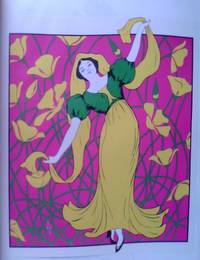
1914- Lucien Vogel éditeur, Paris Mai 2014, 36,5x24cm, une feuille. - Double original color print heightened with gold, printed on vergé paper, non signed. An original print used to illustrate the Gazette du bon ton, one of the most attractive and influential 20th century fashion magazines, featuring the talents of French artists and other contributors from the burgeoning Art Deco movement. A celebrated fashion magazine established in 1912 by Lucien Vogel, La Gazette du bon ton appeared until 1925, with a hiatus from 1915 to 1920 due to the war (the editor-in-chief having been called up for service). It consisted of 69 issues printed in only 2,000 copies each and notably illustrated with 573 color plates and 148 sketches of the models of the great designers. Right from the start, this sumptuous publication "was aimed at bibliophiles and fashionable society," (Françoise Tétart-Vittu, "La Gazette du bon ton", in Dictionnaire de la mode, 2016) and was printed on fine vergé paper using a type cut specially for the magazine by Georges Peignot, known as Cochin, later used (in 1946) by Christian Dior. The prints were made using stencils, heightened in colors, some highlighted in gold or palladium. The story began in 1912, when Lucien Vogel, a man of the world involved in fashion (he had already been part of the fashion magazine Femina) decided, with his wife Cosette de Brunhoff - the sister of Jean, creator of Babar - to set up the Gazette du bon ton, subtitled at the time: "Art, fashion, frivolities." Georges Charensol noted the reasoning of the editor-in-chief: "'In 1910,' he observed, 'there was no really artistic fashion magazine, nothing representative of the spirit of the time. My dream was therefore to make a luxury magazine with truly modern artists...I was assured of success, because when it comes to fashion, no country on earth can compete with France.'" ("Un grand éditeur d'art. Lucien Vogel" in Les Nouvelles littéraires, no. 133, May 1925). The magazine was immediately successful, not only in France but also in the United States and Latin America. At first, Vogel put together a team of seven artists: André-Édouard Marty and Pierre Brissaud, followed by Georges Lepape and Dammicourt, as well as eventually his friends from school and the School of Fine Arts, like George Barbier, Bernard Boutet de Monvel and Charles Martin. Other talented people soon came flocking to join the team: Guy Arnoux, Léon Bakst, Benito, Boutet de Monvel, Umberto Brunelleschi, Chas Laborde, Jean-Gabriel Domergue, Raoul Dufy, Édouard Halouze, Alexandre Iacovleff, Jean Émile Laboureur, Charles Loupot, Chalres Martin, Maggie Salcedo. These artist, mostly unknown when Lucien Vogel sought them out, later became emblematic and sought-after artistic figures. It was also they who worked on the advertising drawings for the Gazette. The plates put the spotlight on, and celebrate, dresses by seven designers of the age: Lanvin, Doeuillet, Paquin, Poiret, Worth, Vionnet and Doucet. The designers provided exclusive models for each issue. Nonetheless, some of the illustrations are not based on real models, but simply on the illustrator's conception of the fashion of the day. The Gazette du bon ton was an important step in the history of fashion. Combining aesthetic demands with the physical whole, it brought together - for the first time - the great talents of the artistic, literary, and fashion worlds; and imposed, through this alchemy, a completely new image of women: slender, independent and daring, which was shared by the new generation of designers, including Coco Chanel, Jean Patou, Marcel Rochas, and so on... Taken over in 1920 by Condé Montrose Nast, the Gazette du bon ton was an important influence on the new layout and aesthetics of that "little dying paper" that Nast had bought a few years earlier: Vogue. [FRENCH VERSION FOLLOWS] Estampe double originale en couleur rehaussée à l'or, tirée sur papier vergé, non-signée. Quelques petites tac
1897- Les Maîtres de l'Affiche - imprimerie Chaix, Paris 1897, 29x39,9cm, une affiche lithographiée sur vélin fin. - Lithographie originale en couleurs, gommée et tirée sur vélin fin. Timbre à sec de l'imprimeur en bas à droite de la planche. Superbe publication mensuelle française, les Maîtres de l'Affiche, parut entre 1895 et 1900 à l'initiative de Jules Chéret. Chaque numéro de la revue comprend quatre affiches reproduites au format cloche et en chromolithographie présentant pour chacune un timbre à sec d'authentification. Très bel exemplaire en dépit d'un petit trou d'épingle en marge haute de l'affiche. Cette affiche fut réalisée par Giovanni Mataloni, l'un des précuseurs du stile Liberty , l'Art Nouveau italien. [ENGLISH DESCRIPTION ON DEMAND]
1932- Paris 1932, 15x9,5cm, une feuille. - Dessin original du peintre et dessinateur Georges Tournon, au fusain rehaussé de gouache, signé "G. Tournon Jardin des plantes Paris 1932". "Georges Tournon devait être un artiste parisien qui avait acquis une dextérité certaine dans l'art de croquer le petit peuple de la rue. Il avait une réelle prédilection pour repérer et dessiner d'après-nature des personnages de la misère d'entre les deux guerres. Clochards recroquevillés par le froid et la faim, couples de vieux assis sur un banc, vagabonds errants... il associait à ces exclus « au bout du rouleau », des vendeurs de « quasi-rien », qui, contre quelques sous, cédaient aux passants des fleurs, du mimosa, des plumeaux... ou jouaient de l'orgue de barbarie portatif à la sonorité si déchirante qu'on ne l'oublie pas une fois qu'on l'a entendue." (Elisabeth Poulain) [ENGLISH DESCRIPTION ON DEMAND]
Best.-Nr. js141022Academy Editions. Very Good/No Jacket. very large lavish book. original plain green boards. undated but appears to be from about 1971. contains 33 large poster sized prints. most brilliant colour and all eminently suitable for framing. sadly a few appear to have been removed.no inscriptions and well bound. due to the size this book will probably attract extra postage. Our orders are shipped using tracked courier delivery services. Academy Editions hardcover
Best.-Nr. 1541Impression en lithographie. Printed by Chai Hua R. O. P. ca.1966. Dim: 87 x 56,5 cm. Une trace de scotch une déchirure, trous de punaises. Dans les premiers tirages sur papier fort, peu courante.
Best.-Nr. 1541Impression en lithographie. Printed by Chai Hua R. O. P. ca.1966. Dim: 87 x 56,5 cm. Une trace de scotch une déchirure, trous de punaises. Dans les premiers tirages sur papier fort, peu courante.
1945Best.-Nr. 143918- Une feuille repliée. 81 x 117 cm.
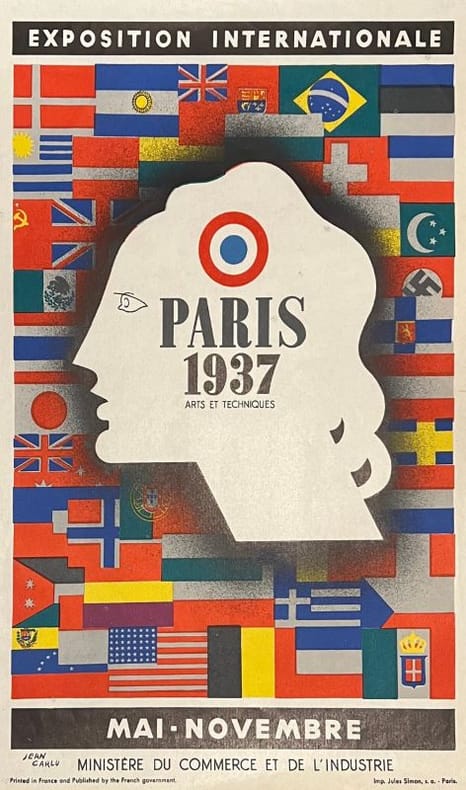
1937Best.-Nr. 248241937 Lithographie signée en bas à gauche, Paris, Imprimerie Jules Simon , Ministère du Commerce et de l'Industrie, 1937, 40 x 26.5 cm.
1969Best.-Nr. 4831Milan Olivetti 1969 petit in-4 en feuilles Sl [Milan], Olivetti, 1969 (1968 au copyright). 25,5 x 22 cm, petit in-4, 12 planches en couleurs tirées en offset et montées sur carton, (4) pp. de texte également montées sur carton (ici recto et verso), en feuilles sous étui de l'éditeur imprimé au dos.
1942Best.-Nr. 143936- Une feuille repliée. 118 x 158 cm. Petites déchirures sans manques à 6 points de pliage.
Best.-Nr. 7940Affiche 51,5 x 73. Lithographie tirée par Mourlot.
Best.-Nr. 534.1aafLeipziger Schulbilderverlag von F.E. Wachsmuth, o.J. um 1920, 66x88 cm links oben und unten gerissen sowie oben in der Mitte. 1 Blatt.
Best.-Nr. 122495aafFribourg le 10 Avril 1839. Le Directeur Ge. des Postes Monnerat. Planche lithographique Lith. J.C. Meyer, Fribourg, facs. vers 1960?, 44x57 cm, retirage d’une affiche des services des diligences de Fribourg, une planche encadrée.
Best.-Nr. 10492Sans nom, sans lieu, sans date. Silhouette de la célèbre héroïne de Tardi, peinte sur contreplaqué. Un format presque à l'échelle, à savoir 1,56 m. des pieds au sommet du chapeau. Petite fente à l'épaule (voir image), renforcée au dos par une plaque de bois, 2 petit trous pour fixation. Quelques petites usures et frottements, ce qu'on lui pardonnera puisqu'il s'agit d'une pièce unique et artisanale.
Best.-Nr. 8106Affiche, sérigraphie 45 x 81.
Best.-Nr. 7787Affiche, sérigraphie (2e édition) 67,5 x 92.
Best.-Nr. 8136Affiche lithographique au format 62 x 100, imprimée par Mourlot.
Best.-Nr. 96645aafLausanne, Au Verseau, chez Roth & Sauter, imprimeurs-éditeurs. s.d. vers 1940, 38x46.4 cm. Gravure sur bois coloriée, entourée d’un texte par le Chanoine Louis Poncet.
Best.-Nr. 2197.1aafLausanne, A. Marsens. 1924, affichette en couleurs, 1 feuille.
Best.-Nr. 111596aafÉdité et imprimé par Lith. Art. Säuberlin & Pfeiffer, Vevey, s.d, vers 1950, 97x65 cm, Chromolithogr. Schul-Wandbildbild / Affiche, lithographie en couleur, sous l’affiche ‘reproduction autorisée par l’auteur’, 1 Blatt / 1 feuille,
Best.-Nr. 781.1aafLitho Casserini-Aebi Thun, 70x99 cm. Einzelblatt
2003Best.-Nr. 1730Bibliothèques municipales de la ville de Genève, 2003. Rarissime portfolio de 12 planches, tirées par le maître-sérigraphe Christian Humbert-Droz -5 couleurs sur papier cuve "Arche 88"-, sous chemise grise imprimée en blanc (infime choc en tête).
1990Best.-Nr. 1720Agence Vues sur la Ville / Typelec Photocomposition / S.c.r.o Photogravure / Cid Editions Impression, 1990. Rarissime et magnifique calendrier, en feuille sous couverture bleue imprimée, au format 36,5 x 28 cm. Très légers frottements à la couverture, 2 petits plis au coin inférieur courant sur tout le volume.
Best.-Nr. 80435Paris, Chambre Syndicale Typographique Parisienne 1925, 310x240mm, broché. Inscriptions manuscrites sur le haut de page de garde supérieure et cachet de bibliothèque, autrement bel exemplaire.
Best.-Nr. 96691aafGenève, Edite par Peter, Cailler, Kohler, Chocolat Suisse S.A. au profit des Oeuvres patronnees par le Departement Militaire Suisse, Lithographie Sonor S.A., (1915), 32 x 123 cm, Lithographie originale en couleurs, faux-plis au milieu de l’affiche./ Farbig lithogr. szenische Darstellungen aus den Schweizer Truppen im Aktivdienst 1914-1918. Gedruckt auf festem Papier. Gerollt.