11,027 results
1892ref. 22052paris Eugène Verneau 1892 une lithographie originale en couleurs format : 25 x 32 cm, par Henri-Gabriel IBELS, 1892 Paris Eugène Verneau Imprimeur Editeur,
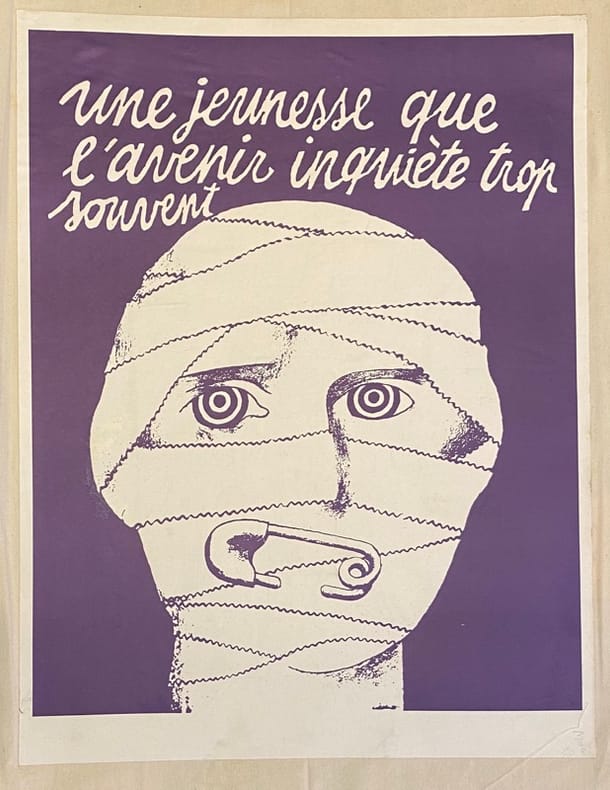
ref. 232832(1968) 56 x 42 cm, en feuille, contrecollée sur toile souple moderne.
1968ref. 10041[Martigny], [éditions du Manoir], [1968]. Texte avec signature en fac-similé autographe, au format 28 x 37,5 cm. (feuille), sur Arches.
ref. 500297409Sans date.
1976ref. LCI-65641976 60 x 80 LE PACTE DE L'OMBRE : Affiche originale (1976) du film Une fille pour le diable. Peter Sykes dirige le duel final entre Richard Widmark et l'inoubliable Christopher Lee dans ce chef-d'œuvre occulte des studios Hammer. Une composition visuelle saisissante, marquant les débuts de Nastassja Kinski. Présentée dans un état exceptionnel, cette affiche est un vestige fascinant de l'âge d'or du fantastique britannique.
français Sans date. Affiche originale du film.120x160 cm (approximatif). Pliée, petits trous et manques de papier dans les coins, scotchs en bordure.
ref. 3092Affiche au format 40 x 50 cm., à l'état de neuf.
ref. 3091Sérigraphie au format 50 x 40 cm., à l'état de neuf.
1957ref. 1036921957 Affiche lithographique sur papier 119x80cm, signé dans la planche en bas à droite, vers 1940.Imprimé par Imp. Bedos & Cie, Paris.Traces de plis ayant éventuellement occasionné de petits manques, couleurs fraîches. (103692)
ref. RO80078824LES GALOCHONS DU CHATEAU. Non daté. In-12. Broché. Bon état, Couv. convenable, Dos satisfaisant, Intérieur frais. Affiche en noir et blanc de 40 / 60 cm.. . . . Classification : 0-Affiches Cinéma
ref. 26699Reproduction sous cadre au format 23 x 17 cm.
1913- Lucien Vogel éditeur, Paris Février 1913, 19x24,5cm, une feuille. - Original color print, printed on vergé paper, signed in the plate. An original print used to illustrate the Gazette du bon ton, one of the most attractive and influential 20th century fashion magazines, featuring the talents of French artists and other contributors from the burgeoning Art Deco movement. A celebrated fashion magazine established in 1912 by Lucien Vogel, La Gazette du bon ton appeared until 1925, with a hiatus from 1915 to 1920 due to the war (the editor-in-chief having been called up for service). It consisted of 69 issues printed in only 2,000 copies each and notably illustrated with 573 color plates and 148 sketches of the models of the great designers. Right from the start, this sumptuous publication "was aimed at bibliophiles and fashionable society," (Françoise Tétart-Vittu, "La Gazette du bon ton", in Dictionnaire de la mode, 2016) and was printed on fine vergé paper using a type cut specially for the magazine by Georges Peignot, known as Cochin, later used (in 1946) by Christian Dior. The prints were made using stencils, heightened in colors, some highlighted in gold or palladium. The story began in 1912, when Lucien Vogel, a man of the world involved in fashion (he had already been part of the fashion magazine Femina) decided, with his wife Cosette de Brunhoff - the sister of Jean, creator of Babar - to set up the Gazette du bon ton, subtitled at the time: "Art, fashion, frivolities." Georges Charensol noted the reasoning of the editor-in-chief: "'In 1910,' he observed, 'there was no really artistic fashion magazine, nothing representative of the spirit of the time. My dream was therefore to make a luxury magazine with truly modern artists...I was assured of success, because when it comes to fashion, no country on earth can compete with France.'" ("Un grand éditeur d'art. Lucien Vogel" in Les Nouvelles littéraires, no. 133, May 1925). The magazine was immediately successful, not only in France but also in the United States and Latin America. At first, Vogel put together a team of seven artists: André-Édouard Marty and Pierre Brissaud, followed by Georges Lepape and Dammicourt, as well as eventually his friends from school and the School of Fine Arts, like George Barbier, Bernard Boutet de Monvel and Charles Martin. Other talented people soon came flocking to join the team: Guy Arnoux, Léon Bakst, Benito, Boutet de Monvel, Umberto Brunelleschi, Chas Laborde, Jean-Gabriel Domergue, Raoul Dufy, Édouard Halouze, Alexandre Iacovleff, Jean Émile Laboureur, Charles Loupot, Chalres Martin, Maggie Salcedo. These artist, mostly unknown when Lucien Vogel sought them out, later became emblematic and sought-after artistic figures. It was also they who worked on the advertising drawings for the Gazette. The plates put the spotlight on, and celebrate, dresses by seven designers of the age: Lanvin, Doeuillet, Paquin, Poiret, Worth, Vionnet and Doucet. The designers provided exclusive models for each issue. Nonetheless, some of the illustrations are not based on real models, but simply on the illustrator's conception of the fashion of the day. The Gazette du bon ton was an important step in the history of fashion. Combining aesthetic demands with the physical whole, it brought together - for the first time - the great talents of the artistic, literary, and fashion worlds; and imposed, through this alchemy, a completely new image of women: slender, independent and daring, which was shared by the new generation of designers, including Coco Chanel, Jean Patou, Marcel Rochas, and so on... Taken over in 1920 by Condé Montrose Nast, the Gazette du bon ton was an important influence on the new layout and aesthetics of that "little dying paper" that Nast had bought a few years earlier: Vogue. [FRENCH VERSION FOLLOWS] Estampe originale en couleur, tirée sur papier vergé et signée en bas à gauche de la planche. Gravure originale réalisée pour
français Sans date (circa 1948). Affiche originale 60x80 cm. Ginette Leclerc et Lucien Coedel dans un film de Jacques Daroy.
ref. 3813Affiche originale. Imprimerie Quotidienne Fontenay sous bois, Val de Marne. Institut français d'architecture. 1982. Très belle impression sur papier Ingres d'Arches MBM. Dim : 593 x 420 mm.
1999ref. 38754Assalit 1999 In-8, broché couv. illustrée, illustrations en couleurs, 102 pp. Etat neuf.
1990ref. 20356Milan - F. Ghozland, Toulouse 1990 In-8, oblong, cartonnage illustré, sous jaquette illustrée, illustrations en couleurs, 104 pp. Bon état d’occasion.
1990ref. RO20020351Milan. 1990. In-8. Relié. Très bon état, Couv. remarquable, Dos impeccable, Intérieur frais. 102p, illustré à chaque page de photos couleurs d'affiches dans le texte, cartonné, couverture illustrée couleurs, jaquette illustrée.. Avec Jaquette. . A l'italienne. Classification Dewey : 741.67-Illustrations des affiches
1895ref. 27534paris Eugène Verneau 1895 Une Affichette Publicitaire , lithographiée en couleurs, format : 31,8 x 24,8 cm, Signé en bas à droite : T. Synave , 1895 [Paris] : Imprimerie Eugène Verneau, Editeur,
1894ref. 27347Paris HIPPODROME 1894 une AFFICHETTE ORIGINALE, format : 27,2 x 19,5 cm, illustrée en noir par Jules CHÉRET 1894, sans nom d'imprimeur, 1894 Paris Hippodrome Editeur,
ref. RO80091884***. Non daté. In-12. Broché. Etat d'usage, Couv. convenable, Dos satisfaisant, Intérieur frais. 1 affiche de 35 x 23 cm. Une déchirure de 3 à 4 cm.. . . . Classification : 300-Affiches Divers
1898ref. 27308Nantes Imprimerie Spéciale du "CLOU" Deroual et Jubin et Cie 1898 une affichette, imprimée et lithographiée en noir, format : 30,5 x 42,5 cm, SOIRÉE MUSICALE ET DRAMATIQUE - SALLE DU CERCLE CATHOLIQUE, RUE DU CHAPEAU ROUGE , au bénéfice des Ecoles Chretiennes des Frères de la Ville de Nantes, illustrée en noir par de BREM (Artiste Peintre Nantais), sans date (1898) Nantes CERCLE CATHOLIQUE Editeur,
1965Une affiche de format 49 x 65cm; impression offset Les Presses Artistiques. Infimes défauts; bel état. Voir photo.
ref. 15873Nantes Au Musée vers 1965 1 Une affiche de format 49 x 65cm; impression offset Les Presses Artistiques.
1965Une seule affiche de dimensions 49 x 64 cm; tirage offset par Les Presses Artistiques, Paris. Trace d'adhésif au coin inférieur gauche; sinon bon état. Voir photo ( Alain Kirili?).