29.623 risultati
1866rif. 61161London: Published for the Author 1866. An early impression but likely not the first lacking decorative gilt tooling to spine. Octavo 22cm. Green cloth boards blindstamped titled in gilt on spine; chocolate brown endpapers; xii516pp; prospectus for the author's "History of the Colony of Natal" tipped in at front; tinted lithographic frontispiece and 7 plates one black and white lithograph folding map with touches of hand color and 4 relief full-page plates. Bookplate of Arthur Wakefield Chapman. Lightly rubbed but generally sound and clean: Very Good. History and contemporary account of what is now South Africa by a Wesleyan missionary who had been in South Africa for 27 years. Theal noted in 1812 that "the first part of this book is fairly accurate the second part is correct to a letter" though the third section had become obsolete. THEAL p.141. MENDELSSOHN I p.725. 61161. Published for the Author unknown books
1815rif. 61210London: John Murray 1815. Second Edition. Quarto 28cm. Half-bound in later nineteenth-century brown calf and purple cloth rebacked all edges marbled; plain dark taupe endpapers; iii-xx1-3731pp; folding map at front with routes traced in red and blue occasional in-text figures. Bound with out half-title. Sewing sound but joints cracked amateur reinforcements to hinges general mild wear to boards internally with occasional spots of foxing but largely clean: just Very Good. Mungo Park 1771-1806 was an early explorer in Africa whose 1799 about his first journey along the Niger River Travels into the Interior of Africa earned him great popularity and is #16 in Blockson's Commented Bibliography. In 1805 he undertook a second expedition. He led his group overland to Bamako losing many members to dysentery. He reached Ségou and Sansanding in modern-day Mali and sailed on reportedly reached the Bussa rapids in modern-day Nigeria. But in late 1805 his party was attacked by native Africans who he had antagonized and Park drowned. His journal was sent back to the UK where it was published with statements from the expedition guides Amadi Fatouma and Isaaco. Exploration of the Niger ceased until after the Napoleonic Wars and the Niger Delta was not located by Europeans until the Lander expedition in 1830. HOWGEGO II P4. John Murray unknown books
1879rif. 61206London: John Murray 1879. First Edition. First printing. Octavo 23cm. Full green calf gilt and blind rules along board edges spine stamped in gilt titled on brown spine label; all edges marbled; marbled endpapers; xxii418pp; 3 maps 1 with color frontispiece and 10 relief plates with tissue guards additional in-text illustrations. Bookplate of the Earls of Derby. Bright and sound mild edge rubbing spine dry and rubbed one tissue guard lacking else Very Good or better. "The British consul to Mozambique Elton spent considerable time fighting the slave trade in the region. He explored the region around Lake Nyassa and enjoyed considerable sport.During his return to the coast he contracted fever and died. His journals were arranged edited and completed by his hunting companion H. B. Cotterill." CZECH p.55. John Murray unknown books
1938rif. 61372Oxford: Clarendon Press 1938. First Edition. Octavo 23cm. Maroon cloth titled on spine; plain endpapers; viii584pp; two folding maps at rear. Sound and straight spine rubbed and slightly faded minor rubbing to edges: generally Very Good. 61372. Clarendon Press unknown books
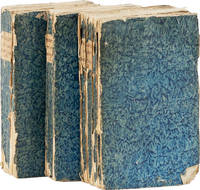
1743rif. 61213Amsterdam: Jean Catuffe 1743. Third French edition. 12mo 18.5cm. Three volumes in blue pastepaper wraps with manuscript titles on plain paper spine labels; I: xxiv4282pp; II: xvi162pp; III: xx320pp; 5 folding maps and 25 line engravings one folding. Untrimmed and unbeaten. Cracks to paper over spine on vols II and III significant cracks to spine on vol. I wrappers lightly rubbed at edges with small abrasion on front wrapper of vol. I dampstaining to about 16 leaves in vol. III else clean: Very Good. Peter Kolbe 1675-1726 was an astronomer who traveled to the Cape of Good Hope in modern-day South Africa for astronomical research from 1704 to 1713. In 1719 he published this seminal work on natural history the Khoekhoen people and Dutch settlers in South Africa. The work became highly popular and was translated into multiple languages; this is the third edition in French. See MENDELSSOHN pp842-845 for the first edition and other translations. Jean Catuffe unknown books
1834rif. 60678New York: Harper and Brothers 1834. First American Edition. First printing. 12mo 20cm. Glazed pale red cloth titled on printed paper spine label; 4284pp; 4pp publisher's ads at rear; folding map and four plates. Bookseller's ticket of Moore & Payne to front pastedown. Ownership inscriptions of Wm. M. Holland 1836 and W. Barratt 1849 to f.f.e.p. Straight and sound minor stains to cloth light fading to spine minor foxing throughout but generally Very Good. Narrative of travels in the Eastern Cape of South Africa by a Methodist missionary. Theal acknowledged that the book was informative about the "Bantu tribes and the Wesleyan missions" but criticized it for calling out the cruelties of colonization p.158. Mendelssohn meanwhile called Theal's criticisms "drastic" and the work itself "interesting and instructive.especially with regard to the natural and political history of the country and its topography and ethnology" p.805. The term for this region used in the work's title was derived from a racial slur and is no longer in use. THEAL p.158. MENDELSSOHN I p.805. Harper and Brothers unknown books
1930rif. 52156Cambridge: Harvard University Press 1930. First Edition. Inscribed on front endpaper of first volume: "Mr. Malcolm B. Stone / with much appreciation of his interest in the work in tropical medicine / from Richard P. Strong" dated in year of publication. First printings. Two large octavo volumes 27cm; publisher's maroon cloth boards lettered in gilt on spines and front covers; xxvi1-568; ix569-1064pp; illus. Mild lean to text block of second volume else a tight Near Fine set lacking the dustwrappers. A major work in the history of public medicine. Strong 1872-1948 was the first professor of Tropical Medicine at Harvard and the foremost American authority on the subject. This important two-year expedition to Liberia and the Congo led by Strong in the company of seven fellow Harvard scientists was the first full-scale attempt to document the etiology of a variety of tropical diseases as well as documenting existing sanitary conditions in Liberia and colonial West Africa. The mission also collected a wealth of zoological and anthropological data that would inform various fields of Africa Studies for decades. Harvard University Press unknown books
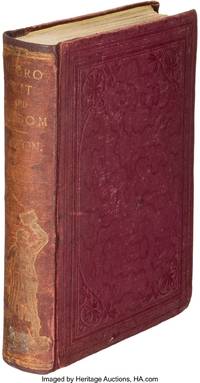
1865rif. 158421865. Burton Richard Francis. Wit and Wisdom from West Africa. Or a Book of Proverbial Philosophy Idioms Enigmas and Laconisms 1865 linguistic and cultural compilation assembled by the British explorer and scholar whose travels and writings contributed significantly to nineteenth century European knowledge of Africa and the Middle East. Burton's work records proverbs idioms and aphoristic expressions drawn from several West African languages reflecting a broader nineteenth century effort by travelers and linguists to document oral traditions and vernacular speech. By collecting proverbial literature from multiple language communities the book preserves elements of philosophical and rhetorical traditions transmitted through oral culture across West Africa. Burton Richard Francis. Wit and Wisdom from West Africa. Or a Book of Proverbial Philosophy Idioms Enigmas and Laconisms. London: Tinsley Brothers 1865. First edition. The text gathers sayings and proverbial expressions from a range of West African languages including Wolof Kanuri Oji Ga Yoruba Efik and Mpangwe presenting them as examples of moral reflection wit and philosophical thought embedded in everyday language. Burton's compilation reflects his interest in comparative language study and the intellectual traditions preserved in oral literature. Octavo volume containing preliminary pages and 455 pages of text. During the nineteenth century European scholars increasingly recognized the importance of recording oral traditions and vernacular expressions as sources of cultural and linguistic knowledge. Proverbs and idioms formed a particularly valued category of material because they condensed ethical teaching social norms and rhetorical style into concise expressions widely shared within communities. Burton's work belongs to this tradition of linguistic documentation and reflects the broader Victorian era interest in comparative philology and ethnographic study. Octavo volume bound in original purplish red publisher's cloth stamped in blind with gilt lettering on the spine all edges trimmed later endpapers and bookplate of Dwight Edwards Marvin on the front pastedown. Rebacked with original backstrip laid down; wear to edges and corners rubbing to boards discoloration to backstrip with partial loss of gilt faint yellowing to text block edges scattered foxing and light staining split between half title and title with possible loss of a leaf and repair at the inner margin of the final leaf with penciling to verso. Text block very good in a good binding. Penzer pp. 75-76. unknown books
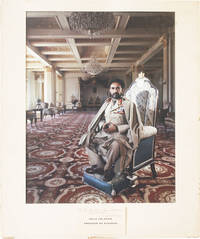
rif. 47326N.d. ca 1970s. Original large-format color print in presentation mat with title card affixed to mat below image. View size 49cm x 38cm ca 19" x 15"; overall dimensions 60cm x 51cm. Title card inscribed in black ink: "For Bob MacNeal a fellow photographer with best wishes / Arnold Newman" undated. Mat lightly soiled with a few small chips and abrasions to extremities; image clean and unfaded Near Fine. ca NOTE: the mat appears permanently fixed to the photograph as presented by the photographer; we have not attempted to examine the print outside the mat. Impressive large-format portrait by Newman here inscribed to one "Bob MacNeal" identified as a "fellow photographer" though we can find no photographers of the period who used this spelling. Possibly a misspelling of Bob MacNeil still active the prominent Canadian fashion photographer; possibly a misspelling of Bob McNeill d.2007 the prominent African-American documentary photographer; or possibly the correct spelling of an acquaintance of no notable prominence at all. Undated but ca. early 1970s a superlative image of the Ethiopian Emperor boldly inscribed and signed by Newman below image. unknown books
1954rif. 28950Pretoria: Government Printer 1954. First Edition. Large thick octavo 25cm.; original blue printed paper-covered boards; viii1364pp.; folding color map plates folding brochure titled "History of the Kruger National Park" bound in between pp. 54 & 55. Spine slightly sunned else Very Good or better. Government Printer unknown books
1879rif. 516731879. South Africa. Cape of Good Hope. Acts of the Parliament of the Colony of the Cape of Good Hope Sessions 1879 1880 1881 1882. Cape Town: Soul Salomon and Co 1879-1882. Four books in one with individual paginations. Octavo 6" x 9-1/2". Four books in printed wrappers bound into later quarter cloth over marbled boards with typewritten spine label. Some rubbing to spine ends with minor chip to head of spine. Ex-library. Location label to spine small inkstamp to title page. $125. The Cape Colony was established by the Dutch East India Company in 1652. After occupying the colony from 1795-1803 Great Britain assumed formal control in 1806. British possession was recognized by the Anglo-Dutch treaty of 1814. A parliament was established in 1854. It existed until the colony was incorporated into the Union of South Africa in 1910. South Africa became an independent republic in 1961. These volumes offer valuable insight into the administration of the colony in its final decades. No complete sets and few individual volumes listed on OCLC. Sweet & Maxwell A Legal Bibliography of the British Commonwealth 7:124. unknown books
1971rif. 73784La Hague - Paris: Mouton 1971. First edition 8vo pp. 200; tables and graphs in the text; fine in original plain card wrapperes and printed dust jacket. "This book is an important contribution to the reconstruction of the Proto-Benue-Congo PCB class system. The Introduction specifies the subject and the difficulties that were encountered during the preliminary stages: the setting up of sound correspondences for some fifty Benue-Congo languages. There is an account of the method and a list of the diachronic and synchronic terms used with some attempts at new definitions" jacket blurb. Mouton unknown books
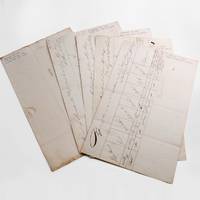
1824rif. 376899South Afrca 1824. Folio. Very Good a few margin tears 1 closed 2 with holes from seal generally sound some with postmarks. Folio. Report of Arrivals in Simons Bay Cape of Good Hope.which is l on the shores of Simon's Bay in False Bay on the eastern side of the Cape Peninsula. For more than two centuries it has been a naval base and harbour first for the British Royal Navy and now the South African Navy. The town is named after Simon van der Stel an early governor of the Cape Colony. 4 documents. 1823-24. Each SIGNED BY RICHARD WEATHERLEY HARBOR MASTER Report of Arrivals and Departures.Algoa Bay. Port Elizabeth. Eastern Cape SA 6 documents to Captain Francis Evatt important Commandant of Fort Frederick at Port Elizabeth. Each document signed by Evatt. 1824. unknown books
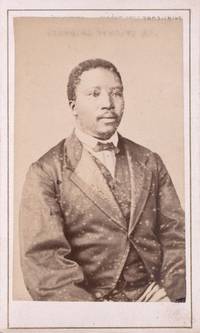
1870rif. 351805Paris 1870. Ink inscription on verso. Spotting in the image the image mounted upside down on the mount. Ink inscription on verso. unknown books
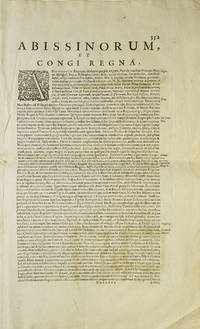
1638rif. 263796Amsterdam 1638. Copper engraved map colored in outline letterpress text on verso Abissinourm et Congi Regna Folios 352-353. 1 vols. Folio map 345 x 495 mm. Outline color. Small repairs to Nubia along old fold chiefly infill of blank areas. Very good. Copper engraved map colored in outline letterpress text on verso Abissinourm et Congi Regna Folios 352-353. 1 vols. Folio map 345 x 495 mm. Hand-colored map from the 1638 edition of the Mercator-Hondius Atlas. Includes frequent references to Amazons and locates "populi Antropophagi" just north of the Congo and Tritons and Sirens in Lake Victoria. Describes Nubia as "olim Christianam" and locates famous biblical queens of the time of Solomon along the banks of the Nile river. May locate the kingdom of Prester John on top of Amara Mons in the center of the map. A beautifully hand-colored map in excellent condition. Koeman I 8720:1A unknown books
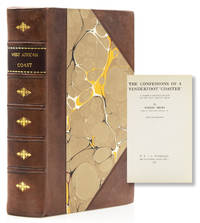
1927rif. 318085London: Witherby 1927. First edition. Illus. 280pp. 8vo. Bound in modern three quarter mottled calf and marbled boards Fine. First edition. Illus. 280pp. 8vo. Witherby unknown books
1883rif. 52639London: Chatto & Windus 1883. First edition small 8vo 2 volumes pp. xii 2 354 2 32 Chatto & Windus ads; vi 381 3; 2 folding maps chromolithograph frontispiece in vol. II a few illustrations in the text; original decorative red cloth stamped in red and black; spines soiled and spine extremities chipped; cloth a little soiled; good and sound. Penzer p. 106-7; Casada 65: "The work was an outgrowth of the trip Burton made with Cameron who was the first European to cross central Africa 1873-75 to explore the Kong Mountains and search for gold in the valley of the Ancobra River . Burton wrote virtually all of the first volume and much of the second although Cameron was an accomplished literary hand in his own right. Chatto & Windus unknown books
1590rif. 40297N.p. 1590. Image area 19-1/2" x 12-7/8" in 28" x 23" mat. 1 vols. Imperfectly colored along crease down center small and unobtrusive dampstain in one corner. Still a nice piece. Image area 19-1/2" x 12-7/8" in 28" x 23" mat. 1 vols. Abraham Ortelius 1527-98 was a Flemish geographer of German origin. His major work Theatrum Orbis Terrarum 1570 with later revisions and addendums was the first modern atlas. It was based on contemporary charts and maps and contained a collection of plates engraved by Frans Hagenberg in a uniform size and format. The Theatrum preceded the first atlas of Ortelius' good friend Gerardus Mercator. In fact popular sentimental legend has it that Mercator delayed publication of his own work so that his younger friend's would appear first. Although this simply isn't true Mercator wasn't ready the legendary cartographer did complement Ortelius for the "care and elegance" he had put into the Theatrum. unknown books
rif. 50306For the lot of approximately 250 items $6000. a Correspondence with various government officials hunting guides and others involved with preparing and carrying out the trip including14 letters to Furlong typed and autograph one accompanied by four photographs of members of the expedition with trophies; five retained copies of letters from Furlong to the correspondents four telegrams seven typed and manuscript recapitulations of various aspects of the trip e.g. titles for the "Dance of the Nandi" film and a three page typed press release on the expedition dated Nairobi 27 March 1930 accompanied by a photograph of Furlong and two bearers with a leopard he has killed. b Two hunting licenses issued by the Uganda Protectorate to Furlong 22 April 1930 one "For a First Elephant" the other a "Visitor's Full Game License." c Three maps period road map of Kenya and Uganda published by Bullows and Roy for the Royal East Africa Automobile Assn.; Map Showing Cairo-Mombasa Route published by the Sudan Survey Dept Khartoum 1929; and a period National Geographic Society map of Africa. d An account book narrow 12mo 19 pp. 22 March - 8 June 1930 and approximately 125 receipts most partly printed for a wide range of services and material necessary for the trip. e 21 photographs in addition to those mentioned above many picturing Furlong in the field with his rifle and trophies some with Furlong's notations on verso and 34 unused photo postcards featuring tribesmen animals and scenery of East Africa. f 42 promotional pamphlets ca. 1925-1934 for the various parts of Africa along Furlong's route 36 of which are unrecorded on OCLC. The pamphlets were issued by African railway companies and governmental agencies outfitters e.g. Thomas Cook and "Safari Africa Limited" London ship lines and other travel agencies and taxidermy concerns. g A wooden carved string instrument from the Para Mountains in present day Tanzania with Furlong's ownership label "Col. Wellington Furlong / c/o Safariland Ltd. / Musical Instrument / Para Mountains" still attached; the instrument is shaped like a hollowed-out bread tray 27 x 7 1/2 inches three holes in the shape of crosses in the bottom six strings stretched across the opening. Furlong 1874-1967; American explorer army officer author artist and photographer embarked on this big game expedition in 1930 partly as an effort to recover relics of Sir Henry M Stanley in East and Central Africa. Gateway to the Sahara New York 1909 is among several books he published. A member of the Explorers Club he was the first American to explore the interior of Tierra del Fuego 1907-1908. Most of his personal papers are held by the Stefansson Collection at Dartmouth. unknown books
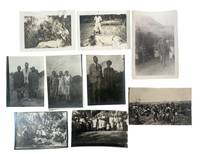
1929rif. 238951929. Machemeje missionary photo archive depicting African Christian community life in Portuguese East Africa circa 1929 to 1930s during the establishment of a new Protestant mission station associated with Mozambican missionary and educator Kamba Simango. A contemporary 1929 missionary report identifies Machemeje as a new station established on 2500 acres with financial support from the Congregational Fairfield County Association of Connecticut which had supported Simango's education and proposed missionary work in his country of birth. The photographs record conversion through African family and community relationships including one inscription which identifies "Zuka and his two sisters whom he brought to Christ" while another identifies "Zuka and his mother." The wording places an African Christian convert directly within the work of evangelization recording Christianity spreading through kinship and local relationships rather than presenting conversion exclusively as the accomplishment of a European or American missionary. Photo archive of 9 silver gelatin photographs ranging 2.5 x 3 inches to 4.5 x 3 inches Portuguese East Africa circa 1929 to 1930s. The photographs show African men women and children at Machemeje and in surrounding rural settings including a large congregation or community group posed outside a thatched building; Zuka formally dressed in a jacket and tie between two women identified as his sisters; Zuka standing beside his mother; three women in Western style dresses; and families seated outside thatched dwellings. One photograph carries the inscription "Christians at Machemeje the new station in Portuguese East Africa." Another records sickness and mortality within a household "Family afflicted with flu. One child died." A large agricultural scene shows scores of men and women gathered in a harvested field many carrying long handled implements while another photograph depicts a group beside fish and bears the inscription "Sharing fish at Machemeje after the water has gone down." Hunting photographs show African men posed with a killed antelope and a lion introducing the recreational and trophy hunting culture that frequently accompanied expatriate life in colonial Africa. The images move between posed Christian portraiture and records of food gathering agricultural labor illness domestic life and communal assembly preserving both the missionary photographer's categories and the African people and relationships that exceeded them. Machemeje belonged to a wider history of Protestant Christianity in colonial Mozambique in which African teachers converts and evangelists could carry religious teaching between mission institutions and local communities. Contemporary reporting identifies Kamba Simango as Mozambican born converted to Christianity at fourteen later educated at Hampton Institute and Teachers College in New York and supported by the Fairfield County Association in establishing Machemeje. Scholarship on colonial African missions has emphasized that African teachers and catechists were often indispensable to Christian expansion even when missionary publications represented them chiefly as evidence of European mission success; the inscriptions concerning Zuka preserve a particularly direct example of this local agency. The photographs also belong to a colonial visual vocabulary in which African communities were classified through conversion illness labor subsistence dress and hunting while the handwritten captions supply names and relationships that allow individual lives to emerge from those categories. Light surface wear fading occasional abrasions and handling marks with several prints retaining legible handwritten identifications on the versos. Overall in good condition. A photographic record of Machemeje at the beginning of its life as a Protestant mission station documenting African Christian conversion as a process carried through families and local converts within colonial Portuguese East Africa. unknown books
1960rif. 231931960. African press photo archive credited on the versos to Tomas D.W. Friedmann documenting images of anticolonial war apartheid labor urban growth and locals across Africa in 1970. These press photos translated events in Angola South Africa Nigeria and Tunisia into public facing articles for western audiences. At the time of production Angola was still fighting Portuguese colonial rule in 1970 while South Africa's mining economy and urban development remained bound to apartheid labor structures centered on Johannesburg and the Witwatersrand goldfields. Tomas D.W. Friedmann was a press photographer 1925-2012 traveled globally documenting Africaand its art. Photo archive of 9 silver gelatin photographs each 8" x 10" Africa circa 1960-1970. The archive belongs to the late colonial and apartheid era when American editorial photography often compressed Africa into legible news features of conflict labor ritual wildlife and into ethnic stereotypes for news splashes even as decolonization and liberation struggles were reshaping the continent.Verso labels identify specific scenes including "Nigeria: Kano / snake being charmed" "South Africa / Daggafontein gold miners pushing cart with ore underground" "Union of South Africa Johannesburg north-eastern section of town with sand-hills of the goldmines" "Tunisia: boy climbing palm tree and diving into Roman tanks below in which Gafsa boys swim" and two Angola captions describing "rebel held territory" where a patrol meets refugees in the bush and "early morning exercises at rebel army camp Serra de Canda deep inside rain forest." The group image depicts an Angolan rebel army that has been fighting liberation from Portugal since 1961. Another South Africa caption identifies a Durban whaling scene with Africans beginning to cut up a whale while one photograph of men and boys in furred ceremonial dress is marked in later handwriting "South Africa / Xhosa doctors." Light surface and edge wear minor curling otherwise clean and legible; overall very good condition. The group anchors itself in the historical upheaval of decolonization where armed resistance to Portuguese rule entrenched apartheid industry and postcolonial social change were being documented and mediated for western audiences. unknown books
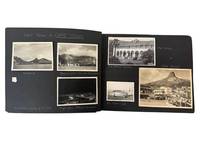
1954rif. 232801954. English woman's photo album documenting a year of work and travel in Apartheid era South Africa and Southern Rhodesia in 1954-1955 during a time when white colonies were well established during the consolidation of apartheid. Compiled by an English woman attached to the Over-Seas League Torquay branch and employed for a year in physiotherapy the album moves from Union-Castle sea passage to Cape Town hotels mountain excursions resort and garden visits Rhodesian travel and repeated encounters with African people framed as "native" villages "war dances" and ethnographic spectacle. This album was assembled in the middle of the National Party's early apartheid decade after the Population Registration Act and Group Areas Act of 1950 the Bantu Authorities Act of 1951 the pass law consolidation of 1952 and the Bantu Education Act of 1953 had deepened racial classification territorial segregation labor control and state supervision of Black life while resistance accelerated through the 1952 Defiance Campaign and the 1955 Freedom Charter. Photo archive of approximately 225 silver gelatin photographs and real photo or printed postcards various sizes South Africa and Southern Rhodesia 1954-1955. Housed in a 12.5" x 9.5" album with black leaves most cornered in with extensive white manuscript captions throughout. The compiler's route is legible page by page: "Off to South Africa. July 1st 1954" beside ship and shipmates; "First Views of Cape Town" "My Hotel in Sea Point" and "Going up Table Mountain"; urban views of Cape Town civic buildings and streets; scenic excursions to Table Bay the Hottentots Holland mountains Ceres and Oudtshoorn; "Coon Carnival on New Years Day" using outdated racialized language with Black performers in racially exaggerated costume makeup; Bulawayo and Southern Rhodesia pages naming hospitals villages roads and grave sites; "Native War Dances" "Bantu villages" "On the road to Pretoria" and "Zulus! In the Valley of a Thousand Hills" where African subjects are repeatedly isolated as performers or spectacle. Other leaves record Groote Constantia Rhodes Memorial Groote Schuur the Malay Quarter and a "Malay Wedding" Kruger National Park Durban Royal Natal National Park sugar plantation scenes Victoria Falls including aerial views brochures menus ship material and invitation ephemera all arranged in a clear chronological travel sequence. Cape Town one of the album's main settings was already a segregated city by the 1940s and 1950s making the compiler's easy movement through hotels gardens roads and viewpoints part of the racial ordering that structured urban South Africa. The album plainly records colonial hierarchy as everyday practice rather than abstract policy. A white British woman could arrive by imperial shipping line enter professional placement through an elite exchange network rent rooms drive tour monuments to settler power such as Rhodes Memorial and traverse Cape Town Natal Pretoria Kruger and Rhodesia while African people appear in the album largely through the language of tribe village dance labor and spectacle. That contrast places the photographs inside the social order built by apartheid and older settler colonial rule. Light general wear to album scattered corner wear and handling to photographs and postcards some items loose captions clear and legible and photos mostly clean and clear. Overall very good condition. A substantial and thoroughly captioned record of British female travel inside the racial geography of apartheid era southern Africa. unknown books
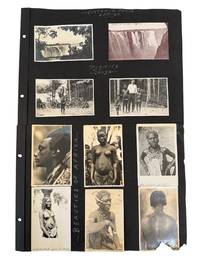
1920rif. 234321920. Indigenous peoples of Africa photo archive circa 1920s-1930s recording Shilluk Sudanese Congolese Nile and Victoria Falls subjects within the colonial-era climate of expeditionary travel and anthropology. The captions identify locations and peoples across a wide geographic range including "Shilluks of the Nile Sudan Africa" "Pygmies Congo" "Natives White Nile" and "Victoria Falls Africa." Such material was produced during a period when European and American travelers researchers missionaries and press photographers circulated native African culture for audiences shaped by imperial geography ethnographic classification and popular fascination with the African continent. Photo archive of 19 silver gelatin photographs each 3.25" x 5.25" Africa circa 1920s-1930s. Subjects include Shilluk men posed with bead necklaces arm ornaments headbands and draped cloth; Sudanese girls seated outdoors; men gathered beside dugout canoes on the Nile; a riverside settlement captioned "On the Banks of the Nile"; and a line of men identified as "Stork Men." The Congo section includes a group gathered in a forest clearing and a Western man standing beside Congolese natives under the caption "Pygmies Congo." Additional portraits emphasize hair styling scarification beadwork body ornament and dress including captions reading "Fancy Hair Styles Africa" "Beauties of Africa" "Native of Nile" and "Sudanese White Nile." Victoria Falls appears in two views placing human subjects within a broader travel record of African geography and spectacle. Captions on many of the margins By the early twentieth century much of Africa had been divided among European colonial powers following the 1884-1885 Berlin Conference which formalized imperial claims across the continent without African participation. The archive records how African people and places were subjects of anthropological research and interest to Westerners. The captions preserve period terminology named regions and the collecting habits of a Western observer moving across Sudan Congo the Nile and Victoria Falls. The presence of the Western man posed with Congolese subjects is especially important marking the encounter as more than scenic tourism and aligning the group with field travel research missionary contact or journalistic documentation. Mounted on black album leaves with handwritten captions; some prints show fading edge wear and light surface abrasion and the mounts show chipping and losses at corners. Overall in very good condition. Portraits emphasizing scarification ornament hairstyles and bodily presentation were often produced within a colonial framework that treated African communities as subjects of scientific racial or geographic classification. At the same time these scenes now preserve important visual records of cultural practices regional identity and daily life during a period of rapid political and social transformation under colonial rule. unknown books
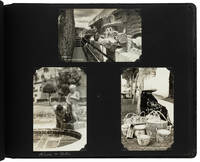
1930rif. 205481930. Early twentieth century travel photo album compiled by "Jake"documents the working life and global mobility of a merchant ship crewman during the 1930s and 1940s with sustained visual attention to port cities across Africa the Americas and the United States. The album supports research into maritime labor informal American commercial presence abroad and everyday interactions between traveling workers and local populations under late colonial conditions. Photographs taken in Beira and Dondo in Mozambique and Angola Durban and Cape Town in South Africa and Accra in the Gold Coast record encounters shaped by European colonial infrastructures and tourist economies including images captioned "Typical Ricksha Boy" depicting South African rickshaw pullers in elaborate headdress and dress and scenes of women in Accra balancing baskets and trays of food. Additional captions such as "Sam and his 'girls'" showing uniformed workers marked "Sea View Hotel" and "me and my gals" portraying informal social contact provide direct evidence of how American maritime workers framed and recorded relationships with local communities. The album further situates this mobility within a broader circuit including the Panama Canal Mexico City and Vera Cruz and U.S. port cities such as Galveston New York and Boston. Travel photo album compiled circa 1930s to 1940s likely by an American merchant marine crewman identified as Jake. String-bound black cloth album containing 44 leaves with 218 silver gelatin photographs and postcards mounted or cornered in along with one original sketch of an African man. Images span multiple global locations including Beira Dondo Durban Cape Town Accra Vera Cruz Mexico City the Panama Canal Powell River Vancouver Galveston New York and Boston. Several photographs depict shipboard life and crew activity aboard the S.S. Nemiskam Park with additional images of small craft landings including African men canoeing crew members ashore. A sequence of photographs taken in Boston shows the compiler in maritime work gear wearing thigh-high boot wraps rubber gloves and an oxygen mask captioned "At last -- working for a change." Nineteen photographs document Mexico including rancheros and rancheras in embroidered dress scenes of bullfighting and crew members wearing sombreros and sarapes. This album provides a concentrated record of interwar and wartime-era maritime circulation linking North American labor to colonial and postcolonial port environments offering primary visual evidence of how working-class American travelers documented race labor and leisure across imperial geographies. The inclusion of commercial signage hotel uniforms and transport labor such as rickshaw pulling situates the photographs within local economies shaped by tourism and global trade while the Panama Canal images anchor the album within a critical artery of twentieth-century shipping and U.S. strategic infrastructure. The juxtaposition of African Mexican and U.S. scenes underscores the continuity of maritime networks that connected these regions and the album's captions provide insight into informal language humor and perception among traveling crewmen. Minor edge wear to album corners with some mounts loosening; leaves and photographs remain clean and stable. Overall very good condition. unknown books
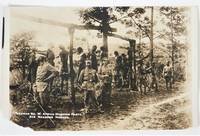
1896rif. 185041896. German colonial forces operating in German South West Africa present day Namibia execution photograph documenting colonial military punishment of African prisoners during the early period of German imperial rule circa 1896. The image records a scene of public hanging in which numerous African men appear suspended from a gallows while German soldiers stand nearby. The photograph emerges from the violent regime of colonial control established after Germany declared the territory a protectorate in 1884. Armed resistance against German occupation began during the 1890s including uprisings among communities identified in colonial records as Herero and Nama. German authorities responded with punitive campaigns intended to suppress rebellion and enforce imperial authority. The photograph preserves visual evidence of colonial execution practices and racialized violence used by imperial administrations to control subject populations. Albumen photograph approximately 6 x 4 inches black and white circa 1896. Caption beneath the image reads "German So. W Africa Hanging Party. 312 Negroes Hanged." The photograph depicts a gallows structure with numerous bodies visible while soldiers stand in the foreground observing the execution site. Several African men appear present among the assembled personnel alongside European soldiers illustrating the complex composition of colonial forces that often included locally recruited auxiliaries. The composition presents a stark view of the aftermath of execution and the organized display of punishment within the colonial military environment of German South West Africa. German colonial warfare in the region escalated during the following decade culminating in the Herero and Nama wars beginning in 1904 during which German forces carried out systematic campaigns of killing forced displacement and imprisonment against indigenous populations. Historians widely recognize these events as one of the earliest genocidal campaigns of the twentieth century. Photographs documenting punitive executions from the earlier phase of German rule provide visual context for the structures of coercion and racial hierarchy that defined colonial governance in the territory. Minor paper loss at the lower left corner and a closed tear measuring approximately three quarters of an inch repaired on the verso; image largely unaffected and overall condition very good. unknown books