162 Ergebnisse
1961Best.-Nr. 25433Paris: Denoël 1961. First edition. Wrappers slight wear unopened copy. 325 pages illustrated. 21 cm. One of 25 copies on Alfa d'Avignon paper including 5 h.c. Denoël unknown books
Best.-Nr. 5869SUPERBE LETTRE SON AMI REN ALLEAU DANS LAQUELLE IL ABORDE LA NOTION DTERNIT......Jarrive peine reprendre pied, (...). Cest en vain que je chercherais ici lquivalent de cet air lgrement parfum, de cette athmosphre (sic) dore qui rappelle l-bas tout homme quil peut tre des compagnons de Dionysos. Et sil est bien dans la vertu de lor de sacraliser ce quil touche, que dire de ces dernires journes que nous avons passes en Provence, aidant de nos mains clbrer le sacrifice des grappes dans le fouloir...La substance de votre lettre, si riche de sens et si belle, saccordait parfaitement celle de ces journes fastes et simples. Je vous aurais aussitt rpondu, si le travail qui saccomplissait (et pas seulement dans les cuves !) net exig autant de vigilance de notre part que de bonnes dispositions des astres et des pluies (...).Maintenant que ce charme nest plus quun souvenir, nous nous trouvons nouveau ballots par les eaux bitumeuses (...). Lternit, massurez-vous, est seule compter, non cet avenir que je croyais devoir invoquer comme un miracle toujours possible (...). Il nen reste pas moins que le mot nest, comme dautres, nullement exempt de rsonances qui, trs probablement, me lon fait inconsciemmentrejeter. (...), il voque quelque chose de statique, de contraignant, propre freiner tout essor. Ne pourrait-on parler dune 6 ternit en mouvement, faite de tous les temps, de toutes les naissances et de toutes les morts (je ne pense pas forcment l ternel retour ) ?...Tout ceci pour manifester le profond intrt que jai pris vous lire, plutt que pour discuter un problme qui chappe en grande partie mes comptences, dans la mesure o je suis plus pote que mtaphysicien. Pour tre tout fait sincre, je dois ajouter cependant que la posie peut, mon sens, saisir plus troitement et plus vite certaines ralits spirituelles, que ne le pourra jamais la philosophie (...). Cest cette conviction, peut-tre fort subjective, qui ma soutenu tout au long du texte que je vous envoie sous ce pli. Je naurais pas tant tard vous ladresser, si je navais pens que Monsieur Canseliet vous le communiquerait...Ren Alleau (1917-2013) est un historien des sciences occultes. Il fut un proche dAndr Breton. Franc-maon, il a t membre de la loge de Paris de tendance gunonienne Thebah, appartenant la Grande Loge de France. Louvrage de Ren Alleau Aspects de l'alchimie traditionnelle fut prfac par Eugne Lon Canseliet (1899-1982 auteur et alchimiste, disciple de Fulcanelli).
1880Best.-Nr. 145371880. Albumen photograph "Biskra. Fantasia Arabe" circa 1880s-1890s depicting a group of mounted Algerian horsemen charging across the desert near Biskra during the period of French colonial rule. Approximately a dozen riders gallop across the foreground with rifles and swords raised while a Bedouin encampment scattered palms and the mountains surrounding the Biskra oasis appear in the distance. The image captures the speed and spectacle of the fantasia a traditional North African equestrian display involving coordinated riding weapons and demonstrations of martial skill. Inscribed in the negative "2090. Biskra. fantasia arabe." A photograph bearing the same title and negative number is held by the École Nationale Supérieure des Beaux-Arts in Paris and attributed to J. Geiser of Algiers a prominent photographer of colonial Algeria.Approximately 7" x 9". Strong image with excellent detail in the riders encampment and surrounding landscape. An evocative visual document relevant to French colonialism in North Africa Algerian history Orientalist photography Indigenous cultural representation and nineteenth-century military and equestrian traditions. Biskra became an important destination for European travelers artists soldiers and photographers during the nineteenth century and images of its desert landscape and Indigenous population circulated widely within the visual culture of French colonial Algeria. Photographs of the fantasia were especially popular because they combined genuine regional traditions of horsemanship with the dramatic exotic imagery sought by European audiences. As a result such photographs function both as records of Algerian social and equestrian culture and as examples of the colonial and Orientalist lens through which North Africa was presented to the West.Light wear consistent with age; very good condition. unknown
1880Best.-Nr. 145371880. Albumen photograph "Biskra. Fantasia Arabe" circa 1880s-1890s depicting a group of mounted Algerian horsemen charging across the desert near Biskra during the period of French colonial rule. Approximately a dozen riders gallop across the foreground with rifles and swords raised while a Bedouin encampment scattered palms and the mountains surrounding the Biskra oasis appear in the distance. The image captures the speed and spectacle of the fantasia a traditional North African equestrian display involving coordinated riding weapons and demonstrations of martial skill. Inscribed in the negative "2090. Biskra. fantasia arabe." A photograph bearing the same title and negative number is held by the École Nationale Supérieure des Beaux-Arts in Paris and attributed to J. Geiser of Algiers a prominent photographer of colonial Algeria.Approximately 7" x 9". Strong image with excellent detail in the riders encampment and surrounding landscape. An evocative visual document relevant to French colonialism in North Africa Algerian history Orientalist photography Indigenous cultural representation and nineteenth-century military and equestrian traditions. Biskra became an important destination for European travelers artists soldiers and photographers during the nineteenth century and images of its desert landscape and Indigenous population circulated widely within the visual culture of French colonial Algeria. Photographs of the fantasia were especially popular because they combined genuine regional traditions of horsemanship with the dramatic exotic imagery sought by European audiences. As a result such photographs function both as records of Algerian social and equestrian culture and as examples of the colonial and Orientalist lens through which North Africa was presented to the West.Light wear consistent with age; very good condition. unknown books
Best.-Nr. 1069Editions Seghers / Collection " Poètes d'aujourd'hui " n° 18 de 1950. In-12 broché carré de 226 pages au format 16 x 13,5 cm. Portrait de André Breton en couverture par Max Ernst. Etude de Jean-Louis Bédouin avec inédits, oeuvres choisies, bibliographie, dessins, photos et fac-similés. Dos légérement insolé avec petites pliures de lecture. Infime manque au coin inférieur du 1er plat. Intérieur frais. Edition originale. Précieux exemplaire orné d'une dédicace autographe de Jean-Louis Bédouin à René Lalou, contresignée par André Breton. Provenance idéale.
Best.-Nr. 10995Collection suivie et sans manque, du n° 1 (février 1996) au n° 117 (janvier 2015). Ensemble bien complet de tous ses suppléments. Chaque numéro est contenu dans une pochette plastique ; ces pochettes sont réunies dans des classeurs. Ensemble en parfait état. Importante documentation. /// Contributions de : Pierre Alechinsky, Noël Arnaud, Héribert Becker, Jean-Louis Bédouin, Xavier Canonne, Jean-Claude Charbonnel, Etienne Cornevin, Claude Courtot, Gérard Durozoi, Jean-Michel Goutier, Tom Gutt, Edouard Jaguer, Jacques Lacomblez, Dominique Lambert, Jean-Pierre Lassalle, Miguel Pérez Corrales, José Pierre, Dominique Rabourdin, Gérard Roche, Georges Sebbag, Gérard de Sède, Laurens Vancrevel, Bastiaan van der Velden, Her de Vries, etc.
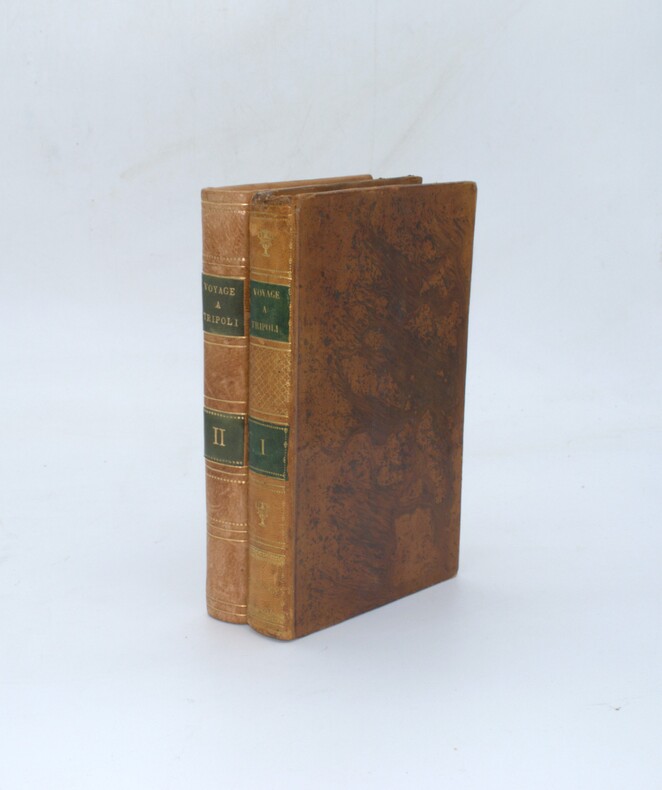
1819Best.-Nr. PHO-2364Paris, chez P. Mongie Ainé, 1819. 2 volumes in-8 (20,5x13cm), X- 392- 394 pp., 2 volumes reliés presque à l'identique pleine basane marbrée (de l'époque pour le premier volume, pastiche pour le second), dos lisse avec pièces de titre et tomaison vertes, défaut au titre tome 2, quelques rousseurs. 7 planches dont un frontispice et une carte dépliante dans une pochette en fin de volume du tome II, un plan de Tripoly en Barbarie (Nicolas de Fer, 1705 ?) dans une pochette au tome 1
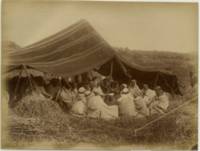
1900Best.-Nr. 145891900. Nineteenth century albumen photographs depicting Bedouin camp life in the Arabian desert during the period when early photography began documenting nomadic societies of the Middle East. European photographers and travelers working across the Ottoman and Arabian regions during the nineteenth century frequently recorded images of desert encampments tribal leaders and mounted riders as part of a broader photographic interest in documenting cultures associated with caravan routes pastoral nomadism and the social organization of Bedouin communities. These images present scenes of communal gathering and mounted travel central to Bedouin social and economic life. Two original albumen prints showing Bedouin encampment scenes. Circa nineteenth century. Each photograph measures approximately 8 x 10 inches. One image depicts a large group of Bedouin men assembled beneath a tent in an open desert plain covered with sparse grass suggesting a communal meeting or gathering within the camp. The second photograph captures five mounted horsemen their horses fully saddled speaking with an older Bedouin figure positioned outside a cluster of tents that form part of a larger encampment. The photographs document both the spatial layout of a Bedouin camp and the presence of mounted riders whose mobility was central to pastoral life and desert travel. Modern colonization of Middle East and North Africa was dominated by France Italy and Britain with France administering Algeria Morocco and Tunisia under varying forms of rule. Photographs of Bedouin communities produced during the nineteenth century formed part of a wider photographic record of the Middle East created by travelers military observers and early ethnographic photographers. Such images circulated in travel literature and photographic albums that introduced European audiences to the landscapes and social organization of the Arabian deserts. Visual documentation of Bedouin camps offers insight into the material culture of nomadic life including tent structures mounted transport and communal gathering practices that structured desert society. Light age toning and minor handling wear; overall very good condition. A clear pair of nineteenth century albumen photographs documenting Bedouin camp life. unknown
1900Best.-Nr. 145891900. Nineteenth century albumen photographs depicting Bedouin camp life in the Arabian desert during the period when early photography began documenting nomadic societies of the Middle East. European photographers and travelers working across the Ottoman and Arabian regions during the nineteenth century frequently recorded images of desert encampments tribal leaders and mounted riders as part of a broader photographic interest in documenting cultures associated with caravan routes pastoral nomadism and the social organization of Bedouin communities. These images present scenes of communal gathering and mounted travel central to Bedouin social and economic life. Two original albumen prints showing Bedouin encampment scenes. Circa nineteenth century. Each photograph measures approximately 8 x 10 inches. One image depicts a large group of Bedouin men assembled beneath a tent in an open desert plain covered with sparse grass suggesting a communal meeting or gathering within the camp. The second photograph captures five mounted horsemen their horses fully saddled speaking with an older Bedouin figure positioned outside a cluster of tents that form part of a larger encampment. The photographs document both the spatial layout of a Bedouin camp and the presence of mounted riders whose mobility was central to pastoral life and desert travel. Modern colonization of Middle East and North Africa was dominated by France Italy and Britain with France administering Algeria Morocco and Tunisia under varying forms of rule. Photographs of Bedouin communities produced during the nineteenth century formed part of a wider photographic record of the Middle East created by travelers military observers and early ethnographic photographers. Such images circulated in travel literature and photographic albums that introduced European audiences to the landscapes and social organization of the Arabian deserts. Visual documentation of Bedouin camps offers insight into the material culture of nomadic life including tent structures mounted transport and communal gathering practices that structured desert society. Light age toning and minor handling wear; overall very good condition. A clear pair of nineteenth century albumen photographs documenting Bedouin camp life. unknown books
Best.-Nr. 26085P., Seghers, 1967, in-4, broché, 58 p. Édition originale. 1/400 ex. sur bouffant. Bel envoi autographe signé à Mado et Roland SIG. Exemplaire unique enrichi de 10 collages originaux, la plupart en couleurs, de Roland SIG.
1899Pages 562-676. Features: In the Khalifa's Clutches - part IV of Charles Neufeld's ordeal; Impressions of Pekin - sensational photo-illustrated article; Two Loves Affairs, and How They Ended - Colonel Hervey Tryon falls headlong into a deep well of garbag; The Hook-Swinging Ceremony as I Saw It - Rev. Joshua Knowles describes a South Indian pagan festival in which devotees have hook placed in their flesh before they are swung into the air at the end of long poles - with photos; A Desperate Plight - travails of Captain H.V. Barclay in the arid Australian interior; The Great Grottos of Han - photo-illustrated article on the marvelous caverns near Han-sur-Lesse in the Belgian Ardennes; Held by An Octopus - Herbert Perkins explains how he was grabbed from out of the water; Shooting the Reversible Falls - photo-illustrated story from St. John, New Brunswick involving Xavier Francis and Louis Mitchell; Life in an Italian Village (near Pallanza); On the War-Path with Redskins - a retaliatory raid of natives is recounted by J.W. Schultz, a Rocky Mountain guide who was married to a Blackfoot and lived among them in Montana; The Fantastic Carnival at Pangau in a remote part of the Austrian Tyrol; Twenty-Seven Days in an Open Boat - Part II - the castaways are finally rescued, but in ghastly condition; Naia, The Witch of Rochefort-en-Terre, in Brittany - photo-illustrated article; Through Italy in Bedouin Dress - photo-illustrated account; One Thousand Miles on Mule-Back - Part I of this photo-illustrated article of the amazing journey of Mabel Penniman from New York to London via Central and South Amerca; The Bogus "Rush" at Coolgardie - photo-illustrated of a fake gold rush in Australia as told by John Marshalll of Kalgoorlie; Photo of women coal heavers in Dresden; Full-page photo from Kelsey Creek, California showing a river of fish three feet deep - with no water!; Photo of Tunisian camel fight; and more. Average external wear and soiling. Few pencil markings. Binding intact. A sound vintage copy of this excellent issue. Book
Best.-Nr. 7325Paris, Seghers, 1967. In-4 (200 x 260 mm), 57 pp., 2 ff. n. ch. En feuilles, couverture ocre imprimée d'éditeur à rabats, chemise en demi-chagrin marron, titre et auteur en long au dos, étui bordé (P. Goy & C. Vilaine).