5 820 résultats
2013réf. x-0415608619Routledge 2013. Hardcover. New. 255 pages. 9.50x6.25x0.75 inches. Routledge hardcover
réf. 27727833-nnew. unknown
1996réf. SONG1550374672Brand: Annick Press 1996-03-01. hardcover. Used: Good. 9.00x0.25x11.25. Buy with confidence. Excellent Customer Service & Return policy. Brand: Annick Press hardcover
2022réf. BN561091Taylor & Francis Ltd 2022. 2022. Hardcover. Geographies of Food and Power Geographies of Food and Power Amy University of Georgia USA Trauger Taylor & Francis Ltd hardcover
1856Original publishers boards, 12mo, 132 pages. Singerman 1440. DE RENNE II, p.579. Milberg nr. 58. Uncommon work by this Jewish author who would go on to become a Confederate Officer during the Civil War. Levy (1827 - 1888) . Was also editor in chief of the Savannah Daily Advertiser, and in April 1868 Levy criticized in print the political views of a certain Dr. James Waring. Waring, apparently thin-skinned, demanded a duel. Levy obliged, but luckily friends were able to defuse the situation (Encyclopedia of Southern Jewish Communities, 2013) . Logan was a popular actress of the mid-19th Century, daughter to Cornelius Logan, a comic actor & playwriter who served as her manager until his death in 1853. While Logan was born in Philadelphia, she made her name in the antebellum South, with many lucrative engagements in cities such as Savannah, where she, no doubt, inspired Mr. Levy to write this work in her honor. Very Good Condition. (amr-45-23B) xx
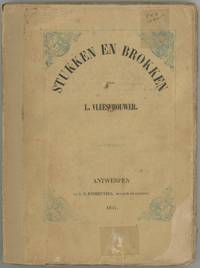
1851réf. BK0174Antwerpen: J. E. Rysheuvels 1851. 312 pp. 12mo. Original printed wrappers. Binding tight. Text in Dutch. Good plus with a chip to the front wrapper some edge wear tape repairs and light soiling. An uncommon collection of essays sketches and travel narratives by the Belgian journalist Lodewijk Vleeschouwer 1810-1866 including approximately 150 pages devoted to his experiences in the United States between 1828 and 1834. Vleeschouwer traveled through New York Philadelphia Charleston and Savannah eventually finding employment teaching languages and philology at the Chatham Academy and Savannah Lyceum in Georgia. He later returned to Belgium where he became a prominent journalist and satirist. The American section titled Brokken uit eene reize door de Vereenigde Staten van Noord-Amerika "Fragments from a Journey through the United States of North America" begins with a journey from New York to Philadelphia. Vleeschouwer describes a fierce competition between two steamboat companies which reduced fares to nothing and eventually offered passengers free meals before one company abandoned the route. He recounts a collision between competing vessels and gives observations on Philadelphia's streets public works boarding houses and social customs. Other chapters describe American Sunday observances Quaker meetings Methodist preaching and the treatment of Black servants including a confrontation involving a white guest and a Black servant over the biblical descendants of Cain and Abel. The later American chapters concern Vleeschouwer's residence in Savannah including an extended account of a dispute between two young men following a horse race. The quarrel begins when one man who is Jewish takes offense at the name "Shylock" leading to a challenge to a duel and subsequent legal proceedings. Vleeschouwer concludes with an account of his return voyage to Europe aboard the Olive-branch departing Savannah for Liverpool. The remainder of the volume consists of satirical sketches speeches literary criticism and essays including a discussion of phrenology. A relatively unusual Dutch-language account of American life during the Jacksonian period written by a European visitor who spent several years living and working in the United States. Howes V135. . J. E. Rysheuvels unknown
1851réf. BK0174Antwerpen: J. E. Rysheuvels 1851. 312 pp. 12mo. Original printed wrappers. Binding tight. Text in Dutch. Good plus with a chip to the front wrapper some edge wear tape repairs and light soiling. An uncommon collection of essays sketches and travel narratives by the Belgian journalist Lodewijk Vleeschouwer 1810-1866 including approximately 150 pages devoted to his experiences in the United States between 1828 and 1834. Vleeschouwer traveled through New York Philadelphia Charleston and Savannah eventually finding employment teaching languages and philology at the Chatham Academy and Savannah Lyceum in Georgia. He later returned to Belgium where he became a prominent journalist and satirist. The American section titled Brokken uit eene reize door de Vereenigde Staten van Noord-Amerika "Fragments from a Journey through the United States of North America" begins with a journey from New York to Philadelphia. Vleeschouwer describes a fierce competition between two steamboat companies which reduced fares to nothing and eventually offered passengers free meals before one company abandoned the route. He recounts a collision between competing vessels and gives observations on Philadelphia's streets public works boarding houses and social customs. Other chapters describe American Sunday observances Quaker meetings Methodist preaching and the treatment of Black servants including a confrontation involving a white guest and a Black servant over the biblical descendants of Cain and Abel. The later American chapters concern Vleeschouwer's residence in Savannah including an extended account of a dispute between two young men following a horse race. The quarrel begins when one man who is Jewish takes offense at the name "Shylock" leading to a challenge to a duel and subsequent legal proceedings. Vleeschouwer concludes with an account of his return voyage to Europe aboard the Olive-branch departing Savannah for Liverpool. The remainder of the volume consists of satirical sketches speeches literary criticism and essays including a discussion of phrenology. A relatively unusual Dutch-language account of American life during the Jacksonian period written by a European visitor who spent several years living and working in the United States. Howes V135. . J. E. Rysheuvels unknown books
1810réf. 32385Milledgeville Ga. 1810. The acts of the Georgia assembly for the relevant session including legislation on the lottery county management and personal petitions. Rare. OCLC locates only four copies. Gathered signatures stitched. Moderate edge wear. Heavy foxing minor dampstaining occasional minor tears. Good. DE RENNE I p.340. SHAW & SHOEMAKER 20205. OCLC 10269041 unknown
1810réf. 32385Milledgeville Ga. 1810. The acts of the Georgia assembly for the relevant session including legislation on the lottery county management and personal petitions. Rare. OCLC locates only four copies. Gathered signatures stitched. Moderate edge wear. Heavy foxing minor dampstaining occasional minor tears. Good. DE RENNE I p.340. SHAW & SHOEMAKER 20205. OCLC 10269041 unknown books
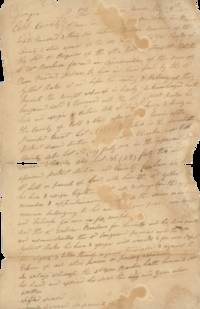
1836réf. List2949Clarke Cobb and Harris Counties Georgia 1836. Three documents. One four-page document measuring 5 x 8 ¾ inches likely previously a single sheet; water stained with some tearing at folds very good. One double-sided document measuring 8 x 10 inches; water stained and folded with large tears at folds possibly with part missing good. One single-sided document measuring 7 ¾ x 12 ¾ inches. Water stained and folded with large tears at folds much damage to margins good. Overall good. Three legal documents in which William Barber buys and sells plots of land shortly following the establishment of Cobb County. In 1834 and 1835 Barber buys plots from John Gann and Elizabeth Kennon for $100 each and in 1836 sells land to Gilbert Rake for $500. Gann is possibly the plantation owner Cobb County pioneer and State Senator. These land contracts date to a time at which a small number of Cherokee—whose territory included present-day Cobb County—had voluntarily left the area following the Indian Removal Act of 1830 while a majority had not done so. The Indian Removal Act required Indigenous people east of the Mississippi River to cede their land to Euro-Americans and move west of it to so-called Indian Territory now Oklahoma. In 1835 the US government met with a group of Cherokee claiming to represent the tribe in New Echota Georgia and signed a removal treaty. When the majority of the tribe viewing the treaty as illegitimate refused to move voluntarily the US government sent the military to intervene. Of interest to historians of Cobb County and land dealings between its early Euro-American residents during the removal of its Indigenous population. unknown
1836réf. List2949Clarke Cobb and Harris Counties Georgia 1836. Three documents. One four-page document measuring 5 x 8 ¾ inches likely previously a single sheet; water stained with some tearing at folds very good. One double-sided document measuring 8 x 10 inches; water stained and folded with large tears at folds possibly with part missing good. One single-sided document measuring 7 ¾ x 12 ¾ inches. Water stained and folded with large tears at folds much damage to margins good. Overall good. Three legal documents in which William Barber buys and sells plots of land shortly following the establishment of Cobb County. In 1834 and 1835 Barber buys plots from John Gann and Elizabeth Kennon for $100 each and in 1836 sells land to Gilbert Rake for $500. Gann is possibly the plantation owner Cobb County pioneer and State Senator. These land contracts date to a time at which a small number of Cherokee—whose territory included present-day Cobb County—had voluntarily left the area following the Indian Removal Act of 1830 while a majority had not done so. The Indian Removal Act required Indigenous people east of the Mississippi River to cede their land to Euro-Americans and move west of it to so-called Indian Territory now Oklahoma. In 1835 the US government met with a group of Cherokee claiming to represent the tribe in New Echota Georgia and signed a removal treaty. When the majority of the tribe viewing the treaty as illegitimate refused to move voluntarily the US government sent the military to intervene. Of interest to historians of Cobb County and land dealings between its early Euro-American residents during the removal of its Indigenous population. unknown books
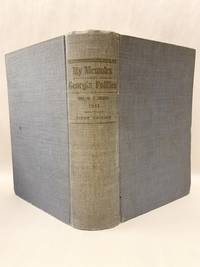
1911réf. 51933Atlanta Ga: Self Published 1911. First Edition. Hardcover. Very good. 680p quarto illustrated. "It was her husband's request that she should collect qnd publish the story of his Congressional and Legislative life as connected with Georgia politics from 1874 during more than 20 years of public service in State and National Legislature" Salley Eugenia Brown's copy with her ownership signature on the front fly leaf. Brown 1862-1942 Miss Brown the daughter of Joseph E Brown Civil War Governor of Georgia. Martha "Pat" Simmons Garroway of Sargentville Maine related the story of Sally as a little girl watching General Sherman's troops march through Atlanta. Later she summered in Sargentville Mine and had a house at the end of Caterpillar Hill Road where it intersects with Reach Road. Inner hinges cracked but a surprisingly very good copy. Self Published hardcover
2008réf. 42304Weider History Group. Very Good with no dust jacket. 2008. Hardcover. Red Cloth bound very good plus copies 12 vol. In 16 books Book #3 and Book #12 covers are slightly concave slightly bowed due to being stored pages down otherwise copies are in very good bright condition ; 6.5 x 9 . Weider History Group hardcover
2002réf. DADAX0367075237Routledge 2020-02-13. 1. hardcover. New. 7.25x1.00x9.50. Buy with confidence. Excellent Customer Service & Return policy. Routledge hardcover
réf. 1835863-nnew. unknown
2004réf. DADAX0789019469Routledge 2004-10-13. 1. hardcover. New. 6.06x0.73x8.86. Buy with confidence. Excellent Customer Service & Return policy. Routledge hardcover
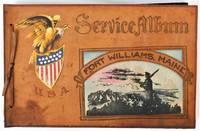
1934réf. 189891934. Photograph album 1934-1940 documenting the service of a U.S. Army soldier stationed at Fort Benning Georgia; Fort Williams Maine; and additional locations across the northeastern United States Many photos captioned with names of fellow soldiers friends and placenames. This Album has relevance to the study of interwar military life mechanization and training practices prior to American entry into the Second World War. The images include multiple views of tanks such as the Mark VIII Renault Ford 3-ton and Christie models reflecting the transitional development of armored warfare during the interwar period. Scenes at Doughboy Stadium at Fort Benning evoke the continued presence of World War I memory within military culture while the broader sequence of photographs captures routine service camaraderie and movement across training posts. Captioned images identify fellow soldiers and locations and autograph pages at the beginning of the album preserve personal inscriptions humor and social connections within the unit. Additional photographs include landscapes from New York Vermont and Maine as well as personal images of acquaintances situating the soldier's experience within both military and civilian contexts. Photograph album containing 149 black and white silver gelatin photographs most measuring approx 2.5 x 3.5 inches with a few larger prints including examples measuring approximately 7 x 5 inches. The photographs are mounted in a suede-bound "Service Album" measuring approximately 11 x 7 inches with many images captioned in manuscript identifying individuals and locations. The content includes military equipment soldiers group portraits training environments and personal snapshots reflecting both formal and informal aspects of Army life during the late 1930s. The 149 photographs are mounted in the album with minimal losses; pages generally well preserved. Light wear consistent with handling; overall very good condition. A cohesive visual record of U.S. Army service and evolving military technology in the years immediately preceding World War II. unknown
1934réf. 189891934. Photograph album 1934-1940 documenting the service of a U.S. Army soldier stationed at Fort Benning Georgia; Fort Williams Maine; and additional locations across the northeastern United States Many photos captioned with names of fellow soldiers friends and placenames. This Album has relevance to the study of interwar military life mechanization and training practices prior to American entry into the Second World War. The images include multiple views of tanks such as the Mark VIII Renault Ford 3-ton and Christie models reflecting the transitional development of armored warfare during the interwar period. Scenes at Doughboy Stadium at Fort Benning evoke the continued presence of World War I memory within military culture while the broader sequence of photographs captures routine service camaraderie and movement across training posts. Captioned images identify fellow soldiers and locations and autograph pages at the beginning of the album preserve personal inscriptions humor and social connections within the unit. Additional photographs include landscapes from New York Vermont and Maine as well as personal images of acquaintances situating the soldier's experience within both military and civilian contexts. Photograph album containing 149 black and white silver gelatin photographs most measuring approx 2.5 x 3.5 inches with a few larger prints including examples measuring approximately 7 x 5 inches. The photographs are mounted in a suede-bound "Service Album" measuring approximately 11 x 7 inches with many images captioned in manuscript identifying individuals and locations. The content includes military equipment soldiers group portraits training environments and personal snapshots reflecting both formal and informal aspects of Army life during the late 1930s. The 149 photographs are mounted in the album with minimal losses; pages generally well preserved. Light wear consistent with handling; overall very good condition. A cohesive visual record of U.S. Army service and evolving military technology in the years immediately preceding World War II. unknown books
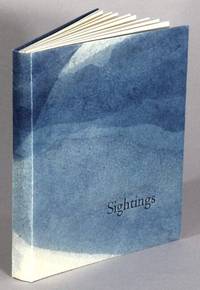
2010réf. 68905Place of publication not identified: Artichoke Press / Ephemeral Press January 2010. Edition limited to 35 copies this no. 31; 6" x 5" 10 interleaved bifolia; Layered Indigo Day a handmade flax sheet by Cave Paper forms the cover of a non-adhesive tab and fold binding. The book block is hand sewn comprised of textured Domestic Etching and interleaved Thai Kozo sheets. The text is set in 12 pt. Optima" colophon. Stitching becoming a little loose else fine. "Poems & illustrations: Georgia A. Greeley; book design: Sue Bjerke." Denver and Hennepin County in OCLC. Artichoke Press / Ephemeral Press, January unknown
2010réf. 68905Place of publication not identified: Artichoke Press / Ephemeral Press January 2010. Edition limited to 35 copies this no. 31; 6" x 5" 10 interleaved bifolia; Layered Indigo Day a handmade flax sheet by Cave Paper forms the cover of a non-adhesive tab and fold binding. The book block is hand sewn comprised of textured Domestic Etching and interleaved Thai Kozo sheets. The text is set in 12 pt. Optima" colophon. Stitching becoming a little loose else fine. "Poems & illustrations: Georgia A. Greeley; book design: Sue Bjerke." Denver and Hennepin County in OCLC. Artichoke Press / Ephemeral Press, January unknown books
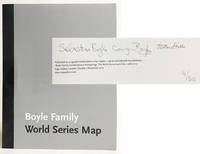
2013réf. 021884Vigo Gallery London 2013. Book. Fair. Wrappers. Signed by the Artists. 100 pages. Folio sized paperback. From a limited edition of 30 this is number 4 signed in pencil by the three artists who collectively make up the Boyle Family. There is a deep vertical crease near the center of the book near the spine with some minimal shelfwear to the edges and some spots of surface loss possibly insect damage on the back cover. But inside the pages are clean and free of markings. Published to coincide with the exhibition held in October/November 2013 this artist book has only an introductory text in English with facsimile excerpts selected randomly from the artists' monumental World Series Map showing the 1000 sites that make up the series. Beautifully printed. Vigo Gallery, London Paperback
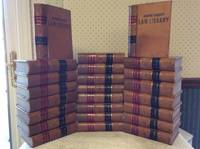
1847réf. 1233456Georgia 1847. 1st Edition. Leather bound. Fair. A complete run of the first 24 volumes of the State of Georgia's offical law reports. FIRST EDITIONS FIRST PRINTINGS OF THESE RARE PRE-CIVIL WAR GEORGIA IMPRINTS. Vol. I was published in New York but Vol. II was published in Savannah Vols. 3-20 in Athens GA and Vols. 21-24 in Columbus GA. The set is bound in matching leather but some bindings are damaged. Each volume has a law library name stamped on the covers; the front boards of Vols. I and VI are detached; the spines of Vols. I IX and XX are torn; most volumes have a strip of brown cloth tape across the top of the spine. ATTENTION: many bindings are fragile so one can expect other covers to detach. Other than some very minor foxing scattered throughout the set the interior pages are clean tight and unmarked. Offered as-is and no returns accepted. Buyer should understand they may need to rebind these books. These reports on various law cases were standard volumes in Georgia courts but the vast majority were destroyed during the Civil War As with other works from this era antebellum printings from Georgia are today rarely found. unknown
1999réf. BN421123Klett-Cotta 1999. 1999. Das therapeutische Gespräch : der gleichberechtigte Dialog als Perspektive der Veränderung Das therapeutische Gespräch : der gleichberechtigte Dialog als Perspektive der Veränderung Harlene Anderson. Aus dem amerikan. Engl. von Georgia Hanenberg Klett-Cotta unknown
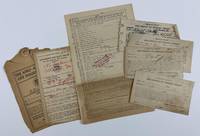
1949réf. 5007Atlanta Ga 1949. Very good. Eight printed documents most completed in manuscript. Some folds mostly minor dust-soiling wear and creasing moderate toning and some unobtrusive chipping. An interesting group of documents issued from the Afro-American Life Insurance Company's Atlanta District during the Jim Crow period. The collection includes a Member's Receipt Book issued by an agent of the company in La Grange Georgia with twenty manuscript entries in pencil collecting weekly insurance dues for a policy holder named Minnie B. Reed over the course of a few months in 1949; a small folder issued to Reed presumably to hold her receipt book; four loose partially-printed receipts for premiums paid by a man named Paul Ealy also in 1949 completed in manuscript weekly payments for life insurance for both of these policy holders was twenty-five cents; and two blank application forms for the company's insurance service. The application forms include the company's home office address in Jacksonville Florida and indicates the company's expansion through the use of several ink stamps applied to most of the documents indicating the material emanated from the company's Atlanta office. The present grouping provides an interesting snapshot of insight into the company's activities costs and reach during the period just after World War II. "Florida's First African-American Insurance Company -1901-2001. The Afro-American Insurance Company formerly the Afro-American Industrial and Benefits Association was founded in 1901 to provide affordable health insurance and death benefits to the state's African-Americans. Founded by the Reverend E.J. Gregg E.W. Latson Abraham Lincoln Lewis A.W. Price Dr. Arthur W. Smith J.F. Valentine and the Reverend J. Melton Waldron the Afro's first office at 14 Ocean Street was destroyed by the great Jacksonville Fire two months after it opened on May 3 1901. It then moved to 621 Florida Avenue the home of treasurer and future president Abraham Lincoln Lewis 1865-1947. From their next home office at 105 E. Union Street the company wrote millions of dollars of insurance policies and started district offices in Georgia Alabama Louisiana and Texas." - Historical marker at the site of the company's original location in Jacksonville. unknown
1949réf. 5007Atlanta Ga 1949. Very good. Eight printed documents most completed in manuscript. Some folds mostly minor dust-soiling wear and creasing moderate toning and some unobtrusive chipping. An interesting group of documents issued from the Afro-American Life Insurance Company's Atlanta District during the Jim Crow period. The collection includes a Member's Receipt Book issued by an agent of the company in La Grange Georgia with twenty manuscript entries in pencil collecting weekly insurance dues for a policy holder named Minnie B. Reed over the course of a few months in 1949; a small folder issued to Reed presumably to hold her receipt book; four loose partially-printed receipts for premiums paid by a man named Paul Ealy also in 1949 completed in manuscript weekly payments for life insurance for both of these policy holders was twenty-five cents; and two blank application forms for the company's insurance service. The application forms include the company's home office address in Jacksonville Florida and indicates the company's expansion through the use of several ink stamps applied to most of the documents indicating the material emanated from the company's Atlanta office. The present grouping provides an interesting snapshot of insight into the company's activities costs and reach during the period just after World War II. "Florida's First African-American Insurance Company -1901-2001. The Afro-American Insurance Company formerly the Afro-American Industrial and Benefits Association was founded in 1901 to provide affordable health insurance and death benefits to the state's African-Americans. Founded by the Reverend E.J. Gregg E.W. Latson Abraham Lincoln Lewis A.W. Price Dr. Arthur W. Smith J.F. Valentine and the Reverend J. Melton Waldron the Afro's first office at 14 Ocean Street was destroyed by the great Jacksonville Fire two months after it opened on May 3 1901. It then moved to 621 Florida Avenue the home of treasurer and future president Abraham Lincoln Lewis 1865-1947. From their next home office at 105 E. Union Street the company wrote millions of dollars of insurance policies and started district offices in Georgia Alabama Louisiana and Texas." - Historical marker at the site of the company's original location in Jacksonville. unknown books