Georgia CarrBiblio.com

5 788 résultats
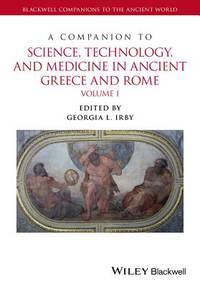
réf. Bloomsbury-9781350461079Bloomsbury Academic. Hardback. New. 236 pages Bloomsbury Academic hardcover
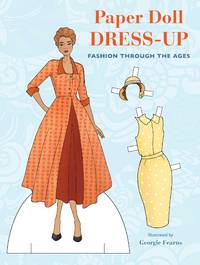
2013réf. DADAX1908862734CICO Books 2013-04-11. paperback. New. 10.85x0.40x8.20. Buy with confidence. Excellent Customer Service & Return policy. CICO Books paperback
réf. BN529313Actar. Stalking Detroit Stalking Detroit Daskalakis Georgia Waldheim Charles Young Jason Actar unknown
réf. 24811734-nnew. unknown
réf. Bloomsbury-9781784538293Bloomsbury Academic. Hardback. New. 296 pages Bloomsbury Academic hardcover
réf. Bloomsbury-9781784538293Bloomsbury Academic. Hardback. New. 296 pages Bloomsbury Academic hardcover
réf. Bloomsbury-9781350155848Bloomsbury Academic. Hardback. New. 312 pages Bloomsbury Academic hardcover
réf. Bloomsbury-9781350155848Bloomsbury Academic. Hardback. New. 312 pages Bloomsbury Academic hardcover
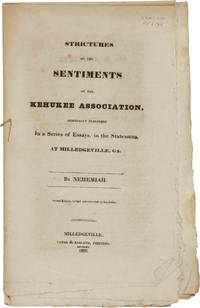
1829réf. 32413Milledgeville: Camak & Ragland 1829. Self-styled second edition after the first of the same year with corrections. A series of combative essays lambasting the Kehukee Association one of the largest Baptist societies in the region. Published under the pseudonym of "Nehemiah." A scarce Georgia imprint. OCLC locates only eight copies of the first edition. Not in De Renne. Gathered signatures stitched. Minute edge wear. Overall internally clean. Very good unopened and untrimmed. OCLC 13070208. unknown
1829réf. 32413Milledgeville: Camak & Ragland 1829. Self-styled second edition after the first of the same year with corrections. A series of combative essays lambasting the Kehukee Association one of the largest Baptist societies in the region. Published under the pseudonym of "Nehemiah." A scarce Georgia imprint. OCLC locates only eight copies of the first edition. Not in De Renne. Gathered signatures stitched. Minute edge wear. Overall internally clean. Very good unopened and untrimmed. OCLC 13070208. unknown books
1944réf. 28922AB1944. No.8 / 200 copies of the original limited edition. Dublin The Cuala Press 1944 September 1944. Octavo. 58 pages. Original Hardcover. Inscribed by George Yeats on the front free endpaper: "Mrs. Hempel from George Yeats April 1944". This has to be of course "April 1945". The impossibility of signing/inscribing a book in April 1944 if it was only published in September 1944 is easily explained with the classic everyday-mistake of still writing the previous year in the first few months of the following year. A stunning association. The signature and inscription is a solid match to George Yeats' autographs in her later hand and William Butler Yeats and George Yeats were frequent visitors to the Hempel's in Dublin. In addition the low number of the edition 8/200 suggests this being one of the reference copies given to George Yeats who contributed heavily to the volume and even added an explanatory note in print verso the titlepage. This copy is near fine bound in the publisher's quarter buckram over yellow paper-covered boards. The books pages remained unopened. Eva Hempel's husband Eduard Hempel is one of the most controversial figures in modern Irish history excoriated by some as 'Hitler's man' defended by others such as the country's first President Eamon De Valera. Certainly Hempel presented William Butler Yeats in 1938 with a copy of 'Germany Speaks' whose inscription described an 'unforgettable afternoon' spent together by Yeats and Hempel. Eduard Hempel and his wife were accepted socialites in the Dublin world of World War II famously receiving a condolence call by de Valera upon the death of Hitler. Eduard Hempel and his wife Eva were granted asylum in Ireland after world war II and stayed way beyond the end of World War II. Alan Wade 207 / Liam Miller 75 hardcover
2002réf. DADAX1557045291Brand: Newmarket Press 2002-04-11. paperback. New. 5.75x0.75x6.50. Buy with confidence. Excellent Customer Service & Return policy. Brand: Newmarket Press paperback
2004réf. x-0789019469Haworth Pr Inc 2004. Hardcover. New. 1st edition. 180 pages. 9.00x6.50x0.75 inches. Haworth Pr Inc hardcover
2013réf. x-0415608619Routledge 2013. Hardcover. New. 255 pages. 9.50x6.25x0.75 inches. Routledge hardcover
1995réf. DADAX1884822290BLACK DOG & LEVENTHAL PUBLISHERS 1995-01-10. hardcover. New. 11.25x1.00x14.50. Buy with confidence. Excellent Customer Service & Return policy. BLACK DOG & LEVENTHAL PUBLISHERS hardcover
réf. 27727833-nnew. unknown
1996réf. SONG1550374672Brand: Annick Press 1996-03-01. hardcover. Used: Good. 9.00x0.25x11.25. Buy with confidence. Excellent Customer Service & Return policy. Brand: Annick Press hardcover
2022réf. BN561091Taylor & Francis Ltd 2022. 2022. Hardcover. Geographies of Food and Power Geographies of Food and Power Amy University of Georgia USA Trauger Taylor & Francis Ltd hardcover
1856Original publishers boards, 12mo, 132 pages. Singerman 1440. DE RENNE II, p.579. Milberg nr. 58. Uncommon work by this Jewish author who would go on to become a Confederate Officer during the Civil War. Levy (1827 - 1888) . Was also editor in chief of the Savannah Daily Advertiser, and in April 1868 Levy criticized in print the political views of a certain Dr. James Waring. Waring, apparently thin-skinned, demanded a duel. Levy obliged, but luckily friends were able to defuse the situation (Encyclopedia of Southern Jewish Communities, 2013) . Logan was a popular actress of the mid-19th Century, daughter to Cornelius Logan, a comic actor & playwriter who served as her manager until his death in 1853. While Logan was born in Philadelphia, she made her name in the antebellum South, with many lucrative engagements in cities such as Savannah, where she, no doubt, inspired Mr. Levy to write this work in her honor. Very Good Condition. (amr-45-23B) xx
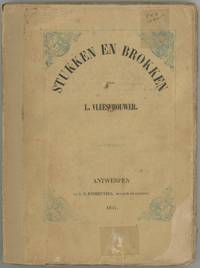
1851réf. BK0174Antwerpen: J. E. Rysheuvels 1851. 312 pp. 12mo. Original printed wrappers. Binding tight. Text in Dutch. Good plus with a chip to the front wrapper some edge wear tape repairs and light soiling. An uncommon collection of essays sketches and travel narratives by the Belgian journalist Lodewijk Vleeschouwer 1810-1866 including approximately 150 pages devoted to his experiences in the United States between 1828 and 1834. Vleeschouwer traveled through New York Philadelphia Charleston and Savannah eventually finding employment teaching languages and philology at the Chatham Academy and Savannah Lyceum in Georgia. He later returned to Belgium where he became a prominent journalist and satirist. The American section titled Brokken uit eene reize door de Vereenigde Staten van Noord-Amerika "Fragments from a Journey through the United States of North America" begins with a journey from New York to Philadelphia. Vleeschouwer describes a fierce competition between two steamboat companies which reduced fares to nothing and eventually offered passengers free meals before one company abandoned the route. He recounts a collision between competing vessels and gives observations on Philadelphia's streets public works boarding houses and social customs. Other chapters describe American Sunday observances Quaker meetings Methodist preaching and the treatment of Black servants including a confrontation involving a white guest and a Black servant over the biblical descendants of Cain and Abel. The later American chapters concern Vleeschouwer's residence in Savannah including an extended account of a dispute between two young men following a horse race. The quarrel begins when one man who is Jewish takes offense at the name "Shylock" leading to a challenge to a duel and subsequent legal proceedings. Vleeschouwer concludes with an account of his return voyage to Europe aboard the Olive-branch departing Savannah for Liverpool. The remainder of the volume consists of satirical sketches speeches literary criticism and essays including a discussion of phrenology. A relatively unusual Dutch-language account of American life during the Jacksonian period written by a European visitor who spent several years living and working in the United States. Howes V135. . J. E. Rysheuvels unknown
1851réf. BK0174Antwerpen: J. E. Rysheuvels 1851. 312 pp. 12mo. Original printed wrappers. Binding tight. Text in Dutch. Good plus with a chip to the front wrapper some edge wear tape repairs and light soiling. An uncommon collection of essays sketches and travel narratives by the Belgian journalist Lodewijk Vleeschouwer 1810-1866 including approximately 150 pages devoted to his experiences in the United States between 1828 and 1834. Vleeschouwer traveled through New York Philadelphia Charleston and Savannah eventually finding employment teaching languages and philology at the Chatham Academy and Savannah Lyceum in Georgia. He later returned to Belgium where he became a prominent journalist and satirist. The American section titled Brokken uit eene reize door de Vereenigde Staten van Noord-Amerika "Fragments from a Journey through the United States of North America" begins with a journey from New York to Philadelphia. Vleeschouwer describes a fierce competition between two steamboat companies which reduced fares to nothing and eventually offered passengers free meals before one company abandoned the route. He recounts a collision between competing vessels and gives observations on Philadelphia's streets public works boarding houses and social customs. Other chapters describe American Sunday observances Quaker meetings Methodist preaching and the treatment of Black servants including a confrontation involving a white guest and a Black servant over the biblical descendants of Cain and Abel. The later American chapters concern Vleeschouwer's residence in Savannah including an extended account of a dispute between two young men following a horse race. The quarrel begins when one man who is Jewish takes offense at the name "Shylock" leading to a challenge to a duel and subsequent legal proceedings. Vleeschouwer concludes with an account of his return voyage to Europe aboard the Olive-branch departing Savannah for Liverpool. The remainder of the volume consists of satirical sketches speeches literary criticism and essays including a discussion of phrenology. A relatively unusual Dutch-language account of American life during the Jacksonian period written by a European visitor who spent several years living and working in the United States. Howes V135. . J. E. Rysheuvels unknown books
1810réf. 32385Milledgeville Ga. 1810. The acts of the Georgia assembly for the relevant session including legislation on the lottery county management and personal petitions. Rare. OCLC locates only four copies. Gathered signatures stitched. Moderate edge wear. Heavy foxing minor dampstaining occasional minor tears. Good. DE RENNE I p.340. SHAW & SHOEMAKER 20205. OCLC 10269041 unknown
1810réf. 32385Milledgeville Ga. 1810. The acts of the Georgia assembly for the relevant session including legislation on the lottery county management and personal petitions. Rare. OCLC locates only four copies. Gathered signatures stitched. Moderate edge wear. Heavy foxing minor dampstaining occasional minor tears. Good. DE RENNE I p.340. SHAW & SHOEMAKER 20205. OCLC 10269041 unknown books
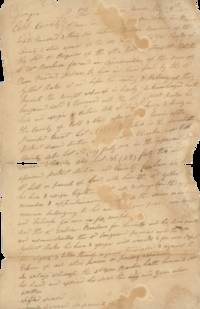
1836réf. List2949Clarke Cobb and Harris Counties Georgia 1836. Three documents. One four-page document measuring 5 x 8 ¾ inches likely previously a single sheet; water stained with some tearing at folds very good. One double-sided document measuring 8 x 10 inches; water stained and folded with large tears at folds possibly with part missing good. One single-sided document measuring 7 ¾ x 12 ¾ inches. Water stained and folded with large tears at folds much damage to margins good. Overall good. Three legal documents in which William Barber buys and sells plots of land shortly following the establishment of Cobb County. In 1834 and 1835 Barber buys plots from John Gann and Elizabeth Kennon for $100 each and in 1836 sells land to Gilbert Rake for $500. Gann is possibly the plantation owner Cobb County pioneer and State Senator. These land contracts date to a time at which a small number of Cherokee—whose territory included present-day Cobb County—had voluntarily left the area following the Indian Removal Act of 1830 while a majority had not done so. The Indian Removal Act required Indigenous people east of the Mississippi River to cede their land to Euro-Americans and move west of it to so-called Indian Territory now Oklahoma. In 1835 the US government met with a group of Cherokee claiming to represent the tribe in New Echota Georgia and signed a removal treaty. When the majority of the tribe viewing the treaty as illegitimate refused to move voluntarily the US government sent the military to intervene. Of interest to historians of Cobb County and land dealings between its early Euro-American residents during the removal of its Indigenous population. unknown
1836réf. List2949Clarke Cobb and Harris Counties Georgia 1836. Three documents. One four-page document measuring 5 x 8 ¾ inches likely previously a single sheet; water stained with some tearing at folds very good. One double-sided document measuring 8 x 10 inches; water stained and folded with large tears at folds possibly with part missing good. One single-sided document measuring 7 ¾ x 12 ¾ inches. Water stained and folded with large tears at folds much damage to margins good. Overall good. Three legal documents in which William Barber buys and sells plots of land shortly following the establishment of Cobb County. In 1834 and 1835 Barber buys plots from John Gann and Elizabeth Kennon for $100 each and in 1836 sells land to Gilbert Rake for $500. Gann is possibly the plantation owner Cobb County pioneer and State Senator. These land contracts date to a time at which a small number of Cherokee—whose territory included present-day Cobb County—had voluntarily left the area following the Indian Removal Act of 1830 while a majority had not done so. The Indian Removal Act required Indigenous people east of the Mississippi River to cede their land to Euro-Americans and move west of it to so-called Indian Territory now Oklahoma. In 1835 the US government met with a group of Cherokee claiming to represent the tribe in New Echota Georgia and signed a removal treaty. When the majority of the tribe viewing the treaty as illegitimate refused to move voluntarily the US government sent the military to intervene. Of interest to historians of Cobb County and land dealings between its early Euro-American residents during the removal of its Indigenous population. unknown books