5781 risultati
2007rif. 72714Hudson Hills Press. New. Hardcover. FREE UPGRADE to Courier/Priority Shipping Upon Request - IN STOCK AND IMMEDIATELY AVAILABLE FOR SHIPMENT - Flawless copy brand new pristine never opened -- Text in English. 136 pp. With 76 ills. 49 col. . 28 x 24 cm. -- with a bonus offer-- . 2007. 0943411491 . Hudson Hills Press hardcover
1993rif. 55113Gallery. New. Paperback. FREE UPGRADE to Courier/Priority Shipping Upon Request – – IN STOCK AND IMMEDIATELY AVAILABLE FOR SHIPMENT - Flawless copy brand new pristine never opened -- 19 works catalogued and illustrated in color -- with a bonus offer-- . 1993. Gallery paperback
1999rif. 68929Yale University Press. New. Hardcover. FREE UPGRADE to Courier/Priority Shipping Upon Request - IN STOCK AND IMMEDIATELY AVAILABLE FOR SHIPMENT - Flawless copy brand new pristine never opened -- 176 pp. With 149 ills. 77 col. . 29 x 24 cm. -- with a bonus offer--; 0.79 x 11.34 x 9.41 Inches . 1999. 0300079354 . Yale University Press hardcover
rif. 23832Athens GA: University of Georgia. As New. Paperback. FREE UPGRADE to Courier/Priority Shipping Upon Request - IN STOCK AND IMMEDIATELY AVAILABLE FOR SHIPMENT - AS NEW THE TEXT BLOCK IS PRISTINE CLEAN UNMARKED AND IN EXCELLENT CONDITION - -- clean and crisp tight and bright pages with no writing or markings to the text. -- with a bonus offer--; 012626-1; Classic Ground : Mid-Nineteenth-Century American Painting and the Italian Encounter - Georgia Museum of Art Athens ART EXHIBITION CATALOGUE . University of Georgia paperback
1997rif. 68928Harry N. Abrams Distribution . New. Hardcover. FREE UPGRADE to Courier/Priority Shipping Upon Request - IN STOCK AND IMMEDIATELY AVAILABLE FOR SHIPMENT - Flawless copy brand new pristine never opened -- 148 pp. With 81 ills. 37 x 28 cm. -- with a bonus offer--; 0.75 x 14.25 x 11.25 Inches . 1997. Harry N. Abrams (Distribution) hardcover
2012rif. 100021MNM Press. New. Hardcover. FREE UPGRADE to Courier/Priority Shipping Upon Request - IN STOCK AND IMMEDIATELY AVAILABLE FOR SHIPMENT - Flawless copy brand new pristine never opened -- 64 pp. ; 11 illus. -- with a bonus offer--; In 1977 Margaret Wood was a twenty-four-year-old living an ordinary life in Lincoln Nebraska. That year her life changed as she came to Abiquiu a remote village in northern New Mexico where she began a five-year stay as companion and caretaker to then eighty-nine year old Georgia O'Keeffe. There were no sign posts in the village in those years and few markers for a young woman managing the complex role as companion to a woman of O'Keeffe's stature who nonetheless was now dependent on others to maintain the independent life she had cultivated so fiercely. Growing and preparing food was one of O'Keeffe's greatest pleasures with the artist mentoring her young caregiver on the art of gardening and cooking. Wood and O'Keeffe often walked the red hills of Ghost Ranch in early evenings the place where the artist experienced true freedom. The artist had a reputation of living a secluded life but in fact enjoyed welcoming a host of visitors to her home. Wood shares anecdotes about these social exchanges along with a treasure trove of stories intimately shared. When Wood's father -- the photographer Myron Wood -- came to visit he asked for and received permission to photograph O'Keeffe. A dozen of these historic images published a decade later in the seminal publication O'Keeffe's Abiquiu are reproduced to complement Margaret Wood's quiet insights of life spent with O'Keeffe. . 2012. 0890135460 . MNM Press hardcover
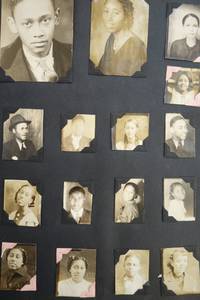
1950rif. List1810Mostly Atlanta 1950. Leatherette album measuring 12 x 9 inches. With over 225 images most 4 ½ x 2 ¾ inches. Very well preserved and nearly complete with three empty slots about fine overall. Near Fine. A compelling visual record of the childhood of Mable Williams of Atlanta Georgia a high school student at Booker T. Washington High School in Atlanta the first public high school for African-American students in the state. Williams graduated from Booker T. Washington High School in 1953 per a newspaper article included here and would attend Spelman College. Composed mostly of snapshot photographs of her friends and family as a group the album provides a visual record of a vibrant network of family and friends in Atlanta during the time period. The album begins with a picture showing her as a girl alongside a picture of a house perhaps hers and traces her life through early adulthood through snapshots and family photographs. We find records of Williams performing at the Greater Atlanta Music Festival in 1950 as a representative of her high school. A newspaper article laid in shows Williams in a newspaper showing her graduation picture and stating that she will attend Spelman College in Atlanta in September of 1953. Pictures show her in New York City visiting a friend at N.Y.U. She would later marry Billy Reid a local jazz musician from Atlanta and would remain active in the Spelman community after graduating in 1957. Overall a very well preserved document of the African-American community in Atlanta during the 1940s and 1950s. unknown
1950rif. List1810Mostly Atlanta 1950. Leatherette album measuring 12 x 9 inches. With over 225 images most 4 ½ x 2 ¾ inches. Very well preserved and nearly complete with three empty slots about fine overall. Near Fine. A compelling visual record of the childhood of Mable Williams of Atlanta Georgia a high school student at Booker T. Washington High School in Atlanta the first public high school for African-American students in the state. Williams graduated from Booker T. Washington High School in 1953 per a newspaper article included here and would attend Spelman College. Composed mostly of snapshot photographs of her friends and family as a group the album provides a visual record of a vibrant network of family and friends in Atlanta during the time period. The album begins with a picture showing her as a girl alongside a picture of a house perhaps hers and traces her life through early adulthood through snapshots and family photographs. We find records of Williams performing at the Greater Atlanta Music Festival in 1950 as a representative of her high school. A newspaper article laid in shows Williams in a newspaper showing her graduation picture and stating that she will attend Spelman College in Atlanta in September of 1953. Pictures show her in New York City visiting a friend at N.Y.U. She would later marry Billy Reid a local jazz musician from Atlanta and would remain active in the Spelman community after graduating in 1957. Overall a very well preserved document of the African-American community in Atlanta during the 1940s and 1950s. unknown books
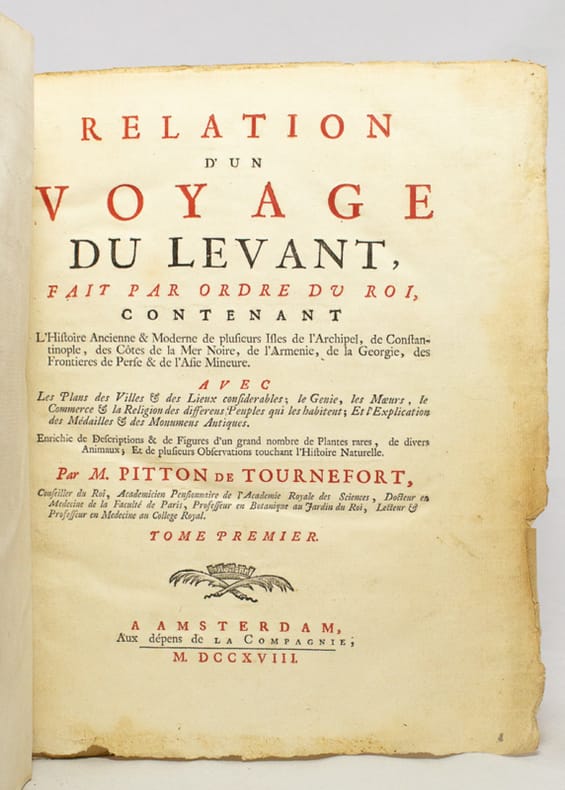
1718rif. 17654Amsterdam, Aux dépens de la Compagnie, 1718. Deux tomes en un volume in-4° de [28]-188; [2]-208-[16] pages, demi-basane blonde, dos lisse orné de filet doré, pièce de titre en papier cartonné, non rogné.
2004rif. 71619Torch Press. New. 2004. Hardcover. 0971640823 . FREE UPGRADE to Courier/Priority Shipping Upon Request - IN STOCK AND IMMEDIATELY AVAILABLE FOR SHIPMENT - Flawless copy brand new pristine never opened -- 240 pp. With 215 ills. 136 col. . 33 x 27 cm. -- with a bonus offer-- . Torch Press hardcover
2001rif. 1966New York: Hippocrene Books. New. 2001. Paperback. 0781808839 . FREE UPGRADE to Courier/Priority Shipping Upon Request - IN STOCK AND IMMEDIATELY AVAILABLE FOR SHIPMENT - -- with a bonus offer-- May be either: out of print OOP and extremely rare in this pristine condition; signed by author or contributor; or a first or special edition . Hippocrene Books paperback
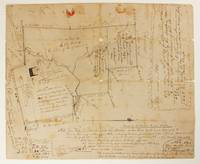
1825rif. 6154Augusta 1825. Good. Manuscript map 15.25 x 12.5 inches. Docketed on verso. Old folds. Wear and separation at several folds with minor loss light toning and foxing. Handsome map of the area around Augusta which is today in part the Augusta National Golf Course. The map indicates the 461 acres owned by Thomas Flournoy 1775-1857 a lawyer who served in the War of 1812 and later as an Indian Commissioner in Georgia. The map depicts a charming illustration of Flournoy's house near Rae's Creek also indicating water ways the Bath Spring a saw mill types of forest on the property as well as the details about purchases for several pieces of acreage from different individuals. The main tract 412 acres was purchased from Lucy Lamar. The key indicates a scale of ten chains to the inch while noting that "This platt is a tolerable representation of the Rae's Creek land belonging to Thomas Flournoy in the year 1822. but it is laid down by guess not depending on actual measurements. Nor is the scale correct." Docketing on the verso indicates the map was updated in 1825 to include additional land purchases and a further note on the recto is dated 1829. unknown
1825rif. 6154Augusta 1825. Good. Manuscript map 15.25 x 12.5 inches. Docketed on verso. Old folds. Wear and separation at several folds with minor loss light toning and foxing. Handsome map of the area around Augusta which is today in part the Augusta National Golf Course. The map indicates the 461 acres owned by Thomas Flournoy 1775-1857 a lawyer who served in the War of 1812 and later as an Indian Commissioner in Georgia. The map depicts a charming illustration of Flournoy's house near Rae's Creek also indicating water ways the Bath Spring a saw mill types of forest on the property as well as the details about purchases for several pieces of acreage from different individuals. The main tract 412 acres was purchased from Lucy Lamar. The key indicates a scale of ten chains to the inch while noting that "This platt is a tolerable representation of the Rae's Creek land belonging to Thomas Flournoy in the year 1822. but it is laid down by guess not depending on actual measurements. Nor is the scale correct." Docketing on the verso indicates the map was updated in 1825 to include additional land purchases and a further note on the recto is dated 1829. unknown books
1961rif. 150130Washington D.C: United States Government Printing Office 1961-1966. First editions of the complete set of Truman’s papers from 1945-1953. Imperial octavo eight volumes original publisher's cloth with gilt titles to the spine frontispieces. Presentation copy inscribed by President Truman in the fifth volume 1949 on the half-title page "Kindest regards to Georgia & Andy Gray from Harry S. Truman 3-2-65." The recipient Georgia Neese Clark Gray 1898-1995 was the first woman to hold the office of the Treasurer of the United States. Gray was active in the state Democratic Party and was elected Democratic National Committee member from Kansas in 1936 a position she held until 1964. She was an articulate and well-liked representative of the party and an early supporter of Harry S. Truman. It was this support that brought about her nomination as the first woman to be Treasurer of the United States a post she held from 1949 to 1953. In fine condition with light rubbing to the extremities. Housed in the original cardboard shipping boxes with each box sealed except for volume five 1949 and volume eight 1952-1953. After serving as a United States Senator from Missouri 1935–45 and briefly as Vice President 1945 Harry S. Truman succeeded to the presidency on April 12 1945 upon the death of Franklin D. Roosevelt. Germany surrendered on Truman's 61st birthday just a few weeks after he assumed the presidency but the war with Imperial Japan raged on and was expected to last at least another year. Truman approved the use of atomic bombs to end the fighting and to spare the millions of American and Japanese lives that would inevitably be lost in the planned invasion of Japan and Japanese-held islands in the Pacific. Although this decision and the numerous issues that arose as a result of it remain the subject of debate to this day it was one of the principal factors that forced Japan's unconditional surrender. Truman presided over an unexpected surge in economic prosperity as America sought readjustment after long years of depression and war. His presidency was a turning point in foreign affairs as the United States engaged in an internationalist foreign policy and renounced isolationism. Truman helped found the United Nations in 1945 issued the Truman Doctrine in 1947 to contain Communism and got the $13 billion Marshall Plan enacted to rebuild Western Europe. His political coalition was based on the white South labor unions farmers ethnic groups and traditional Democrats across the North. Truman was able to rally these groups of supporters during the 1948 presidential election and win a surprise victory that secured a presidential term in his own right. United States Government Printing Office hardcover
1999rif. C86677Yale University Press; Et Al. As New. Hardcover. FREE UPGRADE to Courier/Priority Shipping Upon Request - IN STOCK AND IMMEDIATELY AVAILABLE FOR SHIPMENT - Flawless copy brand new pristine never opened -- Corresponds to ASIN: B000IVEPX4 and ISBN: 0300081766. TWO 2 VOLUME SET each volume with 600 pages; well illustrated. Catalogue Raisonné Catalogue Raisonne Catalog Raisonnee Complete Works -- with a bonus offer-- - May be EITHER: out of print OOP and extremely rare in this pristine condition; signed by author or contributor; or a first or special edition; inquire for details; This two-volume slipcased catalogue raisonn_ presents in color more than 2000 works by Georgia O`Keeffe an artist whose creations placed her at the center of the ferment in early twentieth-century American art. The catalogue`s paintings drawings watercolors and sculpture display O`Keeffe`s innovative use of color and form and testify to her distinctive contribution to American modernism. . 1999. 0300081766 . Yale University Press; Et Al hardcover
1865rif. 64783Appomattox Court House VA: Union Army Printer at Clover Hill Tavern April 10th 1865. Oblong 8vo. 8 x 3.25 in. 1 sheet printed on recto decorative border at left hand margin header of Appomattox Court House VA and filled-in w/ ink MS by Captain Cook minor edgewear original fold creases now mounted and framed in archival matte board and Tru Vue Museum Glass w/ UV Protection recent black wood frame a VG exemplar. This extraordinary original document captures the aftermath of General Robert E. Lee’s surrender of the Army of Northern Virginia at Appomattox Court House VA April 9 1865 where Ensign J.F. Cook who was the 21st George Infantry Regiment’s Regimental Color Bearer and honored with surrendering with the colours of the Regiment at Appomattox Court House on April 9 1865 alongside the final remnants of Major General Bryan Grimes’ Division commanded at the time by Confederate Brigadier General Philip Cook. General Grant’s terms to Lee at the time included allowing enlisted men to return to their homes and this was one of the 28231 passes officially signed and issued to Confederate personnel from April 10 to April 15 1865. Union Army printers under Major General George Sharpe commandeered a portable local printing press set up at the Clover Hill Tavern nearby and printed over 30000 of the rectangular passes over several days. These passes kept Confederate soldiers safe from arrest or prosecution for treason or being branded as deserters provided they obeyed local law authorized transportation on US Military Railroads and Steamships and could also draw food rations. Officers were allowed to retain sidearms and baggage.The document was signed by Captain Ed Smith served in the much-reduced Second Corps of the Army of Northern Virginia operated alongside divisional sharpshooters during the final Appomattox campaign. These passes fulfilled President Lincoln’s desire to unify the nation by allowing Southern soldiers to lay down arms and return home and also fulfilled the request by General Lee that each soldier was granted an individual “Paroled Prisoner’s Pass.” See: Fonfederate Parole Pass 1865 Document Bank of Virginia Library of Virginia; Paroled Soldiers List Appomattoc Court House National Historical Park May 14 2025. [Union Army Printer, at Clover Hill Tavern], unknown
1999rif. 86677Yale University Press; Et Al. New. 1999. Hardcover. 0300081766 . FREE UPGRADE to Courier/Priority Shipping Upon Request - IN STOCK AND IMMEDIATELY AVAILABLE FOR SHIPMENT - Flawless copy brand new pristine never opened -- Corresponds to ASIN: B000IVEPX4 and ISBN: 0300081766. TWO 2 VOLUME SET each volume with 600 pages; well illustrated. Catalogue Raisonné Catalogue Raisonne Catalog Raisonnee Complete Works Yale University Press; Et Al hardcover
rif. 3036Ghost Ranch New Mexico: np 1975. Fine. ARTIST’S PROOF SIGNED BY THE PHOTOGRAPHER BUDNIK. A wonderful evocative photograph of O’Keeffe at 87 years old taken at her beloved Ghost Ranch just north of Abiquiú New Mexico. By March 1975 when this photograph was taken O’Keeffe had begun to explore pottery as her chief artistic medium. The photographer Budnik powerfully foregrounds the hands that shaped the clay reminding us of O’Keeffe’s relentless pursuit of art and creativity. At an age where most famous people are photographed looking wise or contemplative it’s refreshing to see Budnik capturing the joy of O’Keeffe in her later stage of life. The photographer Dan Budnik whose career ranged from artist portraiture to major documentary work on the Civil Rights Movement brought to his sitters an unusual mixture of intimacy and formal rigor. His 1975 photographs of O’Keeffe at Ghost Ranch are among the most compelling visual records her in the last years of her life. Gelatin silver print artist’s proof noted “AP” by Budnik at bottom left from an unspecified edition; printed later. Not examined out of frame. Size: 16 x 10.5 in; framed to an overall size of approx. 26 x 23 in. Fine condition. np unknown
rif. 3036Ghost Ranch New Mexico: np 1975. Fine. ARTIST’S PROOF SIGNED BY THE PHOTOGRAPHER BUDNIK. A wonderful evocative photograph of O’Keeffe at 87 years old taken at her beloved Ghost Ranch just north of Abiquiú New Mexico. By March 1975 when this photograph was taken O’Keeffe had begun to explore pottery as her chief artistic medium. The photographer Budnik powerfully foregrounds the hands that shaped the clay reminding us of O’Keeffe’s relentless pursuit of art and creativity. At an age where most famous people are photographed looking wise or contemplative it’s refreshing to see Budnik capturing the joy of O’Keeffe in her later stage of life. The photographer Dan Budnik whose career ranged from artist portraiture to major documentary work on the Civil Rights Movement brought to his sitters an unusual mixture of intimacy and formal rigor. His 1975 photographs of O’Keeffe at Ghost Ranch are among the most compelling visual records her in the last years of her life. Gelatin silver print artist’s proof noted “AP” by Budnik at bottom left from an unspecified edition; printed later. Not examined out of frame. Size: 16 x 10.5 in; framed to an overall size of approx. 26 x 23 in. Fine condition. np unknown books
1969rif. 2925Abiquiu New Mexico: np 1969. first edition. Fine. GEORGIA O’KEEFFE AS ART DEALER FOR HER OWN WORK: A fascinating correspondence between O’Keeffe and disgraced art dealer Andrew Crispo revealing O’Keeffe’s reluctance to sell her paintings. On September 27 1969 the 24-year-old art dealer Andrew Crispo who later became infamous through his connection with the “Death Mask Murder” case visited O’Keeffe at her home in Abiquiu New Mexico. While there Crispo – perhaps trying to make a big splash in the art world – negotiated with O’Keeffe to purchase three of her paintings: “Lake George – Blue” for $6000; “White Birches” for $40000; “Mule’s Skull and Pink Poinsetta” for $50000. The first letter in the correspondence dated September 29 is from O’Keeffe to Crispo outlining the terms for the sale of “Lake George – Blue” for $6000. This is no simple sale however – Crispo wants payment terms and O’Keeffe outlines them here: $100 paid already $1900 due in January 1970; $2000 in January 1971; $2000 in January 1972. The most interesting part of the letter however is O’Keeffe reluctance to let go of her work. She proposes a deal where she has the right of first refusal to buy it back from Crispo for $6000 should he wish to sell it to anyone. She originally wanted no time limit on this but Crispo successfully negotiated a window reflected in a “Note” at the bottom of the letter of four years for O’Keeffe’s right of first refusal. This letter signed by both O’Keeffe and Crispo retains its original envelope with September 30 1969 postmark. The negotiations get more complicated when considering two significantly more expensive O’Keeffe paintings. In an October 2 1969 letter from Crispo included here he notes that he gave her deposits $100 each on the two paintings and understood the checks and their verbal agreement bound her to sell the painting “White Birches” for $40000 and “Skull and Poinsettas” later renamed “Mule’s Skull and Pink Poinsetta” for $50000. O’Keeffe was clearly getting uncomfortable with the sale of these paintings; hence Crispo’s insistence that the deal had been made. This hesitancy comes to the fore in the final letter signed by O’Keeffe in the collection. Dated December 11 1969 the letter – after confirming the details of the “Lake George” sale reads in part: “You may recall that when we first met I told you that I did not wish to sell any paintings. As I have thought things over it seems best to leave things that way. I would rather keep the two paintings than send them to you.” She then notes that she is returning his two checks for $100 deposits on the paintings and the two torn checks are included with this letter along with the original envelope. O’Keeffe at the time of this letter was 82 years old and it is surprising that she turned down a substantial amount of money for the two paintings. The $90000 for the two paintings is approximately $760000 in today’s dollars. Perhaps she really couldn’t bear to let them go or perhaps she sensed something unsavory about Andrew Crispo. In 1969 Crispo had been working at New York City’s ACA Galleries and was likely laying the foundation for his namesake gallery which he opened a few years later but in the 1980s and 90s Crispo became notorious for his involvement in the gruesome “Death Mask Murder” case and later served time in prison for extortion. Over time all three paintings passed through various private collections. “Lake George - Blue” the only painting Crispo successfully purchased from O’Keeffe remains in a private collection. “White Birches” is now housed at the Amon Carter Museum of American Art in Fort Worth Texas while “Mule’s Skull with Pink Poinsetta” is part of the Georgia O’Keeffe Museum’s collection in Santa Fe New Mexico. –––––––– In total this archive includes two O’Keeffe typed letters signed one unsigned O’Keeffe typed letter and one Andrew Crispo typed letter signed with a duplicate retained copy a retained copy of a Crispo letter Dec. 5 two torn checks signed by Crispo and two transmittal envelopes from O’Keeffe. All letters on standard 8 1/2 x 11 sheets. Mailing fold lines a few creases otherwise fine condition with strong O’Keeffe signatures in black ink. np unknown
1969rif. 2925Abiquiu New Mexico: np 1969. first edition. Fine. GEORGIA O’KEEFFE AS ART DEALER FOR HER OWN WORK: A fascinating correspondence between O’Keeffe and disgraced art dealer Andrew Crispo revealing O’Keeffe’s reluctance to sell her paintings. On September 27 1969 the 24-year-old art dealer Andrew Crispo who later became infamous through his connection with the “Death Mask Murder” case visited O’Keeffe at her home in Abiquiu New Mexico. While there Crispo – perhaps trying to make a big splash in the art world – negotiated with O’Keeffe to purchase three of her paintings: “Lake George – Blue” for $6000; “White Birches” for $40000; “Mule’s Skull and Pink Poinsetta” for $50000. The first letter in the correspondence dated September 29 is from O’Keeffe to Crispo outlining the terms for the sale of “Lake George – Blue” for $6000. This is no simple sale however – Crispo wants payment terms and O’Keeffe outlines them here: $100 paid already $1900 due in January 1970; $2000 in January 1971; $2000 in January 1972. The most interesting part of the letter however is O’Keeffe reluctance to let go of her work. She proposes a deal where she has the right of first refusal to buy it back from Crispo for $6000 should he wish to sell it to anyone. She originally wanted no time limit on this but Crispo successfully negotiated a window reflected in a “Note” at the bottom of the letter of four years for O’Keeffe’s right of first refusal. This letter signed by both O’Keeffe and Crispo retains its original envelope with September 30 1969 postmark. The negotiations get more complicated when considering two significantly more expensive O’Keeffe paintings. In an October 2 1969 letter from Crispo included here he notes that he gave her deposits $100 each on the two paintings and understood the checks and their verbal agreement bound her to sell the painting “White Birches” for $40000 and “Skull and Poinsettas” later renamed “Mule’s Skull and Pink Poinsetta” for $50000. O’Keeffe was clearly getting uncomfortable with the sale of these paintings; hence Crispo’s insistence that the deal had been made. This hesitancy comes to the fore in the final letter signed by O’Keeffe in the collection. Dated December 11 1969 the letter – after confirming the details of the “Lake George” sale reads in part: “You may recall that when we first met I told you that I did not wish to sell any paintings. As I have thought things over it seems best to leave things that way. I would rather keep the two paintings than send them to you.” She then notes that she is returning his two checks for $100 deposits on the paintings and the two torn checks are included with this letter along with the original envelope. O’Keeffe at the time of this letter was 82 years old and it is surprising that she turned down a substantial amount of money for the two paintings. The $90000 for the two paintings is approximately $760000 in today’s dollars. Perhaps she really couldn’t bear to let them go or perhaps she sensed something unsavory about Andrew Crispo. In 1969 Crispo had been working at New York City’s ACA Galleries and was likely laying the foundation for his namesake gallery which he opened a few years later but in the 1980s and 90s Crispo became notorious for his involvement in the gruesome “Death Mask Murder” case and later served time in prison for extortion. Over time all three paintings passed through various private collections. “Lake George - Blue” the only painting Crispo successfully purchased from O’Keeffe remains in a private collection. “White Birches” is now housed at the Amon Carter Museum of American Art in Fort Worth Texas while “Mule’s Skull with Pink Poinsetta” is part of the Georgia O’Keeffe Museum’s collection in Santa Fe New Mexico. –––––––– In total this archive includes two O’Keeffe typed letters signed one unsigned O’Keeffe typed letter and one Andrew Crispo typed letter signed with a duplicate retained copy a retained copy of a Crispo letter Dec. 5 two torn checks signed by Crispo and two transmittal envelopes from O’Keeffe. All letters on standard 8 1/2 x 11 sheets. Mailing fold lines a few creases otherwise fine condition with strong O’Keeffe signatures in black ink. np unknown books
1923rif. 3037New York: Anderson Galleries 1923. first edition. Very Good. EXHIBITION PROGRAM FOR O’KEEFFE’S FIRST MAJOR ART SHOW SIGNED AND INSCRIBED BY O’KEEFFE. Inscribed by O’Keeffe on cover in pencil: “I am sorry you cant come – / Hope all is well with you / Sincerely / Georgia O’Keeffe.”. O’Keeffe’s first major show – opening at Anderson Galleries in New York on January 29 1923 –was a sensation. “The reviews were excellent. Henry McBride pleased O’Keeffe ‘immensely’ when his piece for the New York Herald stated that in the show ‘there is a great deal of clear precise unworried painting’ which Stieglitz was calling ‘color music.’ The Sun’s critic Alan Burroughs marveled that in the concurrent exhibition of still lifes and flower pieces by the likes of Cézanne Manet Monet and Renoir at Durand-Ruel ‘one sees no canvases with the intensity of Miss O’Keeffe’s.’” “As many as five hundred people a day thronged the galleries. Although many went out of curiosity aroused by Stieglitz’s photographs of the artist once there they mostly liked what they saw. O’Keeffe’s work was sensuous easily understandable greatly appealing often decorative and much of it seemed quite overtly sexual in a fashionably liberated way. Some twenty paintings were sold for a total of about $3000…” Whelan. There was no catalog for the show - for as Stieglitz wrote explicitly on the back page of the program “There is no catalogue. The pictures have no titles but are numbered and dated” – so this program is the only significant printed documentation of the exhibition. And significant it is for it opens with an artist’s statement by O’Keeffe that is one of the most important and revealing things she ever wrote. She opens with a blunt almost anti-romantic autobiography: she “grew up pretty much as everybody else grows up” and then describes a turning point “one day seven years ago” when she realized she couldn’t keep living by other people’s rules — “I can’t live where I want to… I can’t even say what I want to.” She identifies painting as “the only thing I could do that didn’t concern anybody but myself” and discovered that she could say things “with color and shapes” that she couldn’t say any other way — “things that I had no words for.” She almost cheekily anticipates some criticism “Some of the wise men say it is not painting some of them say it is. Art or not Art – they disagree. Some of them do not care.” before shifting her narrative to credit Stieglitz not only for this exhibition but for her famous introduction to the art world when Stieglitz exhibited the drawings shown to him by O’Keeffe’s friend Anita Pollitzer years earlier. In a bluntly forthright final paragraph she expresses her ambivalence but also her need to have her paintings shown: “I say that I do not want to have this exhibition because among other reasons there are so many exhibitions that it seems ridiculous for me to add to the mess but I guess I’m lying. I probably do want to see my things hang on a wall as other things hang so as to be able to place them in my mind in relation to other things I have seen done. And I presume if I must be honest that I am also interested in what anybody else had to say about them and also in what they don’t say because that means something to me too.” –––––––– New York: The Anderson Galleries 1923. 6.25x9.5 inches. Two sheets making eight pages when folded as issued. With a printed extract on O’Keeffe by Marsden Hartley headed: “Extract from ‘Some Women Painters’ in ‘Adventures in the Arts’ by Marsden Hartley.” on pages 5-6. Mailing folds some general light soiling. Housed in custom presentation folder. RARE: We are not aware of another signed copy that has been on the market. References: Whelan Richard. Alfred Stieglitz: A Biography. Boston: Little Brown 1995 pp. 437-9. Anderson Galleries unknown
1923rif. 3037New York: Anderson Galleries 1923. first edition. Very Good. EXHIBITION PROGRAM FOR O’KEEFFE’S FIRST MAJOR ART SHOW SIGNED AND INSCRIBED BY O’KEEFFE. Inscribed by O’Keeffe on cover in pencil: “I am sorry you cant come – / Hope all is well with you / Sincerely / Georgia O’Keeffe.”. O’Keeffe’s first major show – opening at Anderson Galleries in New York on January 29 1923 –was a sensation. “The reviews were excellent. Henry McBride pleased O’Keeffe ‘immensely’ when his piece for the New York Herald stated that in the show ‘there is a great deal of clear precise unworried painting’ which Stieglitz was calling ‘color music.’ The Sun’s critic Alan Burroughs marveled that in the concurrent exhibition of still lifes and flower pieces by the likes of Cézanne Manet Monet and Renoir at Durand-Ruel ‘one sees no canvases with the intensity of Miss O’Keeffe’s.’” “As many as five hundred people a day thronged the galleries. Although many went out of curiosity aroused by Stieglitz’s photographs of the artist once there they mostly liked what they saw. O’Keeffe’s work was sensuous easily understandable greatly appealing often decorative and much of it seemed quite overtly sexual in a fashionably liberated way. Some twenty paintings were sold for a total of about $3000…” Whelan. There was no catalog for the show - for as Stieglitz wrote explicitly on the back page of the program “There is no catalogue. The pictures have no titles but are numbered and dated” – so this program is the only significant printed documentation of the exhibition. And significant it is for it opens with an artist’s statement by O’Keeffe that is one of the most important and revealing things she ever wrote. She opens with a blunt almost anti-romantic autobiography: she “grew up pretty much as everybody else grows up” and then describes a turning point “one day seven years ago” when she realized she couldn’t keep living by other people’s rules — “I can’t live where I want to… I can’t even say what I want to.” She identifies painting as “the only thing I could do that didn’t concern anybody but myself” and discovered that she could say things “with color and shapes” that she couldn’t say any other way — “things that I had no words for.” She almost cheekily anticipates some criticism “Some of the wise men say it is not painting some of them say it is. Art or not Art – they disagree. Some of them do not care.” before shifting her narrative to credit Stieglitz not only for this exhibition but for her famous introduction to the art world when Stieglitz exhibited the drawings shown to him by O’Keeffe’s friend Anita Pollitzer years earlier. In a bluntly forthright final paragraph she expresses her ambivalence but also her need to have her paintings shown: “I say that I do not want to have this exhibition because among other reasons there are so many exhibitions that it seems ridiculous for me to add to the mess but I guess I’m lying. I probably do want to see my things hang on a wall as other things hang so as to be able to place them in my mind in relation to other things I have seen done. And I presume if I must be honest that I am also interested in what anybody else had to say about them and also in what they don’t say because that means something to me too.” –––––––– New York: The Anderson Galleries 1923. 6.25x9.5 inches. Two sheets making eight pages when folded as issued. With a printed extract on O’Keeffe by Marsden Hartley headed: “Extract from ‘Some Women Painters’ in ‘Adventures in the Arts’ by Marsden Hartley.” on pages 5-6. Mailing folds some general light soiling. Housed in custom presentation folder. RARE: We are not aware of another signed copy that has been on the market. References: Whelan Richard. Alfred Stieglitz: A Biography. Boston: Little Brown 1995 pp. 437-9. Anderson Galleries unknown books
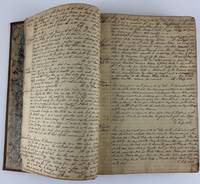
1819rif. 13404Savannah GA and other locations 1819. 542pp. approximately 200000 words. Large folio. Modern full calf tooled in brown preserving original morocco spine label reading "Letter Book." Minor edge wear and rubbing to boards. Even toning to text occasional staining or spotting. Overall very good. An extraordinary surviving collection of outgoing correspondence from the desk of Thomas Gardner 1772-1822 a prominent Georgia entrepreneur. A native of Glasgow Scotland Gardner emigrated to the United States with his brother James settling in late-18th-century Savannah. The brothers entered into business together and eventually expanded their interests up the Savannah River to Augusta. Thomas married Ann McKinne in Augusta in 1804 the couple produced eleven children. The present highly detailed copybook contains a detailed record of the activities of an early-19th southern tradesman who operated in Georgia's major port cities and primarily traded in various types of cotton Sea Island Upland etc. and Georgia tobacco. In total the letter book contains the text of more than 2100 separate letters sent from Gardner to a wide variety of businessmen and companies including his brother James. The letters range from a few lines of text to quarter half and even a few full pages of text. They were written mostly from Savannah between June 29 1816 and June 22 1819 and mostly concern business matters between Gardner and his correspondents with personal matters necessarily being occasionally reported. Taken together Gardner's letters are wealth of information on the merchant business in the South in the second decade of the 19th century. In addition to the letters a small portion of the book contains some ledger-like financial records including an estate sold by Gardner and a partner at auction in 1816. This estate contained at least five slaves listed as "Nancy and her 2 children" "Jones Richard" and "Mary." In order to recreate the content within the present letter book one would need to track down from the recipients all the letters recorded here a decidedly impossible task 200 years later. The following excerpts provide a flavor of Gardner's letters but the content most certainly goes well beyond this fractional representation: 1 To Martin & Mackie June 29 1816: "Since I last wrote you I am without any of your favors. Robert Lang & Co. have here about 200 crates crockery & some salt. I mention this to you a I think it probable you could make an arrangement with them to bring them up in your boats . That would be mutually advantageous. Cotton has become very flat here 30 to 32 may be considered the nominal value of it & no purchasers. The late accts. from England are unfavorable." 2 To James Gardner February 8 1817: "I am favored with yours of the 30th inst. I feel mortified about the draft you drew in favor of Larimby. I wrote to John Barnes respecting it & he expresses a good deal of regret. I now enclose you 225 dollars to reimburse you for Larimby's wages. Also to pay your Blacksmiths bill. As I don't like overseers to have an account at a store without a check on them I have to beg you to give him orders for whatever may be necessary for my place. On Robert Lang & Co. of Augusta to whom I have this day wrote on the subject. The Iron and Plow moulds had better be got at Augusta. I have purchased two negro fellows which I intend sending up in a few days & may probably increase the number to six if I can purchase them next sale day. When the hams are properly cured I want one half of them sent down to the land. The other half I will keep untill I come up to the sand hills with my family." 3 To Bogart & Wheeland May 15 1818: "Enclosed you have bill of lading for four bales deer skins to your address Brig Amelia I Mott belonging to Solomon Wheeland Augusta. The Amelia will sail the first fair wind. You can therefore effect insurance accordingly. Sea Island Cotton 70.80. Upland 31.32. Rice 6.625. Georgia tobacco 8 @ 9$." 4 To John A. Barnes November 10 1818: "The Augusta stage arrived here last evening but brought no mail. The ship Thorn arrived here on Sunday last from L'pool and brings dates. Six days later than the Georgia. Cottons continued very dull and but few purchasers in market. I have to beg you to go very light into the mkt for I am certain it will tumble here as soon as any arrives. It can be bought this morning in the mkt square at 30 per $. I feel anxious about my Negroes as they have not yet got their winter clothes & the weather getting very cool. They are on board the boat Wasp and if you could get anyone that could get them out & bring them up immediately you could pay them 3 or 4 dollars." 5 To Adam Hutcheson April 181819: "I have drawn on you under date of the 5 inst at 4 months in favor of JP Henry for 1552 3/100 dollars on a/c of 54 barrels Sugar at 13 37/100. The invoice and receipt I will forward you next mail. This is all the sugar I can procure at present of a good quality at your limits. Coffee cannot be got at present under 30 cents today." A phenomenal source for studying the American-English cotton trade as well as other markets for tobacco sugar whiskey and so forth in the Deep South during the early-19th century. unknown books
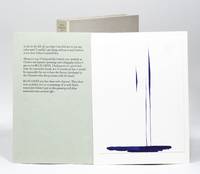
rif. 3074New York: Atlantis Editions 1974. First edition. Very Good. SIGNED LIMITED EDITION ONE OF ONLY 100 COPIES out of a total edition of 120 SIGNED BY GEORGIA O'KEEFFE AND LEONARD BASKIN. A masterful collection of drawings O'Keeffe created between 1915 and 1963; illustrated with 21 charcoal and pencil drawings reproduced on Arches Silkscreen in 300-line screen offset lithography each laid into a lettered folded leaf of Arches paper. Most drawings are accompanied by O'Keeffe's commentary- her first writing intended for book publication- explaining the details setting or inspiration for each work. Elegantly designed by Leonard Baskin and printed at The Meadows Press. Size: Box = 6.5 x 8.75 inches; Plates = 6.0 x 8.25 inches. New York: Atlantis Editions 1974. Octavo contents loose as issued in original publisher's cloth folding box with paper title label. Small bump to outer edge of box otherwise fine. RARE. Atlantis Editions unknown