O'KEEFFE, GEORGIABiblio.com

5.788 Ergebnisse
1969Best.-Nr. 2925Abiquiu New Mexico: np 1969. first edition. Fine. GEORGIA O’KEEFFE AS ART DEALER FOR HER OWN WORK: A fascinating correspondence between O’Keeffe and disgraced art dealer Andrew Crispo revealing O’Keeffe’s reluctance to sell her paintings. On September 27 1969 the 24-year-old art dealer Andrew Crispo who later became infamous through his connection with the “Death Mask Murder” case visited O’Keeffe at her home in Abiquiu New Mexico. While there Crispo – perhaps trying to make a big splash in the art world – negotiated with O’Keeffe to purchase three of her paintings: “Lake George – Blue” for $6000; “White Birches” for $40000; “Mule’s Skull and Pink Poinsetta” for $50000. The first letter in the correspondence dated September 29 is from O’Keeffe to Crispo outlining the terms for the sale of “Lake George – Blue” for $6000. This is no simple sale however – Crispo wants payment terms and O’Keeffe outlines them here: $100 paid already $1900 due in January 1970; $2000 in January 1971; $2000 in January 1972. The most interesting part of the letter however is O’Keeffe reluctance to let go of her work. She proposes a deal where she has the right of first refusal to buy it back from Crispo for $6000 should he wish to sell it to anyone. She originally wanted no time limit on this but Crispo successfully negotiated a window reflected in a “Note” at the bottom of the letter of four years for O’Keeffe’s right of first refusal. This letter signed by both O’Keeffe and Crispo retains its original envelope with September 30 1969 postmark. The negotiations get more complicated when considering two significantly more expensive O’Keeffe paintings. In an October 2 1969 letter from Crispo included here he notes that he gave her deposits $100 each on the two paintings and understood the checks and their verbal agreement bound her to sell the painting “White Birches” for $40000 and “Skull and Poinsettas” later renamed “Mule’s Skull and Pink Poinsetta” for $50000. O’Keeffe was clearly getting uncomfortable with the sale of these paintings; hence Crispo’s insistence that the deal had been made. This hesitancy comes to the fore in the final letter signed by O’Keeffe in the collection. Dated December 11 1969 the letter – after confirming the details of the “Lake George” sale reads in part: “You may recall that when we first met I told you that I did not wish to sell any paintings. As I have thought things over it seems best to leave things that way. I would rather keep the two paintings than send them to you.” She then notes that she is returning his two checks for $100 deposits on the paintings and the two torn checks are included with this letter along with the original envelope. O’Keeffe at the time of this letter was 82 years old and it is surprising that she turned down a substantial amount of money for the two paintings. The $90000 for the two paintings is approximately $760000 in today’s dollars. Perhaps she really couldn’t bear to let them go or perhaps she sensed something unsavory about Andrew Crispo. In 1969 Crispo had been working at New York City’s ACA Galleries and was likely laying the foundation for his namesake gallery which he opened a few years later but in the 1980s and 90s Crispo became notorious for his involvement in the gruesome “Death Mask Murder” case and later served time in prison for extortion. Over time all three paintings passed through various private collections. “Lake George - Blue” the only painting Crispo successfully purchased from O’Keeffe remains in a private collection. “White Birches” is now housed at the Amon Carter Museum of American Art in Fort Worth Texas while “Mule’s Skull with Pink Poinsetta” is part of the Georgia O’Keeffe Museum’s collection in Santa Fe New Mexico. –––––––– In total this archive includes two O’Keeffe typed letters signed one unsigned O’Keeffe typed letter and one Andrew Crispo typed letter signed with a duplicate retained copy a retained copy of a Crispo letter Dec. 5 two torn checks signed by Crispo and two transmittal envelopes from O’Keeffe. All letters on standard 8 1/2 x 11 sheets. Mailing fold lines a few creases otherwise fine condition with strong O’Keeffe signatures in black ink. np unknown
1969Best.-Nr. 2925Abiquiu New Mexico: np 1969. first edition. Fine. GEORGIA O’KEEFFE AS ART DEALER FOR HER OWN WORK: A fascinating correspondence between O’Keeffe and disgraced art dealer Andrew Crispo revealing O’Keeffe’s reluctance to sell her paintings. On September 27 1969 the 24-year-old art dealer Andrew Crispo who later became infamous through his connection with the “Death Mask Murder” case visited O’Keeffe at her home in Abiquiu New Mexico. While there Crispo – perhaps trying to make a big splash in the art world – negotiated with O’Keeffe to purchase three of her paintings: “Lake George – Blue” for $6000; “White Birches” for $40000; “Mule’s Skull and Pink Poinsetta” for $50000. The first letter in the correspondence dated September 29 is from O’Keeffe to Crispo outlining the terms for the sale of “Lake George – Blue” for $6000. This is no simple sale however – Crispo wants payment terms and O’Keeffe outlines them here: $100 paid already $1900 due in January 1970; $2000 in January 1971; $2000 in January 1972. The most interesting part of the letter however is O’Keeffe reluctance to let go of her work. She proposes a deal where she has the right of first refusal to buy it back from Crispo for $6000 should he wish to sell it to anyone. She originally wanted no time limit on this but Crispo successfully negotiated a window reflected in a “Note” at the bottom of the letter of four years for O’Keeffe’s right of first refusal. This letter signed by both O’Keeffe and Crispo retains its original envelope with September 30 1969 postmark. The negotiations get more complicated when considering two significantly more expensive O’Keeffe paintings. In an October 2 1969 letter from Crispo included here he notes that he gave her deposits $100 each on the two paintings and understood the checks and their verbal agreement bound her to sell the painting “White Birches” for $40000 and “Skull and Poinsettas” later renamed “Mule’s Skull and Pink Poinsetta” for $50000. O’Keeffe was clearly getting uncomfortable with the sale of these paintings; hence Crispo’s insistence that the deal had been made. This hesitancy comes to the fore in the final letter signed by O’Keeffe in the collection. Dated December 11 1969 the letter – after confirming the details of the “Lake George” sale reads in part: “You may recall that when we first met I told you that I did not wish to sell any paintings. As I have thought things over it seems best to leave things that way. I would rather keep the two paintings than send them to you.” She then notes that she is returning his two checks for $100 deposits on the paintings and the two torn checks are included with this letter along with the original envelope. O’Keeffe at the time of this letter was 82 years old and it is surprising that she turned down a substantial amount of money for the two paintings. The $90000 for the two paintings is approximately $760000 in today’s dollars. Perhaps she really couldn’t bear to let them go or perhaps she sensed something unsavory about Andrew Crispo. In 1969 Crispo had been working at New York City’s ACA Galleries and was likely laying the foundation for his namesake gallery which he opened a few years later but in the 1980s and 90s Crispo became notorious for his involvement in the gruesome “Death Mask Murder” case and later served time in prison for extortion. Over time all three paintings passed through various private collections. “Lake George - Blue” the only painting Crispo successfully purchased from O’Keeffe remains in a private collection. “White Birches” is now housed at the Amon Carter Museum of American Art in Fort Worth Texas while “Mule’s Skull with Pink Poinsetta” is part of the Georgia O’Keeffe Museum’s collection in Santa Fe New Mexico. –––––––– In total this archive includes two O’Keeffe typed letters signed one unsigned O’Keeffe typed letter and one Andrew Crispo typed letter signed with a duplicate retained copy a retained copy of a Crispo letter Dec. 5 two torn checks signed by Crispo and two transmittal envelopes from O’Keeffe. All letters on standard 8 1/2 x 11 sheets. Mailing fold lines a few creases otherwise fine condition with strong O’Keeffe signatures in black ink. np unknown books
1923Best.-Nr. 3037New York: Anderson Galleries 1923. first edition. Very Good. EXHIBITION PROGRAM FOR O’KEEFFE’S FIRST MAJOR ART SHOW SIGNED AND INSCRIBED BY O’KEEFFE. Inscribed by O’Keeffe on cover in pencil: “I am sorry you cant come – / Hope all is well with you / Sincerely / Georgia O’Keeffe.”. O’Keeffe’s first major show – opening at Anderson Galleries in New York on January 29 1923 –was a sensation. “The reviews were excellent. Henry McBride pleased O’Keeffe ‘immensely’ when his piece for the New York Herald stated that in the show ‘there is a great deal of clear precise unworried painting’ which Stieglitz was calling ‘color music.’ The Sun’s critic Alan Burroughs marveled that in the concurrent exhibition of still lifes and flower pieces by the likes of Cézanne Manet Monet and Renoir at Durand-Ruel ‘one sees no canvases with the intensity of Miss O’Keeffe’s.’” “As many as five hundred people a day thronged the galleries. Although many went out of curiosity aroused by Stieglitz’s photographs of the artist once there they mostly liked what they saw. O’Keeffe’s work was sensuous easily understandable greatly appealing often decorative and much of it seemed quite overtly sexual in a fashionably liberated way. Some twenty paintings were sold for a total of about $3000…” Whelan. There was no catalog for the show - for as Stieglitz wrote explicitly on the back page of the program “There is no catalogue. The pictures have no titles but are numbered and dated” – so this program is the only significant printed documentation of the exhibition. And significant it is for it opens with an artist’s statement by O’Keeffe that is one of the most important and revealing things she ever wrote. She opens with a blunt almost anti-romantic autobiography: she “grew up pretty much as everybody else grows up” and then describes a turning point “one day seven years ago” when she realized she couldn’t keep living by other people’s rules — “I can’t live where I want to… I can’t even say what I want to.” She identifies painting as “the only thing I could do that didn’t concern anybody but myself” and discovered that she could say things “with color and shapes” that she couldn’t say any other way — “things that I had no words for.” She almost cheekily anticipates some criticism “Some of the wise men say it is not painting some of them say it is. Art or not Art – they disagree. Some of them do not care.” before shifting her narrative to credit Stieglitz not only for this exhibition but for her famous introduction to the art world when Stieglitz exhibited the drawings shown to him by O’Keeffe’s friend Anita Pollitzer years earlier. In a bluntly forthright final paragraph she expresses her ambivalence but also her need to have her paintings shown: “I say that I do not want to have this exhibition because among other reasons there are so many exhibitions that it seems ridiculous for me to add to the mess but I guess I’m lying. I probably do want to see my things hang on a wall as other things hang so as to be able to place them in my mind in relation to other things I have seen done. And I presume if I must be honest that I am also interested in what anybody else had to say about them and also in what they don’t say because that means something to me too.” –––––––– New York: The Anderson Galleries 1923. 6.25x9.5 inches. Two sheets making eight pages when folded as issued. With a printed extract on O’Keeffe by Marsden Hartley headed: “Extract from ‘Some Women Painters’ in ‘Adventures in the Arts’ by Marsden Hartley.” on pages 5-6. Mailing folds some general light soiling. Housed in custom presentation folder. RARE: We are not aware of another signed copy that has been on the market. References: Whelan Richard. Alfred Stieglitz: A Biography. Boston: Little Brown 1995 pp. 437-9. Anderson Galleries unknown
1923Best.-Nr. 3037New York: Anderson Galleries 1923. first edition. Very Good. EXHIBITION PROGRAM FOR O’KEEFFE’S FIRST MAJOR ART SHOW SIGNED AND INSCRIBED BY O’KEEFFE. Inscribed by O’Keeffe on cover in pencil: “I am sorry you cant come – / Hope all is well with you / Sincerely / Georgia O’Keeffe.”. O’Keeffe’s first major show – opening at Anderson Galleries in New York on January 29 1923 –was a sensation. “The reviews were excellent. Henry McBride pleased O’Keeffe ‘immensely’ when his piece for the New York Herald stated that in the show ‘there is a great deal of clear precise unworried painting’ which Stieglitz was calling ‘color music.’ The Sun’s critic Alan Burroughs marveled that in the concurrent exhibition of still lifes and flower pieces by the likes of Cézanne Manet Monet and Renoir at Durand-Ruel ‘one sees no canvases with the intensity of Miss O’Keeffe’s.’” “As many as five hundred people a day thronged the galleries. Although many went out of curiosity aroused by Stieglitz’s photographs of the artist once there they mostly liked what they saw. O’Keeffe’s work was sensuous easily understandable greatly appealing often decorative and much of it seemed quite overtly sexual in a fashionably liberated way. Some twenty paintings were sold for a total of about $3000…” Whelan. There was no catalog for the show - for as Stieglitz wrote explicitly on the back page of the program “There is no catalogue. The pictures have no titles but are numbered and dated” – so this program is the only significant printed documentation of the exhibition. And significant it is for it opens with an artist’s statement by O’Keeffe that is one of the most important and revealing things she ever wrote. She opens with a blunt almost anti-romantic autobiography: she “grew up pretty much as everybody else grows up” and then describes a turning point “one day seven years ago” when she realized she couldn’t keep living by other people’s rules — “I can’t live where I want to… I can’t even say what I want to.” She identifies painting as “the only thing I could do that didn’t concern anybody but myself” and discovered that she could say things “with color and shapes” that she couldn’t say any other way — “things that I had no words for.” She almost cheekily anticipates some criticism “Some of the wise men say it is not painting some of them say it is. Art or not Art – they disagree. Some of them do not care.” before shifting her narrative to credit Stieglitz not only for this exhibition but for her famous introduction to the art world when Stieglitz exhibited the drawings shown to him by O’Keeffe’s friend Anita Pollitzer years earlier. In a bluntly forthright final paragraph she expresses her ambivalence but also her need to have her paintings shown: “I say that I do not want to have this exhibition because among other reasons there are so many exhibitions that it seems ridiculous for me to add to the mess but I guess I’m lying. I probably do want to see my things hang on a wall as other things hang so as to be able to place them in my mind in relation to other things I have seen done. And I presume if I must be honest that I am also interested in what anybody else had to say about them and also in what they don’t say because that means something to me too.” –––––––– New York: The Anderson Galleries 1923. 6.25x9.5 inches. Two sheets making eight pages when folded as issued. With a printed extract on O’Keeffe by Marsden Hartley headed: “Extract from ‘Some Women Painters’ in ‘Adventures in the Arts’ by Marsden Hartley.” on pages 5-6. Mailing folds some general light soiling. Housed in custom presentation folder. RARE: We are not aware of another signed copy that has been on the market. References: Whelan Richard. Alfred Stieglitz: A Biography. Boston: Little Brown 1995 pp. 437-9. Anderson Galleries unknown books
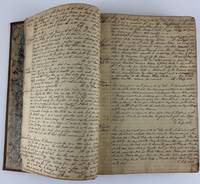
1819Best.-Nr. 13404Savannah GA and other locations 1819. 542pp. approximately 200000 words. Large folio. Modern full calf tooled in brown preserving original morocco spine label reading "Letter Book." Minor edge wear and rubbing to boards. Even toning to text occasional staining or spotting. Overall very good. An extraordinary surviving collection of outgoing correspondence from the desk of Thomas Gardner 1772-1822 a prominent Georgia entrepreneur. A native of Glasgow Scotland Gardner emigrated to the United States with his brother James settling in late-18th-century Savannah. The brothers entered into business together and eventually expanded their interests up the Savannah River to Augusta. Thomas married Ann McKinne in Augusta in 1804 the couple produced eleven children. The present highly detailed copybook contains a detailed record of the activities of an early-19th southern tradesman who operated in Georgia's major port cities and primarily traded in various types of cotton Sea Island Upland etc. and Georgia tobacco. In total the letter book contains the text of more than 2100 separate letters sent from Gardner to a wide variety of businessmen and companies including his brother James. The letters range from a few lines of text to quarter half and even a few full pages of text. They were written mostly from Savannah between June 29 1816 and June 22 1819 and mostly concern business matters between Gardner and his correspondents with personal matters necessarily being occasionally reported. Taken together Gardner's letters are wealth of information on the merchant business in the South in the second decade of the 19th century. In addition to the letters a small portion of the book contains some ledger-like financial records including an estate sold by Gardner and a partner at auction in 1816. This estate contained at least five slaves listed as "Nancy and her 2 children" "Jones Richard" and "Mary." In order to recreate the content within the present letter book one would need to track down from the recipients all the letters recorded here a decidedly impossible task 200 years later. The following excerpts provide a flavor of Gardner's letters but the content most certainly goes well beyond this fractional representation: 1 To Martin & Mackie June 29 1816: "Since I last wrote you I am without any of your favors. Robert Lang & Co. have here about 200 crates crockery & some salt. I mention this to you a I think it probable you could make an arrangement with them to bring them up in your boats . That would be mutually advantageous. Cotton has become very flat here 30 to 32 may be considered the nominal value of it & no purchasers. The late accts. from England are unfavorable." 2 To James Gardner February 8 1817: "I am favored with yours of the 30th inst. I feel mortified about the draft you drew in favor of Larimby. I wrote to John Barnes respecting it & he expresses a good deal of regret. I now enclose you 225 dollars to reimburse you for Larimby's wages. Also to pay your Blacksmiths bill. As I don't like overseers to have an account at a store without a check on them I have to beg you to give him orders for whatever may be necessary for my place. On Robert Lang & Co. of Augusta to whom I have this day wrote on the subject. The Iron and Plow moulds had better be got at Augusta. I have purchased two negro fellows which I intend sending up in a few days & may probably increase the number to six if I can purchase them next sale day. When the hams are properly cured I want one half of them sent down to the land. The other half I will keep untill I come up to the sand hills with my family." 3 To Bogart & Wheeland May 15 1818: "Enclosed you have bill of lading for four bales deer skins to your address Brig Amelia I Mott belonging to Solomon Wheeland Augusta. The Amelia will sail the first fair wind. You can therefore effect insurance accordingly. Sea Island Cotton 70.80. Upland 31.32. Rice 6.625. Georgia tobacco 8 @ 9$." 4 To John A. Barnes November 10 1818: "The Augusta stage arrived here last evening but brought no mail. The ship Thorn arrived here on Sunday last from L'pool and brings dates. Six days later than the Georgia. Cottons continued very dull and but few purchasers in market. I have to beg you to go very light into the mkt for I am certain it will tumble here as soon as any arrives. It can be bought this morning in the mkt square at 30 per $. I feel anxious about my Negroes as they have not yet got their winter clothes & the weather getting very cool. They are on board the boat Wasp and if you could get anyone that could get them out & bring them up immediately you could pay them 3 or 4 dollars." 5 To Adam Hutcheson April 181819: "I have drawn on you under date of the 5 inst at 4 months in favor of JP Henry for 1552 3/100 dollars on a/c of 54 barrels Sugar at 13 37/100. The invoice and receipt I will forward you next mail. This is all the sugar I can procure at present of a good quality at your limits. Coffee cannot be got at present under 30 cents today." A phenomenal source for studying the American-English cotton trade as well as other markets for tobacco sugar whiskey and so forth in the Deep South during the early-19th century. unknown
1819Best.-Nr. 13404Savannah GA and other locations 1819. 542pp. approximately 200000 words. Large folio. Modern full calf tooled in brown preserving original morocco spine label reading "Letter Book." Minor edge wear and rubbing to boards. Even toning to text occasional staining or spotting. Overall very good. An extraordinary surviving collection of outgoing correspondence from the desk of Thomas Gardner 1772-1822 a prominent Georgia entrepreneur. A native of Glasgow Scotland Gardner emigrated to the United States with his brother James settling in late-18th-century Savannah. The brothers entered into business together and eventually expanded their interests up the Savannah River to Augusta. Thomas married Ann McKinne in Augusta in 1804 the couple produced eleven children. The present highly detailed copybook contains a detailed record of the activities of an early-19th southern tradesman who operated in Georgia's major port cities and primarily traded in various types of cotton Sea Island Upland etc. and Georgia tobacco. In total the letter book contains the text of more than 2100 separate letters sent from Gardner to a wide variety of businessmen and companies including his brother James. The letters range from a few lines of text to quarter half and even a few full pages of text. They were written mostly from Savannah between June 29 1816 and June 22 1819 and mostly concern business matters between Gardner and his correspondents with personal matters necessarily being occasionally reported. Taken together Gardner's letters are wealth of information on the merchant business in the South in the second decade of the 19th century. In addition to the letters a small portion of the book contains some ledger-like financial records including an estate sold by Gardner and a partner at auction in 1816. This estate contained at least five slaves listed as "Nancy and her 2 children" "Jones Richard" and "Mary." In order to recreate the content within the present letter book one would need to track down from the recipients all the letters recorded here a decidedly impossible task 200 years later. The following excerpts provide a flavor of Gardner's letters but the content most certainly goes well beyond this fractional representation: 1 To Martin & Mackie June 29 1816: "Since I last wrote you I am without any of your favors. Robert Lang & Co. have here about 200 crates crockery & some salt. I mention this to you a I think it probable you could make an arrangement with them to bring them up in your boats . That would be mutually advantageous. Cotton has become very flat here 30 to 32 may be considered the nominal value of it & no purchasers. The late accts. from England are unfavorable." 2 To James Gardner February 8 1817: "I am favored with yours of the 30th inst. I feel mortified about the draft you drew in favor of Larimby. I wrote to John Barnes respecting it & he expresses a good deal of regret. I now enclose you 225 dollars to reimburse you for Larimby's wages. Also to pay your Blacksmiths bill. As I don't like overseers to have an account at a store without a check on them I have to beg you to give him orders for whatever may be necessary for my place. On Robert Lang & Co. of Augusta to whom I have this day wrote on the subject. The Iron and Plow moulds had better be got at Augusta. I have purchased two negro fellows which I intend sending up in a few days & may probably increase the number to six if I can purchase them next sale day. When the hams are properly cured I want one half of them sent down to the land. The other half I will keep untill I come up to the sand hills with my family." 3 To Bogart & Wheeland May 15 1818: "Enclosed you have bill of lading for four bales deer skins to your address Brig Amelia I Mott belonging to Solomon Wheeland Augusta. The Amelia will sail the first fair wind. You can therefore effect insurance accordingly. Sea Island Cotton 70.80. Upland 31.32. Rice 6.625. Georgia tobacco 8 @ 9$." 4 To John A. Barnes November 10 1818: "The Augusta stage arrived here last evening but brought no mail. The ship Thorn arrived here on Sunday last from L'pool and brings dates. Six days later than the Georgia. Cottons continued very dull and but few purchasers in market. I have to beg you to go very light into the mkt for I am certain it will tumble here as soon as any arrives. It can be bought this morning in the mkt square at 30 per $. I feel anxious about my Negroes as they have not yet got their winter clothes & the weather getting very cool. They are on board the boat Wasp and if you could get anyone that could get them out & bring them up immediately you could pay them 3 or 4 dollars." 5 To Adam Hutcheson April 181819: "I have drawn on you under date of the 5 inst at 4 months in favor of JP Henry for 1552 3/100 dollars on a/c of 54 barrels Sugar at 13 37/100. The invoice and receipt I will forward you next mail. This is all the sugar I can procure at present of a good quality at your limits. Coffee cannot be got at present under 30 cents today." A phenomenal source for studying the American-English cotton trade as well as other markets for tobacco sugar whiskey and so forth in the Deep South during the early-19th century. unknown books
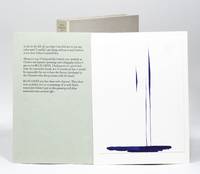
Best.-Nr. 3074New York: Atlantis Editions 1974. First edition. Very Good. SIGNED LIMITED EDITION ONE OF ONLY 100 COPIES out of a total edition of 120 SIGNED BY GEORGIA O'KEEFFE AND LEONARD BASKIN. A masterful collection of drawings O'Keeffe created between 1915 and 1963; illustrated with 21 charcoal and pencil drawings reproduced on Arches Silkscreen in 300-line screen offset lithography each laid into a lettered folded leaf of Arches paper. Most drawings are accompanied by O'Keeffe's commentary- her first writing intended for book publication- explaining the details setting or inspiration for each work. Elegantly designed by Leonard Baskin and printed at The Meadows Press. Size: Box = 6.5 x 8.75 inches; Plates = 6.0 x 8.25 inches. New York: Atlantis Editions 1974. Octavo contents loose as issued in original publisher's cloth folding box with paper title label. Small bump to outer edge of box otherwise fine. RARE. Atlantis Editions unknown
Best.-Nr. 3074New York: Atlantis Editions 1974. First edition. Very Good. SIGNED LIMITED EDITION ONE OF ONLY 100 COPIES out of a total edition of 120 SIGNED BY GEORGIA O'KEEFFE AND LEONARD BASKIN. A masterful collection of drawings O'Keeffe created between 1915 and 1963; illustrated with 21 charcoal and pencil drawings reproduced on Arches Silkscreen in 300-line screen offset lithography each laid into a lettered folded leaf of Arches paper. Most drawings are accompanied by O'Keeffe's commentary- her first writing intended for book publication- explaining the details setting or inspiration for each work. Elegantly designed by Leonard Baskin and printed at The Meadows Press. Size: Box = 6.5 x 8.75 inches; Plates = 6.0 x 8.25 inches. New York: Atlantis Editions 1974. Octavo contents loose as issued in original publisher's cloth folding box with paper title label. Small bump to outer edge of box otherwise fine. RARE. Atlantis Editions unknown books
1936Best.-Nr. 125466Tbilisi: Gosfoto Council of People's Commissars 1936. Soviet spectacle for Beria's Georgian protégé Presentation photograph album commemorating the 15th anniversary of Soviet rule in Georgia bearing the gilt supralibros of Valerian Bakradze 1901-1971 then Second Secretary of the Georgian Communist Party and a protégé of Lavrentiy Beria. Its 57 original photographs document the state celebrations in Tbilisi in February 1936 including impressive panoramic views of the capital and the military parade. The album opens with imposing portraits of Lenin Stalin Kliment Voroshilov and Sergo Ordzhonikidze followed by two panoramas of Tbilisi with the Mtatsminda funicular and Sioni Cathedral clearly discernible. Voroshilov then People's Commissar for Defence appears delivering a speech and greeting Filipp Makharadze chairman of the Georgian Central Executive Committee. Another photograph records the opera house decorated with banners and Stalin's portrait. The central sequence comprises 19 photographs of the parade in Transcaucasian Federation Square now Freedom Square including ten exceptionally large prints taken from an elevated vantage point. They show massed crowds military bands infantry cavalry horse-drawn machine-gun carts and T-26 tanks followed by processions of athletes gymnasts dancers and figures in folkloric costume. Several film crews are visible among the crowds. One striking image shows a young woman posed inside an enormous tyre bearing the legend "Rubber Concern USSR". The final six leaves depict new buildings roads and bridges presenting Tbilisi's modernization as another Soviet achievement. Bakradze subsequently headed Georgia's government from 1937 to 1946. His close relationship with Beria gives the album particular interest. After Stalin's death he briefly returned to office in April 1953 but following Beria's arrest he publicly denounced his former patron as a "foul criminal" and an "agent of international capitalism" Knight p. 213. Bakradze was himself dismissed that September. The celebrations recorded here preceded both the dissolution of the Transcaucasian Federation later in 1936 and the purges that devastated Soviet Georgia. Landscape photograph album 600 x 410 mm. 57 original photographs 113 x 65 mm to 450 x 350 mm mounted on 29 heavy card leaves with linen hinges. Presentation binding of red skiver over bevelled boards front cover titled in gilt red silk endleaves edges stained red. Binding lightly scuffed and abraded a few creases to prints some silvering to a number of photographs: a very good copy. Amy Knight Beria: Stalin's First Lieutenant 1993. hardcover
Best.-Nr. 51-7083London: Spafax Publishing; tate the art magazine ; Philip Allison 2001. 4to. 21x 29.7cm. Sheets loose as issued in original silver printed chemise and box. 28pp. text; poster and 50 signed broadsides folded from 59.5 x 42cm. to 8 pages. Fine condition. .The deluxe portfolio 2000-01 comprising 50 offset lithographs on smooth wove paper with title-page and text each signed by the respective artist the sheets folded as issued within the original silver Solander box with debossed cover and spine.Richard Hamilton Gavin Turk Tim Stoner Philip Treacy Caruso St John John Hilliard Liam Gillick Georgie Hopton & Josephine Soughton Jake & Dinos Chapman Mark Hosking Grayson Perry Simon Patterson Runa Islam Anish Kapoor Bella Freud Tacita Dean Antony Gormley Carey Young Marine Hugonnier Will Self Fiona Rae Tracey Emin Christopher Le Brun Liam Gillick Douglas Gordon Carsten Holler Pierre Huyghe Philippe Parreno Rirkrit Tiravanija Nigel Shafran Anya Gallaccio James White & Tim Sheward Mark Lewis Richard Deacon & Martin Kreyssig Wolfgang Tillmans Joao Penalva Matthew Higgs Oliver Payne & Nick Relph John Latham Gilbert & George Enrico David Mona Hatoum Andrew Lewis Cerith Wyn Evans Howard Hodgkin Tom Gidley Sam Taylor-Wood Harland Miller Peter Doig Hussein Chalayan Patti Smith Darren Almond Michael Craig-Martin Jeremy Deller Bridget Riley."fig-1" was a project initiated by Mark Francis and White Cube founder Jay Jopling who held 50 one-week exhibitions at a disused venue in Soho London.The project called together 49 British artists of different generations from veterans such as Richard Hamilton Howard Hodgkin Anish Kapoor and Bridget Riley to established YBAs including Jake & Dinos Chapman Tracey Emin and Gavin Turk and up and coming soon to be illustrious names such as Peter Doig Grayson Perry and Harland Miller - each one of them exhibiting for one week with Richard Hamilton showing twice in the first and last week.Divided into 50 sections the book chronicles each project in the words of the participants through interviews essays and visual documentaries. .Arrangment of the prints: 01. Richard Hamilton02. Gavin Turk03. Tim Stoner04. Philip Treacy05. Caruso St. John06. John Hilliard07. Liam Gillick08. Georgie Hopton Josephine Soughan09. Jake Dinos Chapman10. Mark Hisking11. Grayson Perry12. Simon Patterson13. Runa Islam14. Anish Kapoor15. Bella Freud16. Tacita Dean17. Antony Gormley18. Carey Young19. Marine Hugonnier20. Will Self21. Fiona Rae22. Tracey Emin23. Christopher Le Brun24. Liam Gillick Douglas Gordon Carsten Höller Pierre Huyghe Philippe Parreno Rirkrit Tiravanija25. Nigel Shafran26. Anya Gallaccio27. James White Tim Sheward28. Mark Lewis29. Richard Deacon Martin Kreyssig30. Wolfgang Tillmans31. João Penalva32. Matthew Higgs Oliver Payne Nick Relph33. John Latham34. Gilbert George35. Enrico David36. Mona Hatoum37. Andrew Lewis38. Cerith Wyn Evans39. Howard Hodgkin40. Tom Gidley41. Sam Taylor-Wood42. Harland Miller43. Peter Doig44. Hussein Chalayan45. Patti Smith46. Darren Almond47. Michael Craig-Martin48. Jeremy Deller49. Bridget Riley50. Richard Hamilton London: Spafax Publishing; tate, the art magazine ; Philip Allison, 2001 unknown
1968Best.-Nr. 178373New York: Atlantis Editions 1968. Early abstract drawings of O'Keeffe First edition number 185 of 230 copies signed by the artist from a total edition of 250. O'Keeffe personally selected ten of her drawings two of which are from the Metropolitan Museum of Art to represent the range and variety of her work in this medium. To some of the drawings she made changes enhancing the print. Folio. With 10 reproduced drawings printed in 300-line screen offset lithography at the Meriden Gravure Co. I-IX are printed on Rives BFK paper and X on Arches Cover paper. Sheet sizes: 63.3 x 48.5 cm. Eight-page booklet together with 10 loose prints in separate folders. All housed in the publisher's white cloth clamshell box. All in fine condition. hardcover
Best.-Nr. 140831London: Spafax Publishing in association with tate: the art magazine 2001. Signed by over 50 artists First edition first printing. Edition of 50 signed by the artists. Fig-1 was 50 projects in 50 weeks initiated by Mark Francis and Jay Jopling set in a small warehouse building in Soho each project lasting one week. Each poster is signed by the relevant artist or artists. The projects embraced a broad range of contemporary creative productions including fine art with 13 Turner Prize nominees as well as literature film and video fashion design and architecture. Quarto 32 page stapled booklet A1 folded poster with photo-portraits of all the artists 50 A2 folded posters. With the original silver card clamshell box. Box lightly rubbed to edges else fine. unknown
1922Best.-Nr. 166022Boston: B. J. Brimmer 1922. Inscribed to "the greatest Black orator of his day" First edition first printing presentation copy inscribed by the author in the month after publication on the first blank "Dec. 27 - '22. To Mr. Roscoe C. Simmons shall we not dedicate this page to this day which we must regard happy and signal. Read page 15 from The Heart of a Woman & thank every God for your exclusion. Sincerely Georgia Douglas Johnson". Inscribed copies are rare: we have traced just one other. Johnson's page reference is to the poem "Repulse" which was published in her first volume of poetry The Heart of a Woman and Other Poems in 1918. Although we have not been able to identify what happened on the "happy and signal" day of this inscription the implication of Johnson's inscription must be in reference to the refrain "Nobody cares when I am glad. Nobody cares when I am sad" suggesting that Simmons as a caring friend was excluded from these. "Roscoe Conkling Simmons 1881-1951 was the greatest Black orator of his day blessed with the ability to electrify audiences for hour after hour. Americans nationwide knew of him through his electioneering for the Republican party and his lecture tours. Blacks meanwhile read his column in the Chicago Defender the nation's most popular Black newspaper. Simmons was an experienced political player and functioned as an unofficial adviser to Presidents Harding Coolidge and Hoover. Through his pack of associates - Black America's most powerful businessmen and editors entertainers and racketeers - he forged close links with key Black organizations participating in the affairs of fraternities churches and educational institutions. Therefore when white Republicans needed help in rallying Northern Black voters Simmons was the fixer they summoned" Kaye pp. 79-80. Johnson a nationally recognized figure of the Harlem Renaissance wrote from Washington DC where she had an immense influence on New Negro writers from all over the country in part by holding a literary salon in her home. Referred to as the "Saturday Nighters" the attendees included many prominent African-American writers including Countee Cullen W. E. B DuBois Alain Locke Langston Hughes and Jessie Fauset. She provided a much-needed venue in which these authors "read their works exchanged criticisms and argued views on literature art and politics and found the nurture encouragement and reception that Black Washington seemed unwilling to extend" Edwards p. 157. Johnson's literary salon had standards; as Washington journalist and poet J. C. Byars put it "if dull ones come she weeds them out gently effectively" Hull p. 166. Works by both Simmons and Johnson were included in the 1920 publication The Dunbar Speaker and Entertainer edited by Alice Moore Dunbar-Nelson. The Heart of a Woman Cornhill 1918 had been "criticized in some quarters because it did not contain enough 'racially conscious' poems Perhaps in response to such criticism her next book Bronze: A Book of Verse 1922 is much concerned with issues of race as well as gender" ANB. Both works were published by the African American poet and literary critic William Stanley Braithwaite who founded the publishing firm B. J. Brimmer in 1921 having left Cornhill when Brookes More took control and stopped publishing African American poets: "to be recognized by Braithwaite was to receive a significant imprimatur" Kenny J. Williams quoted in Brooker & Thacker p. 316. Octavo. Original white cloth-backed paper covered boards printed paper spine label spine and front cover lettered in black. With rear flap and rear panel of dust jacket loosely inserted. A little wear to extremities minor marks to boards. A very good copy notably well preserved. Peter Brooker & Andrew Thacker eds The Oxford Critical and Cultural History of Modernist Magazines Volume II: North America 1894-1960 2009; Brent Hayes Edwards The Practice of Diaspora: Literature Translation and the Rise of Black Internationalism 2009; Gloria T. Hull Color Sex and Poetry: Three Women Writers of the Harlem Renaissance 1987; Andrew Kaye Roscoe Conkling Simmons and the Significance of African American Oratory Historical Journal vol. 45 no. 1 March 2002. hardcover