17.738 risultati
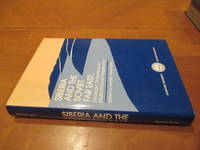
1987rif. 019218Stanford: Hoover Institution Press / Stanford University 1987. First Edition . Blue Cloth. Fine/Fine. Xxx 298 Pp. Blue Cloth Spine Gilt. First Printing. Fine. Critical Strategic Analysis Regarding Russia. Nicely Inscribed By The Author To Professor Hammond Rolph. The Two Of Them Wrote A Book On Vietnam Together. Per Usc Swearingen A Former World War Ii Intelligence Corps Officer And Top Aide To General Douglas Macarthur Swearingen Became A Close Friend And Colleague Of Then Future Secretary Of State Henry Kissinger While Both Were Graduate Students At Harvard University In The Late 1940S. Swearingen'S Wife Darlene Swearingen Said That During The 1970S And 1980S Her Husband And Kissinger Took Numerous Trips To China And The Soviet Union. Their Findings Assisted The U.S. Government In Developing International Relations Policies She Said. Rodger Swearingen Joined Usc Dornsife'S School Of International Relations In 1954 Creating A Teaching And Research Focus On Soviet Policy And World Communism. In The 1960S Swearingen Was One Of A Group Of Cold War Scholars Who Convinced Usc Trustee And Donor Henry Salvatori To Contribute $1.25 Million To Establish The Usc Research Institute On Communist Strategy And Propaganda. After Founding The Institute Swearingen Went On To Direct It Teaching Courses And Seminars There Until His Retirement In 1993. He Also Played A Vital Role In Writing For The Journal Published By The Institute. During The Cold War Swearingen Also Brought His Knowledge To Television Moderating A 35-Week Documentary Series On The "Dangers" Of Communism. Titled Communism: Myth Vs. Reality It Aired Nationwide And On U.S. Armed Services Stations Abroad. In Later Years Swearingen Was A Key Advisor To Several Military Committees - Providing Expert Testimony On Both Soviet And Chinese Military Strategies. Swearingen Was Born On April 23 1923 In Los Angeles. His Father Was The Chief Real Estate Broker For The City Of Los Angeles And Was In Charge Of Negotiating Home Purchases To Make Room For The City'S Expanding Freeway System. Hoover Institution Press / Stanford University hardcover
1932rif. 015752New York: Alfred A. Knopf 1932. 1st Edition 1st Printing. Wheat Cloth. Fine/Very Good Dustjacket. 13 Maps and 127 Illustrations and Diagrams. Xxix 711 Vii. Wheat Cloth. First American Edition Stated. "Revised And Supplemented By The Author For The English Edition." A Clean Tight Unworn Copy In A Jacket With Some Edge Wear And Small Edge Chips Not Affecting Lettering Or Design. An Immense Amount Of Interesting Detail Not Usually Publicized Elsewhere; For Example 41 % Of The Russian Higher Army Command Under Alexander Ii Was Of German Ancestry And At That Same Time The Russian Senate Was 33% German Etc. American Writing About Russia In Public Printings Remains Largely Political Opinion And Of No Obvious Practicality. Alfred A. Knopf hardcover
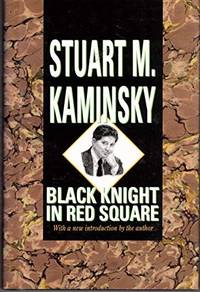
1992rif. 021506N.Y.: Armchair Detective Library 1992. 1st hdcvr ed. Originally published in paperback by Berkley in 1983. Fine unread copy in slipcase w/o dj as issued. LIMITED EDITION One of 100 numbered copies SIGNED by Kaminsky with a new intro by him. 2nd Rostnikov title. Bound in burgundy cloth without dust wrapper as issued in matching burgundy slipcase gilt stamping to front board and spine pencil sketch of the author by Carolyn Hartman at front board. An EDGAR AWARD NOMINEE in 1985 for Best Paperback Original. "The Moscow Film Festival is in town and the elite artists of the East and West have convened at the legendary Metropole Hotel to drink gossip and flirt. But the party is about to come crashing down. Four men - one American one Japanese and two Russians - will all be dead by morning poisoned. To keep the killings under wraps the Kremlin hands the investigation over to the famously discreet police investigator Porfiry Rostnikov. A hard-boiled cop with more than three decades' experience navigating the deadly jungle of the Soviet bureaucracy Rostnikov is about to find himself both in the international spotlight and in the crosshairs of a terrorist who is targeting foreigners to embarrass the Soviet state and will happily sacrifice any Russian who gets in the way. Signed by Author. First Edition. Hard Cover in Slipcase. Fine. Limited Edition. Armchair Detective Library Hardcover
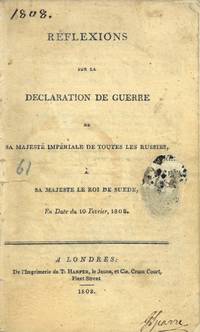
1808rif. 76978Londres. London 1808. Liten 8vo. Nyere shirtingryggbind med marmorerte dekler. 2 41 2 s. Small 8vo. More recent cloth bound marbled covers. 2 41 2 pp. Fransk. Ex libris “Bibliotheca Trolleholmiæ”. Med navntrekk G. Sparre på tittelbladet. Krigserklæringen endte til slutt med Sveriges tap av Finland. Name on tiltle page “G. Sparre”. This declaration of war ended finally with the loss of Finland from the Swedish crown. hardcover
2004rif. ZB1339758Liki Rossii 2004. THIS IS Russian Empire in Photographs. End of XIX - Beginning of XX Century; 303 pp. Hardcover fine. - If you are reading this this item is actually physically in our stock and ready for shipment once ordered. We are not bookjackers. Buyer is responsible for any additional duties taxes or fees required by recipient's country. Liki Rossii hardcover
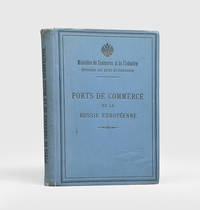
1908rif. 189307St- Petersburg: R. Golicke & A. Willborg for the Ministère du Commerce et de l'industrie 1908. Havens for Tsarist maritime commerce First and only edition. Officially sanctioned painstaking survey of the Russian ports of Europe recorded at the height of their influence. Rare WorldCat locates a single copy in the University of Genoa. Altogether sixty-five ports are described in great detail accompanied by photographs plans and engineer's sections for aspects of their construction. This sort of close scrutiny would very soon be confined behind a wall of Soviet state secrecy. The report covers the White Sea Black Sea Baltic Sea and Sea of Azov; more than a half of the ports analyzed are now located outside of Russia in the Baltic states Ukraine and Georgia. This volume was never intended for general distribution but rather was passed through official channels a presentation of the ports as a manifestation of the of Russian Empire's influence on European maritime commerce. Finely produced the presswork was carried out by R. Golicke & A. Willborg a house known for its involvement in Russian livres d'artiste and other fine editions the binding was commissioned from the workshop of M. Uleman small gilt on white ticket to the front pastedown. Two pre-Revolutionary ink stamps to the title page one repeated on the front cover. Crossed out on the title is of that of the Imperial Library of the Central Statistical Committee of Ministry of Internal Affairs the repeated stamp is for "Professor Emeritus of the St Petersburg Institute of Communication Routes Vsevolod Evgenievich Timonov". Timonov 1862-1936 was a hydraulic engineer hydrologist and transportation engineer typical of the intended constituency for the volume. From 1886 to 1895 he served in the Ministry of Railways working on the Commission for the Construction of Commercial Ports. During this time Timonov supervised the first work on the construction of stone block breakwaters for ports on the Baltic 1887 organized and implemented the initial marine dredging works there 1889 explored the mouths of the Dnieper Don and Volga rivers 1890 selecting the branches for development drew up a project for improving the rapids on the Dnieper carrying out exploratory work on one section 1894 explored the shores of the Pacific Ocean to assist in the selection Vladivostok as the location for the Pacific port terminal of the Siberian railway and explored the rivers of the Amur region developing measures to increase navigability 1895. Octavo 280 203 mm. pp. 24 33 94 128 91 vii. Printed throughout on coated paper numerous half-tone illustrations maps and plans to the text large folding three-colour printed map 695 x 560 mm retained by a band at the rear endpaper. Original light greenish blue cloth lettered in black on the spine and front cover French fillet panel to both covers in black to the front in blind on the back light greenish grey endpapers. Slightly rubbed and a little bumped some short splits to head and tail of the spine endpapers a touch browned at the edges; text-block marginally toned but clean and sound; very good. hardcover
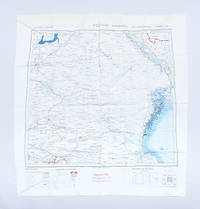
1952rif. 183941London: Ordnance Survey 1952. Later editions marked "restricted" revised from those produced by the War Office in 1919 and 1916 with isogonals correct to 1953. These maps were issued in the early years of the Cold War only a decade after the region was ravaged in the Battle of Stalingrad. Stepnoy now Elista was renamed only five years after this map's publication. In the early years of the Cold War the CIA attempted to gather information on the Soviet Union through aerial spying missions flown with the co-operation of the British government. "The RAF formed a top-secret reconnaissance outfit in the spring of 1951. Churchill approved the RAF overflight program knowing that if one of the planes came down on Russian territory Labour MPs in an embarrassed and angered House of Commons undoubtedly would force a vote of confidence to bring down his government. But he balanced that possibility against the desperate need for radar pictures of Soviet military targets that would held SAC and RAF bombers in the event of war" Burrows pp. 131-33. In 1952 John Crampton flew a high-speed high-altitude test run over the Berlin corridor which Bomber Command followed with three simultaneous sorties reaching as far as Moscow itself. After a ten-hour mission that triggered the Soviet air defences "All three planes made it back to Sculthorpe with their radar imagery and without a scratch" Burrows p. 134 angering the Kremlin and prompting a review of the nation's air warning systems. The map of Stalingrad is the fourth edition and the map of Stepnoy is the fifth. Single sheet of cloth 605 x 554 mm colour maps with key on each side pale border on Stalingrad side lettered in red blue and black. Map bright sometime folded and creased edges a little frayed: a very good copy. William Burrows By Any Means Necessary: America's secret air war in the Cold War 2001. hardcover
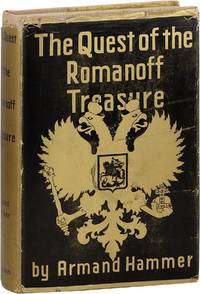
1936rif. 83612New York: The Paisley Press Inc. Succeeding William Farquhar Payson 1936. Stated Third Edition. Octavo. 21.5cm. Publisher's heavy grain pale grey cloth titled and decorated in gilt to spine and front board. Dustjacket. xi; 241pp. Some wear and discoloration to extremities very light it's a very solidly produced book so wear and tear is represented by darkening of the cloth at the edges and some softening of the spine ends rather than anything more drastic; internally clean ownership to front pastedown author's signature to front flyleaf; in a handsome example of the gold and black dustjacket with some chipping and shallow loss to the spine ends scuffing and rubbing to the gilt paper coating and some marginal creasing and soiling. A very good solid copy. Illustrated throughout with full page plates. For a man named by his father after the logo of the American Socialist Labor Party after slipping out of Odessa in the 1870's Armand Hammer's journey to become one of the world's most influential businessmen and "Lenin's Favorite Capitalist" must have been a dramatic one. His father Julius had spent much of the early 20th century consolidating his role at Allied Drug and Chemical which was essentially at times a smuggling front shipping embargoed goods to Russia during the US trade sanctions. After Julius was sentenced to 3 years in Sing Sing allegedly for a botched abortion that resulted in the death of a Russian woman from subsequent pneumonia although modern research suggests that Armand a medical student might have been the one who performed the abortion and Julius took responsibility as the qualified senior medical professional present Armand took over Allied Drug and Chemical and raised it to new heights of corporate success. During Prohibition Allied's largest seller was a essentially alcoholic ginger ale sold as a medicinal tonic to great profit. Acting under the instructions of his imprisoned father Armand began taking numerous business trips to the Soviet Union. A young J. Edgar Hoover at that point basically an analyst at the Justice Department very strongly believed that the equally youthful Hammer was a COMINTERN courier and essentially placed him under surveillance for the rest of his life. Hammer's trips to Russia were ostensibly to recoup bad debts but this quickly developed into a number of lucrative business deals not least of which was selling cheap wheat to starving famine hit areas of Russia. Hammer developed a close co-operative no pun intended relationship with Lenin which resulted in a number of very high status business contracts and deals ranging from medical import contracts to 25 year's worth of asbestos mining in the Urals; one of Hammer's greatest coups was arranging payment for various services in furs caviar jewellery and antiquities seized by the Party from its long tail of enemies making him essentially a conduit for looted and otherwise dubious art jewels and antiques. At the height of Lenin's New Economic Policy Armand Hammer was the sole trade liason between the enormity of Soviet Russia and 38 major US corporations seeking to build trade deals through him. His grasp of the downrange necessities of dealing with the Soviets; graft bribery corruption and palm greasing was legendary and by the 1970's when his methods were starting to be inspected more closely there was no doubt that Hammer's understanding of legitimate business was secondary to his instinctive abilities in the fields of corporate and beaurocratic bribery and manipulation. This book is one personal perspective on the empire of treasure that Hammer accumulated; there are others and the entangled ephemeral traces of looted artworks forged and unfinished Fabergé eggs specially manufactured jeweller's tools designed to copy Fabergé's style exactly and a wealth of other foggy rumors and suspicions ranging from Armand the KGB stooge to Armand the James Bond Villain bent on Soviet domination through capitalism will continue to follow in his wake whether he be considered a legitimate businessman or a highly successful 20th century robber baron of legendary proportions. The Paisley Press Inc. Succeeding William Farquhar Payson unknown
1955rif. 83663New York: Henry Holt 1955. First Edition. Octavo. 21.5cm. Publisher's red cloth spine over grey paper covered boards titled in gilt to spine. Dustjacket. 315pp. Some very light soiling to the paler portions of the boards minor bumping to spine ends internally clean with some offsetting to pastedowns and a very few discrete pencil marks to margins of the prelims in a bright sharp dustjacket with some minor wear to extremities. A very good copy. A rather alarmist but for the time rational analysis of the breadth of Soviet intelligence attempts to maintain and utilize a global espionage network; covers the Atom Spy frenzy The Rosenbergs Alger Hiss etc. Henry Holt unknown
1946rif. 83794Stanford CA: Stanford University Press for The Hoover Library on War Revolution and Peace 1946. First American Edition. Octavo. 23cm. Publisher's black cloth titled and decorated in gilt to spine. Dustjacket. xv; 658pp. Very light wear to the cloth mostly confined to some shallow cosmetic bumping to spine ends; internally clean; in a clean strong price-clipped dustjacket with some marginal fraying and isolated shallow loss to edges some toning of the spine panel and some largely unnecessary tape reinforcement to the verso of the jacket. A very good copy in a dustjacket with some light wear. A sizeable biography of the life of Ipatieff who managed to be a respected scientific figure before the Revolution and an even more respected one afterwards. It can have been no mean feat to have been head of Imperial Russian chemical warfare research during WW1 and then post-revolution to be held responsible for the revitalization of the chemical industry of the newly minted USSR. A joint memoir of the last days of Imperial Russia and the early days of the USSR with all the turbulence fear and uncertainty that must have engendered. Stanford University Press for The Hoover Library on War, Revolution and Peace unknown
1949rif. 84391New York: Macmillan 1949. Second Printing. Octavo. 22cm. Publisher's slate grey cloth titled in gilt to spine. Dustjacket. ix; 342pp. Lightly sunned to spine with some light bumping and fading to the extremities; internally clean with a name and military ID number stamped on the top-edge of the page block and another numerical stamp to the bottom edge; in a priceclipped dustjacket with shalow fraying and chipping to the spine ends and extremities some light soiling to the pale paper and toning to the spine panel. A very good copy in a dustjacket that has seen some use. An extremely readable history of the social hierarchies and structures of Russia prior to the Revlution and the manner in which a nation deals with the overturning of all that it held familiar and enduring. Macmillan unknown
1982rif. 84406New York: W.W. Norton & Co 1982. First American Edition. Octavo. 22cm. Publisher's bright red cloth titled and decorated in black silver and gilt to spine. Dustjacket.xvii; 636pp.; 7pp. Clean and bright with minimal wear; internally clean. A very good copy indeed. A compendium of writings and art pieces banned or denied publication in the Soviet Union originally issued in 1979 under the title of "Metropol" with the demand that they be published free of state censorship. The demand was predictably refused and copies of Metropol were circulated secretly within the Soviet Union before eventually making their way into the West. W.W. Norton & Co unknown
1982rif. 84404New York: Crane Russak 1982. First Thus. Octavo. 23cm. Publisher's bright red cloth titled in black to spine. Dustjacket. xxvi; 398pp. Light bumping to spine ends some very light wear to the extremities of the cloth; internally clean; in a clean sharp example of the dustjacket. A near fine copy. A study produced under the auspices of the RAND Corporation a military adjacent think-tank and research institution originally created to research and protect against future methods of warfare but later expanding into the civilian sector. Coinciding with the opening of Soviet hostilities against Afghanistan but working from a body of knowledge accumulated since the end of WW2 and the commencement of the Cold War this is an attempt to predict and understand Soviet military and strategic thinking and behavior in time of conflict. Crane Russak unknown
1974rif. 84419New York: Taplinger Publishing Co 1974. First American Edition. Octavo. 24cm. Publisher's black cloth titled in gilt to spine. Dustjacket. 472pp. Clean and sharp; internally clean top edge stained red; in a strong bright dustjacket with light wear to extremities. A very good copy indeed. Ninety-two documents showing the development of Soviet internal and foreign policy dating from the Revolution to the period of publication. Taplinger Publishing Co unknown
1980rif. 81760Moscow: Tushino Machine Building Plant 1980's. Pasteboard box 44cm x 23cm. Name printed in stark black and white onto a stereotypically minimalist Soviet box all the more susrprising considering this is a toy for children. Light inoffensive wear to the extremities a little rubbing and scuffing to the corners clean and complete. The verso of the box lid contains a plan of the contents with item numbers and small illustrations. Inside the box liner is moulded polystyrene with spaces for the individual components ranging from pressed steel baseboards and wall/hull sections to a set of rubber tyres woven string to simulate hawsers and cables pulleys connecting rods all the necessary tools a bag of nuts bolts and other connector pieces; all mass produced in a fashion that would have even a cursory modern day child safety inspection shutting down the whole plant and issuing a warning that if your children get this for Christmas you might need to count their fingers on Boxing Day. Miraculously complete as far as can be ascertained and with very little sign of use including the plans and construction book which is complex enough to count as aggressively educational and has the original warranty sheet with inspection stamps hand stamped and dated 1992 although the slip dates the set to the 1980's laid in. The introduction to the set in the 62 page instruction book states: "The 'Yunost' contruction set is a game designed in 1944 to introduce children aged 10-15 years to the principles of technical design and construction engineering. Each set of the 'Yunost' construction set contains the most intricate parts intnded for assembling models of various mechanisms machines and industrial structures." Clearly designed as a controlled Soviet alternative to Western toys like Erector Sets Meccano and the like the principles are identical whilst the delivery is rather more tailored to a deliberately educational USSR approach to entertaining children. "Nothing without purpose" seems to have been the guiding tenet of USSR toy production approaches which became notorious for taking an existing Western temptation like Meccano or Lego or GI-Joe and adapting them to the requirements of collective adherence to the improvement of the USSR. To Western eyes a lot of this material looks like the physical representation of the "We have McDonalds at home." meme but whilst Western toy design was aimed as much at keeping kids quiet and out of the way with a side of education the Soviet philosophy seems to have been 'if a child is building a toy crane then he should be learning the principles of load bearing members understanding pulleys and getting an idea of where crane operators fit into the process of industrial engineering' whilst this approach seems to take some of the joy out of play time it also contributed to the Western paranoia that the USSR was basically a cradle to grave enemy factory. Tushino Machine Building Plant unknown
1999rif. x-0313305110Greenwood Pub Group 1999. Hardcover. New. 773 pages. 9.75x6.25x1.50 inches. Greenwood Pub Group hardcover
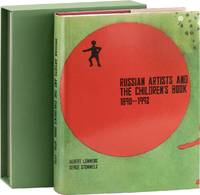
1990rif. 81719Nijmegen: LS 1990. First Limited Edition. Deluxe issue one of eleven copies in slipcase signed by both authors and issued with an original Soviet children's book in this case a copy of Kornei Chukovsky's Telefon Moscow: 1936 with illustrations by Vladimir Konashevich. Quarto 28cm; cloth hardcover dustjacket 511pp; illus. Supplemental DVD laid in as-issued. A fine copy in a crisp unworn dustwrapper and unworn slipcase. The included copy of Telefon is housed in a folding chemise designed to slip into the same slipcase as the main volume; staple-bound pictorial wrappers; 16pp light toning and wear to wrappers else Near Fine. A most desirable copy of what has become a standard English-language reference for Russian illustrated children's books. The deluxe issue is necessarily rare and seldom offered for sale. LS unknown
1966rif. ZB1278337London Math Soc 1966. Russian Mathematical Surveys. v. 21; 22; 25; 27; 32; 33; 34; 35 including postage to Germany. - If you are reading this this item is actually physically in our stock and ready for shipment once ordered. We are not bookjackers. Buyer is responsible for any additional duties taxes or fees required by recipient's country. Photos available upon request. London Math Soc unknown
rif. B9781019196748Hardback. New. hardcover
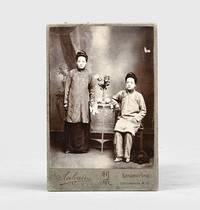
1890rif. 154515Vladivostok: Livay Studio No. 11 Svetlanskaya Street c. 1890. A scarce late 19th-century record of styles of clothing and foot-binding followed by well-to-do Chinese women in the Russian border city of Vladivostok. The Livay photographic studio catered specifically to Chinese residents and visitors and we have not been able to trace any other surviving examples of its work. Following China's transfer of the Haishenwei region to the Tsar in 1860 Vladivostok became a thriving centre of economic activity and cultural interchange between Russians and Chinese with both of these communities served by the Livay studio based on the city's main boulevard. This photograph is a pleasing corrective to the many surviving photographs of late-imperial Chinese women often produced in cities such as Shanghai which adopt an orientalizing gaze. While photography was introduced into Russia soon after its invention it remained a preserve of the very wealthy until the 1860s when technological changes fuelled an explosion in the number of photographic studios in major cities. "In the hands of commercial studio photographers the medium retained its original social function namely "to solemnize and to immortalize" the portrayed subject. The studio photograph was an index and a means of communicating one's status; it indicated the sitter's place in the social hierarchy both as a commodity object and as information. But more importantly photography dominated the market for portraiture and democratized visual self-representation. It captured people from across the social spectrum and brought about a visual levelling whereby the social benefits and drawbacks of this type of publicity was showered equally on kings nobles lawyers merchants and cobblers. Photography as a mechanized medium of self-representation pulled members of different social class onto the same visual level in the public sphere" Stolarski pp. 4-5. Cabinet card 164 x 108 mm mounted gelatine photograph 140 x 103 mm with glossy finish card lettered in red in Russian and Chinese. Small scuff to upper right corner of photograph image substantially unaffected couple of faint stains to card verso skinned where sometime mounted. A very good example. Christopher Stolarski "The Rise of Photojournalism in Russia and the Soviet Union 1900-1931" PhD Diss. 2013. hardcover
1769rif. 719841769. Lausanne: Francois Grasset & Comp. 1769. Lausanne: Francois Grasset & Comp. 1769. Early French Translation of an Important Document of the Enlightenment Catherine II 1762-1796 Empress of Russia. Balthasar Joseph Anton Felix von 1737-1810 Translator. Instruction Donnee par Catherine II. Imperatrice et Legislatrice de Toutes les Russies a la Commission Etablie par cette Souveraine pour Travailler ala Redaction d'un Nouveau Code de Loix Telle Qu'elle e ete Imprimee en Russe & en Allemand Dans l'Imprimerie Imperiale de Moscow. Nouvelle Edition Augmentee. Lausanne: Chez Francois Grasset & Comp. 1769. xiv 160 i.e. 204 pp. Lacking dedication leaf and copperplate portrait frontispiece. Quarto 7" x 4-3/4". Recent period-style three-quarter calf over marbled boards raised bands and red and black lettering pieces to spine marbled endpapers untrimmed edges. Light rubbing to extremities light fading to spine. Moderate toning light foxing in a few places. $1250. Third French-language edition. An important document of the Enlightenment the Nakaz or Instruction composed by Catherine the Great served to guide the assembly summoned in 1766 to draft a new code of laws for the Russian Empire. Drawn primarily from Montesquieu as well as Rousseau Beccaria and other Enlightenment thinkers the Nakaz condemned torture and capital punishment and endorsed such principles as the equality of all before the law. Published in the principal European tongues between 1767 and 1769 it proved to be a statement to the world as much as a practical legal text. Three editions in French were published in 1769 first in Moscow then in Yverdon with a false St. Petersburg imprint and Lausanne. In 1769 Duc de Choiseul added the "libertine" Nakaz to the list of books prohibited in France. Balthasar the translator of our edition was a Swiss historian and member of the Enlightenment's international "Republic of Letters." His introduction pp. iii-iv is a notable document of the early reception of the Nakaz in Western Europe. Graesse Tresor de Livres Rares et Precieux II:80. unknown
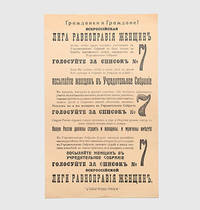
1917rif. 134554Petrograd: Tsentr. Tipograf 1917. A new Russia should be built by women and men together A remarkable survival of a flyer printed by the All-Russian League of Equal Rights for Women for their political campaign for the election to the Constituent Assembly in November 1917. The League participated in elections as its own party under the number 7. In English the flyer text reads: ''Female Citizens and male citizens! The League of Equality for Women wishing that the right of women to participate in the Constituent Assembly was not only on paper expose its candidates to the Constituent Assembly. Vote for the list number 7. If you want our children not to grow up without a home and the old people to not die on the street - send women to the Constituent Assembly. In America Australia and other countries where women take part in the drafting of laws the number of schools is multiplied prisons are empty debauchery and drunkenness noticeably diminish the protection of children and the elderly is fully secured by law. Let's send women to the Constituent Assembly too. The old Russia was built only by men and the grief and misfortunes of the motherland were always shared with them by mothers wives and daughters. A new Russia should be built by women and men together! The most important Russian laws will be written in the Constituent Assembly. From the laws that will be created in the Constituent Assembly the fate and life of many generations depends not only on men but also on women and so send women to the Constituent Assembly.''. The campaign for women's political rights in Russia termed the ''women's liberation movement'' became possible only with the beginning of the revolution in 1905 when the question of the democratization of the political system arose. The oldest women's association in Russia the All-Russian Women's Mutual Charity Society established in 1895 was actively involved and new organizations were created: the Union for the Equality of Women 1905 Women's Progressive Party 1905 and the All-Russian League of Equal Rights for Women 1907. The most influential organization was the first the Union which had 48 offices in various cities across Russia and actively conducted agitation among women workers and peasants. After its disintegration the League of Equal Rights for Women became its successor. Members of the League deliberately abandoned the broad political programme and focused their attention only on suffragist demands practising agitation tours through the provinces Orel Saratov Rostov-on-Don Kremenets Tomsk Kiev Simferopol and Narva. As a result branches of the League emerged in many cities including Moscow 1910 Kharkov 1912 Tomsk 1914 and Yekaterinburg 1914. This included the establishment of the following departments: a reading room for street children with a view to preventing child prostitution; a publishing committee that printed cheap pamphlets and books on women's issues; and an editorial commission that published the proceedings of the congress. Every day reports were given on the issues of women's equality in the League's premises. After the February Revolution delegates from the League repeatedly met with the leaders of the Soviet of Workers' and Soldiers' Deputies on the issue of women's suffrage. Despite initial promises of support they refused to immediately act on granting political rights to women. In response the League organized the famous mass march on 20 March 1917 which brought together about 40000 women. To that date it was the most numerous and memorable stand by the Russian women's movement and resulted in the adoption by the Provisional Government of a decree on universal suffrage which was passed on 20 July 1917. Single-sided flyer 365 x 220 mm. In near-fine condition. unknown
1698rif. 112625London: R. Baldwin 1698. First edition of this work. Octavo bound in modern wrappers 28 pages. In very good condition with some browning and toning to the text. Rare with no other examples appearing at auction in the last 80 years. R. Baldwin unknown
1798rif. 132180St Petersburg: A l'Academie Imperiale des Sciences 1798. First and only edition. Single location on WorldCat at BL KVK adds a copy in the Austrian National Library lacking 2 plates; and copies in the Zentralbibliothek der Bundeswehr Düsseldorf and Universitäts- und Landesbibliothek Sachsen-Anhalt Halle. Decidedly uncommon infantry manual for the Imperial Russian Army from the brief reign of Tsar Paul I r.1796-1801. Paul had travelled extensively in Europe and had developed a taste for French and Italian architecture and Prussian military practice taking immense pleasure in rigidly drilling his private brigade of troops in the Versailles-inspired grounds of his estate at Gatchina. When he ascended the throne he attempted to remodel the army along Prussian lines introducing entirely impractical uniforms a regime of elaborate ceremonials and parades and as shown here the implementation of rigourous regulations and drill. The present manual was directly translated into French from its Prussian equivalent the words of command also being given in phonetically rendered Russian. Paul was assassinated by a group of disaffected army officers after just 4 years on the throne. Octavo 196 x 110 mm. 13 folding plates at the rear; somewhat erratically numbered no plate 1 2 plans numbered 4 but apparently complete. Recent mottled sheep-backed marbled boards by G. Gauché Paris red morocco label gilt rules to the spine. Spine lightly sunned light soiling to the title page pale toning to the text-block throughout overall very good. hardcover
1815rif. 120459London: Printed for Edward Orme 1815. Magnificent hand-coloured views of St Petersburg First edition "one of the most beautiful plate books of St Petersburg" Bobins Collection offering a wonderfully evocative picture of the city in the wake of the Napoleonic Wars issued during the lifetime of one of its most famous inhabitants Alexander Pushkin. Published at 6 guineas coloured this is a superb record of the city of Peter the Great and is divided into two sections: the first 12 plates represent the months of the year through characteristic views of the city; the other 8 illustrate different modes of transport various types of sledges and carriages but include excellent character studies showing diverse types of costume by class and by season. The 26-page introduction entitled "The present state of St Petersburgh" includes a brief historical survey and a few statistics along with descriptions of the main sites and monuments. "Though unsigned the letterpress was chiefly compiled from Robert Ker Porter's Travelling Sketches in Russia and Sweden during the years 1805-1808 as many sections repeat his text verbatim" Giroud p.72. Mornay the artist responsible for the original sketches upon which Clark and Dubourg's aquatints were based eludes identification and does not appear in Thieme-Becker. Martin Hardie in characteristically waspish fashion describes the plates as "lurid in colouring very much in the style of toy theatre scenery" English Coloured Books 1906 p. 138; this is entirely unfair the colouring in the present copy is certainly not "lurid" and the "toy theatre" quality of the views only lends them a most appealing charm: many of them are composed in such a way that they resemble vues d'optiques - symmetrical and theatrical middle-distance perspectives - which combine well with the small scaling figures staffage adding splashes of bright colour against backgrounds of snowy streets grey skies and yellowish-brown buildings of this "city of stone" forming a satisfyingly picturesque effect. Two of the buildings shown - the Exchange 1809 and the Kazan Cathedral 1811 - had only recently been completed. Edward Orme - "Publisher to His Majesty and HRH the Prince Regent" - was "after Rudolph Ackermann the most important publisher of illustrated books during the short golden age of the coloured aquatint" ODNB. He would have had a prudent eye on the visit of the Allied sovereigns to London in June 1814 which celebrated the Treaty of Fontainebleau 11 April 1814 and the peace following the defeat and abdication of Napoleon. Among them was Tsar Alexander I who stayed with his sister the Grand Duchess of Oldenburg at the Pulteney Hotel on Piccadilly. "In 1809 Edward Orme had begun buying land and property in Bayswater London. He exploited the gravel deposits built houses and in 1818 added a chapel of ease. Orme Square developed between 1823 and 1826 was named after him and Moscow Road and St Petersburgh Place nearby may have commemorated the state visit of Tsar Alexander I in June 1814. In the following year he published a volume of twenty coloured aquatint views of St Petersburg and the reference in his will to jewellery presented to him by the emperor of Russia may be connected with these events" ibid. This is a marvellous survey of one of the world's great cities captured at the time when it served as the backdrop for Tolstoy's War and Peace. Folio 469 x 310 mm. Additional engraved title page incorporating a large double-headed Russian eagle 20 hand-coloured aquatint plates by Clark & Dubourg after Mornay; watermarks: plates J. Whatman 1825 text W. Balston 1813. Late 19th-century dark brown morocco-grain half skiver professionally refurbished marbled sides gilt edges drab grey endpapers. From the library of noted bibliophiles Maxine and Joel Spitz with their "Trail Tree" bookplate Joel Spitz was a member of Chicago's prestigious Caxton Club. Light offsetting from frontispiece to engraved title. An excellent copy the plates fresh and bright and with the four leaves of explanation of the plates in French and English. Abbey Travel 226; Bobins Collection 203; Tooley 355; Vincent Giroud St. Petersburg: A Portrait of a Great City Yale University Press 2003. unknown