Gerrare, WirtBiblio.com

17 738 résultats
1903réf. 18104London: J. M. Dent & Sons Ltd. . Very Good. Second Edition. Hardcover. First and last page a bit browned; Gilt lettering and decoration to spine and front board. Top edge gilt. Fore edge and bottom edge untrimmed. NF rear fold out map; Mediaeval Town Series; B&W Illustrations; 16mo 6" - 7" tall; 315 pages . 1903. J. M. Dent & Sons, Ltd. hardcover
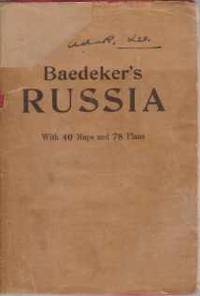
1914réf. 17923Leipzig: Karl Baedeker. Very Good in Good dust jacket. Hardcover. DJ browned as usual and chipped. DJ spine laid-in book. Top DJ professionally repaired. Former owner's address on front endpaper.; 1st and only edition. One of the most scarce and precious titles of the Baedeker series. A description of the country before the revolution. 40 fold out maps in color and 78 plans. A very well preserved copy - especially rare with DJ. Marbled edges nicely preserved - this is the best copy we have ever seen; 16mo 6" - 7" tall; 590 pages . 1914. Karl Baedeker hardcover
1925réf. 17719New York: E. P. Dutton & Company. Very Good. Hardcover. Light shelfwear to boards; Presentation copy from WM E. Borah with presentation slip from United States Senate slip laid in.; 8vo; 402 pages . 1925. E. P. Dutton & Company hardcover
1897réf. 17398Leipzig: Karl Baedeker. Very Good. Second Edition. Hardcover. Half-title page and last blank page browned as usual. Edges a bit tanned and with one small stain. Else a very handsome and tight copy.; "Avec 14 cartes et 22 plans".; 16mo 6" - 7" tall; XLVIII 447 pages . 1897. Karl Baedeker hardcover
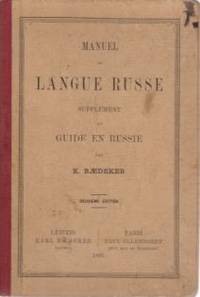
1897réf. 17354Leipzig: Karl Baedeker. Very Good. Second Edition. Stiff Wraps. Boards browned and with small ink soiling to front and a larger ink stain to back.; The rare supplement to the French edition of the Russia Baedeker; 16mo 6" - 7" tall; 108 pages . 1897. Karl Baedeker paperback
1960réf. 13527Greenwich: New York Graphic Society. Very Good in Very Good dust jacket. Hardcover. Light wear and chipping to price clipped DJ; INSCRIBED by author to first blank page. Tipped-in color photographs; Color Illustrations; 4to 11" - 13" tall; 170 pages . 1960. New York Graphic Society hardcover
réf. 12331Moscow: Foreign Lang. Publishing House. Very Good in Very Good- dust jacket. Hardcover. Small tears light chipping to DJ. Slight browning to endpapers. 'Printed in USSR' inkstamp in front free endpaper; Forty-eight B&W plates at rear illustrate this overview of Moscow circa late 1950s; B&W Photographs; 16mo 6" - 7" tall; 169 pages . N.D. Foreign Lang. Publishing House hardcover
1943réf. 7088London: Frederick Muller Ltd. . Very Good in Very Good- dust jacket. Second Edition. Hardcover. DJ with small chips. Light occasional foxing; SIGNED by the Dean of Canterbury with ink on the title page; 12mo 7" - 7½" tall; 154 pages . 1943. Frederick Muller Ltd. hardcover
1913réf. 6307London: John Lane the Bodley Head. Very Good. First Edition. Hardcover. Boards with light rubbing to extremities. Minute tears to spine ends. Hinges not tight but holding together. Occasional foxing mostly to the first half of book.; Fold-out map at rear and 50 photographs; 8vo 8" - 9" tall; 344 pages . 1913. John Lane the Bodley Head hardcover
réf. 42350issued by the City of Moscow in 1908 with coupons text in both English and Russian folio with attractive vignette at the head of a knight slaying a Dragon Moscow At the end of the 19th century Europe lived under the law of alliances. As Germany and Russia move away Saint Petersburg and Paris get closer. Russia needed money and France needed friends to face the Triplice Germany Austria and Italy. "Slovophily" turns into hysteria. In 1888 Moscow issued four loans of 500 million gold francs under the blessing of the French public authorities. The Franco-Russian Alliance of 1891 ensured the success of the loans which multipled. Savers then rushed to the bank counters to show their patriotism and lend to Alexander III we will even build a bridge in Paris over the Seine that bears his name and then to Nicolas II and the City of Moscow. In 1904 the Russo-Japanese war caused panic but the banks were reassuring though after the October Revolution Lenin decided to stop recognising the debts of the old regime. unknown
réf. 42351Imperial Government of Russia 4% State Loan of 1902 bond issued by virtue of the Imperial Ukase of the 1st March 1902 to realise the contribution due to Russia in compensation for the "loses incurred in consequence of the Chinese disorders." the Boxer Rebellion "the annual payments to exactly correspond with the annual payments of interest and amortisation of the part of the contribution due to Russia which China engaged to pay in virtue of the Edict of the Chinese Empoer of of the 29th May 1901." folio A consortium of Russian German and Dutch banking and financial institutions were involved in the administration of this loan and payment of interest against coupons was paid from 18th June-1st July and from 19th December-1st January at various locations. An interesting anomaly is the denomination of the bond which is stated in Reichsmarks. The Reichsmark was not formally adopted as the German currency until 1924. The bonds were negotiable and accepted as security for Government contracts for deferred excise duties and for payment of customs duties at prices to be fixed half-yearly which would be not less than 90% of the face value of the bonds. The Boxer Rebellion in China had been followed by the combined military expedition of the powers to the Relief of Peking in which the US shared and the exaction of a huge indemnity of which the States relinquished nearly half of its share as in excess of the actual losses. The US protested against Russian demands upon China and actively participated in the negotiations which resulted in Russia's agreement to evacuate Manchuria. Russian delays and their policy have led Japan to declare war Secretary of State Hay's diplomacy was influential in limiting the zone of hostilities and the good offices of President Theodore Roosevelt brought about the conference between the two powers at Portsmouth N.H. which terminated hostilities. unknown
réf. 42352issued by the Russian Government for one Billion Roubles in 1916 with 6 of the original 20 coupons still attached 1 side folio printed in Green Ink with the Czarist Eagle at the head Moscow unknown
réf. 6206980561.Gpaperback. Good. Access codes and supplements are not guaranteed with used items. May be an ex-library book. paperback
réf. 61006261Northern Illinois University Press . Hardback. New. pp. liv 421 Maps Index Northern Illinois University Press hardcover
1905réf. 64112New York: Harper & Brothers 1905. Tall 8vo. 505 1 pp. With 100’s of text woodcuts & engravings maps on endpapers. Brick-red decorated publisher’s cloth black & gilt lettering front cover gilt lettering on spine w/ d.j. chipping & loss to spine minor chipping to fore-edges closed tears still NF/G- copy. Later printing of this fairly scarce installment in the Boy Travellers series set against the backdrop of a follow-up to the Far East and Americas adventures with Frank Bassett & Fred Bronson journeying from Vienna to Warsaw & St. Petersburg Moscow the great fair in Nijni Novgorod the Caspian Sea and across Central Asia. Knox 1835-1896 famed Civil War correspondent for the New York Herald later worked for the Russo-American Telegraph Company which inspired his Boy Travellers series featuring an industrialist father and two sons traveling the world. Exceedingly rare in dustjacket. Harper & Brothers, hardcover
1994réf. 725869London: HarperCollins 1994-06-06. First Edition. hardcover. Very Good/Very Good. 6x1x9. Gift inscription to title page. Slight fading to D/J. HarperCollins hardcover
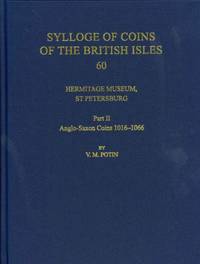
réf. ria9780197265017_inpHardback. New. New Book; Fast Shipping from UK; Not signed; Not First Edition; This volume completes publication of the Anglo-Saxon component of the rich and diverse coin collection built up in the Hermitage Museum St Petersburg. It lists and illustrates over 1100 late Anglo-Saxon pennies now held in the Hermita hardcover
1926réf. 59234Washington D.C.: Government Printing Office Hydrographic Office U.S. Navy 1926; 1930. Two vols. 8vo.viii 478 pp.; 1 22; 1 leaves. With 1 large folding colour map. First vol. in tan publisher’s buckram black lettering front cover & spine minor soiling spotting fore-edges of covers darkening to spine very slight uniform interior toning; 2nd. vol. w/ self-printed softcovers toning to fore-edges minor chipping still VG set. Second edition stated of vol. I and 1st edition of Supplement. These uncommon coast pilot guides to Eastern Mediterranean waters the Black Sea and the Sea of Azov draw upon British Royal Navy Ottoman Empire & Turkish coast pilots Russian & U.S. Navy reports. Prior to modern GPS systems and satellite navigation these regularly updated and revised navigation handbooks provided key sailing instructions. The maps outlines the available charts for the designated areas surrounding the Black Sea as well as detailing those for the extensive set of the Mediterranean Sea. Government Printing Office, Hydrographic Office, U.S. Navy, paperback
1719réf. 59230Washington D.C.: Government Printing Office Hydrographic Office U.S. Navy 1917; 1930. Two vols. 8vo. ix 1 4 364 pp.; 19 mimeograph leaves. With 2 large folding colour map. First vol. in black publisher’s buckram silver lettering stamped on front cover & spine minor shelfwear slight interior toning shelfwear 2nd vol. mimeographed typescript & stapled at gutter margin minor dustsoiling edgewear predation to lower fore-edge tear to last leaf of blank lower portion still a VG set. First editions of these coast pilot guides to Arctic waters during and after World War I issued about the time of the Russian Revolution and offered key navigational guides for Naval forces during the ill-fated White Russia Revolution and over 13000 troops in the Polar Bear Expedition. Prior to modern GPS systems and satellite navigation these regularly updated and revised navigation handbooks provided key sailing instructions often drawing not only from Russian & British sources but also sailing reports from U.S. Navy vessels and those from merchant ships. The two maps serve as indexes to sailing charts to be ordered from the Hydrographic Office and keyed to sailing instructions within the coast pilots. The supplement is uncommon no copies located in Worldcat. Government Printing Office, Hydrographic Office, U.S. Navy, hardcover
1987réf. 43199New York: Rizzoli 1987. Thick 4to. 618 pp. 1544 photos illusts. diagrams plates. Red cloth blk lettrng w/ d.j. couple sml clsd tears very mnr sunng to spine edgewear VG/VG copy from the collection of Dr. Rochelle Martin w/ ownrshp signature on ffep. First edition of this first exhaustive work on the history and examples of Soviet architecture from 1917-32. Included are sections on Classicism rationalism Constructivism nationalism and much more. Rizzoli, hardcover
1976réf. 39583Moscow: Izd. Izobrazitelnoe iskusstvo 1976. Folio. 247 1 pp. 109 colour plates text illusts. Colour-illust. boards mnr shlfwr mnr scuffng to uppr frnt cvr slght bmpng still a VG- copy issued w/o dustjacket. First edition of this scarce and informative collection of 18th and 19th century Russian portraits providing and invaluable resource into czarist Russian costume textiles jewelry and ornament. Izd. Izobrazitelnoe iskusstvo, hardcover
1998réf. 39784Moscow: Interbook Business Publishers 1998. Folio. 241 7 pp. 100s of colour illusts. Black boards gilt lettrng vry slght bmpng to crnrs w/ d.j. vry slght bmpng to lwr crnrs VG/VG. First edition of this spectacularly illustrated work on the traditional Russian lacquers lace embroidery scrimshaw porcelain ceramics weaving metalwork jewelry textiles and more. Printed in only 5000 copies. [Interbook Business Publishers, hardcover
réf. 45149756-nnew. unknown
réf. 55202Irkutsk or Vladivostok: Litografie Inf.-osv. odboru Äsl. vojska na Rusi 1919 or 1920. Postcard 14.3 × 9.5 cm with chromolithograph illustration signed "P" and text "Dopisnice/Pochtovaia kartochka" in Czech and Russian. Unused; very light crease to corner; else very good. Lithographed postcard by Vojtěch Preissig 1873-1944 issued by Czechoslovak Legion soldiers who fought alongside the White Army in Siberia after WWI and controlled large stretches of the Transsiberian Railroad from 1918-19. By 1919 the Legion soldiers retreated further eastward alongside Kolchak's army while transporting the bulk of the Imperial gold reserves for the Whites. In 1920 the Czechoslovak Legion was gradually evacuated by ship from Vladivostok and over 60.000 soldiers returned to the Czechoslovak Republic. Despite the precarious conditions the Legion issued a daily newspaper using a printing press on board the train as well as numerous brochures books as well as handwritten lithographed bulletins printed in small print runs. During longer stops such as during their time in Vladivostok a printer's shop was set up outside the train and the operations significantly expanded. Preissig was an important Secessionist painter graphic artist and book designer who worked with Alfons Mucha among others. In the 1910s he taught art in the United States at the Art Students' League and Columbia University as well in Boston. While still abroad Preissig met future Czechoslovak president T. G. Masaryk and became involved in the independence movement which he supported graphically by designing posters and postcards. He returned to Prague in 1931 establishing himself not only as a leading typographer and book designer but also as a pioneering abstract artist. Following the German Occupation of Czechoslovakia Preissig became involved in the resistance editing and designing an illegal journal. He was arrested and died at Dachau in 1944. unknown
réf. 55203Irkutsk or Vladivostok: Litografie Inf.-osv. odboru Äsl. vojska na Rusi 1919 or 1920. Postcard 14.3 × 9.5 cm with chromolithograph illustration signed "P" and text "Dopisnice/Pochtovaia kartochka" in Czech and Russian. Unused; very light crease to corner; else very good. Lithographed postcard by Vojtěch Preissig 1873-1944 issued by Czechoslovak Legion soldiers who fought alongside the White Army in Siberia after WWI and controlled large stretches of the Transsiberian Railroad from 1918-19. By 1919 the Legion soldiers retreated further eastward alongside Kolchak's army while transporting the bulk of the Imperial gold reserves for the Whites. In 1920 the Czechoslovak Legion was gradually evacuated by ship from Vladivostok and over 60.000 soldiers returned to the Czechoslovak Republic. Despite the precarious conditions the Legion issued a daily newspaper using a printing press on board the train as well as numerous brochures books as well as handwritten lithographed bulletins printed in small print runs. During longer stops such as during their time in Vladivostok a printer's shop was set up outside the train and the operations significantly expanded. Preissig was an important Secessionist painter graphic artist and book designer who worked with Alfons Mucha among others. In the 1910s he taught art in the United States at the Art Students' League and Columbia University as well in Boston. While still abroad Preissig met future Czechoslovak president T. G. Masaryk and became involved in the independence movement which he supported graphically by designing posters and postcards. He returned to Prague in 1931 establishing himself not only as a leading typographer and book designer but also as a pioneering abstract artist. Following the German Occupation of Czechoslovakia Preissig became involved in the resistance editing and designing an illegal journal. He was arrested and died at Dachau in 1944. unknown