The Revolt of 1916 in Russian Central Asia
8vo, br. ed. During the summer of 1916, approximately 270,000 Central Asians-Kazakhs, Kyrgyz, Tajiks, Turkmen, and Uzbeks-perished at the hands of the Russian army in a revolt

Pali s.r.l. · Italie32,00 €
20 115 résultats
réf. SONG0980181216Brand: Ringing Cedars Press 2008-06-15. 2nd. paperback. Used: Good. 5.50x0.50x8.50. Buy with confidence. Excellent Customer Service & Return policy. Brand: Ringing Cedars Press paperback
8vo, x + 230 pp, 5.75 x 8.5, HB, 1st prtg,The historical development of the Soviet and Chinese People's Liberation Armies. An examination of the differences that have existed between the Red Army and the People's Liberation Army in their roles in party and societal affairs in the two decades after the end of the civil wars. The sources of these differences, particularly in the civil war period; the nature of revolutionary change in the two countries. The formative influence of the civil wars etc.
VG/G (lightly faded turquoise dj is browned on spine wih light foxing front cover, lightly worn round edges with small 1/2" tear at top of spine, not clipped, this wartime wrapper has identical printing on the clean reverse side but with author's name inked out, clean turquoise cloth very lightly rubbed top and base of spine, this is a very good clean tight bright copy with light browning endpaper edges and few light speckles outside pages and pre-title page, internally the pages are clean and unmarked, no inscriptions) octavo 237pp. First edition. Prometheus Library series. Nazism, Fascism and Bolshevism - the author shows the family connection, explains why the ostensibly anti-Bolshevik Nazis joined Soviet Russia in a cooperation of the "proletarian" States against the capitalist ones, and discusses the present situation.
8vo, br. ed. During the summer of 1916, approximately 270,000 Central Asians-Kazakhs, Kyrgyz, Tajiks, Turkmen, and Uzbeks-perished at the hands of the Russian army in a revolt
1920319p. Uncut. Two bookseller's labels, Peabody Book Shop in Baltimore and the Old Corner Book Store in Boston. Manuscript notes on last fly leaves. 8vo. Original full brown cloth binding, spotted and worn. Paper spine label, some loss. First edition. Written before the United States Senate rejected the peace compact and the League. **PRICE JUST REDUCED! WWI 10
1997réf. 23222new oversize hc expedited shipping not available Parkstone Press hardcover
réf. 185995278X.Ghardcover. Good. Access codes and supplements are not guaranteed with used items. May be an ex-library book. hardcover
1929réf. ZB1339926NY: The Century Co. 1929. inscribed by the author; second printing xxi 310 pp. hardcover very good in a worn dust jacket. - If you are reading this this item is actually physically in our stock and ready for shipment once ordered. We are not bookjackers. Buyer is responsible for any additional duties taxes or fees required by recipient's country. Photos available upon request. NY: The Century Co. hardcover
1929réf. 0021New York: The Century Co. 1929. Condition: good. Translated by Jean S. Proctor. The Century Co. hardcover
1925Light shelfwear to boards ; Presentation copy from WM E. Borah with presentation slip from United States Senate slip laid in. ; 8vo; 402 pages
1925réf. 17719New York: E. P. Dutton & Company. Very Good. Hardcover. Light shelfwear to boards; Presentation copy from WM E. Borah with presentation slip from United States Senate slip laid in.; 8vo; 402 pages . 1925. E. P. Dutton & Company hardcover
1995Broché. 224 pages.
19958vo., First Edition, with 4 maps in the text; cloth, gilt back, a near fine copy in the dustwrapper. Best and most detailed study of the Soviet spy network operting inside Germany in WWII.
1975Ex-library copy with the usual stamps and markings. Interior pages clean and unmarked; tight binding. 310 pages.
1992réf. 25786Tokyo: Gendaikikakushitsu Publishers 1992. softcover folded card covers as issued. very small cluster of stains to bottom edge minor impact. no other flaws or wear. else clean. no markings. no bumps tears creases. strong sewn binding.; parallel english/japanese text.; 167pp. 117 color plates. two essays. statements by some of the artists. First Edition. Soft Cover. Near Fine Plus. 4to - over 9¾" - 12" tall. Gendaikikakushitsu Publishers Paperback
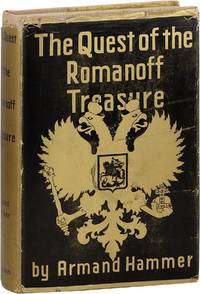
1936réf. 83612New York: The Paisley Press Inc. Succeeding William Farquhar Payson 1936. Stated Third Edition. Octavo. 21.5cm. Publisher's heavy grain pale grey cloth titled and decorated in gilt to spine and front board. Dustjacket. xi; 241pp. Some wear and discoloration to extremities very light it's a very solidly produced book so wear and tear is represented by darkening of the cloth at the edges and some softening of the spine ends rather than anything more drastic; internally clean ownership to front pastedown author's signature to front flyleaf; in a handsome example of the gold and black dustjacket with some chipping and shallow loss to the spine ends scuffing and rubbing to the gilt paper coating and some marginal creasing and soiling. A very good solid copy. Illustrated throughout with full page plates. For a man named by his father after the logo of the American Socialist Labor Party after slipping out of Odessa in the 1870's Armand Hammer's journey to become one of the world's most influential businessmen and "Lenin's Favorite Capitalist" must have been a dramatic one. His father Julius had spent much of the early 20th century consolidating his role at Allied Drug and Chemical which was essentially at times a smuggling front shipping embargoed goods to Russia during the US trade sanctions. After Julius was sentenced to 3 years in Sing Sing allegedly for a botched abortion that resulted in the death of a Russian woman from subsequent pneumonia although modern research suggests that Armand a medical student might have been the one who performed the abortion and Julius took responsibility as the qualified senior medical professional present Armand took over Allied Drug and Chemical and raised it to new heights of corporate success. During Prohibition Allied's largest seller was a essentially alcoholic ginger ale sold as a medicinal tonic to great profit. Acting under the instructions of his imprisoned father Armand began taking numerous business trips to the Soviet Union. A young J. Edgar Hoover at that point basically an analyst at the Justice Department very strongly believed that the equally youthful Hammer was a COMINTERN courier and essentially placed him under surveillance for the rest of his life. Hammer's trips to Russia were ostensibly to recoup bad debts but this quickly developed into a number of lucrative business deals not least of which was selling cheap wheat to starving famine hit areas of Russia. Hammer developed a close co-operative no pun intended relationship with Lenin which resulted in a number of very high status business contracts and deals ranging from medical import contracts to 25 year's worth of asbestos mining in the Urals; one of Hammer's greatest coups was arranging payment for various services in furs caviar jewellery and antiquities seized by the Party from its long tail of enemies making him essentially a conduit for looted and otherwise dubious art jewels and antiques. At the height of Lenin's New Economic Policy Armand Hammer was the sole trade liason between the enormity of Soviet Russia and 38 major US corporations seeking to build trade deals through him. His grasp of the downrange necessities of dealing with the Soviets; graft bribery corruption and palm greasing was legendary and by the 1970's when his methods were starting to be inspected more closely there was no doubt that Hammer's understanding of legitimate business was secondary to his instinctive abilities in the fields of corporate and beaurocratic bribery and manipulation. This book is one personal perspective on the empire of treasure that Hammer accumulated; there are others and the entangled ephemeral traces of looted artworks forged and unfinished Fabergé eggs specially manufactured jeweller's tools designed to copy Fabergé's style exactly and a wealth of other foggy rumors and suspicions ranging from Armand the KGB stooge to Armand the James Bond Villain bent on Soviet domination through capitalism will continue to follow in his wake whether he be considered a legitimate businessman or a highly successful 20th century robber baron of legendary proportions. The Paisley Press Inc. Succeeding William Farquhar Payson unknown books
1936réf. 83612New York: The Paisley Press Inc. Succeeding William Farquhar Payson 1936. Stated Third Edition. Octavo. 21.5cm. Publisher's heavy grain pale grey cloth titled and decorated in gilt to spine and front board. Dustjacket. xi; 241pp. Some wear and discoloration to extremities very light it's a very solidly produced book so wear and tear is represented by darkening of the cloth at the edges and some softening of the spine ends rather than anything more drastic; internally clean ownership to front pastedown author's signature to front flyleaf; in a handsome example of the gold and black dustjacket with some chipping and shallow loss to the spine ends scuffing and rubbing to the gilt paper coating and some marginal creasing and soiling. A very good solid copy. Illustrated throughout with full page plates. For a man named by his father after the logo of the American Socialist Labor Party after slipping out of Odessa in the 1870's Armand Hammer's journey to become one of the world's most influential businessmen and "Lenin's Favorite Capitalist" must have been a dramatic one. His father Julius had spent much of the early 20th century consolidating his role at Allied Drug and Chemical which was essentially at times a smuggling front shipping embargoed goods to Russia during the US trade sanctions. After Julius was sentenced to 3 years in Sing Sing allegedly for a botched abortion that resulted in the death of a Russian woman from subsequent pneumonia although modern research suggests that Armand a medical student might have been the one who performed the abortion and Julius took responsibility as the qualified senior medical professional present Armand took over Allied Drug and Chemical and raised it to new heights of corporate success. During Prohibition Allied's largest seller was a essentially alcoholic ginger ale sold as a medicinal tonic to great profit. Acting under the instructions of his imprisoned father Armand began taking numerous business trips to the Soviet Union. A young J. Edgar Hoover at that point basically an analyst at the Justice Department very strongly believed that the equally youthful Hammer was a COMINTERN courier and essentially placed him under surveillance for the rest of his life. Hammer's trips to Russia were ostensibly to recoup bad debts but this quickly developed into a number of lucrative business deals not least of which was selling cheap wheat to starving famine hit areas of Russia. Hammer developed a close co-operative no pun intended relationship with Lenin which resulted in a number of very high status business contracts and deals ranging from medical import contracts to 25 year's worth of asbestos mining in the Urals; one of Hammer's greatest coups was arranging payment for various services in furs caviar jewellery and antiquities seized by the Party from its long tail of enemies making him essentially a conduit for looted and otherwise dubious art jewels and antiques. At the height of Lenin's New Economic Policy Armand Hammer was the sole trade liason between the enormity of Soviet Russia and 38 major US corporations seeking to build trade deals through him. His grasp of the downrange necessities of dealing with the Soviets; graft bribery corruption and palm greasing was legendary and by the 1970's when his methods were starting to be inspected more closely there was no doubt that Hammer's understanding of legitimate business was secondary to his instinctive abilities in the fields of corporate and beaurocratic bribery and manipulation. This book is one personal perspective on the empire of treasure that Hammer accumulated; there are others and the entangled ephemeral traces of looted artworks forged and unfinished Fabergé eggs specially manufactured jeweller's tools designed to copy Fabergé's style exactly and a wealth of other foggy rumors and suspicions ranging from Armand the KGB stooge to Armand the James Bond Villain bent on Soviet domination through capitalism will continue to follow in his wake whether he be considered a legitimate businessman or a highly successful 20th century robber baron of legendary proportions. The Paisley Press Inc. Succeeding William Farquhar Payson unknown
1974réf. 10799851974). 4to. 6 Bl., 60 Abb. auf Taf. OLwd.
2011New English Paperback. Pbo. Roy. 8vo. (24 x 14 cm). In English. 31, [2] p., color and b/w ills. The protection Cathedral on Red Square. St. Basil's Cathedral.
1931réf. 004694New York: Columbia University Press 1931. 251pp. Describes the 11 years of prohibition in Finland the problems of smuggling and alcoholism the temperance movement attitudes of the press and other aspects of the controvery. Previous owner bookplate inside front cover. First Edition. Cloth. Very Good/No Jacket. 8vo - over 7¾" - 9¾" tall. Columbia University Press hardcover
1942pp. viii, 295. 8vo. Original full blue cloth binding, slightly spotted. Coldwar/Economics 1 / 8
1886Library No. at base of spine. Library label on front pastedown. Fold-out map of Russia attached opposite title page, there is a small tear to attached corner.
1997Book is in excellent condition with light wear to covers only. Binding is solid and square, covers have sharp corners, exterior shows no blemishes, text/interior is clean and free of marking of any kind. 250 pages with charts, graphs, maps.
1951pp. viii, 280. 8vo. Original full cloth binding. Coldwar/Economics 9
1966pp. xi, 199. Numerous inked underlinings and notations. 8vo. Paperback. Coldwar/Economics 9