20 697 résultats
1929réf. 0021New York: The Century Co. 1929. Condition: good. Translated by Jean S. Proctor. The Century Co. hardcover
1925Light shelfwear to boards ; Presentation copy from WM E. Borah with presentation slip from United States Senate slip laid in. ; 8vo; 402 pages
1925réf. 17719New York: E. P. Dutton & Company. Very Good. Hardcover. Light shelfwear to boards; Presentation copy from WM E. Borah with presentation slip from United States Senate slip laid in.; 8vo; 402 pages . 1925. E. P. Dutton & Company hardcover
1995Broché. 224 pages.
19958vo., First Edition, with 4 maps in the text; cloth, gilt back, a near fine copy in the dustwrapper. Best and most detailed study of the Soviet spy network operting inside Germany in WWII.
1975Ex-library copy with the usual stamps and markings. Interior pages clean and unmarked; tight binding. 310 pages.
1992réf. 25786Tokyo: Gendaikikakushitsu Publishers 1992. softcover folded card covers as issued. very small cluster of stains to bottom edge minor impact. no other flaws or wear. else clean. no markings. no bumps tears creases. strong sewn binding.; parallel english/japanese text.; 167pp. 117 color plates. two essays. statements by some of the artists. First Edition. Soft Cover. Near Fine Plus. 4to - over 9¾" - 12" tall. Gendaikikakushitsu Publishers Paperback
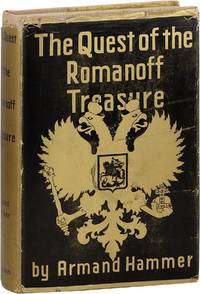
1936réf. 83612New York: The Paisley Press Inc. Succeeding William Farquhar Payson 1936. Stated Third Edition. Octavo. 21.5cm. Publisher's heavy grain pale grey cloth titled and decorated in gilt to spine and front board. Dustjacket. xi; 241pp. Some wear and discoloration to extremities very light it's a very solidly produced book so wear and tear is represented by darkening of the cloth at the edges and some softening of the spine ends rather than anything more drastic; internally clean ownership to front pastedown author's signature to front flyleaf; in a handsome example of the gold and black dustjacket with some chipping and shallow loss to the spine ends scuffing and rubbing to the gilt paper coating and some marginal creasing and soiling. A very good solid copy. Illustrated throughout with full page plates. For a man named by his father after the logo of the American Socialist Labor Party after slipping out of Odessa in the 1870's Armand Hammer's journey to become one of the world's most influential businessmen and "Lenin's Favorite Capitalist" must have been a dramatic one. His father Julius had spent much of the early 20th century consolidating his role at Allied Drug and Chemical which was essentially at times a smuggling front shipping embargoed goods to Russia during the US trade sanctions. After Julius was sentenced to 3 years in Sing Sing allegedly for a botched abortion that resulted in the death of a Russian woman from subsequent pneumonia although modern research suggests that Armand a medical student might have been the one who performed the abortion and Julius took responsibility as the qualified senior medical professional present Armand took over Allied Drug and Chemical and raised it to new heights of corporate success. During Prohibition Allied's largest seller was a essentially alcoholic ginger ale sold as a medicinal tonic to great profit. Acting under the instructions of his imprisoned father Armand began taking numerous business trips to the Soviet Union. A young J. Edgar Hoover at that point basically an analyst at the Justice Department very strongly believed that the equally youthful Hammer was a COMINTERN courier and essentially placed him under surveillance for the rest of his life. Hammer's trips to Russia were ostensibly to recoup bad debts but this quickly developed into a number of lucrative business deals not least of which was selling cheap wheat to starving famine hit areas of Russia. Hammer developed a close co-operative no pun intended relationship with Lenin which resulted in a number of very high status business contracts and deals ranging from medical import contracts to 25 year's worth of asbestos mining in the Urals; one of Hammer's greatest coups was arranging payment for various services in furs caviar jewellery and antiquities seized by the Party from its long tail of enemies making him essentially a conduit for looted and otherwise dubious art jewels and antiques. At the height of Lenin's New Economic Policy Armand Hammer was the sole trade liason between the enormity of Soviet Russia and 38 major US corporations seeking to build trade deals through him. His grasp of the downrange necessities of dealing with the Soviets; graft bribery corruption and palm greasing was legendary and by the 1970's when his methods were starting to be inspected more closely there was no doubt that Hammer's understanding of legitimate business was secondary to his instinctive abilities in the fields of corporate and beaurocratic bribery and manipulation. This book is one personal perspective on the empire of treasure that Hammer accumulated; there are others and the entangled ephemeral traces of looted artworks forged and unfinished Fabergé eggs specially manufactured jeweller's tools designed to copy Fabergé's style exactly and a wealth of other foggy rumors and suspicions ranging from Armand the KGB stooge to Armand the James Bond Villain bent on Soviet domination through capitalism will continue to follow in his wake whether he be considered a legitimate businessman or a highly successful 20th century robber baron of legendary proportions. The Paisley Press Inc. Succeeding William Farquhar Payson unknown books
1936réf. 83612New York: The Paisley Press Inc. Succeeding William Farquhar Payson 1936. Stated Third Edition. Octavo. 21.5cm. Publisher's heavy grain pale grey cloth titled and decorated in gilt to spine and front board. Dustjacket. xi; 241pp. Some wear and discoloration to extremities very light it's a very solidly produced book so wear and tear is represented by darkening of the cloth at the edges and some softening of the spine ends rather than anything more drastic; internally clean ownership to front pastedown author's signature to front flyleaf; in a handsome example of the gold and black dustjacket with some chipping and shallow loss to the spine ends scuffing and rubbing to the gilt paper coating and some marginal creasing and soiling. A very good solid copy. Illustrated throughout with full page plates. For a man named by his father after the logo of the American Socialist Labor Party after slipping out of Odessa in the 1870's Armand Hammer's journey to become one of the world's most influential businessmen and "Lenin's Favorite Capitalist" must have been a dramatic one. His father Julius had spent much of the early 20th century consolidating his role at Allied Drug and Chemical which was essentially at times a smuggling front shipping embargoed goods to Russia during the US trade sanctions. After Julius was sentenced to 3 years in Sing Sing allegedly for a botched abortion that resulted in the death of a Russian woman from subsequent pneumonia although modern research suggests that Armand a medical student might have been the one who performed the abortion and Julius took responsibility as the qualified senior medical professional present Armand took over Allied Drug and Chemical and raised it to new heights of corporate success. During Prohibition Allied's largest seller was a essentially alcoholic ginger ale sold as a medicinal tonic to great profit. Acting under the instructions of his imprisoned father Armand began taking numerous business trips to the Soviet Union. A young J. Edgar Hoover at that point basically an analyst at the Justice Department very strongly believed that the equally youthful Hammer was a COMINTERN courier and essentially placed him under surveillance for the rest of his life. Hammer's trips to Russia were ostensibly to recoup bad debts but this quickly developed into a number of lucrative business deals not least of which was selling cheap wheat to starving famine hit areas of Russia. Hammer developed a close co-operative no pun intended relationship with Lenin which resulted in a number of very high status business contracts and deals ranging from medical import contracts to 25 year's worth of asbestos mining in the Urals; one of Hammer's greatest coups was arranging payment for various services in furs caviar jewellery and antiquities seized by the Party from its long tail of enemies making him essentially a conduit for looted and otherwise dubious art jewels and antiques. At the height of Lenin's New Economic Policy Armand Hammer was the sole trade liason between the enormity of Soviet Russia and 38 major US corporations seeking to build trade deals through him. His grasp of the downrange necessities of dealing with the Soviets; graft bribery corruption and palm greasing was legendary and by the 1970's when his methods were starting to be inspected more closely there was no doubt that Hammer's understanding of legitimate business was secondary to his instinctive abilities in the fields of corporate and beaurocratic bribery and manipulation. This book is one personal perspective on the empire of treasure that Hammer accumulated; there are others and the entangled ephemeral traces of looted artworks forged and unfinished Fabergé eggs specially manufactured jeweller's tools designed to copy Fabergé's style exactly and a wealth of other foggy rumors and suspicions ranging from Armand the KGB stooge to Armand the James Bond Villain bent on Soviet domination through capitalism will continue to follow in his wake whether he be considered a legitimate businessman or a highly successful 20th century robber baron of legendary proportions. The Paisley Press Inc. Succeeding William Farquhar Payson unknown
1974réf. 10799851974). 4to. 6 Bl., 60 Abb. auf Taf. OLwd.
2011New English Paperback. Pbo. Roy. 8vo. (24 x 14 cm). In English. 31, [2] p., color and b/w ills. The protection Cathedral on Red Square. St. Basil's Cathedral.
1931réf. 004694New York: Columbia University Press 1931. 251pp. Describes the 11 years of prohibition in Finland the problems of smuggling and alcoholism the temperance movement attitudes of the press and other aspects of the controvery. Previous owner bookplate inside front cover. First Edition. Cloth. Very Good/No Jacket. 8vo - over 7¾" - 9¾" tall. Columbia University Press hardcover
1866réf. KNY179346tipografiya G. Joseph Manz, 1866. Hardcover. Language: German. Condition: not graded in detail, please see the photos. No illustrations. The photos show the actual copy offered. Ships from Ukraine by Nova Post with tracking after receipt of payment (bank transfer or PayPal); delivery time 12–28 business days including customs clearance. Shipping for this book (up to 1 kg): Netherlands €24.70, Belgium €29.60, Germany €19.90, France €29.10, Austria €29.10, Switzerland €46.00; other countries on request. The exact amount is confirmed when we accept your order. The parcel is sent from outside the EU/UK/Switzerland. Import VAT on books (e.g. Netherlands 9 %, Germany 7 %, Belgium 6 %, France 5.5 %, Switzerland 2.6 %, UK 0 %) and a customs handling fee of the carrier may be charged to the buyer on delivery; they are not included in the price. Antiquarian book (1866). Export from Ukraine of books older than 50 years may require a cultural-goods export certificate; we obtain it before shipping, which can add several weeks. Please ask before ordering if you need a firm delivery date. Consumers in the EU have the statutory 14-day right of withdrawal (see the seller terms). If the book does not match the description or is damaged in transit, please contact us right after receipt.
réf. DADAX0415674387Routledge 2015-06-24. 1. hardcover. New. 6.20x0.60x9.20. Buy with confidence. Excellent Customer Service & Return policy. Routledge hardcover
1942pp. viii, 295. 8vo. Original full blue cloth binding, slightly spotted. Coldwar/Economics 1 / 8
1909réf. KNY238006Shipovnik, 1909. Softcover (paperback). Language: Russian. Condition: fair. Defects: rubbing (binding), tears (binding), inscriptions (title page). Photographs. Original title: Problema mira s tochki zreniya pozitivizma. The photos show the actual copy offered. Ships from Ukraine by Nova Post with tracking after receipt of payment (bank transfer or PayPal); delivery time 12–28 business days including customs clearance. Shipping for this book (up to 1 kg): Netherlands €24.70, Belgium €29.60, Germany €19.90, France €29.10, Austria €29.10, Switzerland €46.00; other countries on request. The exact amount is confirmed when we accept your order. The parcel is sent from outside the EU/UK/Switzerland. Import VAT on books (e.g. Netherlands 9 %, Germany 7 %, Belgium 6 %, France 5.5 %, Switzerland 2.6 %, UK 0 %) and a customs handling fee of the carrier may be charged to the buyer on delivery; they are not included in the price. Antiquarian book (1909). Export from Ukraine of books older than 50 years may require a cultural-goods export certificate; we obtain it before shipping, which can add several weeks. Please ask before ordering if you need a firm delivery date. Consumers in the EU have the statutory 14-day right of withdrawal (see the seller terms). If the book does not match the description or is damaged in transit, please contact us right after receipt.
1886Library No. at base of spine. Library label on front pastedown. Fold-out map of Russia attached opposite title page, there is a small tear to attached corner.
1997Book is in excellent condition with light wear to covers only. Binding is solid and square, covers have sharp corners, exterior shows no blemishes, text/interior is clean and free of marking of any kind. 250 pages with charts, graphs, maps.
1951pp. viii, 280. 8vo. Original full cloth binding. Coldwar/Economics 9
1966pp. xi, 199. Numerous inked underlinings and notations. 8vo. Paperback. Coldwar/Economics 9
4to,pp.238. Following the 1917 Russian Revolution, photography, film, and posters played an essential role in the campaign to disseminate modernity and Communist ideology. From early experimental works by Alexander Rodchenko and El Lissitzky to the modernist photojournalism of Arkady Shaikhet and Max Penson, Soviet photographers were not only in the vanguard of style and technological innovation but also radical in their integration of art and politics. Filmmakers such as Dziga Vertov, Sergei Eisenstein, and Esfir Shub pioneered cinematic techniques for works intended to mobilize viewers. Covering the period from the Revolution to the beginning of World War II, The Power of Pictures considers Soviet avant-garde photography and film in the context of political history and culture. Three essays trace this generation of artists, their experiments with new media, and their pursuit of a new political order. A wealth of stunning photographs, film stills, and film posters, as well as magazine and book designs, demonstrate that their output encompassed a spectacular range of style, content, and perspective, and an extraordinary sense of the power of the photograph to change the world.
VG/VG (slight isolated wear to edges of dj. Loose frontispiece) Octavo 176pp illustrated. Maps at endpapers. The mutiny on the Battleship Potemkin in the Black Sea in 1905 has many and various claims to historical importance. It was a great landmark in Soviet history and one milestone in the eventual overthrow of the Tsar.
19738vo., First Edition, with plates; brown cloth, backstrip lettered in silver, a near fine copy in unclipped dustwrapper.
1963pp. xvi, 300, (xvii-cxlviii)[Epilogue, Bibliography, Footnotes]. 8vo. Original full black glossy wraps. Spiral bound. A study of American political response to Communism and One Worlders, supported by a large documentary apparatus. Written by the founder of the John Birch Society, this is a classic attack on President Eisenhower. The case is made that, while not exactly a card-carrying member of the Communist Party, his policies certainly aided and abetted the International Communist Conspiracy every bit as much as did those of his immediate Democratic predecessors. Coldwar/Economics 5
195280p. Color map endpapers. 4to. Original full cloth binding. Spotted. Coldwar/Economics 7