ORTELIUS (Abraham).Livre Rare Book
4.049 Ergebnisse
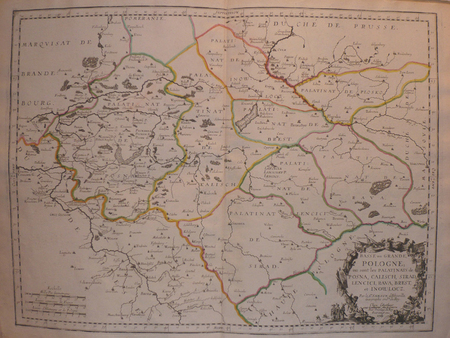
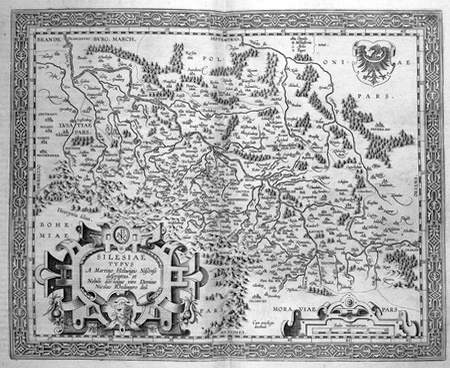
1603Best.-Nr. LBW02528[Anvers, 1603]. 344 x 420 mm.
1935In 4° piccolo; 175, (1) pp. Brossura editoriale con piccolo restauro al margine basso del piatto anteriore e al dorso. Prima edizione di questa raccolta poetica del celebre poeta, critico, teorico dell'arte e drammaturgo polacco, nato a Cracovia il 3 maggio 1891, morto a Varsavia il 9 novembre 1969. Fondatore della rivista Zwrotnica (Lo scambio) si oppose alla poetica del gruppo Skamander (che pubblicava l’omonima rivista), fu tra i massimi teorici del movimento poetico dell’avanguardia costruttivista polacca influenzando notevolmente l’opera di Julian Przybos, Jan Brzekowski e Jalu Kurek. Nato da una famiglia di avvocati ebrei si convertì in giovane età al cattolicesimo passando diversi anni della sua giovinezza in Spagna. “Muovendo da una visione ottimistica della civiltà moderna, P. ha elaborato una concezione razionalistico-costruttivista della poesia, intesa come rigorosa organizzazione intellettuale del materiale linguistico, in cui occupano un posto chiave la metafora, una funzione nuova del ritmo e della rima”. La sua poesia è incentrata sulle le “3xM” città, masse e macchine (in polacco miasto, masa, maszyna) che divenne, fra l’altro, il motto dei costruttivisti. La sua teoria della poesia respinse la linea melodica, il versetto sillabato ed il verso libero era consentito solo per quelle metafore che potevano essere interpretate in modo chiaro. Peiper, come i futuristi, si allontanò dalla tradizione poetica, perché a suo avviso, l'incontro con la nuova realtà non poteva avvenire usando i vecchi schemi. Difese un difficile linguaggio nella poesia, perché il poeta non può chiamare direttamente stati ed emozioni, come fa la prosa. Quella qui presentata è la prima edizione della raccolta completa dei lavori costruttivisti di Peiper e contiene oltre alle tre opere “Z”, “Zywe linie” e “Raz”, una serie di componimenti apparsi su “Zwrotnica”, “Telegram” e “Almanach Nowej Sztuki”. Di grande importanza è il testo critico che Peiper antepose alla raccolta, qui pubblicato per la prima volta che raccoglie la teoria estetica e poetica di Peiper. Il testo è a volte stampato in orrizontale a volte in verticale. Rif. Bibl.: NuNukat, Katalog zbiorow Polskich Bibliotek Naukowych, n° zz2002920499.
1819P., Ménard et Desenne, 1819. 6 volumes in-8 reliés pleine basane havane racinée (reliure d'époque), dos long, portrait en frontispice au premier volume des Oeuvres posthumes ; de 330 à plus de 500 pp. par volume, pièces de titre et de tomaison noires, caissons soulignés de 4 filets dorés et ornés de fleurons, roulettes d'encadrement sur les plats. quelques coins fragiles et arrondis, une départ de fente à un mors, un petit manque de cuir au bas d'un dos, une coiffe faible, néanmoins bel exemplaire. C. C. de Rulhière, tour à tour officier et diplomate, poète et historien, fut l'ami de J.-J. Rousseau et des philosophes. Il accompagna le baron de Breteuil à Saint-Pétersbourg en 1760 et il retraça plus tard la révolution russe de 1762 (O. Posthumes). Il écrivit pour les Dauphin (Louis XVI) une histoire de la Pologne. Sainte-Beuve le donne comme "écrivain spitrituel, savant et habile". Les Oeuvres contiennent : Eclaircissements historiques sur les causes de la Révocation de l'Edit de Nantes, poèmes et discours en vers, épitres, lettres en vers et en prose, contes, épigrammes, poésies diverses. Les Oeuvres Posthumes : Histoire de l'anarchie en Pologne ; Anecdotes sur la révolution de Russie en l'année 1762
1703Best.-Nr. LBW02524Paris chez l'autheur 1703 417 x 560 mm.
1961Best.-Nr. 260801961 Editions Lidis- Imprimerie Nationale, 1964-1965, Paris. 1 volume titré suites (emboîtage de l'éditeur).61/64 lithographies originales de Walter Spitzer sous 5 pochettes dont une incompléte. Le tirage des lithographies originales en couleurs hors le texte et in plano sans serpente volante, composées et gravées par Walter SPITZER, a été assuré par les ateliers MOURLOT Frères.
1841Best.-Nr. 14710Gaultier-Laguionie Paris 1841 1 vol. In-8 de 4 ff.n.ch. 403 pp. 2 ff.n.ch., demi-percaline de l'époque, dos lisse, titre doré.
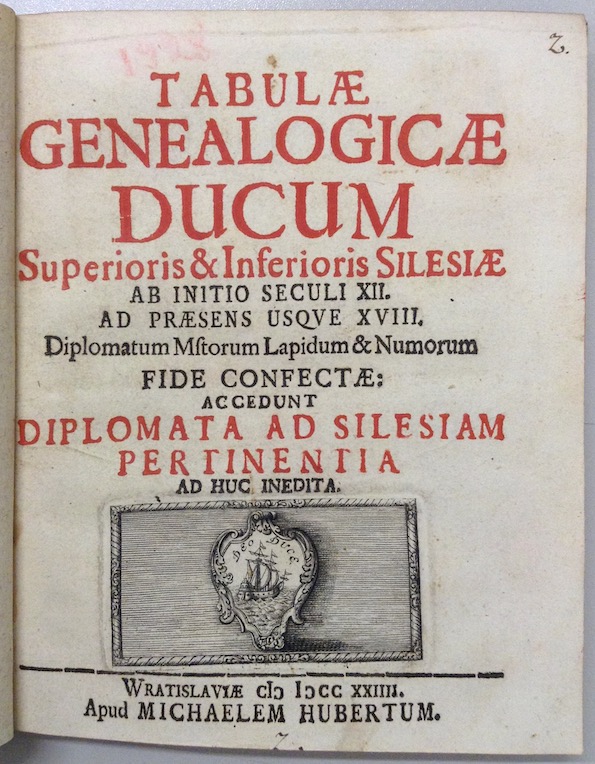
1724Best.-Nr. 627502Breslau, M. Hubert, 1724. 4to. 5 Bl., 128 S. Mit gestochener Titelvignette u. 27 doppelblattgroßen, teils gefalteten Stammtafeln. Moderner Pappband mit Rückenschild. [2 Warenabbildungen]
1823Best.-Nr. 1074Sans deux portraits lithographiés (Stanislas et Marie Leckzinska).Reliure demi-chagrin bleu. Dos lisse finement orné de fleurons et de filets dorés. Coiffe supérieure frottée. Intérieur avec rousseurs. On joint Relation d'un voyage A Bruxelles et à Coblentz (1791).
Best.-Nr. 134805Paris, Delaunay, 1822 in-8, VI-392 pp., frontispice, demi-basane noire, dos lisse orné (rel. de l'époque). Petites rousseurs au front.
1947Small folio, 17, 33pages. First Edition. Inscribed by Vishniac's father, Solomon.With an introductory essay by Abraham Joshua Heschel. A most moving depiction of vibrant Jewish life before the Holocaust. 31 black and white photographs, many now iconic images of Eastern European Jewish life. Original boards, beautiful clean copy in jacket that lacks 3 inches of the spine and has spine label at the bottom but otherwise nice. Inscribed by Vishniac's father, Solomon, in the old Russian style, on the end paper. We had an expert from the Roman Vishniac collection at the Institute for Contemporary Photography take a look at it and this is what they concluded: "Its written in the old Russian language (tsarists times) and says 'In memory to dear Ida Glezer from the devoted friend Solomon Vishnyak (signiture) Roman Vishnyak.' So here we have confirmation. Roman Vishniac's father, Solomon Vishniac, inscribed his son's book to a friend, in the old Russian language of tsarist's times (whereas, Roman Vishniac's Russian was quite modern...So, not signed by Vishniac, but by his father. Confirmed attribution." Very Good Condition in Good Jacket with damaged spine and spine label on jacket only (EE-3-20) xx
1733Best.-Nr. 003256Basle, Chez Christophe Revis, 1733
1998Best.-Nr. Star-9783540628620Springer 1998. Hardcover. New. Springer hardcover
1998Best.-Nr. Star-9783540628620Springer 1998. Hardcover. New. Springer hardcover
1819Best.-Nr. 445295Cracoviae, typis academicis, 1819/44. Jeweils 12-16 Seiten. Alte Heftung. 4to.
18991st edition. Original pink printed paper wrappers, 8vo, 34 pages ; 23 cm. In Yiddish. SUBJECT (S) : Jews -- Galicia (Poland and Ukraine) -- Fiction. Europe. -- Ethnic relations. OCLC lists only 1 copy worldwide (Cambridge) , but theirs lacks the title page. None listed in the US in any condition. Covers fragile, reinforced, and heavily worn with some loss to rear, with spine rebacked. Internal paper toned but good and solid. Good Condition thus. Rare and interesting! (KH-6-25)
1926Original Cloth. 4to. XXVII, 519; XXVII, 519; 623 pages. 32 cm. First edition. Text in Yiddish; summaries in English. Volumes 1, 2, 3 of Filologishe Shriftn. Shriftn fun Yidishn visnshaftlekhn institut 1-3. Other titles: Landoy-bukh; 1926; Filologishe serye; 1926; Serya filologiczna; 1926-1928; Studies in philology; 1928-1929; Prace filologiczne; 1929. Complete run of the Filologishe Shriftn, a "three-volume series published in Vilna by the Yiddish Scientific Institute (YIVO) in 1926, 1928, and 1929. Filologishe shriftn (Studies in Philology) was co-edited by Zalmen Reyzen and Max Weinreich. The inaugural volume of Filologishe shriftn, titled the Landoy-bukh (Landau Book) , was a Festschrift in honor of the German Jewish philologist Alfred Landau (18501935) . In the 1920s, Soviet authorities tolerated cooperation with YIVO; hence, works by authors from the USSR were included in the three volumes. The periodical YIVO-bleter (YIVO Pages) , launched in 1931, continued the tradition of Filologishe shriftn. " - YIVO Encyclopedia. All volumes in original cloth binding with gilt title. Subjects: Yiddish philology - Periodicals. Yivo Institute for Jewish Research. Yiddish philology. Periodicals. Light soiling to cloth. Very slight ageing to outer margins of pages, otherwise very clean and fresh. Very good + condition. An outstanding set. (YID-22-1)
1990Best.-Nr. x-9810204051World Scientific Pub Co Inc 1990. Hardcover. New. 660 pages. 9.00x6.00x1.38 inches. World Scientific Pub Co Inc hardcover
19451st Polish edition. Later boards, 8vo, 91 pages. Includes 12 illustrated plates. In Polish. Title translates to Majdanek: Court Proceedings of the Special Criminal Court in Lublin. A recording of court Preceedings of the Polish-Soviet Special Criminal Court established in Lublin in August 1944, in order to investigate the Nazi crimes in the Majdanek extermination camp. This Polish edition was published with several photographic reproductions, showing the members of the commission, the Nazi officers of the camp, the findings, human remains in Majdanek. The Majdanek concentration camp was established on Heinrich Himmler's order and operated from October 1, 1941 until it was liberated by the Soviet Army on July 22, 1944. It is known to be the best preserved Nazi concentration camp of the Holocaust, as the Germans did not have enough time to destroy the evidences of their crimes. The Commission for investigating the German crimes was established in August 1944 and soon they published this booklet in several languages. Despite of the importance of this statement it must be mentioned that the Commission made many erroneous assumptions regarding the duration of the camp or number of people killed at Majdanek, probably because they were motivated rather by political and propaganda agenda than by a search for historical facts. The total number of the victims is still controversial, in this report 1.5 million victims of different nationalities were counted, however according to the latest researches there were 79, 000 victims, 59, 000 of whom were Jews. [Kranz, T. : Bookkeeping of Death and Prisoner Mortality at Majdanek. Pp. 81-110. In: Silberklang, D. (ed. ) : Yad Vashem Studies. Vol. 35: 1. Jerusalem, 2007.].. WorldCat lists 15 copies worldwide. Overall in very good condition. (HOLO-2-140-1U) .
1795Best.-Nr. 1226249Berlin, Fr. Vieweg d. Ä. 1795. 263, (1) S.; 306 S., 1 Bl. Hübscher Hldrbd d. Zeit m. floraler Rverg. (Deckel etwas berieben, Ex Libris, Stempel a. d. Titelrückseite, z.T. stärker braunfleckig).
In folio, 39x30, leg. in tela verde con tit. in oro al piatto e al dorso, pp.29, testi in polacco e francese su due colonne, e 44 tavole col. applicate alle pagine con velina protettiva con a stampa descrizione delle singole opere.Privo di data, stampato a Parigi (1910 c.ca), segni d'uso alla testa e al piede del dorso, piccola fessura alla cerniera post., nella parte centrale, interno in buono stato, alcune veline distaccate e con qualche piega, ma complessivamente ben tenuto.
1929Roma, Anonima Romana Editoriale, 1929-33, 5 annate complete in 27 fascicoli, raccolti in voll. 5, in-8, copertine fittizie (ma conservate le br. edit.), pp. 446, 372, 371, 524, 656. Scritti di: N. Iorga, R. Chastel, P. Fumagalli, A. Giannini, G. Conforto, G. Devoto, E. Lo Gatto, W. Giusti, E. De Andreis, G. Munzi, G. Salvatori, L. Trompeo, B. Jancso, E. Onatsky, A. Wolkonsky, M.E. Amaldi, N. De Baumgarten, S. Senft, ecc. sulla storia, cultura, letteratura, filologia di: Russia ed U.R.S.S., Ucraina, Lituania, Estonia, Finlandia, Boemia, Jugoslavia, Albania, Polonia, Romania, Ungheria, Bulgaria, Grecia; sulle popolazioni: serbo-croate, ceche, sui Tartari...
In 4°, br. edit. ill., pp. 225-(3nn)-(XI annunci). Numero interamente dedicato alle opere di vari artisti polacchi. Il fascicolo contiene altres? bellissime xilo originali di Pandolfi tirate in rosso e nero. Alcuni interventi di restauro alla cop. (Cfr.: "L'Eroica. Una rivista italiana del Novecento. A cura di Guido Giubbini", 1983)
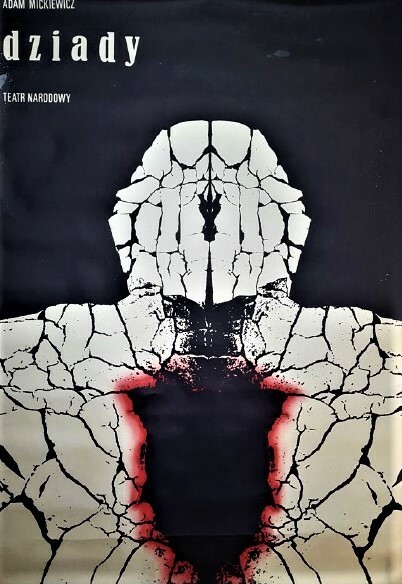
Best.-Nr. 1518Impression en lithographie en couleur. 1967. Dim: 97 x 67 cm. Petits défauts
Best.-Nr. 1518Impression en lithographie en couleur. 1967. Dim: 97 x 67 cm. Petits défauts
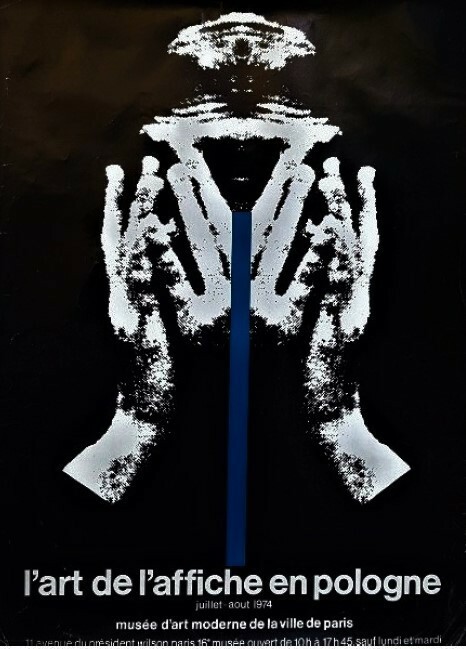
Best.-Nr. 1522Impression offset. Dim: 69 x 49,5 cm. Légers frottements aux coins. Peu courante.