MALIBRAN (H.), CHELMINSKI (J.-V.)Livre Rare Book
MERIAN (Matthäus).Livre Rare Book
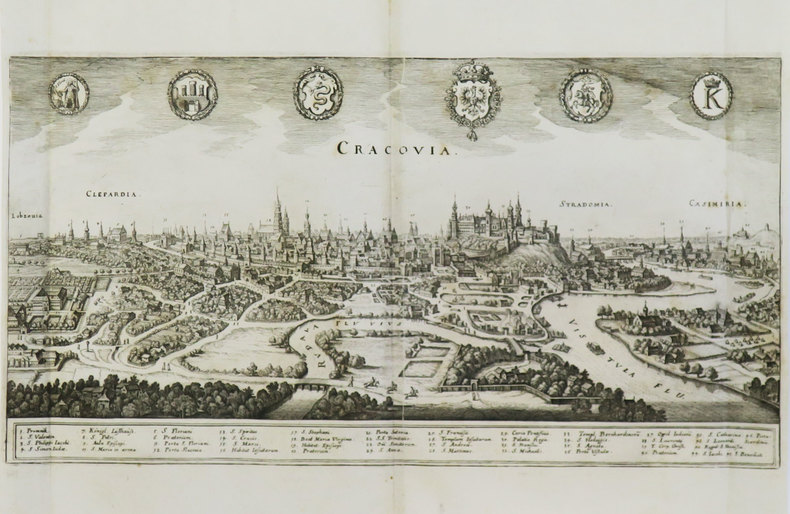
[CRACOVIE] Cracovia.
1649réf. LBW-3597[1649]. 203 x 389 mm.
Librairie Le Bail · Paris, France800,00 €
4 091 résultats
réf. 244825Paris, Leroy, 1913 fort gr. in-4, III-314 pp., index et biblio., toile écrue (reliure moderne).
1649réf. LBW-3597[1649]. 203 x 389 mm.
1819réf. 13828Paris, Chez H. Nicolle et Chez Desenne, 1819. 4 vol. in-8 de (4)-CLXVI-342 pp. ; (4)-500 pp. ; (4)-464 pp. et (4)-397-(2) pp., veau blond glacé, dos ornés à nerfs, large plaque romantique poussée à froid sur les plats, guillochis dorés sur les coupes, dentelles dorées sur les chasses tranches marbrées (reliure de l'époque).
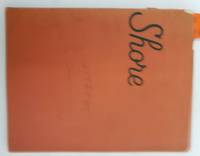
1933réf. 173338New York: Edgar Weyhe 1933. Limited to 200 numbered copies. Paperback. VG with minor coiling to orange dustjacket covers otherwise almost like new except for some separation of spine at the very top. Orange printed dustjacket surrounding a white printed glued wrap-around stiff cover. 54 pp. Two color plates including a signed in pencil lithograph portrait of Shore by Jean Charlot 18 bw photographic reproductions after photographs of the artist's work by Edward Weston 5 smaller bw reproductions which may be lithographs at the head of the text articles. The first color plate may also be a color lithograph but it is not signed. One of Armitage's rarest works. A monograph on the art and career of California modernist painter Henrietta Shore.The portrait by Charlot is signed by the artist but hideous. Includes an article by Edward Weston who also photographed the original artworks by Shore. Includes articles by Merle Armitage Edward Weston and an Appraisal by Reginald Poland. Very rare. Forward colophon reads "Two hundred numbered copies of this book designed by Merle Armitage have been printed . by the Will A. Kistler Company . It is set in twelve point Rockwell type and the entire contents of the book is printed by the Artochrome Process. The photographs of the paintings pastels crayons and drawings in this book were made from the originals by Edward Weston. This is copy no. blank"--Colophon./ Descriptive letterpress on versos facing the plates." Edgar Weyhe paperback
1933réf. 173338New York: Edgar Weyhe 1933. Limited to 200 numbered copies. Paperback. VG with minor coiling to orange dustjacket covers otherwise almost like new except for some separation of spine at the very top. Orange printed dustjacket surrounding a white printed glued wrap-around stiff cover. 54 pp. Two color plates including a signed in pencil lithograph portrait of Shore by Jean Charlot 18 bw photographic reproductions after photographs of the artist's work by Edward Weston 5 smaller bw reproductions which may be lithographs at the head of the text articles. The first color plate may also be a color lithograph but it is not signed. One of Armitage's rarest works. A monograph on the art and career of California modernist painter Henrietta Shore.The portrait by Charlot is signed by the artist but hideous. Includes an article by Edward Weston who also photographed the original artworks by Shore. Includes articles by Merle Armitage Edward Weston and an Appraisal by Reginald Poland. Very rare. Forward colophon reads "Two hundred numbered copies of this book designed by Merle Armitage have been printed . by the Will A. Kistler Company . It is set in twelve point Rockwell type and the entire contents of the book is printed by the Artochrome Process. The photographs of the paintings pastels crayons and drawings in this book were made from the originals by Edward Weston. This is copy no. blank"--Colophon./ Descriptive letterpress on versos facing the plates." Edgar Weyhe paperback books
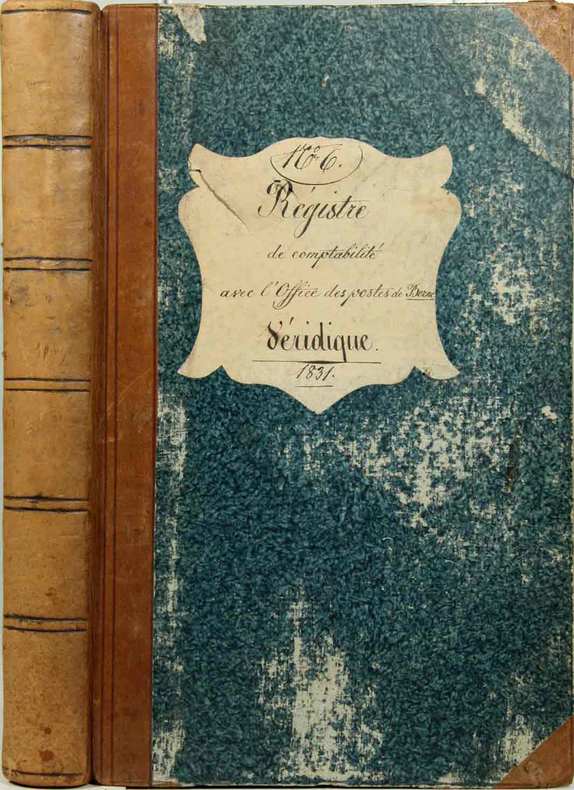
réf. 103316aafFribourg, L.J. Schmid, 1831, gr. in-4°, 4 p., texte sur 2 colonnes par fasc. quelques légères rousseurs, le tout en bon état; 18 ff. + env. 140 ff. vierges, avec feuille volante de décomptes ms. entre les pages (à l’origine collée sur feuille de garde), cartonnage muet original.
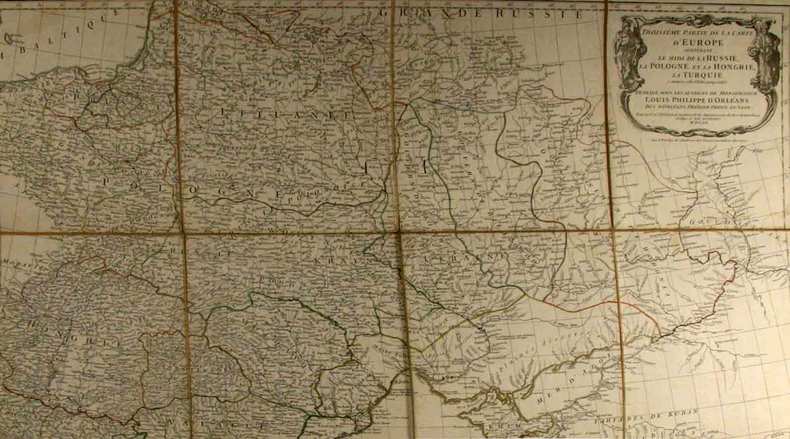
réf. 116334aafPubliée sous les auspices de Monseigneur Louis Philippe dOrléans premier Prince du Sang. MDCCLX, 1760, 84x100 cm, Carte en 16 éléments montés sur toile d’époque, carte pliée 26x21.5 cm. (frontières en couleurs / Map coloured in outline).
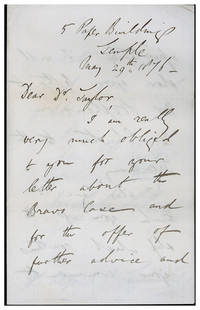
1876réf. 484621876. Taylor Alfred Swaine 1806-80. Archive of material relating to the famous Charles Bravo poisoning case consisting of 1 Autograph letter signed to Taylor from Harry Bodkin Poland 1829-1928. Bifolium. 3pp. Temple London 29 May 1876. 205 x 127 mm. 2 3 autograph letters signed to Taylor from Augustus K. Stephenson 1827-1904. 15pp. total. London 3 June 1876 2 bifolia 8pp.; 5 June 1876 bifolium 4pp.; and 22 July 1876 bifolium 3pp. 184 x 114 mm. 3 Taylor. The Balham mystery. Galley proof corrected in Taylor's hand of the first portion of an unsigned article in The British Medical Journal 20 May 1876: 631-633. 578 x 148 mm. Together 4 letters and one printed proof. Some rodent damage to Stephenson's letters affecting several words mended in several places with clear tape. Small lacuna along one fold in the galley proof affecting a few words. Minor dampstaining but good to very good. From the library of Alfred Swaine Taylor founder of forensic toxicology an archive relating to the notorious and sensational Charles Bravo poisoning a case that is still unsolved. The Bravo mystery has inspired several works of fiction including Shirley Jackson's We Have Always Lived in the Castle 1962 and a three-part BBC serial titled The Poisoning of Charles Bravo 1975. Bravo 1845-76 a 33-year-old barrister died of tartar emetic antimony poisoning on 21 April 1876 less than five months after his marriage to a wealthy widow; the marriage was reportedly an unhappy one. The inquest on Bravo's death held on 25 and 28 April returned an open verdict but the circumstances of the case were so suspicious that Taylor offered his expert advice to Harry Bodkin Poland one of the attorneys for the Crown. Our archive includes the letter Poland sent thanking Taylor for "your letter about the Bravo Case and for the offer of further advice and assistance" and informing Taylor that he "will show your letter to Mr. Augustus K. Stephenson the Solicitor to the Treasury." Stephenson is represented in the archive by three letters asking for Taylor's expert opinion on the case: "You have read the account of the Post-mortem encl. by Dr. Payne . . . That being so does it enable you to form an opinion as to whether the antimony was taken in solid food . . . letter of 3 June. "Assuming small traces of antimony to have been found in the liver of a deceased person-Can you form any opinion as to length of time before death that the antimony was taken" letter of 5 June. "Can you tell me whether antimony in the form of tartar emetic wd. if taken in small doses at intervals during pregnancy induce a miscarriage letter of 22 July. The last item in our archive is a galley proof corrected in Taylor's hand of the first two-thirds of an article on the Bravo case published on 20 May in the British Medical Journal; although the article is unsigned it was most likely written by Taylor. Based on the medical evidence Taylor concluded that Bravo had ingested the fatal dose of antimony during his last meal. He severely criticized the investigators in the case for not testing the remains of the bottle of wine he had drunk with the meal-"the only article of food not shared in common with the three who sat at the dinner-table . . . If tartar emetic had been found in this wine much of the present mystery hanging about the case would be removed . . . In tracing the further history of this bottle we learn that no one now knows what became of it or its contents." . unknown
1876réf. 484621876. Taylor Alfred Swaine 1806-80. Archive of material relating to the famous Charles Bravo poisoning case consisting of 1 Autograph letter signed to Taylor from Harry Bodkin Poland 1829-1928. Bifolium. 3pp. Temple London 29 May 1876. 205 x 127 mm. 2 3 autograph letters signed to Taylor from Augustus K. Stephenson 1827-1904. 15pp. total. London 3 June 1876 2 bifolia 8pp.; 5 June 1876 bifolium 4pp.; and 22 July 1876 bifolium 3pp. 184 x 114 mm. 3 Taylor. The Balham mystery. Galley proof corrected in Taylor's hand of the first portion of an unsigned article in The British Medical Journal 20 May 1876: 631-633. 578 x 148 mm. Together 4 letters and one printed proof. Some rodent damage to Stephenson's letters affecting several words mended in several places with clear tape. Small lacuna along one fold in the galley proof affecting a few words. Minor dampstaining but good to very good. From the library of Alfred Swaine Taylor founder of forensic toxicology an archive relating to the notorious and sensational Charles Bravo poisoning a case that is still unsolved. The Bravo mystery has inspired several works of fiction including Shirley Jackson's We Have Always Lived in the Castle 1962 and a three-part BBC serial titled The Poisoning of Charles Bravo 1975. Bravo 1845-76 a 33-year-old barrister died of tartar emetic antimony poisoning on 21 April 1876 less than five months after his marriage to a wealthy widow; the marriage was reportedly an unhappy one. The inquest on Bravo's death held on 25 and 28 April returned an open verdict but the circumstances of the case were so suspicious that Taylor offered his expert advice to Harry Bodkin Poland one of the attorneys for the Crown. Our archive includes the letter Poland sent thanking Taylor for "your letter about the Bravo Case and for the offer of further advice and assistance" and informing Taylor that he "will show your letter to Mr. Augustus K. Stephenson the Solicitor to the Treasury." Stephenson is represented in the archive by three letters asking for Taylor's expert opinion on the case: "You have read the account of the Post-mortem encl. by Dr. Payne . . . That being so does it enable you to form an opinion as to whether the antimony was taken in solid food . . . letter of 3 June. "Assuming small traces of antimony to have been found in the liver of a deceased person-Can you form any opinion as to length of time before death that the antimony was taken" letter of 5 June. "Can you tell me whether antimony in the form of tartar emetic wd. if taken in small doses at intervals during pregnancy induce a miscarriage letter of 22 July. The last item in our archive is a galley proof corrected in Taylor's hand of the first two-thirds of an article on the Bravo case published on 20 May in the British Medical Journal; although the article is unsigned it was most likely written by Taylor. Based on the medical evidence Taylor concluded that Bravo had ingested the fatal dose of antimony during his last meal. He severely criticized the investigators in the case for not testing the remains of the bottle of wine he had drunk with the meal-"the only article of food not shared in common with the three who sat at the dinner-table . . . If tartar emetic had been found in this wine much of the present mystery hanging about the case would be removed . . . In tracing the further history of this bottle we learn that no one now knows what became of it or its contents." . unknown books
1940Brossura editoriale con risvolti usurata agli angoli, ai margini e al dorso, sia alle estremità che sulla lunghezza. Piatti macchinati; dorso brunito, probabilmente per l'esposizione al sole. Pagine salde alla cerniera, con ampio margine, brunite, così come i tagli. Presenti tavole fuori testo, lievemente ingiallite, con fotografie di Teodoro Susicch, in bianco e nero, con didascalia. Numero pagine 277. USATO
réf. ORD-2643Traduit de l'anglais, enrichi de notes & des éclaircissemens nécessaires, & augmenté d'un Voyage en Norvège. Par M. P. H. MALLET. Ouvrage orné de Cartes géographiques, Portraits, Plans & Figures en taille-douce. Genève. Barde, Manget & Comp. Paris. Buisson. 1786. 4 volumes in-8 (128 x 198mm) plein moucheté de noir, dos à 5 nerfs ornés or, pièces de titre maroquin rouge, de tomaison maroquin noir, tranches rouges, XII, 380; 1f., 404; 1f., 393 et 1f., 303 pages. Bien complet des 19 planches hors texte. Ex-libris Duhamel. 2 coiffes supérieures habilement restaurées, petits accidents aux derniers plats des tomes 1 et 2 sinon très bel exemplaire.
1920réf. 145501920 br. format 30 x 24 cm, Paris s.d. (ca. 1920)
1701réf. 34127S.l. [Cracovie] [Mikolaj Aleksander Schedel] s.d. [1701] in-16 vélin rigide orangé, dos lisse muet [Rel. de l'époque]
19052 gr. voll. in-4, pp. XVIII, 397; 411, bross. edit. Poderosa opera che raccoglie oltre tremila nominativi di italiani che, per diversi motivi, operarono in Polonia. Perfetto esempl. nella veste editoriale originale e in barbe. Raro. [015]
1760réf. 340901760 Paris - Paris - La Compagnie des Libraires - 1742 - 4 volume in8 de 355; 501; 411; 432 pages - Reliures plein veau blond d'époque - coins un peu émoussés - toutes tranches dorées - Dos cinq nerfs - Mors un peu frottés - Triple filet doré d'encadrement et Chiffre couronné sur les plats - Taille de premier volume légérement inférieure à celle des autres -
réf. 977Voyage de deux Français en Allemagne, Danemarck, Suède, Russie et Pologne, fait en 1790-1792. I. Allemagne et Danemarck. - II. Suède. - III. & IV. Russie. - V. Pologne et Autriche. FORTIA DE PILES Alphonse-Toussaint-Joseph de] Description du livre: Paris, Desenne, 1796, 1796. 5 vol. in-8, [4]-VIII-391, VIII-556, VIII-372, [4]-400 et [4]-299 pp., avec 6 tabl. dépl., basane marbrée, dos lisses ornés, encadrement de dent-de-rat dorée sur les plats, tranches jaunes (reliure de l'époque).Edition originale de ce récit d'un voyage lié à l'émigration : en effet, le comte Fortia de Piles (1758-1826), lieutenant des chevau-légers de la Garde du Roi lorsqu'éclata la Révolution, décida de quitter la France, et il entreprit un long voyage à travers l'Europe en compagnie de son ami le chevalier de Boisgelin (c'est lui le second Français du récit). Une fois revenus en France, et la situation politique un peu stabilisée, ils publièrent cette relation, qui se recommande par l'exactitude des détails et l'ampleur des matières abordées.
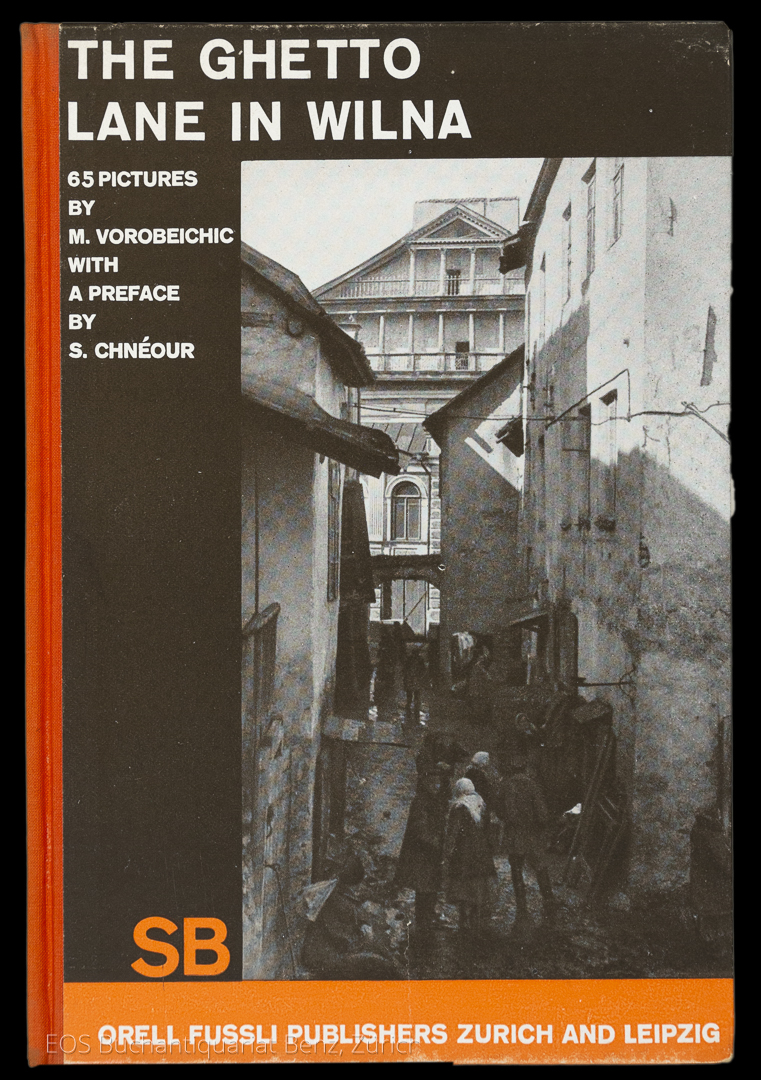
1931réf. 223BBZürich, Leipzig, Orell Füssli Verlag, 1931. 8°. 8 S., (english), 7 S. (hebrew). Mit 65 Abb. nach Photos von M. Vorobeichic. Illustr. Orig.-Halbleinenband + Wichtig: Für unsere Kunden in der EU erfolgt der Versand alle 14 Tage verzollt ab Deutschland / Postbank-Konto in Deutschland vorhanden +, 223BB (berieben und bestossen). = "Schaubücher", Bd. 27.
1940261 pages. "Nazi theory has evolved the concept of 'Lebensraum' (living space) - Nazi practice has realised the fact of 'Todesraum' (death space)" - subtitle. Author conversed with scores of Polish refugees in Paris. "As I listened to their stories I saw with searing vividness the similarity between what is happening in Poland today and what happened in Belgium 25 years ago; the similarity and the difference, which lies in the fact that the Germans today are even more brutal, more bestial than they were in 1914-1918. I decided to publish these stories, together with an essay comparing German conduct during the last war and during the present one, and showing that if they have changed at all it has been for the worse. Some of the stories are so horrible that they exhaust all ordinary human capacity for horror and indignation. However, some, at least, of the victims of German blood lust have escaped death. Let them speak." - Publisher's Statement, pages 6-7. Heavy soiling to publisher's yellow cloth. Front hinge starting. Moderate foxing to and near endpapers. Dust jacket not included. A worthy reference copy of this grim testament to the suffering of the Poles in WWII. Enser p.341. Book
réf. GF28391Amsterdam - Henri Desbordes - 1732 - 2 volumes in8 de 410 -7 et 336 - 6 pages - Reliure pleine basane d'époque - Coiffes un peu usées - Mors légérement frottés - Un mors fendu sur 3 cm - dos cinq nerfs ornés -
1786in-8° (200x124 mm); leg. in piena pelle di colore bruno chiaro maculata in bruno scuro; tagli dei piatti finemente decorati in oro, dorso liscio con preziosi decori dorati a formare sei compartimenti, compreso quello ove si trova il titolo dorato su pelle rosso bordeaux, numerazione dei tomi dorata su ovale in pelle verde entro uno dei compartimenti; guardie marmorizzate, tagli di color giallo chiaro; 4 Tomi legati in 2 vol.; pp. VIII-380-(4), 404; 393-(1), 303-(1); ogni tomo ha il suo frontespizio, preceduto dall'occhietto; ill. calc., cornici e fregi xil., 19 carte di tav. incise su rame di cui qualcuna più volte ripiegata: 5 carte (Polonia, Russia, Mar Caspio, Svezia e Danimarca), 7 piante (Mosca, San Pietroburgo, Canale di Vishnei-Voloshok, Stoccolma, Canale di Trolhoetta, Copenhaghen e Canale di Kiel), 4 ritratti (Stanislas-Auguste de Pologne, Catherine II, Pugatchev e Gustave III de Suède) e altre 3 tav. (uccelli, scritture cirilliche e costumi). Interessante opera geografica riportante i resoconti di viaggi effettuati dal Coxe in Polonia, Russia, Svezia, Danimarca e Norvegia, tradotta in francese dal Mallet. Un particolare risalto è dato alla Russia (dalla fine del I tomo all'inizio del III); la parte aggiuntiva relativa alla Norvegia (p. 159 - IV tomo) è stata curata direttamente dal Mallet. William Coxe (1747-1828), è stato uno storico inglese e sacerdote che ha servito come compagno di viaggio e tutore di nobiltà dal 1771 al 1786. Scrisse numerose opere storiche e cronache di viaggio. Ordinato diacono nel 1771, ha lavorato come rettore e poi arcidiacono di Bemerton vicino a Salisbury dal 1786 fino alla sua morte. Paul Henri Mallet (1730-1807), scrittore e traduttore svizzero, è stato professore di lingua e letteratura francese in Danimarca. Rif.: IT\ICCU\IEIE\005989-005990-005991-005992-005993 (5 copie). OCLC, 9997601. Cond.: Leggerissime macchie d'umidità su alcune pp.; opera completa ed in perfette condizioni generali. -- Veau raciné de l'époque, dos lisses à compartiments fil. et fleuronnés dorés (lég. passés, minimes frottements), étiq. de cuir rouge ou vert, coiffes et coupes guillochées dorées, tr. jaunes, (qqs défauts marginaux, qqs lég. souill. et bruniss., mouill. angulaire aux 1ers ff. du t. III). Bel ex. Edition in-8 (après une in-4) de cette traduction par Paul-Henri Mallet de "Travels into Poland, Sweden and Denmark" (Londres 1784) du voyageur et historien anglais William Coxe (1747-1828). Ex. complet des 19 planches gravées sur cuivre dont qqs-unes dépliantes: 5 cartes (Pologne, Russie (1 déchir. rest.), mer Caspienne, Suède & Danemark), 7 plans (Moscou, Saint-Pétersbourg, canal de Vishnei-Voloshok, Stockholm, canal de Trolhoetta, Copenhague & canal de Kiel), 4 portraits (Stanislas-Auguste de Pologne, Catherine II, Pugatchev & Gustave III de Suède) et 3 autres pl. (oiseaux, écriture cyrillique et costumes). L'ouvrage concerne surtout la Russie (fin du t. I, t. II et début du t. III); la partie relative à la Norvège (p. 159 sq. du t. IV) est due au suisse Paul-Henri Mallet (1730-1807), un temps professeur de langue et littér. française au Danemark. -- FIRST FRENCH EDITION OF THIS INTERESTING GEOGRAPHICAL WORK SHOWING THE ACCOUNTS OF TRAVELS MADE BY COXE IN POLAND, RUSSIA, SWEDEN, DENMARK AND NORWAY. Very light water stains at some pp .; complete copy, in perfect conditions.
réf. 35097Nancy Vigneron 24 mai 1757 in-8 en feuille
1931réf. 223BBZürich, Leipzig, Orell Füssli Verlag, 1931. 8°. 8 S., (english), 7 S. (hebrew). Mit 65 Abb. nach Photos von M. Vorobeichic. Illustr. Orig.-Halbleinenband (berieben und bestossen). = "Schaubücher", Bd. 27.
18901st edition. Period boards with gilt lettering. 4to. [272 pages], 33 cm. In Hebrew. Title translates to The Time: A Periodical of Politics, Literature, and Science for All Matters Related to Jews and Judaism. One of the early Haskalah Hebrew literary journals published out of Galicia. Issued a weekly basis (September 1890 - May 1891) . The periodical appeared under the names Ha-Zeman and Ru'a? Ha-Zeman in alternate weeks, to avoid paying the duty levied on a weekly. (EJ, 2007) . As YIVO notes, even after the center of the Hebrew Haskalah movement had passed to Russia, animated literary life persisted in Galicia until the beginning of the twentieth century, though it was mainly local and provincial in character. This activity found expression in a broad spectrum of periodicals including Ha-Zeman. YIVO, 2018) Not to be confused with the later-published Hebrew newspaper of the same name, but published from 1903-1915. SUBJECTS: Hebrew periodicals -- Poland. OCLC lists 3 copies worldwide (Oxford, HUC, NLI) , none on the East Coast. Ex-library with usual markings. Some pages are brittle and chipping. Pages browning and fragile but in good condition. Overall Good Condition. (YID-30-22)
réf. 242326Paris, Ambroise Dupont et Cie, 1828 in-8, [4]-270 pp., demi-chagrin rouge, dos à nerfs, couv. cons. (reliure moderne).
1916in-4, pp. 226, broch. edit. fig. (dorso allentato). Bel volume impresso su carta pesante, interamente consacrato da Ettore Cozzani alla Polonia, una delle ''nazioni martire'' della prima guerra mondiale. E' corredato di numerose silografie a piena pag. e di 35 ornamenti silogr. originali dell'artista Alessandro Pandolfi (Pescara 1887 – Pavia 1953; cfr. Servolini 596) e molte riproduz. di opere di artisti polacchi. Contiene anche scritti dello stesso Cozzani e di vari saggisti polacchi sulla storia, la cultura e l'arte della loro nazione. Importantissima pubblicazione sia dal punto di vista artistico che storico-politico.. .