FOUCART (P.)Livre Rare Book

4 415 résultats
réf. 233335Paris, Berger-Levrault, 1882 2 vol. in-12, XIV-543 pp. et 473 pp., 4 cartes et 8 tableaux dépliants, broché. Qqs rousseurs.
1815réf. 33698Paris Imprimerie de Didot jeune 1815 in-4 dérelié
Acquaforte misure: mm 220 x 167 I Sadeler furono una famiglia di artisti fiamminghi, principalmente incisori di riproduzione, attivi in tutta Europa tra il XVI e il XVII secolo. Lo stile dei membri della famiglia è molto simile e non sempre facilmente distinguibile ma per tre generazioni, spostandosi dall’Olanda all’Italia, fermandosi in Germania e a Praga, questi incisori, editori e commercianti di stampe hanno giocato un ruolo centrale nella diffusione delle immagini. Dal 1572 Jan/Johan lavorò ad Anversa centro mondiale della stampa, e divenne anche un maestro della Corporazione di San Luca. Con suo fratello minore Rafael il Vecchio si trasferì inizialmente a Colonia ma i tumulti della rivolta olandese costrinsero gli artisti di Anversa a spostarsi e così i Sadeler giunsero in Italia nel 1593 in particolare a Venezia dove aprirono una stamperia. Il culto di San Giacinto, santificato da Clemente VIII nel 1594, ebbe larga diffusione tra il XVI e il XVII secolo. Jacko Odrovaz è stato un Predicatore polacco, nato in Slesia nel 1183 e morto a Cracovia nel 1257, dopo l'incontro in Italia con Domenico di Cuzman decise di farsi domenicano ricevendo l'ordine di diffondere l'ordine domenicano in Europa Orientale. Fondò i conventi di Danzica, Cracovia, Friesach e Kiev, favorì l'unione della chiesa d'oriente con quella d'occidente. A Kiev, durante un attacco dei Tartari si dice che gli apparse la Vergine chiedendogli di portare in salvo una sua statua. Questa stampa è tratta da una pala d'altare, oggi al Museo del Louvre (Louvre), commissionata dalla famiglia emiliana Turrini a Ludovico Carracci nel 1594 per la cappella di famiglia in San Domenico a Bologna raffigura esattamente l'apparizione della Vergine. Rispetto al dipinto lo sfondo appare semplificato, tra le rigonfie nubi non ci sono angeli ma teste di cherubini, e la lapide che occupa la parete di sinistra nel dipinto scompare nell'incisione. Tuttavia le parole scritte su di essa ora escono della bocca della Vergine “Gaude fili Iacinte quia oraziones tuae / gratae sunt filio meo, et quidquid ab eo / per me petiris impetrabis“. La Vergine è comodamente seduta su di una nuvola, avvolta nel suo abito panneggiato, il Bambin Gesù a figura stante accanto alla Madre guarda il santo inginocchiato sulla destra il quale, con le braccia in segno di devozione, ascolta e osserva le figure divine. L'atmosfera argentea ottenuta grazie all'uso controllato del bulino, zone d'ombra costruite con equidistanti linee parallele, l'impiego di aree non incise in corrispondenza delle superfici del panneggio colpite dalla luce, conferiscono viva solennità alla composizione. Firma in basso a sinistra: “J. Sadeler sculp. Venetiis”. Oltre l'immagine due righe in latino "S.Iacinctus Polonus, S. Dominici socius et discipulus, et ordinis Praedicatorum/primus in septentrione fundator”. Impressione eccellente, fresca e ben contrastata. Ottimo stato di conservazione. Minimi margini oltre la battuta del rame. Filigrana: mezza luna. Bibliografia: Un altro esemplare è conservato presso la Biblioteca Casanatense di Roma.
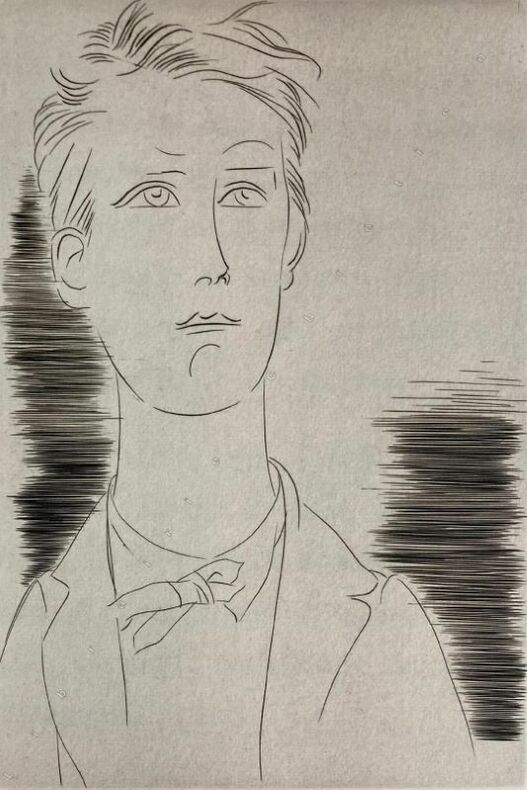
1967réf. 241011967 Paris, Galerie Alice Juillard, Lacourière, 1967, in-folio en feuilles, couverture titrée rempliée, pointe sèche de Louis Marcoussis numérotée, 16 pages.
réf. 1322Encre originale sur page de carnet, signée en bas à gauche (21/12,3 cm).
réf. 1323Encre originale sur page de carnet, signée en bas à gauche (21/12,3 cm).
1st edition. Later boards. 8vo. 153 pages, 25 cm. In Yiddish. Title translates to From My Notebook. Medem (1879-1923) was a Russian Jewish activist and ideologue of the Jewish Labor Bund. The Jewish Labour Bund, founded in 1897 in the Lithuanian Vilnius, was committed to the cultural and national rights of Jews in Eastern Europe. In this regard, Medem dared to oppose the view of Russian Marxists, and even of Lenin. These objectives received support in Central and Western Europe, e.g. from Austromarxists, and especially in several Jewish immigrant workers' clubs in Paris, whose members described themselves as Bundists. One such club, which also saw the education of the workers as its main task was given the name Arbeter-klub afn nomen Vladimir Medem (Workers' Club on behalf of Vladimir Medem). His educational policy ambitions culminated in 1929 in the founding of the Medem Library, which at 30,000 volumes is now the largest Yiddish cultural institution in Europe (Wikipedia, 2019). SUBJECTS: Socialism - Zionism - Nationalism and socialism. OCLC lists 11 copies worldwide (OCLC:144652941). Pages toning, Very good condition. First Edition of an Important Memoir. (YID-33-58-LX-'e)
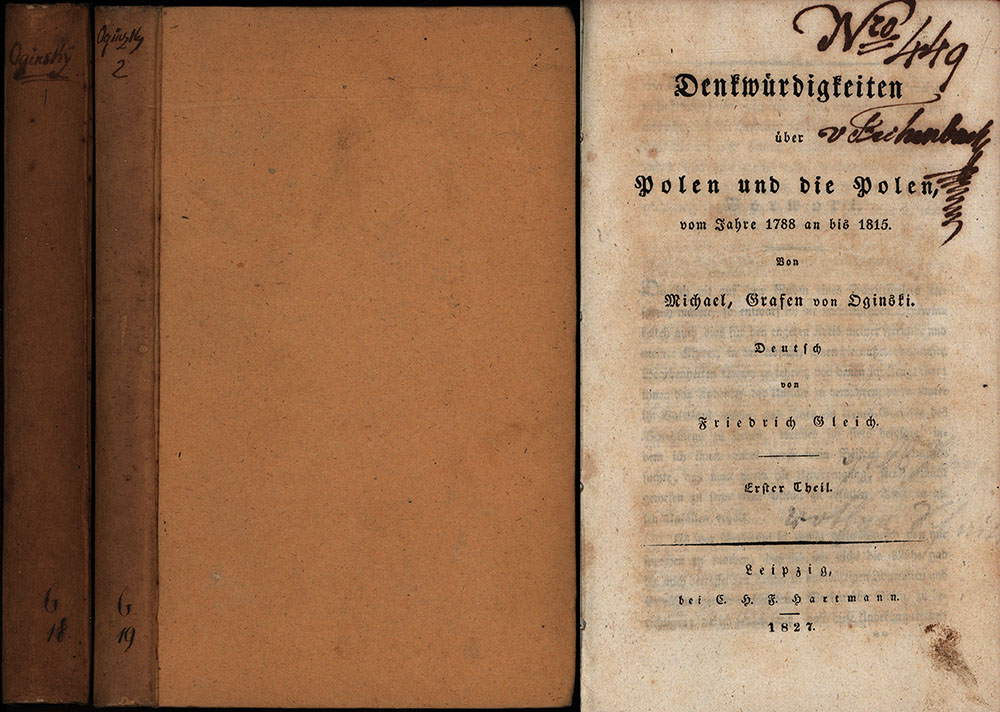
1827réf. 65011CBLeipzig, bei E. H. F. Hartmann, 1827. 8°. 22 x 13 cm. [Titelblatt] XX, 368 Seiten, Titelblatt, 306 Seiten. Private Pappbände mit handgeschriebenen Rückentiteln und roten Schnitten. [3 Warenabbildungen]
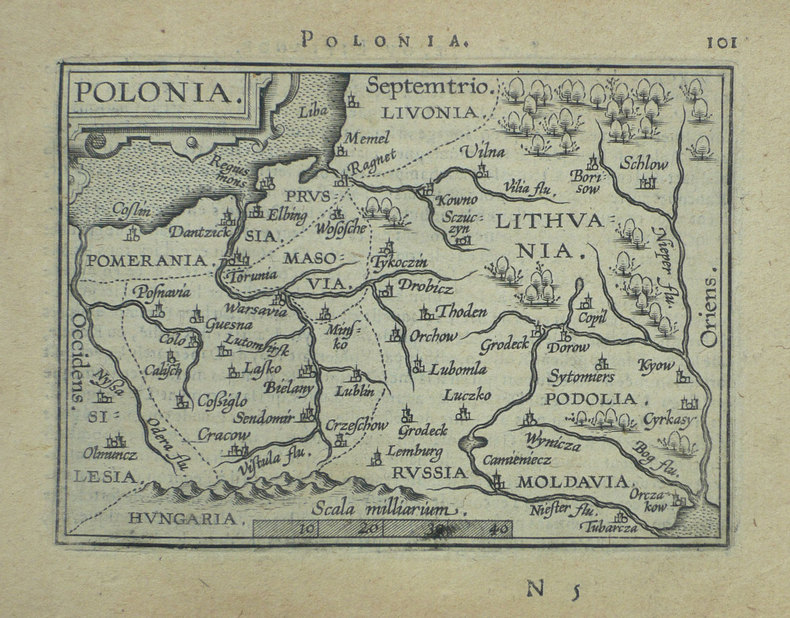
1598réf. LBW-1390Anvers 1598 82 x 108 mm.
réf. 222563Varsovie, Karabela, 2009 2 vol. in-4, 296 pp. ; 296 pp., avec des illustrations en couleurs dans le texte, cartonnage noisette illustré en couleurs, dans emboîtage de carton bordeaux (reliure de l'éditeur).
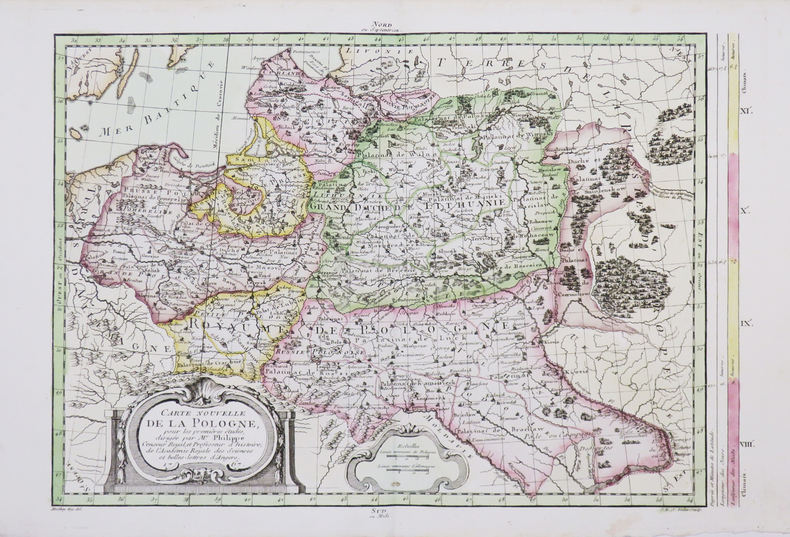
1767réf. LBW-46631767. 281 x 399 mm.
1807réf. 20837P., H. Nicolle et Desenne, 1807, 4 vol. in-8°, lxxv-346, 505, 469 et 431 pp, publié par P.-C.-F. Daunou et précédé d'une Notice sur Rulhière, reliures demi-veau fauve raciné, dos lisses avec pièces de titre et de tomaison maroquin carmin et filets dorés (rel. de l'époque), petits manques aux coiffes, bon état. Edition originale
1901In-4 gr., 3 volumi, brossura orig. figurata (dorsi rifatti), custodia edit. in tela con legacci (aloni al dorso), pp. 291; 235; 326; molto ben illustrati nel t. da 125 figure inc. su legno da Lemoine e da 53 bellissime tavole in tinta in fotoincisione, f.t. (anche a doppia pagina), da disegni del pittore Jan Styka (1858-1925). "Prima edizione". Cfr. Benezit,XIII, p. 340: “Jan Styka (1858-1925), polonais, naturalisé en France, peintre, artiste de renommée internationale” - Lorenz,IX,636. Bella edizione su carta distinta, ben conservata.
réf. 1941Paris, Le Clere, 1857. Fort in-8, reliure cartonnée demi-chagrin noir, titre doré sur dos à nerfs, tranches teintées rouge, 599p. Avec des Fragments de Compositions des Grands-Maîtres Polonais, notices sur la bibliographie musicale polonaise, détails sur les Pèlerinages célèbres en Pologne Infimes rousseurs, coin de dos élimé. Très bon état général.
réf. 205317Paris, À la Librairie de J. Carez [et] chez Eymery, 1825 in-8, VII-[1]-448-[3] pp., 2 portraits dont un en frontispice, 1 fac-similé, 2 planches dépl. (la place Royale) d'après Étienne Pierre, broché, couv. imprimée. Couv. un peu défraîchie.
1946733 pages. Numerous pertinent and interesting news clippings laid-in. "It was Igor Gouzenko who revealed the existence in Canada of a wide-spread conspiracy to obtain secret official information. He has been a most informative witness and has revealed to us the existence of a conspiratorial organization operating in Canada and other countries. He has not only told us the names and cover names of the organizers, the names of many of the Canadians who were caught 'in the net' and who acted here as agents, but he has also exposed much of the set-up of the organization as well as its aims and methods here and abroad." - Introduction. Unmarked with average wear to blue card covers. Binding intact. A sound vintage copy of this fascinating and comprehensive Canadian cold war investigation report. Book
Romae, typis Vaticanis, 1863-1864, voll. 2, in-folio, br. editoriale, pp. XXXI, [3], 771, [1] - [2], XII, [2], 165, [1] 637, [1]. Il volume quarto è diviso in due parti con propri frontespizi. Le legature dei volumi sono piuttosto danneggiate, anche con mancanze rilevanti - la coperta posteriore - al volume quarto e con alcune carte sciolte. Gli interni sono in condizioni più che buone con carte a pieni margini, totalmente prive di fioriture. Timbretti di biblioteca religiosa. Mancano il primo e il secondo volume.
réf. 197930Paris, Delaunay, 1822 in-8, VI-392 pp., frontispice, demi-chagrin brun, dos à nerfs orné de fleurons dorés (reliure de l'époque). Coiffe supérieure frottée.
1864réf. 9027Fils naturel de l'Empereur après sa rencontre avec la belle polonaise. Il fit une brillante carrière diplomatique. L.A.S. datée du 9 avril (1864). Très bon Paris 1864 ?
1995325 pages. A gripping, panoramic espionage novel set in the shadowy, clandestine arena of World War II spycraft. Written with a keen awareness of the nuances of national character, individual psychology, and the weight of history. Very light wear. Clean, bright and unmarked. Three inch crease to back flap of dust jacket. Excellent copy. Book
1960203 pages. Map endpapers. "General Sosabowski was one of the bravest and most unconventional of the military leaders of the last war; his career was both fascinating and of an almost incredible variety. He was born in Poland of very humble parents and as a child was involved in Polish resistance to the Austrian occupation; then he was conscripted into the Austrian Army, but finally gained a commission in the Polish Army."- from dust jacket. Heavily worn first edition copy with usual library markings. Great record of a Polish hero. Reading copy only. *Please note* This copy is missing black and white photographic plates from page 64 and page 192. All others are present. Book
1995réf. 86057Dordrecht: Kluwer Academic Publishers 1995. First edition and first printing thus. Reprinted from Solar Physics Volume 162 Nos. 1-2 1995. Hardcover. Very good. xii 531 1 pages. Illustrations some in color. Formulae. References. No dust jacket present. Illustrated front cover. The SOHO Solar and Heliospheric Observatory was a project of international cooperation between ESA and NASA to study the Sun from its deep core to the outer corona and the solar wind. To achieve its scientific goals it carried a complement of twelve sophisticated state-of-the-art instruments. Three helioseismology instruments were expected to provide unique data for the study of the structure and dynamics of the solar interior from the very deep core to the outermost layers of the convection zone. A set of five complementary remote sensing instruments consisting of EUV and UV imagers spectrographs and coronagraphs were intended to give the first comprehensive view of the outer solar atmosphere and corona leading to a better understanding of the enigmatic coronal heating and solar wind acceleration processes. Finally three experiments were to complement the remote sensing observations by making in-situ measurement of the composition and energy of the solar wind and charged energetic particles. This volume contains detailed descriptions of all the twelve instruments on board SOHO. Also included are an overview paper and a description of the SOHO ground system science operations and data products. The aim of these papers was to make the broader scientific community and in particular potential guest investigators aware of the scientific objectives and capability of the SOHO payload and to provide a reference document for the various instruments. The Solar and Heliospheric Observatory SOHO is a European Space Agency ESA spacecraft built by a European industrial consortium led by Matra Marconi Space now Airbus Defence and Space that was launched on a Lockheed Martin Atlas IIAS launch vehicle on 2 December 1995 to study the Sun. It has also discovered over 4000 comets. It began normal operations in May 1996. It is a joint project between the European Space Agency ESA and NASA. SOHO was part of the International Solar Terrestrial Physics Program ISTP. Originally planned as a two-year mission SOHO continues to operate after over 25 years in space; the mission has been extended until the end of 2025 subject to review and confirmation by ESA's Science Programme Committee. In addition to its scientific mission it is a main source of near-real-time solar data for space weather prediction. Along with Wind Advanced Composition Explorer ACE and Deep Space Climate Observatory DSCOVR SOHO is one of four spacecraft in the vicinity of the Earth–Sun L1 point a point of gravitational balance located approximately 0.99 astronomical unit AU from the Sun and 0.01 AU from the Earth. In addition to its scientific contributions SOHO is distinguished by being the first three-axis-stabilized spacecraft to use its reaction wheels as a kind of virtual gyroscope; the technique was adopted after an on-board emergency in 1998 that nearly resulted in the loss of the spacecraft. The three main scientific objectives of SOHO are: Investigation of the outer layer of the Sun which consists of the chromosphere transition region and the corona. The instruments CDS EIT LASCO SUMER SWAN and UVCS are used for this solar atmosphere remote sensing; Making observations of solar wind and associated phenomena in the vicinity of L1. CELIAS and COSTEP are used for "in situ" solar wind observations and Probing the interior structure of the Sun. GOLF MDI and VIRGO are used for helioseismology. Kluwer Academic Publishers hardcover
2014réf. 2-1631173022Nova Science Pub Inc 2014. Hardcover. New. 212 pages. 8.75x6.00x0.75 inches. Nova Science Pub Inc hardcover
réf. DADAX3642260934New unknown
1769In 8° (21,7x14,6 cm); due tomi in un volume: LXIII, (1), 284 pp. e una c. di tav. fuori testo e (2), 304 pp. Legatura ottocentesca in mezza pergamena con titolo in oro su fascetta al dorso. Piatti foderati con carta marmorizzata ottocentesca. Dedica a orsini Rosenberg. La prima parte con la numerazione romana contiene la vita del Conte Lorenzo Magalotti. Celebre edizione, stampata su carta di ottima qualità della sua più celebre opera che in questa edizione fiornetina venne aggiornata e aumentata di alcune parti inedite. Magalotti decise di pubblicare alcuni suoi studi in forma di lettera con l'intento di rendere più facile e comprensibile il loro contenuto. In questa nuova edizione fra le altre parti inedite: Sulle terre odorose d'Europa e d'America dette volgarmente Buccheri, scritte alla signora Marchesa Strozzi; Selva di una lettera al Principe Leopoldo, con cui si pretende d'assegnare un modo, come gli odori possan essere senza che da' corpi odorosi fluisca un minimo che della sostanza; Comento sopra i primi cinque canti dell'inferno di Dante; Discorso Accademico in cui si raccontano i casi di Tantalo; Lettera al Signor Roberto Boyle in materia di controversia; Al principe Leopoldo sopra il vacuo; A Filippo Bonarroti sull'etimologia di Lonchio; Ristretto intorno alla Pace de Pirenei; Trattato del Gran Duca Cosimo per regolare il commercio del vino; Registro di letteree scritte alla segreteria di Stato nel 1675 allorchè il Magalotti era Ministro del G. Duca di Vienna. Le lettere ai familiari oltre a temi di etica, filosofia e teologia contengono vari studi e componimenti del Magalotti sui più diversi temi come ad esempiuo i temi scientifici o il celebre e lungo componimento in onore di Giovanni III Sobieski dopo la vittoria sui Turchi a Vienna. Piccolo ed ininfluente tarletto al margine interno bianco delle ultime 6 carte. ESEMPLARE ANCORA IN BARBE ED IN OTTIME CONDIZIONI DI CONSERVAZIONE. Edizione che per la sua completezza si fa preferire alle precedenti.