4 415 résultats
réf. ORD-8530Documents communiqués aux Chambres dans la session de 1846-1847, par le Ministre des Affaires étrangères. Paris. Imprimerie de A. Guyot. Janvier 1847. In-4 (188 x 250mm) broché, sans couverture, tiré d'un recueil factice, 1f., 30, (1) pages. Des rousseurs, bords de feuilles un peu enroulés.
réf. 5767P., s. n., (Imp. Gauthier-Villars), 1930 ; in-8, broché. 32pp. - 32 planches hors-texte. Légères rousseurs sur la couverture. Bon état.
1965réf. 97105Varsovie, Conseil de Sauvegarde des Monuments de Lutte et de Martyre, 1965, in-8°, 362 pp, + un cahier de 93 pl. hors texte (291 photos) et 2 cartes dépliantes volantes en couleurs sous étui in-fine, cart. pleine toile grise éditeur, bon état
réf. 62849Bruxelles, Savoir et Agir, 1966, in 8° broché, XXXIX-164 pages ; illustrations hors-texte ; couverture illustrée.
réf. 48345P., Gebethner et Wolff, 1931, grand in 8° broché, 48 pages.
réf. 18431Varsovie, Editions "Polonia", 1960, in 12 relié pleine toile grise de l'éditeur, jaquette (menus défauts), 359 pages.
1982réf. 755161982 Saint-Etienne, Bibliothèque Municipale, Bibliothèque de l'Université, 1982, in 4°, 147 pages ronéotypées agrafées, sous couverture illustrée ; illustrations.
réf. ORD-8531Texte introductif de B. BIERUT. Sans nom de lieu, ni d'éditeur, non daté. Petit carnet in-12 à l'italienne (152 x 103mm) attaché par un cordonnet, 3 pages de texte et 32 vues photographiques, couplées par deux, d'un côté le site en ruine de l'autre le site reconstruit. Couverture fragile, un peu tachée. Émouvant document.
2 volumes in-8, demi-toile chagrinée noir, titres dorés, (4), 523 p. et (4), 499 p. Rarissime première et unique édition. Historique classé chronologiquement. Important appareil d'appendices au tome II. L'ouvrage a été édité à la librairie polonaise du Luxembourg dirigée par W adys aw Mickiewicz, fils d’Adam Mickiewicz. Historienne, publiciste, philanthrope, née Iwanowska, Dionizja Poniatowska (1816-1868) épousa Dariusz Poniatowski. "Dzielo wyd. anonimowo, autorka Dionizja Poniatowska ustalona na podst. bibliografii i PSB" (Nukat Union Cat. of Polish Res. librs). Reliure amateur. Cachet de bibliothèques. Quelques défauts de papier. Rousseurs éparses.
réf. 32194Paris, Librairie du Luxembourg (impr. de Simon Raçon), 1874. 2 volumes in-8, demi-toile chagrinée noir, titres dorés, (4), 523 p. et (4), 499 p.
réf. 46925P., Les Amis de la Pologne, 1928, in 12 agrafé de 24 pages ; illustrations dans le texte ; cachet ex-libris.
réf. GF21292Notice biographique (vers 1860) de quelques pages in8 en feuilles accompagnée d'un PORTRAIT en buste (23 x 14 cm) gravé -
réf. GF9749Lithographie P. Degobert - format 25,5 x 16,5 cm marges comprises - Bruxelles - Méline -1848 - Extraite de la "Galerie des Contemporains illustres, par un homme de rien" (Mr de Loménie)-
réf. 40541766 - 1768 Pour les Eloges historiques de la Princesse Marie [...] et de Stanislas I [...] par M. l'abbé Bellet, Desaint, Paris, 1768, page de titre, 92 pages en numérotation continue et [1f.]. Pour l'Eloge du vrai sage [...], Claude Jean-Baptiste Bauche, Paris, 1766, 120 pages et [1f.] blanc. Pour l'Eloge de Monseigneur le Dauphin [...], François-Théodore Hautot, Saint-Quentin, 1766, 13 pages. Pour l'éloge funèbre de Monseigneur le Dauphin [...] par Marquez [...], Sacarau & Dupleix, Toulouse, 1766, faux-titre, page de titre, 40 pages. Pour l'Eloge [...] de M. Thomas, Regnard, Paris, 1766, 62 pages et [1f.] blanc. Pour l'Examen d'un discours de M. Thomas [...], H. C. De Hansy le jeune, Paris, 1766, faux-titre, page de titre, 63 pages. Pour l'Eloge funèbre [...] par l'Abbé Maury, Tarbé, Sens, Veuve Pierres & Fils, Paris, 1766, faux-titre, page de titre, 58 pages et [1f.] blanc. Pour l'Eloge funèbre [...] par M. Puget de St Pierre, Panckoucke, Paris, 1766, 40 pages et [1f.] blanc. L'ensemble relié en 1 volume plein veau brun, dos lisse orné de fleurons, pièce de titre de maroquin rouge, tranches rouges, coins frottés, coiffe supérieure arasée, première charnière très faible. En l'état.
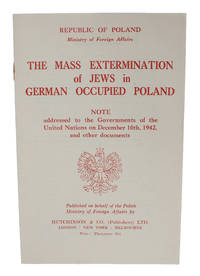
1943réf. 60436London New York Melbourne printed in Great Britain Published on behalf of the Polish Ministry of Foreign Affairs 1943. 8vo. Stapled as issued. Title-page printed in red. Stapels with rust slightly affecting surrounding paper. A very fine near mint copy. 16 pp. The scarce first printing of this hugely important publication which constitutes one of the very first official reports on Holocaust and one of the most accurate accounts that had been presented to the West changing their knowledge of what was actually going on. This seminal pamphlet consists of 1 Raczynski's account of the ongoing Holocaust based among other reports on the eye-witness-report by Jan Karski a Polish Government emissary in occupied Poland who bribed his way into a German concentration camp and witnessed the mass extermination of Jews 2 the seminal "Joint Declaration" by members of the United Nations in which "The above-mentioned Govenments and the French National Committee condemn in the strongest possible terms this bestial policy of cold-blooded extermination. They declare that such events can only strengthen the resolve of all free-loving peoples to overthrow the barbarous Hitlerite tyranny. They reaffirm their solems resolution to ensure that those responsible for these crimes shall not escape retribution and to press on with the necessary practical measures to this end." p. 12 3 an extract of Deputy Prime Minister Mikolajczy's statement on behalf of the Polish Government and 4 the text of Raczynski's broadcast of December 1942 in which pleaded for action wishing to make the public and the Allied nations "understand how real is the tragedy which is taking place not so very far from the shores of this island on the continet of Europe - on the soil of Poland. For more than three years the Germans have consistently done everything they could to hide from the eyes of the world the martyrdom of the Polish nation the like of which has never been known in the history of humanity. But "when we would keep silence the very stones will cry out"." p. 15.While the details were neither complete nor wholly accurate the Allies were aware of most of what the Germans had done to the Jews at a relatively early date. The mass murder of the Jews was of such dimensions however that at first they could not believe the reports that reached them. This quickly changed though.In February of 1942 Jacob Grojanowski an escaped prisoner of the Chelmno extermination camp provided the Oneg Shabbat group with detailed information about what went on at the Chelmno camp. His report became known as the Grojanowski Report. It was smuggled out of the Warsaw Ghetto via the Polish underground and reached London in June of 1942. It is not known exactly what happened to the report at that point but by February of 1942 the United States Office of War Information had decided not to release information about the extermination of Jews thinking that there was a risk of the public viewing the war as only being a Jewish problem. Thus the Grojanowski Report was not released. By at least October of 1942 British radio had broadcast news of the gassing of Jews to the Netherlands and in December 1942 the Western Allies released their Joint Declaration which is printed in the present publication describing and condemning in the strongest manner Hitler's violent attempts at exterminating the Jews of Europe. In 1942 Jan Karski 1914-2000 a Polish World War II resistance movement fighter and later professor at Georgetown University gave his first report to the Polish British and U.S. governments on what was going on in the German extermination camps in Poland.Karski reported to the Polish government in exile i.e. Raczynski who was the Ambassador and one of its most prominent leaders and the Western Allies on the situation in German-occupied Poland. Karski personally met with Franklin Roosevelt and British Foreign Secretary Anthony Eden to explain what went on in Poland and Raczynski wrote up the report. Eventually the American Government confirmed the reports to Jewish leaders in late November 1942 and shortly thereafter they were publicized i.e. in the present publication. Karski's report through Raczynski became one of the most important reports in the history of the Holocaust being a major factor in informing the West. It sparked one of the first official publications from the Allies on the mass extermination of Jews in Poland and resulted in the official reports and condemnations from the Allied countries i.e. the "Joint Declaration" also published here."The purpose of this publication is to make public the contents of the Note of December 10th 1942 addresses by the Polish Government to the Governments of the United Nations concerning the mass extermination of Jews in the Polish territories occupied by Germany and also other documents treating on the same subject. . In the hope that the civilized worlds will draw the appropriate conclusions the Polish Government desire to bring to the notice of the public by means of the present White Paper these renewed German efforts at mass extermination with the employment of fresh horrifying methods." From the Introductory Note p. 3."Most recent reports present a horrifying picture of the position to which the Jews in Poland have been reduced. The new methods of mass slaughter applied during the last few months confirm the fact that the German autorities aim with systematic deliberation at the total extermination of the Jewsih population of Poland and of the many thousands of Jews whom the German authorities have deported to Poland from Western and Central European countries and from the German Reich itself.The Polish Government consider it their duty to bring to the knowledge of the governments of all civilized countries the following fully authentical information received from Poland during recent weeks which indicates all too plainly the new methods of extermination adopted by the German authorities." p. 4. unknown
1943réf. 60182London New York Melbourne printed in Great Britain Published on behalf of the Polish Ministry of Foreign Affairs 1943. 8vo. Stapled as issued. Title-page printed in red. Stapels with rust slightly affecting surrounding paper. A very fine near mint copy. 16 pp. The scarce first printing of this hugely important publication which constitutes one of the very first official reports on Holocaust and one of the most accurate accounts that had been presented to the West changing their knowledge of what was actually going on. This seminal pamphlet consists of 1 Raczynski's account of the ongoing Holocaust based among other reports on the eye-witness-report by Jan Karski a Polish Government emissary in occupied Poland who bribed his way into a German concentration camp and witnessed the mass extermination of Jews 2 the seminal "Joint Declaration" by members of the United Nations in which "The above-mentioned Govenments and the French National Committee condemn in the strongest possible terms this bestial policy of cold-blooded extermination. They declare that such events can only strengthen the resolve of all free-loving peoples to overthrow the barbarous Hitlerite tyranny. They reaffirm their solems resolution to ensure that those responsible for these crimes shall not escape retribution and to press on with the necessary practical measures to this end." p. 12 3 an extract of Deputy Prime Minister Mikolajczy's statement on behalf of the Polish Government and 4 the text of Raczynski's broadcast of December 1942 in which pleaded for action wishing to make the public and the Allied nations "understand how real is the tragedy which is taking place not so very far from the shores of this island on the continet of Europe - on the soil of Poland. For more than three years the Germans have consistently done everything they could to hide from the eyes of the world the martyrdom of the Polish nation the like of which has never been known in the history of humanity. But "when we would keep silence the very stones will cry out"." p. 15. While the details were neither complete nor wholly accurate the Allies were aware of most of what the Germans had done to the Jews at a relatively early date. The mass murder of the Jews was of such dimensions however that at first they could not believe the reports that reached them. This quickly changed though. In February of 1942 Jacob Grojanowski an escaped prisoner of the Chelmno extermination camp provided the Oneg Shabbat group with detailed information about what went on at the Chelmno camp. His report became known as the Grojanowski Report. It was smuggled out of the Warsaw Ghetto via the Polish underground and reached London in June of 1942. It is not known exactly what happened to the report at that point but by February of 1942 the United States Office of War Information had decided not to release information about the extermination of Jews thinking that there was a risk of the public viewing the war as only being a Jewish problem. Thus the Grojanowski Report was not released. By at least October of 1942 British radio had broadcast news of the gassing of Jews to the Netherlands and in December 1942 the Western Allies released their Joint Declaration which is printed in the present publication describing and condemning in the strongest manner Hitler's violent attempts at exterminating the Jews of Europe. In 1942 Jan Karski 1914-2000 a Polish World War II resistance movement fighter and later professor at Georgetown University gave his first report to the Polish British and U.S. governments on what was going on in the German extermination camps in Poland.Karski reported to the Polish government in exile i.e. Raczynski who was the Ambassador and one of its most prominent leaders and the Western Allies on the situation in German-occupied Poland. Karski personally met with Franklin Roosevelt and British Foreign Secretary Anthony Eden to explain what went on in Poland and Raczynski wrote up the report. Eventually the American Government confirmed the reports to Jewish leaders in late November 1942 and shortly thereafter they were publicized i.e. in the present publication. Karski's report through Raczynski became one of the most important reports in the history of the Holocaust being a major factor in informing the West. It sparked one of the first official publications from the Allies on the mass extermination of Jews in Poland and resulted in the official reports and condemnations from the Allied countries i.e. the "Joint Declaration" also published here. "The purpose of this publication is to make public the contents of the Note of December 10th 1942 addresses by the Polish Government to the Governments of the United Nations concerning the mass extermination of Jews in the Polish territories occupied by Germany and also other documents treating on the same subject. . In the hope that the civilized worlds will draw the appropriate conclusions the Polish Government desire to bring to the notice of the public by means of the present White Paper these renewed German efforts at mass extermination with the employment of fresh horrifying methods." From the Introductory Note p. 3. "Most recent reports present a horrifying picture of the position to which the Jews in Poland have been reduced. The new methods of mass slaughter applied during the last few months confirm the fact that the German autorities aim with systematic deliberation at the total extermination of the Jewsih population of Poland and of the many thousands of Jews whom the German authorities have deported to Poland from Western and Central European countries and from the German Reich itself.The Polish Government consider it their duty to bring to the knowledge of the governments of all civilized countries the following fully authentical information received from Poland during recent weeks which indicates all too plainly the new methods of extermination adopted by the German authorities." p. 4. unknown
réf. 13974174Paris: Musée de l'Homme, Museum National d'Histoire Naturelle, 1962 in-4, nombreuses illustrations. Broché. Très bon état, cachet. Sommaire: Jacqueline DELANGE, Les arts anciens de la plaine du Tchad. - Annette LAMING-EMPERAIRE, Travaux archéologiques en Amérique du Sud. - Jacques MILLOT et Yvette LAPLAZE, Les felana malgaches. - Marie-Louise PASQUINO, Un costume finnois du XIIe siècle. - Monique ROUSSEL de FONTANES, Une exposition de papiers découpés polonais.
réf. 13978972Paris: Musée de l'Homme, Museum National d'Histoire Naturelle, 1987 in-4, nombreuses illustrations. Broché, très bon état.
réf. 223835A Paris, chez Plancher, 1818 in-8, LX-166 pp., tableau et plan dépliants, bradel demi-basane brune à coins, dos orné (reliure postérieure). Rousseurs. Restauration au tableau avec légère perte d'une lettre.
réf. 12825Varsovie, Editions Polonia, 1960 ; in-4. 267 pp. - Nombreuses photographies in-texte en héliogravure. Pleine toile grise déditeur (décolorée), titre imprimé à froid sur le plat sup et au dos. Jaquette absente. Intérieur frais.
1986réf. 887501986 L'Artiste, sans date (1986), in 8° carré broché, 89 pages ; très nombreuses photographies ; couverture illustrée.
1983réf. LFA0185cN° 25 de la revue "SILEX" (1983) : 144 pages, format 200 x 240 mm, illustrée, brochée (Grenoble)
1983réf. LFA-126737826Revue trimestrielle de 142 pages, format 200 x 240 mm, illustrée, brochée, Impr. du Néron, bon état
réf. 9927Paris, Didier, 1856. 2 volumes in-12, reliure plein cuir.
1977réf. LFA-126748680Une revue de 24 pages, format 150 x 240 mm, illustrée, brochée, publiée en 1977, Société des Amateurs de Jardins Alpins, bon état