4 407 résultats
réf. 3584aafFribourg, Fragnière, 1907, in-8°, XCII (92 p.) + 132 p. + 16 p. de pub., broché, dos abîmé.
réf. 18431Varsovie, Editions "Polonia", 1960, in 12 relié pleine toile grise de l'éditeur, jaquette (menus défauts), 359 pages.
1979réf. 99930424Cana 1979, In-8 Cana 1979, In-8 broché, 167 pages. Bon état.
1961réf. 169131961 Varsovie, éditions Polonia, 1961, 15 cm x 20 cm, 160 pp, couverture illustrée,
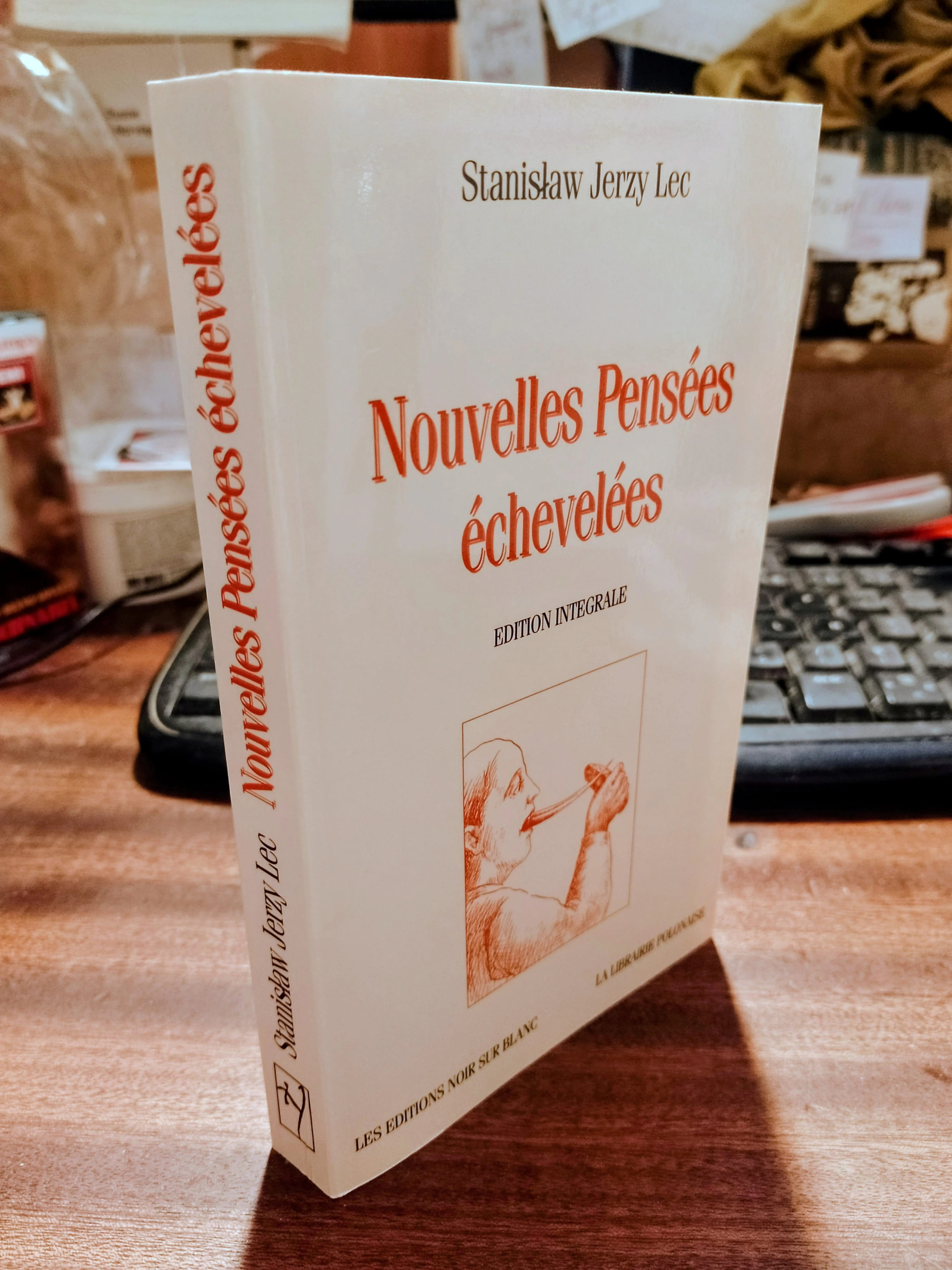
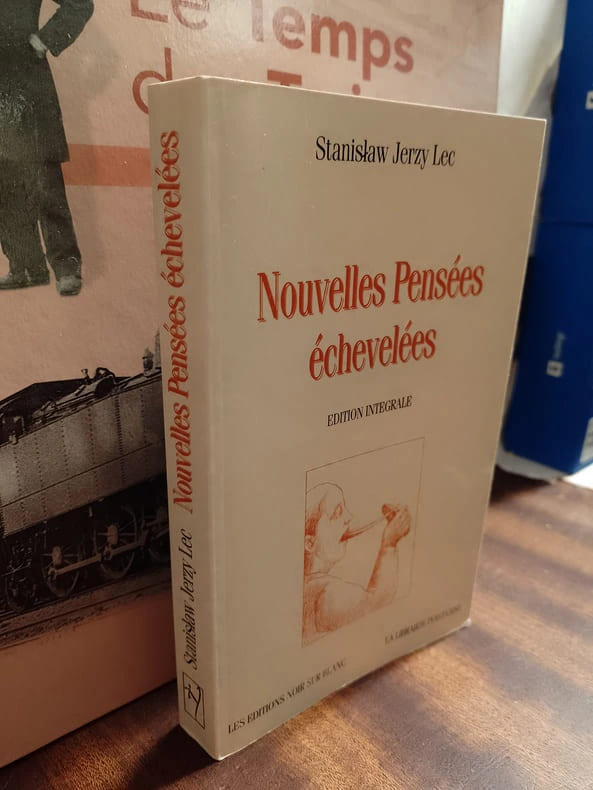
1993réf. LITTPOLO494905241026Paris, Les Editions Noir sur Blanc, "La librairie polonaise", 1993, 11 x 18, 254 pages sous couverture souple illustrée. Traduit du polonais par André et Zofia Kozimor. EDITION INTEGRALE.
1993réf. LITTPOL5656501026Paris, Les Editions Noir sur Blanc, "La librairie polonaise", 1993, 11 x 18, 254 pages sous couverture souple illustrée. Traduit du polonais par André et Zofia Kozimor. EDITION INTEGRALE.
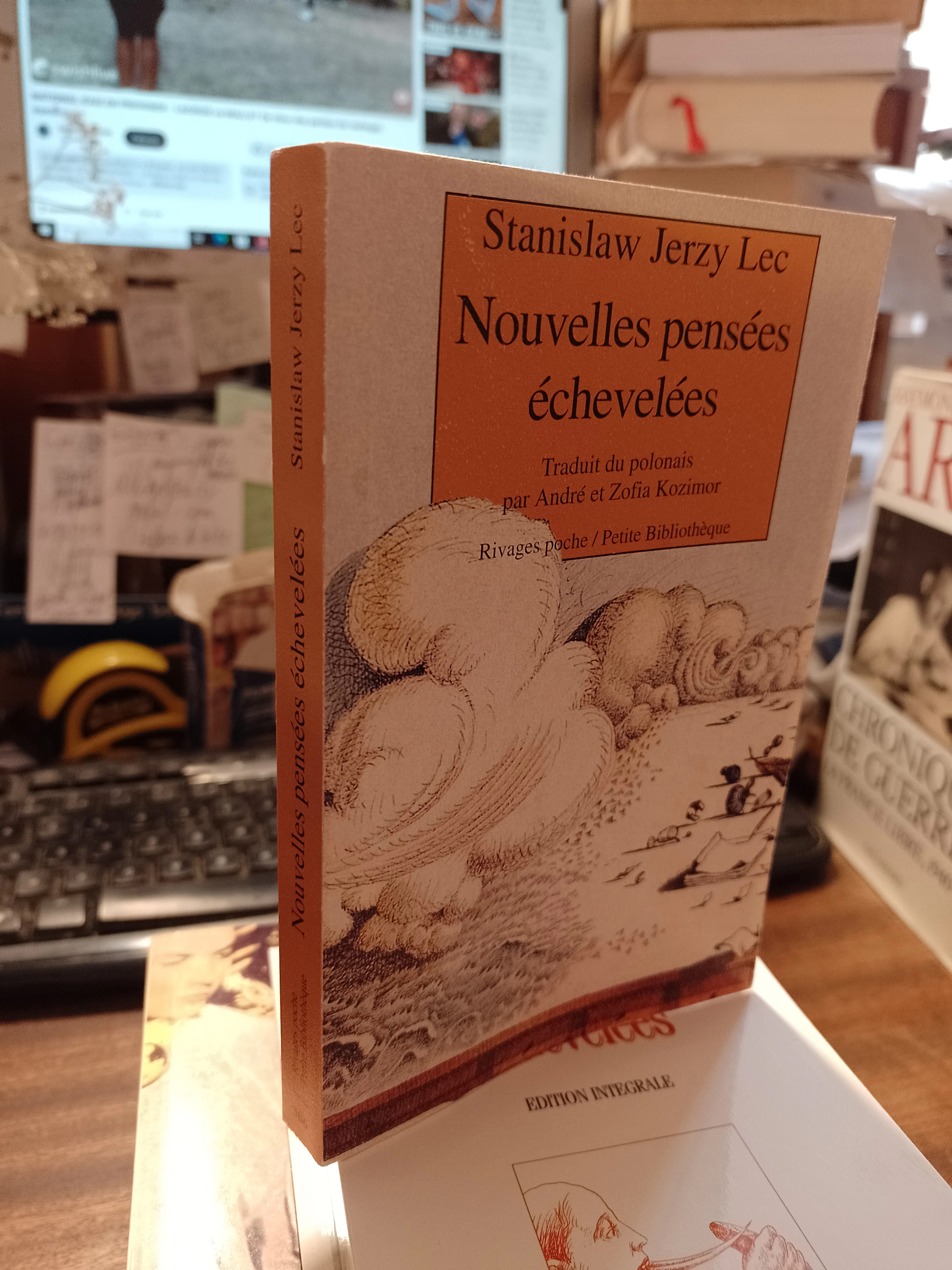
2000réf. LITTEPOLON511026Paris, Les Editions Payot & Rivages, "Rivages poche - Petite bibliothèque", 2000, 11 x 17, 276 pages sous couverture souple illustrée. Traduit du polonais par André et Zofia Kozimor. Préface de Francesco M. Cataluccio
1979Cana 1979, In-8 broché, 167 pages. Bon état.
17912 volumi in-8° (205x130mm), pp. 282; 276. Bella legatura in mezza pelle con titolo su tassello e fregi in oro. Con 3 tavole illustrative su carta azzurrina f.t. (mappa della Norvegia meridionale, mappa di un canale di navigazione, un apparecchio per congelare il mercurio); Prima edizione. Il Coxe (Londra, 1747-ivi, 1828), valente storico, fu membro di numerose accademie inglesi ed estere e, fra le numerose cariche che ricoprì, cappellano del Duca di Marlborough.
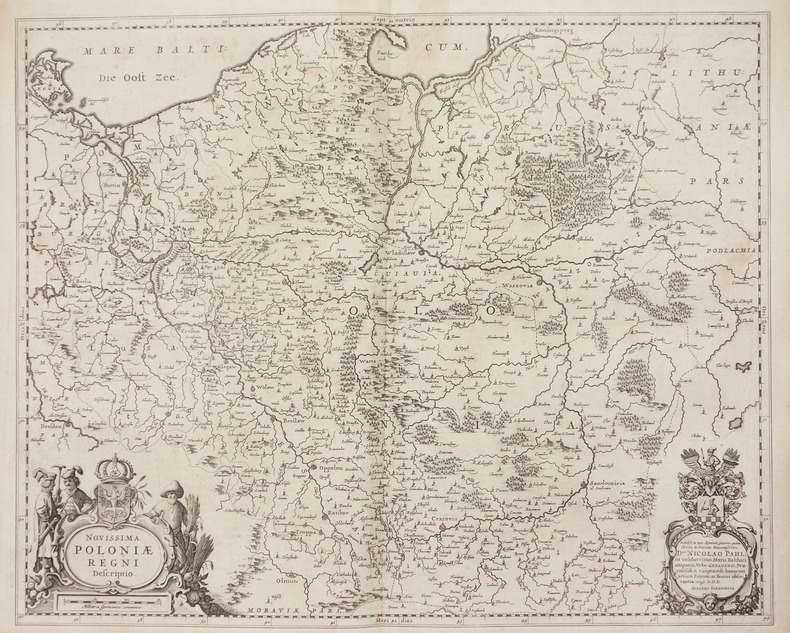
1658réf. LBW-2739[Amsterdam, 1658]. 432 x 539 mm.
1907Small octavo in partly marbled black paper and brown cloth boards; with gilt titles and ornament; 131p. In Czech. Uncommon.
19298° bross. edit. figur. pp. X-370.
Lérida, Imprenta de Carruez, 1873. 8vo.; 109 pp., 1 h. Cubiertas orovisionales en cartulina
In 8o, pp. 450, brossura con sovraccoperta. Seconda edizione accresciuta, edizione numerata. Qualche fioritura e minime sottolineature di studio a matita (06043/POESIA FRANCESE NOVECENTO)
18991st edition. Original pink printed paper wrappers, 8vo, 34 pages ; 23 cm. In Yiddish. SUBJECT (S) : Jews -- Galicia (Poland and Ukraine) -- Fiction. Europe. -- Ethnic relations. OCLC lists only 1 copy worldwide (Cambridge) , but theirs lacks the title page. None listed in the US in any condition. Covers fragile, reinforced, and heavily worn with some loss to rear, with spine rebacked. Internal paper toned but good and solid. Good Condition thus. Rare and interesting! (KH-6-25)
1954réf. 1805210401xbvkWarszawa (Warsaw/Warschau), Ksiazka i Wiedza, 1954. 24 unnumbered pages, wholepage colour-illustrated throughout. - Publisher's colour-illustr. halfcloth binding ('sjm'); 4to.(ca. 29 x 21 cm).
197225x17. 151p. Fotogr. Enc. Tela ed. Sobrecubierta.
1944réf. 187614Breda: Louis Vermijs N.V. 1944. First edition celebrating the Polish contribution to the allied liberation of Europe while the war was still ongoing. At this time the 1st Armoured Division were stationed in the Netherlands having freed cities including Breda where this work was published. The illustrations show battles throughout the campaign German tanks and the division's commander Major General Stanis aw Maczek. The 1st Polish Armoured Division was formed in 1942 from the remains of the 10th Motorized Cavalry Brigade after they were defeated during the German invasion of Poland. After training in Scotland they were transferred to Normandy in August 1944 proceeding to fight across France Belgium and the Netherlands. The latter half of the work celebrates the liberation of Breda during Operation Pheasant where the Germans were forced out without any civilian casualties. It shows Polish Liberation Day festivities held in the city local shops welcoming the allied forces and the plaque recording the freedom of the city given to the division on 30 October 1944. We have traced only eight institutional copies. Oblong octavo 159 x 321 mm. halftone photographic illustrations throughout route map in text. Original buff paper wrappers orange cord binding front wrapper decorated with blue and black border and crest of the 1st Armoured Division in colour rear wrapper lettered in black. Title page inscribed "To my best friends - Mr. & Mrs. A. M. Burchart Limberg 17 Holland 9th Dec 1944". Wrappers a little creased small patch of soiling on front wrapper minor offsetting internally: a very good copy. unknown
19441st edition. Original printed paper wrappers, 16mo, 47 pages. Stapled tan wrappers with brown and dark blue lettering on the covers. In Polish. Title translates as, "The Camp at Majdanek. " An extremely early Polish-language publication of Soviet novelist and journalist Boris Gorbatovs report on the Majdanek Concentration Camp, and the atrocities committed there and in the area of Lublin, which were first published in Russian in the Soviet newspaper "Pravda" on August 11th and 12th of 1944, shortly after the liberation of the camp by Soviet forces in July. These writings constitute some of the earliest writing on the Holocaust in Eastern Europe. The writing describes the camp and the ongoings there in vivid detail, including interviews with local residents of Lublin. Following Gorbatov's report are two shorter pieces on the the camp, one by by Polish-Soviet Commission on Majdanek, and the other a statement by Hilmar Moser a German lieutenant general. Includes 8 photos of the camp, including images of the crematorium, human remains and victims shoes, as well as reproductions of Moser's written statement. OCLC lists only 2 copies worldwide, (FAU, Polish Union Catalog) . Tiny nick to one corner, otherwise Very Good Condition, an excellent copy. Rare and important (Holo2-139-18)
1979réf. 41929Warszawa Warsaw: Pan´stw. Wydawn. Naukowe 1979. 1st Edition. Original black printed portfolio 8vo. Portfolio of seven large folding maps on on 4 sheets of heavy paper 3 are double sided 1 is singled sided. Primarily black and white with some color. Text in Polish. Title translates to “Nazi camps in Poland 1939 - 1945. An Encyclopaedic Reference Book: Maps." Collection of 7 maps each 84 cm x 60 cm 33 x 24 inches produced by Jan Laskowski at the Main Commission for the Investigation of Nazi Crimes in Poland. The maps comprise Volume II of the work; Volume I is a heavily illustrated 676-page book of the same title which we offer separately. The Seven maps all present are: - Map 1 Single Sided: Hitlerowskie obozy na ziemiach polskich w latach 1939 - 1945. “Nazi camps in Poland in the years 1939 - 1945”. Showing: concentration and extermination camps sub-camps of concentration camps extermination centers POW camps more important sub-camps working divisions commandos and temporary POW camps penal labor camps major labor camps prisons transit camps & ghettos. - Map 2A: Getta na ziemiach polskich w okresie okupacji hitlerowskiej w latach 1939 - 1945 “Ghettos in Poland during the Nazi occupation in 1939 - 1945”. - Map 2B: Hitlerowskie obozy przejsciowe na ziemiach polskich w latach 1939 - 1945 “Nazi transit camps in Poland in 1939-1945”. - Map 3A: Hitlerowskie wiezienia i areszty na ziemiach polskich w latach 1939 - 1945 “Nazi prisons and arrests in Poland in 1939 - 1945”. - Map 3B: Hitlerowskie obozy pracy na ziemiach polskich w latach 1939 - 1945 “Nazi labor camps in Poland in the years 1939 - 1945”. - Map 4A: Hitlerowskie obozy jenieckie na ziemiach polskich w latach 1939 - 1945 “Nazi POW camps in Poland in 1939 - 1945”. - Map 4B: Hitlerowskie obozy koncentracyjne i osrodki zaglady na ziemiach polskich w latach 1939 - 1945 “Nazi concentration camps and extermination centers in Poland in 1939 - 1945”. Maps 2A & 2B have been described as a “Terrifying pair of maps showing the locations of German POW and internment camps in Poland during World War II highlighting the widespread locations of these establishments. In some parts of the map the information becomes so dense that three inset maps are shown. This map was designed by Jan Laskowski and printed in 1979 as part of a work on the Nazi extermination machine produced by PWN Warsaw a state-owned research-focused publishing house in Poland. The map on the front is particularly interesting for its depiction of symbols used to classify internees in German camps. The uppermost of these depictions shows the combinations that can be made for different types of prisoners of different levels of importance. The armbands that would have been worn by these prisoners is shown as well as the prison uniforms. Other details are also shown. The map lists hundreds of sites run by Nazi operators throughout the country. These include concentration camps death camps transitional camps and ghettos. The map is divided according to Poland's voivodeships with a key in the lower left. Names of cities too long to spell are also provided in the lower left. This map was produced during a point in Poland's history during which it was actively revisiting the period during the Second World War. Leading social scientists devoted their time to trying to gather all the living as well as the recorded history of the events of the Holocaust and related atrocities before this information vanished. Leading these efforts particularly during the 1960s and 1970s was the Glówna Komisja Scigania Zbrodni przeciwko Narodowi Polskiemu known as the Chief Commission for the Prosecution of Crimes against the Polish Nation. They were active in publishing maps both for domestic educational purposes and for international remembrance and diplomatic efforts regarding the Holocaust. Jan Laskowski was a leading cartographer who produced a number of maps in this field. These maps were produced as part of a series of maps that purported to combine to form an atlas of all of Hitler's crimes in Poland. Many of the large wall maps produced during this period could only show a fraction of the crimes or only the atrocities committed in one region. Thus a series of maps was needed to show all the points necessary which this present work contributes to. Polish Reinterpretations of the Holocaust: Studying the effects of German occupation in Poland is a delicate subject. While it is certain that Poland suffered at least as badly as any other European nation during the Second World War reinterpretations of the Holocaust in the country have also been used to satisfy nationalistic tendencies. It has become evident to Western observers in the last several years that there is a strong nationalist movement in Poland that seeks to place blame for the Holocaust solely on the shoulders of non-Polish actors a movement originally fostered under Soviet rule. This movement has gone so far as to limit freedom of speech criminalizing with a three-year sentence the suggestion that Poland or its citizens in any form participated in the murders committed by Nazis. As such the term ‘Polish concentration camps’ has been deemed unacceptable with the government-approved term being ‘concentration camps on Polish territory.’ All lines of evidence show that this map 2A & 2B was produced using the most accurate and impartial historical sources. The language on the map is simple naming only ‘Hitler's Atrocities’ and there is no evidence of a clear anti-German bias. However it is impossible to separate this map one of the most important productions of the remembrance movement during this period from the social situation in which it was produced. Maps like these can easily be converted into propaganda instruments and today's Polish leaders most of whom grew up during Soviet occupation will have formed their understanding of the Holocaust through maps like these. Soviet Censorship: While the content of the map appears to have been produced free from bias the map still had to go through Soviet censorship. Mentioning prisoner of war camps in which primarily Soviet troops were interned would have been a prerequisite condition upon which the publication of the map rested. Further the lack of mention of any Soviet killings or camps requires no explanation….The map unlike many later maps makes no differentiation between the populations who suffered at the various camps. This represents the Soviet agenda that all nations suffered fought and won equally which sought to limit divisions in this post-identity state” Ruderman 2022. SUBJECTS: World War 1939-1945 -- Prisoners and prisons German. -- Concentration camps -- Poland. Guerre mondiale 1939-1945 -- Prisonniers et prisons des Allemands. -- Camps d'internement -- Pologne. Obozy koncentracyjne -- Polska -- 1900-1945. OCLC: 830885973. Light shelf wear to portfolio as expected. All maps in pristine condition with normal folds as issued. Very Good Condition. Complete and dramatic BR5 holo2-147-19-'cc. Warszawa (Warsaw): Pan´stw. Wydawn. Naukowe unknown
réf. ORD-5517Carte postale polonaise. Kunstverlag: Schiller. S. M. P. Kr. Vor Nachahmung geschützt. Vers 1900. Carte postale (90 x 137mm), caricature. Petit accroc marginal mais bon état.
195818x12. 1265p. Firma anterior poseedor. Prólg. R. Hoenigsfeld, A. Markoff, N. T. y A. Lázaro Ros. Enc. Guaflex ed.
1927In-8° pp. V-137, bross. edit. con piccoli tagli. Parzialmente intonso. Tracce d'umido. Lievi fioriture.
1995In 8°, brossura editoriale illustrata con alette, pp. 300, (4), collana "I Saggi 45", nota di possesso al frontesp., lievi bruniture ma copia molto buona. (spedizione standard SEMPRE tracciata con raccomandata-piego di libri, eventuale FATTURA da richiedere all'ordine)
2020Mm 170x240 "LIMES - Rivista Italiana di Geopolitica, settembre/2020" diretta da Lucio Caracciolo - Brossura originale, 272 pagine con tavole a colori non comprese nel testo. Copia in buone condizioni complessive; spedizione in 24 ore dalla conferma dell'ordine.