Moravski DominikLivre Rare Book
Church and State Behind the Iron Curtain
réf. 1528344995.Gpaperback. Good. Access codes and supplements are not guaranteed with used items. May be an ex-library book. paperback

Bonita · États-Unis57,59 $US≈ 51,35 €
4 091 résultats
1981réf. 98132France-Empire 1981 In-12 broché. 253 pages. Bon état d’occasion.
19478vo; 1st edition. Original illustrated red boards, 8vo, 342 pages. In Yiddish. Title translates as, "The destruction of Vilna." Kaczerginski (19081954) was a Yiddish writer and cultural activist. Born in Vilna to a poor family and educated at that citys Talmud Torah, Shmerke (Pol., Szmerke) Kaczerginski lost both his parents during World War I. As a youth, he was involved with outlawed Communist groups and was arrested several times, serving a lengthy prison term. In the 1930s, two of his revolutionary poems became popular in Poland. He wrote short stories with a radical bent and was a correspondent and reporter for literary publications, including the semilegal leftist press in Poland and the New York Communist daily Morgn-frayhayt. Kaczerginski played a key role in shaping the writers and artists group Yung-Vilne; he organized its evening events and was the de facto publisher of its three miscellanies between 1934 and 1936. During the period of Soviet control over Lithuania in 19401941, he was even more active in the field of Yiddish culture, but at the same time experienced his first disappointments with the attitude of the Soviet regime toward Jewish culture. During the first period of Nazi occupation, Kaczerginski wandered through villages and towns posing as a deaf mute; after many difficulties, he ended up in the Vilna ghetto. Kaczerginski was very involved in the ghettos cultural activities. As a leader of its youth club, he wrote its Yugnt-himen (Youth Hymn), a song that immediately became popular. In 1943, he wrote the song Shtiler, shtiler in memory of the mass murders committed at Ponar. Set to music that Aleksander Volkoviski (later known as Aleksander Tamir) had submitted to a contest organized by the ghetto, the song was first heard at an evening performance there and over the years became one of the best-known songs of the Holocaust. With Avrom Sutzkever and others, Kaczerginski became part of a group of forced laborers whom the Germans designated to sort Jewish cultural treasures at YIVO and other locations. Known as the Papir-brigade (Paper Brigade), the groups members risked their lives to hide the most significant items, smuggling them back into the ghetto or entrusting them to non-Jewish acquaintances. Kaczerginski was a member of the Fareynikte Partizaner Organizatsye (United Partisans Organization; FPO), and, since YIVOs building was located outside the ghetto walls, he took part in smuggling weapons into the ghetto. In September 1943, Kaczerginski, along with Avrom and Freydke Sutzkever and other members of the FPO, escaped from the Vilna ghetto as part of an organized group of fighters just before its liquidation. They joined a Soviet partisan unit in the Naroch Forests, where Kaczerginski fought as a partisan until liberation in July 1944. Kaczerginskis books describe the destruction of Vilna, the partisan struggle, and his own experiences during the Holocaust period: Khurbn Vilne (The Destruction of Vilna; 1947), Partizaner geyen (Partisans on the Move; 1947), and Ikh bin geven a partizan (I Was a Partisan; 1952) (YIVO, 2010). Ex-library, spine sunned, otherwise very Good Condition. (HOLO2-89-3A)
réf. 1528344995.Gpaperback. Good. Access codes and supplements are not guaranteed with used items. May be an ex-library book. paperback
1944x + 432pp., with handwritten dedication and siganture by the author, 24cm., publisher's hardcover in cloth with gilt lettering (trace of removed label at lower enbd of spine), text in English, Doctoral Dissertation (A Dissertation submitted to the Faculty of the School of Sacred Theology of the Catholic University of America in partial fulfillment of the requirements for the degree of Doctor of Sacred Theology), stammp at verso of title page, text is clean and bright, weight: 1kg., R110270
1944réf. R110270Washington D.C., The Catholic University of America Press 1944 x + 432pp., with handwritten dedication and siganture by the author, 24cm., publisher's hardcover in cloth with gilt lettering (trace of removed label at lower enbd of spine), text in English, Doctoral Dissertation (A Dissertation submitted to the Faculty of the School of Sacred Theology of the Catholic University of America in partial fulfillment of the requirements for the degree of Doctor of Sacred Theology), stammp at verso of title page, text is clean and bright, weight: 1kg., R110270
1984Broch?. 330 pages.
Petit in-8 (13,5x18,5) broché, 143 pp. Nombreuses illustrations. A l'Est rien de nouveau - U.R.S.S. - Pologne Il y a 20 ans Un mois de cinema Qui est-ce ? Television En supplement Les livres de cinema - Situation de l'edition en France [FL-17] Bon etat
réf. 10253P., Hôtel de la Monnaie, 9 décembre 1971 - 5 Février 1972. Catalogue In-8, 97 pp., photos in-t., br. 358 références. Préface du Docteur Adam Wiecek
réf. ria9781032822846_inpPaperback. New. New Book; Fast Shipping from UK; Not signed; Not First Edition; This book presents a comprehensive approach to civil protection and domestic security in contemporary hybrid armed conflict. paperback
pp. 1-69, 8 pls. of microphotos, 7 fold. leaves of tabs. and diagrs. in pocket, 18 figs. and diagrs. in text, refs. Wrs. - In Polish with English summary.
1977DISPONIBILITÀ GARANTITA AL 99%; SPEDIZIONE ENTRO 12 ORE DALL'ORDINE. PERFETTO, COME NUOVO. Informazioni bibliografiche Titolo: Classi sociali e lotta politica in Polonia Autore: Grazia Ardissone Editore: Milano: Moizzi, 1977 Collana: Volume 3 di Nuove Ricerche: Scienze Sociali Lunghezza: 181 pagine; 22 cm Soggetto: Comunismo, Urss, Polonia, Sociologia polacca, Socialismo, Politica, Ideologie, Dissenso, Gierek, Regimi Comunisti, Crollo, Fallimento, Democrazia, Classi Subalterne, Opposizione, Solidarnosc, Liberalismo, Classe Operaia, Lotte, Fascismo, Resistenza, Neutrismo, Varga, Cagnoni, Gosi, Rivoluzione, Internazionalismo, Belice, Danzica, Gramsci, Paesi socialisti, Europa dell'Est, Guerra Fredda, Lenin, Stalin, Indagini, Statistiche, Studi sociali, Scienze politiche, Klasy społeczne, Polska, Hasło przedmiotowe, Polityka wewnętrzna, 1944-1989, Wszystkie egzemplarze, Classes sociales et lutte politique en Pologne, Le marxisme d'Ossowski dans la théorie, La réforme économique et le révisionnisme, Polityka, polonaise, Bauman, bureaucratie, Dantzig, sionisme, sociologie, Nowe Drogi, Oskar Lange, Ouvriers spécialisés, pays socialistes, Gomulka, Varsovie, Wessolowski, Wiatr, Zycie, Warszawy, révisionnistes, révolution, intelligentsia, classe ouvrière
réf. 29830363like new. unknown
réf. DADAX1626196508The History Press 2014-08-05. Illustrated. paperback. New. 6.00x0.58x9.00. Buy with confidence. Excellent Customer Service & Return policy. The History Press paperback
réf. 19427Paris : Les éditions Domat-Montchrestien, F. Loviton & C°, 1939. Un volume in-8°, broché.
1931réf. 3628536Torun, 1931. 47 S. Mit Abbildungen auf 16 Tafeln. OKart.
réf. 50891, Varsovie, Wydawnictwo Prawnicze 1966, in-8, br., bon état, 79p.
1905In-16 gr., mz. tela coeva, tit. oro al dorso, cop. orig. applicata al piatto anteriore, pp. XII,692, con un ritratto dell'A., una carta geograf. a doppia pag. e 42 ill. in tavv., f.t. Ben conservato.
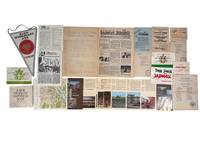
1980réf. 221631980. Solidarity movement ephemera archive. 1980s-1989. This archive documents opposition organizing and political communication in eastern Poland during the final phase of Communist rule with particular emphasis on labor unrest student activism and the 1989 electoral campaign that led to partial democratic reform. The material records how Solidarność operated through underground print culture and regional coordination including strike reporting candidate promotion and direct appeals to voters. It provides primary evidence of political messaging grassroots mobilization and the emergence of open electoral discourse in the months preceding the June 1989 elections. Archive of over 30 pieces of printed ephemera and underground publications produced in the Lublin and Zamość regions primarily in Polish in varying formats including newspapers broadsheets flyers tickets brochures and a pennant. Key items include Biuletyn Solidarność Nos. 2 and 3 15 and 22 May 1989 issued by the Regional Committee for Lublin-Zamość containing articles such as "Protest płacowy na uczelniach lubelskich" documenting wage protests at Lublin universities and an interview with candidate Adam Kozaczyński titled "Mogę pracować dla ludzi i dla kraju." Additional coverage includes "Wyborcy o kandydatach" presenting voter responses to candidates. Student activism appears in Gazeta Strajkowa Lublin Nr. 3 a hectograph-printed publication of the Independent Students' Association NZS criticizing state education policy with statements including "Nie narusza w żadnym stopniu postulatów studentów" and "Odradza nadal Ministerstwo Oświaty i Wychowania." A 13 May 1989 issue of Przegląd Wiadomości Agencyjnych features a mining strike in Lubin under the headline "STRAJK" accompanied by an image of workers holding a protest banner. Election materials include flyers and cards bearing the slogan "Twoja Szansa Solidarność: Wybory 1989" promoting candidates such as Tadeusz Mańka Adam Stanowski and Henryk Janusz Stępniak along with a facsimile-signed letter from Lech Wałęsa dated May 1989 urging coordinated political participation. These materials were produced during the rapid political transformation of 1989 when negotiations between the Communist government and opposition groups led to partially free elections and the eventual formation of a non-Communist government. Underground and semi-legal print media played a central role in disseminating information coordinating protest and legitimizing opposition candidates particularly in regional centers such as Lublin. Light toning and minor wear consistent with ephemeral use; overall very good. A concentrated archive of Solidarity print culture preserving the language organization and visual strategies of political mobilization at the end of Communist rule in Poland. unknown
1980réf. 221631980. Solidarity movement ephemera archive. 1980s-1989. This archive documents opposition organizing and political communication in eastern Poland during the final phase of Communist rule with particular emphasis on labor unrest student activism and the 1989 electoral campaign that led to partial democratic reform. The material records how Solidarność operated through underground print culture and regional coordination including strike reporting candidate promotion and direct appeals to voters. It provides primary evidence of political messaging grassroots mobilization and the emergence of open electoral discourse in the months preceding the June 1989 elections. Archive of over 30 pieces of printed ephemera and underground publications produced in the Lublin and Zamość regions primarily in Polish in varying formats including newspapers broadsheets flyers tickets brochures and a pennant. Key items include Biuletyn Solidarność Nos. 2 and 3 15 and 22 May 1989 issued by the Regional Committee for Lublin-Zamość containing articles such as "Protest płacowy na uczelniach lubelskich" documenting wage protests at Lublin universities and an interview with candidate Adam Kozaczyński titled "Mogę pracować dla ludzi i dla kraju." Additional coverage includes "Wyborcy o kandydatach" presenting voter responses to candidates. Student activism appears in Gazeta Strajkowa Lublin Nr. 3 a hectograph-printed publication of the Independent Students' Association NZS criticizing state education policy with statements including "Nie narusza w żadnym stopniu postulatów studentów" and "Odradza nadal Ministerstwo Oświaty i Wychowania." A 13 May 1989 issue of Przegląd Wiadomości Agencyjnych features a mining strike in Lubin under the headline "STRAJK" accompanied by an image of workers holding a protest banner. Election materials include flyers and cards bearing the slogan "Twoja Szansa Solidarność: Wybory 1989" promoting candidates such as Tadeusz Mańka Adam Stanowski and Henryk Janusz Stępniak along with a facsimile-signed letter from Lech Wałęsa dated May 1989 urging coordinated political participation. These materials were produced during the rapid political transformation of 1989 when negotiations between the Communist government and opposition groups led to partially free elections and the eventual formation of a non-Communist government. Underground and semi-legal print media played a central role in disseminating information coordinating protest and legitimizing opposition candidates particularly in regional centers such as Lublin. Light toning and minor wear consistent with ephemeral use; overall very good. A concentrated archive of Solidarity print culture preserving the language organization and visual strategies of political mobilization at the end of Communist rule in Poland. unknown books
2016Signed and inscribed by author upon title page, other wise clean, bright and unmarked with negligible wear. Appears unread. x, 271 pages. Several black and white reproductions of photos. "Lawrence Fox was born in Midland, Ontario, enlisted in the RCAF in 1952, and recruited by MI-6 in 1956. He performed five highly dangerous Cold War-era missions in Hungary, Czechoslovakia, Poland and Russia. This work was top secret and resulted in long term PTSD. Nothing is left out of this non-fiction espionage thriller." - back cover. Book
Large 8vo, 25cm. Pp. 183. Orig. wrs., uncut. - Bibliography of literature on Polish coleoptera comprising about 4,500 references.
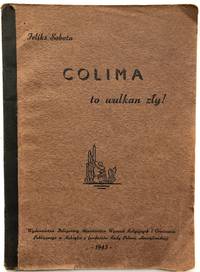
1945réf. H5886Leon Mexico: Wydawnictwo Delegatury Ministerstwa Wyznan Religijnych i Oswiecenia Publicznego w Meksyku z Funduszow Rady Polonii Amerykanskiej 1945. Paperback. Very Good. First printing. Quarto cloth backed wraps 93 pp illustrated including photoplates. Very good. Worldcat locates 9 copies in institutions. In Polish: a geological and archaeological study of Colima Mexico including studies of its terrain and volcanic possibilities. Extremely uncommon publication from the Polish refugee colony at Santa Rosa near Leon in Guanajuato Mexico. Thousands of Polish refugees were first sent off to Soviet gulags and from there were placed in mainly British commonwealth countries including Iran and India although some ended up in Israel. The United States in trying to forge an alliance with Stalin declined to make room for Polish refugees although some indeed did end up on the west coast where they were put into Japanese internment camps. But the Mexican ambassador to Britain Alfonso Rozenzweig Diaz an admirer of the Polish General Sikorski who had pleaded with Roosevelt for assistance offered to put up a community of Poles in Santa Rosa Guanajuato where he made a "hacienda" available schools and school supplies which were supplemented by Polish-American organizations in the States. When the war ended in 1945 the President of Mexico made the Poles remaining at Santa Rosa welcome to either apply for permanent residency or to leave to Poland which was then under Soviet control and therefore almost as unwelcoming as it was under the Germans. Only a handful who had family back in Poland chose to return. Most others ended up in the United States but some who had married or established businesses stayed on in Guanajuato. Most of the Poles who ended up in Santa Rosa were at the end of a 2-year 20000km journey filled with much hardship. Wydawnictwo Delegatury Ministerstwa Wyznan Religijnych i Oswiecenia Publicznego w Meksyku z Funduszow Rady Polonii Amerykanskiej paperback
1900In-16°, pp. 358, legatura editoriale t. tela viola con titolo in oro al dorso. 49 piante e 12 carte f.t., per lo più ripiegate. Etichetta del tempo di libreria torinese. Bell'esemplare. Edizione originale. Le Guides Joanne, pubblicate a partire dal 1841, ebbero larghissima fortuna e diffusione grazie all'estrema accuratezza con cui erano compilate. Dapprima dedicate alla sola Europa, finirono poi col trattare anche i paesi del Medio Oriente e del Nord Africa. Cfr. Daniel Nordman, Les guides-Joanne. Ancêtres des Guides Bleus, Les Lieux de mémoire, II. La Nation, 1, Gallimard, 1986. p. 529-567. Francese
réf. 63614Secrétariat d'état aux anciens combatttants 1978 livre étude 21*14,5 235 pages